Connect with us

Finance

Long-Time Finance Prof Named Interim Dean At Stanford GSB

Published

on

Long-Time Finance Prof Named Interim Dean At Stanford GSB

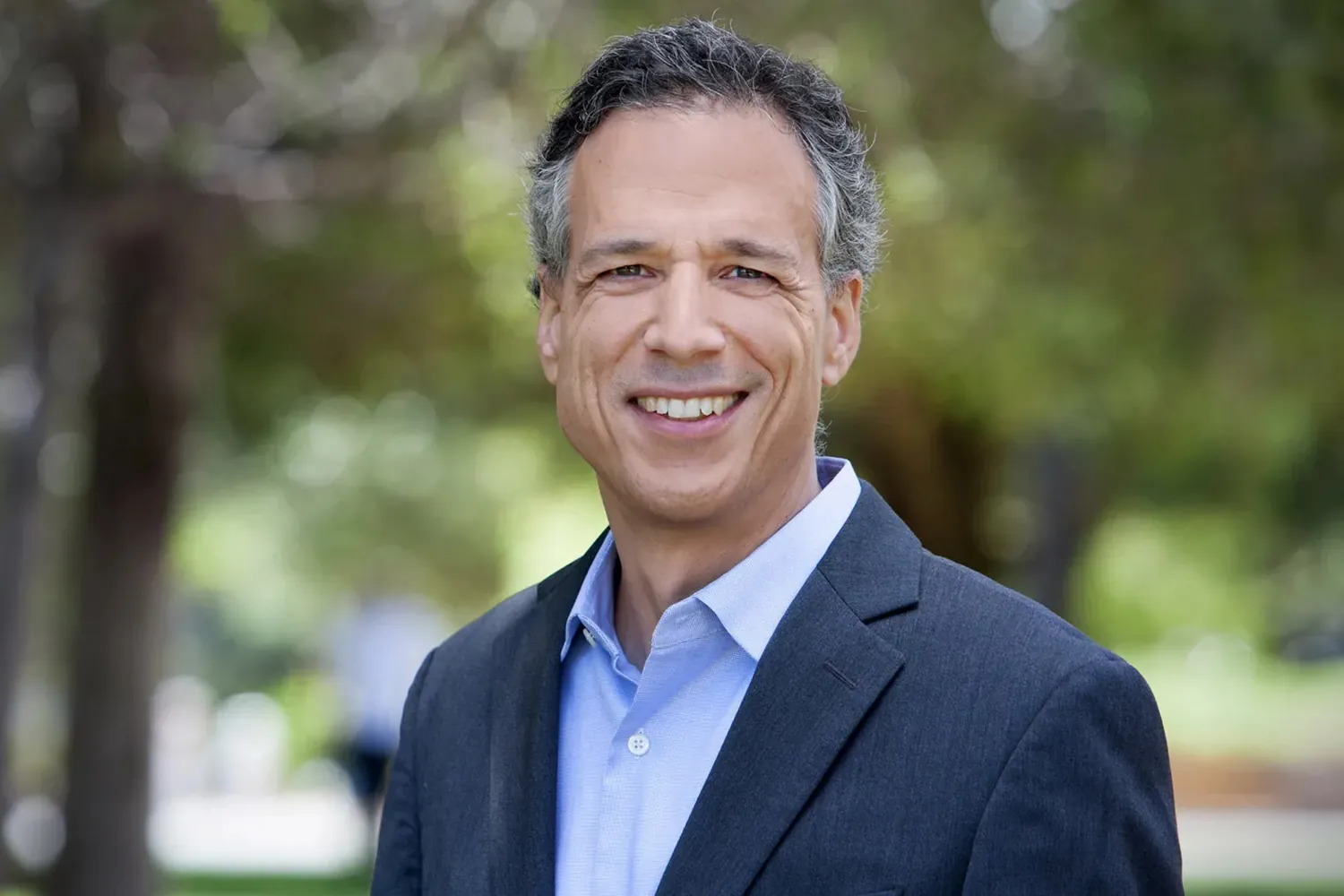
Peter Demarzo will serve on an interim basis as dean of Stanford’s Graduate School of Business beginning August 1 as the search begins for Jonathan Levin’s replacement. Levin becomes the university’s president that day. Stanford photo

The dean’s office at Stanford Graduate School of Business is moving from economics to finance. As Jonathan Levin, an econ prof and GSB dean since 2016, prepares to move up to the university presidency in August, the B-school has named an interim successor: long-time finance professor Peter Demarzo.

Demarzo, Stanford’s John G. McDonald professor of finance who has taught at the B-school altogether for more than a quarter century, assumes the deanship August 1 and will keep it until a permanent successor to Levin is named.

“Peter will provide important continuity for the school during this transition, and we are grateful to him for being willing to accept this responsibility,” Stanford Provost Jenny Martinez says in a news release.

DEMARZO TEACHES CORPORATE FINANCE & FINANCIAL MODELING

Demarzo earned his Ph.D. and a master’s in operations research from Stanford in the 1980s. He taught at the school for two years in the 1990s, then returned for good in 2000. He teaches MBA and Ph.D. courses in corporate finance and financial modeling; he also founded and serves as faculty co-director of the Stanford LEAD Online Business Program.

Advertisement

Before joining Stanford, Demarzo was on the faculty of UC-Berkeley’s Haas School of Business and Northwestern’s Kellogg Graduate School of Management; he was also a national fellow at the Hoover Institution.

Demarzo’s research is in the areas of corporate finance, asset securitization, financial contracting, and regulation. According to his online bio, “He is co-author of Corporate Finance and Fundamentals of Corporate Finance” and “has served as president of the Western Finance Association and the American Finance Association. He is a fellow of the Econometric Society and the American Finance Association, and a research associate of the National Bureau of Economic Research.”

LEVIN LOOKS ‘TO STANFORD’S FUTURE’

Stanford on April 4 announced that Levin, dean of its business school since 2016, will become president of the university on Aug. 1.

Named Dean of the Year by Poets&Quants in 2022 for his success in bringing stability to a school that had been wracked by scandal, Levin’s more important achievements include putting Stanford in the lead of all business schools on diversity and inclusion, making the GSB the first major institution to publish an annual report on its diversity progress.

 “As I look to Stanford’s future, I’m excited to strengthen our commitment to academic excellence and freedom; to foster the principles of openness, curiosity, and mutual respect; and to lead our faculty and students as they advance knowledge and seek to contribute in meaningful ways to the world,” the 51-year-old Levin said in a statement in April.

Advertisement

DON’T MISS STANFORD NAMES BUSINESS SCHOOL DEAN JONATHAN LEVIN ITS PRESIDENT and A DAY IN THE LIFE OF A STANFORD MBA STUDENT

Continue Reading
Click to comment

Leave a Reply

Your email address will not be published. Required fields are marked *

This site uses Akismet to reduce spam. Learn how your comment data is processed.

Finance

Fake ‘ghost students’ stealing identities and financial aid money

Published

on

Fake ‘ghost students’ stealing identities and financial aid money

NEW YORK (WABC) — They’re called “ghost students” and they’re draining the resources of community colleges and stealing tax payer financial aid funds.

“You’re stealing from people who really have the least already,” said Dr. David Stout, President of Brookdale Community College in New Jersey. “It’s infuriating.”

Scammers are stealing people’s identities, often through data breaches, to apply for online college classes. Once they apply for financial aid and get the money, they disappear.

It’s a sophisticated scheme and community colleges are often targeted because of their open enrollment policies.

At Brookdale Community College, they’ve been receiving about 1,000 ghost student applications each year for the past three years.

Advertisement

“Knowing that there are individuals out there that are trying to steal from our community college students and individuals who are trying to steal from our community and from our taxpayers is infuriating,” said Dr. Stout.

Since the pandemic started, it wasn’t rare to have students across the country sign up for his college’s online courses. But three years ago, when one of his financial aid workers noticed a bump in enrollment, the president’s team investigated.

“So she dug a little bit deeper and found that there were seven students that all shared somewhat common credentials and it was at that point that we realized that we were the victims of ghost students,” said Dr. Stout.

“Of course I’m furious that we may have individuals who try to take advantage of the open door policies that community colleges have,” said Dr. Stout.

He said there’s no evidence that any of the fake students who applied at Brookdale received financial funds, they were discovered first. Since then, the college says it has put mechanisms in place to root out fake applicants.

Advertisement

Eyewitness News reached out to other colleges in the area who say they’ve also put new screening practices in place.

At the City University of New York, a spokesperson said ghost applicants make up less than 1% of its applications. In a statement, a college spokesperson said: “Thanks to our careful screening process none were accepted or provided financial aid, but we continue to strengthen our policies to reduce the number of these applications. For example, the University recently introduced CAPTCHA to screen out bots and fake applicants.”

Nassau Community College has also taken precautions.

A spokesperson said. “while we cannot disclose specific security measures, the college’s IT, financial aid, and admissions departments have been working together to protect the integrity of our admissions and financial aid processes and mitigate the risk this type of fraud poses to our institution.”

Eyewitness News partnered with ABC News to show how this is a growing problem across the country.

Advertisement

The Inspector General’s Office with the U.S. Department of Education says they have 200 open investigations nationwide.

“We see in some of these fraud schemes where people are enrolled in two or three different schools at the same time receiving aid at all of them,” said Jason Williams, the U.S. Dept of Education Assistant Inspector General for Investigation.

Some schools are now using special software to screen applicants.

“It takes a tremendous amount of administrative work to go through and verify that they’re fraudulent,” said Dr. Stout.

The Brookdale Community College President says they’re in contact with other colleges in the area on a continuous basis to share information and ways to prevent ghost applicants from getting enrolled.

Advertisement

———-
SHARE YOUR STORY

Do you have an issue with a company that you haven’t been able to resolve? If so, 7 On Your Side wants to help you!

Fill out the form below or email your questions, issues, or story ideas by filling out the form below or by emailing 7OnYourSideNina@abc.com. All emails MUST INCLUDE YOUR NAME AND CELLPHONE NUMBER. Without a phone number, 7 On Your Side will not be able to respond.

You can also contact Dan Krauth directly:

Email your questions, issues, or story ideas to 7OnYourSideDan@abc.com

Advertisement

Facebook: DanKrauthReports

Twitter: @ DanKrauthABC7

Instagram: @DanKrauth

Copyright © 2026 WABC-TV. All Rights Reserved.

Advertisement
Continue Reading

Finance

Graham Price, Senior Consultant, Financial Restructuring

Published

on

Graham Price, Senior Consultant, Financial Restructuring

Graham is a senior consultant in the global special situations & private credit practice, based in the Hong Kong office. Dually qualified in England & Wales and Hong Kong, Graham focuses on both finance and restructuring matters across the Asia-Pacific region. He represents private credit funds, private equity sponsors, major institutional lenders and asset managers on a wide range of finance transactions, including cross-border leveraged financings, restructurings, special situations, direct lending, margin loans, real estate finance and corporate facilities.

Prior to joining Akin, Graham worked at leading international law firms in Hong Kong and London where he also undertook a secondment to Barclays Capital. 

Continue Reading

Finance

Global brand in an EFL world – Wrexham’s finances explained as club eye Premier League

Published

on

Global brand in an EFL world –  Wrexham’s finances explained as club eye Premier League

Because the EFL’s profit and sustainability rules are about trying to make sure clubs are not losing unsustainable amounts of money.

Despite going on a summer spending spree, paying about £30m for players and having one of the highest net spends around, Wrexham are well within the financial parameters because of the commercial revenue already being brought in thanks to deals with giants such as United Airlines and HP.

In League Two, they were already bringing in more than 20 of the 24 Championship clubs.

“Under the PSR rules, you’re allowed to lose £39m over three years,” said Maguire. “Looking at their two most recent sets of accounts, Wrexham lost around about £23m – but they’ve had substantial increases in broadcast revenue, from about £1.2m in TV money in League Two to about £12m this season.”

That is before taking into account a significant jump in sponsorship and commercial income, with chief executive Michael Williamson estimating they are already on a par with some top-flight clubs.

Advertisement

“We have a global brand, a Premier League brand in the Championship,” Williamson told Ben Foster’s Fozcast podcast in August 2025.

“What we don’t have is the broadcast revenue of Premier League clubs or the parachute payments.

“From a commercial standpoint, if you compared us to Championship clubs, I’m sure we’d be among the top and – on commercial revenues only – we would probably surpass a handful of Premier League clubs, around four or five I would guess.”

Continue Reading
Advertisement

Trending