In the world of tax law, truly “free” lunches are rare. Usually, a tax break in one area requires a sacrifice in another. However, if you know where to look, the tax code contains several freebies—legal provisions that allow you to increase wealth, generate income, and gift money without the IRS taking a single penny.
Finance
Financial Health Review Team Charts Course for Remainder of Review Period – East Lansing Info


A committee appointed by the East Lansing City Council to review local finances is poised to make recommendations about the city’s income tax, facility sales and much more over the next three months.
During the first half of its six-month review period, the committee has spent hours hearing presentations on city department budgets, employee benefits and other components of the city budget. Next, the committee will discuss the information it has gathered and make recommendations for the City Council to consider.
At its meeting on Thursday, the committee created a list of topics it will discuss over the remainder of its review period. Many of the discussions were brief and did not indicate what recommendations the committee may make. Still, the conversations were helpful to understand the types of changes the city may make to address a structural budget deficit.
New recommendations for the income tax could be coming.
In 2018, East Lansing voters allowed the city to implement an income tax of 1% on residents and .5% on non-residents. The tax allowed the city to tax Michigan State University employees and was paired with a five-mill reduction to the city’s property tax cap.
After the income tax reimburses the general fund for revenue lost by the property tax reduction, 60% of the tax goes to paying down the city’s pension liability, 20% goes to police and fire and 20% goes towards infrastructure.
Since the tax was put in place, it has been a lifeline for city finances, generating millions of dollars in additional income each year. The tax is set to sunset at the end of 2030, unless it is renewed by voters.
The committee could make recommendations about whether or not to put the income tax on the ballot for renewal and if the revenue should be used in a different way than it is currently. The committee is set to discuss the income tax at its next meeting on April 16.
More regional collaboration on the horizon?
The committee was initially set to discuss creating authorities by working with other municipalities at Thursday’s meeting. However, East Lansing Chief Financial Officer Audrey Kincade said city attorneys did not respond to a request to come to the committee meeting, delaying the discussion.
Committee Chair Jill Rhode said the review team will later discuss if it would save the city money to work with other jurisdictions to create a parks or fire authority, and if local district courts should be combined.
The committee will look into revenue from MSU.
The impact Michigan State University has on the city’s finances has been widely discussed in city meetings, as the university is East Lansing’s top employer and contributes much of the income tax gains. MSU also relies on city services and land on its campus is not subject to property taxes.
Rhode said she wonders if there’s a way to put a surcharge on MSU event tickets. She clarified she is not sure if this is a possibility, but would like to ask city attorneys about it.
The committee will also discuss revenue sharing between the state and city. Previously, discussions at committee meetings and City Council have raised questions about if East Lansing receives enough money for the services it provides to MSU’s campus, including fire services.
Recommending changes to employee benefits will be considered.
The cost of benefits for city employees has long been central in discourse about the city’s financial challenges, as unfunded pension liability is one of the main reasons for East Lansing’s budget troubles.
Rhode said the city should also look at how it funds post-employment benefits, saying the city would save money by fully funding its plan. While the city doesn’t currently have money to fully fund the plan, it could look at making adjustments like redirecting funds from the income tax if voters renew it.
Rhode also suggested the committee examine the cost of other employee benefits, like health insurance.
“I was surprised that employees contribute nothing to health insurance, I think that is extremely rare,” she said. “I think we should address that and look at it and figure out why that is here.”
Committee member Ann Holmes also suggested the committee examine the city’s practices for reviewing new hires and major expenses from year-to-year. This could mean putting a hiring freeze or reassessing expenses at the start of a new fiscal year.
Mayor asks the committee to give recommendation on business fees.
Last budget season, the city installed a new business fee model that aimed to charge bars that saw more public safety issues than others. The Downtown Development Authority contributed $200,000 for police overtime on Thursday through Saturday nights and other busy days downtown. After the $200,000 is expended, businesses are to pay for ELPD overtime costs associated with calls to their business.
The fee applies to businesses with an entertainment license, which includes bars. However, these businesses can choose to pay a fee that is based on occupancy instead.

The fee structure was controversial, as some business owners said at city meetings that police calls to incidents near their bars were incorrectly attributed to them and they already pay high taxes. Some also worried the structure would be a disincentive to call the police.
At Thursday’s meeting, Mayor Erik Altmann requested the committee look into a business fee structure that would increase fees for businesses that need police services more often.
“I think there’s a question about whether fees for public safety are allocated appropriately to consumers of public safety services in our downtown,” Altmann said. “There are a couple of bars in particular that consume a lot of public safety services.”
Committee to review DEI department.
Committee member David Lancaster asked that the group discuss the city’s Diversity, Equity and Inclusion Department at a future meeting.
“I wonder why we have a DEI department,” he said. “I would think… since 2020 [when the department was added] that anything should be ingrained into personnel policies, and that would seem to be the responsibility of the personnel department and the city manager.”
The exchange was brief and it’s unclear what recommendations could be made to the DEI department, but Rhode did add it to the list of topics the committee will discuss.
Recommendations could be issued about taking on debt for facility improvements.
At a discussion-only City Council meeting last month, the body discussed potentially spending upwards of $30 million facility improvements to City Hall, the Hannah Community Center, the fire station, recreational facilities and parking garages.


Prior to Thursday’s meeting, Belleman provided the committee with a memo that clarified the costs for the improvements would be absorbed by the city’s budget, not paid for by a property tax increase.
The facility improvements would be paid for using a 20 or 25-year bond. Paying for the improvements through a bond would spread the cost out over decades, but add millions in interest payments.
Should the city sell properties?
When the city previously discussed using a bond to pay for infrastructure improvements, Altmann floated the idea of selling properties like the Aquatic Center, Soccer Complex and even Hannah Community Center.
At Thursday’s meeting, Altmann said he thinks the sale of city assets must be discussed by the committee. It was explained that in order for the city to sell properties, voters must first approve the sale on a ballot.
Councilmember Mark Meadows said another option to reduce the cost of operating facilities could be contracting with a third-party company to manage them.
Committee to talk about severity of financial challenges, previous review.
Committee Vice Chair Roberta Jameson was not at Thursday’s meeting, but Rhode said Jameson has reviewed recent city budgets and sent questions to try to determine the extent of the city’s financial woes.
A financial forecast presented to the City Council earlier this year projected East Lansing will be bankrupt within five years if it does not make adjustments. However, in recent years budget projections showing large losses have not come to fruition.
City Manager Robert Belleman previously said the discrepancy between budget projections and year-end results has largely been due to vacant positions and delaying major projects.
Previously, the committee recommended the city start using a “vacancy factor” for budgeting. A vacancy factor would attempt to account for vacant positions during the budget process, and give the city a more accurate look at its finances at the start of the fiscal year.
In addition to Jameson’s coming report, the committee will review recommendations from a Financial Health Review Team that made recommendations about a decade ago. The committee will see what suggestions were made and if the city put these recommendations into place.

Continue Reading

A board above the trading floor of the New York Stock Exchange displays the closing number for the Dow Jones industrial average, Thursday, Dec. 11, 2025.
Richard Drew/APHere are five of the most powerful financial freebies available to investors today.
Article continues below this ad
1) The 0% capital gains rate
Most investors assume that selling a winning stock always triggers a tax bill. However, for those in the lower income brackets (up to $50,400 for individuals or $100,800 for married couples in 2026), the long-term capital gains tax rate is exactly 0%.
The Strategy: If you have a low-income year—perhaps due to early retirement before Social Security or required minimum distributions kick in—you can strategically sell appreciated securities without paying any federal tax. The proceeds can fund living expenses or replace the shares you just sold to capture a free stepped-up basis without having to die first.
2) The ‘Augusta Rule’ (rent your home for free)
Named after the homeowners in Georgia who rent out their houses during the Masters golf tournament, Section 280A(g) of the tax code allows you to rent out your primary residence for up to 14 days per year without having to report a single dollar of that income to the IRS.
Article continues below this ad
The Strategy: Whether you live near a major sporting event, a film set, or a popular festival, you can pocket the rental income entirely tax-free. There are no income limits on this rule, and you don’t even need to report the income on your Form 1040. For high-income earners in high-tax states like California, this is a significant freebie that bypasses both federal and state taxes.
3) The $1,000 ‘Baby Seed’ money
The newly enacted One Big Beautiful Bill Act has introduced a literal cash freebie for the next generation. For every child born between Jan. 1, 2025, and Dec. 31, 2028, the federal government will provide a $1,000 seed deposit into a Trump Savings Account.
Article continues below this ad
The Strategy: While these accounts have long-term tax flaws, you should never turn down a government grant. Capture the $1,000 as soon as the portal opens in 2026. Let that government money compound, but pivot your own family contributions to a 529 plan for superior tax treatment.
4) The ‘Gap Year’ Roth conversion
The most valuable freebie for retirees often occurs in the window between the end of a professional salary and the start of required minimum distributions, or RMDs, and Social Security. During these gap years, your taxable income may drop to its lowest level in decades.
The Strategy: Use this low-income window to perform Roth conversions at a 0% or 10% effective tax rate. By filling up these lower tax brackets now, you are effectively prepaying your future tax bill at a massive discount. You eliminate future RMD pressure and ensure that every dollar of future growth in that Roth account is shielded from the IRS forever. It is one of the few times the tax code allows you to move money into a tax-free bucket at little or no cost. In most cases, this is a better deal than recognizing capital gains at 0%.
Article continues below this ad
5) The qualified charitable distribution
Is a qualified charitable distribution, or QCD, truly free? If you are charitably inclined and over age 70½, the answer is a resounding yes. Normally, taking money out of a traditional IRA is a taxable event. However, a QCD allows you to send up to $111,000 each year directly to a charity (in 2026).
The Strategy: The money goes from your IRA to the charity without ever touching your bank account, meaning it is never counted as taxable income. This is a freebie because a lower adjusted gross income can help you avoid higher Medicare premiums, and it reduces the amount of your Social Security that is subject to tax. You are effectively spending your IRA money on your philanthropic goals while keeping the IRS entirely out of the transaction.
Summary for Investors
The IRS rarely hands out gifts, but these five provisions are as close as it gets. Whether it is capturing $1,000 for a newborn or leveraging your gap years for a low-cost Roth conversion, the key is proactive timing.
Article continues below this ad
This article was provided to The Associated Press by Morningstar. For more personal finance content, go to https://www.morningstar.com/personal-finance.
Sheryl Rowling, CPA, is an editorial director, financial advisor for Morningstar.
Article continues below this ad
$1,000 Trump Accounts: Focus on the Financial Benefits, Not the Branding
https://www.morningstar.com/personal-finance/1000-trump-accounts-focus-financial-benefits-not-branding
Still Working in Retirement? Watch Out for These Social Security and Medicare Tax Traps
https://www.morningstar.com/personal-finance/still-working-retirement-watch-out-these-social-security-medicare-tax-traps
Article continues below this ad
How Much Should You Allocate to Safer Assets?
https://www.morningstar.com/portfolios/how-much-should-you-allocate-safer-assets

Citing fears that an impending dry summer will further erode sales tax revenue, Breckenridge town officials requested another review of the town’s annual budget.
Following a financial report at a meeting Tuesday, March 10, council member Dick Carleton said he wanted to revisit financial projections for the remainder of the year, anticipating potentially more of an economic downturn than initially expected.
“I feel a need to be more conservative in our forecast,” Carleton said.
Carleton requested town finance staff return to a council meeting before the summer — when next year’s budgets must be approved — with five-year market projections that he believes would more accurately predict market trends. Carleton said both national and local economic trends worry him. He suggested the council consider further reducing town operational expenses and consider investing in projects that bolster sales tax revenue.
“I’m personally becoming increasingly concerned with the economy going forward nationally, as well as the resort and ski town economy locally,” Carleton said. “I’m becoming increasingly more uncomfortable with these numbers. … I feel a need to reduce expenses and create some room to invest more on the revenue side.”
Finance director Laurie Best said reports from January and February show Breckenridge’s 2026 revenue forecast remains in line with last year’s estimates.
“So far, two months in, I think we’re going to be okay, but I think there’s a lot of unknown,” Best said.
Best agreed to return to council again with five-year projections using that more recently collected data. She noted the town’s operational budget sits at around $35-36 million.
“It is important for us to talk about what’s in the operational expenses, because that’s our general fund budget, which is essentially what we run the town on.”
Carleton again suggested the council reconsider its upcoming operational budget as soon as possible. He said he feels a pressing need to ensure the town’s budget will allow it to remain competitive with other tourism and resort economies in the region. Given that this year’s historically warm winter has already hampered Colorado’s tourism industry, Carleton said the town should consider reconfiguring its upcoming budget to permit more investments in tourism and guest experiences.
“I’m feeling a great urgency to take a look at it,” Carleton said of the town’s upcoming annual budget.
“I think we need to make some investments in guest-facing capital expenditures,” he said. “We haven’t done a lot to increase the guest experience in years, and I’m afraid if we keep sitting back, we’re going to lose market share.”
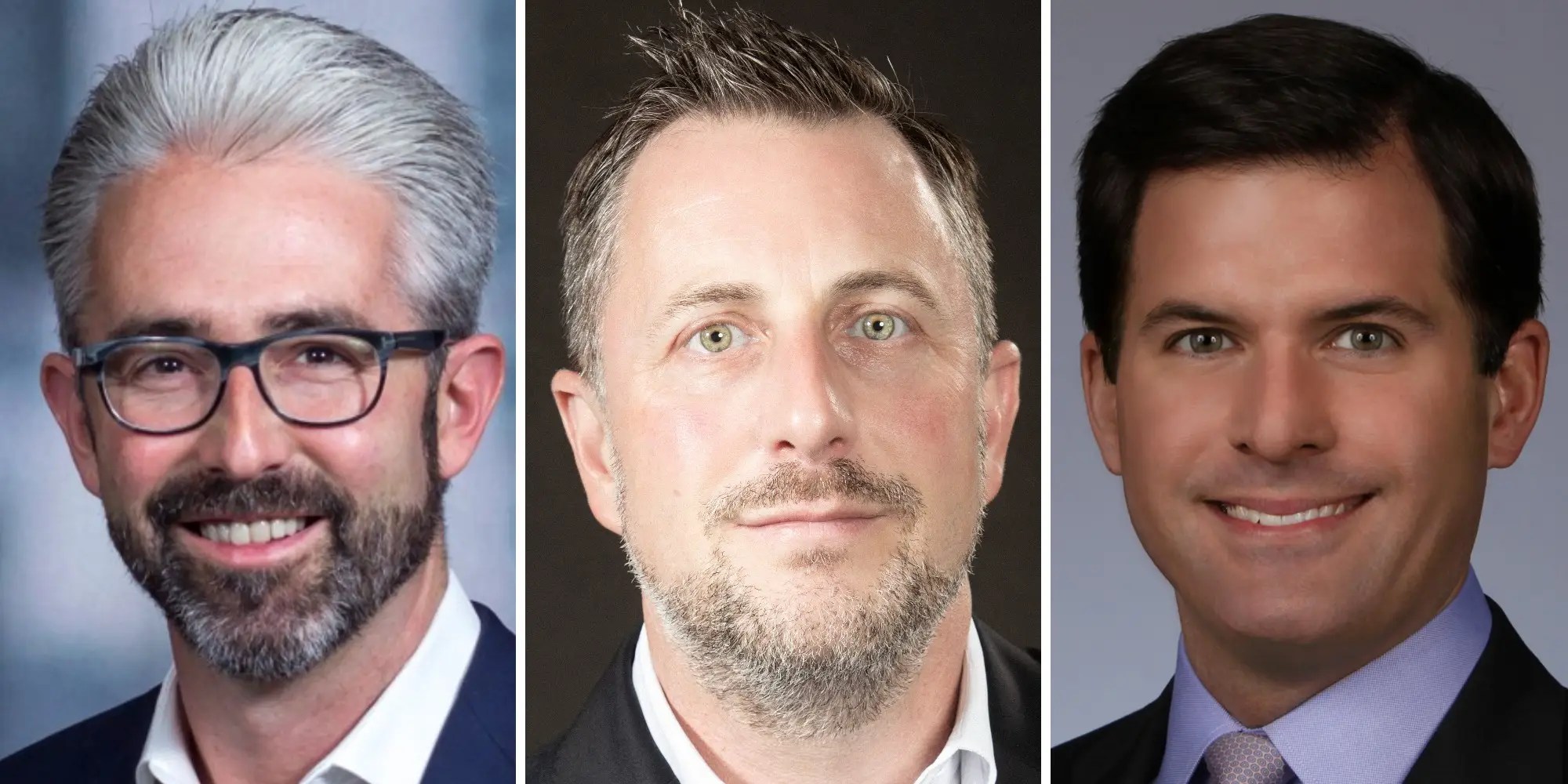
Wall Street banks are racing to finance AI data centers, as deals swell into the tens of billions, forcing a rethink of how these projects are funded.
“If you can’t invest a billion dollars, we don’t even want to talk to you,” said Adam Lewis, a managing director at Citizens, a regional lender that has emerged as a key player in the sector. Just a few years ago, a $100 million financing was a milestone; today, it’s a rounding error.
For Lewis, that billion-dollar floor reflects the rising cost of land and electricity, which has pushed these projects beyond the limits of traditional commercial real estate loans and into the realm of large-scale infrastructure finance.
As deal values surge, banks are focused on seizing what could be Wall Street’s largest-ever financing opportunity. Over the past two years, lenders including Morgan Stanley, Goldman Sachs, and JPMorgan have formed integrated teams across disciplines to become fluent in the mechanics of how data centers are actually constructed.
Citigroup estimates the buildout could require $3 trillion by 2030, according to an internal memo sent in late February by leaders of the firm’s investment banking unit. In the memo, senior bankers from across investment banking, corporate banking, and financing said that Citi would establish a dedicated AI infrastructure group to break through internal silos and evaluate “all pockets of capital” as deals grow larger and more complex.
The sheer scale of the AI buildout is beginning to exhaust the cash reserves of the world’s largest tech giants. While hyperscalers cannot afford to fall behind in the infrastructure race, the costs have become too great to carry on their own balance sheets. To Fred Turpin, the global chair of investment banking at JPMorgan, this represents the “largest investment cycle in the history of capitalism.”
To bridge that gap, Turpin helped organize a firmwide working group that pairs technology and energy experts with bankers versed in private capital markets. The approach allows the bank to jump-start projects using its own balance sheet before connecting them to “long-term” capital from sovereign wealth funds, pension funds, and dedicated infrastructure investors looking for stable, generational returns.
Integrated teams
To put together the unprecedented amount of money to build AI infrastructure, bankers are drawing on multiple sources of capital, from bank loans and bonds to private credit and institutional investors, often assembled into a single structure from the outset.
At Goldman Sachs, the shift has taken shape inside its Capital Solutions Group, a unit formed last year to bring together origination, structuring, and capital distribution as deal sizes and complexity have grown. The group pulls in bankers from across investment-grade and high-yield debt, infrastructure and real estate financing, and equity capital markets, allowing the firm to consider multiple financing options at once.
“We’re elbow to elbow with the bankers that cover sponsors so that we can ensure a direct line between our origination efforts and distribution efforts to financial sponsors,” said John Greenwood, a partner who serves as global head of the infrastructure and real asset finance group within Capital Solutions.
Goldman Sachs

At Morgan Stanley, Richard Myers and William Graham, two top investment bankers, are members of a data-center-focused task force launched in 2024. Last year, Myers and his team arranged a $2.6 billion financing for CoreWeave that used Nvidia chips as collateral. They later pioneered a first-of-its-kind $27 billion bond deal for a joint venture between Meta and Blue Owl. That work increasingly requires bringing together specialists from across the bank — from power and project finance to real estate — to arrange multiple sources of capital.
And Graham, the firm’s global cohead of leveraged finance, has led a $3.2 billion senior secured note offering for TeraWulf and a $2.35 billion raise for Applied Digital — two specialized infrastructure firms that have pivoted from crypto mining to hosting the high-density power loads required for AI.
New vocabulary
Unlike traditional corporate financings, data centers sit at the intersection of real estate, energy, and technology, which means bankers have to weigh not just financial risk — but whether a project can actually be built, powered, and brought online as planned. Bankers said they’ve had to become fluent in a new language — the lexicon behind how these massive projects are built.
“We can read electrical diagrams and mechanical diagrams and understand land use permits and power configurations,” said Lewis, the managing director at Citizens, whose team of more than 30 bankers focuses on advising, structuring, and financing data center projects. Bankers are now required to understand what could delay or derail a project, and to give investors confidence that it will actually come online as planned.
“Most of us just assume it happens magically in some ephemeral thing called the cloud,” said Scott Wilcoxen, who leads digital infrastructure investment banking at JPMorgan. “But physically, what that actually means is there is effectively an unbroken physical connection between individual users and the data sources.”
This technical knowledge is ever more important as bankers say projects are increasingly constrained by limits on power, equipment, and labor. But those constraints don’t appear to be cooling demand, raising questions about how far the buildout can stretch — and what it will take to sustain it.
Goldman’s Greenwood noted that in a recent meeting with a client, someone in the room used a surprising adjective: “terrestrial.”
“I was in a meeting last week, and they were talking about terrestrial data centers,” he said, suggesting the next frontier could be “on the bottom of the sea, or in space.”

Pennsylvania5 minutes ago
Brooklyn baby shooting: Second suspect in killing of 7-month-old girl caught after fleeing to Pennsylvania, sources say | amNewYork

Rhode Island11 minutes ago
This Local Restaurant in Rhode Island Is So Good, You Can Plan an Entire Day Around It

South-Carolina17 minutes ago
NCAA women’s Final Four: UConn v South Carolina, UCLA v Texas – live updates

South Dakota23 minutes ago
USD Sanford medical school location to open mid-2028 in Sioux Falls

Tennessee29 minutes ago
Watch Reese Chapman’s unbelievable catch for Tennessee baseball vs LSU

Florida1 year ago
Florida High School Football Rankings: Top 25 teams – Oct. 21

Oregon2 years ago
How old is Bo Nix? What to know about Oregon quarterback ahead of 2024 NFL Draft

Connecticut2 years ago
Cleary's 21 help Le Moyne down Central Connecticut State 69-64 in OT

Virginia2 years ago
99th annual Pony Swim held in Virginia

Indiana2 years ago
Indiana Members Credit Union announced as new anchor tenant at Bottleworks District

News2 hours ago
Video: Search and Rescue Underway After Iran Downs U.S. Fighter Jet

Politics3 hours ago
Nebraska Senate candidate restructures campaign after complaint over payments to family: report

World4 hours ago
Two dozen Democrat-led states sue Trump over mail-in ballot limits

News5 hours ago
Trump’s ballroom fight sheds new light on an underground White House bunker

News14 hours ago
Video: Trump Struck Iran. Now Farmers Are Paying the Price.
-

 Culture1 week ago
Wil Wheaton Discusses ‘Stand By Me’ and Narrating ‘The Body’ Audiobook
-

 South-Carolina6 days ago
South Carolina vs TCU predictions for Elite Eight game in March Madness
-

 Culture1 week ago
What Happens When We Die? This Wallace Stevens Poem Has Thoughts.
-

 Miami, FL1 week ago
Jannik Sinner’s Girlfriend Laila Hasanovic Stuns in Ab-Revealing Post Amid Miami Open
-

 Minneapolis, MN1 week ago
Boy who shielded classmate during school shooting receives Medal of Honor
-

 Education1 week ago
Video: Transgender Athletes Barred From Women’s Olympic Events
-

 Vermont6 days ago
Skier dies after fall at Sugarbush Resort
-

 Politics6 days ago
Trump’s Ballroom Design Has Barely Been Scrutinized