Finance
Career changers reflect on the many paths into financial planning — and offer advice on making the switch


They were military members, teachers, civil engineers, broadcasters, human resources directors and every profession in between.
And now they’re financial advisors.
While these career changers may not have much in common on the surface, one attribute they share is the desire to find a profession that truly fulfills them — and the determination to take the often arduous path of reinvention.
Several financial advisors who pivoted into the industry reflected on their journeys for Financial Planning and offered hard-won words of advice to those thinking of walking in their footsteps.
A slow turning
Carla Adams, founder and financial advisor at
READ MORE:
“I loved chemistry, and I still do, but I was working long hours in the lab, six to seven days a week,” she said. “That’s very different from four to eight hours a week in the lab in college. It’s fairly isolating and not very social, and I’m an extroverted person.”
After writing a master’s thesis, Adams went job hunting, but to no avail.
“There didn’t seem to be many job openings at the time, and my mother suggested I also apply to jobs in finance, as companies might be interested in my strong analytical background,” she said. “I honestly ended up taking the first job offer I got, which just so happened to be in wealth management at an RIA. It was serendipitous.”
Adams soon fell in love with the job, both working with clients and at the computer running analyses.
“More than 16 years later, I’m running my own firm and couldn’t be happier with where my career has taken me,” she said. “While chemistry of course has pretty much nothing to do with personal finance, I feel that studying chemistry at the graduate level developed my analytical thinking and problem-solving skills.”
Ross Dugas, founder and financial advisor at
But COVID-19 and the resulting on-site staff limitations completely disrupted his plans to better integrate himself within Dow’s production units.
READ MORE:
“I started to consider new possibilities and realized I would enjoy running a solo, advice-only financial planning business,” he said.
Family ties lead to new career paths
Family situations often served as a catalyst behind many career changes into financial planning.
Ann M. Covington, a CFP with
“I insisted we have a financial plan done,” she said. “When we met with our advisor, he kept saying, ‘You know a lot about this. Why aren’t you doing this?’ After several years of working with him as a client, I was going to be a stay-at-home mom, and he finally recruited me.”
Ross J. Natoli, a CFP with
“Budgeting and stretching our dollars were ingrained in me from a young age,” he said. “As I grew up and started making my own money, I became fascinated with financial wellness, my 401(k) and investing. It became a passion and an obsession, so much so that I decided in my mid-30s to leave my marketing career behind and pursue financial advice full-time.”
Marianne M. Nolte, a financial planner with
“I’m blessed that my parents led me to financial planning,” she said. “I became hooked, and I knew this was the profession of my future.”
Not long after her parents died, Nolte started her journey to becoming a CFP and opening her own firm — decisions she said she doesn’t regret.
“If you have the guts, and sufficient funding to get you through the first couple of lean years, step off the ledge,” she said. “There is no need to look back.”
A military edge can help a planning career
Long before he founded
He later worked for Deloitte Consulting in Arlington, Virginia. Rygiel said his previous careers taught him the importance of strategic planning and resilience.
READ MORE:
“I wanted to apply those skills in a way that helped people achieve their financial goals,” he said. “I chose to become a financial advisor because it allows me to blend my analytical skills, strategic thinking and desire to help others into a fulfilling career. Financial advising offers a dynamic environment where I can continuously learn and grow while making a tangible difference in clients’ lives.”
A previous career in the military can prove to be pivotal in a future career in financial planning.
Jeff H. Farrar, co-founder of
What attracted him to his current career was “the finance, puzzle solving, helping people, building long-term relationships, the control of your work-life balance and the constant stimulation of an ever-changing investment, tax and regulatory landscape.”
“Grit, determination, planning, intelligence and curiosity all made me successful,” he said.
John R. Power, a CFP with
“The military plans everything, so I understood the value of analysis and planning better than most,” he said.
Communication and technical skills transfer well
Those with communication skills have also often found a home in financial planning.
Brad Wright, managing partner at
“It had become much less creative,” he said.
After studying in the personal financial planning program at UCLA while still working in media, he began the slow transition.
“My former boss still talks about the time he found me in a production studio studying for the CFP exam,” he said.
Wright said his communication skills and hands-on nature were assets in his new career.
“While building my own firm I’ve discovered that, much like in radio, ‘live and local’ works,” he said. “Getting out and becoming involved in helping your community helps growth.”
A technical background has also proved useful to some.
Andy Cole, a financial advisor with
“Some of my favorite projects as an engineer involved building water models for water distribution systems,” he said. “The design of financial planning models are very similar. The pump inflows, customer demand, reservoir storage and pipe frictions of a water model are like the cash inflows, spending, savings and taxes of a financial planning model.”
Karen Ogden, a partner at
“I believe I am a well-rounded and capable advisor because I had prior career experience,” she said. “This role now draws on all of it and having the confidence to address the myriad situations that arise is key to allowing me to help clients navigate an important aspect of their lives.”
From the classroom to the planning industry
Susan Plisch, founder of
“I thought …, ‘There is a profession where I can use my superpower, mathematics, to help people without compromising my values,’” she said. “The ability to see where someone is at and explain something in a way that connects and brings about that lightbulb moment is a skill I learned while teaching that transfers to financial planning.”
David W. Demming, founder and president of
“Ergo money dictates what people and politics do,” he said.
Because he “needed a paycheck as well as an exemption,” he started teaching high school social studies. Meanwhile, his doctorate program was transferred to Kent State University. While he was a student there, the 1970 shootings occurred. After eight years, he quit the program in frustration with only a master’s degree. It was from there he turned to financial planning in 1978.
“I wanted to help people and as a historian had the perspective,” he said.
Dugas said he brings “an engineer’s skeptical perspective to the financial industry.”
“Working as a researcher requires that one always challenge the status quo and look for better, more efficient ways to solve problems,” he said. “That same mindset of maximizing efficiency translates perfectly to financial planning,”
Advice to others thinking of making the leap
Rygiel said the hardest part of making the transition to becoming an advisor was learning a new skill set and knowledge base. He advised others looking to make a change to seek a mentor.
“If I could do it over again, I would have sought out an ex-military, veteran, mentor in the financial industry earlier in my transition,” he said. “Having guidance from someone with experience in financial advising and an understanding of the military transition would have accelerated my learning curve and provided valuable insights.”
Stephen Maggard, a financial advisor with
“There are so many advisors doing great things in this industry, and doing it in their own unique way,” he said. “Learning who those people are and why they do what they do will only clarify in your mind the path you want to take.”
Finances are also a concern for those about to enter a new field. Fortunately, Dugas said he managed his finances adequately to have the opportunity to make a dramatic career change and forgo a substantial salary.
“I’m blessed that I can now completely control my schedule and lead a slower-paced life with my wife and three young kids,” he said.
Neil Krishnaswamy, president of
“I would advise anyone making a similar transition to ensure they have full support from their spouse, if married, and enough liquid cash or investments to cover their expenses for at least one to two years,” he said. “If you are new to financial planning, consider working with an established firm first before venturing out on your own.”
Li Tian, a CFP with
“For those aspiring career changers who might not want to start from zero, perhaps joining an established firm is a great way to make the switch,” she said.
Cole said those looking to make the change should check in with themselves to ensure they are “running to something and not just running from something.”
“If you are just switching careers because you don’t like your current career, it’s very possible you won’t like being a financial advisor either,” he said. “You will just be swapping a job for a job. If you are going to go through all the effort to make the change, I would encourage you to make sure you are swapping a job for a passion.”
Edward Hadad, a financial planner with
“This is a great profession that needs hardworking people of integrity, and there are spots open for people like you,” he said.
Dugas said he took special care to design his practice to provide himself “maximum flexibility” and “attract those skeptical-, curious-, analytical-minded types” he enjoys working with.
“If I could do it again, I’d do it all the same,” he said.
Adams said she cherishes her relationships with clients and loves “getting into the nitty-gritty details of investing and financial planning.”
“I honestly don’t think I’d change a thing if I could do it all over again, because that path I took somehow led me right to where I am,” she said.



Fifty years ago, the U.S. Supreme Court struck down campaign spending limits in the landmark decision Buckley v. Valeo, finding the curbs violated First Amendment free-speech protections. Since then, several rulings, including the 2010 Citizens United case, which ended restrictions on election donations by corporations, nonprofits, and labor unions, have further loosened campaign finance regulations.
In this interview, which has been edited and condensed for length and clarity, Nicholas Stephanopoulos, Kirkland & Ellis Professor of Law at Harvard Law School, spoke about the recent ruling by the Supreme Court that lifted restrictions on how much money political parties can spend in coordination with candidates, its downside and potential upside, and its possible impact on the midterm elections.
Can you explain what the recent campaign finance ruling means? How is it going to affect political parties?
The recent decision is a not a huge blockbuster like some other campaign finance cases we’ve seen in recent years. That’s because the decision only involves limits on political parties’ coordinated expenditures with candidates, and that pool of money, both today and potentially in the future, is not enormous.
Before this ruling, parties could spend whatever they want, even before they could coordinate a lot of expenditures with candidates. Now they can just coordinate somewhat more. So, the stakes here were sort of moderate.
The two things the decision means above all are these: On the negative side, it’ll be easier now for a corrupt donor [to skirt individual donation limits] to funnel more money to a candidate using a party as the conduit or the vehicle for that contribution. On the positive side, parties are permanent, important political institutions, and now somewhat more money might flow to parties instead of super PACs and dark money groups and other more problematic organizations.
Nicholas Stephanopoulos.
Harvard Law School
Justice Elena Kagan, who dissented from this ruling, said this decision would increase the likelihood of “political corruption.” Do you agree?
First of all, notice that Kagan isn’t challenging the fundamentals of campaign finance law. She’s not claiming that money isn’t speech. She’s not claiming that all campaign finance regulations should be upheld. She’s fully arguing within the current court’s doctrinal framework. She thinks that the law at issue is necessary to prevent corruption.
Kagan points out that, with a little bit of bookkeeping, it should be fairly straightforward now for a donor to give effectively half a million dollars to a candidate channeled through a party, as opposed to the $7,000 the donor is allowed to give directly to the candidate.
With much bigger sums that can now be given through a party to a candidate, there’s the possibility of more quid pro quo corruption. A candidate isn’t likely to do very much in return for $7,000 but a candidate may do quite a bit more in return for $500,000. So I think we’ll see somewhat more corruption in politics as a result of today’s decision.
What’s the idea behind “money is speech,” which has been at the core of most campaign finance decisions since the 1970s?
The premise that money is speech, or at least it enables political speech, means that it can be covered by the First Amendment. That premise underlies all campaign finance doctrine since the 1970s.
It’s a controversial doctrine. Individual justices over the years have pointed out that money is not speech, and merely enabling speech is not the same thing as being speech itself. All campaign finance decisions since the 1970s have assumed that regulations of political funding involved the First Amendment because there’s a close enough connection to political speech, and even the progressive justices in the 1990s and 2000s still accepted that the First Amendment was involved here.
The implication of fully endorsing the position that money isn’t speech is that all of these cases would quickly fall by the wayside. If money isn’t speech and there’s no First Amendment issue presented here, then Congress can regulate campaign finance however Congress wants to, without any possible First Amendment problem. But that view has never been the view of the majority of the court.
Can you compare the impact of this recent ruling to that of the 2010 Citizens United case?
Citizens United involved independent spending by corporations, by unions, and the court said that there’s no valid justification for limiting any independent campaign spending, whether it’s by candidates, rich individuals, parties, corporations, or unions.
The current case involves the somewhat less-explosive issue of coordinated expenditures. Citizens United was a sweeping decision, striking down a very important federal law and opening the door to huge new sums to be spent in politics. This decision isn’t like that. It doesn’t involve independent spending. It only involves one actor, political parties, not the whole range of actors. The stakes are a lot lower than the Citizens United case.
With this ruling, the Supreme Court overruled a 2001 decision, which upheld the same limits on coordinate expenditures with candidates. How do you explain that?
The 2001 case was decided by the court when it was at its most pro-regulatory in the campaign finance context. What changed since 2001 is the composition of the court.
The critical change was when Sandra Day O’Connor retired in 2006, and Sam Alito replaced her. Alito has always been a skeptic of campaign finance regulations, whereas O’Connor, especially toward the end of her time on the court, was willing to uphold a lot of campaign finance regulations.
Almost everything that’s followed since then, Citizens United in 2010, McCutcheon in 2014, and other decisions striking down campaign finance laws, happened not because the world of politics changed or because there was some big insight on the court. It happened because the court became more conservative and what had been a five-four pro-regulation majority became a five-four anti-regulation majority.
It’s no surprise that the current court, which is now six-three against campaign finance regulation, doesn’t like a decision from this earlier period.
Will this ruling impact the midterm elections?
In the near term, this will somewhat benefit the Republican Party committees that have more funds at their disposal because they have just happened to raise a lot more money recently than the Democratic Party entities.
However, even before this decision, all of those Republican entities could still spend their money however they wanted to, so it’s not that big of a change for them. I think Democrats will direct more of their donors to give some more money to party organizations. There might be a short-term benefit for Republicans, but I don’t think this will cause a great imbalance in the system going forward.
Overall, I’m not incredibly alarmed by this ruling. We’re still going to have in place various other laws and precautions that will stop some corruption.
It’s bad for our system to allow super PACs and dark-money groups to become the leading actors in campaign finance. I’d rather have the money in parties’ hands than in super PACs or dark-money groups’ hands. I don’t think the doors are really open for that much additional corruption here. I think there’s a non-trivial silver lining in strengthening political parties, which are valuable institutions.

Breaking a six-month record, the investment banking giant capitalizes on a surging wave of global megadeals.
Goldman Sachs said it had advised on more than $1 trillion of announced global mergers and acquisitions so far this year, the fastest any investment bank has reached that milestone in a six-month period, citing data from capital markets data provider Dealogic.
The bank attributed the milestone to a string of marquee mandates, including serving as co-financial adviser to Dominion Energy on its roughly $67 billion sale to rival utility NextEra Energy, announced last month, along with other major transactions.
Rise of the Megadeal
Goldman reported that its investment banking fees rose 48%, to $2.8 billion in the first quarter. It’s a reflection of the “K-shaped” M&A market, where megadeals are the dominant force, but deal volumes are declining, and mid-market activity is subdued.
Data compiled by PwC revealed that the global M&A market is on track to reach $4 trillion in 2026, a 13% annual increase, with major sales estimated to account for 48% of deal value worldwide, a significant expansion from two years ago.
“Goldman has been the global leader in M&A advisory fees for more than 90 consecutive quarters. The fact that it’s reaping benefits from a moment of megadeal activity simply proves the strength of its franchise,” said Mark Narron, senior director at Fitch Ratings. “However, advisory revenues are generally a small share of total revenues. In 2021, which was Goldman’s record year for advisory, advisory revenues contributed only 10% of total revenues.”
Fitch says it’s difficult to forecast whether Goldman’s advisory revenues will continue to climb, given the cyclical nature of advisory fees and uneven regional M&A trends — with most deal activity still concentrated in the U.S.
Fitch expects M&A activity to be sensitive to market conditions, economic growth, geopolitical events, and interest rates. Global growth is estimated to decelerate to 2.8% this year, according to the latest OECD economic outlook report. Inflationary pressures are rising in advanced and emerging economies due to energy shocks from the Iran conflict. Prices in the G20 economies are expected to climb to 4% in 2026. In a “prolonged disruption” scenario, inflation could rise further, which may prompt hawkish interest rate responses from central banks.
Peter Taberner is a contributing writer based in the U.K.

MADISON, Wis. (Civic Media) – Lt. Gov. Sara Rodriguez, a Democratic candidate for governor, fired her campaign manager Sunday after discovering problems with campaign finance filings, her campaign said.
The campaign said the person was terminated effective immediately following an internal review that found “serious mismanagement and inaccuracies” in reports they prepared. Staff identified the issues late last week and alerted Rodriguez, who then moved to secure campaign accounts and remove the staffer.
The campaign said it plans to contact the Wisconsin Ethics Commission on Monday to correct the filings ahead of a key reporting deadline Wednesday.
Full statement below.
“The Sara Rodriguez for Wisconsin campaign has terminated its campaign manager, effective today, after discovering serious mismanagement and inaccuracies in campaign finance filings she prepared. An initial review found that the manager filed inaccurate and incomplete campaign finance reports. The campaign will be in contact with the Wisconsin Ethics Commission first thing Monday morning to ensure the inaccuracies are corrected. The moment Sara learned of these inaccuracies, she acted swiftly and decisively removed her. The campaign will continue to build support to win in August and beat Tom Tiffany in November.”
-
 Science3 minutes ago
Anger grows in Boyle Heights as warehouse fire leaves stench, flies and vermin in its wake
-
 Sports9 minutes ago
Spain delivers surprise rout of France, clinches berth into World Cup final
-

 World21 minutes ago
US says latest Iran strike wave over, IRGC claims damage to US Naval HQ
-
 News51 minutes ago
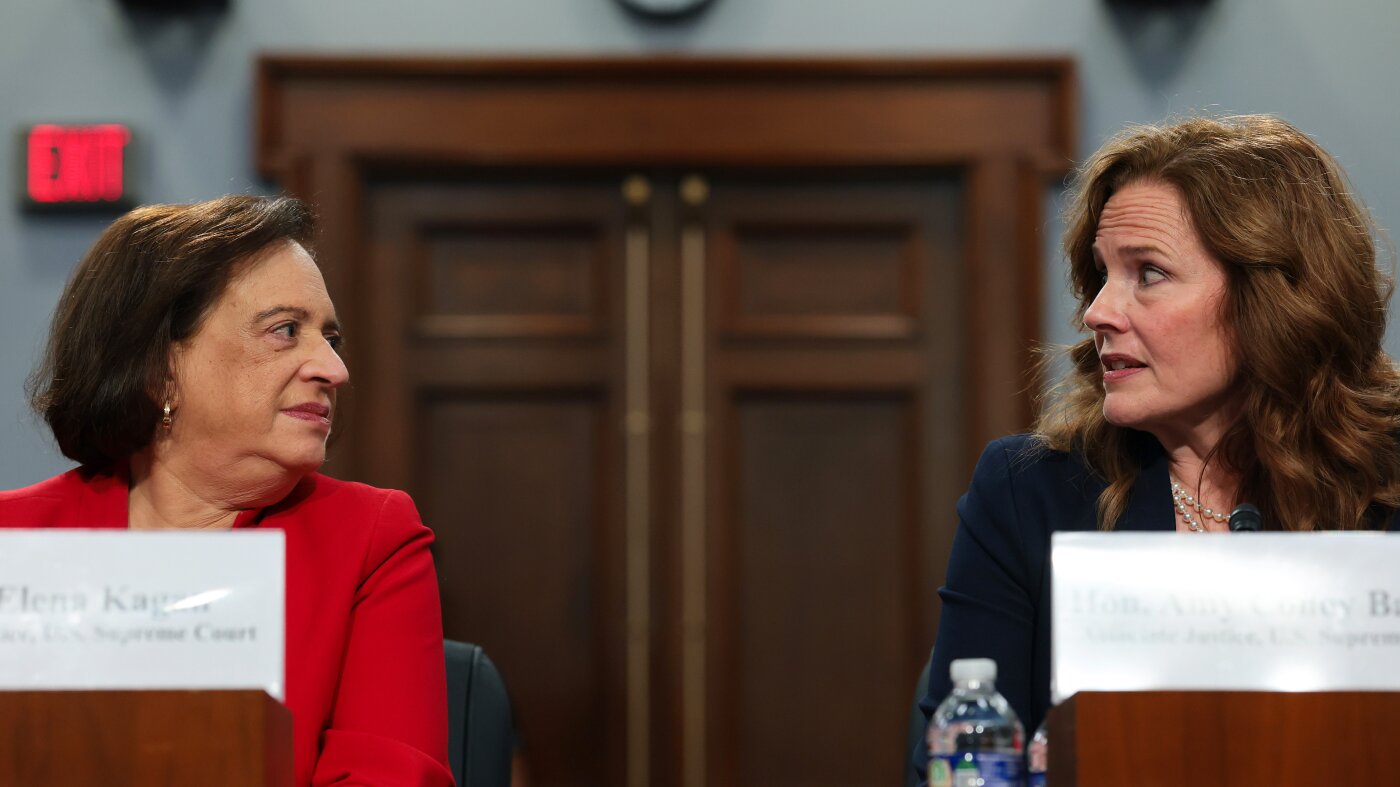
Supreme Court Justices give chilling accounts of threats to their safety
-

 Los Angeles, Ca2 hours ago
Stabbing at Chino Hills liquor store ends in attempted murder arrest
-

 Detroit, MI3 hours ago
A small group of citizens rally for mental health coverage in Detroit
-

 San Francisco, CA3 hours ago
1 dead, 2 missing after boat capsizes near Alcatraz in San Francisco Bay
-

 Dallas, TX3 hours ago
Death penalty off the table for man accused of beheading Dallas motel manager, prosecutors say

