Entertainment
This controversial California AI bill was amended to quell Silicon Valley fears. Here’s what changed

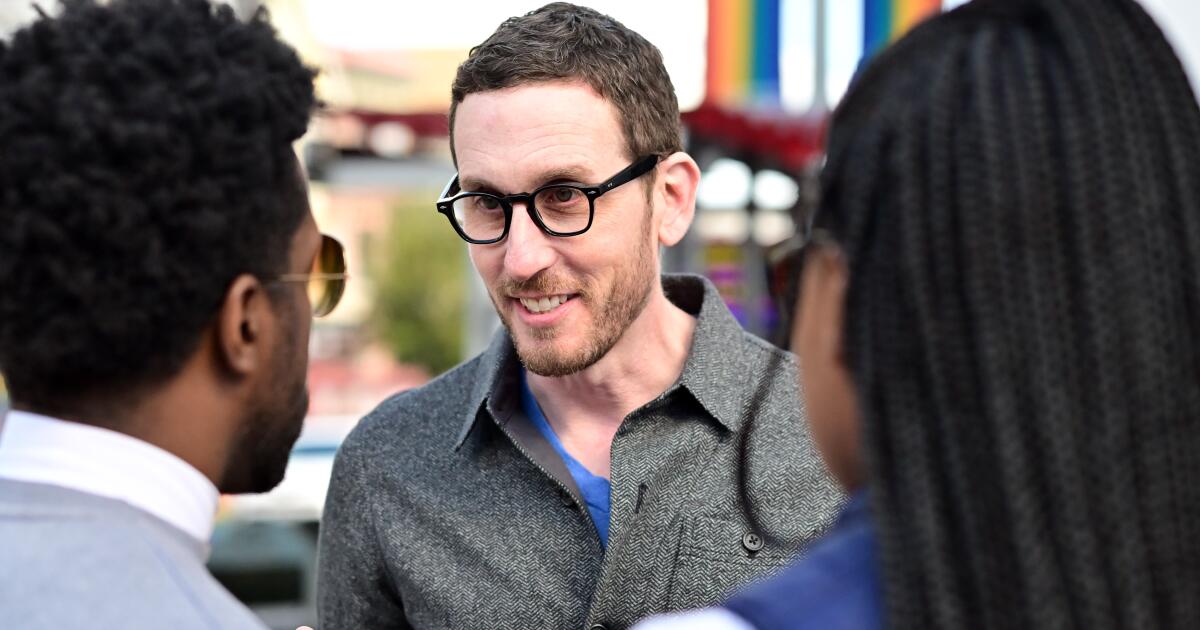
A controversial bill that seeks to protect Californians from artificial intelligence-driven catastrophes has caused uproar in the tech industry. This week, the legislation passed a key committee but with amendments to make it more palatable to Silicon Valley.
SB 1047, from state Sen. Scott Wiener (D-San Francisco), is set to go to the state Assembly floor later this month. If it passes the Legislature, Gov. Gavin Newsom will have to decide whether to sign or veto the groundbreaking legislation.
The bill’s backers say it will create guardrails to prevent rapidly advancing AI models from causing disastrous incidents, such as shutting down the power grid without warning. They worry that the technology is developing faster than its human creators can control.
Lawmakers aim to incentive developers to handle the technology responsibly and empower the state’s attorney general to impose penalties in the event of imminent threat or harm. The legislation also requires developers to be able to turn off the AI models they control directly if things go awry.
But some tech companies, such as Facebook owner Meta Platforms, and politicians including influential U.S. Rep. Ro Khanna (D-Fremont), say the bill would stifle innovation. Some critics say it focuses on apocalyptic, far-off scenarios, rather than the more immediate concerns such as privacy and misinformation, though there are other bills that address these matters.
SB 1047 is one of roughly 50 AI-related bills that have been brought up in the state Legislature, as worries have grown about the technology’s effects on jobs, disinformation and public safety. As politicians work to create new laws to put guardrails on the fast-growing industry, some companies and talent are suing AI companies in hopes that courts can set ground rules.
Wiener, who represents San Francisco — the home of AI startups OpenAI and Anthropic — has been in the middle of the debate.
On Thursday, he made significant changes to his bill that some believe weaken the legislation while making it more likely for the Assembly to pass.
The amendments removed a perjury penalty from the bill and changed the legal standard for developers regarding the safety of their advanced AI models.
Additionally, a plan to create a new government entity, which would have been called the Frontier Model Division, is no longer in the works. Under the original text, the bill would have required developers to submit their safety measures to the newly created division. In the new version, developers would submit those safety measures to the attorney general.
“I do think some of those changes might make it more likely to pass,” said Christian Grose, a USC political science and public policy professor.
Some tech players support the bill, including the Center for AI Safety and Geoffrey Hinton, who is considered a “godfather of AI.” Others, though, worry that it could damage a booming California industry.
Eight California House members — Khanna, Zoe Lofgren (D-San Jose), Anna G. Eshoo (D-Menlo Park), Scott Peters (D-San Diego), Tony Cárdenas (D-Pacoima), Ami Bera (D-Elk Grove), Nanette Diaz Barragan (D-San Pedro) and Lou Correa (D-Santa Ana) — wrote a letter to Newsom on Thursday encouraging him to veto the bill if it passes the state Assembly.
“[Wiener] really is cross pressured in San Francisco between people who are experts in this area, who have been telling him and others in California that AI can be dangerous if we don’t regulate it and then those whose paychecks, their cutting edge research, is from AI,” Grose said. “This could be a real flash point for him, both pro and con, for his career.”
Some tech giants say they are open to regulation but disagree with Wiener’s approach.
“We are aligned with the way (Wiener) describes the bill and the goals that he has, but we remain concerned about the impact of the bill on AI innovation, particularly in California, and particularly on open source innovation,” Kevin McKinley, Meta’s state policy manager, said in a meeting with L.A. Times editorial board members last week.
Meta is one of the companies with open source AI models called Llama, which allows developers to build on top of it for their own products. Meta released Llama 3 in April and there have already been 20 million downloads, the tech giant said.
Meta declined to discuss the new amendments. Last week, McKinley said SB 1047 is “actually a really hard bill to red line and fix.”
A spokesperson for Newsom said his office does not typically comment on pending legislation.
“The Governor will evaluate this bill on its merits should it reach his desk,” spokesperson Izzy Gardon wrote in an email.
San Francisco AI startup Anthropic, which is known for its AI assistant Claude, signaled it could support the bill if it was amended. In a July 23 letter to Assemblymember Buffy Wicks (D-Oakland), Anthropic’s state and local policy lead Hank Dempsey proposed changes including shifting the bill to focus on holding companies responsible for causing catastrophes rather than pre-harm enforcement.
Wiener said the amendments took Anthropic’s concerns into account.
“We can advance both innovation and safety,” Wiener said in a statement. “The two are not mutually exclusive.”
It is unclear whether the amendments will change Anthropic’s position on the bill. On Thursday, Anthropic said in a statement that it would review the new “bill language as it becomes available.”
Russell Wald, deputy director at Stanford University’s HAI, which aims to advance AI research and policy, said he still opposes the bill.
“Recent amendments appear to be more about optics than substance,” Wald said in a statement. “It looks less controversial to appease a couple of leading AI companies but does little to address real concerns from academic institutions and open-source communities.”
It is a fine balance for lawmakers that are trying to weigh concerns about AI while also supporting the state’s tech sector.
“What a lot of us are trying to do is figure out a regulatory environment that allows for some of those guardrails to exist while not stifling innovation and the economic growth that comes with AI,” Wicks said after Thursday’s committee meeting.
Times staff writer Anabel Sosa contributed to this report.

Movie Reviews
‘House of Criticism’ Review: A Pensive and Touching Portrait of Married Art Critics Jerry Saltz and Roberta Smith (It Is Only, at Moments, a True-Life Christopher Guest Movie)

If you wanted to be funny about it, you could say that Jerry Saltz and Roberta Smith, who occupy the center of the documentary “House of Criticism,” are like characters out of a Christopher Guest movie. Both are venerable New York art critics — but the thing is, they’re married New York art critics, whose lives revolve entirely around art and art criticism and talking about art and art criticism. They eat, breathe, sleep and dream it. In the Guest mockumentary of my imagination, the two would be played by Bob Balaban and Parker Posey, and they would be blissfully cracked egghead eccentrics who think that art is the most important thing in the world because it’s the most important thing in the world to them.
At moments, “House of Criticism” does throw off unintentional comic sparks of art-world insularity. But I’m kidding, ultimately, since underneath that it’s a pensive and touching documentary, and it happens to be about two writers I greatly admire. Roberta Smith, the co-chief art critic of the New York Times, and Jerry Saltz, the art critic of New York magazine, are writers of sway, elegance, legend. They’re two of the last powerful legacy critics in America, and both are fantastic writers. For them, the love of art is a mission, at once sophisticated and childlike. Roberta calls art “the most advanced operating system that our species has devised to explore consciousness, the seen and the unseeable.” The way art connects (and saves) these two on a daily basis is its own rarefied story, and it speaks to a certain vanishing culture of passionate New York literary brainiacs that used to be thought of as almost the essence of the city.
Early on, Jerry stands before Picasso’s epochal Les Demoiselles d’Avignon at the Museum of Modern Art and does a head-spinning riff on it, describing how 500 years of art history collapsed in the late 19th century (through Manet, the Impressionists, Van Gogh, Cezanne), leaving the blank slate for Picasso to fill. He compares the way the painting remade the world to the cataclysm of 9/11 (“When we believed in one course of history, and obviously there was another course of history, and they shattered”). Now that’s criticism.
As “House of Criticism” shows us, Jerry Saltz and Roberta Smith are luminaries and survivors who enjoy an idealized life together. Roberta is something of a contradiction, both the haughtier and more vulnerable of the two. She can be imperious in that Timesian way, but there’s a tremulous insecurity about her. Beneath a certain Midwestern patrician rigor, she’s full of self-doubt about her writing and is in constant need of encouragement, which Jerry is more than happy to provide. He’s blustery and big picture-oriented, while her insights are more delicate and intimate, blooming out of her holy communion with the work.
Jerry is a contradiction as well, a man who writes like a demon and looks like a dentist. But don’t let his fubsy aura fool you — he’s the social butterfly and loose cannon, plugged into social media (which he plays like a violin), and the audacious thoughts pour out of him. The most telling aspect of their relationship is that as writers they should be competitors, but instead they’re spiritual collaborators; they turn what could be a competition into a romance. They help each other on word choices, and even when they’re reviewing the same show, they’re really competing with themselves, with their own cultivated and highly different ideas of perfectionism.
Their relationship is built, to a large degree, around Jerry’s belief that Roberta is the superior critic — but this, for Jerry, is a form of chivalry, the flower of their love story. “Your writing is so condensed, right on the object, focused,” he says. He’s intensely supportive, but Jerry, who won the Pulitzer Prize for criticism in 2018, is arguably the greater writer (his poetic showmanship flies higher), and it’s my reading that deep down he knows it. It’s his perpetual self-deprecation and devotion that keeps the marriage balanced.
The two have no children and no apparent hobbies outside of their unrelenting obsession with art. They slip in and out of gallery openings, where they’re treated like royalty, and they attend 20 to 30 shows a week. By all rights, they should have a social calendar that rivals Andy Warhol’s in the ’70s. But here’s the joke: They adore their life together but are so devoted to their work, so monastic about it, that they never go out. Jerry calls them “happy losers” and describes their spacious apartment off Fifth Avenue in Greenwich Village as “the house that criticism built.”
In the morning, he pours deli coffee over ice into a 7-11 Big Gulp cup, and he’ll consume three of those a day. It’s fuel, as is the food he eats. When his friend Adam Platt, the New York magazine restaurant critic, asks Jerry what his favorite food is, Jerry replies: the grilled chicken at Gristede’s (a slightly downscale New York supermarket). “That’s the life of the mind!” says Platt. “You’re as happy with prison food.” He’s not kidding. I live in the same neighborhood and use Gristede’s as a convenience store, and I would never consider buying the grilled chicken there. But as Jerry explains, popping a bag of spinach into the microwave, he and Roberta are so consumed with work that they subsist on this drone food. The two barely go to restaurants (though we see them having breakfast at their favorite diner). Do they drink? If I was them, I’d need a cocktail by the end of the day, but the movie never says.
“House of Criticism,” directed by Alison Chernick, has a sketchy but rather controlled vantage. There’s a lot you don’t learn (I would have liked to see more about the politics of the New York art world), and plenty you do — like the fact that Lena Dunham is their goddaughter. Late in the movie, she comes over to visit them and provokes a penetrating exchange on the subject of why they never had kids.
People don’t often think of critics in humanistic terms, but these two invest criticism with soul, and there’s something disarming about how they were both damaged people who came together by seeing, in each other, a mirror image. She was born in New York and raised in Kansas, moving back to Manhattan in her early twenties to be part of the art scene (her mentor was the artist and critic Donald Judd). She found her way to criticism as a role in life, yet there was something metaphysically lonely about her.
It’s Jerry who comes from trauma. His mother, who committed suicide when he was 10, was erased out of his life (she was never spoken of again). He tells a haunting story about how she dropped him off for a solo visit to the Art Institute of Chicago just two weeks before her death, and it was there, on that visit, that the art lightbulb went off: He realized that every painting is a story. He wanted to be a painter, and tried (he had some talent), but thought that he lacked the proper schooling. What he really lacked was confidence. In photographs from the time, Jerry looks like he could be Richard Dreyfuss’s sad-sack brother. He wound up becoming a long-distance trucker, driving 10-wheelers full of paintings (he did this for 10 years), and he confesses that at moments he would go back into the truck and stomp on paintings and damage them. That is seriously sick behavior (his self-hatred was off the charts), and it’s amazing that he became the menschy person he did.
These two have thrived as critics by evolving. Jerry says of critics, “We have to adapt to the times, or we’re bullies and geezers.” He’s right. The film culminates in Roberta’s ultimate evolution — her decision to retire from the New York Times. The time feels right, but the question hovers: Without that job, what will her identity be? In a moving moment, she tells Jerry, “You’re my infrastructure.” “You’re mine,” he says. (That’s the critic version of “You complete me.”) And seeing each other through the prism of art is both of their infrastructure. These two are standard-bearers for the glory of a culture that once was. It’s a culture where criticism is about judging things, but more than that it’s about exploring things — experiencing things, bringing you closer to life.

In the last decade or so, Angelina Jolie has been on screen less frequently. So when she is — and not in forgettable tentpoles like “Eternals” — it’s worth paying attention. There seems to be a thoughtful intentionality to the roles she now chooses, almost as if this astoundingly famous woman wants to tell us something vital about herself, offering clues into her understandably guarded personal life.
Take 2015’s “By the Sea,” which she wrote and directed. Coincidentally or not, that pained study of marital dissolution, co-starring Jolie’s then-husband Brad Pitt, intersected with the couple’s real-life breakup — not to mention Jolie’s grief over the death of her mother, Marcheline Bertrand. Two years ago, Jolie portrayed a version of the elusive, emotionally closed-off opera singer Maria Callas in “Maria.” The conception of the role, marked by a dim view of stardom’s suffocating alienation, was something Jolie clearly understood. Moviegoers should be careful not to read too much autobiography into an actor’s creative choices, but Jolie makes such speculation tantalizing, adding additional layers of drama to her films.
The intermittently affecting “Couture” feels similarly close to her heart, depicting a filmmaker whose life is interrupted by a cancer diagnosis — a reality Jolie knows all too well. In 2013, she underwent a preventive double mastectomy over concerns of her likelihood to develop breast or ovarian cancer. (Bertrand died of cancer in 2007.) Knowledge of Jolie’s circumstance will inform a viewer’s reaction to her wounded, resilient performance, but our inherent sympathies can only take French writer-director Alice Winocour’s ensemble piece so far.
Jolie plays Maxine, an American indie director hired to create a flashy opening film for Paris Fashion Week. Newly arrived in the City of Light, she has only a few days to put together the short, assisted by her trusted cinematographer Anton (Louis Garrel). As we deduce from the phone calls Maxine makes back home, she’s also going through an acrimonious divorce and has trouble connecting with her blasé teenage daughter. At least this Paris paycheck gig will bolster her finances — and get her ready for the feature film she’s been wanting to make for years.
Just then, though, Maxine’s future gets a rewrite. A French doctor (Vincent London) tells her she has breast cancer and needs a double mastectomy immediately. Maybe she can finish the Fashion Week film, but her passion project must wait. An artist and mother who has spent her adulthood in constant motion will have to learn what it means to stop everything and be still.
The film’s title would appear to be a reference to the story’s setting, but in French, “coutures” can also mean “stitches,” and indeed Winocour sews together three thematically linked story strands. As Maxine wrestles with her cancer diagnosis, an inexperienced South Sudanese model named Ada (Anyier Anei) works Fashion Week so she can send money home to her family. (Ada has no interest in modeling, hoping instead to become a pharmacist.) Meanwhile a makeup artist, Angèle (Ella Rumpf), longs to be an author, although she cannot get anyone interested in her writing. Each one becomes a part of the fabric of Fashion Week, but their disparate problems are a far cry from the glitzy event’s self-importance.
Winocour has often made films about women balancing their public-facing life with their private selves In 2019’s “Proxima,” Eva Green played an astronaut missing her young daughter. In 2022’s “Paris Memories,” Virginie Efira starred as an interpreter recovering from the shock of surviving a terrorist attack. Winocour shows us the intimate, vulnerable spaces within her characters that those on the outside don’t have access to.
“Couture’s” three principals rarely interact with one another, but those meaningful exchanges argue that, amid the mad clatter of the everyday, a brief, unguarded moment with a stranger can be supremely restorative. Unfortunately, the juggling of storylines ends up being more schematic than insightful. Angèle’s narrative never catches fire and while Anei is striking as Ada, that section of the film feels slightly patronizing, reducing this immigrant tale to yet another strained salute to perseverance.
This leaves Jolie as the movie’s magnetic center, with Maxine drifting through despair as she ponders what to do. Her doctor insists that the surgery cannot wait, but putting her ambitions on hold means losing a part of herself — a different kind of death sentence than the one she’s now facing.
The character is underwritten but Jolie picks up much of the slack through her silently shattered expression. As she’s gotten older, the Oscar winner has become more comfortable doing less in her performances, allowing for a fragile serenity that is belied by the anguish and anxiety roiling underneath. It’s not just our recognition of the real-life parallels that make Jolie so touching in “Couture” — it’s that ineffable star power she’s possessed for so long. In a story about a potential tragedy, what’s saddest is that Winocour’s film cannot match its lead’s effortless command.
‘Couture’
In French and English, with subtitles
Rated: R, for language, some sexuality, nudity and brief bloody violence
Running time: 1 hour, 46 minutes
Playing: Opens Friday, June 26 in limited release

By ABBIE BERNSTEIN / Staff Writer
Posted: June 26th, 2026 / 08:03 PM
SUPERGIRL movie poster | ©2026 Warner Bros./DC Studios
Rating: PG-13
Stars: Milly Adcock, David Corenswet, Eve Ridley, Matthias Schoenaerts, Diarmaid Murtagh, Jason Momoa, David Krumholtz, Emily Beecham
Writer: Ana Nogueira, based on characters created by Jerry Siegel & Joe Shuster
Director: Craig Gillespie
Distributor: Warner Bros./DC Studios
Release Date: June 26, 2026
The new SUPERGIRL doesn’t have that “Eureka! This is how you do this now” spark that galvanized its immediate franchise predecessor, last year’s SUPERMAN. Director Craig Gillespie and screenwriter Ana Nogueira, basing the film on characters created by DC Comics’ Jerry Siegel & Joe Shuster, probably wisely, aren’t going for that.
Instead, the SUPERGIRL makers are intent on providing a lively adventure, getting to the point quickly and letting the action unspool with unquestionably strong motivation, abetted by plenty of punch-ups, kicking and frequent explosions.
Supergirl, aka Kara Zor-El (Milly Adcock), is from the now-dead planet Krypton, just like her cousin Clark/Kal-El/Superman (David Corenswet). However, where Clark has chosen to remain on Earth, where the yellow sun gives him superpowers that allow to help Earth’s residents, Kara likes to party on planets that have a red sun, where she has no unusual abilities.
This is because Kara seems to have taken to heart a dictum from a different comic book universe – with great power comes great responsibility – and decided the inverse is true: with no power comes no responsibility.
We get insight into exactly why Kara is so duty-averse over the course of SUPERGIRL, and it’s probably not a spoiler to say that she re-examines some attitudes as events unfold.
Kara plans to celebrate her twenty-third birthday on a backwater red sun planet. The bar where Kara chooses to drink is entered by preteen Ruthye Knoll (Eve Ridley), whose family has been murdered by brigands, led by the horrendous Krem (Matthias Schoenaerts). Ruthye is out for revenge. Kara thinks Ruthye is a bit young and pure-hearted to be on a murderous quest.
Even on a planet with a red sun, though, Kara is still handy with fists and feet. Ruthye sees what Kara can do and concludes she is the ideal ally. Kara absolutely refuses to help. Then something occurs that credibly rouses Kara to do whatever it takes to achieve her aims, which sort of line up with Ruthye’s.
No explanation is needed for why Kara feels such urgency, which we easily share. Her concern for Ruthye is understandable and her connecting to larger purpose is shown rather than spoken.
Intriguingly, the aesthetics of SUPERGIRL are largely those of STAR WARS, with some MAD MAX and BLADE RUNNER thrown in. The filmmakers have a good time with all sorts of utterly nonhuman alien people and figuring out how to make interplanetary versions of familiar items like vending machines.
The pace is pleasingly brisk and the structure doesn’t require much exposition. When they hit a hard-to-answer question like why Kara is Supergirl while Clark is Superman, they acknowledge it and then get out from under without irritating anybody.
For anyone wondering about the veracity of the recording from Superman’s parents that appeared in SUPERMAN, a quick line of dialogue here confirms it (sorry, Jor-El supporters).
There is the expected amount of CGI involved, including a great motion-capture performance by Kara’s dog Krypto (modeled upon executive producer/SUPERMAN director James Gunn’s dog), but a lot of the stunts and makeup appear gratifyingly practical.
Adcock is fine in all of Kara’s moods, from wasted to resistant to determined, with a delightful reaction to feeling her body’s response to the yellow sun. Ridley is an appealing young hero, and Corenswet offers wholesome support. Schoenaerts lets Krem revel in his own soft-spoken vileness, and Jason Momoa enthusiastically portrays an intergalactic bounty hunter. David Krumholtz is affecting as Kara’s scientist father.
SUPERGIRL isn’t going to redefine superhero movies, but it’s a perfectly enjoyable example of the form.
Related: Movie Review: THE GET OUT
Related: Movie Review: CAMP
Related: Movie Review: LEVITICUS
Related: Movie Review: DISCLOSURE DAY
Related: Movie Review: KRAKEN
Related: Movie Review: FIND YOUR FRIENDS
Related: Movie Review: CHUM
Related: Movie Review: CAROLINA CAROLINE
Related: Movie Review: THE SUMMONING
Related: Movie Review: BACKROOMS
Related: Movie Review: SPEED DEMON
Related: Movie Review: PRESSURE
Related: Movie Review: PASSENGER
Related: Movie Review: I LOVE BOOSTERS
Related: TV Review: GREAT PERFORMANCES: STAGEBOUND
Related: Movie Review: OBSESSION
Related: Movie Review: LIFEHACK
Related: Movie Review: IS GOD IS
Related: Movie Review: AFFECTION
Related: Movie Review: ITCH!
Related: Movie Review: HOKUM
Related: Movie Review: ANIMAL FARM
Related: Movie Review: OVER YOUR DEAD BODY
Related: Movie Review: LEE CRONIN’S THE MUMMY
Related: Movie Review: HAPPY HALLOWEEN
Related: Movie Review: NORMAL
Related: Movie Review: FACES OF DEATH
Related: Movie Review: EXIT 8
Related: Movie Review: READY OR NOT 2: HERE I COME
Follow us on Twitter at ASSIGNMENT X
Like us on Facebook at ASSIGNMENT X
Article Source: Assignment X
Article: Movie Review: SUPERGIRL
Related
Related Posts:
-

 Cleveland, OH5 minutes ago
Timofey Mozgov Reveals Sadness, Regret Over Viral 2016 Cleveland Cavaliers Reunion
-

 Austin, TX12 minutes ago
Texas Game Wardens warn of dangers as they respond to emergencies across Texas
-

 Alabama15 minutes ago
Two ejected after boat crash on Alabama lake
-

 Alaska20 minutes ago
Alaska Sen. Dan Sullivan’s primary challenger who has the same name is eligible for ballot, judge rules
-

 Arizona26 minutes ago
Where People Are Moving To In Arizona In 2026
-

 Arkansas29 minutes ago
Fourth of July 2026: Where to celebrate across Northwest Arkansas | Northwest Arkansas Democrat-Gazette
-

 California30 minutes ago
Long Beach officials confirm first California case of human West Nile virus in 2026
-

 Colorado42 minutes ago
Colorado State Patrol investigating after pedestrian struck on Highway 36

