Entertainment
The worst video game ever made is back. But why?


From the arcades to the handhelds, mobile phones to home consoles, absolutely nothing could prepare the video game world for the unrivaled experience that is 1993’s “Plumbers Don’t Wear Ties” — a critically maligned game which, after a quiet rerelease last spring, is now getting a special edition rerelease on the long-defunct ’90s video game system Panasonic 3DO.
For the uninitiated, “Plumbers Don’t Wear Ties” was released as an “interactive romantic comedy” game meant for adults where, in a series of images with PowerPoint pacing, the player has to make “Choose Your Own Adventure”-style choices to help John, a struggling plumber on a bike, successfully woo Jane, a woman he meets in a parking lot as she’s en route to a job interview. What follows is a tale of corruption, Los Angeles action, narrator murder and a happily ever after — with plenty of raunchy ’90s shock humor along the way.
Released independently for the Windows PC and Panasonic’s aforementioned, relatively short-lived 3DO home console at a time before there were industry-wide ratings on games, this adults-only experience may have buried seeds in the minds of ’90s video game magazine readers, who perhaps encountered the scathing reviews in the July 1994 issue of PC Gamer (which gave the game a 3 out of 100 score and called it “the nadir of entertainment”), or who were vaguely intrigued by the title being the only video game for sale in the back-of-the-magazine catalogs with an “18+ only” warning.
While this style/genre of video game was known and embraced in Japan at this time as “visual novels,” the Americans behind “Plumbers” were unaware, and came to the same format through parallel thought. According to the Good Bad Flicks documentary on the game, which is included with the game’s new “Definitive Edition” release, “Plumbers” is the brainchild of Michael Anderson, who in the ’70s and ’80s was a pioneer in early forms of the internet and digital mapping. After he sold his digital mapping company in the ’80s, the lucrative buyout gave Anderson the time and money to — as he put it —“get into trouble.” This was a time where there was interest in “interactive movies,” and given the thrills he found at previous bleeding edges of technology, he explored what it would take to give a cost-effective romantic comedy audience-dictated movie experience a go.
Since full-motion video games weren’t quite at the crisp visual quality for home consoles with modern CD-ROM limitations, Anderson approached making the game as a frame-by-frame experiment. He’d approach potential actors in person, including Jeanne Basone — a face familiar to wrestling fans as “Hollywood” from the original “GLOW: Gorgeous Ladies of Wrestling.”
Basone told The Times that filming was “like shooting a movie you shoot out of sequence, so honestly, if you’ve ever been on a set you understand, you just need to trust your producer and director and that’s just what we did. Plus we had a whole lotta fun shooting it and being on location.” While the guerrilla-style filmmaking around Los Angeles landmarks may have not quite translated the on-set fun to players in 1994, it does look like they were having a blast at time time, perhaps giving the game a bit more charm 30 years later.
That charm is something the Limited Run Games team behind “Plumbers Don’t Wear Ties: Definitive Edition” hoped to maximize while fashioning the game’s resurrection. LRG co-founder and CEO Josh Fairhurst went through the effort to not only track down the “Plumbers” rights holder, but purchase the IP to help make it happen.
“As one of the worst games of all time, we wanted to explore what led to its existence and why it is important,” Fairhurst told The Times, adding “I always value being as authentic as possible to the original experience. With ‘Plumbers Don’t Wear Ties: Definitive Edition,’ we did our best to not mess with the core game. It’s supposed to be bad, so we didn’t want to try and make it good. I felt like that would miss the point. Instead, we faithfully cleaned up and restored the game’s images, did our best to repair the audio without overriding the tinny low-budget charm, and surrounded the game with documentary footage, commentary, and extra features that do their best to contextualize it.”
The restorers of “Plumbers Don’t Wear Ties” had a philosophy: “It’s supposed to be bad, so we didn’t want to try and make it good.”
(Courtesy of Limited Run Games)
One of the new “Definitive Edition” producer/developers Joe Modzeleski felt a full range of emotions in the early stages of development. He told The Times, “It was funny … but it wasn’t long after that, the thoughts started to be, ‘Oh, this is going to be difficult’ because there is nothing compelling to sell here and we have to make a profit.”
Compared to Limited Run Games’ previous remastered ’90s video game cult classics like the controversial “Night Trap” and “Corpse Killer,” this wasn’t a game that could be sold on gameplay. Fellow producer/developer Audi Sorlie also told The Times there was a real ground-up challenge in bringing back “Plumbers” with its proper elements as well. “Nothing really survived of this stuff. It was a weird throwaway project in the ’90s. No one is going to keep any of that. This is a problem throughout the entire video game industry, most of the stuff that was done prior to 2005 didn’t get archived so it’s hard for any project to nail down this stuff. And for ‘Plumbers’ even more so as this was this small project in California.”
Sorlie had to work on the game’s extensive trained AI upscaling, an undertaking that involved taking the game’s 890 images, all 640 x 480 indexed at 256 colors, and bring them to 4K quality — of which the reading and rebuilding combined took a year of compositing and by-hand touch-ups.
So, why put all this effort into something seemingly every video game player would consider objectively bad? Perhaps it’s the fan base, of whom the vast majority likely hasn’t pushed a single button on a “Plumbers” menu before this year. Yes, there’s a “Plumbers Don’t Wear Ties” following, largely thanks to the second life the game has had as an internet meme. In the summer of 2009, longtime YouTube personality James Rolfe dedicated an episode of his series “Angry Video Game Nerd” to “Plumbers Don’t Wear Ties,” giving perhaps the first widespread video capture of its gameplay and trademark sleazy absurdity to the world.
Instantly becoming one of his most popular episodes, today his 2011 upload has over 9 million views and has spawned numerous other reviews and revisitations across all corners of the so-bad-it’s-good video game fandom. A factory-sealed copy of the original 3DO game sold on eBay last year for $600. The one known existing copy of the PC version was tracked down at Ball State University in 2017, and its subsequent software upload to the internet is considered a triumph of lost media discovery.
Whether you consider the prospective players “fans” or just curious, there’s a proven legacy of “Plumbers” whose presence, whether as an intriguing of-its-time experiment or just the absolute worst of the worst, can have a strong argument for preservation.
Fairhurst describes the need for it as, “We frequently get remasters and rereleases of the best games of all time, but rarely does anyone spend their time and resources on the worst. As odd as this seems to say, I think the worst games of all time are just as historically significant as the best. We should be researching these and examining why they were bad, what made them exist, and how they were received culturally,” adding “I think people will always remember ‘Plumbers Don’t Wear Ties’ and want to experience it in the same way film enthusiasts still view and discuss ‘Plan 9 From Outer Space.’ Bad games draw our curiosity and I think there’s something to that. It’s been an honor to get to bring this game back, and I hope that people enjoy getting to experience it.”
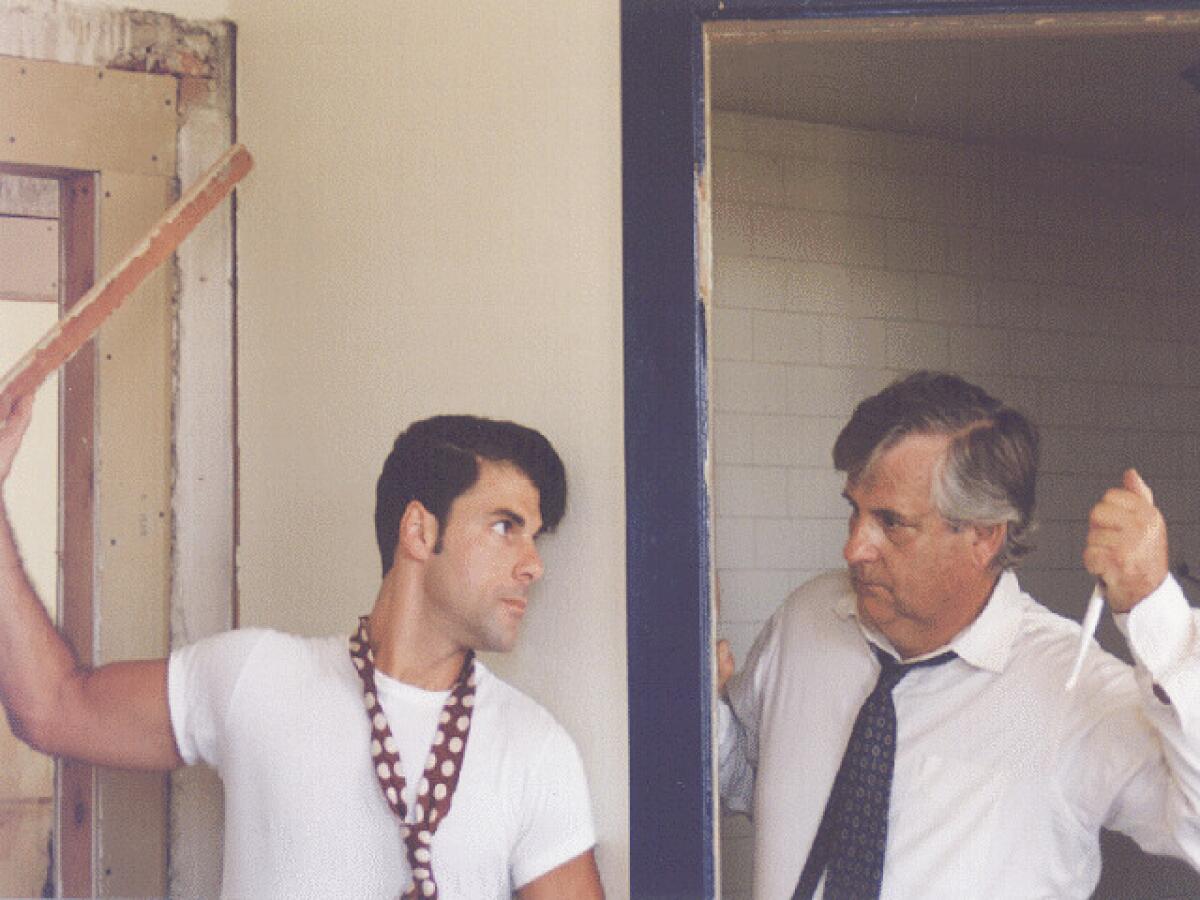
The CEO of Limited Run Games, which is behind the rerelease, says, “I think the worst games of all time are just as historically significant as the best.”
(Courtesy of Limited Run Games)
This new experience is giving “Plumbers” its biggest public boost ever. To promote the game’s release, Basone appeared at Boston gaming convention PAX East to meet the legions of old and new “Plumbers” fans. Basone told The Times, “I couldn’t wait to dive back in and make something that was being updated for what I thought was lost long ago, and will be on all game platforms today. I am proud of everybody who worked on it in 1993, and so happy Limited Run Games decided to release this updated version.” Given that LRG now owns the Plumbers IP, the question of a possible sequel seems more possible now than ever. However, when asked, Modzeleski laughed and said “Well, yeah, but don’t encourage that!” with Sorlie adding “Have you played this game?”



Entertainment
Philip Glass canceled a Kennedy Center show, but this conductor brings his work center stage at L.A. Opera

When Dalia Stasevska heard opera music for the first time, it was a moment of profound self-revelation. She was 13, growing up in the factory town of Tampere in the south of Finland, and her school librarian gave her a CD of Puccini’s “Madama Butterfly” along with a translation of its Italian libretto.
“As a teenage girl, this dramatic story touched my soul,” Stasevska says, adding that she still remembers the experience and thinking, “ ‘This music understands me, this is exactly how I feel.’ And that was…when I knew that I wanted to become a musician.”
Stasevska is now chief conductor of Finland’s Lahti Symphony Orchestra and a prodigious conductor of orchestral music in all forms. A busy guest baton with companies around the globe, she will make her L.A. Opera debut this Saturday with a production of “Akhnaten” by Philip Glass, running through late March.
John Holiday in the title role of L.A. Opera’s 2026 production of “Akhnaten.”
(Cory Weaver)
The seminal work by Glass lands at L.A. Opera just a month after the world-famous composer abruptly canceled June’s world premiere of Symphony No. 15 “Lincoln” at the John F. Kennedy Center for the Performing Arts. “While Philip Glass has pulled out of Kennedy Center, his music will be front and center at our production,” a rep for L.A. Opera wrote in an email.
Stasevska, with her razor-sharp appreciation of the power of Glass’ work, is the ideal conductor to bring it there.
Stasevska, 41, walks from the ornate foyer of the Dorothy Chandler Pavilion, with its emerald green carpets and gleaming chandeliers, to the more ordinary hallways and cubicles of L.A. Opera’s offices. She’s been in town rehearsing for a few weeks and jokes with some of the show’s jugglers in a kitchenette, where she makes herself a machine pod coffee.
The conductor is petite with large, expressive eyes and a Cheshire cat’s smile. Her mouth often pulls to the right when she speaks, her admirable non-native English tugged easterly in a Finnish accent.
Opera remains her great love, and it seems a perfect twist of fate that Stasevska was tapped to conduct “Akhnaten.” She saw it for the first time in 2019 at a Helsinki cinema, in a global broadcast of a production by the Met. She couldn’t believe her friend dozed off.
“I was like, ‘How could you fall asleep? This was the best thing I’ve ever seen in my life. I would do anything to conduct this opera,’ ” she recalls saying.
Stasevska was born in 1984, the same year that Glass’ hypnotic, ritualistic opera, about an Egyptian pharaoh who dared to push monotheism onto his polytheistic culture, debuted in Stuttgart, Germany. Eight months later, Stasevska entered the world in the Soviet-controlled city of Kyiv, the child of a Ukrainian father and Finnish mother.

Conductor Dalia Stasevska, who is making her L.A. Opera debut with Philip Glass’ “Akhnaten,” says that opera is her first great love.
(David Butow / For the Times)
It was a fluke that she was born in Ukraine. Her parents, both painters, were living in the Estonian capital of Tallinn, also under Soviet rule, but found themselves in a Kyiv hospital close to family when Stasevska arrived. She’s never lived in Ukraine — she spent her first few years in Tallinn before moving to Finland at age 5— but her life has been infused with its heritage.
Her father, who as a teenager in Tallinn began to rebel against Sovietization, insisted on teaching Stasevska and her two younger brothers to speak Ukrainian at home. Her grandmother, Iryna, lived with the family and was an important caretaker for much of her childhood. Stasevska grew up hearing fantastic stories filled with dreamlike imagery of the homeland.
“She was such a civilized, cultural person,” Stasevska says of her grandmother, adding that she taught her grandkids everything she knew about her home country. That’s why, even though Stasevska was raised in Finland, she grew up eating Ukrainian food and hearing Ukrainian folk tunes. “I know the language and understand the culture,” she says.
Stasevska grew up poor, but music education was mandatory for her and her brothers: “My father said, ‘This is going to be your profession.’ It was no question that this is not a hobby. So we started practicing immediately, very determined. There was maybe some forcing involved,” she says, laughing.
She played the violin from age 8, but it was only after she heard Puccini at 13 that she fell in love with classical music. She became obsessed with the opera and orchestral repertoires and was immediately determined to play in an orchestra. She approached the headmaster at her conservatory who placed her in a string ensemble before advancing her to the symphony orchestra as a violinist.
At 18, Stasevska entered the Sibelius Academy in Helsinki, which is named after Finland’s most famous composer, Jean Sibelius. She couldn’t stop herself from stealing a peek at the school conductor’s score, copying bowings and poring over the details, but she didn’t indulge any dreams of taking the podium herself. “I was going every week to the concerts,” she says, “but it took me so long to see somebody that looked like me.”
She was 20 when she saw a female conductor for the first time, calling it “the second big moment in my life.” When Stasevska expressed interest in trying it herself, she was referred to Jorma Panula, a legendary conductor and teacher in Finland. Panula invited her to attend one of his masterclasses, and on the first downbeat of her first experience conducting, “I knew immediately that this was beyond anything I’ve experienced in my life,” she says. “It became this kind of madness moment.”
She loved the sheer physicality of it, she says, but also “that I can affect the music, and that I can affect the interpretation, because I had so much in my heart that I felt about the music.”
After completing her conducting studies in 2012, Stasevska assisted Panula — who emphasized discovering unique “gestures in such a way that the orchestral musicians know what you mean,” she says. She also worked with her fellow Finn, Esa-Pekka Salonen. Stasevska became principal guest conductor of the BBC Symphony Orchestra in 2019 and chief of the Lahti Symphony in 2020.
When she’s not globetrotting, Stasevska lives in Helsinki with her young daughter and her husband, Lauri Porra — a heavy metal bassist who is also the great-grandson of Sibelius.
She likes to champion new music — her 2024 album, “Dalia’s Mixtape,” featured works by Anna Meredith, Caroline Shaw and other contemporary composers. She is also a vocal supporter of the land where she was born and has spoken out against Russia’s war in Ukraine.

John Holiday as Akhnaten, with So Young Park, at right, as Queen Tye, in L.A. Opera’s 2026 production of “Akhnaten.”
(Cory Weaver)
Stasevska’s L.A. Opera debut arrives on the same week as the fourth anniversary of Russia’s invasion. Both of her brothers — one a film director, the other a journalist — moved to Ukraine and have borne witness to the war, which has given her “another level of experiencing this horror,” she says.
Stasevska has made it her mission to raise funds — more than 250,000 euros to date — to provide basic supplies particularly for children and elders who are without power and huddling in freezing cold homes. She has even driven in supplies herself by truck.
She has also conducted concerts there — and her next album will celebrate the country’s composers in a meaningful way. “Ukrainian Mixtape,” which she recorded with the BBC Symphony Orchestra in London, features works by five composers who range from the 19th century to the 1960s. Three are premiere recordings of artists who have been completely forgotten, which required a year of searching for materials.
“I think that it will not leave anybody cold,” Staveska says, “and I hope that it will inspire everybody to discover Ukrainian music more, and that we will hear it more on main stages of the world — where it deserves to be.”
For now, though, her focus is on ancient Egypt and Philip Glass — and opera. She says her goal, in every concert, is to give audiences the same experience she had when she was 13, that remarkable feeling that the music uniquely understands them.

2.5/5
01 Hrs 59 Mins | Romantic Comedy | 27-02-2026
Cast – Sree Vishnu, Nayana Sarika, Satya, Brahmaji, Praveen, Murali Sharma, Srikanth Iyyengar, Satyam Rajesh, Srinivasa Reddy, Goparaju Ramana and others
Director – Yadunaath Maruthi Rao
Producer – Sumanth Naidu G
Banner – Sree Subrahmanyeshwara Cinemas
Music – Radhan
Since 2023, with three commercial hits and one critically acclaimed film, Sree Vishnu has established himself as a minimum guarantee hero and built a loyal audience. To continue the success streak, he chose yet another romantic comedy film, directed by debutant Yadunaath Maruthi Rao. ‘Aay’ fame, Nayana Sarika, played the female lead role and Radhan, scored the music for the film. After creating enough curiosity among the audience with the teaser and trailer, the film was finally released in theatres today. Did Sree Vishnu, deliver yet another hit with a romantic comedy film? Did Nayan Sarika, score a hit in Telugu, after AAY & KA? How does the debutant director, Yadunaath Maruthi Rao, do? Did the music director, Radhan, come up with memorable songs and score? Let’s figure it out with a detailed analysis.
What is it about?
Vishnu(Sree Vishnu), works as a junior lecturer at a college, where Manisha(Nayan Sarika), works as the head of the department(HOD/faculty). Manisha, with her eccentric characteristics, intrigues Vishnu and both of them eventually fall in love with each other. When everything is going well for the couple to get married, Manisha informs Vishnu about a flaw in her Jathakam. What was the Dosham(flaw) in Manisha’s jathakam? How did it impact her prospects of getting married before meeting, Vishnu? Why did Vishnu initially get reluctant to marry Manisha, after hearing about her Jathaka Dosham? Will the couple sort out all the issues and get married eventually? Forms the rest of the story.
Performances:
Sree Vishnu, with his comedy timing generated a few fun moments that worked in favour of the film. However, in an attempt to appear effortless, he went overboard at times and appeared monotonous at a few places. Nayana Sarika got a good role and she delivered a good performance. She looked good throughout the film and appeared confident.
Satya, got a full-length role and he was able to generate a few laughs here and there with his comedy timing. Srikanth Iyyengar’s performance looked over the top and his portions looked rushed and very artificial. Srinivasa Reddy played a role similar to Mallikarjuna Rao’s role in Raviteja’s movie, Venky. He did an ok job but it seemed like he did dub for his role in the film? The film had Brahmaji, Praveen, Murali Sharma, Satyam Rajesh, Goparaju Ramana and a few others, in character roles. All of them made their presence felt but none of their roles gave the desired impact and extra mileage.
Technicalities:
Cinematography by Sai Sriram, is a major plus to the film. The visuals looked colourful, vibrant and gave a pleasant look to the film throughout. Radhan’s music should have been better. The songs scored by him were below par and the background score was pretty standard. Editing by Karthikeyan Rohini, was alright. He tried to cut the film with a very crisp runtime of around two hours and yet, ended up having a few repetitive sequences. Production values by, Sree Subrahmanyeshwara Cinemas, were decent and were within the limitations of a midrange romantic comedy film. Let’s discuss the work of the writer and the director, Yadunaath Maruthi Rao, in detail in the analysis section.
Positives:
1. First Half
2. Comedy Portions
3. Sree Vishnu & Satya’s Timing
4. Cinematography
Negatives:
1. Second Half
2. Lack of Strong Emotions
3. Music
Analysis:
The debutant writer and the director, Yadunaath Maruthi Rao, wrote a so-called peculiar characterisation of the female lead in the film and tried to generate enough fun moments using the comedy timing of his lead actor, Sree Vishnu and the lead comedian, Satya. Right from the word go, the writer intended only to make the audience laugh at any cost, and in doing so, he succeeded in parts but would have done a better job in other parts, especially the latter part of the second half. The film had at least five to six notable actors but for some reason, the director only concentrated on generating fun by using his lead actor.
The entire first half of the film unfolded without any major complaints. There were enough comedy sequences in the first half that engaged the audience in a fairly decent manner and the revelation of the conflict point during intermission, worked as well. However, after the initial few minutes of the second half, the film got into repetitive mode and the drama during the last thirty minutes was the film was written and executed in a very unexciting manner without any proper emotional depth. The twist during the climax was very predictable and it was narrated in a bland and rushed manner. Better care in writing and execution during the second half would have elevated the film’s overall graph.
The bare minimum that the audience expects from debutant writers and directors is original characters and characterisations, isn’t it? In Vishnu Vinyasam, to a crucial character, it was surprising to see a debutant director use the characterisation of ‘Jagadamba Chowdary’, a character from Ravi Teja’s movie Venky. Also, at just around two hours of runtime, the film makes the audience feel monotonous with a few repetitive sequences. One of the major negative points of the film is the songs. For a romantic comedy film to work, it is necessary to have at least one or two chartbuster songs. Unfortunately, none of the songs composed by, Radhan, helped the film in any way.
Overall, the core point of, Vishnu Vinyasam, has enough potential to become a very engaging romantic drama film. But, the half-hearted effort from the writer, director and the music director, ended up making it a decent watch. You may give it a try watching for a few well-executed comedy portions, Sree Vishnu and Satya’s timing.
Final Verdict – Partly Entertaining
Rating – 2.5/5
Related
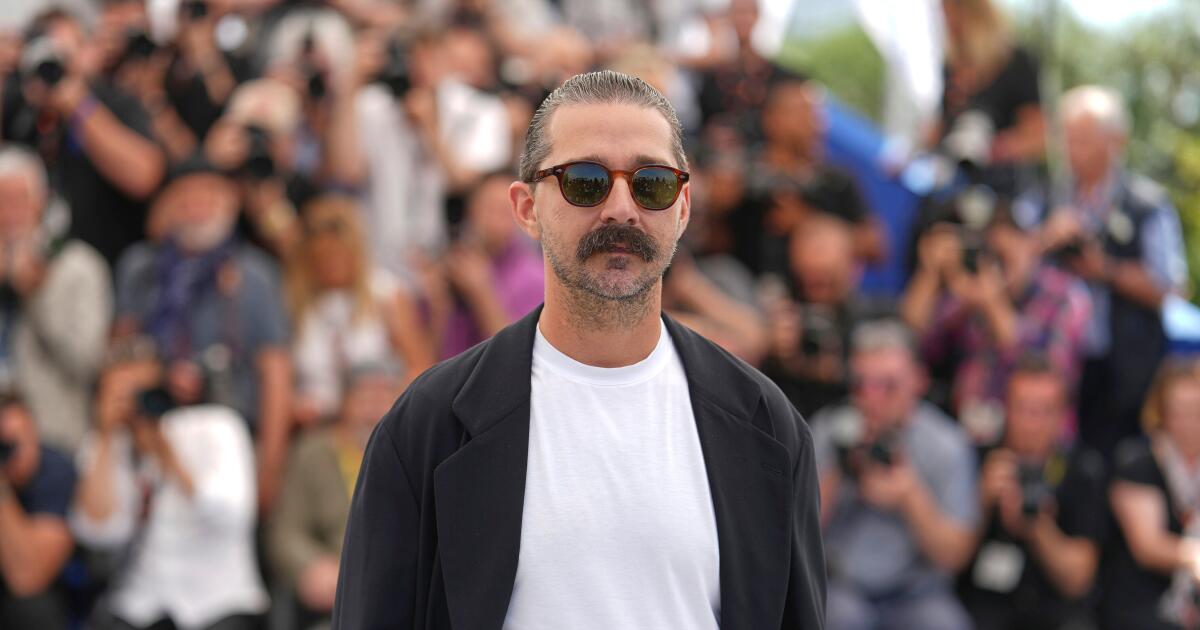
Actor Shia LaBeouf’s raucous Mardi Gras episode in New Orleans earlier this month has now earned him court-ordered drug and alcohol treatment.
A New Orleans judge on Thursday ordered the former Disney Channel star, 39, to begin substance abuse treatment and undergo weekly drug testing after he was arrested on suspicion of assaulting two men in the city’s famed French Quarter. He was charged with two counts of simple battery, the Associated Press reported.
“Transformers” and “Honey Boy” actor LaBeouf agreed to the updated terms of his release, including posting bond of $100,000, and underwent a drug test during his court appearance on Thursday. His attorney said the test did not show illegal substances in the actor’s system.
Orleans Parish Criminal Court judge Simone Levine criticized LaBeouf for his behavior during the Mardi Gras celebrations. In addition to striking the two men at a bar, LaBeouf allegedly yelled homophobic slurs. Levine expressed concern for “the safety of this larger community” and said LaBeouf “does not take his alcohol addiction seriously.”
A legal representative for LaBeouf did not immediately respond to a request for comment but said during the actor’s court appearance that “being drunk on Mardi Gras is not a crime.”
The actor has yet to enter a formal plea to the charges.
The New Orleans Police Department said its officers responded to a report of an assault in the 1400 block of Royal Street. The former “Even Stevens” child star was “causing a disturbance” at the business, leading staff to remove him from the premises, police said. The actor allegedly “used his closed fists” on one of the victims “several times.”
Authorities said LaBeouf left the business but returned, “acting even more aggressive.” According to the incident report, an unspecified number of people tried to subdue him and eventually let him go “in hope that he would leave.” Instead, police said, LaBeouf began assaulting the same man as before, hitting his upper body with closed fists. The actor is accused of punching the second man in the nose.
People held down LaBeouf until officials arrived. He was transported to a hospital and treated for unknown injuries and was arrested and charged upon his release.
An additional police report identified a local entertainer as one of LaBeouf’s alleged victims. The “Megalopolis” actor, whose history of violent behavior has led to previous arrests and other legal troubles, allegedly threatened the man’s life and shouted homophobic slurs.
Levine ordered that LaBeouf refrain from contacting the two victims and visiting the bar at the center of the brawl. She also denied his travel requests.
Hours after news of the brawl and his arrest spread, LaBeouf issued a brief statement on social media.
He posted to X: “Free me.”
Baz Luhrmann will make you fall in love with Elvis Presley

Here’s your first look at Kratos in Amazon’s God of War show

State Dept authorizes non-essential US Embassy personnel in Jerusalem to depart ahead of possible Iran strikes

Where Iran’s ballistic missiles can reach — and how close they are to the US

Heart disease threat projected to climb sharply for key demographic

Florida High School Football Rankings: Top 25 teams – Oct. 21

Cleary's 21 help Le Moyne down Central Connecticut State 69-64 in OT

How old is Bo Nix? What to know about Oregon quarterback ahead of 2024 NFL Draft

99th annual Pony Swim held in Virginia

Indiana Members Credit Union announced as new anchor tenant at Bottleworks District
Where Iran’s ballistic missiles can reach — and how close they are to the US

Has India’s influence in Afghanistan grown under the Taliban?

Bill Clinton to testify before House committee investigating Epstein links

Read Judge Schiltz’s Order

Vulnerable House Dem lashes out at Trump’s ‘racist’ SOTU challenge: ‘That was uncomfortable’
-

 World1 day ago
Exclusive: DeepSeek withholds latest AI model from US chipmakers including Nvidia, sources say
-

 Massachusetts2 days ago
Mother and daughter injured in Taunton house explosion
-

 Montana1 week ago
2026 MHSA Montana Wrestling State Championship Brackets And Results – FloWrestling
-

 Oklahoma1 week ago
Wildfires rage in Oklahoma as thousands urged to evacuate a small city
-

 Louisiana4 days ago
Wildfire near Gum Swamp Road in Livingston Parish now under control; more than 200 acres burned
-

 Technology6 days ago
YouTube TV billing scam emails are hitting inboxes
-

 Denver, CO2 days ago
10 acres charred, 5 injured in Thornton grass fire, evacuation orders lifted
-

 Technology6 days ago
Stellantis is in a crisis of its own making