Lifestyle
Centuries-old cherries were found at George Washington's home. What can they tell us?

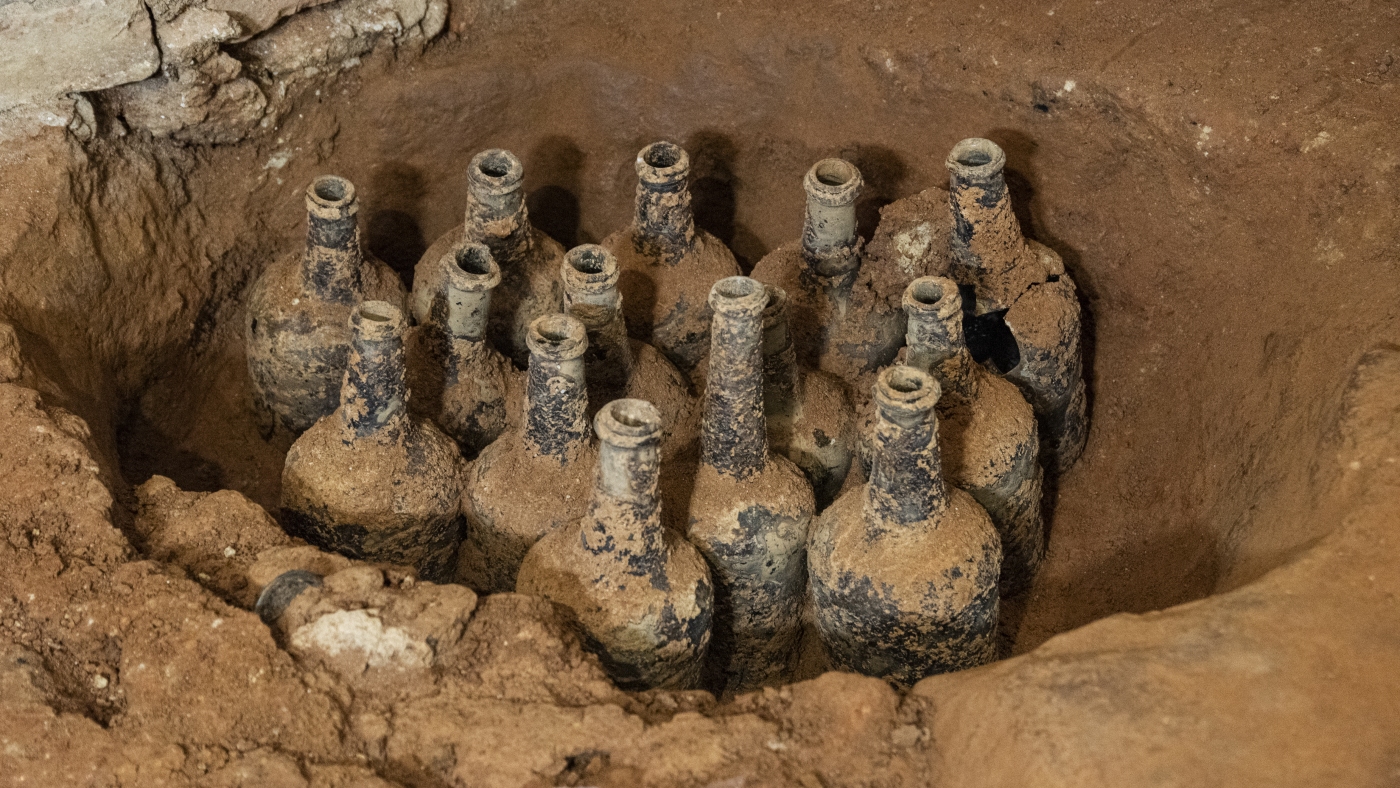
Archaeologists on a multi-year restoration project found 35 bottles of cherries and berries in five different pits in the Mount Vernon cellar.
George Brown/Mount Vernon Ladies’ Association
hide caption
toggle caption
George Brown/Mount Vernon Ladies’ Association
Archeologists at George Washington’s historic Virginia home have unearthed more than two dozen bottles of cherries and berries dating back to the 18th century in a particularly juicy find.
Officials first announced in April that they had discovered two glass jars of cherries, liquid and pits while excavating the cellar of Mount Vernon, the residence, plantation and final resting place of the nation’s first president.
Further sweetening the deal, last week they announced the discovery of 35 more fruit-filled vessels. Officials say 29 of the bottles are intact and contain “perfectly preserved cherries and berries, likely gooseberries or currants.”
“To our knowledge, this is an unprecedented find and nothing of this scale and significance has ever been excavated in North America,” Mount Vernon President and CEO Doug Bradburn said in a statement.
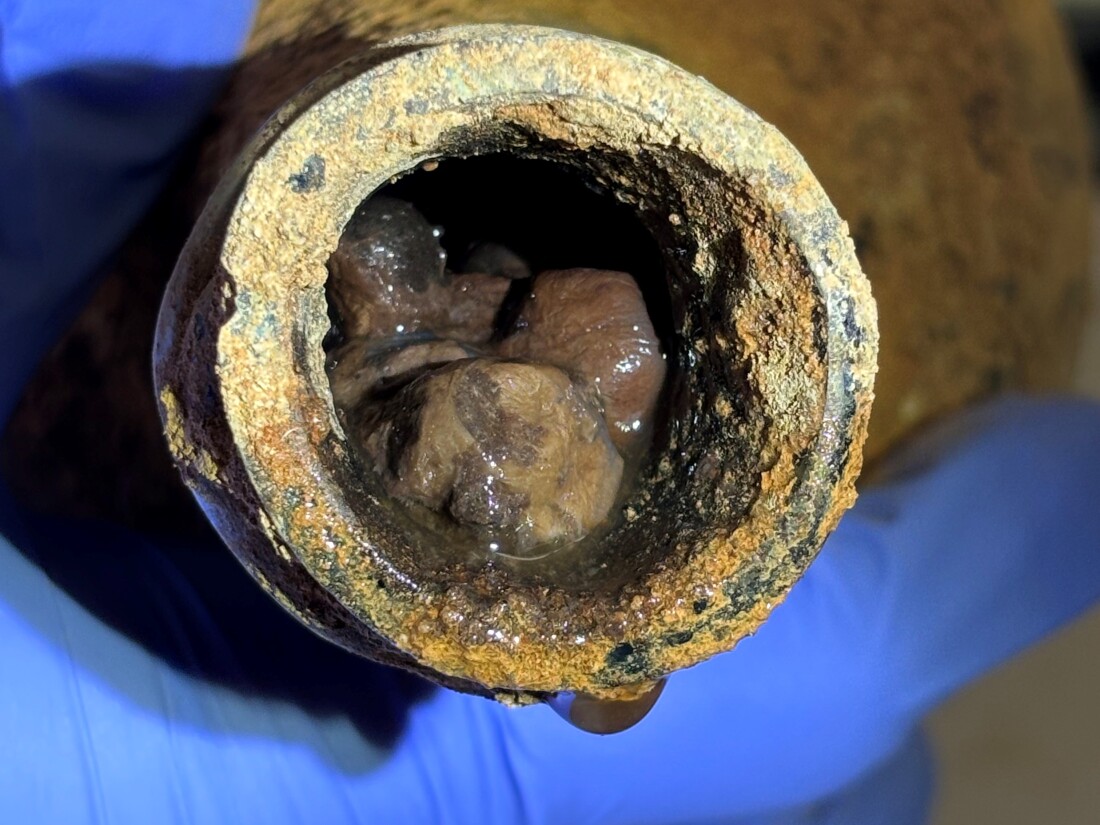
A view of preserved cherries inside one of the bottles found at Mount Vernon.
Mount Vernon Ladies’ Association
hide caption
toggle caption
Mount Vernon Ladies’ Association
The bottles, whose shapes are characteristic of styles from the 1740s and 1750s, were discovered in five storage pits throughout the cellar.
“These artifacts likely haven’t seen the light of day since before the American Revolution, perhaps forgotten when George Washington departed Mount Vernon to take command of the Continental Army,” Bradburn added.
That was in 1775.
Archaeologists revisited the site as part of a privately funded $40 million preservation project, aimed at ensuring Mount Vernon’s structural integrity and slated for completion in 2026 — just in time for America’s 250th birthday.
Now, fresh off this well-preserved discovery, researchers hope that modern technology will allow them to learn more about the cherries and, by extension, the world from which they came.

Jason Boroughs, the principal archaeologist at Mount Vernon, called the discovery “beyond extraordinary.” He told NPR and WBUR’s Here & Now in April that “intact 18th-century food remains is just not something that’s typically found.”
The cherries, he added, can serve as a window into the environment and cuisine of the period, as well as the entire Mount Vernon community — and not just the first first family.
“The bottles and the contents are actually material items that were connected to real lives and real people in the past,” Boroughs said. “They may have been intended for the Washingtons’ table, but they were certainly picked and packaged and stored by members of the enslaved community here.”
The cherries can teach us about life at Mount Vernon
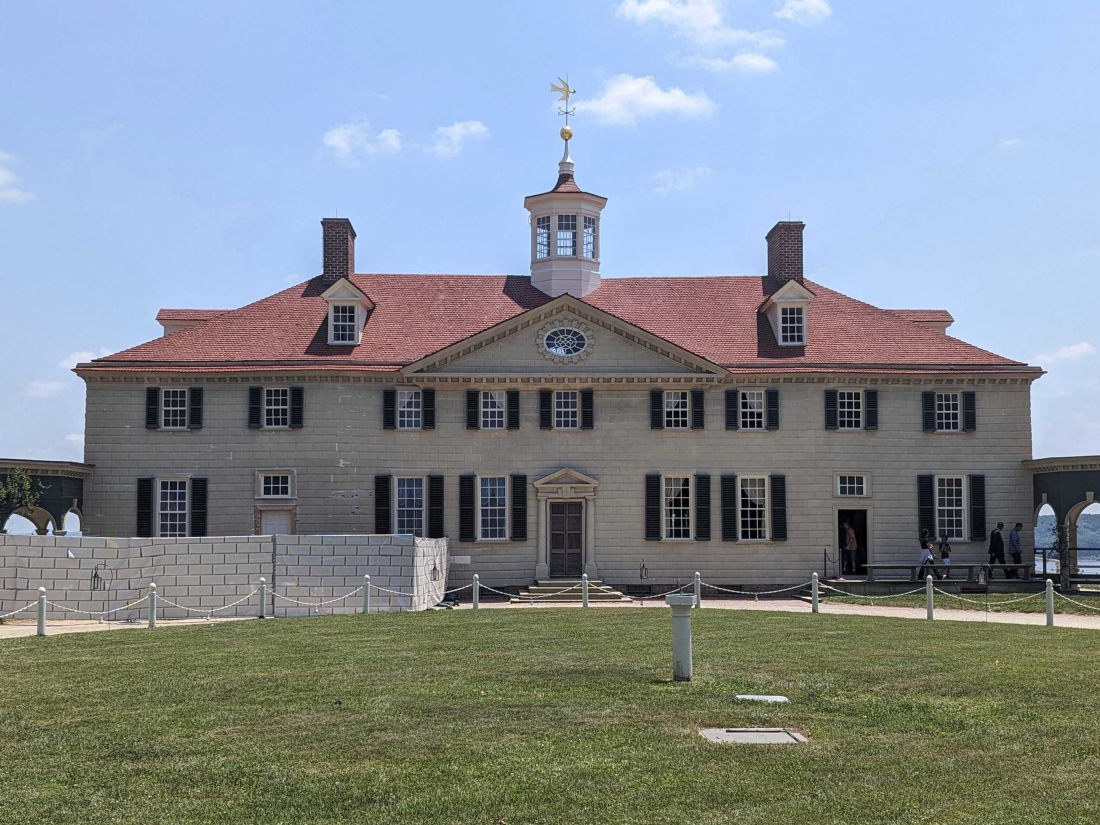
George Washington’s residence in Mount Vernon, Va.,
Nathan Ellgren/AP
hide caption
toggle caption
Nathan Ellgren/AP
Boroughs said this month the bottles and their contents are a “testament to the knowledge and skill of the enslaved people who managed the food preparations from tree to table” at Mount Vernon.
At least 577 enslaved people lived at Mount Vernon during the course of Washington’s life, according to the institution. Washington left instructions in his will for the eventual emancipation of those he owned.
Among them was Doll, who was 38 in 1759 when Martha Washington brought her and her five children to the estate and placed her in charge of the kitchen.
Doll likely no longer had a formal work assignment in her later years, but continued to “use the kitchen to distill rose and mint water for medicinal purposes and to dry fruits such as cherries,” historians say.
In fact, a 1795 letter from Martha Washington to her niece, Fanny Bassett, appears to acknowledge Doll’s expertise in that area.
Martha Washington, writing from Philadelphia to Bassett, who lived at Mount Vernon, mentions that she would like “some of the morelly cherrys” dried, adding, “I should think old Doll cannot have forgot how to do them.”
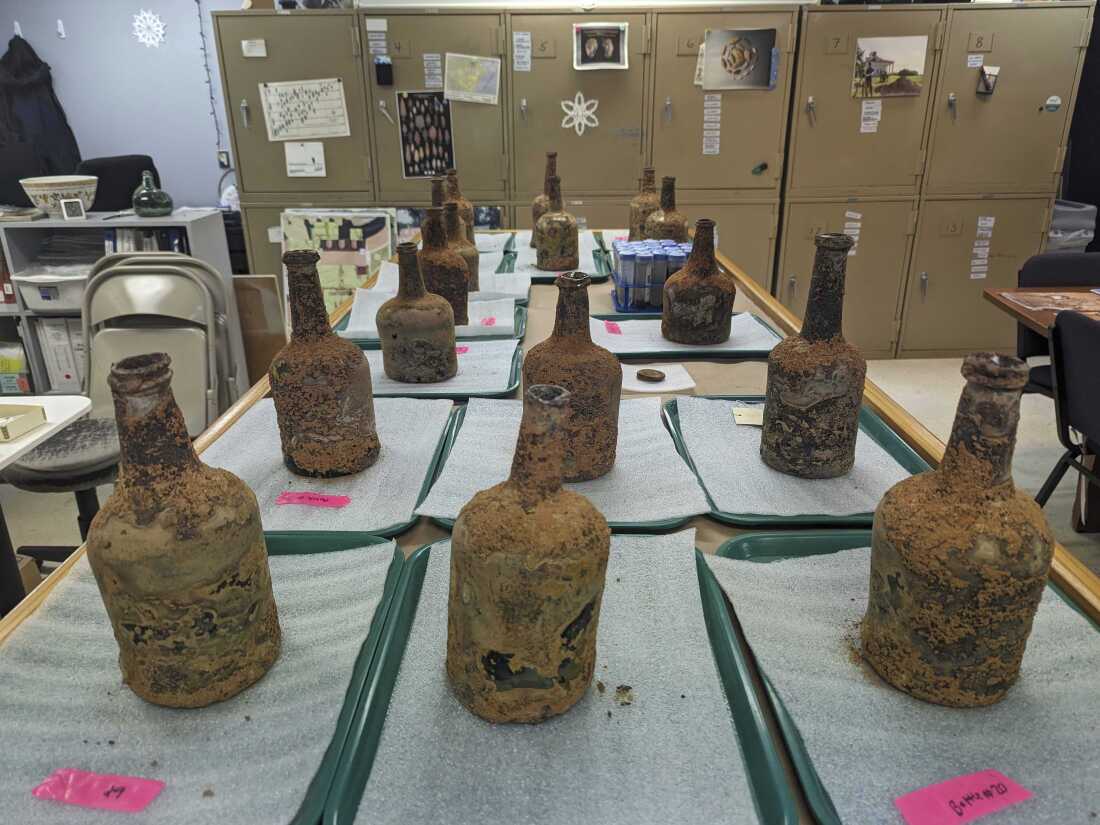
18th-century bottles that contained fruit sit inside an archaeology lab near George Washington’s residence in Mount Vernon, Va., on Monday.
Nathan Ellgren/AP
hide caption
toggle caption
Nathan Ellgren/AP
It’s not the only clue that the Washingtons were fans of cherries.
Historians at Mount Vernon say the family often enjoyed a popular brandy-based drink called “Cherry Bounce,” made from cherry juice infused with spices over the course of two weeks.
Washington was apparently such a fan of the cordial that, as general, he packed a “canteen” of it — as well as Madeira and port — for a 1784 journey across the Allegheny Mountains.
Boroughs told Here & Now that there is also evidence — including from letters and diaries of Chesapeake planters — that families in the area would enjoy bowls of preserved cherries with meals.
“So it’s quite likely that these bottles had been on the Washingtons’ table more than once,” he said.
The 18th-century preservation process involved placing the cherries in dry bottles, corking them and then burying them under heavy clay, to protect the fleshy fruits from elements like mold and fungus.
Normally, Boroughs said, they were only intended to be stored as such for about a year.
“But it’s because of the way that they were placed in the ground and there they remained until this year that they were able to survive, basically, the ravages of time,” he explained.
Scientists hope the discovery might bear fruit
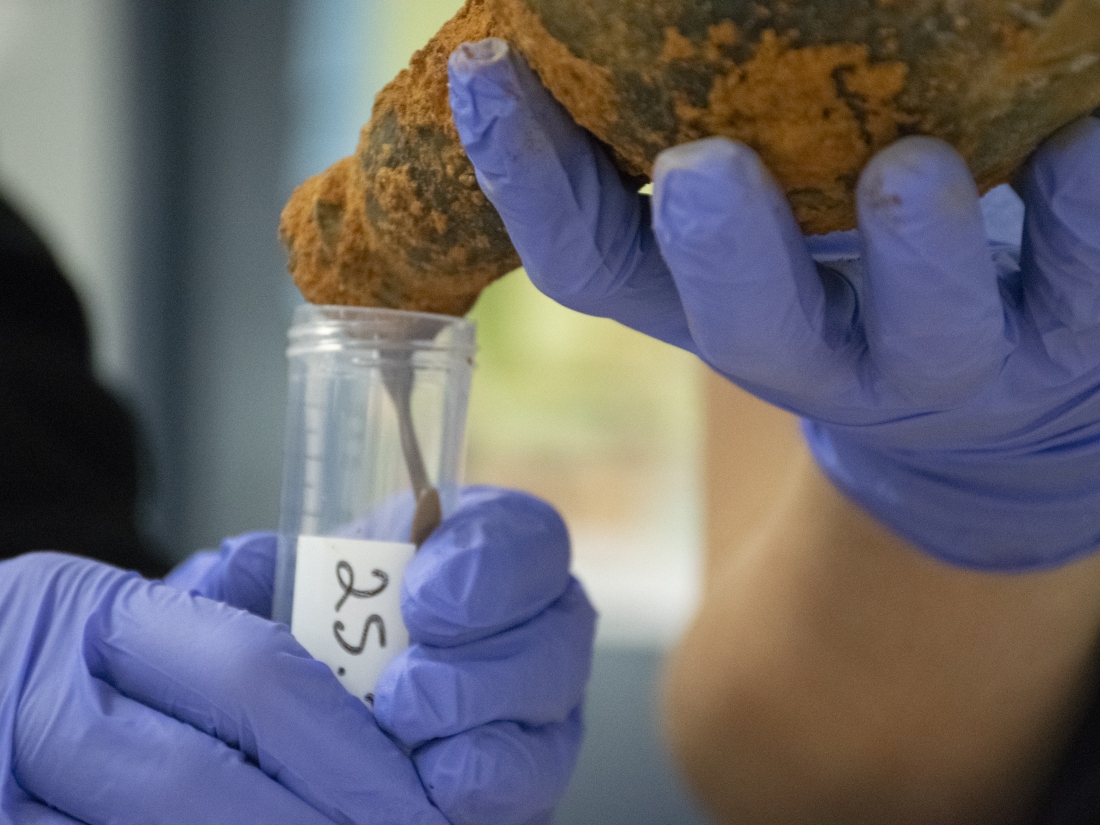
Fruit substance is carefully extracted from a bottle.
Tess Ostoyich/Mount Vernon Ladies’ Association
hide caption
toggle caption
Tess Ostoyich/Mount Vernon Ladies’ Association
Experts have extracted the contents of the bottles and refrigerated them at Mount Vernon, where they will undergo scientific analysis. The bottles themselves are “slowly drying” in the lab and will be sent off-site for conservation, officials say.
Mount Vernon is partnering with the United States Department of Agriculture’s Agricultural Research Service (ARS) to analyze the 250-year-old produce.
Benjamin Gutierrez, a plant geneticist and the apple and tart cherry curator at the USDA-ARS Plant Genetic Resources Unit in New York, told NPR that the first thing his team did was advise the archeologists on how to extract the substance from the bottles in the hopes of best “capturing that moment of the last hands that put them in the earth.”
“We had anxiety,” he said. “You hear ‘fruit remains’ and you’re picturing what’s in the back of your fridge, right? It’s slowly degrading now that it’s out in the open, we’ve got to get to this before it turns to pulp.”
Gutierrez says their main priority is to extract DNA from the cherry tissue and compare it to their robust tart cherry database to try to identify — or at least narrow down — which variety the Washingtons grew and enjoyed at Mount Vernon. That could, in turn, shed light on how the Virginia climate has changed since.
Researchers suspect the cherries are of a tart variety, with a relatively acidic composition that likely helped aid in their preservation.
So far, Gutierrez says they have identified 54 cherry pits and 23 stems from sifting through just the first two vessels — which would suggest that each bottle was at least originally chock full of some 50 to 70 cherries.
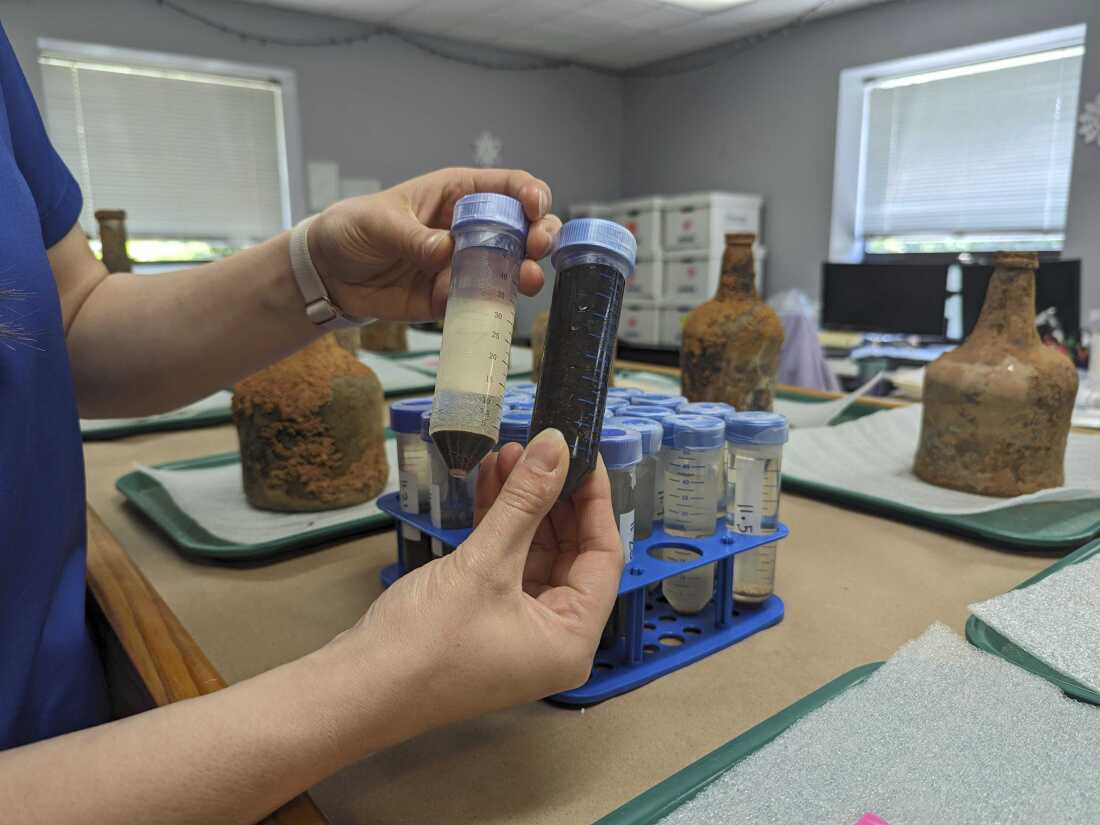
Curator Lily Carhart holds up different samples of liquid they extracted from a few dozen bottles.
Nathan Ellgren/AP
hide caption
toggle caption
Nathan Ellgren/AP
The sheer amount of material, he adds, means researchers can be a little bit more “adventurous” in what they do to some of it while carefully preserving the rest.
“Who knows in another 100 years what other tests they might want to do,” he says.
In the nearer-term, his team hopes to have more answers within six months or a year. One of the biggest questions is whether they can germinate seeds from any of the cherry pits to grow a new tree.
Gutierrez says it’s somewhat of a long shot, since many of the pits are waterlogged. And even if germination is possible, the seeds wouldn’t produce the same exact “mother tree,” but rather the next generation of it.
Still, he says, it would be really something to plant a new tree out of historic cherry pits.
“We work so much with heirloom groups conserving grandma’s apple tree in their backyard,” he adds. “Fruit somehow captures our imagination and our culture more than any other crop, I feel like.”
And one could argue that would be the cherry on top for Washington of all people, given one of the most enduring myths about him centers on chopping down that very type of tree.


On-air challenge
Based on the clue, name two words that have the same number of letters and begin and end with the letters provided. (Ex. Rocks / five letters / S and E —> Slate, Shale)
1. European languages in 7 letters starting with S and ending with .
2. Ancient stringed instruments / 4 letters / L and E
3. Birds / 6 letters / P and N
4. Parts of the body / 5 letters / T and H
5. Things seen in a classroom / 5 letters / C and K
6. Newsstand magazines / 7 letters / E and E
7. Books of the Bible / 4 letters / A and S
8. Foods from Italy / 5 letters / P and A
Last week’s challenge
Next weekend will be the 186th convention of the National Puzzler League, in Bloomington, Ind., which I’ll be attending as always. Two other people who will be there are Henri Picciotto and Joshua Kosman, who created this week’s challenge. Name two words that are opposites. They share a single letter. Remove that shared letter from each word, put a hyphen between the two starting words, and you’ll get a term you sometimes see in food ads. What are the two words?
Challenge answer
Slow, fast –> low-fat
Winner
Debra Waller of Burlington, Kentucky
This week’s challenge
This week’s challenge comes from Steve Baggish, of Arlington, Mass. Take the 10-letter name of a popular TV series for which most of its seasons have been filmed in a foreign country. Remove the first and last letters, and the remaining letters can be rearranged to spell the name of a country. What are the two names?
If you know the answer to the challenge, submit it below by Thursday, July 16 at 3 p.m. ET. Listeners whose answers are selected win a chance to play the on-air puzzle.

“Portraits 2019 – 2026” by Tyler Matthew Oyer at Night Gallery
“Location Unknown, 2023 – TANA 2023.”
(Tyler Matthew Oyer and Night Gallery)
Experience Tyler Matthew Oyer’s photographic exhibition, “Portraits 2019-2026.” This immersive show moves through seven years of portraits through Oyer’s lens, capturing subjects’ raw individuality. Showcasing “the panoramic and the intimate,” the photographs line the entirety of the gallery in identical scales and frames, emphasizing that every face carries equal presence and beauty. The exhibition coincides with Oyer’s fifth portrait book release, which features selections from his extensive archive. Open July 18 through Aug. 15. 2050 Imperial St., Los Angeles. nightgallery.com
Paloma Wool opening

Paloma Wool’s first permanent store in L.A. houses footwear, bags, a fresh new menswear line and exclusive specialty projects. This new space contrasts a bright, vivid backdrop with dark furnishings, alluding to the brand’s edgy, crisp designs. Open now. 8410 Melrose Ave., Los Angeles. palomawool.com
Noah Los Angeles opening

Founders Brendon Babenzien and Estelle Bailey-Babenzien bring the East Coast to L.A. this summer with the opening of Noah’s first West Coast location. Blending classic menswear with skate and surf culture, the space also features an in-store skate bowl, reflecting the brand’s roots while tapping into Los Angeles’ laid-back vibe. Open now. 911 N. Orange Drive, Los Angeles. noahny.com
H. Lorenzo opening

H. Lorenzo’s new flagship store reflects the brand’s commitment to highlight both established and emerging designers from around the world. It also showcases rare collectible furniture, including pieces by woodworker George Nakashima. By day, the space takes on an ever-evolving approach to display; by night it transforms into a hub for cultural programming and community gatherings. Open now. 8801 Beverly Blvd. West Hollywood. hlorenzo.com
Bang & Olufsen opening

Bang & Olufsen’s new flagship is using music to connect people from all over the world, reimagining the classic retail experience into an immersive sound house perfect for showcasing Los Angeles’ vibrant and diverse entertainment culture. Customers can experience the brand’s latest technology in a setting inspired by Nordic design and Southern California living. Open now. 370 N. Robertson Blvd., West Hollywood. bang-olufsen.com
Maison Louis Marie opening

Upgrade your scent game this summer with a visit to Maison Louis Marie’s new flagship store in Silver Lake. Designed in collaboration with Via Clover, the fragrance house has curated a light, modern space, blending French and Californian aesthetics where customers browse everything from Fleur de la Passion hair and body mist to No. 10 Aboukir candles at their own pace. Open now. 3920 Sunset Blvd., Los Angeles. maisonlouismarie.com
Molteni&C L.A. flagship redesign and new collection

Italian craftsmanship and contemporary living come together in Molteni&C’s newly redesigned Beverly Hills flagship. After exploring thoughtfully curated living spaces featuring coffee tables designed by Vincent Van Duysen, be sure to check out the brands’ latest Outdoor Collection, ideal for the heat of L.A.’s long summers. Open now. 147 N Robertson Blvd., West Hollywood. molteni&c.com
Zegna’s new fragrance line

Zegna’s new fragrance line, Memorie, is shaped by place, ritual and intention. Inspired by the Alps of northern Italy, each of the six scents captures a moment, place or object from founder Ermenegildo Zegna’s life, preserving memory through fragrance. Available now. zegna.com
“Animals” by Alex Gardner at Perrotin

“Catapult,” 2025. Acrylic on canvas. Unframed: 48 1/16 x 96 1/16 inches. Framed: 51 7/8 x 99 3/4 x 5 inches.
(Don Lewis/Alex Gardner; Perrotin)
Join Long Beach artist Alex Gardner for the final days of his first solo exhibition in a decade as he reimagines the meaning of fatherhood at Perrotin. Through a series of acrylic paintings, Gardner explores intimate connections between parents and children, partners and siblings, inviting viewers to identify themselves within his signature faceless figures. Open through July 11. 5036 W. Pico Blvd., Los Angeles. perrotin.com

A promo image of Peter Sagal, Jason Narducy, and Alzo Slade
NPR and James Richards IV/NPR and Jason Narducy
hide caption
toggle caption
NPR and James Richards IV/NPR and Jason Narducy
This week, we’re live in Milwaukee with musician Jason Narducy. Plus, panelists Alonzo Bodden, Adam Burke, and Negin Farsad talk the World Cup, Love Island, and new rules for summer travel.
-

 Arkansas46 seconds ago
Arkansas officials react to death of Sen. Lindsey Graham
-

 California7 minutes ago
Exclusive: Paramount weighs leaving California over Warner Bros. rift
-

 Colorado13 minutes ago
New Colorado wildfire sparks evacuations south of Steamboat Springs
-

 Connecticut19 minutes ago
Cyclosporiasis outbreak prompts food safety concerns in Connecticut
-

 Delaware25 minutes ago
Delaware still in drought despite heavy rainfall
-

 Florida31 minutes ago
Florida leaders react to Sen. Lindsey Graham’s death, remembering his legacy of public service
-

 Georgia37 minutes ago
Georgia leaders remember Sen. Lindsey Graham after longtime South Carolina lawmaker’s death
-

 Hawaii43 minutes ago
Hawaii’s JJ Mandaquit took roundabout route to reunite with Tommy Lloyd

