Lifestyle
Meet Anh Phoong, L.A.’s latest billboard celebrity, serving looks with Humberto Leon

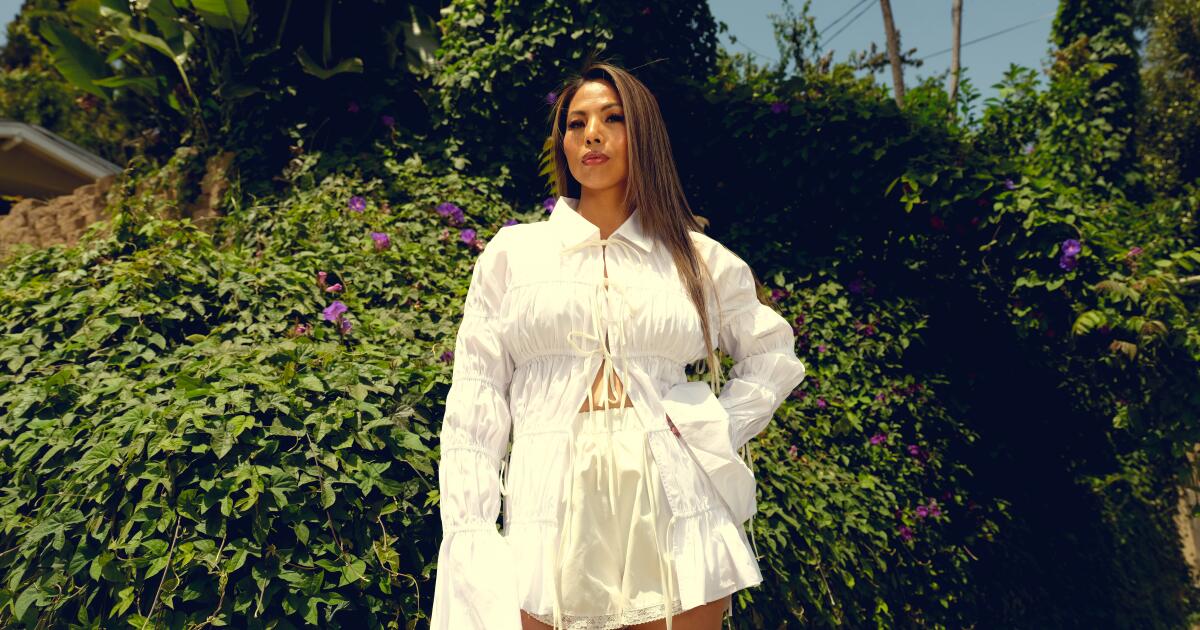
Anh Phoong stands in front of one of her L.A. billboards. Phoong wears Oori Ott bodysuit and shorts, Firmé Atelier jacket.
(Kanya Iwana/For The Times)
Anh Phoong isn’t afraid of heights. She has a vivid memory of herself in college dancing on top of a nightclub speaker. It’s an image that her friends won’t let her live down to this day, telling her, “Anh, all we remember you as is the girl on speakers.”
Now, she’s the woman on billboards.
If her name doesn’t immediately ring a bell, it will when it’s said in a sentence: “Something wrong? Call Anh Phoong.” I first saw the personal injury attorney’s blue-and-yellow billboards last November. They struck me in a way that no other lawyer billboard has. There was a campiness that I couldn’t quite put my finger on, so I snapped a photo and posted it on my Instagram story. “This is such a serve,” I typed. Immediately, other friends replied, also curious about this Asian woman who was giving Jacoby & Meyers and Shen Yun a run for their money.
Six months later I’m meeting Phoong for dinner. She’s in L.A. for her goddaughter’s college graduation and wants Asian food. Phoong is Chinese Vietnamese, which means I’m twice more likely to disappoint her with restaurant recommendations. And so, we meet at Lasita in Chinatown, a Filipino rotisserie spot that I know we’ll both love.
Phoong tells me a story over dinner. Earlier that day, Phoong and her assistant, Linh Lee, had been walking in downtown L.A., and just as they were about to cross the street, Lee saw her boss’s advert on the back of a bus. When she tried to get Phoong’s attention, she realized that it wasn’t Anh Phoong on the bus — it was Glen Powell. “Keep your hands clean. Call Dean,” the sign read. The actor was wearing a red sweater reminiscent of Phoong’s outfit in her billboards, standing in the middle of a blue-and-yellow sign. At the bottom corner, Lee noticed the Netflix logo and then it clicked: It was a parody poster promoting the streaming service’s new film “Hit Man.”
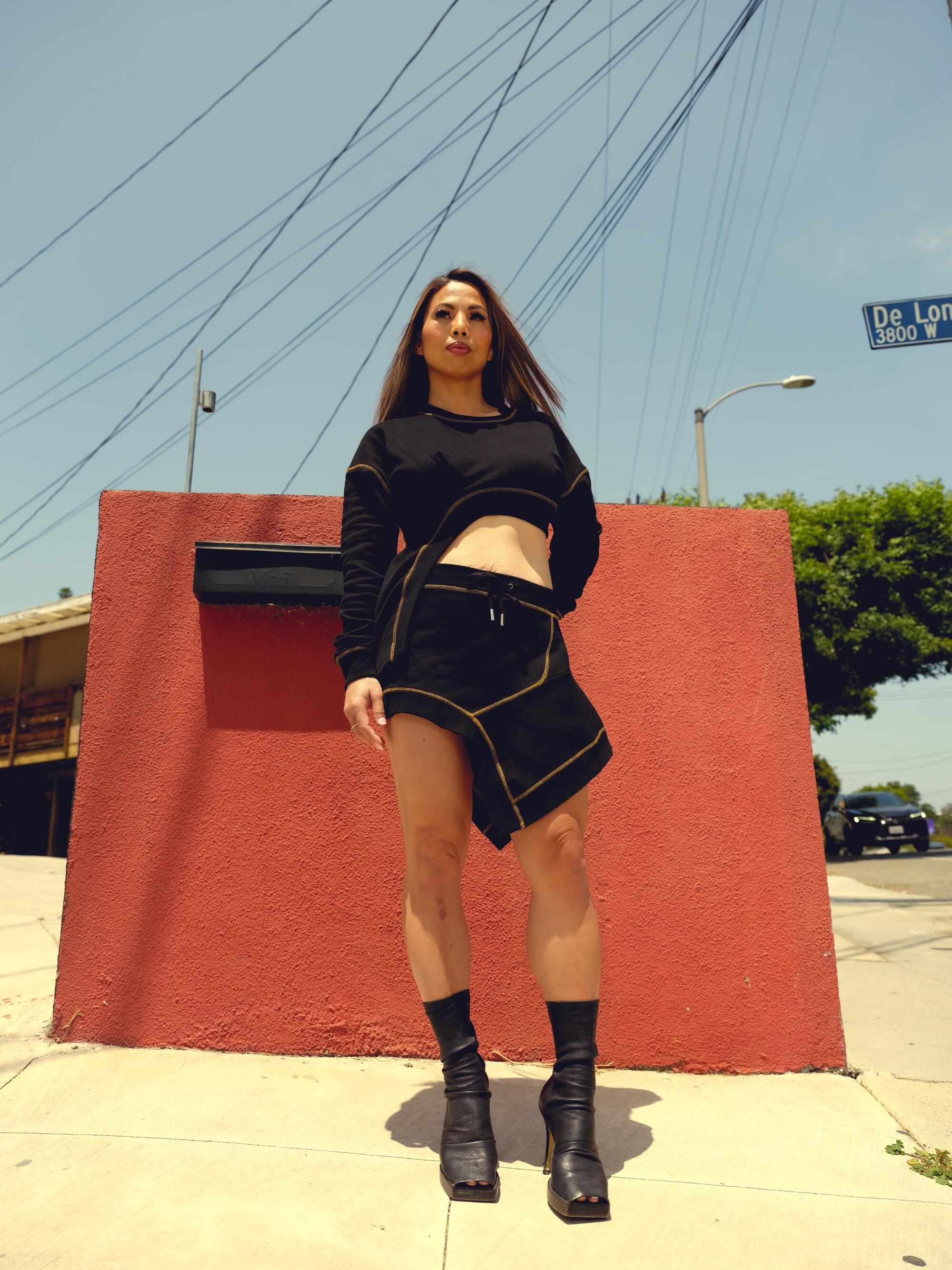
Anh Phoong wears Gao top and skirt.
“We weren’t sure if it was coincidental that [Netflix’s] billboards looked exactly like one of Anh’s, but after reading their slogan, we were sure it was an imitation,” Lee says. Phoong adds, “I’m flattered by that. The best compliment is when people try to imitate you.”
Her catchphrase has a specific cadence — one that easily evokes a laugh after every recitation. It’s a simple rhyme that Phoong’s husband came up with during a vacation in 2016. The couple spitballed a few ideas on their cruise until they landed on her now-famous slogan, which she initially thought was “so stupid, it’s not going to work.”
Little did she know that the catchphrase would later catapult her Sacramento firm into the pop culture zeitgeist. When businesses pulled back on advertising spending during the pandemic, Phoong noticed all the empty discounted billboards in California. She took advantage of the bundles and expanded her business to the Bay Area. Last November, the “Queen of NorCal,” as she’s dubbed, finally set her sights on the City of Angels.
While most attorneys would slap a lawsuit, Phoong clapped back by taking over L.A.
“What started happening in Northern California was a lot of the L.A. lawyers were coming up here,” Phoong explains. “They would pretend to be me. They’re buying my name, buying Google ads.” One day, Phoong says, a man stormed into her office claiming to be her client. She had no record of him, but he insisted that he was telling the truth. After looking through his contract, Phoong discovered that the man called another firm’s number from a Google ad, which was posing as Phoong Law.
“Don’t buy my name and tell people you’re me. That’s straight up fraud,” she says. While most attorneys would slap a lawsuit, Phoong clapped back by taking over L.A.
Almost immediately, her advertisements took the city by storm. “Just saw an Anh Phoong billboard in L.A… she’s EVOLVING,” someone wrote on X. “No single person or company has ever had a better billboard marketing campaign than her, and it needs to be studied in school,” TikToker Ben Trinh said in a video.
I didn’t realize until I moved here from the Midwest that Angelenos stan lawyers as if they were celebrities. When famed personal injury attorney Larry H. Parker died in March, there was an outpouring of tributes on social media. The 75-year-old lawyer was an early adopter of litigation advertising on TV, and became known for his catchphrase, “We’ll fight for you.”
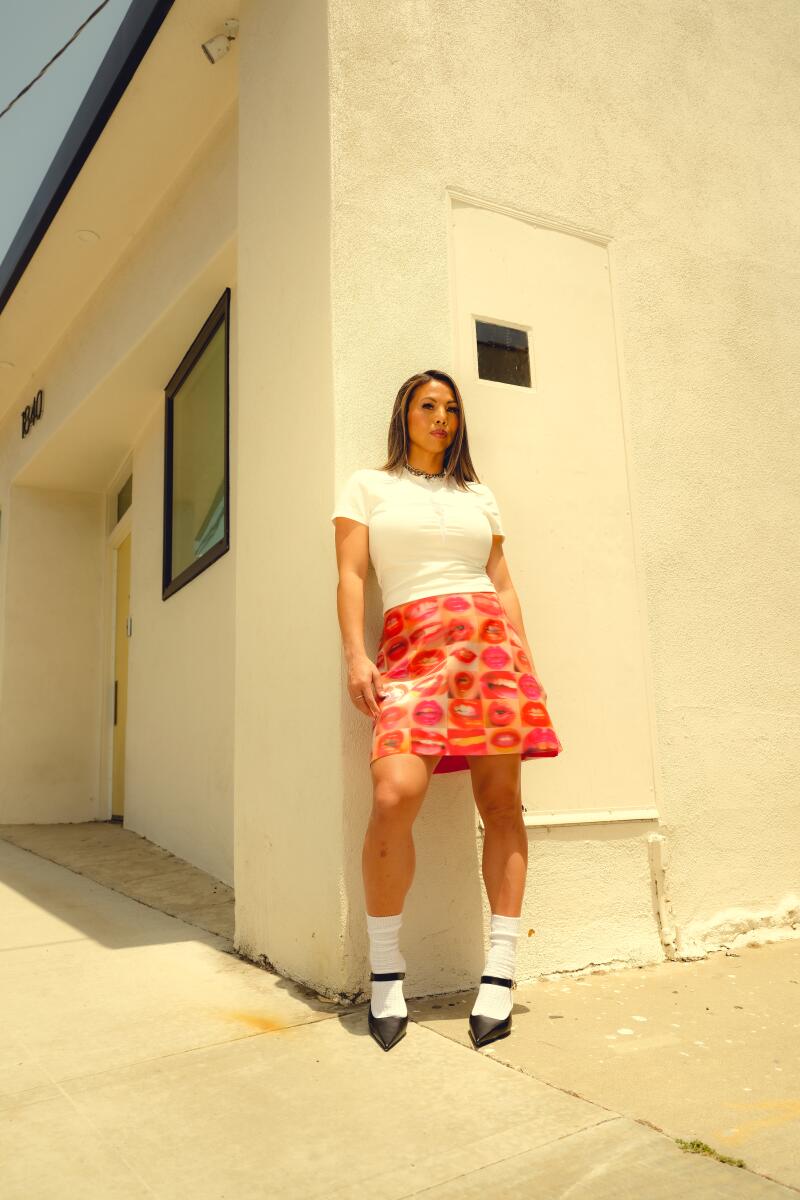
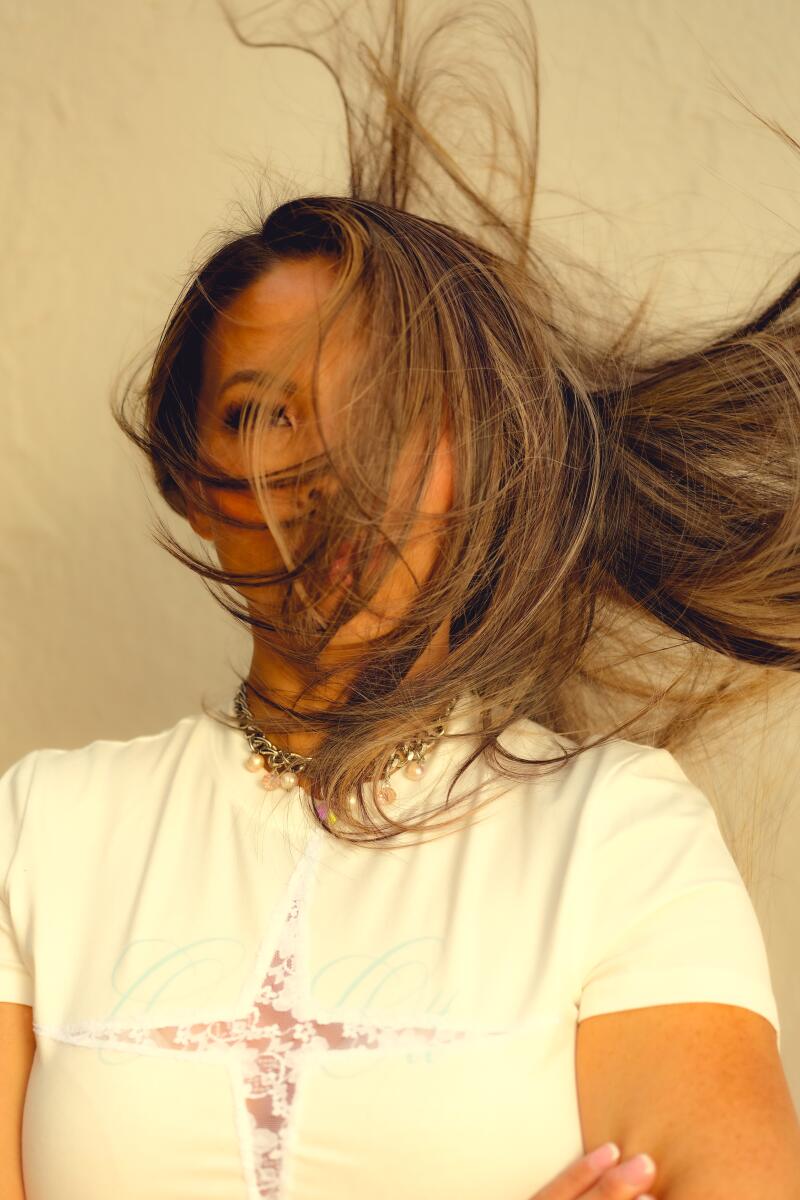
Anh Phoong wears Oori Ott top and Leeann Huang skirt.
“Not everyone knows who the big movie or pop star is, yet we all know who the local injury lawyer is,” Alfonso Gonzalez Jr. tells me. The visual artist, who started his career as a billboard painter, recently closed out his installation at Jeffrey Deitch’s “At the Edge of the Sun” exhibit. Gonzalez hand-painted real local injury lawyer advertisements on over 30 canvases, from Adriana’s Insurance to James Wang.
“The way we navigate the sprawling landscape on streets and freeways via car, combined with the influence of the movie industry, creates the perfect environment for the billboard format,” he explains.“There’s a long history of hand-painted billboards in Hollywood, primarily for movie posters, but also for local icons such as Angelyne,” Gonzalez adds.
In 1984, a series of billboards went up around town depicting a blond woman in suggestive poses. The only text was her name, Angelyne, emblazoned in hot pink letters. Nobody knew who this mysterious blondie was, but her billboards attracted the public’s attention — leading to offers from film studios and magazines. Gonzalez, who apprenticed under Angelyne’s original billboard painters, thinks of some of these lawyers as present-day Angelynes. But he also critiques the influx of personal injury billboards in his work by “humorously confronting marketing tactics such as fear-mongering and appealing to specific demographics.”
“I don’t want to intimidate people because a lot of the time you can’t be real with your lawyer”
— Anh Phoong
Phoong says she’s not in the business of instilling fear. “I don’t want to intimidate people because a lot of the time you can’t be real with your lawyer,” she tells me over our plates of pork belly lechon and Napa caesar salad. “Anybody can get into a car accident … but you don’t know who you can go to except for the white guys.” She knows she doesn’t fit in, adding, “What you would typically see was an older white male; dominant, a powerhouse, and straight-faced. We wanted to be different.”
The first decision she made was to not wear a suit in her billboards. “I just want to be real; I want people to see me,” she says. In her first billboard, she was intentional about wearing a black dress because it felt “safe.” Phoong wanted to incorporate more of her personal style, telling me her favorite designers include Gucci, Hermès, Givenchy and Dolce & Gabbana. Eventually, she added more colors to her billboard outfits, later donning a burgundy and blue dress that even inspired a drag look.
Alpha Andromeda has been doing drag in the Bay Area for years, but one particular performance last summer caught Phoong’s attention. The drag queen was in a trench coat performing to “Vroom Vroom” by Charli XCX on stage. Then, the lights went off and came back on. Alpha Andromeda was now in a blue dress impersonating Phoong, lip-syncing to her TV commercial intercut with Blondie’s “Call Me.”
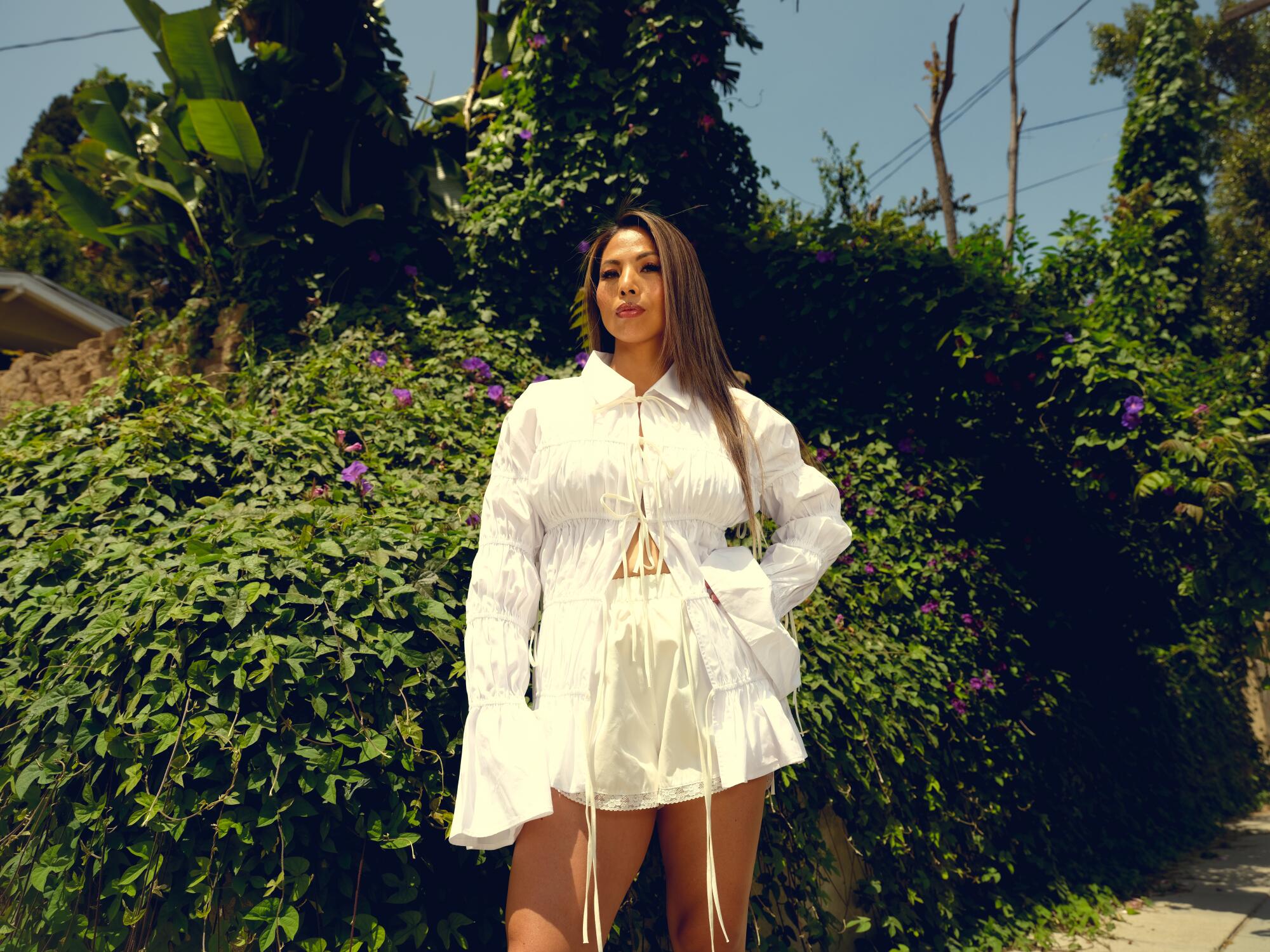
Anh Phoong wears Koredoko top and Oori Ott shorts.
“That billboard that you pass on your commute everyday? That’s drag now!” Alpha Andromeda tells me.
Being on a billboard wasn’t something Phoong was necessarily prepared for. “Struggling with teeth and being a young girl not feeling pretty enough, and then putting myself on a billboard? It’s a lot,” she says. “It’s not like ‘Oh, my God, I love myself so much.’ I was scared as hell.” She understands that the billboards are more than just about herself; it’s about representation. “The majority of my clients are minorities,” she explains. “I think they identify with me, and that’s who I want.” When Phoong Law traces their intake calls, their billboards are the No. 1 driving factor — and people aren’t just calling about legal services.
“I had a girl in Oakland, she was 12 years old, and her aunt reached out,” Phoong shares. The woman asked if the attorney had any merch to send her niece for her birthday. Phoong didn’t have any merch at the time, so instead she invited the girl out to lunch. (Since that encounter, however, the attorney is now on a shirt.)
As our dinner’s winding down, our server comes back with a slice of calamansi cream pie and recognizes who he’s been tending to all night. “Oh my God, you’re Anh Phoong!” he exclaims.
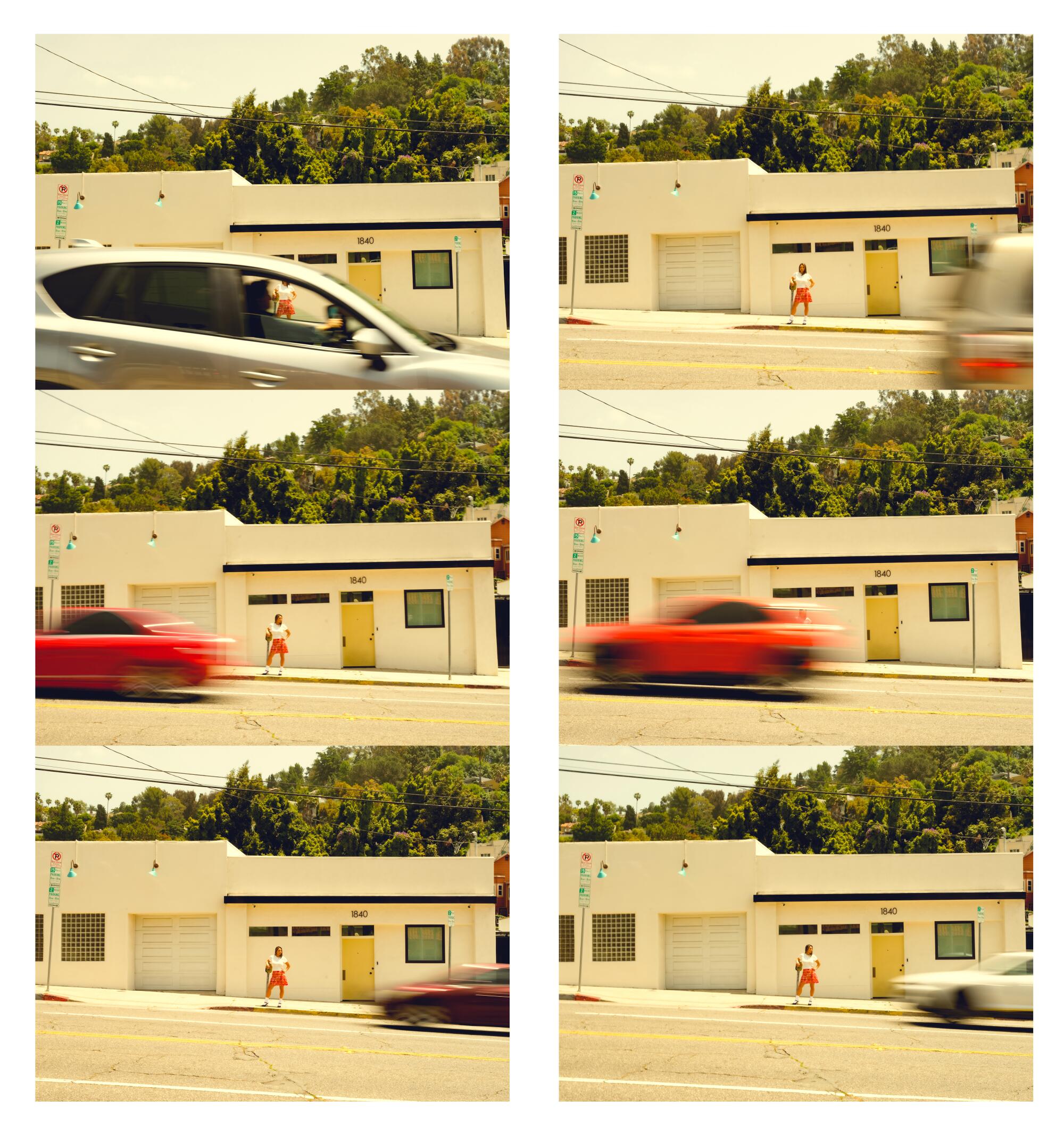
We all laugh at the interaction, a sure sign that Phoong has officially seeped into pop culture — our modern-day Angelyne, decked out in Gucci.
In early May, Phoong finally met Alpha Andromeda. The attorney found herself back at the club for the reopening of the Stud, a historic queer bar in San Francisco that closed during the pandemic. There was already buzz that Phoong would be making an appearance that night. “This is the absolute CAMPIEST thing I’ve ever seen,” someone commented on the bar’s Instagram flier featuring the lawyer. A line began to form, and any bystander would’ve thought Lady Gaga was in the house.
Phoong didn’t expect that reaction at all. “Is she even a lawyer? She’s just out there having fun,” she worried, telling me that she almost didn’t go that night. But just like the times she put herself on a speaker or her first billboard, Phoong told herself that night, “You know what? F— it. I want to do this.”
Production: Mere Studios
Makeup: Daphne Chantell Del Rosario
Hair: Adrian Arredondo
Photo assistant: Jeremy Sinclair
Styling assistant: Kelly Sachiko Page
Phillipe Thao is an entertainment and culture writer. His work has appeared in the Washington Post, Teen Vogue, InStyle and Catapult.


On-air challenge
Based on the clue, name two words that have the same number of letters and begin and end with the letters provided. (Ex. Rocks / five letters / S and E —> Slate, Shale)
1. European languages in 7 letters starting with S and ending with .
2. Ancient stringed instruments / 4 letters / L and E
3. Birds / 6 letters / P and N
4. Parts of the body / 5 letters / T and H
5. Things seen in a classroom / 5 letters / C and K
6. Newsstand magazines / 7 letters / E and E
7. Books of the Bible / 4 letters / A and S
8. Foods from Italy / 5 letters / P and A
Last week’s challenge
Next weekend will be the 186th convention of the National Puzzler League, in Bloomington, Ind., which I’ll be attending as always. Two other people who will be there are Henri Picciotto and Joshua Kosman, who created this week’s challenge. Name two words that are opposites. They share a single letter. Remove that shared letter from each word, put a hyphen between the two starting words, and you’ll get a term you sometimes see in food ads. What are the two words?
Challenge answer
Slow, fast –> low-fat
Winner
Debra Waller of Burlington, Kentucky
This week’s challenge
This week’s challenge comes from Steve Baggish, of Arlington, Mass. Take the 10-letter name of a popular TV series for which most of its seasons have been filmed in a foreign country. Remove the first and last letters, and the remaining letters can be rearranged to spell the name of a country. What are the two names?
If you know the answer to the challenge, submit it below by Thursday, July 16 at 3 p.m. ET. Listeners whose answers are selected win a chance to play the on-air puzzle.

“Portraits 2019 – 2026” by Tyler Matthew Oyer at Night Gallery
“Location Unknown, 2023 – TANA 2023.”
(Tyler Matthew Oyer and Night Gallery)
Experience Tyler Matthew Oyer’s photographic exhibition, “Portraits 2019-2026.” This immersive show moves through seven years of portraits through Oyer’s lens, capturing subjects’ raw individuality. Showcasing “the panoramic and the intimate,” the photographs line the entirety of the gallery in identical scales and frames, emphasizing that every face carries equal presence and beauty. The exhibition coincides with Oyer’s fifth portrait book release, which features selections from his extensive archive. Open July 18 through Aug. 15. 2050 Imperial St., Los Angeles. nightgallery.com
Paloma Wool opening

Paloma Wool’s first permanent store in L.A. houses footwear, bags, a fresh new menswear line and exclusive specialty projects. This new space contrasts a bright, vivid backdrop with dark furnishings, alluding to the brand’s edgy, crisp designs. Open now. 8410 Melrose Ave., Los Angeles. palomawool.com
Noah Los Angeles opening

Founders Brendon Babenzien and Estelle Bailey-Babenzien bring the East Coast to L.A. this summer with the opening of Noah’s first West Coast location. Blending classic menswear with skate and surf culture, the space also features an in-store skate bowl, reflecting the brand’s roots while tapping into Los Angeles’ laid-back vibe. Open now. 911 N. Orange Drive, Los Angeles. noahny.com
H. Lorenzo opening

H. Lorenzo’s new flagship store reflects the brand’s commitment to highlight both established and emerging designers from around the world. It also showcases rare collectible furniture, including pieces by woodworker George Nakashima. By day, the space takes on an ever-evolving approach to display; by night it transforms into a hub for cultural programming and community gatherings. Open now. 8801 Beverly Blvd. West Hollywood. hlorenzo.com
Bang & Olufsen opening

Bang & Olufsen’s new flagship is using music to connect people from all over the world, reimagining the classic retail experience into an immersive sound house perfect for showcasing Los Angeles’ vibrant and diverse entertainment culture. Customers can experience the brand’s latest technology in a setting inspired by Nordic design and Southern California living. Open now. 370 N. Robertson Blvd., West Hollywood. bang-olufsen.com
Maison Louis Marie opening

Upgrade your scent game this summer with a visit to Maison Louis Marie’s new flagship store in Silver Lake. Designed in collaboration with Via Clover, the fragrance house has curated a light, modern space, blending French and Californian aesthetics where customers browse everything from Fleur de la Passion hair and body mist to No. 10 Aboukir candles at their own pace. Open now. 3920 Sunset Blvd., Los Angeles. maisonlouismarie.com
Molteni&C L.A. flagship redesign and new collection

Italian craftsmanship and contemporary living come together in Molteni&C’s newly redesigned Beverly Hills flagship. After exploring thoughtfully curated living spaces featuring coffee tables designed by Vincent Van Duysen, be sure to check out the brands’ latest Outdoor Collection, ideal for the heat of L.A.’s long summers. Open now. 147 N Robertson Blvd., West Hollywood. molteni&c.com
Zegna’s new fragrance line

Zegna’s new fragrance line, Memorie, is shaped by place, ritual and intention. Inspired by the Alps of northern Italy, each of the six scents captures a moment, place or object from founder Ermenegildo Zegna’s life, preserving memory through fragrance. Available now. zegna.com
“Animals” by Alex Gardner at Perrotin

“Catapult,” 2025. Acrylic on canvas. Unframed: 48 1/16 x 96 1/16 inches. Framed: 51 7/8 x 99 3/4 x 5 inches.
(Don Lewis/Alex Gardner; Perrotin)
Join Long Beach artist Alex Gardner for the final days of his first solo exhibition in a decade as he reimagines the meaning of fatherhood at Perrotin. Through a series of acrylic paintings, Gardner explores intimate connections between parents and children, partners and siblings, inviting viewers to identify themselves within his signature faceless figures. Open through July 11. 5036 W. Pico Blvd., Los Angeles. perrotin.com

A promo image of Peter Sagal, Jason Narducy, and Alzo Slade
NPR and James Richards IV/NPR and Jason Narducy
hide caption
toggle caption
NPR and James Richards IV/NPR and Jason Narducy
This week, we’re live in Milwaukee with musician Jason Narducy. Plus, panelists Alonzo Bodden, Adam Burke, and Negin Farsad talk the World Cup, Love Island, and new rules for summer travel.
-

 Arkansas45 seconds ago
Arkansas officials react to death of Sen. Lindsey Graham
-

 California7 minutes ago
Exclusive: Paramount weighs leaving California over Warner Bros. rift
-

 Colorado13 minutes ago
New Colorado wildfire sparks evacuations south of Steamboat Springs
-

 Connecticut19 minutes ago
Cyclosporiasis outbreak prompts food safety concerns in Connecticut
-

 Delaware25 minutes ago
Delaware still in drought despite heavy rainfall
-

 Florida31 minutes ago
Florida leaders react to Sen. Lindsey Graham’s death, remembering his legacy of public service
-

 Georgia37 minutes ago
Georgia leaders remember Sen. Lindsey Graham after longtime South Carolina lawmaker’s death
-

 Hawaii43 minutes ago
Hawaii’s JJ Mandaquit took roundabout route to reunite with Tommy Lloyd

