Movie Reviews
Review | What Does that Nature Say to You: Hong Sang-soo finds humour in domesticity


4/5 stars
Veteran Korean director Hong Sang-soo specialises in delicate character studies, but rarely has he found such a warm ray of humour as he does in his latest film, What Does That Nature Say to You.
Premiering in competition at the Berlin International Film festival – a feat Hong seems to manage almost every year without fail – this new work is an incisive domestic comedy-drama that feels like it has the potential to break out of the festival circuit.
The story begins as a couple arrive by car from Seoul. Dong-hwa (Ha Seong-guk), a poet in his thirties, has driven his girlfriend, Jun-hee (Kang So-yi), to her parents’ home in Yeoju.
Introduced to her father, Or-yeong (Hong regular Kwon Hae-hyo), he is convinced to spend the day at the family homestead. Soon enough, he is drinking makgeolli with Jun-hee’s father, and promising that he wants to love her.
Dong-hwa, who earns money shooting wedding videos, is also principled, and refuses financial help from his parents.



Watch I Know Exactly How I Die on VOD
The director of I Know Exactly How I Die is Alexandra Spieth, who ensures a tight pace and some gorgeous shots. She previously directed Stag and created and starred in the web-series [Blank] My Life. The screenplay comes from Mike Corey, and I do really like the plot and evolution of this story.
As already mentioned, the star Rushabh Patel is the executive producer. As a result, this movie is billed as “Rushabh Patel’s I Know Exactly How I Die“, which I am not a fan of. Unless Rushabh Patel is famous in ways I am not familiar with – nor is IMDb, as this is his first and so far only credit there.
This is like people wondering if Something Very Bad Is Going to Happen is connected to Stranger Things, because the media keeps referring to it as a new show from The Duffer Brothers. Sure, they produced it, but Haley Z. Boston created the original story and wrote the screenplay. And she’s not even a newcomer.
Okay, rant over, but I just don’t understand the marketing and press decisions of it all.
Anyway, as already mentioned, the practical effects in I Know Exactly How I Die are gorgeous. Any slasher fan should enjoy the concept of the plot as well as those amazing practical effects. And yet, you will have to endure a little terrible CGI, but this is an indie production, so budget restraints come into play. Of course, so does choosing the best talent, and that did not happen for CGI here!
I Know Exactly How You Die is out on VOD from April 7, 2026. You can rent it on Digital HD from your preferred platform, including Prime Video and Fandango at Home. The film will also be available on DVD.
Movie Reviews
‘Super Mario’ fans ignore weak reviews and send sequel to $372.5 million global box office debut, biggest opening of the year for a studio film | Fortune

Mixed reviews didn’t dissuade mass audiences from buying tickets to the “The Super Mario Galaxy Movie,” which scored the biggest opening of the year for a Hollywood movie. The Illumination and Nintendo co-production earned $130.9 million over the weekend and a massive $190.1 million in its first five days in North American theaters, according to studio estimates Sunday.
Universal Pictures released the sequel globally on Wednesday, capitalizing on kids’ spring break vacations in the week leading up to the Easter holiday. With an estimated $182.4 million from 80 overseas markets, the film is looking at an astronomical $372.5 million debut — the latest hit for the PG rating. Mexico is leading the international bunch with $29.1 million from 5,136 screens, followed by the U.K. and Ireland with $19.7 million.
The animated sequel, Illumination CEO Christopher Meledandri’s 16th movie in 16 years, is the industry’s biggest debut since “Avatar: Fire and Ash” launched over Christmas. The Chinese movie “Pegasus 3,” which was not a Motion Picture Association release, has the slight edge for the 2026 global record, however.
It’s also a dip from the first film, which opened to $204 million domestically during the same five-day time frame in 2023 ($147 of that was from Friday, Saturday and Sunday). “The Super Mario Bros. Movie” went on to be the second biggest movie of 2023, with over $1.3 billion in box office receipts.
“The Super Mario Galaxy Movie,” which features returning voice actors Chris Pratt, Jack Black, Anya Taylor-Joy and Charlie Day, had a massive footprint in the U.S. and Canada, where it played in 4,252 theaters, including 421 IMAX and 1,345 premium large format screens. It made $15 million from the IMAX screens alone.
“It’s exactly the kind of broad, crowd-pleasing release that brings people into theatres,” AMC Chairman and CEO Adam Aron said in a statement.
It also cost around $110 million to make, not including marketing and promotion expenses. But it arrived on a wave of less-than-stellar reviews. Its Rotten Tomatoes score is currently sitting at a lousy 40%. Ticket buyers were more enthusiastic, however.
The family audience gave the movie five out of five stars according to PostTrak exit polls, while general audiences gave it four stars and an A- on CinemsScore. Audiences skewed male (61%) overall, although when it came to families attending there were slightly more moms (52%) than dads.
“These kind of audience reaction scores just point to a ridiculously strong run, not only throughout the spring, but likely into the summer as well,” said Jim Orr, Universal’s president of domestic distribution.
“The Super Mario Galaxy Movie” will open in Japan later this month.
Last year, the first weekend in April hosted the launch of another video game blockbuster, “A Minecraft Movie,” which had a bigger three-day debut ($162.8 million) but didn’t have a “Project Hail Mary” in a strong second place, meaning the weekend overall is still up around 5%.
As expected, “The Super Mario Galaxy Movie” ended the two-week reignof the Ryan Gosling-led sci-fi hit “Project Hail Mary,” which landed in second its third weekend in theaters where it added $30.7 million, bringing its running domestic total to $217.2 million. Worldwide, it’s made $420.7 million to date.
Third place went to A24’s provocative new movie “The Drama,” starring Zendaya and Robert Pattinson, which made an estimated $14.4 million from 3,087 theaters. The film’s stars have been on a massive and charming press blitz to promote their R-rated movie about a engaged couple grappling with an unnerving revelation, which cost a reported $28 million to produce. The reveal has drummed up a fair amount of cultural discourse. While reviews have been more positive than not (82% on Rotten Tomatoes), it got a less promising B CinemaScore.
“Hoppers” and “Reminders of Him” rounded out the top five. And the box office outlook looks bright overall, up around 30% from last year.
“There’s no better opening act for a great summer than a huge month of April powered by a mega blockbuster like the ‘The Super Mario Galaxy Movie,’” said Paul Dergarabedian, comscore’s head of marketplace trends.
Top 10 movies by domestic box office
With final domestic figures being released Monday, this list factors in the estimated ticket sales for Friday through Sunday at U.S. and Canadian theaters, according to Comscore:
1.“The Super Mario Galaxy Movie,” $130.9 million.
2.“Project Hail Mary,” $30.7 million.
3.“The Drama,” $14.4 million.
4.“Hoppers,” $5.8 million.
5.“Reminders of Him,” $2.2 million.
6.“A Great Awakening,” $2.1 million.
7.“They Will Kill You,” $1.9 million.
8.“Dhurandhar The Revenge,” $1.9 million.
9.“Ready or Not 2: Here I Come,” $1.8 million.
10.“Scream 7,” 915,000.


Man pleads guilty to shooting Justin

Recorder Rewind: NCAA Division III basketball championship (Photos)

Primanti Bros. closes Monroeville and North Versailles locations

Master’s week 2026 is underway

100 mph driver found not guilty of murder in deadly Rock Creek Parkway crash

Florida High School Football Rankings: Top 25 teams – Oct. 21

How old is Bo Nix? What to know about Oregon quarterback ahead of 2024 NFL Draft

Cleary's 21 help Le Moyne down Central Connecticut State 69-64 in OT

99th annual Pony Swim held in Virginia

Indiana Members Credit Union announced as new anchor tenant at Bottleworks District

GOP races to pass ICE, Border Patrol funding bill as priorities pile up, divisions emerge
Jet fuel crisis: Rationing triggered at four airports in Italy
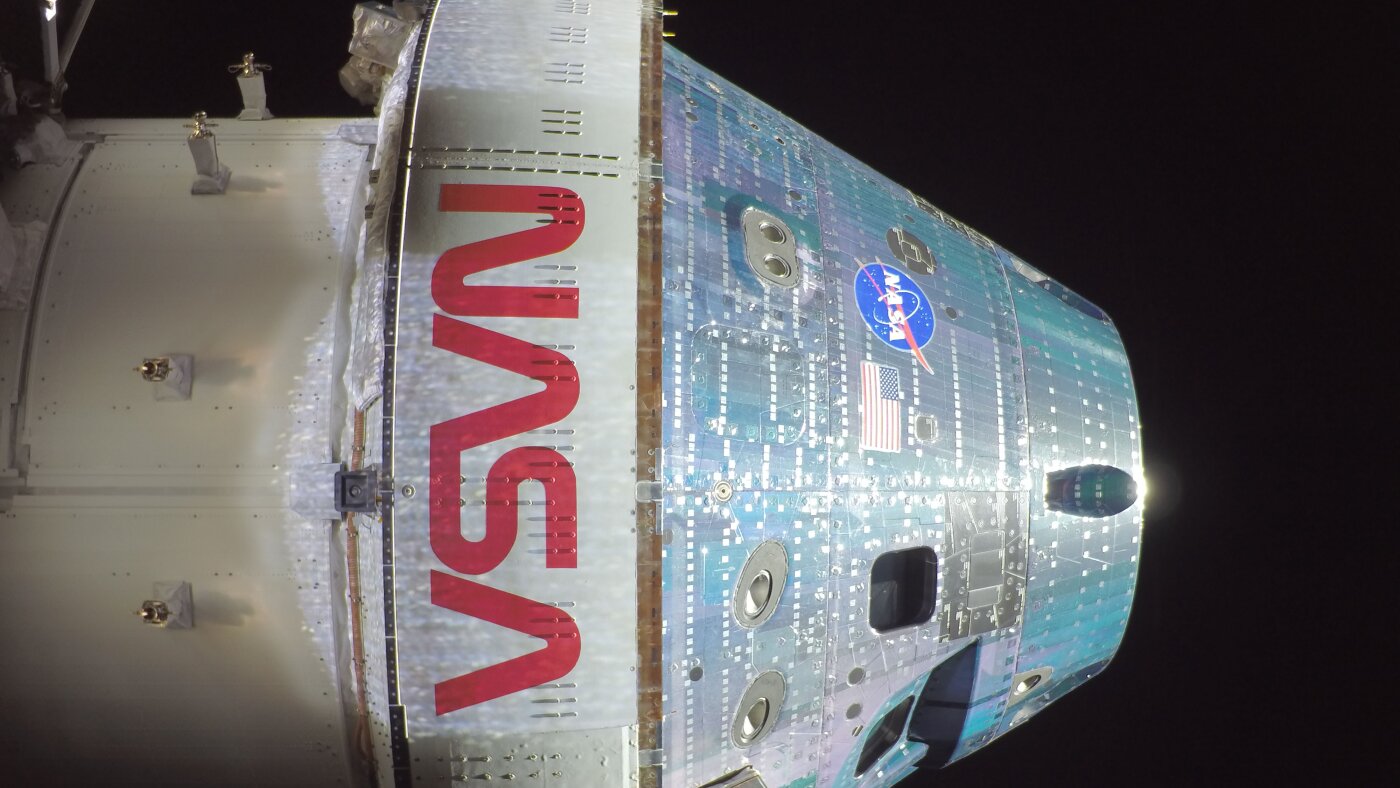
NASA’s Artemis II crew readies for Monday’s lunar flyby. Here’s what you need to know

Tax day is next week: Avoid these 5 common mistakes that can cost you money

Hamas armed wing says disarmament demands not acceptable
-

 South-Carolina1 week ago
South Carolina vs TCU predictions for Elite Eight game in March Madness
-

 Atlanta, GA2 days ago
1 teenage girl killed, another injured in shooting at Piedmont Park, police say
-

 Vermont1 week ago
Skier dies after fall at Sugarbush Resort
-

 Movie Reviews4 days ago
Vaazha 2 first half review: Hashir anchors a lively, chaos-filled teen tale
-

 Politics1 week ago
Trump’s Ballroom Design Has Barely Been Scrutinized
-

 Atlanta, GA1 week ago
Fetishist ‘No Kings’ protester in mask drags ‘Trump’ and ‘JD Vance’ behind her wheelchair
-
 Entertainment4 days ago
Inside Ye’s first comeback show at SoFi Stadium
-

 Politics1 week ago
JD Vance says he was ‘obsessed’ with UFOs, believes aliens are actually ‘demons’