Connect with us

Movie Reviews

Drop-Dead Glamour-Puss Glen Powell Is a Reason to See ‘Twisters’

Published

on

Drop-Dead Glamour-Puss Glen Powell Is a Reason to See ‘Twisters’
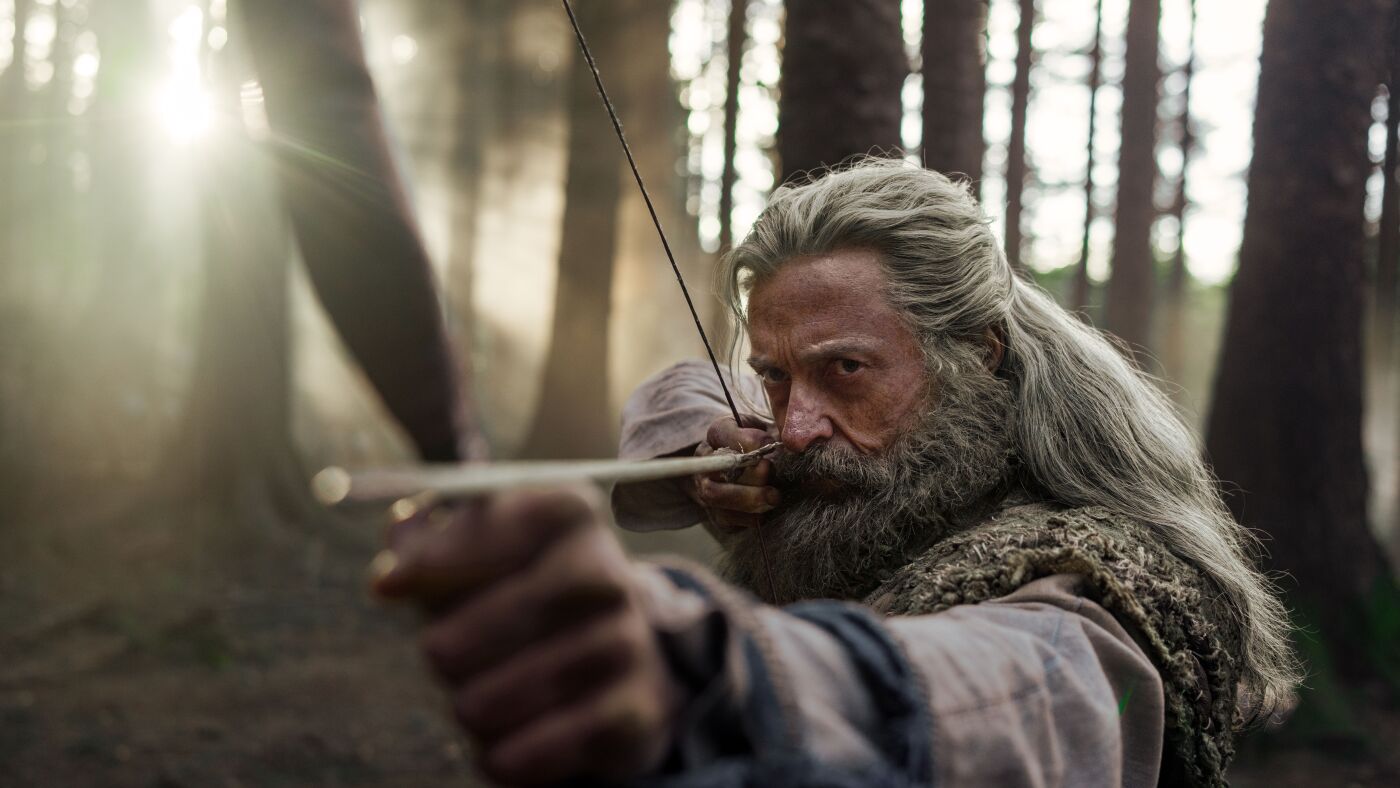
Daisy Edgar-Jones and Glen Powell star in ‘Twisters’, but the love affair part of the film is so wholesomely family-oriented that they never share even one single kiss. Courtesy of Universal Pictures

Before tornado movies threaten to become a cottage industry, just remember that in spite of both the bad ones and the forthcoming plans for more that are being assembled on the drawing boards as we speak, the only one that ever reached blockbuster status was the 1996 action epic Twister. In the realm of tornado movies, we now have Twisters. Erroneous publicity misleads us to consider it a sequel, which it isn’t. In fact, Twisters has nothing whatsoever to do with Twister, aside from the fact that it consists primarily of the same computer-generated special effects and it also takes place in Oklahoma, where the Richard Rodgers-Oscar Hammerstein corn is no longer high as an elephant’s eye, but on its way to almost total crop destruction thanks to not one but an army of lethal, never-ending new twisters that seem to arrive every ten minutes, and the wind comes sweeping down the plain with pulse-pounding noise and life-altering force.  


TWISTERS ★★(2/4 stars)
Directed by: Lee Isaac Chung
Written by: Mark L. Smith
Starring: Daisy Edgar-Jones, Daryl McCormack, Glen Powell
Running time: 122 mins.


There is also something of an obstacle-riddled romance, but nothing as interesting as the one in Twister. (You can’t improve on Helen Hunt and the late Bill Paxton, and only a fool would try.) The new female centerpiece is Kate (Daisy Edgar-Jones), a lovely would-be scientist who grew up obsessed with weather, first shown in a prologue as a college student, placing some kind of gizmo inside the heart of a ferocious tornado in a dangerous project designed to record enough scientific data to give folks in the paths of devastating storms a better chance to prepare and run for their lives in advance of weather patterns. The research fails, killing three of her best friends who are blown away to Tornado Heaven, leaving Kate so depressed and disillusioned that she retires from studying the weather forever.

Five years later, she’s a meteorologist in a Manhattan research lab, safe and far away from the dangers of Oklahoma twisters. An old boyfriend named Jeb (Daryl McCarmack), one of the few survivors of the college tragedy five years earlier, appears suddenly and, for reasons known only by the screenwriter, talks Kate into returning to Oklahoma to track another deadly storm. Subplots about Jeb’s secret job working for a crook and a brief, aborted attempt to revive their stale romance are deleted fast between lightning flashes, ear-splitting wind tunnels and hail the size of billiard balls while Kate falls in with a new heartthrob named Tyler, played by drop dead Glen Powell, the fastest rising glamour-puss movie star since the young Robert Redford first appeared on the scene. The hot sparks between these two are leavened by their constant hostility. Kate and her crew aim to make a difference; Tyler is a storm tracker in it for excitement and adventure.  

References to the twister in The Wizard of Oz are annoying gimmicks inserted to inject some humor into the proceedings, including Tyler’s crew of storm chasers, with names like Scarecrow, Tin Man and Lion. But clearly, the only true wizards in Twisters are not in Kansas anymore—or Oz. They’re the fearless computer geniuses who have conjured up the fantastic special effects in this movie and made them work—the tractors flying through deafening decibel levels of howling wind and rain, the towns razed and obliterated by airborne trucks, barns, farmhouses, trees, chickens and even a rodeo. The thunderous effects they create would keep the Weather Channel in business for years.

Advertisement

The sets, lighting design, and computer-generated special effects are superb, enhancing the viewer’s fascination with the subject matter. By comparison, the humans in Twisters are so unimportant and so undeveloped they seem like interlopers. The one-dimensional plot is tedious and the charm, good looks and style of the two leads are the only elements of the film that try but fail to invigorate. There don’t seem to be any limits to Glen Powell’s charisma. Even his smile is in Cinemascope and Technicolor, and he can act, too—although the benign script by Mark L. Smith is so mired in technology about pollen counts, anchor funnels, velocity measurements and silver oxide, and Lee Isaac Chung’s mediocre direction is so camouflaged in technical obscurity that they don’t give Mr. Powell much of an opportunity to show what he can do. The love affair part of the film is so wholesomely family-oriented that it’s about as sexy as an algebra book. There isn’t even one single kiss. 

Fortunately, the action sequences are nothing bland or dull, adding up to a whale of entertainment. I guess my scoreboard reads: Twisters, 10. People: 0. In the end, Kate prepares to return to New York, Tyler wants to know when she’ll come back, and there’s evidence that a lot of unfinished business is waiting to be solved. Twisters 2, anyone?

Drop-Dead Glamour-Puss Glen Powell Is a Reason to See ‘Twisters’

Movie Reviews

Peaky Blinders: The Immortal Man review – Tommy Shelby returns for muddy, bloody big-screen showdown

Published

on

Peaky Blinders: The Immortal Man review – Tommy Shelby returns for muddy, bloody big-screen showdown

After six TV series from 2013 to 2022, which caused a worrying surge in flat cap-wearing among well-to-do men in country pubs, Peaky Blinders is now getting a hefty standalone feature film, a muscular picture swamped in mud and blood. This is the movie version of Steven Knight’s global small-screen hit, based on the real-life gangs that swaggered through Birmingham from Victorian times until well into the 20th century. Cillian Murphy returns with his uniquely unsettling, almost sightless stare as Tommy Shelby, family chieftain of a Romani-traveller gang, a man who has converted his trauma in the trenches of the first world war into a ruthless determination to survive and rule.

As we join the story some years after the curtain last came down, it is 1940, Britain’s darkest hour and Tommy is the crime-lion in winter. He now lives in a huge, remote mansion, far from the Birmingham crime scene he did so much to create, alone except for his henchman Johnny Dogs, played by Packy Lee. Evidently wearied and sickened by it all, Tommy is haunted by his ghosts and demons: memories of his late brother, Arthur, and dead daughter, Ruby, and working on what will be his definitive autobiography. (Sadly, we don’t get any scenes of Tommy having lunch with a drawling London publisher or agent.)

But a charismatic and beautiful woman, played by Rebecca Ferguson, brings Tommy news of what we already know: his malign idiot son Erasmus Shelby, played by Barry Keoghan, is now running the Peaky Blinders, a new gen-Z-style group of flatcappers raiding government armouries for guns that should really belong to the military. And if that wasn’t disloyal and unpatriotic enough, Erasmus has accepted a secret offer from a sinister Nazi fifth-columnist called Beckett, played by Tim Roth, to help distribute counterfeit currency which will destroy the economy and make Blighty easier to invade. Doesn’t Erasmus know what Adolf Hitler is going to do to his own Romani people? (To be fair to Erasmus, a lot of the poshest and most well-connected people in the land didn’t either.)

Clearly, Tommy is going to have to come down there and sort this mess out. And we get a very ripe scene in which soft-spoken Tommy turns up in the pub full of raucous idiots who cheek him. “Who the faaaaaack is ‘Tommy Shelby’?” sneers one lairy squaddie, who gets horribly schooled on that very subject.

Advertisement

In this movie, Tommy Shelby is against the Nazis, and he can’t get to be more of a good guy than that. (Tommy has evidently put behind him memories of Winston Churchill from the first two series, when Churchill was dead set on clamping down on the Peaky Blinders.) The war and the Nazis are a big theme for a big-screen treatment and screenwriter Knight and director Tom Harper put it across with some gusto as a kind of homefront war film, helped by their effortlessly watchable lead. Maybe you have to be fully invested in the TV show to really like it, although this canonisation of Tommy is a sentimental treatment of what we actually know of crime gangs in the second world war. Nevertheless, it is a resoundingly confident drama.

Peaky Blinders: The Immortal Man is in out on 6 March in the UK and US, and on Netflix from 20 March.

Continue Reading

Movie Reviews

Movie Review: Here comes “THE BRIDE!”, audacious and wild – Rue Morgue

Published

on

Movie Review: Here comes “THE BRIDE!”, audacious and wild – Rue Morgue

That’s both a promise and a challenge she delivers, since what follows may rub some viewers the wrong way. Yet Gyllenhaal’s full-throttle commitment to her vision is compelling in and of itself, and she has marshalled an absolutely smashing-looking and -sounding production. The story proper begins in 1936 Chicago, which, like everything and everyplace else in the movie, has been luminously shot by cinematographer Lawrence Sher and sumptuously conjured by production designer Karen Murphy. Her involvement is appropriate given that her previous credits include Bradley Cooper’s A STAR IS BORN and Baz Luhrmann’s ELVIS, since among other things, THE BRIDE! is a nostalgic musical. Its Frankenstein (Christian Bale), who has taken the name of his maker, is obsessed with big-screen tuners, and imagines himself in elaborate song-and-dance numbers. (Considering the reception to JOKER: FOLIE À DEUX, one must applaud the daring of Warner Bros. for greenlighting another expensive film in which a tormented protagonist has that kind of fantasy life.)

THE BRIDE! may be revisionist on many levels, but its characterization of its “monster” holds true to past screen incarnations from Karloff’s to Elordi’s: His scarred appearance masks a lonely soul who desires companionship. Frankenstein has arrived in Chicago to seek out Dr. Cornelia Euphronious (Annette Bening), correctly believing she has the scientific know-how to create an appropriate mate for him. Rather than piece one together, Dr. Euphronious resurrects the corpse of Ida (Jessie Buckley), whose consorting with underworld types led to her brutal death. Previously chafing against the man’s world she inhabited in life, she becomes even more defiant and unruly as a revenant, apparently possessed by the spirit of Shelley herself, declaiming in free-associative sentences and quoting rebellious literature.

Buckley, currently an Oscar favorite for her very different literary-inspired role in HAMNET, tears into the role of the Bride (who now goes by the name Penny) with invigorating abandon that bursts off the screen. Unsure of her identity yet overflowing with self-confident bravado, she’s the opposite of the sensitive “Frank,” but they’re united by the world that stands against them. That becomes literal when a violent incident sends them on the lam, road-tripping to New York City and beyond, on a trail inspired by the films of Ronnie Reed (Jake Gyllenhaal), Frank’s favorite song-and-dance-man star.

With THE BRIDE!, Gyllenhaal has made a film that’s at once her very own and a feverish homage to all sorts of cinema past and present. It’s a horror story, a lovers-on-the-run movie, a crime thriller, a musical and more, and historical fealty be damned if it makes for a good scene (as when Penny and Frank sneak into a 3D movie over a decade before such features became popular). In-references are everywhere: It might just be a coincidence that the couple’s travels take them past Fredonia, NY (cf. “Freedonia” in the Marx Brothers’ DUCK SOUP), but it’s certainly no accident that the former Ida is targeted by a crime boss named Lupino, referencing the actress and pioneering filmmaker whose works included noirs and women’s-issues stories. Penny’s exploits lead legions of admiring women to adopt her look and anarchic attitude, echoing the first JOKER (while a headline calls them “Twisted Sisters”), and the use of one Irving Berlin song in a Frankensteinian context immediately recalls a classic comedic take on the property.

Whether the audience should be put in mind of a spoof at a key point in a film with different goals is another matter. At times like these, Gyllenhaal’s pastiche ambitions overtake emotional investment in the story. As strong as the two lead performances are (Bale is quite moving, conveying a great deal of soul from behind his extensive prosthetics), it’s easier to feel for them in individual scenes than during the entire course of the just-over-two-hour running time. The diversions can be entertaining, to be sure, but they also result in an uncertainty of tone. The dissonance continues straight through to the end, where the filmmaker’s choice of closing-credits song once again suggests we’re not supposed to take all this too seriously.

Advertisement

There’s nonetheless much to admire and enjoy about THE BRIDE!, and this kind of risk-taking by a major studio is always to be encouraged (especially considering that we’ll see how long that lasts at Warner Bros. once Paramount takes it over). Beyond the terrific work by the aforementioned actors, there’s fine support from Peter Sarsgaard and Penelope Cruz as detectives on Penny and Frank’s heels, with Sandy Powell’s lavish costumes and Hildur Guðnadóttir’s rich, varied score vital to fashioning this fully imagined world. Kudos also to makeup and prosthetics designer Nadia Stacey and to Chris Gallaher and Scott Stoddard, who did those honors on Frank, for their visceral, evocative work. Uneven as it may be, THE BRIDE! is also as alive! as any film you’ll likely see this year.

Continue Reading

Movie Reviews

Maxime Giroux – ‘In Cold Light’ movie review

Published

on

Maxime Giroux – ‘In Cold Light’ movie review

Maxime Giroux – ‘In Cold Light’

Advertisement

The action is relentless in the complex thriller In Cold Light, a tense combination of crime and fugitive tale and family drama. It is the third feature and first English language film by Maxime Giroux, best known for a very different kind of film, the critically acclaimed 2014 drama Felix & Meira.

The tension and high energy of In Cold Light almost overwhelm the film, but are relieved, barely, by moments of character development and introspection that keep the audience pulling for the restrained and outwardly cold main character. 

Speaking at the film’s Canadian premiere, director Giroux admitted he found creating an action film a challenge. Part of his approach was using very minimal dialogue, especially for the central character, letting the action speak for itself, and allowing silence to intensify suspense. Giroux has said he likes the lack of dialogue and speaks highly of the importance of silence in cinema; he prefers using “physical aspects of communication” in his films. 

Young Ava Bly (Maika Monroe) is a competent and businesslike drug dealer, working in partnership with her brother Tom (Jesse Irving) and a small team. As the film begins, Ava has just been released from a brief prison sentence. She is hoping to return to her former position, but her brother’s associates consider her a risk due to her recent incarceration. While she works to re-establish herself, a shocking encounter with a corrupt police officer sends Ava’s life into chaos and forces her to go on the run.

Ava’s fugitive experience introduces a new character, to whom Ava turns for help: her father, Will Bly, played by Troy Kotsur, known for his excellent performance in CODA. Their first interaction is handled in a fascinating way, as Will is deaf and the two communicate through sign language. This, of course, provides another form of the silent interaction the director prefers; he explained that much of the father-daughter interaction was rewritten with the actor in mind. Their conflict is nicely expressed through a scene in which their initial conversation is intermittently cut off by a faulty light which goes out periodically, making communication through sign momentarily impossible, nicely expressing the rift between father and daughter. 

Advertisement

As Ava continues to evade danger, her escape becomes complicated by new information, placing her in a painful dilemma. We gradually learn more about Ava, her background, and her character through occasional flashbacks and glimpses of her dreams. The plot becomes more complex and more poignant, and gains features of a mystery as well as an action tale, as she is pressed to choose from among equally unacceptable alternatives.

The climax of her efforts to protect both herself and those close to her comes to a head as she meets with the director of a rival drug gang. Veteran actress Helen Hunt is perfect in the minor but significant role of Claire, the rival drug lord, who plays odd mind games with Ava in an intriguing psychological fencing match. It’s an unusual scene, in which Ava’s personality is made clearer, and Claire’s understated dominance and casual speech do not quite conceal the threat she represents. 

The frantic pace and emotional turmoil are enhanced by the camera work, which tends to focus tightly on Ava, and by a harsh, minimal musical score that sets the tone without distracting from the action. Giroux chose to shoot the film in Super 60; he describes digital as “too perfect” for the look he was going for, and since “Ava is rough,” the film portrays her better. The director describes the entire movie as “rough,” in fact, and deliberately chose a dark, washed-out look for much of the footage, occasionally using light and colour, in the form of fireworks, lightning, or a colourful carnival, to both relieve and emphasise the darkness. 

The dynamic, intense story holds the attention in spite of the lengthy, sometimes repetitive chase scenes and subdued dialogue. Ava’s predicament, and the difficult decisions she is forced to make, are made surprisingly relatable, from the initial disaster that starts the action to the surprising flash-forward that concludes the film, on as high a note as the situation could allow. Fans of action movies will definitely enjoy this one.

Advertisement
Continue Reading

Trending