Entertainment
George Lucas voices support for Bob Iger amid Nelson Peltz proxy battle

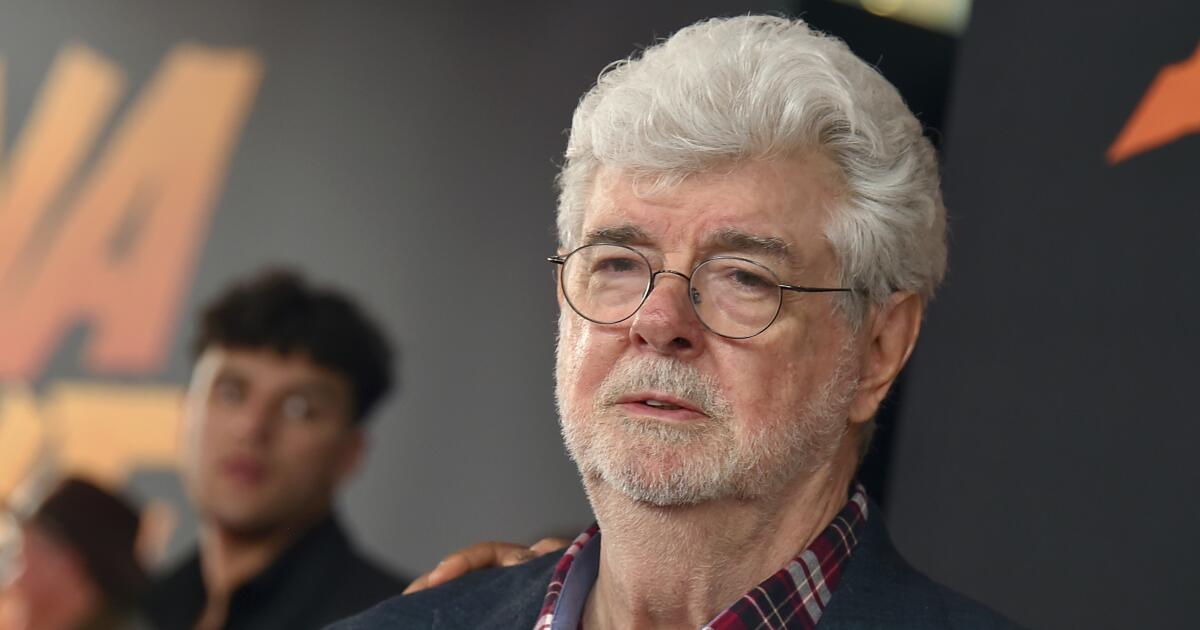
Is the Force strong with Bob Iger? On Tuesday, “Star Wars” creator George Lucas threw his support behind the Walt Disney Co. boss amid the executive’s fight with activist investor Nelson Peltz.
The Lucasfilm founder and longtime Disney shareholder released a statement professing his “full faith and confidence in the power of Disney and Bob’s track record of driving long-term value.” The Burbank-based entertainment giant acquired Lucasfilm in 2012 for $4 billion and has since released a spate of “Indiana Jones” and “Star Wars” movies and TV series under the storied banner.
“Creating magic is not for amateurs,” Lucas said in a statement provided to The Times. “When I sold Lucasfilm just over a decade ago, I was delighted to become a Disney shareholder because of my longtime admiration for its iconic brand and Bob Iger’s leadership.”
Lucas’ stamp of approval comes at a pivotal time for Iger and the Disney board. The House of Mouse’s annual shareholder meeting — which will see Peltz and his company, Trian Fund Management, attempt to unseat two Disney board directors — is scheduled for April 3.
Also on Team Iger is investment firm and Disney shareholder ValueAct Capital Management. In Peltz’s corner are former Marvel Entertainment Chief Executive Ike Perlmutter and ex-Disney Chief Financial Officer Jay Rasulo, whom Trian is nominating for a board position along with Peltz.
“When Bob recently returned to the company during a difficult time, I was relieved,” Lucas continued in his statement. “No one knows Disney better. … I have voted all of my shares for Disney’s 12 directors and urge other shareholders to do the same.”
Lucas hasn’t always spoken so warmly about Disney. In 2015, in an interview with Charlie Rose, he expressed regret for selling Lucasfilm to what he referred to as “white slavers.”
“They looked at the stories, and they said, ‘We want to make something for the fans,’” Lucas told Rose. “They weren’t that keen to have me involved anyway — but if I get in there, I’m just going to cause trouble, because they’re not going to do what I want them to do. … And so I said, ‘OK, I will go my way, and I’ll let them go their way.’”
Disney’s acquisition of Lucasfilm was among Iger’s most high-profile accomplishments during his first 15-year run as CEO, along with the purchases of Pixar, Marvel and 21st Century Fox.
The company brought back the Skywalker franchise in 2015 with J.J. Abrams’ “Star Wars: The Force Awakens,” which grossed $2 billion in global box office sales. Jon Favreau’s series “The Mandalorian” was one of the first major hits for Disney+, leading to a surge in subscribers and Baby Yoda merchandise sales.
But the studio, led by Kathleen Kennedy, also has had stumbles, including the poorly received film spinoff “Solo: A Star Wars Story.” The 2019 trilogy capper “Star Wars: The Rise of Skywalker” grossed $1.08 billion, significantly less than the two previous installments, and got poor reviews. Lucasfilm’s latest movie, “Indiana Jones and the Dial of Destiny,” collected a disappointing $384 million in ticket sales.
The next “Star Wars” movie for theaters is “The Mandalorian & Grogu,” planned for 2026, with Favreau directing.


By and large, the zombie subgenre has bitten off more than it can chew in modern times. Between George Romero survival films and camp comedies, the well has become pretty infected. But once in a while, along comes a movie like This Is Not A Test.
Let’s sink our teeth into this new release and see how it stacks up against the classics.
The tone and tenor of this film represent the classic survival movies like Night Of The Living Dead. But the thing that grabs the audience about This Is Not A Test is the trauma of the characters. Holt shines as a withdrawn survivor of an abusive home, trying to cut through the wreckage to reunite with her sister. Each of the main characters have standout traits, and they bathe in strongly acted moments as the stress of the situation changes who they are.
The gore in This Is Not A Test is pretty strong. The attacks spring quickly and when they do, the special effects team does a good job showcasing the battle scars. The camera work is also frenetic in a good way, because the chaos of the chase scenes puts the viewers in a first-person perspective. This film lets you feel like a part of the survivors, so their journeys are interactive.

Longtime fans may say that there’s nothing new in This Is Not A Test, and maybe they’re right. There’s no fresh take on the monsters here, no crazy origin, nothing that we haven’t seen in the past fifty-eight years. But the pacing nails a great balance between getting to know the characters and getting the zombie splatter fest. The mental meltdowns of the characters feel well earned, and the arc of Sloane and her sister brings a lot of heart and investment to the story. Even the most jaded zombie horror fans will find something to appreciate here, even as a background movie.
Adam MacDonald has made another intense hit here, and This Is Not A Test is currently available to stream on Shudder.
Entertainment
‘You’re scaring my people.’ Shia LaBeouf’s alleged stalker arrested after posting viral video
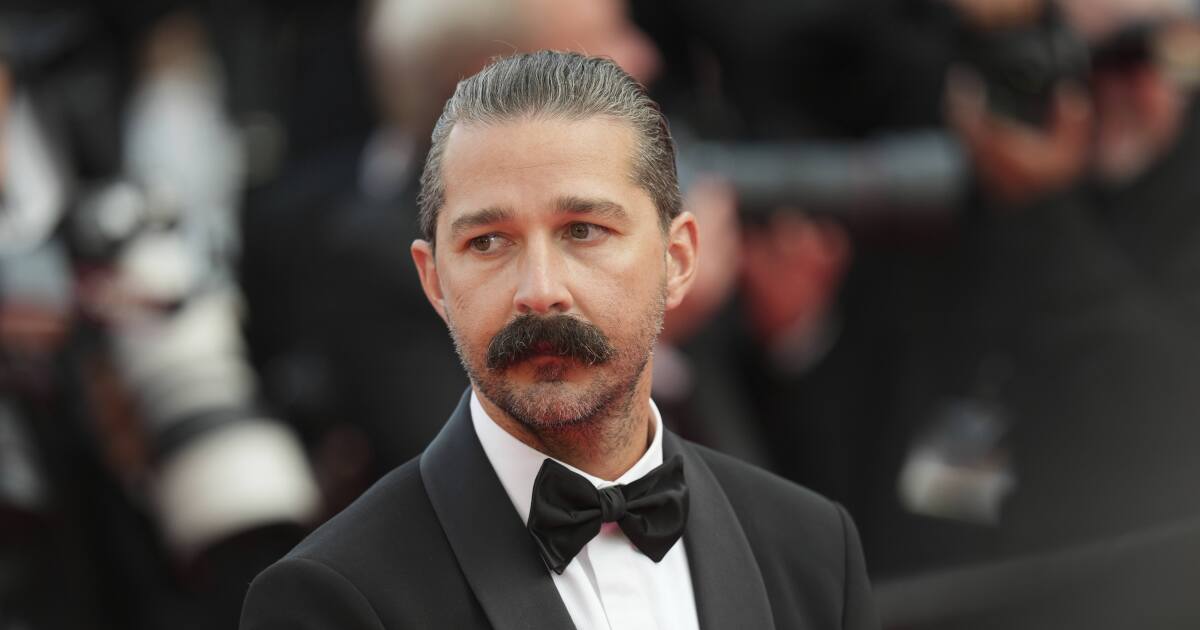
Shia LaBeouf’s alleged stalker has been arrested after posting a video of the actor asking to be left alone.
According to Orleans Parish Sheriff’s Office booking records, Alyssa Lee Couture, 40, was arrested Monday night and booked on a misdemeanor charge of stalking. Hours earlier, Couture had posted a video of a confrontation with LaBeouf in what appeared to be a grocery store parking lot. The “Honey Boy” actor is shown speaking to Couture through the window of a car.
“Leave me alone. God bless you. Leave me alone,” LaBeouf says calmly in the video. “You’re scaring my dad. You’re scaring my people. Leave me alone.”
Couture has posted more than 5,000 videos on her Instagram, most of which feature the woman addressing the embattled actor, whom she appears to believe is her husband. In a GoFundMe launched in May, Couture wrote that she was hoping to raise $70,000 to find permanent housing and that she had been living in her car and staying with family members. She also wrote that she had schizophrenia, among other disabilities.
Although the New Orleans Police Department does not identify Couture’s stalking victim as LaBeouf due to privacy policies, the timeline of her booking appears to line up with the confrontation with LaBeouf.
According to People, LaBeouf left Los Angeles after his split from actor Mia Goth last year and relocated to Louisiana to be closer to family.
In June, he pleaded guilty to three counts of simple battery, months after he went viral for his involvement in a Mardi Gras altercation in New Orleans. The actor, 39, was arrested in New Orleans on Feb. 17. At the time, New Orleans police confirmed LaBeouf was charged with two counts of simple battery for allegedly assaulting two men near a bar in the French Quarter. TMZ published bystander video of the incident and footage of LaBeouf walking through the French Quarter hours before the brawl.
The actor was released from jail shortly after his arrest and posted $100,000 in bond. More than a week after LaBeouf’s initial arrest, the New Orleans Police Department issued a second warrant for the actor’s arrest in connection with the same incident, and he racked up an additional simple battery charge. Prior to the second arrest, a New Orleans judge ordered LaBeouf to begin substance abuse treatment and undergo weekly drug testing.
Times staff reporter Alexandra Del Rosario contributed to this report.

- THE ODYSSEY
- Starring: Matt Damon, Tom Holland and Anne Hathaway
- Directed by: Christopher Nolan
- Rated: R
- Running time: 2 hrs 45 mins
- Universal
Our score: 4.5 out of 5
EPIC. If I was asked to describe Christopher Nolan’s latest film, that is the word I would use. He has mounted a film that rivals the greatest achievements of filmmakers like Cecil B. DeMille or David Lean. And, like the films of those mentioned, it’s runs a tad too long.
I was shocked, but pleased, to see that my 12-year-old granddaughter recently did a school paper on King Agamemnon. Thank goodness they’re still teaching History in our schools. Based on Homer’s “The Odyssey,” the film tells the story of King Odysseus (Damon) and his adventures which, if you’ve read “The Odyssey,” include the Trojan Horse, the Cyclops and assorted angry Greek gods. The film covers each of these adventures in great detail, sparing nothing in the production design department. While Odysseus is away – and he’s gone for a l-o-n-g time, his wife Penelope (Hathaway) has to endure a never ending string of “suitors,” men lining up in the hopes of replacing the King should he not return. The men are nothing more then scavengers, taking advantage of the law of Zeus, which decrees no one should be turned away. This angers the Queen’s son, Telemachus (Holland), who must control his temper when the men try to bait him into a fight, the idea being if Telemachus is killed, the new husband would become the King. It’s all very interesting and complicated. And long.
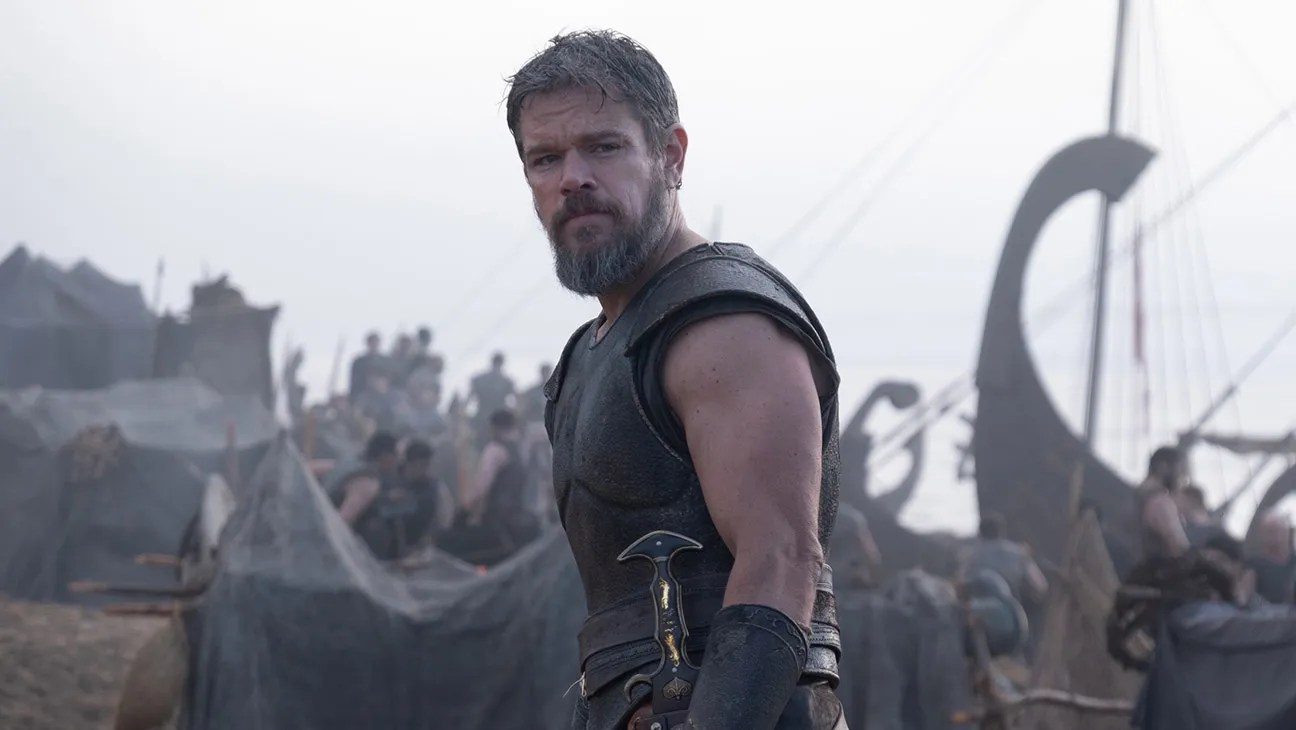
Director Nolan is one of the rare filmmakers who, in my opinion, has never made a bad film. From “Memento” to the “Dark Knight” trilogy to the Oscar-winning “Oppenheimer,” he has proven himself a true master of cinema. “The Odyssey” only adds to that distinguished resume’
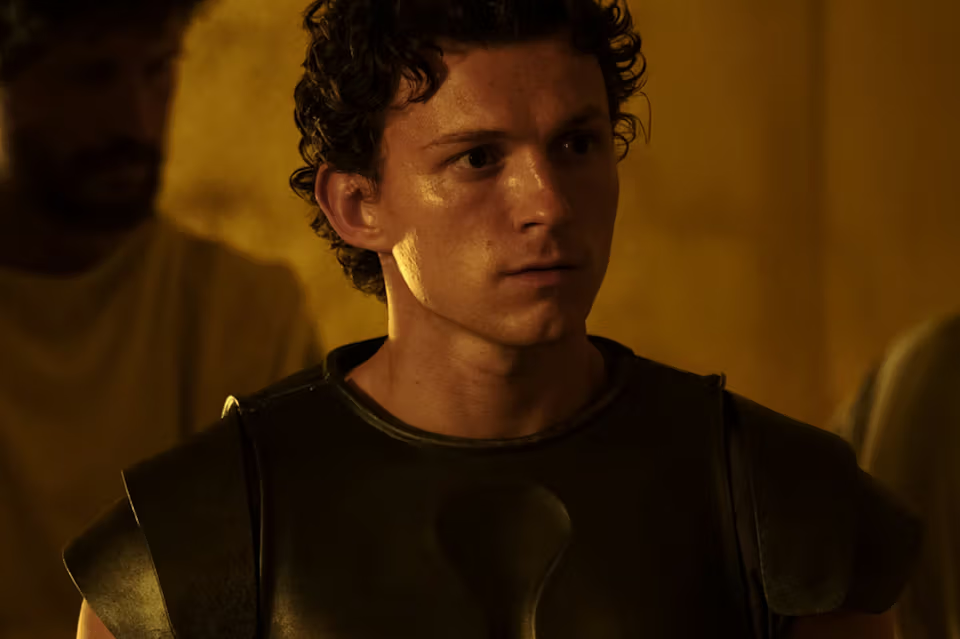
The cast is a tribute to Nolan himself who, like Woody Allen, can pretty much get anyone he wants for his films because, as an actor, why wouldn’t you want a credit in one of his films. Besides the three stars named above, the cast includes Robert Pattinson, John Leguizamo, Zendaya, James Remar, Jon Bernthal, Oscar nominees Samantha Morton and Elliot Page as well as Oscar winners Charlize Theron and Lupita Nyongo. As MGM used to advertise, “more stars than there are in heaven.”
The script and story are pretty faithful to the source material, though for some reason it bothered me whenever Telemacus referred to Odysseus as “dad.” Never father. The weird things you notice. Visual.y the film is stunning and the Trojan Horse and battle of Troy are worth the price of admission alone. I will add that I did see the film in 70 mm and, if that format is playing in your town, I urge you to see it in that format.
On a scale of zero to five, “The Odyssey” receives ★★★★ ½
-

 Colorado44 seconds ago
See where the new Colorado Connector train will stop
-

 Connecticut7 minutes ago
This Connecticut barbecue restaurant is ‘beloved’ for a reason.
-

 Delaware13 minutes ago
Delaware oversight commission debates authority to reject utility rate hikes
-

 Florida19 minutes ago
Florida preacher buys VT campus to build Christian college | Fox News Video
-

 Georgia25 minutes ago
Northwest Georgia shelters overwhelmed: Catoosa tops 80 pets and Walker adds 73 in July
-

 Hawaii31 minutes ago
Records were set for June rainfall – Hawaii Tribune-Herald
-
 Idaho37 minutes ago
How the City of Boise tests water samples to ensure the Boise River runs clean
-

 Illinois43 minutes ago
Data center fears mount after Illinois village residents prepare for the worst

