Entertainment
Disney employee accuses studio of ignoring alleged sexual assault by exec


A Disney employee has sued the Burbank entertainment giant for allegedly failing to investigate the sexual harassment and assault she allegedly suffered at the hands of an executive at the company.
The lawsuit, filed Tuesday in Los Angeles Superior Court, alleges that Disney retaliated against the plaintiff, identified as Jane Doe, after she reported former Vice President of Distribution Nolan Gonzales’ alleged sexual misconduct to the human resources department.
The plaintiff is accusing Disney, Gonzales and others of sexual harassment, sexual assault and/or battery, retaliation, negligence, disability discrimination and other grievances, including failure to investigate and prevent sexual harassment. According to the lawsuit, company leaders “created an environment in which Gonzales was free to harass women with impunity.”
“Management was incentivized to hide Gonzales’s harassment because he generated valuable revenue as the Director of Distribution,” the complaint said. “Women were discouraged to come forward about his behaviors because management seemingly accepted Gonzales conduct as being part of the entertainment industry and his firing would hurt the company financially.”
The complaint alleges that Gonzales repeatedly made unwanted advances toward the plaintiff while she worked for him at 20th Century Fox and Disney between 2014 and 2022. (Disney acquired 20th Century Fox — later rebranded as 20th Century Studios — in 2019.)
During the plaintiff’s early years at 20th Century Fox, Gonzales repeatedly invaded her personal space, touched her “at every opportunity,” made sexual remarks, referred to her as his wife and often asked her out on dates, according to the lawsuit. When the plaintiff rejected his advances, Gonzales allegedly reminded her of how well-connected he was in the entertainment industry and threatened to stop communicating with her.
While in Las Vegas for a conference in 2017, the lawsuit continues, Gonzales ground his pelvis into the plaintiff’s back and caressed her neck at a casino before begging her to have sex with him in her hotel room. The plaintiff declined and “was rattled by the experience,” according to the filing.
After the Las Vegas conference, the complaint alleges, Gonzales’ “comments and touching” became increasingly “aggressive and forceful.”
Circa 2017, the filing states, Gonzales allegedly began tricking the plaintiff into “ingesting illicit drugs” and pressuring her to “consume excessive amounts of alcohol so that he could sexually abuse her with limited resistance or questioning.” The lawsuit alleges that Gonzales drugged the plaintiff and then “had sex with her while she was incapacitated.”
The filing also alleges that Gonzales took “intimate” photos and videos of the plaintiff without her consent and threatened to publish them “if she did not agree to continue to have sex and party with him.”
In November 2018, the plaintiff complained to the company human resources department that Gonzales had sexually harassed and drugged her, “but to her knowledge her complaints were not investigated or escalated,” according to the filing. The lawsuit claims that “many people in management were aware of Gonzales’ egregious conduct” and that the executive “‘retired’ from his position at Disney” in 2022 after other women allegedly reported his behavior.
The plaintiff was demoted in 2023 after human resources interviewed her “numerous times” about Gonzales’ alleged misconduct, according to the lawsuit. She went on medical leave while suffering from anxiety, depression and post-traumatic stress disorder, the complaint said . The plaintiff alleges that she was demoted because she reported her sexual assault.
Disney did not immediately respond Thursday to The Times’ request for comment. Gonzales could not be reached for comment.
The plaintiff is seeking a jury trial and unspecified damages.
The complaint was filed about a month after a judge certified a class action lawsuit alleging that Disney had paid thousands of women less than their male counterparts. The pay discrimination case is scheduled to go to trial in October.



Watch I Know Exactly How I Die on VOD
The director of I Know Exactly How I Die is Alexandra Spieth, who ensures a tight pace and some gorgeous shots. She previously directed Stag and created and starred in the web-series [Blank] My Life. The screenplay comes from Mike Corey, and I do really like the plot and evolution of this story.
As already mentioned, the star Rushabh Patel is the executive producer. As a result, this movie is billed as “Rushabh Patel’s I Know Exactly How I Die“, which I am not a fan of. Unless Rushabh Patel is famous in ways I am not familiar with – nor is IMDb, as this is his first and so far only credit there.
This is like people wondering if Something Very Bad Is Going to Happen is connected to Stranger Things, because the media keeps referring to it as a new show from The Duffer Brothers. Sure, they produced it, but Haley Z. Boston created the original story and wrote the screenplay. And she’s not even a newcomer.
Okay, rant over, but I just don’t understand the marketing and press decisions of it all.
Anyway, as already mentioned, the practical effects in I Know Exactly How I Die are gorgeous. Any slasher fan should enjoy the concept of the plot as well as those amazing practical effects. And yet, you will have to endure a little terrible CGI, but this is an indie production, so budget restraints come into play. Of course, so does choosing the best talent, and that did not happen for CGI here!
I Know Exactly How You Die is out on VOD from April 7, 2026. You can rent it on Digital HD from your preferred platform, including Prime Video and Fandango at Home. The film will also be available on DVD.

The box office hit a power-up this weekend, as “The Super Mario Galaxy Movie” continued a healthy streak for family films in theaters.
The animated sequel from Universal Pictures, Nintendo and Illumination raced to $190 million in the U.S. and Canada in its five-day holiday weekend debut, placing it solidly in first place, according to studio estimates and Comscore data. That total was in line with expectations of a $186-million domestic opening.
Globally, the film earned $372.5 million, the largest opening so far in 2026.
The first film based on the video game franchise, “The Super Mario Bros. Movie,” made $146.4 million in its 2023 debut.
“The Super Mario Galaxy Movie,” which had a production budget of $110 million, continues the story of iconic Nintendo characters Mario, Luigi and Princess Peach as they journey to rescue Princess Rosalina.
Amazon MGM’s “Project Hail Mary” came in second at the box office with a domestic total of $30.7 million – pushing its total to $217 million. A24’s “The Drama ($14.4 million), Disney’s “Hoppers” ($5.8 million) and Universal’s “Reminders of Him ($2.2 million) rounded out the top five.
The success of “Mario” this weekend is another example of the power of family films at the box office.
Animated movies like Sony Pictures Animation’s “Goat” and Walt Disney Co. and Pixar’s “Hoppers” have performed well in theaters this year, along with the strong holdover performance of Disney’s 2025 hit “Zootopia 2,” which has now made more than $1.87 billion worldwide.
That’s all contributed to a stronger first quarter in the theatrical business, as this year’s revenue was up more than 20% compared with the same period in 2025. March was especially strong, with the massive haul from “Project Hail Mary.”
Movie Reviews
‘Super Mario’ fans ignore weak reviews and send sequel to $372.5 million global box office debut, biggest opening of the year for a studio film | Fortune

Mixed reviews didn’t dissuade mass audiences from buying tickets to the “The Super Mario Galaxy Movie,” which scored the biggest opening of the year for a Hollywood movie. The Illumination and Nintendo co-production earned $130.9 million over the weekend and a massive $190.1 million in its first five days in North American theaters, according to studio estimates Sunday.
Universal Pictures released the sequel globally on Wednesday, capitalizing on kids’ spring break vacations in the week leading up to the Easter holiday. With an estimated $182.4 million from 80 overseas markets, the film is looking at an astronomical $372.5 million debut — the latest hit for the PG rating. Mexico is leading the international bunch with $29.1 million from 5,136 screens, followed by the U.K. and Ireland with $19.7 million.
The animated sequel, Illumination CEO Christopher Meledandri’s 16th movie in 16 years, is the industry’s biggest debut since “Avatar: Fire and Ash” launched over Christmas. The Chinese movie “Pegasus 3,” which was not a Motion Picture Association release, has the slight edge for the 2026 global record, however.
It’s also a dip from the first film, which opened to $204 million domestically during the same five-day time frame in 2023 ($147 of that was from Friday, Saturday and Sunday). “The Super Mario Bros. Movie” went on to be the second biggest movie of 2023, with over $1.3 billion in box office receipts.
“The Super Mario Galaxy Movie,” which features returning voice actors Chris Pratt, Jack Black, Anya Taylor-Joy and Charlie Day, had a massive footprint in the U.S. and Canada, where it played in 4,252 theaters, including 421 IMAX and 1,345 premium large format screens. It made $15 million from the IMAX screens alone.
“It’s exactly the kind of broad, crowd-pleasing release that brings people into theatres,” AMC Chairman and CEO Adam Aron said in a statement.
It also cost around $110 million to make, not including marketing and promotion expenses. But it arrived on a wave of less-than-stellar reviews. Its Rotten Tomatoes score is currently sitting at a lousy 40%. Ticket buyers were more enthusiastic, however.
The family audience gave the movie five out of five stars according to PostTrak exit polls, while general audiences gave it four stars and an A- on CinemsScore. Audiences skewed male (61%) overall, although when it came to families attending there were slightly more moms (52%) than dads.
“These kind of audience reaction scores just point to a ridiculously strong run, not only throughout the spring, but likely into the summer as well,” said Jim Orr, Universal’s president of domestic distribution.
“The Super Mario Galaxy Movie” will open in Japan later this month.
Last year, the first weekend in April hosted the launch of another video game blockbuster, “A Minecraft Movie,” which had a bigger three-day debut ($162.8 million) but didn’t have a “Project Hail Mary” in a strong second place, meaning the weekend overall is still up around 5%.
As expected, “The Super Mario Galaxy Movie” ended the two-week reignof the Ryan Gosling-led sci-fi hit “Project Hail Mary,” which landed in second its third weekend in theaters where it added $30.7 million, bringing its running domestic total to $217.2 million. Worldwide, it’s made $420.7 million to date.
Third place went to A24’s provocative new movie “The Drama,” starring Zendaya and Robert Pattinson, which made an estimated $14.4 million from 3,087 theaters. The film’s stars have been on a massive and charming press blitz to promote their R-rated movie about a engaged couple grappling with an unnerving revelation, which cost a reported $28 million to produce. The reveal has drummed up a fair amount of cultural discourse. While reviews have been more positive than not (82% on Rotten Tomatoes), it got a less promising B CinemaScore.
“Hoppers” and “Reminders of Him” rounded out the top five. And the box office outlook looks bright overall, up around 30% from last year.
“There’s no better opening act for a great summer than a huge month of April powered by a mega blockbuster like the ‘The Super Mario Galaxy Movie,’” said Paul Dergarabedian, comscore’s head of marketplace trends.
Top 10 movies by domestic box office
With final domestic figures being released Monday, this list factors in the estimated ticket sales for Friday through Sunday at U.S. and Canadian theaters, according to Comscore:
1.“The Super Mario Galaxy Movie,” $130.9 million.
2.“Project Hail Mary,” $30.7 million.
3.“The Drama,” $14.4 million.
4.“Hoppers,” $5.8 million.
5.“Reminders of Him,” $2.2 million.
6.“A Great Awakening,” $2.1 million.
7.“They Will Kill You,” $1.9 million.
8.“Dhurandhar The Revenge,” $1.9 million.
9.“Ready or Not 2: Here I Come,” $1.8 million.
10.“Scream 7,” 915,000.

Falcons address biggest hole with Georgia prospect in new mock draft

Traditional Treasures: A Brief History of Hawaiian Heirloom Jewelry

From tragedy to reform: Advocates drive passage of three Idaho child protection laws

Illinois must rein in spending

‘That’s Mr. Indiana’: Steve Alford back in Indy for Final Four. His luster hasn’t worn off

Florida High School Football Rankings: Top 25 teams – Oct. 21

How old is Bo Nix? What to know about Oregon quarterback ahead of 2024 NFL Draft

Cleary's 21 help Le Moyne down Central Connecticut State 69-64 in OT

99th annual Pony Swim held in Virginia

Indiana Members Credit Union announced as new anchor tenant at Bottleworks District

GOP races to pass ICE, Border Patrol funding bill as priorities pile up, divisions emerge
Jet fuel crisis: Rationing triggered at four airports in Italy
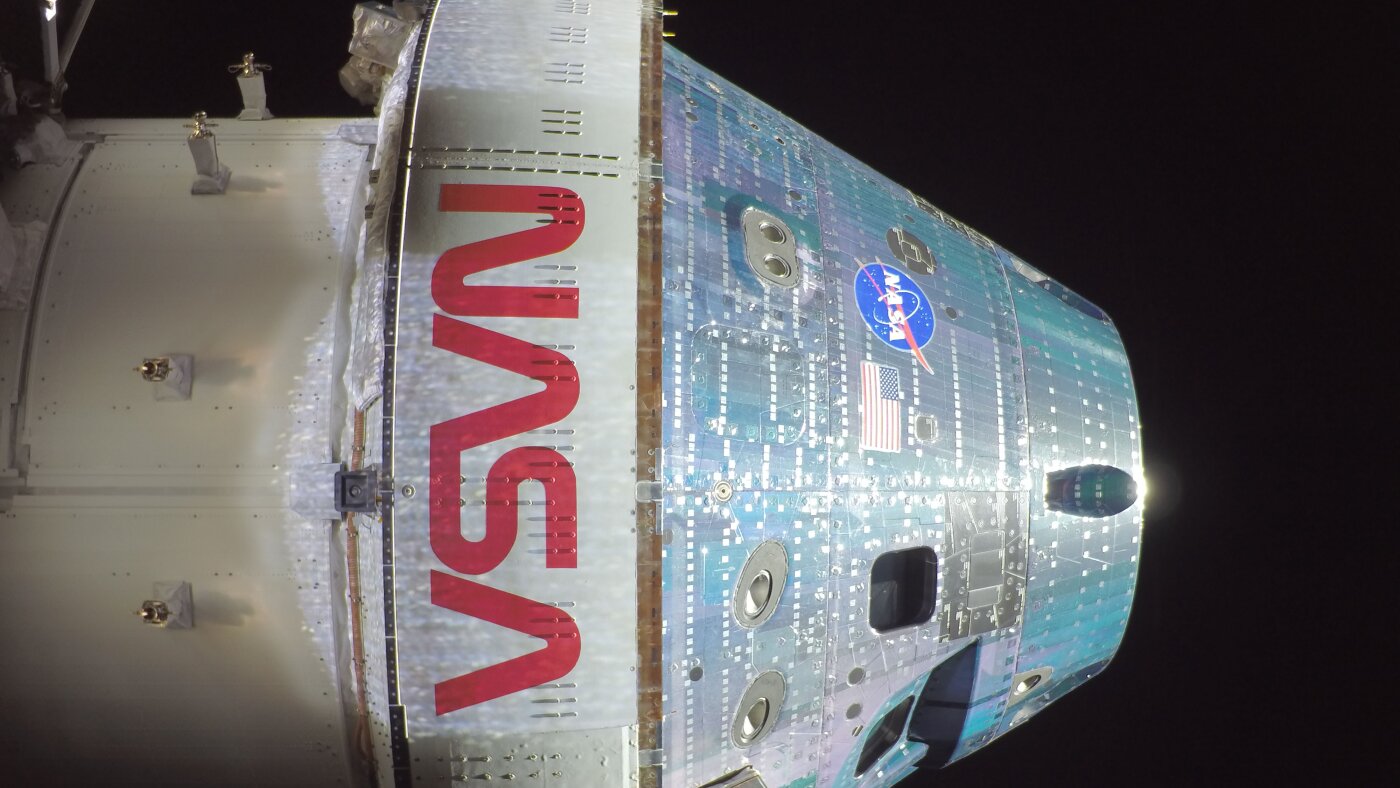
NASA’s Artemis II crew readies for Monday’s lunar flyby. Here’s what you need to know

Tax day is next week: Avoid these 5 common mistakes that can cost you money

Hamas armed wing says disarmament demands not acceptable
-

 South-Carolina1 week ago
South Carolina vs TCU predictions for Elite Eight game in March Madness
-

 Atlanta, GA1 day ago
1 teenage girl killed, another injured in shooting at Piedmont Park, police say
-

 Vermont1 week ago
Skier dies after fall at Sugarbush Resort
-

 Movie Reviews4 days ago
Vaazha 2 first half review: Hashir anchors a lively, chaos-filled teen tale
-

 Politics1 week ago
Trump’s Ballroom Design Has Barely Been Scrutinized
-
 Entertainment4 days ago
Inside Ye’s first comeback show at SoFi Stadium
-

 Atlanta, GA1 week ago
Fetishist ‘No Kings’ protester in mask drags ‘Trump’ and ‘JD Vance’ behind her wheelchair
-

 Politics1 week ago
JD Vance says he was ‘obsessed’ with UFOs, believes aliens are actually ‘demons’