Entertainment
Chris Young arrested and charged with 3 misdemeanors after scuffle in Nashville bar

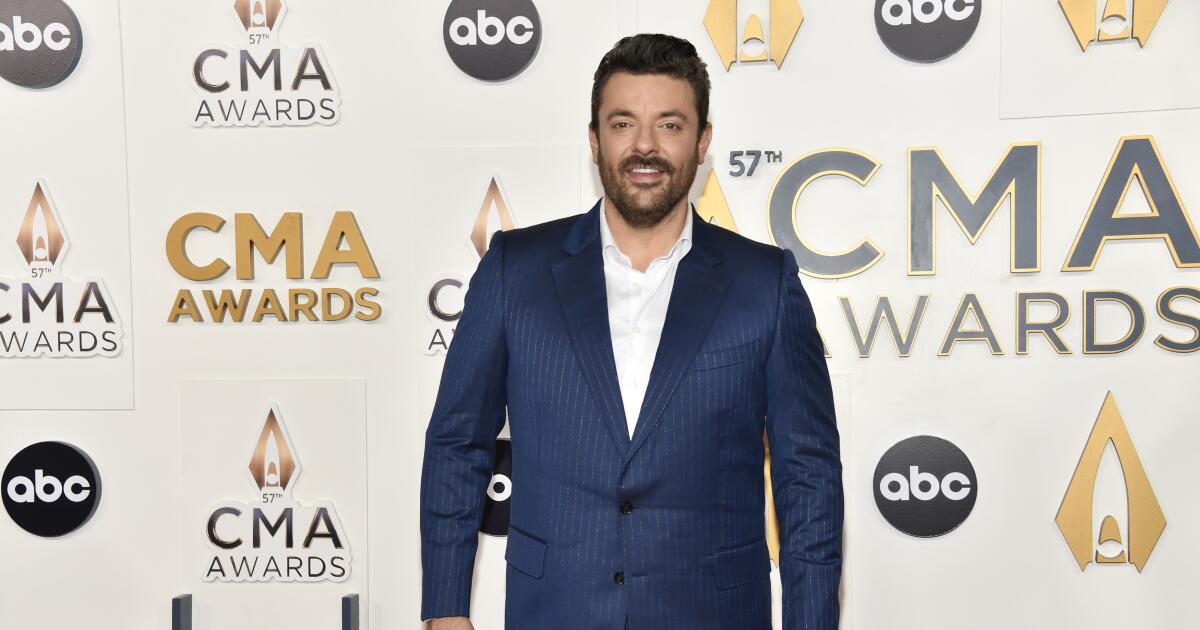
An attorney for Chris Young is calling for three misdemeanor charges against the country singer to be dropped after he was arrested following an alleged scuffle with state agents in a Tennessee bar on Monday. And he wants an apology.
The “I’m Comin’ Over” and “Famous Friends” musician was arrested at the Dawg House bar in Midtown Nashville and later charged with resisting arrest, disorderly conduct and assault on an officer, according to Nashville’s criminal court clerk records reviewed Wednesday by The Times.
He was taken into custody and released on a $250 bond for the disorderly conduct charge, a $1,000 bond for the resisting arrest charge and $1,250 for the assault charge, the court records said, and he is scheduled to appear in court Feb. 16.
According to a copy of the arrest affidavit reviewed by The Times, the 38-year-old was approached by agents for the state’s Alcoholic Beverage Commission (ABC) doing compliance checks at the bar next door, Tin Roof, at around 8:30 p.m. Young presented his ID to the agents, who scanned it and returned it to him. He asked questions of the agents at the time and started recording them. When the agents moved on to the Dawg House, Young and “multiple” friends followed, the affidavit said.
“While walking out the door Mr. Young put his hands out to stop me from leaving the bar and struck me on the shoulder,” an agent said in the affidavit. “I then pushed Mr. Young to create distance since I had no idea of who Mr. Young was or what he had.”
Patrons at the bar got up and got in between the singer and the agent and began yelling and screaming, the affidavit said. Another agent also intervened, giving orders to a retreating Young. Two agents then detained Young, putting him in handcuffs.
“While all agents were trying to leave the bar, multiple people who were with Mr. Young started following agents and making the incident hostile,” the affidavit said, noting that Young had bloodshot, watery eyes and slurred speech.
However, Young’s attorney Bill Ramsey disagreed with the agent’s remarks.
“What happened to my client Chris Young at a bar in Nashville on Monday night was wrong, and he never should have been arrested and charged in the first place,” Ramsey said Wednesday in a statement to The Times. “In light of the video evidence, Tennessee ABC needs to drop the charges and apologize for the physical, emotional and professional harm done towards my client.”
In surveillance footage provided by Ramsey and reviewed by The Times, Young puts his left hand out to try to stop one of the agents passing him and the agent immediately shoves him away, knocking the singer-songwriter into a high-top table. Both Young and a stool fall over.
Once Young gets up, he puts his arm out and starts to back away from the agent, and patrons and friends are seen getting between the two men. Other videos provided by Ramsey show the incident from behind and other angles.
The musician is preparing to launch his 18-track “Young Love & Saturday Nights” album in March, his ninth studio album and his largest album to date. The album comes after his 2021 successes with Kane Brown on “Famous Friends” and with Mitchell Tenpenny on “At the End of the Bar.”



The Video Age was an amazing boost to the film industry. Not only did it open up a whole new marketplace for studios to sell successful films too, it also became a secondary outlet to eventually recoup losses if a film performed poorly in theaters. It even opened up some films to a wider audience.Most Mom and Pop stores didn’t care that you weren’t seventeen and would rent you anything on their shelves, outside of those tapes behind the saloon doors in the back corner (from an industry that, let’s face it, probably profited more than any others since you no longer had to go to a gross and grimy theater), because every rental simply meant profit.This era also expanded an already moderately active subculture: The Cult Film. Some of those movies that didn’t do well in the theaters caught on with the rental audiences, and so did some that you might not have heard about until you stepped into the store that day. Video also helped bring into your home those movies you only heard about as being shown in midnight screenings in larger cities.There were also those that somehow became legendary through rumor. Movies whispered about in school halls or at recess. Movies that someone’s brother/cousin/friend-of-a-friend had seen at a sleepover. Movies so taboo that you’d be grounded for life if your parents found out you’d watched them. One of the most legendary of these was Faces of Death.A documentary supposedly featuring footage of real deaths, it was the king of the no-no videos, going well beyond anything else on the Video Nasties list. Though later debunked as containing faked scenes, it still holds a solid spot in the pantheon of Cult Cinema. This being the 21st century, where any past property is fair game, we of course now have a meta-reimagining also titled Faces of Death.Margot (Barbie Ferreira) works for Kino, an app similar to TikTok, as a content moderator. Every day she sits at her computer, watches the first moments of a video submitted for review and decides if it violates company standards or can stay on the platform.Margot has personal reasons for doing this, having gone horribly viral in a video, and she wants to make sure the internet is a safer place. When a series of videos come across her desk featuring deaths that look too real, she tries to get her boss, Josh (Jermaine Fowler), to go further than simply banning them, but he refuses. Since no one will listen to her, she violates the terms of the company’s NDA and begins investigating them in her free time.During her investigation, she discovers the existence of a movie called Faces of Death, and her horror-loving roommate, Ryan (Aaron Holliday), happens to have a copy. It turns out that someone is recreating scenes from the video, using the voiceover from the movie and possibly performing actual murders. That someone is Arthur (Dacre Montgomery), and Margot’s investigating puts her directly in his crosshairs.If you’re going to do anything modern with the rights to the original Faces of Death, this is definitely the direction to go. The film is a creative look into the desensitized modern screen culture and the Insta-fame of influencers. Director Daniel Goldhaber and his co-writer Isa Mazzei, who together in the same capacities brought us the excellent Netflix film Cam, have created an interesting and surprisingly entertaining treatise on the extremes that current society can make a person go to, similar to the message behind their other film How to Blow Up a Pipeline.While based on such a grotesquery as Faces of Death, Goldhaber has decided to hold back on the gore created for this version. There’s still a good amount of blood, but not as much as you might expect from something carrying this brand.Instead, the film’s more of a psychological cat-and-mouse thriller, where the emphasis is put on Margot’s investigation. Yes, through that we get to see not only Arthur’s recreations but also clips from the original video, but the filmmakers graciously curb the content shown. Plus, the slightly grainy look and the subdued lighting the Goldhaber gives to the film helps make it feel like a videotape from the 1980s, dipping us deeper into the intended effect I believe he is going for, here.Ferreira makes for an interesting choice for a Final Girl. While she’s a beautiful woman, she’s not the person would typically get hired for this role being that she’s also plus sized. This makes her more relatable than your usual Hollywood beauty. She’s not Jamie Lee or Neve, she’s you and me, and that makes the situation she finds herself in even more frightening.Montgomery is well cast as Arthur, too. He has the ability to put on this nerdy kind of public face, but his private persona is much more dangerous and off kilter. I look forward to viewing this where I can pause and see what videotape titles the filmmakers decided to put on the bookcase/door to his secret studio to see if that gives even more insight into Arthur’s mental state.While it didn’t blow me away, I really had no idea what to expect from Faces of Death. So, therefore, I can honestly say that my expectations were exceeded.
The Video Age was an amazing boost to the film industry. Not only did it open up a whole new marketplace for studios to sell successful films too, it also became a secondary outlet to eventually recoup losses if a film performed poorly in theaters. It even opened up some films to a wider audience.
Most Mom and Pop stores didn’t care that you weren’t seventeen and would rent you anything on their shelves, outside of those tapes behind the saloon doors in the back corner (from an industry that, let’s face it, probably profited more than any others since you no longer had to go to a gross and grimy theater), because every rental simply meant profit.
This era also expanded an already moderately active subculture: The Cult Film. Some of those movies that didn’t do well in the theaters caught on with the rental audiences, and so did some that you might not have heard about until you stepped into the store that day. Video also helped bring into your home those movies you only heard about as being shown in midnight screenings in larger cities.
There were also those that somehow became legendary through rumor. Movies whispered about in school halls or at recess. Movies that someone’s brother/cousin/friend-of-a-friend had seen at a sleepover. Movies so taboo that you’d be grounded for life if your parents found out you’d watched them. One of the most legendary of these was Faces of Death.
A documentary supposedly featuring footage of real deaths, it was the king of the no-no videos, going well beyond anything else on the Video Nasties list. Though later debunked as containing faked scenes, it still holds a solid spot in the pantheon of Cult Cinema. This being the 21st century, where any past property is fair game, we of course now have a meta-reimagining also titled Faces of Death.
Margot (Barbie Ferreira) works for Kino, an app similar to TikTok, as a content moderator. Every day she sits at her computer, watches the first moments of a video submitted for review and decides if it violates company standards or can stay on the platform.
Margot has personal reasons for doing this, having gone horribly viral in a video, and she wants to make sure the internet is a safer place. When a series of videos come across her desk featuring deaths that look too real, she tries to get her boss, Josh (Jermaine Fowler), to go further than simply banning them, but he refuses. Since no one will listen to her, she violates the terms of the company’s NDA and begins investigating them in her free time.
During her investigation, she discovers the existence of a movie called Faces of Death, and her horror-loving roommate, Ryan (Aaron Holliday), happens to have a copy. It turns out that someone is recreating scenes from the video, using the voiceover from the movie and possibly performing actual murders. That someone is Arthur (Dacre Montgomery), and Margot’s investigating puts her directly in his crosshairs.
If you’re going to do anything modern with the rights to the original Faces of Death, this is definitely the direction to go. The film is a creative look into the desensitized modern screen culture and the Insta-fame of influencers. Director Daniel Goldhaber and his co-writer Isa Mazzei, who together in the same capacities brought us the excellent Netflix film Cam, have created an interesting and surprisingly entertaining treatise on the extremes that current society can make a person go to, similar to the message behind their other film How to Blow Up a Pipeline.
This content is imported from YouTube.
You may be able to find the same content in another format, or you may be able to find more information, at their web site.
While based on such a grotesquery as Faces of Death, Goldhaber has decided to hold back on the gore created for this version. There’s still a good amount of blood, but not as much as you might expect from something carrying this brand.
Instead, the film’s more of a psychological cat-and-mouse thriller, where the emphasis is put on Margot’s investigation. Yes, through that we get to see not only Arthur’s recreations but also clips from the original video, but the filmmakers graciously curb the content shown. Plus, the slightly grainy look and the subdued lighting the Goldhaber gives to the film helps make it feel like a videotape from the 1980s, dipping us deeper into the intended effect I believe he is going for, here.
Ferreira makes for an interesting choice for a Final Girl. While she’s a beautiful woman, she’s not the person would typically get hired for this role being that she’s also plus sized. This makes her more relatable than your usual Hollywood beauty. She’s not Jamie Lee or Neve, she’s you and me, and that makes the situation she finds herself in even more frightening.
Montgomery is well cast as Arthur, too. He has the ability to put on this nerdy kind of public face, but his private persona is much more dangerous and off kilter. I look forward to viewing this where I can pause and see what videotape titles the filmmakers decided to put on the bookcase/door to his secret studio to see if that gives even more insight into Arthur’s mental state.
While it didn’t blow me away, I really had no idea what to expect from Faces of Death. So, therefore, I can honestly say that my expectations were exceeded.

Anna (Halle Bailey) doesn’t have great boundaries in other people’s homes. Her tendency to make herself entirely too comfortable gets her into trouble as a house sitter, but that specific quirk ultimately leads to her romantic good fortune during a spontaneous trip to Italy, so how bad can it really be?
In fact, if Anna had never donned the wardrobe of her high-end client (Nia Vardalos) to walk the dog in a fit of wealth cosplay, she never would have gotten fired in time to meet an Italian hunk, Matteo (Lorenzo de Moor), who inspires the trip that unfolds in “You, Me & Tuscany,” directed by Kat Coiro and scripted by Ryan and Kristin Engle. So really, the message here is that we should all be more impulsive and slightly unhinged — Anna ends up living her Tuscan dreams after all.
Running off to Italy and into the arms of an earthy Mediterranean man holding a big bowl of pasta is a specifically American, female-friendly kind of fantasy that’s been depicted on-screen before, in travelogues like “Under the Tuscan Sun” and “Eat Pray Love,” both name-checked in “You, Me & Tuscany.” The Vardalos cameo also connects the dots between this film and “My Big Fat Greek Wedding,” both with large, cartoonishly ethnic families enthusiastically champing at the bit to plan a marriage ceremony.
But first, how do we get from unemployed house sitter to impending Italian nuptials? Anna, a culinary school dropout, is drifting from gig to gig, grieving her mother, who was a chef, when she meets Matteo at a hotel bar. He enthralls her with stories of his Tuscan hometown and currently empty villa, having run away from the burden of his family’s expectations. Anna takes it as a sign and books a flight. She turns up in his hometown and, with nowhere else to stay, helps herself to his villa while Matteo gallivants around the States, blissfully ignorant.
Later, while trying on a random diamond ring she finds (see aforementioned boundary issues), Matteo’s family turns up. They put two and two together, add a few assumptions and Anna goes with it, letting his mother Gabriella (Isabella Ferrari) indulge in a best-case scenario. Then she meets Matteo’s cousin/adopted brother Michael (Regé-Jean Page of “Bridgerton” fame), a soulful winemaker, and things get complicated. There’s also a family restaurant that’s struggling and could really use the help of a talented would-be chef obsessed with Italian cuisine.
There are almost too many romance tropes in “You, Me & Tuscany” to take it seriously: fake dating, a journey from being enemies to lovers, a fiancé’s brother, etc. So many plot points and characters keeps things jam-packed in what’s essentially a Hallmark movie with a travel budget. But for an outlandish romance set in a theme-park version of Italy that features more slow-motion shots of food being tossed in the air than an ’80s McDonald’s commercial, it’s actually pretty charming.
Anna has an angel and a devil on each shoulder, neither of whom she listens to very much. One is her best friend Claire (Aziza Scott) in New York, who’s always encouraging her to make the prudent choice. The other is her Italian taxi driver Lorenzo (Marco Calvani), who suggests she tell the truth but agrees that her way is more romantic. They synthesize and parrot back the script’s outrageous plot points, serving as a Greek chorus, though being reasonable wouldn’t push Anna toward her destiny.
As a romantic lead, Page could do this blindfolded with one arm tied around his back — he’s just that handsome and smooth. He even manages to pull off an a cappella version of the 2004 Mario R&B ballad “Let Me Love You” without drifting into cringe territory.
Bailey has a wide-eyed clueless cuteness that lends to her character’s well-meaning naiveté — even her missteps have a way of working out. She brings a sort of Disney princess innocence and pluck to Anna, which makes sense considering she played Ariel in the live-action “The Little Mermaid.”
There are limits to Bailey’s charm, though. She manages comedy much better than sincerity but Coiro knows how to work around it, punctuating her big speeches with quick cutaways to comic relief so we don’t dwell on them too much. The script grounds its fantasy in real emotional traumas and triggers: Anna and Michael bond over losing parents and the competition between brothers resonates authentically. Even if the setting and circumstances are over the top, the choices the characters make track as actual human behavior (if heightened).
But most importantly, “You, Me & Tuscany” is self-aware. It’s transporting and ridiculous and knows exactly what it is, and therefore, we do too. So go ahead, enjoy a little dolce vita as a treat.
Katie Walsh is a Tribune News Service film critic.
‘You, Me & Tuscany’
Rated: PG-13, for some strong language, and sexual material
Running time: 1 hour, 44 minutes
Playing: Opens Friday, April 10 in wide release
Movie Reviews
BAFTA Film Awards Review of Tourette’s Fiasco Finds “Weaknesses” in Planning and Crisis Procedures, But No “Malicious Intent”

An independent review of the BAFTA Film Awards has found a “number of structural weaknesses” in planning, escalation procedures, and crisis coordination before John Davidson‘s Tourette’s outburst.
Davidson, an executive producer on the BAFTA-winning I Swear, dominated headlines for weeks after involuntarily shouting the n-word as Michael B. Jordan and Delroy Lindo presented the award for best visual effects at the 79th British Academy Film Awards on Feb. 22.
The BBC has had its own questions to answer after airing the slur despite the two-hour tape delay, and just this week also ruled the incident a breach of the broadcaster’s editorial standards. Chief content officer Kate Phillips has maintained the breach was “not intentional,” though former director-general Tim Davie was unable to say why the ceremony remained available to stream on BBC iPlayer 15 hours after the event.
On Friday, a review commissioned by the BAFTA board and carried out by RISE Associates concluded its findings on what happened and what must change. Sent to The Hollywood Reporter, the review identified “a number of structural weaknesses” across the British Academy’s planning and crisis management.
“However,” said a note from the BAFTA board, “it did not find evidence of malicious intent on the part of those involved in delivering the event. We accept its conclusions in full.”
The board continued: “We apologize unreservedly to the Black community, for whom the racist language used carries real pain, brutality, and trauma; to the disability community, including people with Tourette Syndrome, for whom this incident has led to unfair judgement, stigma, and distress; and to all our members, guests at the ceremony and those watching at home. What was supposed to be a moment of celebration was diminished and overshadowed.”
The statement added: “We have written to those directly impacted on the night to apologize.”
The review is clear that while it is “not a failure of intent,” BAFTA’s planning and processes “have not kept pace with its diversity and inclusion goals.” The board also admits they did not “adequately anticipate or fully prepare for the impact of such an incident in a live event environment and as a result our duty of care to everyone at the ceremony and watching at home fell short.”
Work is already underway to address the specific areas of improvement recommended in the review to reduce the risk of this happening again. This includes improving the escalation process and the chain of information sharing around BAFTA Awards ceremonies, strengthening how they plan for and deliver access, inclusion, and support at their events, and addressing any internal cultural gaps or lack of knowledge that “may prevent BAFTA from meeting its commitment to diversity, equity, and inclusion across all our work.”
The BBC, too, has vowed to learn from their mistakes and prevent history from repeating itself. The corporation has set out measures to improve event planning, live production, and the iPlayer takedown processes.
The backlash from the incident lasted weeks. Davidson claimed he was “deeply mortified” if anyone thought his tics were “intentional.” It became a topic of discussion at the NAACP Image Awards, as well as the subject of a bad-taste SNL sketch that had The Hollywood Reporter asking: Is there a U.S.-U.K. gap on Tourette’s education?

San Francisco store created and run by AI

Wembanyama drops 40 as Spurs beat Mavericks, reach award eligibility

Who is Rueben Bain Jr\ufeff? Miami Hurricanes draft prospect visits Bengals

Full-length Replay: Boston | FOX Sports

Recap: Denver Nuggets B squad defeats Oklahoma City Thunder C squad 127-107. – Denver Stiffs

Florida High School Football Rankings: Top 25 teams – Oct. 21

How old is Bo Nix? What to know about Oregon quarterback ahead of 2024 NFL Draft

Cleary's 21 help Le Moyne down Central Connecticut State 69-64 in OT

99th annual Pony Swim held in Virginia

Indiana Members Credit Union announced as new anchor tenant at Bottleworks District

Swalwell’s former female staffer drops bombshell allegations of sexual assault, exposing himself: report

NASA’s Artemis II prepares for splashdown on Earth

Trump proposes painting executive office building white

Rep Randy Fine joins House Freedom Caucus: ‘Strongest group of conservative patriots in Congress’

Trump issues NATO ultimatum to reopen Strait of Hormuz ‘within days’
-

 Atlanta, GA6 days ago
1 teenage girl killed, another injured in shooting at Piedmont Park, police say
-

 Education1 week ago
Video: YouTube’s C.E.O. on the Rise of Video and the Decline of Reading
-

 Movie Reviews1 week ago
Vaazha 2 first half review: Hashir anchors a lively, chaos-filled teen tale
-

 Education1 week ago
Video: Toy Testing with a Discerning Bodega Cat
-

 Georgia4 days ago
Georgia House Special Runoff Election 2026 Live Results
-

 Pennsylvania4 days ago
Parents charged after toddler injured by wolf at Pennsylvania zoo
-

 Arkansas14 hours ago
Arkansas TV meteorologist Melinda Mayo retires after nearly four decades on air
-
 Milwaukee, WI5 days ago
Potawatomi Casino Hotel evacuated after fire breaks out in rooftop HVAC system