Culture
How Miami moved to the epicenter of the global game – with a little help from Lionel Messi


“Miami loves football. The world loves football, and the world loves Miami.”
That was FIFA president Gianni Infantino’s claim on October 19 when he announced that Inter Miami, per FIFA’s convenient parameters, had qualified for next summer’s new-look Club World Cup in the United States.
Led by Lionel Messi, Inter Miami earned an invitation to the 32-team tournament (up from seven previously) after winning the Supporters’ Shield. That trophy is awarded to the MLS side with the best record over the 34-game regular season. Miami also set a new regular season points record with 74.
“You’re the best team of the season in America,” Infantino said. “You can start telling your story to the world.”
Inter Miami co-owner Jorge Mas called it “an honor” to participate in the Club World Cup, with David Beckham summing up Miami’s moment. “This was always about creating history for Miami,” he said.
The four-year-old club will now host the opening match of the Club World Cup at Miami’s Hard Rock Stadium on June 15, nine days before Messi’s 38th birthday. If the Argentina captain does not play on so he can participate in the 2026 World Cup co-hosted by the United States, Mexico and Canada, the Club World Cup could be the last great opportunity to capitalize on Messi’s exorbitant global reach as a player.
Messi shakes hands with Infantino earlier this month (Carmen Mandato/Getty Images)
For FIFA to find a way to virtually guarantee that he is part of the inaugural playing of the revamped Club World Cup came as no surprise.
Messi’s takeover of American soccer coincides with FIFA’s own push into the North American market. The sport’s governing body has moved some of its offices and employees from Zurich in Switzerland to Florida, including the organization’s entire legal department. “We have more than 100 colleagues here working on legal and compliance matters and taking care of all the legal aspects of the company,” Emilio Garcia Silvero, FIFA’s chief legal and compliance officer, told The Athletic from its corporate offices in the Coral Gables district of Miami.
Logistically, it makes sense. The next men’s World Cup will be staged by three North and Central American nations. South America’s Brazil will host the 2027 women’s World Cup and the United States will vie for its 2031 edition. By establishing a presence in Miami, FIFA can strengthen its relationship with CONCACAF (North and Central America and the Caribbean) and CONMEBOL (South America), two confederations whose influence continues to grow.
“We knew we needed to open an office outside Europe, outside of Switzerland,” Garcia Silvero said. “And why Miami? It’s not just because Messi is here. Miami is the perfect hub for North America, Central America, and South America. It’s the perfect hub to be close to 50 FIFA members.”
If player transfers are what interest you most about world football, the FIFA legal and compliance office in Miami oversaw a record 74,836 cross-border moves in 2023, according to a spokesperson from the organisation. They also handled more than 18,000 cases and enquiries received by the FIFA Football Tribunal. Per FIFA, the majority of those cases were contractual disputes between clubs, players and coaches.
Whether intentionally or not, FIFA has linked its Miami move to Messi’s enormous presence in the city and to the wave of major tournaments that are coming to the United States. They’re not alone. The Argentina Football Association has plans to build multiple training facilities in the Miami area, ahead of the 2026 World Cup, where they will be defending champions (assuming they qualify).
Infantino told FIFA’s website from the pitch of Inter Miami’s current Chase Stadium home on October 19 that the organisation was there to “transform this country”, crediting the MLS club and its owners for the opportunity to “make football, soccer, the number one sport in North America”.
His idealism in regards to the continued growth of soccer in the U.S. contrasts with the realities the sport has always faced here. Soccer will never outgrow the NFL, or college-level American football. Soccer in America will never take over basketball’s NBA, a league whose international footprint continues to expand. Today, baseball isn’t America’s favorite pastime, but at this time of year, the country is hyper-focused on the MLB’s postseason, leading to the World Series.

Mas and Infantino at Chase Stadium (Carmen Mandato/Getty Images)
MLS and broadcast partner Apple want more people to see Messi play. Seems obvious, right? One of the sport’s greatest-ever players is the current face of American soccer. Messi is a celebrity with a 305 area code (the Miami region) who is on the verge of winning the league’s MVP award after a spectacular 19-game season.
But unless you’re an MLS Season Pass subscriber on Apple, the Messi and Inter Miami content you consume is boiled down to Instagram reels and YouTube highlights.
That’s not a particularly bad thing.
Messi is flying the MLS flag and he can move mountains with a soundbite or with an 11-minute hat trick on the last day of the MLS regular season. But Apple doesn’t release viewership numbers, so we don’t know what Messi’s impact has truly been. This refusal to do so, coupled with MLS’ historically low television numbers, would lead anyone with common sense to assume Apple’s 10-year $2.5billion (£1.9m) broadcast deal hasn’t delivered as expected.
That raises legitimate questions about Apple’s strategy to attract audiences to its MLS product. Messi represents a once-in-a-lifetime opportunity that won’t last much longer, but the Messi brand has never gone head-to-head with American sports culture.
Generally speaking, sports other than soccer dominate the news cycle during the fall season (autumn) in the States. Clutter has always been an obstacle for MLS. To combat it, even ever so slightly, the league announced on October 3 that Inter Miami would begin its best-of-three series versus Atlanta United on a Friday. It would be the only MLS playoff match of the night, on October 25, and would be free on Apple TV.
On Saturday, the city of Miami would host a college football rivalry game between the University of Miami and Florida State University. Sunday would see the much-anticipated return for the NFL’s Miami Dolphins of star quarterback Tua Tagovailoa, after suffering a concussion on September 12. So Friday would be Inter Miami’s moment to shine.
Until it wasn’t.
When the New York Yankees clinched a spot in the World Series on October 19, MLS league officials and Apple executives must surely have groaned.
Apple and MLS had announced a series of promotions around Messi, including a dedicated camera that would follow the Inter Miami captain exclusively on the league’s Tik Tok account. It was a novel idea, but one that did little to move the needle.
The big swing was to broadcast Inter Miami’s match live in New York’s famous Times Square on a 78-foot digital TV display. But with the Yankees now playing in game one of the World Series in Los Angeles against the Dodgers at that time, the plan was scrapped. An MLS spokesperson told The Athletic on Saturday that the broadcast had been postponed until a later date.
Still, those who did watch Miami defeat Atlanta 2-1 saw a highly entertaining match. Game two is this Saturday, November 2, in Atlanta, where an expected crowd of 70,000 will provide MLS with another chance to showcase Messi to the rest of the world.

Messi in action against Atlanta United (Peter Joneleit/Icon Sportswire via Getty Images)
Miami is becoming a focal point for FIFA. Spanish clubs Barcelona — Messi’s former side — and Atletico Madrid want to stage a La Liga fixture in the city. Simultaneously, Inter Miami’s popularity is surging. However, the club’s path to relevance from a television viewership standpoint has been largely in the dark. At best, it’s been witnessed by a mix of MLS’ loyal but niche U.S. fans and newcomers from around the world who subscribe to watch Messi.
Mas is the man responsible for bringing Messi to MLS. It wasn’t easy. There were many moments of uncertainty during the years-long courtship. And while much more should be done to market the MLS/Messi product, things couldn’t be going better for Miami.
“Four years ago, David (Beckham), myself and Jose (Mas) promised two things,” Mas said in front of a sellout crowd at Chase Stadium, in Fort Lauderdale, a short drive north of Miami, last week. “Number one is that the eyes of the world, when they think of ‘futbol’ in America, will be placed here. They’ll think of Inter Miami. Tonight I say, ‘Check’.”

GO DEEPER
Why European football matches might finally be coming to the U.S.
(Top photo: Carmen Mandato/Getty Images)



Welcome to Lit Trivia, the Book Review’s regular quiz about books, authors and literary culture. This week’s challenge asks you to identify a novel’s title based on the characters in the text. In the five multiple-choice questions below, tap or click on the answer you think is correct. After the last question, you’ll find links to the books if you’d like to do further reading.

A strong sense of place can deeply influence a story, and in some cases, the setting can even feel like a character itself — or have a lasting influence on an author. With that in mind, this week’s literary geography quiz highlights the final stops for five authors after a life of writing. To play, just make your selection in the multiple-choice list and the correct answer will be revealed. At the end of the quiz, you’ll find links to the books if you’d like to do further reading.

Whatever you do, don’t think of a bird.
Now: What kind of bird are you not thinking about? A pigeon? A bald eagle? Something more poetic, like a skylark or a nightingale? In any case, would you say that this bird you aren’t thinking about is real?
Before you answer, read this poem, which is quite literally about not thinking of a bird.
Human consciousness is full of riddles. Neuroscientists, philosophers and dorm-room stoners argue continually about what it is and whether it even exists. For Wallace Stevens, the experience of having a mind was a perpetual source of wonder, puzzlement and delight — perfectly ordinary and utterly transcendent at the same time. He explored the mysteries and pleasures of consciousness in countless poems over the course of his long poetic career. It was arguably his great theme.
Stevens was born in 1879 and published his first book, “Harmonium,” in 1923, making him something of a late bloomer among American modernists. For much of his adult life, he worked as an executive for the Hartford Accident and Indemnity Company, rising to the rank of vice president. He viewed insurance less as a day job to support his poetry than as a parallel vocation. He pursued both activities with quiet diligence, spending his days at the office and composing poems in his head as he walked to and from work.
As a young man, Stevens dreamed of traveling to Europe, though he never crossed the Atlantic. In middle age he made regular trips to Florida, and his poems are frequently infused with ideas of Paris and Rome and memories of Key West. Others partake of the stringent beauty of New England. But the landscapes he explores, wintry or tropical, provincial or cosmopolitan, are above all mental landscapes, created by and in the imagination.
Are those worlds real?
Let’s return to the palm tree and its avian inhabitant, in that tranquil Key West sunset of the mind.
Until then, we find consolation in fangles.

Boston Police Blotter: Man charged with allegedly trafficking thousands of fentanyl, meth pills

The Hands-Down Best Pie In Denver Comes From This Family-Owned Colorado Hotspot

1-inch RapidRide G Line error costs Seattle $650,000 to fix – MyNorthwest.com
![Major Changes to San Diego Comic-Con Hotel Sale for 2026 [UPDATE April 7]](https://i0.wp.com/sdccblog.com/wp-content/uploads/2023/03/sdcc-hotel-480x360.jpg?w=80&resize=80,80&ssl=1 "Major Changes to San Diego Comic-Con Hotel Sale for 2026 [UPDATE April 7]")
Major Changes to San Diego Comic-Con Hotel Sale for 2026 [UPDATE April 7]

How to watch Milwaukee Brewers games on TV, streaming in 2026

Florida High School Football Rankings: Top 25 teams – Oct. 21

How old is Bo Nix? What to know about Oregon quarterback ahead of 2024 NFL Draft

Cleary's 21 help Le Moyne down Central Connecticut State 69-64 in OT

99th annual Pony Swim held in Virginia

Indiana Members Credit Union announced as new anchor tenant at Bottleworks District

Ilhan Omar calls Trump an ‘unhinged lunatic,’ urges booting him out of office
Between Budapest and Brussels: Péter Magyar’s political tightrope
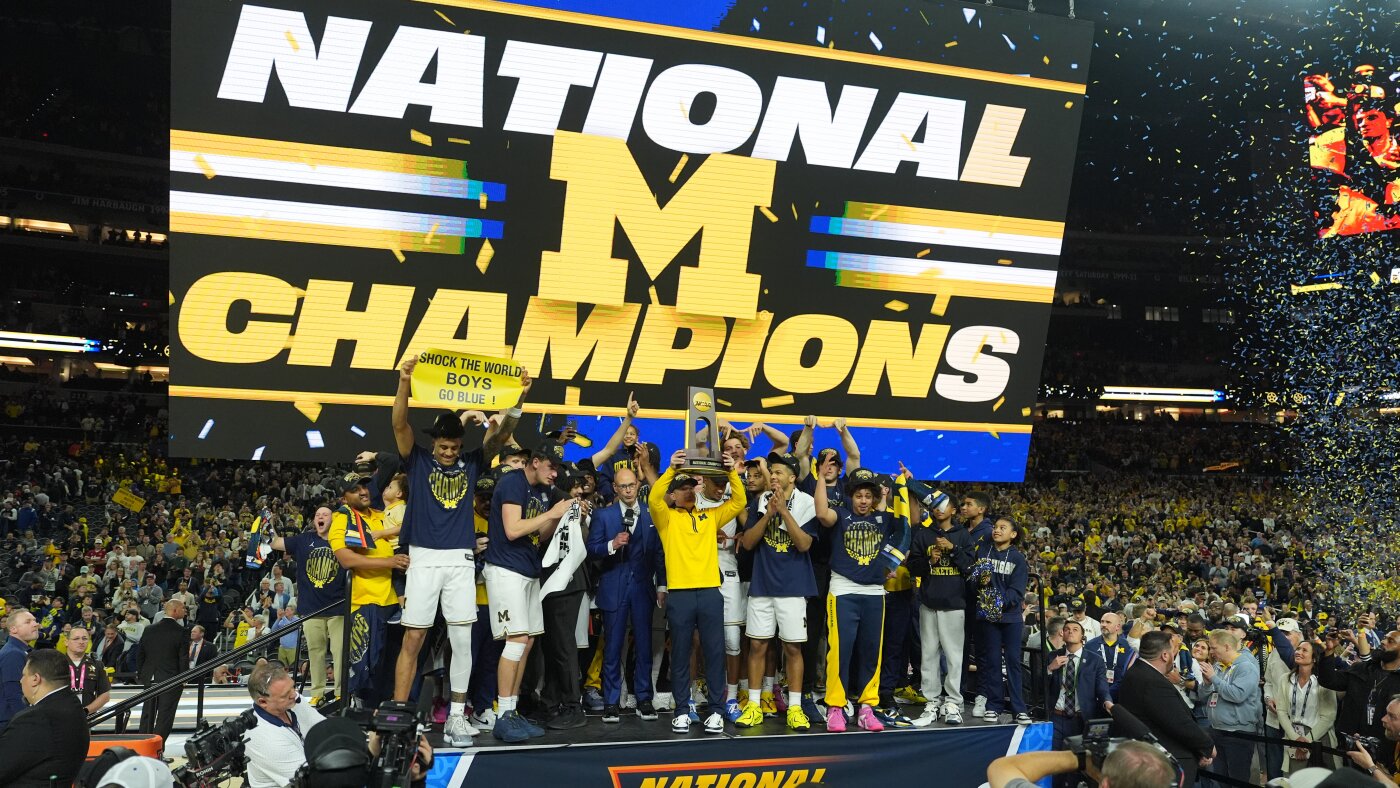
Michigan muscles its way to program’s 2nd NCAA basketball title, beating UConn

Map: Minor Earthquake Strikes Near San Diego

Trump claims he’d win as the president of Venezuela — just needs to ‘quickly’ learn Spanish
-

 Atlanta, GA3 days ago
1 teenage girl killed, another injured in shooting at Piedmont Park, police say
-

 South-Carolina1 week ago
South Carolina vs TCU predictions for Elite Eight game in March Madness
-

 Movie Reviews5 days ago
Vaazha 2 first half review: Hashir anchors a lively, chaos-filled teen tale
-

 Vermont1 week ago
Skier dies after fall at Sugarbush Resort
-

 Politics1 week ago
Trump’s Ballroom Design Has Barely Been Scrutinized
-

 Politics1 week ago
JD Vance says he was ‘obsessed’ with UFOs, believes aliens are actually ‘demons’
-

 Politics1 week ago
Jeffries declines to break with indicted Democrat after ethics panel’s guilty verdict
-
 Entertainment5 days ago
Inside Ye’s first comeback show at SoFi Stadium