Crypto
SEC Chief Warns on Crypto Investments


Amid anticipations surrounding the potential
approval of a spot Bitcoin exchange-traded product by the Securities and
Exchange Commission (SEC), Chair Gary Gensler’s recent cautionary statements
have cast a spotlight on the inherent risks within the crypto landscape.
Gensler’s thread on social media underscores the
significant concerns around crypto investments. He emphasized the volatility of digital assets and their susceptibility to fraudulent schemes.
Gensler has warned against the risks inherent in
cryptocurrency investments. His social media thread, albeit not explicitly tied
to the awaited spot Bitcoin ETF approval, sheds light on the broader concerns surrounding
crypto investments.
2⃣ Investments in crypto assets also can be exceptionally risky & are often volatile. A number of major platforms & crypto assets have become insolvent and/or lost value. Investments in crypto assets continue to be subject to significant risk.
— Gary Gensler (@GaryGensler) January 8, 2024
Gensler’s cautionary statement concerns asset managers
potentially bypassing federal securities laws with their crypto investment
offerings. The SEC Chair’s commentary alludes to the possibility that certain
investment assets may not align with established regulatory frameworks,
prompting a call for investors’ vigilance and due diligence.
Gensler’s remarks revolve around crypto investments’
inherent volatility and vulnerability. His comments highlight the sector’s
susceptibility to market fluctuations and emphasize the need for investors to
exercise caution, particularly given the prevalence of fraudulent activities in
the crypto space.
Spot Bitcoin ETF Speculations
Recently, the price of Bitcoin soared past $45,000
amid immense anticipation for the approval of the first spot Bitcoin ETF.
According to a report by Finance Magnates, analysts are anticipating the SEC to
potentially approve the spot Bitcoin ETF between January 8 and 10, with the
entire crypto community eagerly awaiting the decision.
This momentous event has led to a strategic shift in
the market, with investors withdrawing their coins from exchanges, signaling a
long-term commitment, and companies making significant preparations for the
impending news.
Contrary to expectations, analysts predict limited
downside after the ETF’s approval due to the decreasing supply of BTC on
exchanges. Notably, significant liquidations of positions have occurred,
creating a crypto blockbuster.
However, a rejection of the ETF license by the SEC
could cause a shift in the market, potentially turning bullish sentiments
bearish and forcing traders to readjust their strategies.
Amid anticipations surrounding the potential
approval of a spot Bitcoin exchange-traded product by the Securities and
Exchange Commission (SEC), Chair Gary Gensler’s recent cautionary statements
have cast a spotlight on the inherent risks within the crypto landscape.
Gensler’s thread on social media underscores the
significant concerns around crypto investments. He emphasized the volatility of digital assets and their susceptibility to fraudulent schemes.
Gensler has warned against the risks inherent in
cryptocurrency investments. His social media thread, albeit not explicitly tied
to the awaited spot Bitcoin ETF approval, sheds light on the broader concerns surrounding
crypto investments.
2⃣ Investments in crypto assets also can be exceptionally risky & are often volatile. A number of major platforms & crypto assets have become insolvent and/or lost value. Investments in crypto assets continue to be subject to significant risk.
— Gary Gensler (@GaryGensler) January 8, 2024
Gensler’s cautionary statement concerns asset managers
potentially bypassing federal securities laws with their crypto investment
offerings. The SEC Chair’s commentary alludes to the possibility that certain
investment assets may not align with established regulatory frameworks,
prompting a call for investors’ vigilance and due diligence.
Gensler’s remarks revolve around crypto investments’
inherent volatility and vulnerability. His comments highlight the sector’s
susceptibility to market fluctuations and emphasize the need for investors to
exercise caution, particularly given the prevalence of fraudulent activities in
the crypto space.
Spot Bitcoin ETF Speculations
Recently, the price of Bitcoin soared past $45,000
amid immense anticipation for the approval of the first spot Bitcoin ETF.
According to a report by Finance Magnates, analysts are anticipating the SEC to
potentially approve the spot Bitcoin ETF between January 8 and 10, with the
entire crypto community eagerly awaiting the decision.
This momentous event has led to a strategic shift in
the market, with investors withdrawing their coins from exchanges, signaling a
long-term commitment, and companies making significant preparations for the
impending news.
Contrary to expectations, analysts predict limited
downside after the ETF’s approval due to the decreasing supply of BTC on
exchanges. Notably, significant liquidations of positions have occurred,
creating a crypto blockbuster.
However, a rejection of the ETF license by the SEC
could cause a shift in the market, potentially turning bullish sentiments
bearish and forcing traders to readjust their strategies.



Donald Trump made $1.4bn (approximately £1bn) from his cryptocurrency dealings in his first year back in office, in what his former White House lawyer has described as part of “the greatest onslaught of corruption in the history of mankind.”
Overall, Trump pulled in at least $2.2bn (£1.65bn) from his vast holdings, including real estate assets, in 2025. By comparison, his enterprises pulled in $662m (£495m) in 2024 before he returned to the presidency.
The US president – who denies any wrongdoing – received around $500m (£374m) from $WLFI, the digital currency sold by his family’s main crypto firm World Liberty Financial (WLF).
Trump also got a windfall from his $TRUMP meme coin, which was launched three days before his inauguration and earned him more than $600m (£449m).
The coin was dismissed as a ‘pump-and-dump scheme’ by analysts and led to hundreds of thousands of mostly small investors losing money.
The figures were released as part of Trump’s 927-page mandatory financial report for 2025.
An additional $500m (£374m) deal – struck days before his second inauguration in January 2025 – to sell 49% of WLF to representatives of a high-ranking Emirati royal has invited accusations of corruption.
The deal saw $187m (£140m) of the initial payment steered to entities controlled by the Trump family, according to the Wall Street Journal.
Months later, the UAE got the green light to import 500,000 Nvidia AI chips, despite concerns from US security officials.
Former White House lawyer Ty Cobb, who was part of the Trump administration’s legal team between 2017 and 2018, accused the president of violating parts of the constitution designed to prevent federal officials from engaging in corruption or being unduly influenced by foreign powers.
“Several hundred million dollars related to those coins,” Cobb told CNN. “How can that be anything other than trading on his image and likeness in violation of the emoluments clause?”
He added: “We are seeing the greatest onslaught of corruption in the history of mankind in the last 18 months.”
The White House has called the accusation “bogus and irrelevant”. Trump denied that he was profiting from the presidency, adding: “We have funds that run my money.”
“He got richer,” California’s governor Gavin Newsom posted on X. “His crypto supporters got rug-pulled.”
Lee Reiners, a former Federal Reserve Bank examiner who now specialises in cryptocurrency, told the New York Times: “It is hard to wrap your head around that the president of the United States would engage in this level of self-enrichment at the expense of so many of his supporters.”
He added: “This is a president of the United States who has made more money off crypto since he took office than he made in any prior year in his entire business career.”

Key Takeaways
- Supporters are warning that failure to schedule a CLARITY Act vote before the window closes could stall the bill for an extended period.
- Backers argue the legislation is critical to resolving oversight gaps, establishing registration pathways, and enforcing consumer protections and compliance standards.
- Analysts caution that without a scheduled Senate vote, procedural movement, or unified committee text, the bill faces growing legislative and political risk.
Limited July Schedule Raises Urgency for Floor Vote
Efforts to pass a federal crypto market-structure bill have entered a critical phase as the Senate remains in recess until July 13. The advocacy group Stand With Crypto on July 1 urged supporters to contact Senators and push for a floor vote on the Digital Asset Market Clarity Act, or CLARITY Act, before lawmakers leave for the August recess.
The timeline leaves a narrow window for action following months of committee work and industry lobbying. Supporters say the bill would reduce regulatory uncertainty by establishing clearer federal rules for digital asset issuers, trading platforms, developers, and market participants.
“The Senate is in recess. The clock on Clarity is running,” Stand With Crypto noted on X, adding:
“The window before the August recess is short, and when Senators return on July 13, they can vote on the Clarity Act to end years of regulatory guesswork. Don’t let the window close. Call your Senators to schedule a vote on Clarity.”
The legislation advanced in June when the Senate Banking Committee approved H.R. 3633 in a bipartisan 15-9 vote. The bill outlines agency oversight, registration pathways for crypto firms, consumer protections, and compliance standards across digital asset markets.
Lawmakers return to Washington on July 13 after the Independence Day recess, leaving Congress with just eight legislative business days before the planned August recess. The compressed schedule gives lawmakers limited time to consider the CLARITY Act alongside annual defense and government funding legislation.
Industry Groups Increase Pressure on Senate Leadership
Industry advocacy has intensified as the legislative calendar tightens ahead of the 2026 midterm elections. More than 200 organizations, including Coinbase, Ripple, Kraken, Circle, Binance.US, Uniswap Labs, Paradigm, Andreessen Horowitz, and Stand With Crypto chapters, have urged Senate leaders to bring the bill to the floor.
Mason Lynaugh, policy director at Stand With Crypto, said:
“There’s a limited window to get this done, with few remaining days left in the current Congress before the midterm elections. If Senate leaders don’t schedule a CLARITY Act vote in the coming weeks, an enormous amount of bipartisan work, compromise, and progress, could be wasted.”
Ripple has also promoted the effort in Washington, D.C., including a branded CLARITY truck near Capitol Hill to raise visibility as lawmakers consider crypto legislation.
Stand With Crypto cited polling showing nearly three-quarters of surveyed crypto owners in Senate battleground states are more likely to support candidates who favor clearer cryptocurrency rules. The group also reported that more than one-third of respondents use digital assets for personal transfers, while 21% use them for monthly expenses.
Despite the momentum, analysts remain cautious. Galaxy Research lowered its 2026 passage estimate for the CLARITY Act to 50-50 from 60%, citing the absence of a scheduled Senate floor vote, no motion to proceed, and no unified text between Senate committees.

Good morning. You’re reading the Up First newsletter. Subscribe here to get it delivered to your inbox, and listen to the Up First podcast for all the news you need to start your day.
Today’s top stories
President Trump’s financial disclosures reveal that he and his family earned more than $1 billion through cryptocurrency ventures and other businesses last year, according to a 927-page report filed with the Office of Government Ethics. The report shows that more than $500 million came from the cryptocurrency venture “World Liberty Financial,” which was co-founded by Trump family members. The sale of souvenir “meme” coins featuring Trump’s image generated more than $600 million. Other income included more than $50 million from settlements with media companies and millions in profits from Trump-branded products like Bibles, sneakers and watches. These earnings, which have outpaced his real estate business, have sparked concerns about potential conflicts of interest. The White House released a statement denying any conflicts of interest, and spokesperson Anna Kelly applauded Trump for making the U.S. “the crypto capital of the world.”
President Trump walks to board Air Force One as he departs Bismarck Municipal Airport on July 1, 2026, in Bismarck, North Dakota. Trump traveled to North Dakota to attend the Theodore Roosevelt Presidential Library dedication.
Andrew Harnik/Getty Images
hide caption
toggle caption
Andrew Harnik/Getty Images
- 🎧 Democrats have had a lot to say regarding the president’s earnings, NPR’s Linda Kenyon tells Up First. Sen. Adam Schiff of California suggested Trump has earned more money in the first year of his current term than in the rest of his life combined. Rep. Jason Crow of Colorado referred to the president’s cryptocurrency earnings as another example of what he described as “grift and corruption.” Crow also highlighted that the president took his first flight yesterday on a brand-new Air Force One, a gift from a foreign government valued at roughly $400 million.
The Vatican this morning formalized the excommunications of the bishops and priests of the conservative group known as the Society of St. Pius X, declaring that it has entered schism and broken communion with the pope and the Catholic Church. The group, known as SSPX, celebrates the traditional Latin Mass and opposes some modern church reforms. In the Catholic Church, the appointment of new bishops is the responsibility of the pope. But yesterday, the group defied Pope Leo XIV by consecrating four bishops without his approval. The Society framed its actions as a defense of Catholic tradition. During the ceremony, the Rev. Davide Pagliarani, head of the Society of St. Pius X, described the consecrations as an act of service rather than rebellion. Two of the excommunicated men teach in the U.S., where the group’s membership has been growing, according to the society.
A little over a week has passed since rare double earthquakes struck Venezuela. Thousands of people are feared dead as the official death toll continues to rise and hope diminishes for finding survivors in the rubble. Yesterday, the number of people killed by the quakes reached 2,295, and more than 11,200 people were injured, said Jorge Rodríguez, the president of Venezuela’s National Assembly. Tens of thousands of people remain unaccounted for. The number of people left homeless could be staggering. An analysis of satellite data by Corey Scher and Jamon Van Den Hoek from Oregon State University estimated that 58,870 buildings were likely damaged or destroyed by the earthquakes. The U.N.’s International Organization for Migration has reported that up to 6.8 million people could be affected by the disaster, needing shelter, water, sanitation, healthcare and other relief items. Here are the most significant developments since the tragedy occurred.
The U.S. men’s national team defeated Bosnia-Herzegovina 2-0, marking its first FIFA World Cup knockout round victory since 2002. With this win, the U.S. advances to the Round of 16, where it will face Belgium on July 6. The team will have to play without U.S. forward Folarin Balogun, who will be suspended after receiving a red card for a cleat-first challenge on Bosnian defender Tarik Muharemović. Balogun has scored three goals in three World Cup matches, including the first goal of yesterday’s game. Balogun is currently the top goalscorer for the U.S. team in the 2026 World Cup.
- 🎧 NPR’s Becky Sullivan says it’s hard to know how the U.S. will fare against Belgium next week. The Belgian team easily beat the U.S. 5-2 in a friendly back in March, but Sullivan says Belgium also looks like one of the most beatable “good teams” in the tournament so far. So the U.S. has a good chance, even without Balogun. A win would bring the American men to the quarterfinals, the furthest they’ve ever advanced in a modern World Cup.
Life advice

Got a fridge full of half-eaten food like this rotisserie chicken and not sure what to do with it? Chefs share creative cooking tricks and storage techniques to motivate you to use it all up.
Pulse/Getty Images/Corbis RF Stills
hide caption
toggle caption
Pulse/Getty Images/Corbis RF Stills
Don’t let your leftovers go to waste. According to the nonprofit ReFED, about a quarter of all food products are wasted nationally. Life Kit spoke with chefs who shared clever storage techniques and cooking tips to help you make the most of your food scraps.
- 🍽️ Start with a mindset shift. Consider cooking with leftovers as a creative and experimental exercise rather than a guilt-driven one.
- 🍽️ Develop a collection of flexible, go-to recipes that can use up a variety of ingredients. For example, if you have leftover rice, you can cook it with other ingredients, such as rotisserie chicken and older vegetables, to make fried rice.
- 🍽️ Save yourself the guessing game of wondering what is in your fridge by labeling and dating your leftovers.
- 🍽️ Never throw away herb stems, as they still have the same herby flavor as the leaves. If you blend them with a clove of garlic and olive oil, you can create a base sauce. You can do the same thing with vegetables like broccoli to make soups.
For additional guidance on creative ways to use your leftover odds and ends, listen to this episode of NPR’s Life Kit. Subscribe to the Life Kit newsletter for expert advice on love, money, relationships and more.
Picture show

Garland Jones, recreational therapist and senior program director of the YMCA of South Florida’s special needs program, teaches Mackenzie Wesley, 5, to breathe safely in water by using a ping pong ball as a visual aid.
LA Johnson/NPR
hide caption
toggle caption
LA Johnson/NPR
Children with autism are 160 times more likely to die from drowning compared to their peers, according to a 2017 study from Columbia University. This is largely because about half of autistic children have a tendency to wander away from safe environments. That fact, combined with an attraction to water, can be very dangerous. High-quality swim lessons can be a vital preventative measure to combat this issue. Florida, which has one of the highest childhood drowning rates in the nation, expanded a voucher program this month that puts children ages 1-7 who have autism at the front of the line for subsidized swim lessons. The YMCA of South Florida’s low-cost Swim Buddies program is one of the largest programs specifically designed for children with disabilities in the area. One of its key features is its focus on individualization and one-on-one instruction, rather than traditional group lessons. Staff members assess each child’s needs and tailor the lessons accordingly. Take a look at how this program is helping children with autism.
3 things to know before you go

Photo Illustration of the new Wegovy 1.5 mg and 4 mg semaglutide tablets with injectable prescription weight loss pens on a white background. Its a prescription medicine used with a reduced calorie diet and physical activity. (Photo by: Michael Siluk/UCG/Universal Images Group via Getty Images)
Universal Images Group/Getty Images
hide caption
toggle caption
Universal Images Group/Getty Images
- A Medicare pilot program for GLP-1 drugs launched yesterday, allowing beneficiaries to get a weight loss prescription for $50 a month.
- Kroger is set to acquire the Pittsburgh-based Giant Eagle grocery store chain for $1.65 billion. (via WESA)
- Dozens of states might be responsible for millions of dollars next year to help feed low-income families through the federal Supplemental Nutrition Assistance Program (SNAP). Under the One Big Beautiful Bill Act, states with error rates of 6% or higher will be required to cover 5%, 10% or 15% of SNAP benefits in the coming years. (via KCUR)
This newsletter was edited by Suzanne Nuyen.
-
 Lifestyle1 minute ago
L.A. Affairs: He wanted L.A. I wanted New York. A panic attack changed everything
-
 Politics5 minutes ago
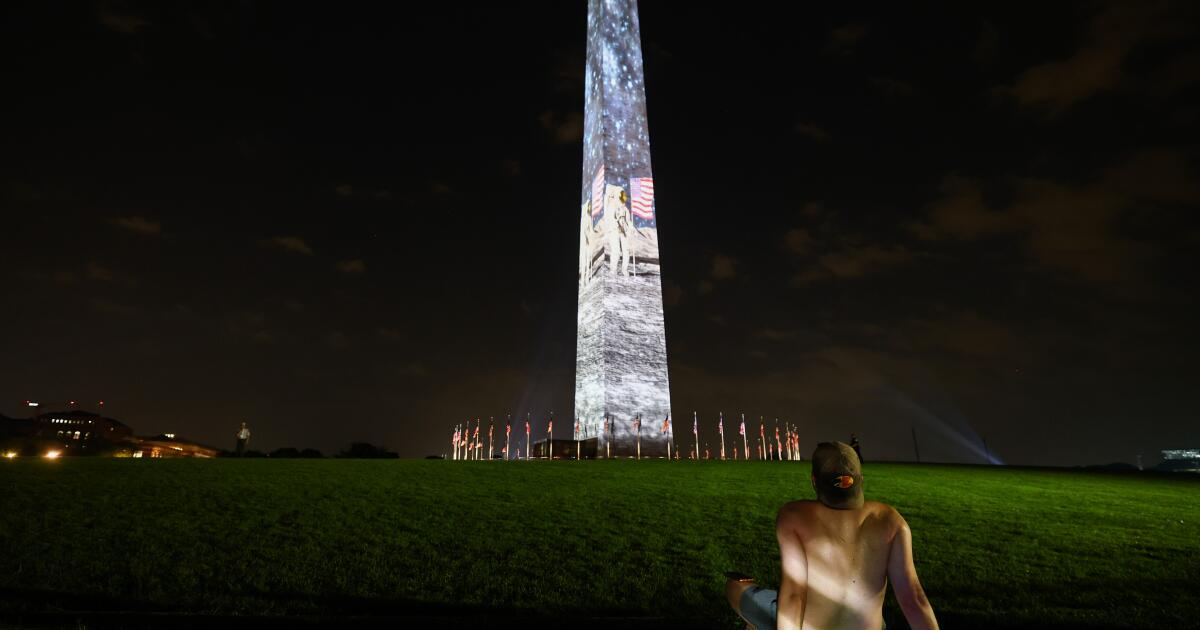
Trump refashions America’s 250th as a celebration of himself
-
 Sports20 minutes ago
How Dodgers’ Max Muncy, vying for his third All-Star selection, continues to evolve
-

 World32 minutes ago
Germany’s Merz defends NATO spending after Trump calls it ‘ridiculous’
-
 News55 minutes ago
Oregon ER doctors win a ‘David and Goliath’ battle against a national company
-

 Videos2 hours ago
Iran gets ready for Khamenei’s funeral • FRANCE 24 English
-

 Los Angeles, Ca2 hours ago
2 arrested after 3 LASD deputies injured during East L.A. World Cup celebration
-

 Detroit, MI3 hours ago
Ex-girlfriend in custody after Taylor man found fatally stabbed, police say

