Crypto
Ledger Taps Revolut For Crypto Payments In Europe – FinanceFeeds

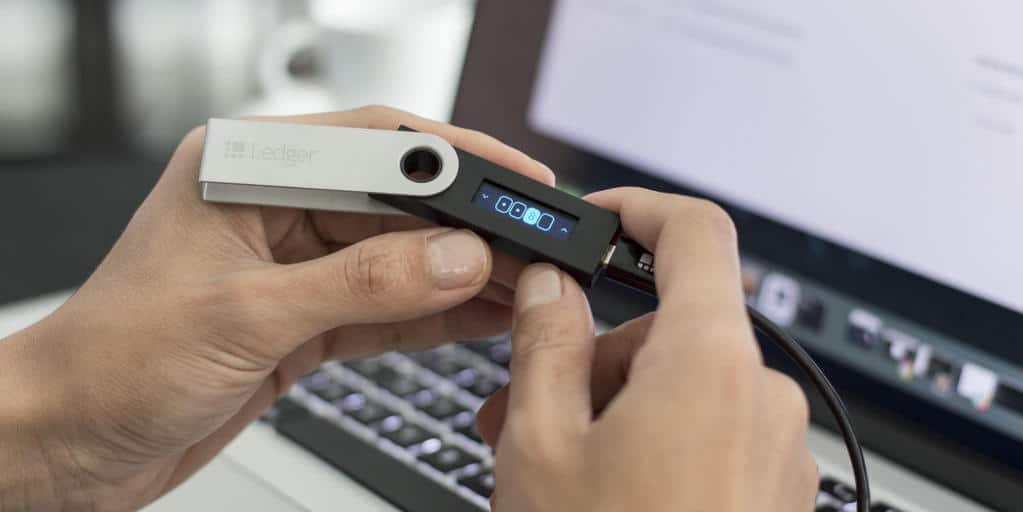
UK Fintech giant Revolut has teamed up with hardware wallet firm Ledger to expand cryptocurrency payment options in specific European Economic Area (EEA) countries.
Announced today, the partnership will allow Ledger customers to buy and sell cryptocurrencies, including Bitcoin, through Revolut’s on-ramp service, Revolut Ramp.
The alliance will integrate Revolut as an official buy provider within Ledger’s wallet application, Ledger Live, in 27 EEA countries, including Bulgaria, Denmark, Ireland, Malta, and Switzerland.
The partnership is said to simplify the process of buying cryptocurrency while maintaining full digital ownership. Revolut customers who have completed Know Your Customer (KYC) checks can now bypass additional verification steps when buying crypto through Ledger, making the process faster and more secure.
Revolut Ramp also allows non-Revolut customers to complete KYC checks and make purchases using Visa or Mastercard in minutes. The integration includes Revolut Pay as a payment method on Ledger, facilitating instant online payments.
– Advertisement –
Revolut, the UK’s highest-valued fintech company, has been providing cryptocurrency services since 2017 and currently serves over 40 million customers globally.
“We’re delighted to be working with Ledger, a leader in the self-custody space, as we further cement Revolut as the go-to financial app for crypto investors,” said Revolut’s general crypto manager Emil Urmanshin.
Meanwhile, Ledger has integrated MoonPay’s instant crypto purchasing and token swap capabilities into its Ledger Live.
The collaboration also introduces a limited-edition Ledger x MoonPay Nano X hard wallet, which is purple and includes a $25 crypto voucher from MoonPay. A one-year subscription to Ledger Recover, a key recovery service, will soon be available with this product.
Ledger already allows users of its popular crypto hardware wallet to buy cryptocurrency directly in the App with bank cards after it has inked a partnership with Canadian payments firm Nuvei. The agreement gives Ledger users a fiat onramp to conduct and settle crypto transactions, a grey area of business where a gauntlet of KYC requirements and other regulations kick in.


US President Donald Trump has made $US1.4 billion ($2b) from cryptocurrency in the past 12 months.
$US635 million came from celebration coins royalties and $US236m came from cryptocurrency “token sales”, while the rest of his income came from assorted cryptocurrency wallets.
His celebration coin income is linked to meme coins he launched before returning to office, namely $TRUMP.
But what are meme coins and has anyone other than the Trump family profited?
Meme coins
Cryptocurrencies are a type of digital asset, not unlike a stock, which can be used as an exchangeable form of money online.
Much like paper currencies since the gold standard was ended, crypto has value because investors collectively agree it does, in part due to its security and scarcity.
Meme coins on the other hand are a bit harder to pin down.
“Meme coins are cryptocurrencies that leverage popular memes or internet trends to create a community-driven, often playful approach to digital currency,” according to crypto broker Blockchain.com.
Meme coins have no inherent value and, unlike Bitcoin, have varying limits of scarcity, rendering the price of any coin vulnerable to the rise and fall in popularity of whatever meme or trend inspired the item.
As an example Hailey Welch, an American woman, launched her own brand of meme coin after she rose to internet fame in June 2024.
The $HAWK coin released in December 2024 reached a market capitalisation of $500m before it crashed to $25m by late January.
Investors have since sued $HAWK.
The $TRUMP coin
The $TRUMP coin is valued at $US1.65 as of July 1, 2026. (Supplied: GetTrumpMemes.com)
Mr Trump’s own meme coin $TRUMP launched days before his second inauguration, also in January 2025.
At its peak it sold for almost $US75 a coin, but by the end of February its value had plummeted to about $US20 and as of July 1, 2026 its value sits at $US1.65.
This is where the bulk of Mr Trump’s $US635m in royalties and $US236m in token sales are believed to have come from.
In April 2026, Democratic Senator for California Adam Schiff said he and other senators would be investigating a Mar-a-Lago conference which invited the top 297 $TRUMP token holders to attend and offered VIP access to Mr Trump.
In a statement he said CIC Digital and Fight Fight Fight LLC, which controlled 80 per cent of $TRUMP supply, received trading revenue from all $TRUMP activity.
“The announcement of the conference ‘set off a quick but brief run-up in the price of the $TRUMP meme coin, which reached $3.08 before tumbling back down,’” the senators highlighted.
“President Trump financially benefits from the market value and activity of the $TRUMP cryptocurrency.“
Mr Schiff and his fellow senators asserted “not all” investors of $TRUMP and the similarly branded first ladies meme coin, $MELANIA, benefited from their investment.
“According to recent reports, $TRUMP, and the First Lady’s meme coin, $MELANIA, “erased an estimated $4.3 billion in retail wealth,” they said.
“Insiders, however, reportedly made a fortune: 45 ‘early-deployment wallets’ earned $1.2 billion off the meme coins, meaning that for every dollar insiders earned, retail investors lost $20.”
World Liberty Financial, another Trump family-linked business which distributed Mr Trump’s royalty and token sale revenue, provided him with an additional $65m in income.
Eric Trump and Donald Trump Jr are involved in its management and it was co-founded by Zach Witkoff, the son of Mr Trump’s special envoy to the Middle East Steve Witkoff.

Donald Trump Jr and Eric Trump with Zach Witkoff. (Reuters: Eduardo Munoz)
Mr Trump’s $236m in token sale revenue is a marked leap in profits collected compared to Mr Trump’s 2025 disclosure which only reported $US57m from token sales.
World Liberty Financial launched another cryptocurrency in May, 2025 called USD1.
USD1 rose to US$1.016 after launch and is now valued at $U0.99.
It was also used to pay bonuses to UFC fighters performing at the White House in June.
On July 1, after his disclosure came out, Mr Trump said his wealth was the result of the US stock market’s success.
“”You know why I’m profiting? Because the stock market’s going up, everybody’s profiting,” Mr Trump said, according to Reuters.

Key Takeaways
- OKX launched a 20 USDT airdrop for earthquake victims, easing the financial burden on affected residents.
- Eligible La Guaira residents receive automatic credits, providing immediate crisis relief without hurdles.
- Following Binance’s $3M pledge, OKX’s move amplifies the role of crypto in global disaster relief efforts.
OKX Opens Airdrop for Venezuelan Earthquake Victims
OKX, one of the largest cryptocurrency exchanges by volume, has taken action to help Venezuelan users affected by the twin earthquakes that left over 2,000 dead and hundreds of buildings collapsed.
On social media, using its Latam account, OKX referred to the twin earthquakes that hit Venezuela on June 24, 2026, and how the cryptocurrency community has responded to this event in one of the Latam countries with growing crypto adoption.
“We know that these days have been difficult. But we have also seen something extraordinary: the solidarity of Venezuela and the entire international community, which fills us with hope,” it declared.
To help Venezuelan users in regions hit by the natural disaster, OKX announced it will distribute 20 USDT to each user with proof of address (POA) verifying they reside in La Guaira, the state most affected by the twin earthquakes.
While OKX did not disclose the total funds available for this initiative, it pointed out that support was limited and would be distributed on a “first-come, first-served” basis.
The funds will be automatically credited to the accounts that fulfill the POA requirement. “No registration, claim code, or qualifying transaction is required; the 20 USDT reward is automatically credited once eligibility is confirmed,” the exchange explained.
“We know that the road ahead will require effort, help, and support from everyone for a long time. But you will not walk it alone. We are one region, and we will be with you on this journey. We stand with you, Venezuela.” OKX concluded.
OKX’s relief efforts follow a similar campaign by Binance. The most popular exchange in Venezuela pledged $3 million to users residing in La Guaira, Distrito Capital, Miranda, Aragua, Carabobo, Falcón, and Yaracuy, offering a similar path for users to reclaim 20 USDT via redeemable vouchers.

Donald Trump made $1.4bn (approximately £1bn) from his cryptocurrency dealings in his first year back in office, in what his former White House lawyer has described as part of “the greatest onslaught of corruption in the history of mankind.”
Overall, Trump pulled in at least $2.2bn (£1.65bn) from his vast holdings, including real estate assets, in 2025. By comparison, his enterprises pulled in $662m (£495m) in 2024 before he returned to the presidency.
The US president – who denies any wrongdoing – received around $500m (£374m) from $WLFI, the digital currency sold by his family’s main crypto firm World Liberty Financial (WLF).
Trump also got a windfall from his $TRUMP meme coin, which was launched three days before his inauguration and earned him more than $600m (£449m).
The coin was dismissed as a ‘pump-and-dump scheme’ by analysts and led to hundreds of thousands of mostly small investors losing money.
The figures were released as part of Trump’s 927-page mandatory financial report for 2025.
An additional $500m (£374m) deal – struck days before his second inauguration in January 2025 – to sell 49% of WLF to representatives of a high-ranking Emirati royal has invited accusations of corruption.
The deal saw $187m (£140m) of the initial payment steered to entities controlled by the Trump family, according to the Wall Street Journal.
Months later, the UAE got the green light to import 500,000 Nvidia AI chips, despite concerns from US security officials.
Former White House lawyer Ty Cobb, who was part of the Trump administration’s legal team between 2017 and 2018, accused the president of violating parts of the constitution designed to prevent federal officials from engaging in corruption or being unduly influenced by foreign powers.
“Several hundred million dollars related to those coins,” Cobb told CNN. “How can that be anything other than trading on his image and likeness in violation of the emoluments clause?”
He added: “We are seeing the greatest onslaught of corruption in the history of mankind in the last 18 months.”
The White House has called the accusation “bogus and irrelevant”. Trump denied that he was profiting from the presidency, adding: “We have funds that run my money.”
“He got richer,” California’s governor Gavin Newsom posted on X. “His crypto supporters got rug-pulled.”
Lee Reiners, a former Federal Reserve Bank examiner who now specialises in cryptocurrency, told the New York Times: “It is hard to wrap your head around that the president of the United States would engage in this level of self-enrichment at the expense of so many of his supporters.”
He added: “This is a president of the United States who has made more money off crypto since he took office than he made in any prior year in his entire business career.”
-

 New Hampshire2 minutes ago
Fireworks Near Me: July 4th Events Around Concord For 2026
-

 New Jersey5 minutes ago
New Jersey has had an image problem for 250 years. We love it anyway
-

 New Mexico10 minutes ago
New Mexico father, son reunite in El Paso after 3-year abduction
-

 North Carolina17 minutes ago
Three wildfires continue burning across Eastern Carolina
-

 North Dakota20 minutes ago
1 dead in southwestern North Dakota crash Friday
-

 Ohio25 minutes ago
Severe storms bring downed trees, power outages across Northeast Ohio
-

 Oklahoma32 minutes ago
Beware of out-of-state recruiters chasing Utah talent. Oklahoma and Michigan just upped efforts
-
Oregon35 minutes ago
Oregon Lottery Mega Millions, Pick 4 results for July 3

