Business
What We’re Watching in 2025


Andrew here. Happy New Year and happy Saturday. This morning, we’re taking a look at what may — or may not — happen in 2025. This is not an effort to crystal-ball the future so much as it is a rundown of big topics that the DealBook team and I have on our radar screen in the new year.
On this list: Changes to deal-making in the new Trump era, the future (or end) of D.E.I. efforts, the growing momentum of workers returning to the office, the evolving relationship between China and the U.S., new investments in artificial intelligence, and yes, the role of Elon Musk in all of the above. Let us know what you think. And we’ll revisit this list at the end of the year.
Deals will flow. Deal makers pretty much universally expect a flood of deals under President-elect Donald Trump after four years of pent-up activity under President Biden, whose antitrust enforcers challenged a record number of mergers. The more interesting question: Which kinds of companies will make those deals? More M.&A. in the energy sector seems probable, given Trump’s support for the industry. Bank deals could also take off: After the regional banking crisis, Treasury Secretary Janet Yellen said the country could benefit from more mergers. Deals may also pop up to address cybersecurity concerns, the impact of GLP-1 drugs and the fierce A.I race.
Media companies will reshuffle. Media executives and their advisers have been saying for years that the industry needs a drastic overhaul to address its new reality: an overabundance of streaming options and the decline of the legacy cable industry. Deals that were effectively considered a no-go under Biden’s aggressive antitrust enforcers may finally be given a green light under a Trump administration.
Everyone is watching to see what a handful of key players do next: Will Comcast’s move to spin off its cable business inspire others, such as Warner Bros. Discovery, to do the same? Will Paramount use Larry Ellison’s deep pockets to acquire streaming businesses? Will Rupert Murdoch respond to his failed attempt to change his family trust by selling Fox, making it bigger, or trying to buy out some of his children? Will Trump allow a major media company (or his own) to buy TikTok?
Big Tech may not catch a break. While corporate America has been anticipating a longer leash under the Trump administration, Silicon Valley giants may still face a lot of scrutiny. Several of Trump’s picks to lead key regulators — Andrew Ferguson at the Federal Trade Commission, Gail Slater at the Justice Department’s antitrust division and Brendan Carr of the Federal Communications Commission — are expected to keep looking closely at Big Tech.
Unlike Lina Khan, the outgoing F.T.C. chief whose lawsuits fighting tech giants’ market power came from a progressive perspective, many of Trump’s picks have accused companies like Google and Meta of silencing conservative voices.
What will Elon Musk do with his power? The tech billionaire has been one of the most influential and omnipresent voices in Trump’s ear since the election, and his perch as co-head of the Department of Government Efficiency potentially gives him great sway — some critics say too much — over government agencies that fear budget cuts.
But the extent of Musk’s agenda remains unclear. He has already fought longtime Trump allies in defense of the skilled-worker visa program known as H-1B, a battle that he appears to have won for now. He’s also likely to push for further deregulation and more openness when it comes to A.I. and crypto. One unknown: how Musk, who sells a lot of Teslas in China, will weigh in on Beijing policy.
Executives want employees back in the office — and politics out of it. Starting this month, many of Amazon’s corporate staff members were required to work from the office five days a week, up from three days a week previously. The tech company’s return-to-office mandate caused waves and there are signs that office attendance across industries is ticking up.
But remote work remains prevalent, with about 30 million workers in hybrid or fully remote arrangements. Will other big tech companies follow Amazon’s lead in 2025?
Along with office attendance, executives are increasingly cracking down on employee activism. Starbucks sued a union that represents some of its workers after local affiliates posted pro-Palestinian social media posts (the union sued back). After Google fired dozens of employees last year over protests related to the company’s cloud computing contract with the Israeli government, the Google C.E.O., Sundar Pichai, told employees that work was not a place to “fight over disruptive issues or debate politics.” The sentiment seems to be catching on: Big tech companies that saw protests after Trump was elected in 2016 were silent after he was elected in 2024. Will the quiet continue?
D.E.I. will fight for its life. In 2024, the programs were attacked by lawsuits, activists such as Robby Starbuck and conservative lawmakers. As companies prepare for a Trump administration, some, like JetBlue and Molson Coors, have flagged diversity, equity and inclusion policies as a risk factor in their security filings. Walmart, Ford Motor and Toyota have rolled back some programs, and others are rebranding their efforts without advertising it, in hopes of attracting less attention. Fewer have publicly fought back, though Costco last month challenged a proposal by activist shareholders looking to end its D.E.I. efforts.
Infrastructure will become a growing focus of the A.I. race. The fight to dominate artificial intelligence is also spurring investment in infrastructure to generate the huge amount of electricity it requires. The International Energy Agency has forecast data center energy demand could double by 2026.
Some of the tech industry’s highest-profile executives are investing. Sam Altman of OpenAI, Jeff Bezos and Bill Gates are all backing nuclear fusion start-ups. Microsoft and BlackRock launched a $30 billion fund to invest in A.I. infrastructure last year. Silver Lake, the private equity firm, is spending big on data centers.
One name to watch this year: SoftBank. The Japanese tech investor has reportedly talked to Apollo, the private equity firm, about creating a $20 billion A.I. investment fund, and Masa Son, SoftBank’s mercurial C.E.O., is hunting for deals.
Defense tech could be in for a bumper year. Trump has promised to end the war in Ukraine. Whether or not he succeeds, the defense tech industry will benefit either way. It’s already happening: Venture investment in defense start-ups soared last year, and by September had surpassed the total amount invested in 2023. Palantir, a data analytics company, was a star performer. Its market capitalization jumped almost fivefold to $180 billion in 2024, its operating margins have risen sharply and it joined the S&P 500 in September.
Others are also profiting from rising global uncertainty. Anduril Industries, a California-based defense start-up backed by Peter Thiel, the venture capitalist and Palantir co-founder, announced in August that it had raised $1.5 billion in a funding round that valued it at $14 billion. And Helsing, a German start-up that uses A.I. to process live data from the battlefield, is one of Europe’s best-funded companies.
If Trump does manage to end the war, it’s plausible that Western defense companies will find opportunities helping to build Ukraine’s military capability. If he doesn’t, more of their tech may be deployed on the ground there. Smaller, A.I.-powered companies are already testing their equipment in real time in a war where drones and other tech are playing a big role.
How will Trump take on China, and how will Beijing respond? Trump has promised to increase tariffs on goods from China, accusing Beijing and its companies of unfair competition among other things. It’s the same stance he took during his first presidency, when he ratcheted up trade restrictions with the world’s second-biggest economy.
Much uncertainty remains about how Trump’s threats will play out once he’s in office, but Chinese companies have proven adept at finding ways around previous restrictions. Some moved final manufacturing and assembly operations to countries like Mexico, Vietnam and Malaysia so they could export directly to the United States without paying the 25 percent levy Trump imposed during his first term. Other businesses, such as Temu, the e-commerce company, set up operations in the U.S. to appear less Chinese and more American. Even after that facade faded, it’s still thriving: Temu was the most downloaded free app in Apple’s App Store in 2024.
How will Trump’s policies affect the economy? Trump’s plan to cut taxes and red tape is expected to keep G.D.P. growth steady at about 3 percent this year, and bolster American businesses’ bottom line in the short run. But his vow to impose tariffs on some of the country’s biggest trading partners on his first day in office could seriously crimp global growth in 2025.
Another pressing question is whether Trump will dismantle the Inflation Reduction Act, which would put billions of dollars’ worth of tax credits in jeopardy. That prospect has prompted even some Big Oil executives to lobby Trump hard to preserve the law.
A wild-card: inflation. Will Trump’s policies reignite it, spooking both the Fed and the so-called bond vigilantes? Keep an eye on the yield for 10-year Treasury notes, market watchers say. A spike there could force the administration to dial back its most ambitious plans to stimulate growth. Already, inflation fears have prompted the Fed to slash its forecast for 2025 rate cuts.
Thanks for reading! We’ll see you Monday.
We’d like your feedback. Please email thoughts and suggestions to dealbook@nytimes.com.




The luxury shopping center in Pacific Palisades will reopen next month after more than $100 million in renovations forced by the January 2025 wildfire that devastated the Los Angeles neighborhood.
Palisades Village will reopen Aug. 15, owner Rick Caruso announced Wednesday. The outdoor center survived the blaze that destroyed homes and other businesses but needed refurbishment to eliminate contaminants that the fire could have spread.
Crews are putting finishing touches on mall buildings after tearing them down to the studs, treating the wood and rebuilding the walls, Caruso said.
“Everybody’s working, and stores are moving their products in,” he said. “It’s a really cool feeling that people have really locked arms and are working together.”
An electrician installs lighting for a restaurant at Rick Caruso’s Palisades Village on Thursday. The shopping center is scheduled to reopen mid-August.
(Myung J. Chun / Los Angeles Times)
Pacific Palisades resident Allison Polhill, who is rebuilding the home of 30 years that her family lost in the blaze, said she is “thrilled” at the prospect of returning to the mall she used to frequent. Its comeback is a boost for the community, she said.
“Every single step that we make to reopen our commercial corridors is going to bring more people back into the Palisades,” said Polhill, who expects to move back into her home at the end of August.
A total of 6,822 structures were destroyed in the Palisades fire, including more than 5,500 residences and 100 commercial businesses, according to the California Department of Forestry and Fire Protection.
Caruso previously attributed the mall’s survival to the hard work of private firefighters and the fire-resistant materials used in the mall’s construction.
The $200-million shopping and dining center opened in 2018 with a movie theater and a roster of upmarket tenants, including Erewhon, which may be the only grocer in the heart of the fire-ravaged neighborhood when it opens.
Caruso’s company was able to fill the mall with tenants despite the long shutdown.
Palisades Village is 99% leased, with the majority of tenants returning, said Jackie Levy, chief financial and revenue officer. Nearly one-third of the shops and restaurants are new to the property.

A firefighter carries a hose back to his rig while walking through a destroyed home from the Palisades fire in Pacific Palisades on Jan. 7, 2025.
(Genaro Molina / Los Angeles Times)
Last year, Pacific Palisades-based fashion designer Elyse Walker said she would reopen her eponymous store in Palisades Village after losing her 25-year flagship location on Antioch Street to the inferno.
Other neighborhood shops destroyed in the fire that are reopening at the mall include K Bakery and Loomey’s Toys, which caters to children up to age 12 and used to be across the street from Palisades Elementary Charter School.
“It’s been a journey and I’m excited because I wasn’t sure that there was going to be a place to come back to,” said toy store owner Amanda Rastegar. “Hopefully we can bring some of that magic back.”
Rastegar’s home in the Palisades survived but was damaged by the fire. The family returned about eight weeks ago. Her last memory of the fire was a burning supermarket.
“I just couldn’t wrap my brain around what was happening,” she said. “By the time I left, Gelson’s was on fire.”
Among the returning tenants is Angelini Ristorante & Bar. Well-known Los Angeles chef Gino Angelini said he will be in the kitchen next month for a return of the Italian restaurant.
“We won’t do a big celebrity open,” he said. “We want to have a very soft opening and see our customers come back.”

Construction takes place at Rick Caruso’s Palisades Village on Thursday. The shopping center is scheduled to reopen mid-August.
(Myung J. Chun / Los Angeles Times)
An elaborate celebration would not feel “correct for me,” Angelini said, because the devastation has been “very sad” for so many.
Other new tenants include local chef Nancy Silverton, who has agreed to move in with a new Italian steakhouse called Spacca Tutto. Women’s activewear retailer LESET will open its first West Coast location.
Caruso said he is optimistic that customers will return to the center, even though many Pacific Palisades residents are still dispersed. One tracking system estimated that about 30% of the Village’s customer base was impacted by the fire, he said.
“That means 70% did not get impacted, so there’s a lot of customers still left out there,” Caruso said. Historically, the center drew customers from as far away as Beverly Hills and Calabasas, as well as Malibu, Brentwood and Santa Monica.
He also hopes many will be inspired to visit the revived mall.
“I believe in the goodness of people and I believe that people are going to want to support the Palisades,” he said. “They’re going to want to be there and support the businesses that have had the courage and the heart to reopen.”

Walmart is rapidly expanding its network of electric vehicle chargers designed for customers to use while they shop.
The network could help fill gaps in EV infrastructure in states with greater need for chargers. Walmart, which has more than 5,000 locations in the U.S. and hundreds in California, says more than 90% of Americans live within 10 miles of one of its stores.
The chargers also offer an incentive for customers to choose Walmart — Walmart Plus members will receive a 10% discount off an average price of $0.46 per kilowatt-hour of energy at the company’s chargers.
Walmart chargers are already available at more than 75 locations in 17 states, with Texas boasting the most charging stations, followed by Florida and Arizona.
Matthew Nelson, Walmart’s director of energy policy, said last week on LinkedIn that the network will soon reach 29 states, including California.
“We are delivering on the promise of affordable, reliable and convenient charging,” Nelson said in his post.
According to Walmart’s website, six charging stations are coming to California soon, though the company did not offer a specific timeline.
The chargers will be installed at stores in Antelope, Brea, Fresno, Stockton, Suisun City and Vallejo.
Most charging sites in California will include eight to 16 fast-charging stalls, said Walmart spokesperson Kelsey Bohl.
The company first announced plans in April 2023 to install its own EV chargers at Walmart and Sam’s Club stores, with a goal of installing thousands of chargers by 2030. Partnering with ABB E-Mobility and Alpitronic, it added 25 new charging sites this past May and six more in June.
“Walmart is building a leading retail-integrated EV fast-charging network, focused on delivering an affordable, reliable and convenient charging experience where customers already shop,” Bohl said in an emailed statement. “Customers can charge while they shop, access stations through the Walmart app they already use, and benefit from affordable pricing.”
The charging stations already available include 612 individual charging stalls using 400-kilowatt chargers. Each stall has a dual charging cord with both Combined Charging System and North American Charging Standard connectors. The standard connectors, designed by Tesla, are smaller and lighter than the combined systems.
The primary way to pay for the chargers is through the Walmart app, but the company is also experimenting with built-in credit card readers to allow those without the app to use the stations.
Customers can check charger availability on the Walmart app. The company said the chargers will be available 24 hours a day.

Robotaxis could be turning into robocops.
A self-driving Waymo reported two teens to San Mateo, Calif., police on Monday after they were found drinking alcohol and shooting toy guns in the back of the vehicle.
According to a social media post from the San Mateo Police Department, officers detained two 15-year-olds after the Waymo they were riding in contacted the department and stopped in a parking lot until law enforcement arrived.
“Parents do you know where your teens are?” the San Mateo Police Department wrote on Facebook following the incident. “Waymo does!”
Officers removed both teens from the vehicle and determined they were using toy guns to shoot Orbeez out the windows. Orbeez are small, water-absorbing beads sold at toy stores.
“Toy guns, water guns, and BB guns all pose real dangers, especially to an untrained eye,” the Police Department said. “The simple handling of them can cause fear in [passersby].” “
A video posted on Facebook shows at least five officers and a police dog responding to the scene and approaching the Waymo with their weapons raised.
Waymo did not immediately respond to a request for comment.
Waymo vehicles have internal cameras and microphones that may be used in an emergency or to “promote safety and security,” according to Waymo’s online support page.
The cameras are also used to ensure the vehicles are clean and to help find lost items, according to the support page.
The company said it does not use facial recognition or other biometric identification technologies to identify individuals.
“In more urgent circumstances, support may access live video during a trip,” the Waymo page said.
The San Mateo Police Department’s Facebook post has garnered nearly 60 comments, with one user accusing Waymo of “snitching.”
“At least they got a designated driver?!” one user commented.
-

 Alaska4 minutes ago
Outmigration, inflation, choice schools: Alaska school closures likely to continue without changes
-
 Arizona7 minutes ago
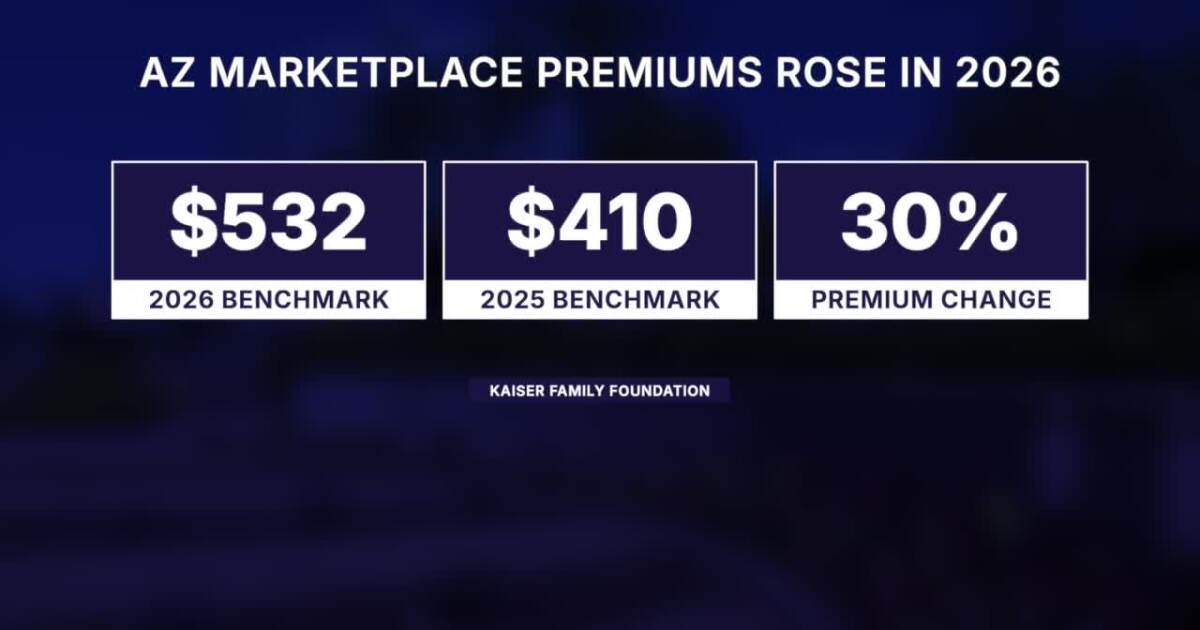
WATCH: Arizona’s health insurance marketplace is seeing dropping enrollment
-

 Arkansas12 minutes ago
ARKANSAS SIGHTSEEING: Randolph County can claim many firsts in Arkansas | Northwest Arkansas Democrat-Gazette
-

 California19 minutes ago
Toddler sustains brain injury in fall after California childcare worker threw him into the air, lawsuit says
-

 Colorado22 minutes ago
‘Saleabration’ comes back to Colorado Springs for third year
-

 Connecticut27 minutes ago
‘It’s a neighborhood effort’: Improvements made to Quinnipiac River Park
-

 Delaware34 minutes ago
Kids get hands-on learning during summer camp at Delaware County Technical School
-

 Florida37 minutes ago
Iranian drones in Cuba could threaten South Florida, officials warn

