Business
Here’s What to Know About Trump’s Tariffs


President Trump on Saturday signed executive orders imposing sweeping tariffs on the country’s three largest trading partners, a move that risks unleashing a damaging trade war.
Trade wars were a feature of Mr. Trump’s first term in the White House, too. But his latest tariffs on Canada, Mexico and China, which are set to take effect at 12:01 a.m. Eastern time on Tuesday, may broaden the scale of disruptions. The three countries account for more than a third of the products brought into the United States, supporting tens of millions of American jobs.
Here’s what to know about the anticipated fallout from the tariffs:
How sweeping are the tariffs?
All goods imported from Canada and Mexico will be subject to a 25 percent tariff, except Canadian energy products, which will face a 10 percent tariff, according to the executive orders. The orders also placed a 10 percent tariff on Chinese goods.
The auto and electric equipment sectors in Mexico are most exposed to disruption from sweeping tariffs, as is mineral processing in Canada, according to economists at S&P Global. In the United States, the largest risks are to farming, fishing, metal and auto production.
What should consumers expect?
Some companies may try to pass the cost on to their customers by raising prices. Others may opt to eat the cost of the tariff. Companies may also try to force foreign suppliers to bear the burden by negotiating lower prices for their products.
When Mr. Trump imposed tariffs on China during his first term, economic studies found that most of those costs were passed on to American consumers — a scenario that is likely to play out once again. That could mean higher prices in grocery aisles, at car dealerships and at the pump.
Roughly 60 percent of the oil that the United States imports comes from Canada. Tariffs on Canadian energy, though lower than for other imports, could prompt an uptick in prices at the pump, especially in the Midwest, where refineries turn Canadian oil into gasoline and diesel.
There’s also concern about inflationary pressures across the board. Analysts at Goldman Sachs have said that if Mr. Trump proceeds with across-the-board tariffs, it would both raise prices in the United States and slow economic growth. Most economists expect that fresh trade barriers could lead to a temporary burst of higher inflation.
How long might it take for prices to rise?
Consumers could see a swift uptick in prices for nondurable goods, including groceries. Most of the avocados in the United States are imported from Mexico, and they could become more expensive within a couple of weeks of the tariffs going into effect. Prices for cucumbers and tomatoes might spike, too. It could take longer for prices to rise for durable goods, like cars, thanks to existing inventory, or if companies expect the tariffs to be temporary.
“It could take a little while, but if these tariffs are there to stay, then these price increases are going to come eventually,” said Felix Tintelnot, an associate professor of economics at Duke University.
How quickly firms are willing and able to raise their prices remains to be seen, Peter Simon, an economics professor at Northeastern University, said Saturday. While some price increases may represent a legitimate response to rising costs for businesses, there is also the risk of opportunistic pricing, meaning companies may use tariffs as an excuse to raise prices even more than necessary, Mr. Simon said. An uptick in inflation, he said, is an “unavoidable result” of the tariffs.
How has Mr. Trump explained his tariffs?
After taking office, Mr. Trump said he would impose tariffs on Canada and Mexico because the neighboring countries were allowing “mass numbers of people to come in and fentanyl to come in.” His arguments since Inauguration Day — that punishments are necessary to halt the flow of migrants and drugs into the United States — follow months of similar threats during his presidential campaign.
Mr. Trump issued the executive orders under a law called the International Emergency Economic Powers Act, expanding the scope of a national emergency that he declared on his first day in office with respect to an “influx of illegal aliens and illicit drugs.”
Canada and Mexico have already signaled possible retaliation. The Canadian government has made plans to target orange juice from Florida, whiskey from Tennessee and peanut butter from Kentucky, while Mexico’s president, Claudia Sheinbaum, has said her country is prepared to respond with retaliatory tariffs.
“If the United States moves ahead, Canada’s ready with a forceful and immediate response,” Prime Minister Justin Trudeau of Canada said Friday on social media.
Mr. Trump’s executive orders, however, aim to restrict the affected governments’ ability to fight back. The United States might ramp up its tariffs if the countries retaliate by imposing their own import duties or taking other measures, according to a clause in the orders.
Have U.S. companies been preparing?
Ahead of Mr. Trump’s announcement on Saturday, U.S. companies did not appear to be in a big rush to bring in shipments from Mexico and Canada, though there were signs of an uptick. Efforts to bring in goods before the tariffs probably contributed to an increase in the transportation of shipping containers across North America by rail in the first four weeks of the year, compared with the same period in 2024.
Data released in the weeks before Mr. Trump’s executive orders on Saturday showed modestly higher freight volumes on road and rail. Transportation experts said that for rail and trucking companies, the situation differed from 2021 and 2022, when a deluge of imports overwhelmed supply chains, causing shipping costs to skyrocket and helping fuel a rapid acceleration of inflation.



Business
Many indie festival films struggle to get distribution. Alamo Drafthouse is trying to change that
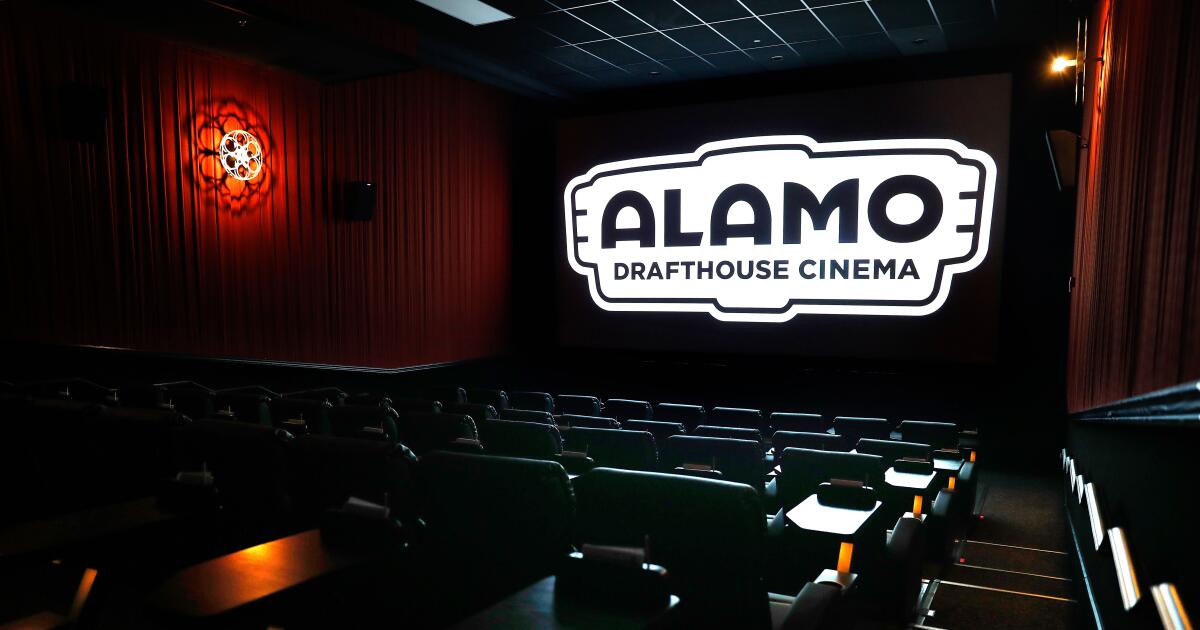
Dine-in movie theater chain Alamo Drafthouse Cinema is launching a new initiative to show unreleased independent films that had successful festival runs, a move that comes as specialty films have struggled to gain distribution.
The Alamo Exclusives program, announced Wednesday, will give limited theatrical runs to films that showed at festivals including Sundance, the Toronto International Film Festival, Tribeca Festival and South by Southwest festival, as well as Alamo’s own Fantastic Fest.
The idea is to help showcase films that received critical acclaim, but did not secure distribution or acquisition deals. The chain will not acquire these films, but instead will enter into agreements with filmmakers to exhibit their films on Alamo Drafthouse screens. By showing these films to audiences on the big screen, these films could get the momentum they need for further opportunities.
The program’s first film will be the documentary “Butthole Surfers: The Hole Truth and Nothing Butt,” which debuted last year at South by Southwest and chronicles the history of the punk rock band.
The film will be shown in Alamo Drafthouse theaters for a limited time later this summer.
The Austin-based chain, which is owned by Sony Pictures, has a long history of curating indie films for its audiences, giving Alamo Drafthouse confidence that its viewers want to see these kinds of movies, company chief executive Michael Kustermann said in a statement.
“Time and again, they’ve shown they’ll come out to support bold, original films when given the opportunity,” he said. The new Alamo Exclusives “gives us another way to champion filmmaker-driven films that deserve to be discovered and connect them with the wider Alamo Drafthouse audience.”
The initiative comes at a difficult time for indie films. Since the pandemic upended the movie business, traditional studios and distributors have had less appetite for risk, including betting on smaller indie films out of festivals.
And as the 2023 dual writers’ and actors’ strikes thinned out theatrical lineups, that aversion to uncertainty became a push for reliable and profitable hits.
“Too many incredible films premiere at festivals and then never receive the theatrical life they deserve,” Lisa Dreyer, director of Fantastic Fest and film innovation at Alamo, said in a statement. “We are actively searching for films across all genres, from horror to comedy, to everything in-between, to champion in this new, exciting way.”
The recall of a popular chip brand over salmonella concerns was recently upgraded to the U.S. Food and Drug Administration’s highest level, just ahead of the Fourth of July holiday and countless backyard barbecues.
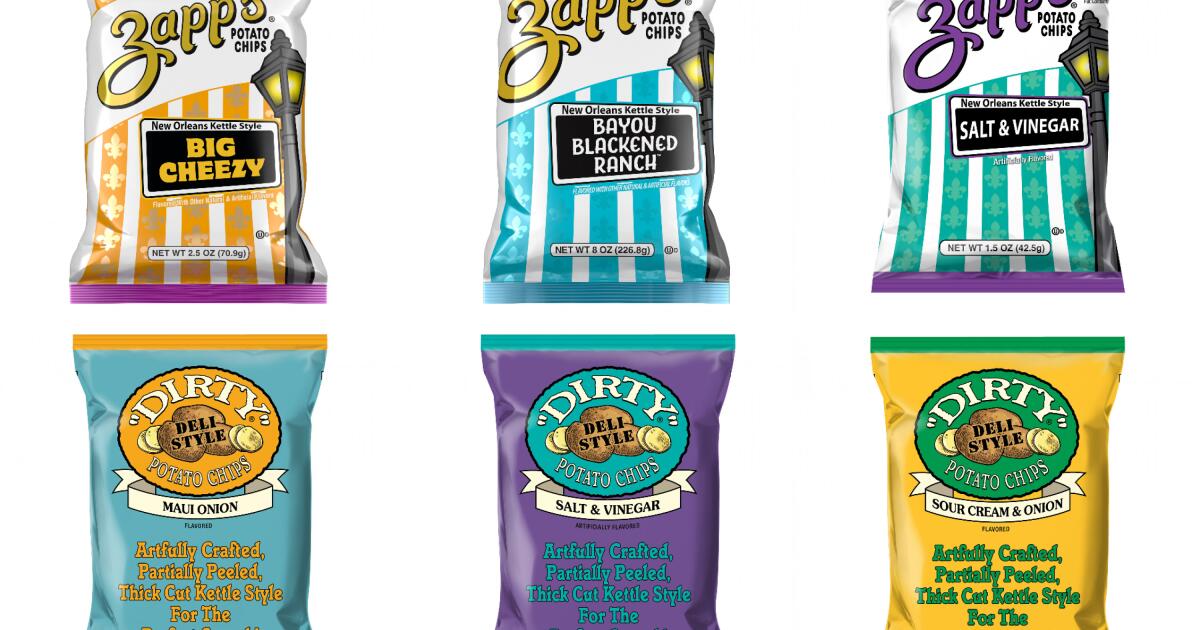
On June 24, the FDA designated the recall of several varieties of Zapp’s and Dirty brand potato chips as Class I, meaning it’s “a situation in which there is a reasonable probability that the use of or exposure to a violative product will cause serious adverse health consequences or death.”
FDA has classified the following items as Class I:
Zapp’s
- 1.5-ounce Zapp’s Bayou Blackened Ranch Kettle Chips
- 2.5- and 8-ounce Zapp’s Bayou Blackened Ranch Potato Chips
- 1.5- and 8-ounce Zapp’s Big Cheezy Potato Chips
Dirty
- 1.5- and 2-ounce Dirty Brand Salt and Vinegar Potato Chips
- 2-ounce Dirty Maui Onion Chips
- 2-ounce Dirty Sour Cream and Onion Potato Chips
The chips are produced by Utz Quality Foods, LLC, which on April 28 issued a recall after learning “that a seasoning containing dry milk powder, sourced from California Dairies, Inc. and supplied by a third-party supplier, may contain the presence of Salmonella.”
Salmonella can lead to sometimes deadly infections in elderly people, young children and those with weakened immune systems, according to the FDA.
More than 680,000 bags are included in the recall.
Anyone who has these products should not eat them and should discard them immediately.
What to look for
Salmonella is a foodborne illness that can be fatal to young children, pregnant women, older adults and people with weakened immune systems, according to the National Institutes of Health.
Symptoms may develop 12 to 72 hours after infection, according to the FDA.
The FDA said that people with strong immune systems infected with salmonella may experience fever, diarrhea (which may be bloody), nausea, vomiting and abdominal pain. The illness can last four to seven days.
In rare cases, the infection may produce more severe illnesses such as arterial infections, endocarditis and arthritis, the agency added.
What to do if infected
If you contract salmonella, the Centers for Disease Control and Prevention recommends drinking plenty of fluids to prevent dehydration.
The CDC advises consulting a doctor before taking antidiarrheal medicine or antibiotics. If severe symptoms continue after two days, seek medical help, the agency says.
Because those with diarrhea can spread salmonella to others, it’s also recommended to avoid sharing food or preparing meals for others, sexual contact and swimming in public pools, and to stay home while sick.
Times staff writer Jasmine Mendez contributed to this report.

The Minions took over theaters this weekend as Universal Pictures and Illumination’s “Minions & Monsters” won the top spot at the box office, though with a lower-than-expected domestic haul.
The animated movie, which follows the Minions’ takeover of Hollywood, took in $61.4 million in the U.S. and Canada for the five-day Fourth of July holiday weekend, according to studio estimates. That haul was lower than analysts’ expectations for a domestic opening of about $68 million. The movie’s three-day total was $36.4 million.
But the Minions performed well internationally, bringing in about $85 million. In total, “Minions & Monsters” made $159.9 million worldwide on a production budget of about $85 million.
The film is the latest in the powerhouse franchise that began with “Despicable Me” in 2010. Across its previous six installments, the “Despicable Me” and “Minions” franchise has made more than $5.6 billion at the global box office. The last movie, 2022’s “Minions: The Rise of Gru,” made more than $940 million worldwide.
“Minions & Monsters” marks the lowest opening for the franchise. Part of the issue could be timing — the box office can be negatively affected when the Fourth of July lands on a Saturday, said Paul Dergarabedian, head of marketplace trends at Rentrak.
Walt Disney Co. and Pixar’s “Toy Story 5” came in second at the box office this weekend with a domestic three-day gross of $31 million. Angel Studios’ biopic “Young Washington” ($20.8 million), Warner Bros. and DC Studios’ “Supergirl” ($9.6 million) and Universal’s “Disclosure Day” ($6 million) rounded out the top five, according to Rentrak.
The haul for “Minions & Monsters,” coupled with the strong holdover performance of “Toy Story 5,” proved again that family films are making a dent in the summer box office.
“Toy Story 5” has now brought in a total of $764.3 million worldwide, and last month, Universal, Illumination and Nintendo’s “The Super Mario Galaxy Movie” crossed $1 billion at the global box office, becoming the first film of any kind to do so this year.
The rest of the summer theatrical lineup is also expected to bring in audiences and push domestic box office totals closer to pre-pandemic figures. Next week, Disney will release its live-action “Moana,” followed by Christopher Nolan’s “The Odyssey” and Sony Pictures’ “Spider-Man: Brand New Day.”
To date, the summer box office is now about $2.3 billion, a nearly 12% increase compared with the same period a year ago, according to Rentrak data. Compared with pre-pandemic 2019’s numbers, however, it is still down about 7%.
-

 World8 minutes ago
Cuba sees nationwide power blackout for third time in six months
-
 News31 minutes ago
The U.S. men’s run at the World Cup ends with a 4-1 Round of 16 loss to Belgium
-

 Los Angeles, Ca2 hours ago
L.A. man who violently crashed into Border Patrol agents sentenced to 5 years in prison
-

 Detroit, MI2 hours ago
Fans pack Detroit’s Campus Martius for USA-Belgium World Cup match
-

 San Francisco, CA2 hours ago
Terrified passengers film Waymo autonomous vehicle driving into live fireworks in San Francisco
-

 Dallas, TX2 hours ago
WATCH: USA vs. Belgium watch party at FIFA Fan Festival Dallas
-

 Miami, FL3 hours ago
Tim Hardaway Jr. returns home as Miami Heat sign veteran guard:
-

 Boston, MA3 hours ago
‘Enough is enough’: Weekend violence in Boston sparks calls for change, from more police to community investment – The Boston Globe

