Business
Help! I Couldn’t Take My Tall-Ship Voyage, and I Want My Money Back.


Dear Tripped Up,
Last summer, I booked a five-day sailing trip with Tall Ship Experience, a company based in Spain. For 1,350 euros, or $1,450, I would be a volunteer on the crew of the Atlantis, sailing between two ports in Italy. But eight days before, I had a bad fall that resulted in multiple injuries, including eight stitches to my face that doctors said I could not expose to sun or water. The Tall Ship Experience website clearly states that I could cancel for a full refund up to seven days before the trip. But the company revealed it was just an intermediary and the Dutch organization actually running the trip, Tallship Company, had different rules, under which I was refunded 10 percent. I offered to take credit for a future trip, to no avail. Finally, I disputed the charges with my credit card issuer, American Express. But Tall Ship Experience provided a completely different set of terms to Amex, saying I canceled one day in advance. The charges were reinstated. Can you help? Martha, Los Angeles
Dear Martha,
This story reads like a greatest-hits playlist of travel industry traps: a middleman shirking responsibility, terms and conditions run amok, a credit card chargeback gone wrong, and the maddening barriers to pursuing justice against a foreign company. However, the documentation you sent was so complete and the company’s website so confusing that I was sure Tall Ship Experience would quickly refund you.
Tallship Company did not respond to requests for comments, but did nothing wrong. It simply followed its own terms and conditions that Tall Ship Experience, as a middleman, should have made clear to you. When you canceled, Tallship Company sent back a 10 percent refund to Tall Ship Experience to then send to you.
That’s why I was surprised that the stubborn (though exceedingly polite) Tall Ship Experience spokeswoman who responded to me on behalf of the Seville-based organization argued repeatedly that although she regretted your disappointment, Tall Ship Experience was not at fault. At one point she suggested you should have purchased travel insurance, even as the company scrambled to adjust and update its website as we emailed.
Before the changes, the site contained two distinct and contradictory sets of terms and conditions: one for customers who purchased via the website’s English and French versions, and another on the Spanish version. (Confusingly, both documents were in Spanish.)
The English/French version — the one you had seen — promised customers a full refund for trips canceled more than seven days in advance. The Spanish one is vastly more complex, offering distinct cancellation terms for each ship. The Atlantis offered customers in your situation only 10 percent back.
Enter the stubborn spokeswoman: “The terms and conditions in Spanish correctly reflected the cancellation policy of the ship in the moment the client made the reservation,” she wrote via email. “We are conscious that at the time, the English version of the terms was not updated, which may have generated confusion. However, the official terms of the reservation were applied correctly.”
In other words, customers should somehow know to ignore one contract and seek out another on a different part of the site, both in a language they may not read.
But I am no expert in Spanish consumer law, so I got in touch with two people who are: Marta Valls Sierra, head of the consumer rights practice at Marimón Abogados, a law firm based in Barcelona; and Fernando Peña López, a professor at the Universidade da Coruña in A Coruña.
They examined the documentation and each concluded independently that Tall Ship Experience had violated basic Spanish consumer statutes. When I passed along their convincing points to the spokeswoman and alerted her that you were considering taking the company to Spanish small-claims court, she finally said it would refund you the remaining €1,215.
I felt a bit sheepish about exerting so much pressure on this small company — actually, an arm of the nonprofit Nao Victoria Foundation, which operates several replicas of historic ships — but the company should have taken much more care when it set up its website, Ms. Valls Sierra told me.
“If in your terms and conditions you say that up until seven days before departure you have the right to cancel,” she said in an interview, “and a consumer comes and says, ‘I want to cancel,’ you have to cancel their trip and return their money. They can’t use ‘Sorry, we forgot to put it on one web page, but we put it on another web page’ as an excuse.”
It is a principle of consumer law, she added, that confusing or contradictory contracts are interpreted in favor of the consumer.
The other troubling issue with the website is that you had no way of knowing that your trip was not operated by Tall Ship Experience. There was no such mention I could find on the website, which relies on marketing copy like this: “On board you will learn everything you need to know that will allow you to become one of our crew.”
Dr. Peña López, the law professor, wrote me in an email that “Tall Ship Experience is obligated to inform the consumer about the service it provides in an accessible and understandable manner, clearly indicating whether it is an intermediary.” He added that Tall Ship Experience “clearly” presented itself as the ship’s operator in this case.
As I mentioned, Tall Ship Experience did begin updating its site almost as soon as I got in touch, calling itself a “marketplace” for experiences and posting the correct terms and conditions (in the correct languages) on its English and French pages.
But Tall Ship Experience agreed to a refund only after I sent the company a compilation of the two experts’ legal analyses. “We are dedicated to creating experiences aboard unique boats, and not to legal matters,” came the spokeswoman’s response. “Regardless of which party is correct in this case, we would like to refund the full amount. We look forward to putting this to rest and to focus on continuing to improve customer experiences.”
You also said that American Express had let you down, by taking the company’s word over yours when you contested the charge. It is true that the document Tall Ship Experience sent to Amex (which forwarded it to you, who forwarded it to me), is wildly inaccurate, including only the terms favorable to the company and saying you canceled only one day in advance.
A spokeswoman for American Express emailed me a statement saying that the company “takes into account both the card member and the merchant perspectives.” But travelers should not mistake credit card issuers for crack investigators who will leave no stone unturned in pursuit of travel justice. A chargeback request works best when the problem is straightforward — you were charged more than you agreed to pay, or you never agreed to pay at all. Asking your card issuer to do a deep dive into terms and conditions is a much longer shot.
And as we’ve seen before (and might be seeing in this case) such chargeback requests often anger the companies involved to the point that they refuse to deal with you further.
If all else had failed, as I told you before the company gave in, you could have requested a “juicio verbal,” Spain’s version of a small-claims-court proceeding, via videoconference. It would not have been easy, said Dr. Peña López. Cases under €2,000 do not require a lawyer, but they do require you to have a Foreigner Identification Number, to fill out forms in legal Spanish (A.I. might help) and to find an interpreter to be by your side.
When I finally told you — in our 39th email! — you’d get a refund, you told me you had been “almost looking forward to a Spanish small-claims experience.” I admire your spirit, although I suspect it would have been quickly broken by bureaucratic and linguistic barriers.
If you need advice about a best-laid travel plan that went awry, send an email to TrippedUp@nytimes.com.
Follow New York Times Travel on Instagram and sign up for our Travel Dispatch newsletter to get expert tips on traveling smarter and inspiration for your next vacation. Dreaming up a future getaway or just armchair traveling? Check out our 52 Places to Go in 2025.




California Atty. Gen. Rob Bonta is asking a judge to unravel Nexstar Media Group’s $6.2-billion acquisition of rival TV station owner Tegna — the latest in a flurry of merger twists.
Nexstar announced late Thursday that it had consummated the Tegna takeover — despite a lawsuit that Bonta and seven other Democratic state attorneys general had filed in federal court the previous day.
The state officials sued to block the union of the station groups, alleging the new colossus would violate antitrust rules and a federal law limiting broadcast station ownership.
The lawsuit was filed in U.S. District Court in Sacramento.
Hours after that filing, the Federal Communications Commission’s Media Bureau in Washington approved Nexstar’s deal — clearing the way for the nation’s largest TV station group owner to swallow the third-largest station group.
The purchase gives Nexstar, which owns KTLA-TV Channel 5 in Los Angeles, 265 television stations.
On Friday, Bonta and the other attorneys general asked a judge for a temporary restraining order to freeze the takeover until a hearing on the matter.
“Nexstar/Tegna is not a done deal,” Bonta said Friday in a statement. “I will not let these corporate behemoths merge without a fight.”
It was not immediately clear when a judge might rule on the request for a restraining order.
Bonta appeared at a lawmakers’ hearing in Burbank on Friday to explore the impacts of another huge merger: Paramount Skydance’s proposed $111-billion takeover of Warner Bros. Discovery. Bonta’s office has opened an investigation into the Paramount-Warner merger, but Bonta said Friday that no decision has been made on whether he or other attorneys general will seek to block it.
For now, he is focused on derailing the Nexstar-Tegna deal.
“We filed a suit before that deal closed,” Bonta told The Times. “We think our case is extremely strong. There is no way this should be approved.”
At issue is whether the FCC had the power to grant a waiver that would allow Nexstar to control TV stations that reach nearly 80% of U.S. households. In 2003, Congress set the station ownership cap at 39% of the country.
The Department of Justice also gave its blessing to close the deal.
The three FCC commissioners did not vote on the matter — despite pleas from the lone Democrat on the panel who advocated for an open process.
Approval of the merger was rapid after President Trump endorsed the consolidation on Feb. 7.
“We need more competition against THE ENEMY, the Fake News National TV Networks,” Trump wrote in his social media post.
“Letting Good Deals get done like Nexstar – Tegna will help knock out the Fake News because there will be more competition, and at a higher and more sophisticated level,” Trump wrote. “GET THAT DEAL DONE!”
In a statement Thursday, Nexstar founder and chief executive Perry Sook thanked Trump and FCC Chairman Brendan Carr, saying Nexstar was “grateful” they recognized the “dynamic forces shaping the media landscape” and allowed the transaction to move forward.

Multiple strikes
in Tehran
At least 37 energy oil refineries, natural gas fields and other energy sites in nine countries have been damaged since the United States and Israel began bombarding Iran, a New York Times analysis found. Some have been struck by drones. Several have been hit more than once.
As the attacks escalate, both sides increasingly view energy as a potent target — one that is capable of inflicting severe economic pain. Iran depends on oil and natural gas to keep the lights on and its government running, while the United States wants to prevent prices from soaring further and damaging the underpinnings of the global order.
The question is no longer just when Iran’s tight grip on the Strait of Hormuz, a narrow but critical passage on its southern coast, will ease enough for most ships to pass. It is also how long it will take to complete repairs needed to produce and process oil and natural gas in the first place.
“The longer this war goes on, the more likely it is that the two sides are going to play their strongest energy-leverage cards,” said Clayton Seigle, an energy expert at the Center for Strategic and International Studies, a Washington research group. “The attacks on facilities are not easily reversible.”
To count the number of attacks and disruptions at energy facilities in the region, The New York Times reviewed statements from government, state-run and private energy companies. The Times also reviewed lists compiled by ClearView Energy Partners and the Institute for the Study of War, two research firms, and subsequently verified their findings.
Through Friday, The Times had found a total of 45 attacks, though there is no official accounting and more may have occurred. Strikes occur seemingly every day.
The importance of energy in the war became even clearer after Israel struck facilities tied to Iran’s South Pars gas field on Wednesday. Iran responded by lashing out across the Gulf. At least 10 sites were damaged this week, The Times found, including an energy hub in Qatar, as well as oil refineries in Kuwait, Saudi Arabia and Israel.
The various attacks sent oil and natural gas prices soaring as traders worried that much of the Gulf’s energy could remain effectively landlocked for a while, possibly months. Brent crude, the international oil benchmark, briefly topped $119 a barrel on Thursday morning before retreating. Oil fetched less than $73 a barrel before the war started on Feb. 28, a price that reflected the possibility of a war.
“It’s been the cumulative effect that’s really driven this crisis,” said Raad Alkadiri, a Washington-based political risk analyst who specializes in energy and the Middle East.
While oil has been front and center, analysts are especially concerned about the damage to the world’s largest natural-gas export terminal, called Ras Laffan, on Qatar’s coast.
The sprawling facility, which is operated by the state-owned QatarEnergy company, cools natural gas into liquid that can be loaded onto tankers and shipped. But Qatar said on the third day of the war that it had stopped producing liquefied natural gas, citing military attacks.
This week’s strikes caused further damage, compromising 17 percent of the country’s L.N.G. export capacity, QatarEnergy said on Thursday, adding that repairing the damage could take up to five years.
There is no easy replacement for that fuel, which is used to generate electricity and heat homes. And there is little spare L.N.G. capacity in other countries.
Other points of vulnerability include the oil export terminals where the United Arab Emirates and Saudi Arabia are rerouting oil to avoid the Strait of Hormuz. One of those areas, in the Emirates, was targeted as recently as this week. A refinery near the other, in Saudi Arabia, was also hit by a drone.
“It could become a lot worse if the craziness continues to prevail,” said Charif Souki, a former chief executive of Houston-based Cheniere Energy, a large L.N.G. company. “But there are so many people who have a vested interest in not letting it get too far out of hand.”
Indeed, countries around the world have agreed to release oil from emergency stores to stem rising prices. The U.S. military is also attacking Iranian vessels and drones to try to clear the Strait of Hormuz, and the Trump administration said it would lift sanctions on Iranian oil to nudge prices down.
In many cases, it is hard to know how severe the damage has been to a facility.
As Kevin Book, managing director of ClearView Energy Partners put it, “The last thing they probably want to do is tell Iran, ‘You missed me, try again.’”
Even when companies have been more forthcoming, their disclosures have sometimes only raised more questions.
Mr. Souki said he was surprised to hear that QatarEnergy expected it would take up to five years to repair its L.N.G. facilities. “I think he’s hedging his bets at the moment,” Mr. Souki said, referring to QatarEnergy’s chief executive. “You can always give good news later.”

Artificial intelligence powerhouse Anthropic’s battle with the Pentagon has sparked some soul-searching in Silicon Valley that could reshape the tech sector’s complicated relationship with war and the White House.
Anthropic is the San Francisco-based startup behind the chatbot Claude and some of the most powerful AI on the market. In its negotiations with the military, it has demanded guardrails on how its technology is used.
The military said it refused to be beholden to a corporation and pushed back, labeling Anthropic a threat akin to an enemy foreign power and blocking it from some government contracts.
Tech leaders have quietly backed Anthropic, saying that AI isn’t ready for some weapons and that strong-arming companies is counterproductive and antidemocratic. President Trump called Anthropic a bunch of “left-wing nut jobs.”
How this showdown plays out will affect not only Anthropic’s booming business but also the way tech titans and other corporations work with an administration known for lashing out at resisters, said Alan Rozenshtein, an associate professor at the University of Minnesota Law School.
“On the one hand, it could cause the government’s other Silicon Valley suppliers to be more compliant, lest they be treated like Anthropic has been,” he said. “On the other hand, it could lead more companies to avoid doing business with the government at all to avoid the risk of something like this happening to them.”
As some tech trailblazers in recent years have become more comfortable with developing weapons, Southern California has emerged as a hub for defense tech startups. With a long history in defense, it has the factories, engineers and aerospace expertise to turn venture funding and military demand into weapons, satellites and other advanced systems.
The fallout from Anthropic’s showdown with the Trump administration will help determine the local winners and losers in the sector in the coming years.
While many of the key players in tech have been reluctant to join the brawl in a high-profile manner, the positions on different sides are laid out in a court case that Anthropic has pursued to get off the Pentagon’s blacklist.
Anthropic filed the lawsuit in the U.S. District Court in the Northern District of California and a petition for review in the U.S. Court of Appeals for the District of Columbia Circuit on March 9. The company is asking the court to overturn its designation as a “supply chain risk” and block the Trump administration from enforcing the government’s ban on its technology.
“The consequences of this case are enormous,” Anthropic’s lawsuit said. “The federal government retaliated against a leading frontier AI developer for adhering to its protected viewpoint on a subject of great public significance — AI safety and the limitations of its own AI models — in violation of the Constitution and laws of the United States.”
Some of Anthropic’s biggest concerns are that its technology could be used for government surveillance or autonomous weapons. It has been asking for assurances in the wording of its contracts that its AI would not be used for these purposes. While the government said it would not use the tech for those purposes, it was unable to provide Anthropic with the assurance it wanted.
Tech industry groups, Microsoft and workers from Google and OpenAI have backed Anthropic in its legal fight against the Trump administration, adding their own views to its case.
On Tuesday, lawyers for the U.S. government said in a court filing that the Defense Department started to wonder whether Anthropic could be trusted.
“Anthropic could attempt to disable its technology or preemptively alter the behavior of its model either before or during ongoing warfighting operations, if Anthropic — in its discretion — feels that its corporate ‘red lines’ are being crossed,” the government said in the filing.
The Department of Defense and Anthropic declined to comment.
The tech industry has a long, complicated history of working with the military. In the 1960s, the Department of Defense developed the internet’s predecessor, ARPAnet, to help keep military and government computers secure.
For much of this century, the big tech companies, as well as their investors, have often tried to avoid developing or promoting things that helped spy on people or kill them. Google, once known for its motto “Don’t Be Evil,” didn’t renew a controversial Pentagon contract, Project Maven, in 2018 after thousands of workers protested over concerns that AI would be used to analyze drone surveillance footage.
That has changed in recent years as there has been more money to be made in tech fixes for military problems.
Benjamin Lawrence, a senior lead analyst at CB Insights, said that advancements in AI and major events, such as Russia’s invasion of Ukraine in 2022, helped fuel a surge in venture capital investment in defense tech.
“It caused a huge shift with a lot of traditional investors looking at defense tech in a more positive light because you have a sovereign democratic nation that was invaded,” he said.
The world’s most powerful tech companies have been partnering with defense tech startups and securing government contracts.
Google has been offering AI tools to civilians and military personnel for unclassified work. The Department of Defense also awarded a $200-million contract to Google Public Sector, a division that works with government agencies and education institutions, to accelerate AI and cloud capabilities.
The industry’s allegiance with the White House and its military ambitions was strengthened with the arrival of the second Trump administration. Many of the top executives of the tech world have been supporting and advising Trump.
The recent strong-arming of one of the thought leaders of the AI revolution, however, has given many pause. Some of the resistance echoes the earlier era when the tech industry was suspicious of how governments would use its innovations.
The tech industry finds itself in a tricky spot after Anthropic’s clashes with the Pentagon. In late February, the public feud escalated after Trump assailed Anthropic and ordered government agencies to stop using its technology. His administration labeled Anthropic a “supply chain risk,” prompting the company to sue.
Trump’s actions could jeopardize hundreds of millions of dollars in contracts it has with private parties, according to Anthropic’s lawsuit. Federal agencies have started to cancel contracts.
Last week, tech industry groups such as TechNet, whose members include Anthropic, Meta, OpenAI, Nvidia, Google and other major companies, said in an amicus brief that blacklisting an American company “engenders uncertainty throughout the broader industry.”
“Treating an American technology company as a foreign adversary, rather than an asset, has a chilling effect on U.S. innovation and further emboldens China’s efforts to export its own government-backed AI technology,” the brief said.
Microsoft has also backed Anthropic, urging the court to temporarily block Trump from blacklisting the AI company. Labeling Anthropic as a supply chain risk means that Microsoft and other government suppliers will have to use “significant resources” to determine how excluding Anthropic would affect their contracts.
The U.S. government said in its filing that its concerns with Anthropic focus on its conduct and are unrelated to its speech. But Anthropic and the tech industry say the move would hurt their businesses.
In addition to Trump’s harsh criticism of the company, Secretary of Defense Pete Hegseth accused Anthropic of delivering a “master class in arrogance and betrayal.”
Anduril’s founder, Palmer Luckey, backed the Pentagon’s position, stating that it should be elected officials, not corporate executives, making military decisions. Anthropic countered, stating in a blog post it “understands that the Department of War, not private companies, makes military decisions.”
As this battle plays out, some experts say Anthropic would probably have an upper hand in court.
In its lawsuit, Anthropic said the Trump administration violated a law for labeling a company a supply chain risk, noting it doesn’t have ties to a U.S. “adversary,” such as China or Iran.
Anthropic also said the Trump administration retaliated against the company for its speech and other protected activities, violating the 1st Amendment.
“They’re just lashing out,” said Rozenshtein of the University of Minnesota Law School. “I think that’s a lot of what this is.”

Metro Detroit Weather Forecast, March 21, 2026 — 8:45 AM Update

Former 49ers defensive coordinator Robert Saleh ‘pumped’ for Dre Greenlaw’s return to San Francisco

Examining the Buzz About Brooks and Dallas

Spring storm starts up on Sunday – Boston News, Weather, Sports | WHDH 7News

Denver Broncos mock draft: Post-Jaylen Waddle trade

Florida High School Football Rankings: Top 25 teams – Oct. 21

How old is Bo Nix? What to know about Oregon quarterback ahead of 2024 NFL Draft

Cleary's 21 help Le Moyne down Central Connecticut State 69-64 in OT

99th annual Pony Swim held in Virginia

Indiana Members Credit Union announced as new anchor tenant at Bottleworks District

Read the Ruling in The Times’s Lawsuit Against the Pentagon

NYC Mayor Mamdani’s wife glorified terrorists in online posts, criticized US military: report

Curro Rodríguez: from bankruptcy to global water empire
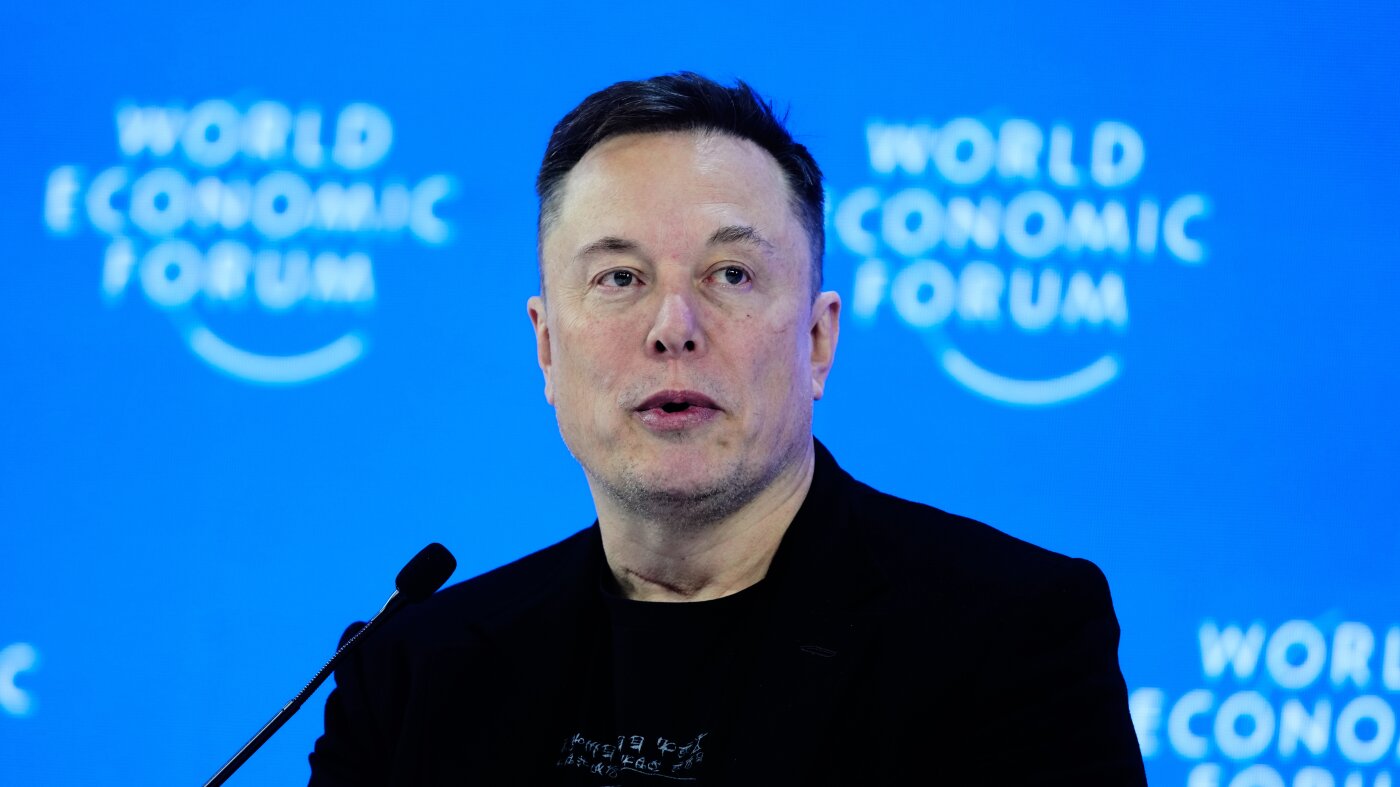
Jury finds Elon Musk misled investors during Twitter purchase

Pritzker pushes prosecutions of Trump officials as part of Dem ‘Project 2029’ agenda
-

 Detroit, MI3 days ago
Drummer Brian Pastoria, longtime Detroit music advocate, dies at 68
-

 Oklahoma7 days ago
Family rallies around Oklahoma father after head-on crash
-

 Nebraska1 week ago
Wildfire forces immediate evacuation order for Farnam residents
-

 Georgia5 days ago
How ICE plans for a detention warehouse pushed a Georgia town to fight back | CNN Politics
-

 Massachusetts1 week ago
Massachusetts community colleges to launch apprenticeship degree programs – The Boston Globe
-

 Alaska6 days ago
Police looking for man considered ‘armed and dangerous’
-

 Southwest1 week ago
Talarico reportedly knew Colbert interview wouldn’t air on TV before he left to film it
-

 Michigan1 week ago
Michigan-based Stryker hit with cyberattack