Business
California’s wealthiest farm family — and scores of their workers — accuse UFW of bait and trick

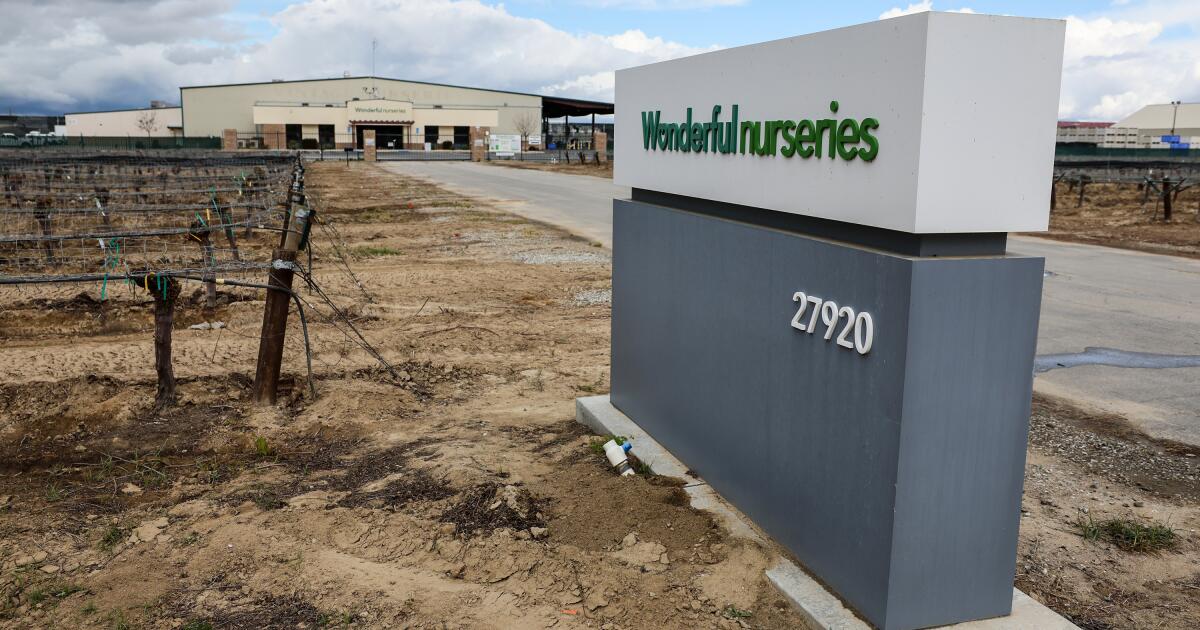
The revelation that United Farm Workers would be representing workers at a Kern County company owned by the state’s wealthiest farming family should have been a triumphant moment for the storied union co-founded by Cesar Chavez and Dolores Huerta.
Following decades of diminishing membership in the vast stretches of California’s farm fields, the UFW had seized on a new way to unionize workers, made possible by recent state legislation. Rather than hold a formal election at a company job site, union leaders had invited employees at Wonderful Nurseries, the nation’s largest grapevine nursery, to off-site meetings where they were instructed in how to apply for $600 in federal relief for farmworkers who labored during the pandemic, as well as encouraged to sign cards authorizing the UFW to represent them at Wonderful.
Labor experts say the outcome of the UFW-Wonderful skirmish could have outsize ramifications on the future of unionizing farmworkers in California.
(Max Whittaker / For the Times)
The UFW subsequently filed a petition with the Agricultural Labor Relations Board, asserting that a majority of the 600-plus farmworkers at Wonderful Nurseries in Wasco had signed the authorization cards and asking that the UFW be certified as their union representative. It appeared to mark the UFW’s third victorious unionization drive in a matter of months.
But within days, Wonderful — part of the farming empire owned by billionaires Stewart and Lynda Resnick — hit back with an explosive allegation: The company accused the UFW of using the $600 in federal relief as bait to trick farmworkers into signing the authorization cards. And it submitted nearly 150 signed declarations from nursery workers saying they had not understood that by signing the cards they were voting to unionize.
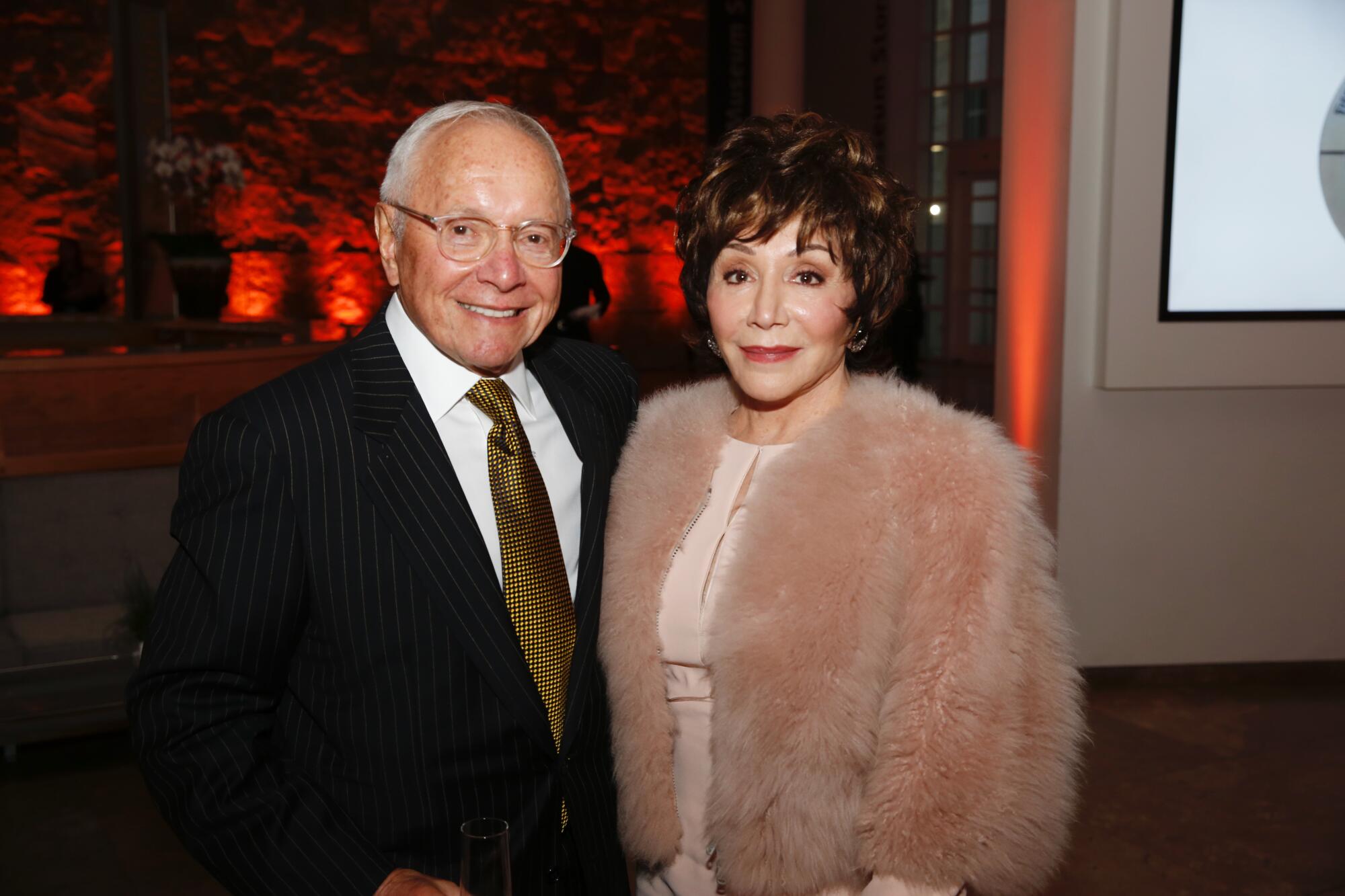
Stewart and Lynda Resnick in a 2016 portrait
(Ryan Miller / Getty Images)
Claudia Chavez, a full-time employee of a labor contractor for Wonderful Nurseries, is among several workers who told The Times that they attended meetings where they understood that the UFW would help them claim the $600. She said she was given a card to sign, but didn’t know that signing it was a vote for the union.
“They said clearly — this I do remember — that it was $600 of aid for farmworkers who worked during COVID,” Chavez, 43, said during an interview outside her Wasco home. “But they never said, ‘If you sign, we’re going to come to your work.’”
Union leaders have stood their ground, alleging that the company intimidated workers into making false statements and brought in a labor consultant with a reputation as a union buster to manipulate worker emotions in the weeks that followed.
Antonio De Loera-Brust, UFW’s communications director, called the allegations that workers were tricked into signing union cards “categorically false.” The union has put forward other workers who said they understood what they were signing and believe that UFW representation would improve their pay and working conditions.
Still, what could have been a David-versus-Goliath tale has become something tangled and far more troubling. The UFW and Wonderful are locked in battle, each employing legal muscle and PR prowess, and will present their cases to the ALRB, the state agency charged with overseeing farm labor disputes and union elections.
Labor experts say the outcome could have outsize ramifications for the future of unionizing farmworkers in California. Though still an influential voice in Democratic leadership circles, UFW has seen its on-the-ground presence and sway plummet from its vibrant heyday in the 1960s and ‘70s. At its peak, UFW had about 80,000 members across hundreds of farms. Today, that number has fallen to about 5,000, with another 2,000 in the Teamsters or United Food and Commercial Workers International unions.
If Wonderful is found to have engaged in unfair labor practices, it could be subject to financial penalties. But if the union is found to have misled workers, it faces a blow to its credibility and its nascent resurgence could be stopped in its tracks.
“One way or another it’s going to have an impact on the ability of farmworkers to organize,” said Gaspar Rivera-Salgado, project director at the UCLA Center for Labor Research and Education. “If the union fails and it’s a setback to the organizing, it’s going to be a long while before they can find a foothold to fight for farmworkers in California.”
The UFW-Wonderful skirmish is in some ways an outgrowth of a longer-running clash between labor leaders and California’s powerful agricultural interests over the UFW’s efforts to streamline the unionization process.
For years, UFW leaders had argued that the process for unionizing work sites was stacked against them. Before the new system went into effect, farmworkers voted for union representation by secret ballot at a dedicated polling event, typically held on company grounds. The UFW contends that left workers vulnerable to employer intimidation.
In 2022, Assembly Bill 2183 sought to allow farmworkers to select labor representation through mail-in ballots or a system known as card check, which allows workers to authorize a union by signing cards off-site rather than voting in-person at a designated polling place.
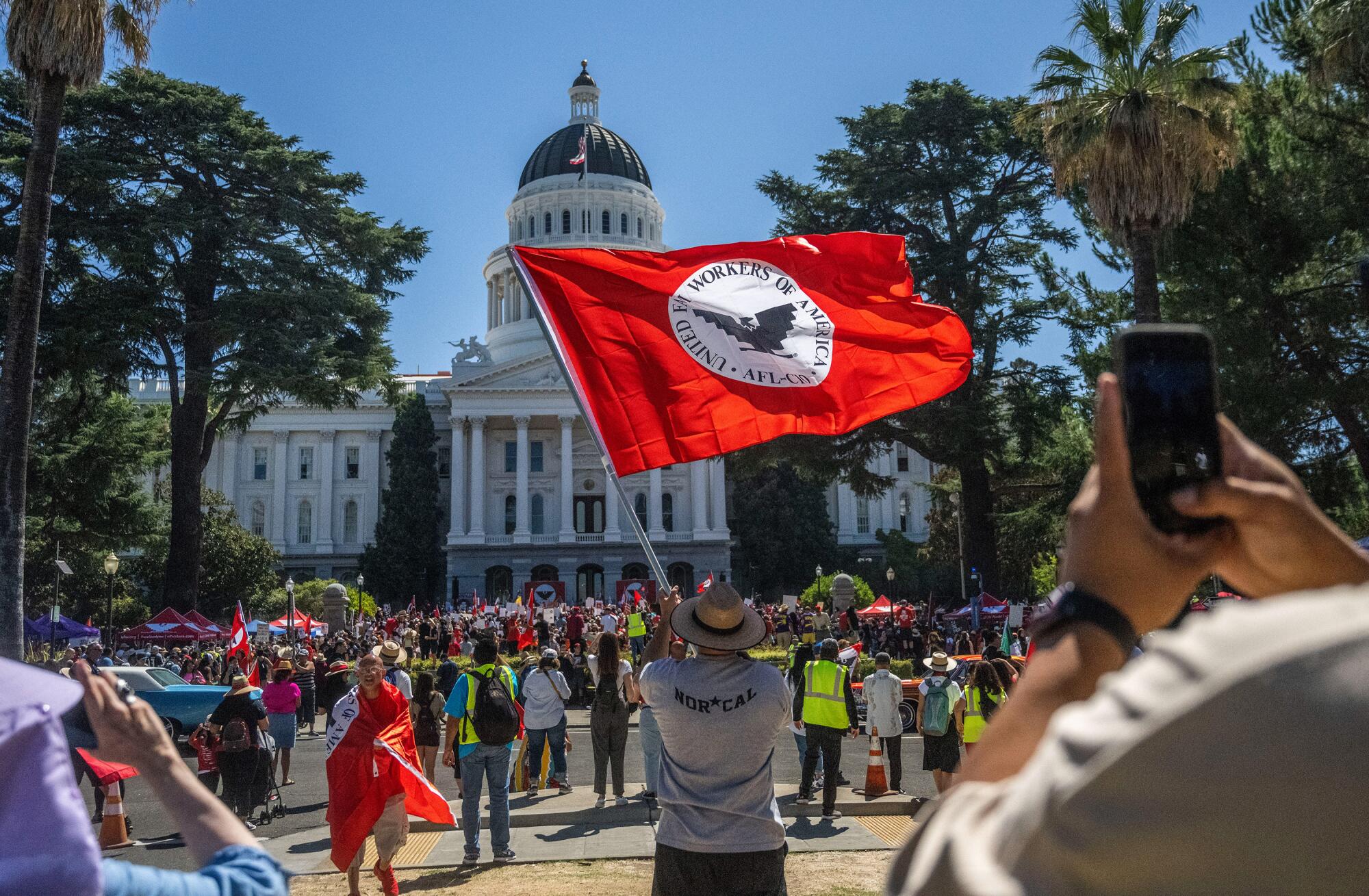
The UFW organized a 335-mile march to ramp up pressure on Gov. Gavin Newsom to sign legislation that would provide more avenues to authorize union representation at agricultural work sites.
(Hector Amezcua / The Sacramento Bee)
Gov. Gavin Newsom had vetoed a similar bill the previous year, citing concerns specific to the integrity of the mail-in balloting. His team signaled he would also veto AB 2183. But President Biden publicly exhorted Newsom to sign the bill, and the UFW organized a 335-mile march from Delano to Sacramento to ramp up pressure.
Newsom signed the bill, under the condition that it be amended to limit certain aspects. In 2023, the law was amended to remove the mail-in ballot option and cap the number of work sites that could be petitioned through card check to 75. It took effect Jan. 1, 2023, and will sunset in 2028.
Under the new system, a union can seek to organize an agricultural work site without notifying an employer. Once union representatives gather enough authorization cards to constitute what they believe is majority support, the union files a petition with the state labor board and the employer. The ALRB must decide whether there is proof a majority of the bargaining unit employees support forming a union.
But as is playing out in the Wonderful case, that process can be appealed.
From the start, the new system has been shadowed by a lack of specifics on the responsibilities of the union and employers in the card check drive. It has taken the ALRB 10 months to publish proposed regulations for the new law, and growers say they feel they’ve been playing a game with no rules.
UFW’s first certification petition under card check landed in Stanislaus County in September when it sought to represent 250 workers at DMB Packing Corp., also known as DiMare, where it won 51% support. DiMare submitted several objections, including an allegation that the union obtained signatures through “fraud” and “coercion.” The ALRB found the allegations lacked evidence.
Guadalupe Luna, 55, said working conditions at the tomato packing company in Newman were miserable — that they had no health benefits, no paid time off and got paid 77 cents for every bucket of tomatoes collected. Before Luna arrived at the farm about a year ago, he said, he worked on a farm in Firebaugh where the UFW represented workers and they received benefits and better pay.
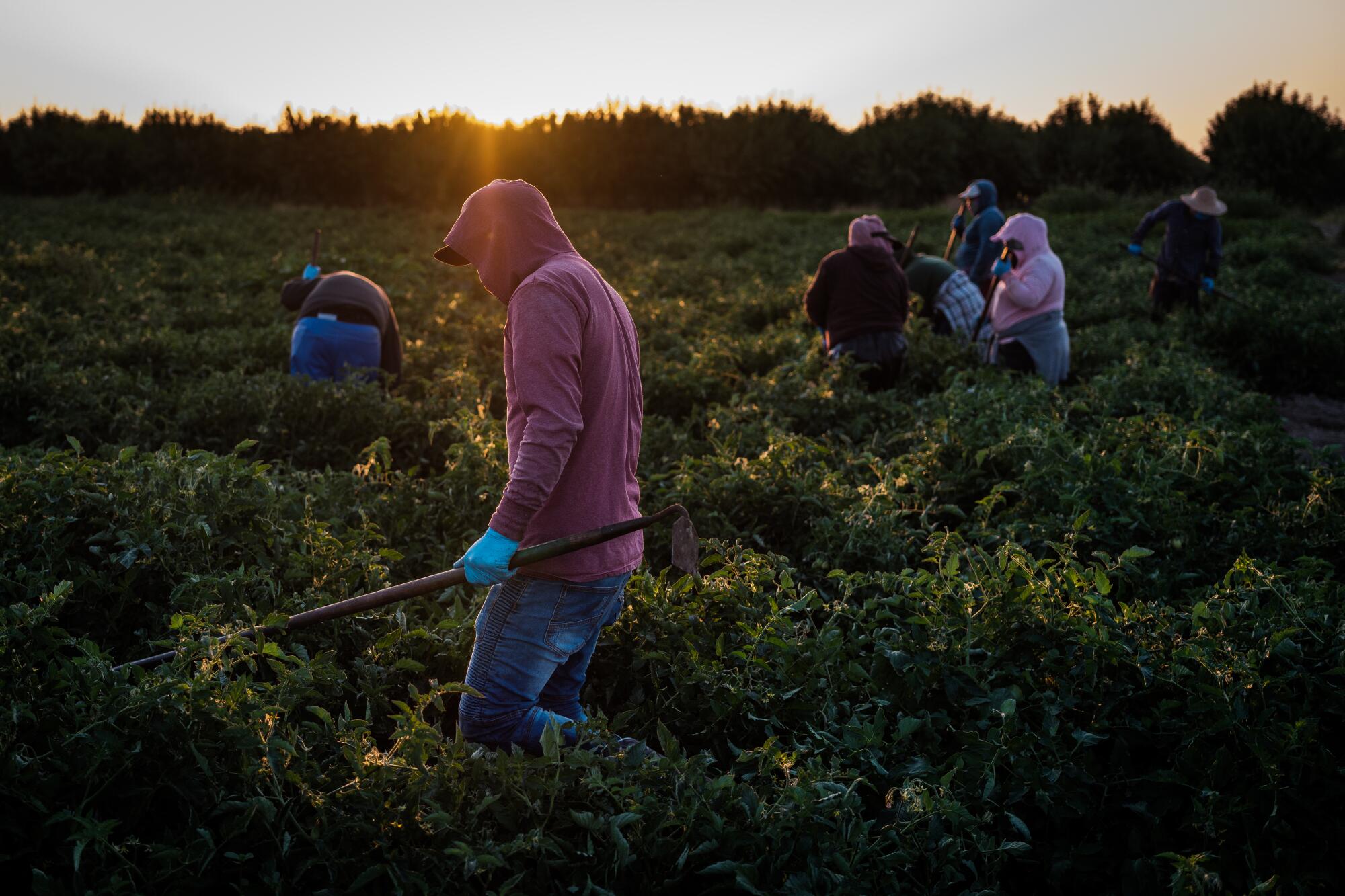
Though still an influential voice in Democratic leadership circles, the UFW has seen its on-the-ground presence plummet from its vibrant heyday in the 1960s and ‘70s.
(Max Whittaker / For the Times)
Luna, who is on the bargaining committee for the union, said the UFW meetings he attended with co-workers were focused on the benefits of unionizing and did not include conversations about the $600 federal relief payments. “The coworkers I spoke with, we talked and there wasn’t that [confusion].” he said. “We just talked to them and explained the process.”
DMB Packing President Jeff Dolan said the company is appealing the labor board’s decision. Nonetheless, he said, negotiations with the UFW and workers have been “cordial and positive.”
In Fallbrook, 50 miles north of San Diego, the UFW submitted a petition in January to represent more than 70 employees at Olive Hill Greenhouses. According to the ALRB, no objections were filed, and both sides are at the table to negotiate their first contract.
Santiago Hernandez was among those eager to unionize workers at the Fallbrook nursery. He said he told colleagues to talk to a UFW organizer and explain what they wanted out of their jobs and decide if they wanted to support a union.
The first meeting, he said, was about starting a union and they received the authorization cards to consider. He said the last meeting he attended, where people could drop off the cards, also allowed people to sign up for the $600 in relief. He did not hear from colleagues about being tricked, he said, and felt it had been clearly communicated that the two were not linked.
“The union is here to help farmworkers, not to screw with farmworkers,” Hernandez said.
One of the largest employers in the Central Valley, the Wonderful Co. prides itself on its treatment of farmworkers, including paying above minimum wage and extending company benefits — like free use of its health centers and gyms — to full-time employees. Wonderful has also invested millions of dollars in farmworker communities in Kern County, building parks and schools and improving infrastructure.
The Resnicks, owners of FIJI Water, Wonderful Pistachios and POM Wonderful, are major political donors who have contributed more than $220,000 to Newsom’s campaigns alone.
The workers at Wonderful Nurseries’ sprawling complex in Wasco tend to wine and table grapevines and nut tree rootstocks. In both the company and union narratives about the card check episode, the workers have been portrayed as pawns in a much larger game. The divergent narratives offer little room for a middle ground, for example whether there could have been some confusion in the meetings because of a general lack of understanding of the UFW’s role.
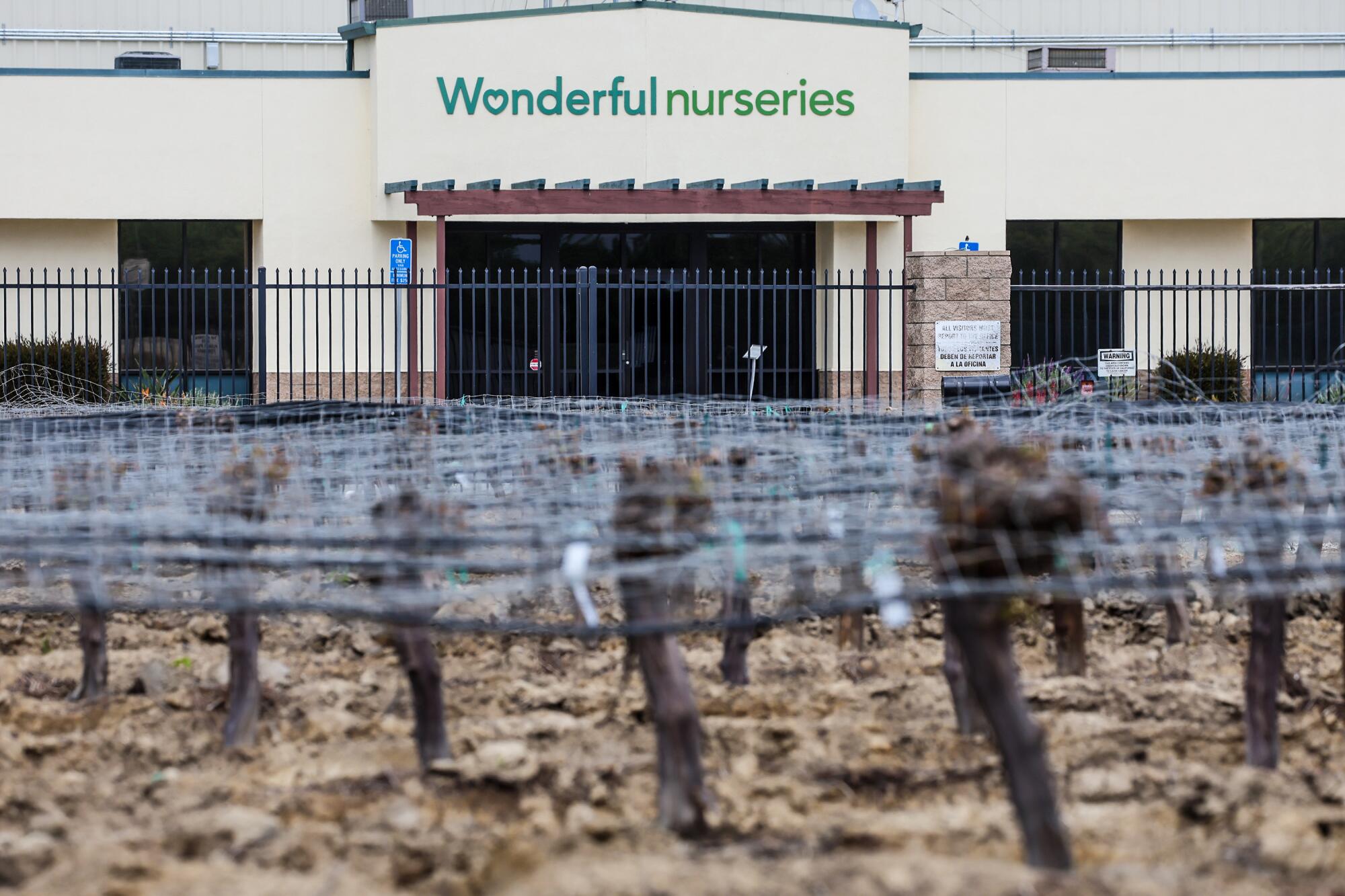
One of the largest employers in the Central Valley, the Wonderful Co. has invested millions of dollars in farmworker communities in Kern County.
(Robert Gauthier / Los Angeles Times)
There does seem to be general agreement that the organizing meetings for Wonderful employees incorporated discussion of both the federal relief payments and the unionization drive. The U.S. Department of Agriculture has authorized several organizations to distribute the one-time grants, including the UFW Foundation, which is separate from the labor union.
Rosa Maria Silva de Rodriguez, 40, who has worked at Wonderful Nurseries for five years, said she hosted several of the meetings at her home last year. She said she wants a union because she feels workers are being mistreated. The water provided in 5-gallon coolers was inconsistently refilled and cleaned, she said. She said she’s had uncomfortable situations in which male coworkers made suggestive comments about women and she knew of no avenue for reporting it.
Silva de Rodriguez said it was clear at the meetings that the federal relief money was not tied to signing a union card. The UFW representative “always talked about the rights of workers, what it meant to form a union, to bring in a union, what the union would do,” Silva de Rodriguez said.
Yet other workers interviewed by The Times spoke in equally heartfelt terms about feeling duped.
Maria Pedro, 27, makes $16.30 an hour as a seasonal worker for a labor contractor at Wonderful Nurseries. She likes that the work in the greenhouses is indoors — and therefore dependable, even when it rains.
“Look, I just got home, and I’m clean,” Pedro said on a recent afternoon, as she sat at a table in her work clothes, khaki-colored pants and a black, long-sleeved shirt.
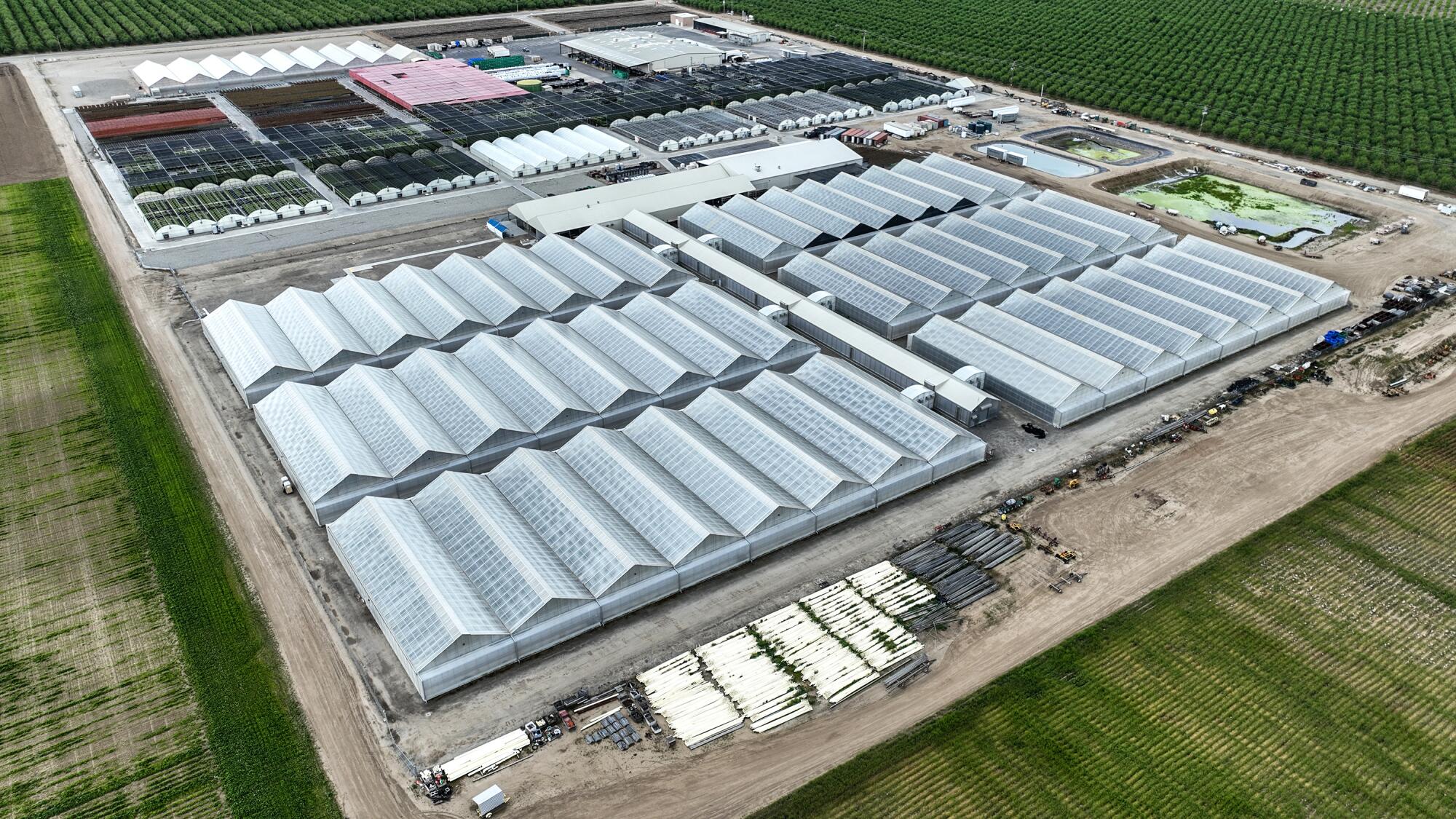
The workers at Wonderful Nurseries’ sprawling complex in Wasco tend to wine and table grapevines and nut tree rootstocks.
(Robert Gauthier / Los Angeles Times)
She described attending a meeting last year at a colleague’s home in Wasco. She said a UFW representative was there to help Pedro and others apply for the $600 federal grant. As a single mother of three, the money would help her pay rent and buy diapers.
Pedro, who emigrated from Guatemala five years ago, said she had never heard of the union. But during the meeting, the rep explained that the organization helps farmworkers assert their rights. Pedro signed several documents. Among them was a white card emblazoned with the union’s eagle logo that reads, in English and Spanish, “I authorize the Union of Farm Workers of America to be my union representative to collectively negotiate an employment contract with my employer to improve my wages, working conditions and benefits.”
The union rep never asked if the workers wanted to join the union and didn’t explain the significance of the cards, Pedro said.
On Feb. 23, the UFW filed a petition with the ALRB to represent Wonderful Nurseries employees. Several workers, including people for and against unionizing, described attending meetings days later, led by an outside consultant, Raul Calvo, who has built a business advising farm companies on how to avoid unionization. The workers said Calvo told them about the union’s entrance into Wonderful Nurseries and that once the contract was ratified, 3% of their paycheck would go toward union dues.
Pedro said it was only then that she realized that, by signing the card, she had voted for the UFW to represent her. “Thanks to him, we understood what was happening, because the union never really explained what they did,” she said.
If her name was on the petition, Pedro said, she wanted it removed and asked Wonderful for help. She was among the workers who signed a declaration.
Silva de Rodriguez, on the other hand, contends Calvo was the first to suggest employees were tricked. She said workers began admitting to supervisors that they had signed the union card and faced pressure to renounce their support. She said she has seen workers who once supported the unionization effort now protest against it.
“It bothers me, but at the same time, it gives me a bit more strength, because I am fighting for something fair, something fair for everyone,” she said.
The union filed a charge against Wonderful Nurseries, alleging the company required workers to attend a “captive audience” meeting to urge employees to reject UFW representation. Wonderful Nurseries maintains it “provided interested employees with factual information about the process and their rights.”
Calvo confirmed to The Times he is working for the company but declined to answer questions about his role.
The ALRB acknowledged receiving worker declarations on March 1 and called the allegations “serious in nature.” Three days later, the regional director of the labor board moved forward to certify the union’s petition, determining the UFW had submitted 327 valid authorization cards from a bargaining unit of 640, establishing majority support.
The dispute crystallized last week when about 100 Wonderful Nurseries workers left work and traveled 60 miles north to the labor board’s Visalia office. They sported the orange safety vests they’re required to wear at work and carried signs reading, “We don’t want a union! Listen to our voices. Don’t ignore us.”
While the company and two participants who spoke with The Times were adamant the demonstration was worker-led, the UFW has filed a charge with the board alleging that Wonderful Nurseries coerced workers into attending.
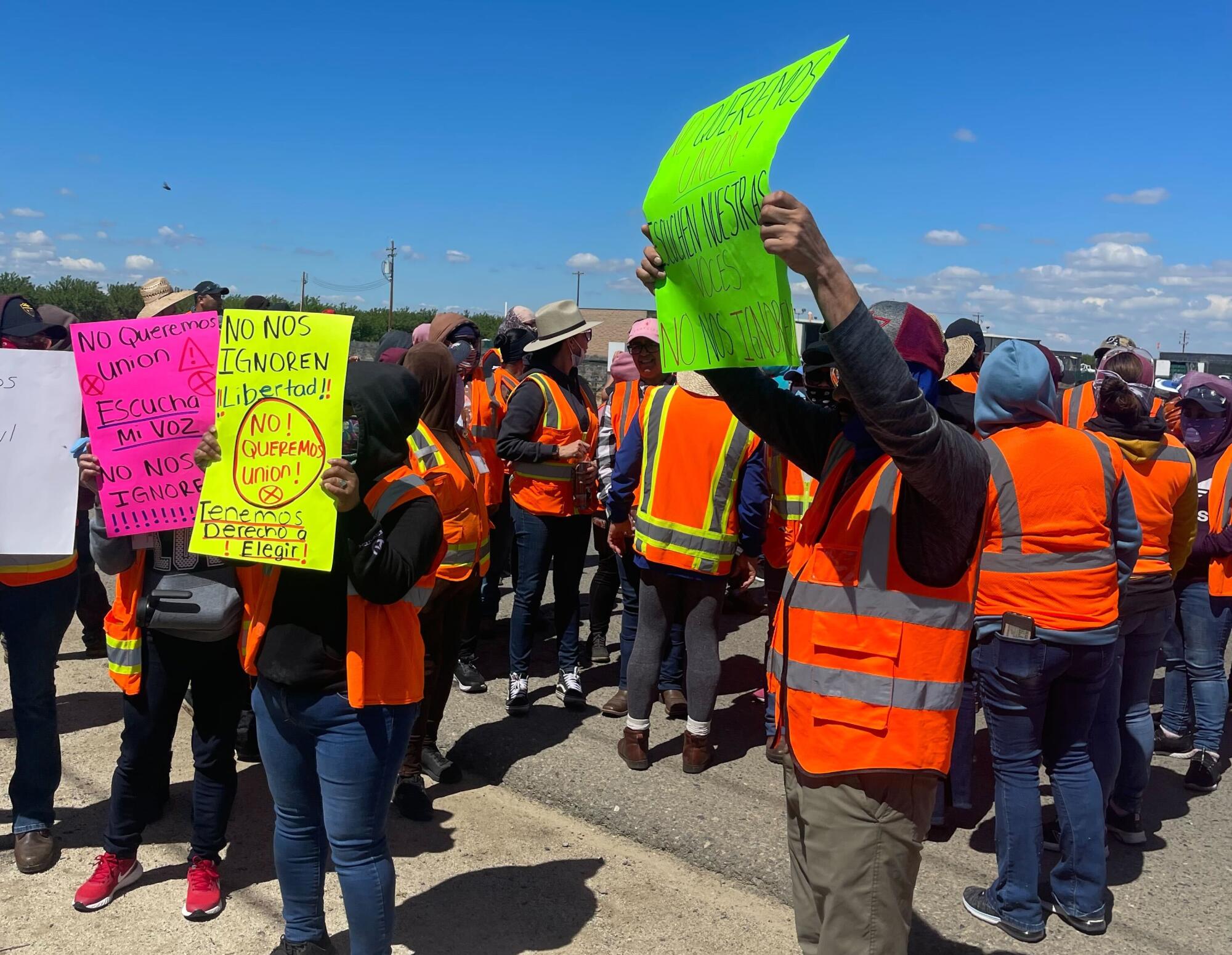
About 100 employees of Wonderful Nurseries who say the UFW used deceptive tactics in its unionization drive stage a protest at the Agricultural Labor Relations Board in Visalia.
(Courtesy of Claudia Chavez)
Last week, in yet another escalation, a Central Valley law firm that frequently represents the UFW filed charges with the state Civil Rights Department on behalf of seven workers, including Silva de Rodriguez, alleging that Wonderful Nurseries doesn’t provide sexual harassment training, resulting in a “hostile work environment.”
Wonderful fired back, dismissing the charges as “bogus claims.” In a statement, company President Rob Yraceburu said every manager, including those employed through third parties, is in compliance with all mandatory training, and that the company provided the UFW with its employee handbook, which includes its harassment policy, a week before the charges were filed.
“It’s getting harder to keep up with the fire hose of lies the UFW is pushing in their effort to divert attention from their fraudulent conduct in a vote decided by just seven votes, but where more than 150 farmworkers say they were misled,” Yraceburu said.
Wonderful has appealed the UFW certification. The state labor board is expected to meet this month to consider the company’s objections.
This article is part of The Times’ equity reporting initiative, funded by the James Irvine Foundation, exploring the challenges facing low-income workers and the efforts being made to address California’s economic divide.


Elon Musk wants to take investors on a ride to the moon — and beyond.
His pioneering rocket company SpaceX filed Wednesday for what’s expected to be the largest initial public offering in history, potentially raising at least $75 billion and valuing the company at as much as $2 trillion.
The registration statement with the Securities and Exchange Commission for an expected public offering next month explicitly sets aside stocks for retail investors, though the exact number will be spelled out in a later filing, as will the offering price and company valuation.
Interest in the stock offering is expected to be high despite the billionaire’s controversial politics, including his involvement last year with the Department of Government Efficiency, the makeshift cost-cutting effort that resulted in the loss of hundreds of thousands of government jobs.
“Potential investors are probably just as polarized as the electorate is too, given his dabbling in politics,” said Carol Schleif, chief market strategist for BMO Private Wealth. “But it’s not just the SpaceX IPO per se, it’s a bigger, broader excitement among investors for space investment in general.”
Investor interest was piqued by the Artemis II moon mission this year that SpaceX did not participate in, she said. However, the company is expected to play a larger role in future missions that take astronauts to the moon..
Ultimately, Musk, 54, wants to establish a colony on Mars but those plans have been set on the back burner, with NASA now focusing on moon missions.
Musk will remain the company’s chief executive and chairman. Under a dual-class stock structure as a holder of special Class B shares he will be able to control the election of directors, the filing says.
The IPO is expected to be at least twice as large as the current record holder: Saudi Aramco, the state-controlled national oil and gas company of Saudi Arabia, which raised nearly $30 billion in 2019.
Nearly two dozen banks will be underwriting the IPO and offering shares to investors, including Goldman Sachs, Bank of America and Citigroup.
Founded in 2002 in El Segundo, SpaceX has revolutionized the aerospace industry by developing the reusable Falcon 9 rocket that has radically lowered launch costs.
The company moved its headquarters from Hawthorne to Texas in 2024. However, SpaceX retains large operations in the South Bay city and blasts off regularly from Vandenberg Space Force Base in Santa Barbara County.
Scores of former SpaceX employees have launched startups in Southern California, including rocket company Relativity Space, hypersonic missile startup Castelion and satellite manufacturer Apex Space.
Since developing its reusable rocket technology, SpaceX has established its Starlink network as the leading satellite-based broadband internet service. It also is moving into satellite-based cellular service and this year merged with Musk’s xAi artificial intelligence company that also included his X social network.
Marco Cáceres, an aerospace analyst at Teal Group, said that the advantage of going public for SpaceX lies in the IPO’s ability to raise a large amount of capital quickly to complete development of its Starship rocket.
“It is going to dominate the market even more than the Falcon 9 is dominating the market now,” he said. “That’s going to be ultimately what’s going to drive their business for the next 10 years.”
The 12th test launch of Starship is set for Friday from the company’s south Texas launch facility. The rocket is the third version of craft, standing more than 400 feet tall and with about three times the payload of the second version.
The regulatory filing claims that the market for its rocket, internet and mobile telephone businesses could be as large as $28.5 trillion.
SpaceX also plans to launch thousands of orbiting data centers powered by the sun that would perform AI calculations.
With the company making massive capital investments, it recorded a $4.28-billion loss in the first quarter. Last year, it recorded $18.7 billion in revenue and lost $4.94 billion, according to the filing.
The public offering is expected to hit the market next month after a “road show,” during which SpaceX will seek to drum up interest from institutional and retail investors.
It will arrive after a fairly quiet year for IPOs that was brightened last week when Cerebras Systems, a Sunnyvale company that makes semiconductors for AI supercomputers, went public.
Shares at Cerebras were offered at $185 and jumped 68% on its opening day. They closed Wednesday at $290.69.
Matt Kennedy, a senior strategist at Renaissance Capital, said the SpaceX offering would dwarf that of Cerebras, as it is expected to raise more than every IPO combined in the last two years.
“A win here or a loss could really impact the IPO market,” he said. “The sheer size of this deal is going to make or lose fortunes.”
Among the oddest disclosures of the IPO is a decision by the company’s board in January to grant Musk 1 billion Class B shares if the company reaches a certain market capitalization and establishes a “permanent human colony on Mars with at least one million inhabitants.”

Erewhon opened its newest location in Glendale on Wednesday, marking the luxury grocer’s 14th store in Southern California with more set to open soon.
The new store, located at 520 N. Glendale Ave., includes the chain’s signature cafe and tonic bar as well as an indoor-outdoor patio space.
Known for its upscale, trendy products and high prices, Erewhon has grown into a tourist destination in Los Angeles and a hot spot for celebrities and influencers.
The Glendale location will bring Erewhon staples to trendy consumers in the area, including the beloved Strawberry Glaze Skin Smoothie, which until last year was named after the model Hailey Bieber.
Employees at the store handed out complimentary gift bags and fresh flowers during the grand opening Wednesday morning.
“This location was designed to reflect the spirit of the neighborhood while creating a welcoming space to gather, centered around wellness, connection, and a commitment to the quality standards that define Erewhon,” Erewhon President Josephine Antoci said in a statement.
The company purchased the space, which was formerly a hardware store, in 2024.
Erewhon has locations in several of Southern California’s wealthiest areas, including Calabasas and Beverly Hills. It also has stores in Venice, Manhattan Beach and at the Grove.
“Erewhon’s decision to invest in Glendale reflects confidence in our city’s economic future,” Glendale Mayor Ardashes Kassakhian said in a news release.
The grocer was founded in 1966 by Japanese immigrants Michio and Aveline Kushi — pioneers of the natural-foods macrobiotic movement — who began selling imported organic goods out of their Boston home. In 1969, the company opened its first Los Angeles location on Beverly Boulevard.
Josephine and Tony Antoci bought the company in 2011 and helped launch it to its luxury status with a cult-like following. Tony serves as chief executive while Josephine handpicks much of the store’s merchandise.
By the mid-2010s, Erewhon had become a watering hole for celebrities such as the Kardashians and the Beckhams.
The company has its eye on further expansion. A Thousand Oaks location is slated to open this August and stores in Costa Mesa and downtown Los Angeles are planned for 2027. An Erewhon cafe opened in the Los Angeles County Museum of Art’s new David Geffen Galleries earlier this month.
The Pacific Palisades location, which shut down after the wildfires last year, is set to reopen in January.
The Glendale Erewhon takes the place of Virgil’s Hardware Home Center, which opened in 1932 and closed in 2019.

Volvo Group North America has agreed to pay nearly $197 million to resolve allegations from California regulators that company’s heavy-duty truck engines violated California emissions standards and certification requirements.
About 10,000 diesel truck engines manufactured by Volvo were equipped with an undisclosed device, causing them to release excessive levels of smog-forming pollution across California, according to the California Air Resources Board, the state agency that regulates air pollution and greenhouse gases.
Volvo is developing a software fix to repair many of these vehicles and extend their warranties at no cost to the owners. Eligible truck owners are expected to be notified of a non-mandatory recall on these trucks next year.
CARB found inconsistencies in the Swedish automaker’s data while testing trucks with Volvo engines from model year 2010 to 2016, which resulted in the investigation and ensuing settlement.
“This case underscores why CARB’s compliance testing and strong enforcement are essential to protecting the state’s air quality and public health,” said Lauren Sanchez, chair of the state Air Resources Board. “Our responsibility goes beyond adopting regulations — we are committed to upholding them by identifying violations and holding companies accountable for meeting emissions standards.”
Under the settlement, Volvo will pay $17.5 million in civil penalties to reimburse the state for the cost of the investigation and support its vehicle-testing operations. Another $179 million will go toward investing in clean-air initiatives, such as electric vehicle incentive programs, to offset air pollution that resulted from the alleged violations.
-

 Los Angeles, Ca41 minutes ago
2 red-tailed hawk nestlings rescued after 63-foot fall in Santa Clarita
-

 Detroit, MI1 hour ago
Former Detroit Mayor Mike Duggan drops out of Michigan governor race
-

 San Francisco, CA1 hour ago
San Francisco Sheriff discusses security at houses of worship, pickpocket arrests
-

 Dallas, TX1 hour ago
3 Dallas Cowboys UDFAs Who Could Steal a Spot on 53-Man Roster
-

 Miami, FL1 hour ago
Man accused of following woman in his Tesla, exposing himself to her in South Miami
-

 Boston, MA2 hours ago
What’s happening in and around Boston during the World Cup
-

 Denver, CO2 hours ago
Denver weather: More sunshine, high plains storms
-

 Seattle, WA2 hours ago
The Status of Fare Evasion in Washington State

