Alaska
Opinion: Alaska’s win-win constitutional solution – Homer News


Opinion: Alaska’s win-win constitutional solution
Published 1:30 am Thursday, May 21, 2026
Alaska’s Legislature just wrapped another budget cycle with the same tired script. Cut the Permanent Fund Dividend to fund government, or cut government to fund the dividend.
Every proposal forces Alaskans to lose so someone else can win.
Senator Robert Myers captured our fiscal crisis perfectly in a recent article: “Our constitution says we are supposed to manage our resources in such a way we maximize the benefits to all Alaskans. The problem is we have defined it in such a way as to mean only the maximum revenue to the state.”
The constitutional insight points toward something Alaska has never tried: a solution where everybody wins.
Ten percent of the Permanent Fund could provide Alaska families with home mortgages at 2% interest rates. The Fund would earn market returns through mortgage payments. Families would save $330,000 over the life of a typical loan. No losers. No trade-offs. No raids.
Alaska’s Permanent Fund holds more than $80 billion. Ten percent—$8 billion—could fund mortgages for 23,000 Alaska families. Current mortgage rates hover around 7%. The program would offer 2% rates to Alaska residents buying homes in Alaska.
The math favors everyone. A family borrowing $350,000 at 7% pays $2,300 per month and $830,000 in total over 30 years. The same loan at 2% costs $1,300 monthly and $470,000 total. The family saves $1,000 per month and $360,000 over the loan’s life.
Meanwhile, the Fund earns 2% annually on mortgage payments instead of hoping for higher returns in volatile markets. Stable, predictable income backed by Alaska real estate.
The program serves exactly the constitutional purpose Senator Myers described: maximum benefit to all Alaskans rather than maximum revenue to government. Jay Hammond designed the dividend as a “resource dividend” to connect Alaskans to their resource wealth. Home ownership extends the connection to where Alaskans live and build futures.
The political advantages matter more than the economics. Homeowners vote across party lines. A program saving families $330,000 on their largest expense creates a constituency defending it aggressively. Compare the Permanent Fund Dividend — legislators cut the PFD every budget cycle because families have no organized way to fight back.
The program also addresses Alaska’s most serious long-term challenge: keeping young families in the state. A $330,000 mortgage savings gives families a powerful reason to stay and build lives here rather than seeking affordable housing elsewhere.
Traditional housing programs fail because they require subsidies competing with other budget priorities. The mortgage program requires no state spending. The Fund provides the capital. The mortgages provide the returns.
Alaska’s current fiscal mess stems from treating Permanent Fund earnings as government revenue rather than people’s wealth. The mortgage program reverses the relationship. Instead of government spending Fund earnings on itself, the Fund serves Alaskans directly.
We can keep fighting over who loses, or we can try something where everybody wins.
Evan Swensen, an Alaska resident since 1957, is publisher of Publication Consultants and author of “What’s The Money For,” which examines constitutional solutions to Alaska’s fiscal crisis.

Alaska
New Partnerships With State of Alaska & University of Alaska Fairbanks Expand on Critical Minerals & Energy Innovation – CleanTechnica

Support CleanTechnica’s work through a Substack subscription, on Patreon, or on Stripe. Help us produce all of the high-quality, original content we publish week after week despite the challenges of content-scraping AI, antisocial media, inflation, and other hurdles.
NLR Laboratory Director Jud Virden Signs Partnership Agreements at Alaska Sustainable Energy Conference in Anchorage
The National Laboratory of the Rockies (NLR) signed two new memorandums of understanding (MOUs) on May 19 that aim to increase research and innovation in critical minerals, energy, and buildings in Alaska and the Arctic. These partnerships build on longstanding collaborations and are designed to tap into Alaska’s resources in a way that benefits both the state and the nation.
“Alaska faces unique challenges,” NLR Director Jud Virden said. “NLR is proud to partner with the state and its flagship university to develop and accelerate innovative solutions to Alaskan challenges and address our nation’s pressing needs in critical minerals, energy, and buildings.”
At the Alaska Sustainable Energy Conference, joined by U.S. Department of Energy (DOE) Assistant Secretary Audrey Robertson, Alaska’s governor Mike Dunleavy, and University of Alaska Fairbanks (UAF) leadership, Virden signed agreements that will make it easier for NLR to work with these key partners to scale solutions for the real world.
NLR is the only DOE national laboratory with a physical presence in Alaska, located adjacent to the University of Alaska Fairbanks campus. NLR’s Alaska research focuses on energy and building technologies in extreme climates and remote locations, as well as support for military, government, and communities in decreasing energy costs and improving reliability. Recent projects include an analysis of the state’s power grid to address declining natural gas supply within Alaska, an evaluation of methods to stabilize permafrost on military sites, and support for designing a secure, resilient facility on the Alaska-Canada border.
Through the MOU with the university, NLR gains access to UAF expertise in microgrids, engineering, and critical minerals—such as the Alaska Critical Minerals Collaborative, a research unit at UAF connecting government, industry, and researchers to advance critical mineral development across Alaska. The laboratory may also host students and fellows from UAF’s College of Engineering and School of Mines, Arctic engineering, geosciences, and other relevant programs, offering a training ground for the critical mineral workforce of the future.
On the flip side, NLR can provide access to advanced analysis tools, such as the ability to create digital twins of mines and microgrids with its Advanced Research on Integrated Energy Systems (ARIES) platform, and a wide range of capabilities in its new Energy Materials and Processing at Scale (EMAPS) facility that offers partners an entirely new model for “market-first” research: the ability to grow laboratory-scale innovations into scalable and validated market-relevant prototypes under a single roof.
“This partnership leverages the unique strengths of each of our organizations to create something that is greater than the sum of two parts,” UAF Interim Chancellor Mike Sfraga said.
NLR’s agreement with the state is complementary in approach, paving the way for NLR and the state to coordinate resources, share research, and boost Alaska energy and critical mineral production.
“This agreement helps turn Alaska’s resources and know-how into practical solutions,” Gov. Dunleavy said. “By formally partnering with federal researchers who are already based in Alaska, we can lower energy costs, build infrastructure that works in Arctic conditions, strengthen domestic supply chains, and create good-paying jobs, especially in rural and remote communities. It puts Alaska at the center of solutions that matter to both our state and the nation.”
Learn more about NLR critical minerals research and collaborations.
By Molly Rettig, NLR
Sign up for CleanTechnica’s Weekly Substack for Zach and Scott’s in-depth analyses and high level summaries, sign up for our daily newsletter, and follow us on Google News!
Have a tip for CleanTechnica? Want to advertise? Want to suggest a guest for our CleanTech Talk podcast? Contact us here.
Sign up for our daily newsletter for 15 new cleantech stories a day. Or sign up for our weekly one on top stories of the week if daily is too frequent.


CleanTechnica uses affiliate links. See our policy here.
CleanTechnica’s Comment Policy

Southcentral Alaska’s largest natural gas utility said Tuesday it might not have the gas to make it through this winter. That’s after state regulators last Wednesday denied Enstar’s request that would’ve expanded natural gas storage in Kenai, as the region faces a looming natural gas shortage.
Enstar president John Sims said it’s “not looking good” for the utility’s more than 150,000 Southcentral customers heading into the cold, winter months.
“Just to be very blunt, we need additional production in order to make it through this winter,” Sims said. “We are kind of turning over every stone possible and trying to find more gas resources.”
In the order, the Regulatory Commission of Alaska wrote they were “unsure about the timing of the need for additional natural gas storage capacity, including insertion and withdrawal capacity.”
Enstar proposed developing and operating a depleted reservoir known as the Kenai Loop Pool that is currently leased and operated by AIX Energy, LLC., to store gas to use during the colder months.
The utility was seeking an “advanced determination” from RCA that it was prudent, which would allow the project to unlock financing for development, the order says. In its original filing, Enstar said that the project would help ensure there are enough supplies to meet the needs of its customers.
A search for other options
The commission denied the utility’s request in a 17-page order last Wednesday, saying the Department of Natural Resources hadn’t determined if the facility was capable of serving as a gas storage facility. Hilcorp has a competing application for the same storage facility, the order said.
The RCA didn’t respond to a request for comment Tuesday afternoon.
The facility would hold 25 billion cubic feet of gas, which Sims said is appropriately sized for the current supply needs and future natural gas imports.
“The other benefit of having this storage facility right now is we can go to Furie, AIX, to all the small producers and even Hilcorp and say, ‘Hey, whatever volume of gas you produce, I can buy it.’ And I can store that into this storage facility for later use,” he said.
Longer term, utilities are looking to import natural gas, which would impose an unavoidable price increase to thousands of households and businesses. Legislators are currently in negotiations over a multibillion-dollar property tax break for the developer of the Alaska LNG project, Glenfarne. But it’s unknown if, or when, that project will be built.
According to the order, Enstar’s Kenai storage project garnered support from DNR, multiple state legislators and other regional electric utilities. However, some Anchorage-based property management companies said it was “inappropriate” for ratepayers to bear the cost of the project. The project’s $240 million price tag would’ve increased bills for customers by $10 to $12 per month, according to the filing.
Sims said Enstar is filing a petition for the reconsideration of the ruling next week.
“Just in case the commission denies that request, yes, we are looking at other storage options,” he said. “Unfortunately, based on our analysis that we did before we filed with the commission, those options appear to be more expensive.”
Sims said he’s hoping production and storage ramps up, but if it doesn’t, he said the utility may need to ask customers this winter to conserve supplies by lowering their thermostats.
___
This story was originally published by Alaska Public Media and distributed through a partnership with The Associated Press.
Alaska
ICE: Alaska state attorney arrested by immigration officials, held in Tacoma detention center

ANCHORAGE, Alaska (KTUU) – U.S. Immigration and Customs Enforcement arrested Shucheng “Charlie” Yang, 32, a Chinese national and attorney with the Alaska Department of Law, on July 10 in Anchorage, according to an ICE spokesperson.
ICE said Yang violated the terms of his admission and is a “deportable alien.”
He is currently being held at the Northwest ICE Processing Center in Tacoma, Washington, pending immigration proceedings.
Yang pled no contest to a speeding ticket he was cited for on May 22. There are no other charges against him listed in the Alaska court system.
Yang is the most recent person in Alaska to be taken into ICE custody at the Tacoma processing center; a Mexican woman living in Soldotna was deported along with her three children in February.
His arrest also comes days after a Colombian man was shot and killed by a federal immigration officer earlier this week in Maine, fueling a new wave of protests against perceived ICE brutality.
State outlines hiring process
The Alaska Department of Administration responded to general questions about verifying employment eligibility for all full-time hires and said the state requires applicants to self-disclose their employment eligibility during the application process.
“The State of Alaska hires individuals who have the legal right to work in the United States,” Policy Advisor Kate Sheehan said. “This employment eligibility is confirmed through the federally mandated I-9 verification process.”
Yang is listed as Department of Law civil attorney on the State of Alaska employee directory.
Agencies decline to comment on Yang
Both the Alaska Department of Law and the Office of Gov. Mike Dunleavy declined to address Yang’s employment status or arrest.
“As a practice, the Department of Law does not provide comments on personnel issues,” Information Officer Sam Curtis said.
“We do not comment on personnel issues,” Deputy Press Secretary Grant Robinson said.
Alaska’s News Source is reaching out to Yang through multiple channels while he remains detained in Tacoma.
See a spelling or grammar error? Report it to web@ktuu.com
Copyright 2026 KTUU. All rights reserved.
-
 Politics44 seconds ago
A new piece of Democrats’ midterm strategy: Being ‘practical’
-
 Science7 minutes ago
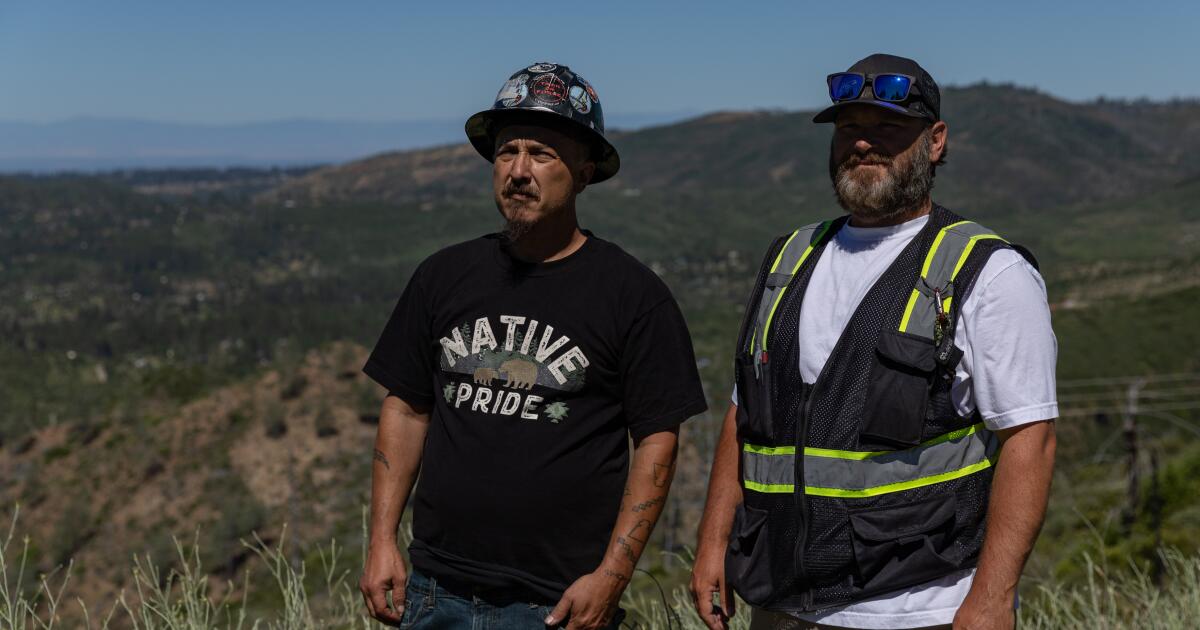
After wildfires destroyed 95% of this California tribe’s forests, members uncovered 1,200 ancestral sites
-
 Sports13 minutes ago
World Cup championship and third-place game: Start times and how to watch
-

 World25 minutes ago
Rule of Law in Hungary shows ‘radical change’ under Magyar, EU says
-

 News55 minutes ago
Where Wildfire Smoke Is The Worst Right Now—And What To Do About It
-

 Los Angeles, Ca3 hours ago
LADWP begins long-term repairs after West Hollywood water main rupture
-

 Detroit, MI3 hours ago
Livestream: Mayor Sheffield, Detroit health chief to address wildfire smoke threat
-
 San Francisco, CA3 hours ago
A sculpture of a giant naked woman goes on sale in San Francisco. Bring a crane

