Missouri
Missouri consumers file class-action lawsuit against Good Day Farm


A marijuana dispensary chain with locations in Springfield and Columbia is again facing allegations of creating a monopoly to take advantage of the Missouri recreational marijuana market.
Damon Toussaint Frost Jr. filed a class-action lawsuit May 4 in Jackson County Circuit Court against Good Day Farm, Missouri’s largest dispensary chain.
Frost, who is identified in the court filing as a Missouri resident who has purchased recreational cannabis from GDF, alleges that the dispensary chain’s and its affiliates have conspired to monopolize recreational cannabis sales in Missouri, resulting in Missouri consumers paying significantly higher prices than they would have in a free market. Frost and other class members — defined in the suit as Missouri citizens who have purchased recreational cannabis products from Good Day Farm or its affiliates in Missouri — are seeking that the “illegal conspiracy” be dismantled and that they be compensated for damages.
Frost is represented by Michael Williams of Williams Dirks Dameron in Kansas City. Williams did not respond to a request for comment as of publication.
A spokesperson for GDF denied the allegations.
“The claims in this lawsuit are baseless and without merit. Our company operates in full compliance with all applicable Missouri state laws and regulations, and we will vigorously defend that record,” the spokesperson wrote in an email Friday, May 15, afternoon. “We will not allow aggressive legal tactics to distract us from what matters most: our mission to deliver uninterrupted service and exceptional products to the patients, customers and employees who rely on us.”
This isn’t the first class-action lawsuit filed against the dispensary chain. In April, two Missouri-licensed cultivators and manufacturers alleged that GDF violated the Missouri Constitution and created a “cartel.”
Like in the April lawsuit, Frost’s lawsuit alleges that the “GDF consortium” — which includes Good Day Farm Dispensaries, Codes Dispensaries, Greenlight, 3Fifteen Primo and Fresh Karma — has control of about 25% of dispensary licenses in Missouri. The Missouri Constitution mandates that entities are limited to owning, controlling or managing no more than 10% of the total dispensary licenses in Missouri.
In order to circumvent the 10% cap, GDF “arranged for investors to invest into limited liability companies” that would then acquire already-licensed entities from owners, court records said, and would then be operated by GDF. The lawsuit alleges that GDF created four limited liability companies.
It also alleges that GDF employees, including the compliance director, general counsel and former director of investor relations, were listed on paperwork for various Codes, Greenlight and Fresh Karma dispensaries.
“Defendants anticompetitive conduct (i) robs consumers of choice and selection of products, and (ii) leaves third parties to compete for a significantly (and increasingly) small sliver of shelf space in the overall Missouri market,” the petition said. “In addition, Defendants misconduct will likely result in fewer competitive brands on the market, substantially reduced diversity of products available and sold, and, ultimately, to fewer choices, lower quality, and higher prices for consumers.”



Missouri
Missouri teen Gabbriana Boyster shot dead in home as mom makes horrifying discovery; 3 friends charged

A Missouri teen was shot dead while hanging out with her friends, who are accused of not reporting the killing before her mother made the horrifying discovery inside their home.
Gabbriana Boyster, 16, was allegedly struck in the head in a Hillsboro, Missouri, home Friday night — with her body not being found by her mom, Candy G’Sell, until the following afternoon, KDSK reported.
“I walked in the room and she was laying there… sitting up,” the grieving mother told the outlet.
G’Sell immediately called 911, but by the time paramedics arrived, her daughter had already been dead for hours.
Investigators with the Jefferson County Sheriff’s Office said Boyster was shot Friday evening, and her body remained inside the home “for hours” until her mother made the devastating discovery, according to the outlet.
Police did not disclose what led to the fatal shooting or who owned the weapon.
Three boys were at Boyster’s home at the time of the shooting, investigators suspect, and one has been charged with involuntary manslaughter, unlawful use of a weapon resulting in death, armed criminal action, and abandonment of a corpse.
The two other juveniles were released from custody following charges of abandonment of a corpse.
The identities of all three minors are being withheld by authorities due to their ages.
G’Sell said the three boys were friends with her daughter.
“It’s not fair. My daughter was sweet and innocent and kind. And she loved her friends… for them, her friends, to just leave her…” the grief-stricken mother said.
“There’s no relief. My baby is gone. What mother wants to bury their baby?”
Gabby, as she was known to loved ones, was an incoming junior at Hillsboro High School with dreams of becoming an ultrasound technician after graduation.
The district’s superintendent, Dr. Jon Isaacson, released a statement Tuesday saying that “Our hearts are with the student’s family, friends, and everyone impacted by this unimaginable loss,” KMOV reported.
“While words cannot take away the pain of this tragedy, we want our students, staff, and families to know they are not alone. We are committed to providing support and care for everyone who is grieving during this difficult time.”
Boyster, the youngest of three siblings, “brought warmth and laughter to those fortunate enough to know her,” according to an online obituary.
“Although she could be quiet at first, once she opened up, her vibrant personality and gift for conversation quickly shined through,” the obituary read.
“Her kind heart, playful spirit, and the joy she brought to others will be deeply missed and lovingly remembered.”
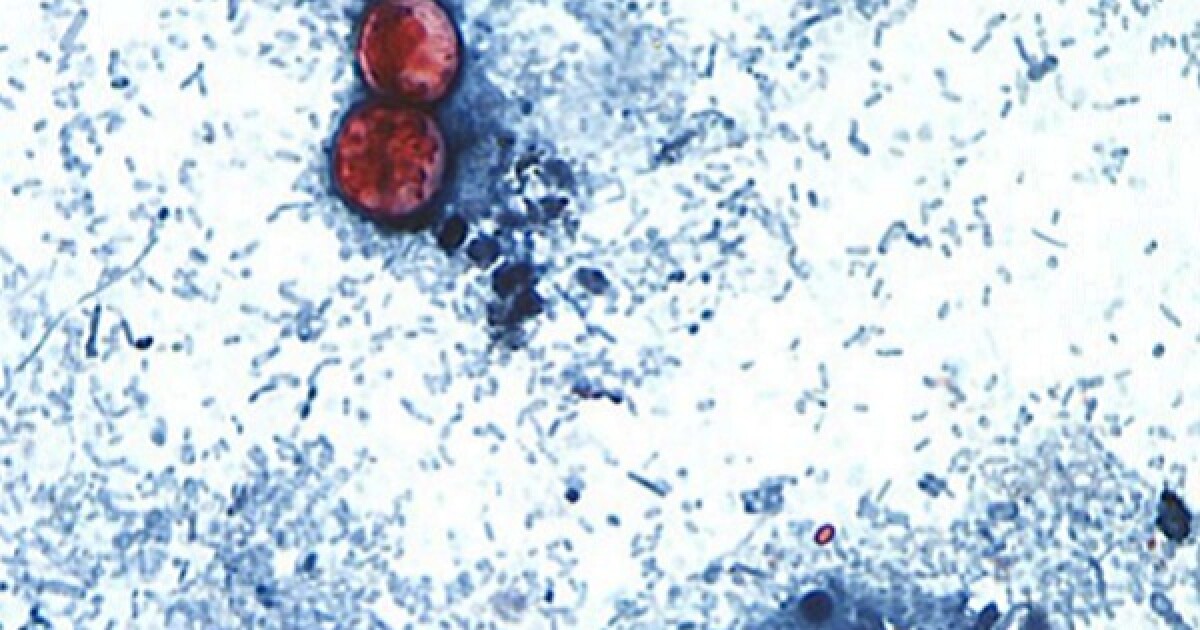
Missouri health officials are investigating dozens of confirmed or probable cases of cyclosporiasis, the intestinal infection that has sickened thousands of people across the country this summer.
As of Sunday, the state Department of Health and Senior Services logged 43 cases of the infection, which causes diarrhea and other digestive symptoms. The department data does not include where in the state cases have been reported.
Missouri has a relatively small number of reported cases compared to Michigan and other states at the center of the outbreak.
Illinois health officials have reported 216 cases of the infection, according to the state’s health department. In Michigan, which has the most reported cases, health officials have logged more than 3,700 cyclospora infections.
Officials expect that number to go up as more people are tested. Because people with diarrhea rarely go to the doctor and even fewer of those people receive the necessary stool sample test, it’s likely more people are infected.
Local health departments are following up with patients to get their food and travel history, which could help identify where the parasite came from.
Cyclosporiasis can cause watery diarrhea, nausea and dehydration. Unlike other illnesses caused by food-borne pathogens, fever and vomiting are relatively rare symptoms. Most people recover from the infection without treatment, but antibiotics can clear the infection.
According to the federal Centers for Disease Control and Prevention, no deaths have been reported due to the current outbreak.
Cyclospora, a parasite that can only be seen through a microscope, is spread through human feces. Past outbreaks have been linked to leafy greens, but officials have not yet found the cause of this year’s outbreak.
People can prevent the illness by thoroughly washing produce, cutting off bruised or damaged bits and refrigerating cut fruits and vegetables. Heat kills the parasite, so cooking vegetables can also cut down on risk.
The Missouri Lottery offers several draw games for those aiming to win big.
Here’s a look at July 14, 2026, results for each game:
Winning Mega Millions numbers from July 14 drawing
02-04-10-48-56, Mega Ball: 22
Check Mega Millions payouts and previous drawings here.
Winning Pick 3 numbers from July 14 drawing
Midday: 4-6-0
Midday Wild: 4
Evening: 7-5-9
Evening Wild: 8
Check Pick 3 payouts and previous drawings here.
Winning Pick 4 numbers from July 14 drawing
Midday: 7-6-5-4
Midday Wild: 6
Evening: 8-8-1-5
Evening Wild: 3
Check Pick 4 payouts and previous drawings here.
Winning Cash Pop numbers from July 14 drawing
Early Bird: 12
Morning: 15
Matinee: 12
Prime Time: 15
Night Owl: 14
Check Cash Pop payouts and previous drawings here.
Winning Show Me Cash numbers from July 14 drawing
05-07-12-32-36
Check Show Me Cash payouts and previous drawings here.
Feeling lucky? Explore the latest lottery news & results
Are you a winner? Here’s how to claim your lottery prize
All Missouri Lottery retailers can redeem prizes up to $600. For prizes over $600, winners have the option to submit their claim by mail or in person at one of Missouri Lottery’s regional offices, by appointment only.
To claim by mail, complete a Missouri Lottery winner claim form, sign your winning ticket, and include a copy of your government-issued photo ID along with a completed IRS Form W-9. Ensure your name, address, telephone number and signature are on the back of your ticket. Claims should be mailed to:
Ticket Redemption
Missouri Lottery
P.O. Box 7777
Jefferson City, MO 65102-7777
For in-person claims, visit the Missouri Lottery Headquarters in Jefferson City or one of the regional offices in Kansas City, Springfield or St. Louis. Be sure to call ahead to verify hours and check if an appointment is required.
For additional instructions or to download the claim form, visit the Missouri Lottery prize claim page.
When are the Missouri Lottery drawings held?
- Powerball: 9:59 p.m. Monday, Wednesday and Saturday.
- Mega Millions: 10 p.m. Tuesday and Friday.
- Pick 3: 12:45 p.m. (Midday) and 8:59 p.m. (Evening) daily.
- Pick 4: 12:45 p.m. (Midday) and 8:59 p.m. (Evening) daily.
- Cash4Life: 8 p.m. daily.
- Cash Pop: 8 a.m. (Early Bird), 11 a.m. (Late Morning), 3 p.m. (Matinee), 7 p.m. (Prime Time) and 11 p.m. (Night Owl) daily.
- Show Me Cash: 8:59 p.m. daily.
- Lotto: 8:59 p.m. Wednesday and Saturday.
- Powerball Double Play: 9:59 p.m. Monday, Wednesday and Saturday.
This results page was generated automatically using information from TinBu and a template written and reviewed by a Missouri editor. You can send feedback using this form.
-

 West Virginia2 minutes ago
Repair work on busiest bridge in West Virginia to happen in phases to “minimize disruptions”
-
Wyoming8 minutes ago
Wyoming Rodeo Stars Set for National High School Finals
-

 Crypto13 minutes ago
New law protects consumers from cryptocurrency kiosk/ATM fraud | Maui Now
-

 Fitness26 minutes ago
‘This works’: Fitness icon Suzy Jalowsky, 60, shares the simple exercise formula she swears by
-

 Movie Reviews38 minutes ago
Movie Review: “The Odyssey”
-

 World49 minutes ago
US military says it completed latest strikes on Iran, targets included Bandar Abbas
-

 Politics1 hour ago
Inside Trump’s Swift Construction of a White House Helipad
-

 Science1 hour ago
The Wildfire Researchers Who Burn Houses Down on Purpose


