Lindsay Arnold using The Everything Band.
Ambit Creative


“Dancing With the Stars” alum Lindsay Arnold is expanding her digital fitness universe with the launch of a home exercise tool, The Everything Band.
Out now, the all-in-one, multiloop resistance band is a first-of-its-kind product designed to replace clunky gym equipment such as reformers, leg machines, rowers, kettlebells and more. With 11 loops (five “levels” on each side of the center loop), the portable tool, $35, can assist more than 100 movements, all of which are modeled in Arnold’s four-week, low-impact Tone Program, available on The Movement Club app.
Lindsay Arnold using The Everything Band.
Ambit Creative
Speaking with WWD, Arnold described the band as a physical manifestation of her need to multitask. “I like to get things done. I like to be efficient with my time. And anything I create is going to be kind of a physical version of that,” she said. “The Movement Club is our digital version of that. It’s accessible movement that people can truly do anywhere. So when we decided to go into the physical product space, I knew I wanted something that’s multifunctional, that is versatile, that is innovative.”
Arnold founded the membership platform in 2020, after her 10-year run as a coach on “Dancing With the Stars.” The idea was born out of a sudden change in her own fitness regimen that occurred when she was pregnant with her first baby. “My body was my tool to perform, but when I stepped away from that career and became a mom, life looked a lot busier. I didn’t have as much time to get back to myself,” she recalled.
“I started looking at fitness in a different way,” she continued. “I felt like there was a missing space in the fitness industry for a program that’s for everyone, not a program that’s only for pregnant women or only for people in the best shape of their life, but truly a program that meets people exactly where they are at in their fitness journey.”

The Everything Band in the four-week Tone Program.
Ambit Creative
In 2025, The Movement Club saw a 190 percent increase in revenue, a 226 percent increase in new subscribers and 151 percent growth spike in returning subscribers.
With 12 programs including Full Body, Bridal, Postpartum, Pilates Strength and Self Care, the membership-based platform is, indeed, suitable for beginners, experts and every exercise level in between. Most workouts range from 18 to 30 minutes, with elements of dance woven throughout. “A lot a lot of my classes incorporate ballet, bar movements and also the stretching that I do feel like is a lot more targeted for dancers, which is really, really cool, because it’s all about lengthening and strengthening your muscles while also stretching and keeping your body safe,” Arnold explained.
The Tone Program, which is five days on and two days off, targets arms, glutes, legs and core, with short, high-intensity intervals and three-to-four reps of each exercise. The format, Arnold said, allows members to familiarize themselves with the band, and hopefully, inspire them to use it in their own regimen. “I will continue to add new videos with the band, like I always do, but first, I really wanted to launch with a good program for people to follow along with and track their progress,” she said.


With a 3:45am wake-up call, it’s a wonder Susanna Reid has any time or energy left to work out, particularly after hours of grilling politicians live on Good Morning Britain. Nevertheless, movement has remained a priority for Susanna – even if that movement looks slightly different to what it did previously.
‘I used to go to the gym and run a lot. I would do marathons, 10ks and parkruns, but I don’t do that any more, so I have to keep my body moving,’ she revealed to Fabulous Magazine earlier this month. While Susanna said she’s ‘quite disciplined’ about incorporating that movement into her day, she’s not doing ‘three gym sessions a week’.
So, how does she maximise the movement in her day?
First off, Susanna is serious about her steps, with a post-work walk being non-negotiable. ‘I always have a walk after work, because you get sluggish if you don’t move your body,’ she told Fabulous. ‘I walk for two miles every day.’
Susanna added that the best thing about her new work building ‘is that it gives me 2,500 extra steps every day, because there is a longer walk between different parts of the building’.
Indeed, while you might dismiss walking as active exercise, the benefits of extra steps shouldn’t be underestimated. A recent study found that as few as 4,000 daily steps had clinically meaningful benefits, and that compared with 2,000 daily steps, around 7,000 steps a day was associated with significantly lower risks of premature death, cardiovascular disease, depression and type 2 diabetes.
And another recent study found that a 10-minute walk straight after eating helps suppress blood sugar spikes, eliciting similar effects to those seen after a 30-minute walk.
Talking of 10 minutes of movement, Susanna also revealed that she does a 10-minute workout every day. ‘I just go on YouTube and I do it in my room before I get in the shower,’ she said. ‘It’s one of those things with exercise – if you are not that way inclined, like me, you need to reduce the obstacles.’
Again, the science shows that short, consistent bouts of exercise can be as effective as longer, continuous workouts. In fact, one study found that accumulating as little as 15-20 minutes of vigorous physical activity across the week is associated with a significantly lower risk of heart disease, cancer and early death.
Hannah Bradfield is a Senior Health and Fitness Writer for Women’s Health UK. An NCTJ-accredited journalist, Hannah graduated from Loughborough University with a BA in English and Sport Science and an MA in Media and Cultural Analysis. She has been covering sports, health and fitness for the last five years and has created content for outlets including BBC Sport, BBC Sounds, Runner’s World and Stylist. She especially enjoys interviewing those working within the community to improve access to sport, exercise and wellness. Hannah is a 2024 John Schofield Trust Fellow and was also named a 2022 Rising Star in Journalism by The Printing Charity. A keen runner, Hannah was firmly a sprinter growing up (also dabbling in long jump) but has since transitioned to longer-distance running. While 10K is her favoured race distance, she loves running or volunteering at parkrun every Saturday, followed, of course, by pastries. She’s always looking for fun new runs and races to do and brunch spots to try.

Heel touches are one of those exercises you look at and either think, ‘is that it?’ or ‘that looks nice and easy!’, depending on how much you enjoy core exercises. For those who’d rather avoid planks and crunches, this movement makes for a good alternative – and it can be done lying down.
This exercise targets the obliques, muscles that sit on the sides of our core and help stabilise the spine and support hip strength. Often underworked and underrated, these muscles are essential for everyday movements like bending down and twisting, which in turn may help prevent lower back pain.
Watch On
If you’re new to heel touches, Abby says they can be “easily modified, or progressed to make it more challenging”. You might not be able to touch your heels at first, but as your spine becomes more mobile, you will see improvements.
“Your pelvis will naturally tuck slightly as you bring the head, neck and shoulders up, but just try to move with control, keeping the pelvis stable,” she says.
If you’ve been doing a bodyweight Pilates workout for even a few weeks, you’ll already have good strength in your obliques and abdominal muscles. You may need to make the heel touches harder to see the benefits.
To do this, Abby says: “You could take your feet off the floor into tabletop, which will make pelvic stability more challenging, or lengthen the legs on the diagonal to create more of a challenge, or even add hand weights to increase the load.”
You could also move your heels further away from your bottom to increase the stretch, or hold each touch for two seconds.
While above we’ve suggested alternating sides for the touches, you could do all of your reps on one side before switching to the other. This will intensify the pressure on your obliques. Abby suggests aiming for 15-25 reps over three or four sets to “make it count”.
Adding in additional core exercises that complement heel touches can fire up these muscles even more. Dead bugs and the side plank are good options for targeting the obliques.

Getty Images
Teenagers who see exercise as fun, social and good for their health are significantly fitter by late adolescence than those driven by competition, pressure or fear of judgement, new research led by Flinders University shows.
Tracking more than 1,000 young people from age 14 to 17, researchers found early attitudes to physical activity strongly predict measurable aerobic fitness three years later.
The national study, using data from the long‑running Raine Study, was led by Flinders University in collaboration with the University of Notre Dame Australia, and has been published in Child: Care, Health and Development journal.
Researchers examined how teenagers’ beliefs about physical activity relate to aerobic fitness in late adolescence, measured using a standard laboratory cycling test at age 17.
The findings show that intrinsic motivations – such as enjoying physical activity, feeling healthy, keeping fit and spending time with friends – consistently matter most between the ages of 14 and 17.
Teenagers who value these factors are significantly fitter at 17 than those motivated primarily by winning, external rewards or pressure from others.
Senior author Associate Professor Mandy Plumb, a clinical exercise physiologist at Flinders University, says the results underline the importance of understanding what genuinely motivates young people.
“When adolescents see physical activity as enjoyable, social and good for their health, they are more likely to develop lasting fitness into later adolescence,” says Associate Professor Plumb, who is based at Flinders’ Rural and Remote Health NT.
Participants reported both how important they believed different outcomes of physical activity were, and how likely they thought those outcomes were to occur, including enjoyment, health benefits and appearance.
While most motivational factors remained relatively stable across adolescence, improving appearance was the only factor that increased in importance for both boys and girls by age 17.
Associate Professor Plumb says this reflects normal adolescent development.
“As teenagers get older, they become more aware of their bodies and how they are perceived by others, which is why appearance becomes more influential in later adolescence,” she says.
The study also identified clear gender differences in how motivation relates to fitness outcomes.
Boys tended to have higher aerobic fitness at 17 when motivated by competition, winning and external rewards.
Girls, by contrast, were fitter when motivated by enjoyment, feeling healthy, weight control and supportive social environments.
Associate Professor Plumb says these findings show youth sport and physical activity programs need to be more targeted.
“One‑size‑fits‑all approaches don’t work, particularly for girls during adolescence,” she says.
The research also highlights the damaging impact of negative social experiences, especially for teenage girls.
Girls who believed others would make fun of them for being physically active were significantly less fit by age 17.
“Fear of judgement can directly reduce participation in physical activity, leading to poorer long‑term fitness outcomes,” says Associate Professor Plumb.
Importantly, the study shows that attitudes formed in early adolescence influence later health outcomes – not just behaviour at the time.
“What teenagers believe about physical activity at 14 continues to shape their fitness several years later,” says Associate Professor Plumb.
The authors say the findings have clear implications for parents, schools, coaches and policymakers.
“Programs that prioritise fun, friendship and feeling healthy may be more effective than those focused on competition or performance alone,” says Associate Professor Plumb.
“Reducing pressure, bullying and overly competitive environments could help more young people stay active throughout adolescence.”
The authors say that schools and community sports organisations are well placed to apply the findings to help reverse declining physical activity levels among teenagers.
The paper, Perceptions of the Likelihood and Importance of Physical Activity Outcomes at 14 Years Affects Physical Fitness at 17 Years by Amanda Timler, Paola Chivers, Helen Parker, Elizabeth Rose, Jocelyn Tan, Beth Hands and Mandy S. Plumb was published in Child: Care, Health and Development journal. DOI: 10.1111/cch.70276
Acknowledgements: The Raine Study Gen2-14 year follow-up received funding from NHMRC (Sly et al., ID 211912), NHMRC Program Grant (Stanley et al.,ID 003209) and The Raine Medical Research Foundation. The Raine Study Gen2-17 year follow-up was funded through a NHMRC Program Grant (Stanley et al., ID 353514).
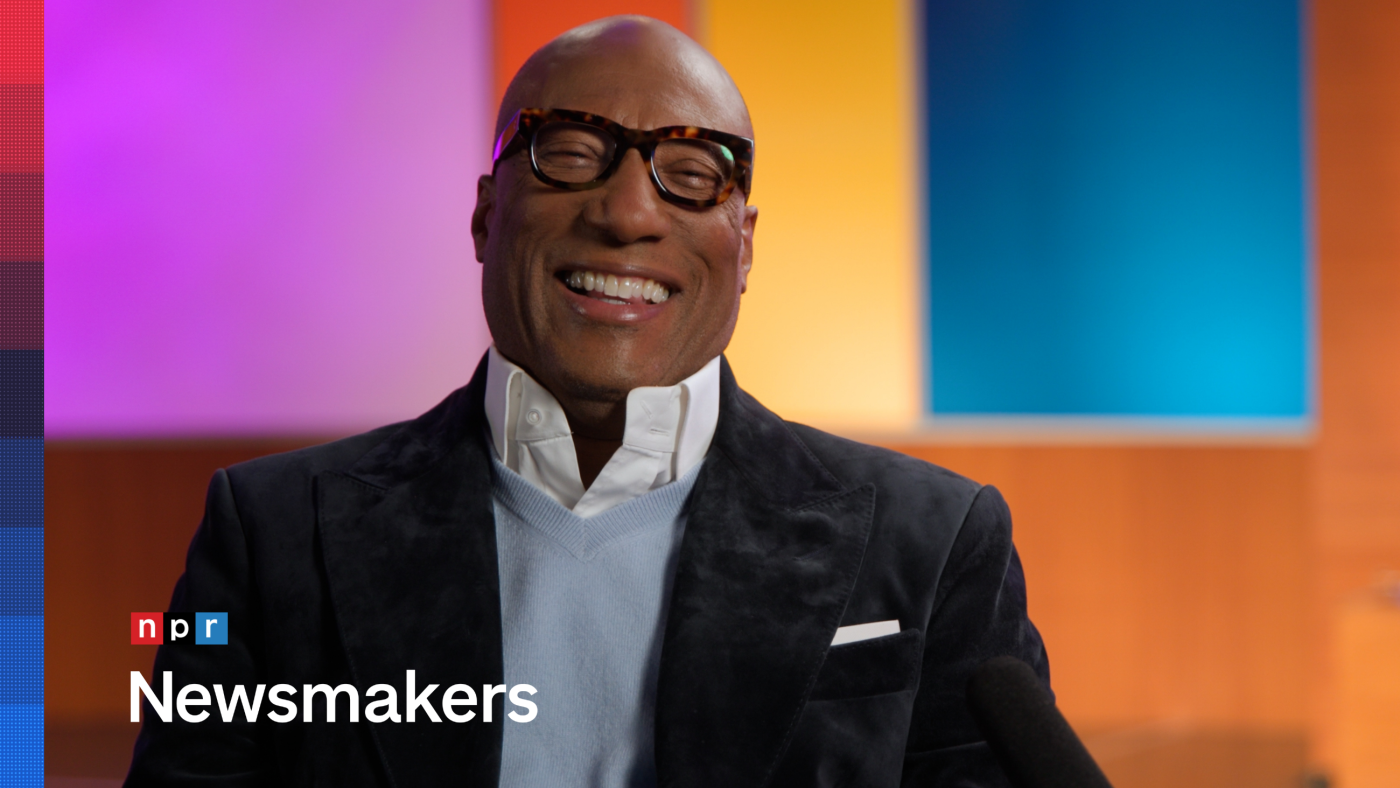
Late night has enough political humor already, says host stepping into Colbert’s slot : NPR’s Newsmakers


Google’s AI search is so broken it can ‘disregard’ what you’re looking for


Mojtaba Khamenei using ‘bin Laden template’ to survive, learned from Abbottabad: analyst


Military families demand DOJ distribute nearly $800M from French cement company found guilty of bribing ISIS


Low-impact routine may help adults lower blood pressure at home


Thunder erase 15-point deficit to take series lead over Spurs as Victor Wembanyama’s 26 points fall short


Fox News AI Newsletter: AI girlfriend dumps Hollywood filmmaker

Waymo suspends all freeway rides over safety


