Crypto
Crypto and Human Trafficking: 2026 Crypto Crime Report


TL;DR
- Cryptocurrency flows to suspected human trafficking services, largely based in Southeast Asia, grew 85% in 2025, reaching a scale of hundreds of millions across identified services.
- Telegram-based “international escort” services show sophisticated integration with Chinese-language money laundering networks (CMLNs) and guarantee platforms, with nearly half of transactions exceeding $10,000.
- Analysis reveals global reach of Southeast Asian trafficking operations, with significant cryptocurrency flows from destinations across the Americas, Europe, and Australia.
- CSAM networks have evolved to subscription-based models and show increasing overlap with sadistic online extremism (SOE) communities, while strategic use of U.S.-based infrastructure suggests sophisticated operational planning.
- Unlike cash transactions, cryptocurrency’s inherent transparency creates unprecedented opportunities for law enforcement and compliance teams to detect, track, and disrupt trafficking operations.
The intersection of cryptocurrency and suspected human trafficking intensified in 2025, with total transaction volume reaching hundreds of millions of dollars across identified services, an 85% year-over-year (YoY) increase. The dollar amounts significantly understate the human toll of these crimes, where the true cost is measured in lives impacted rather than money transferred.
This surge in cryptocurrency flows to suspected human trafficking services is not happening in isolation, but is closely aligned with the growth of Southeast Asia–based scam compounds, online casinos and gambling sites, and Chinese-language money laundering (CMLN) and guarantee networks operating largely via Telegram, all of which form a rapidly expanding local illicit ecosystem with global reach and impact. Unlike cash transactions that leave no trace, the transparency of blockchain technology provides unprecedented visibility into these operations, creating unique opportunities for detection and disruption that would be impossible with traditional payment methods.
Our analysis tracks four primary categories of suspected cryptocurrency-facilitated human trafficking:
- “International escort” services: Telegram-based services that are suspected to traffic in people
- “Labor placement” agents: Telegram-based services that facilitate kidnapping and forced labor for scam compounds
- Prostitution networks: suspected exploitative sexual service networks
- Child sexual abuse material (CSAM) vendors: networks of individuals engaged in the production and dissemination of CSAM
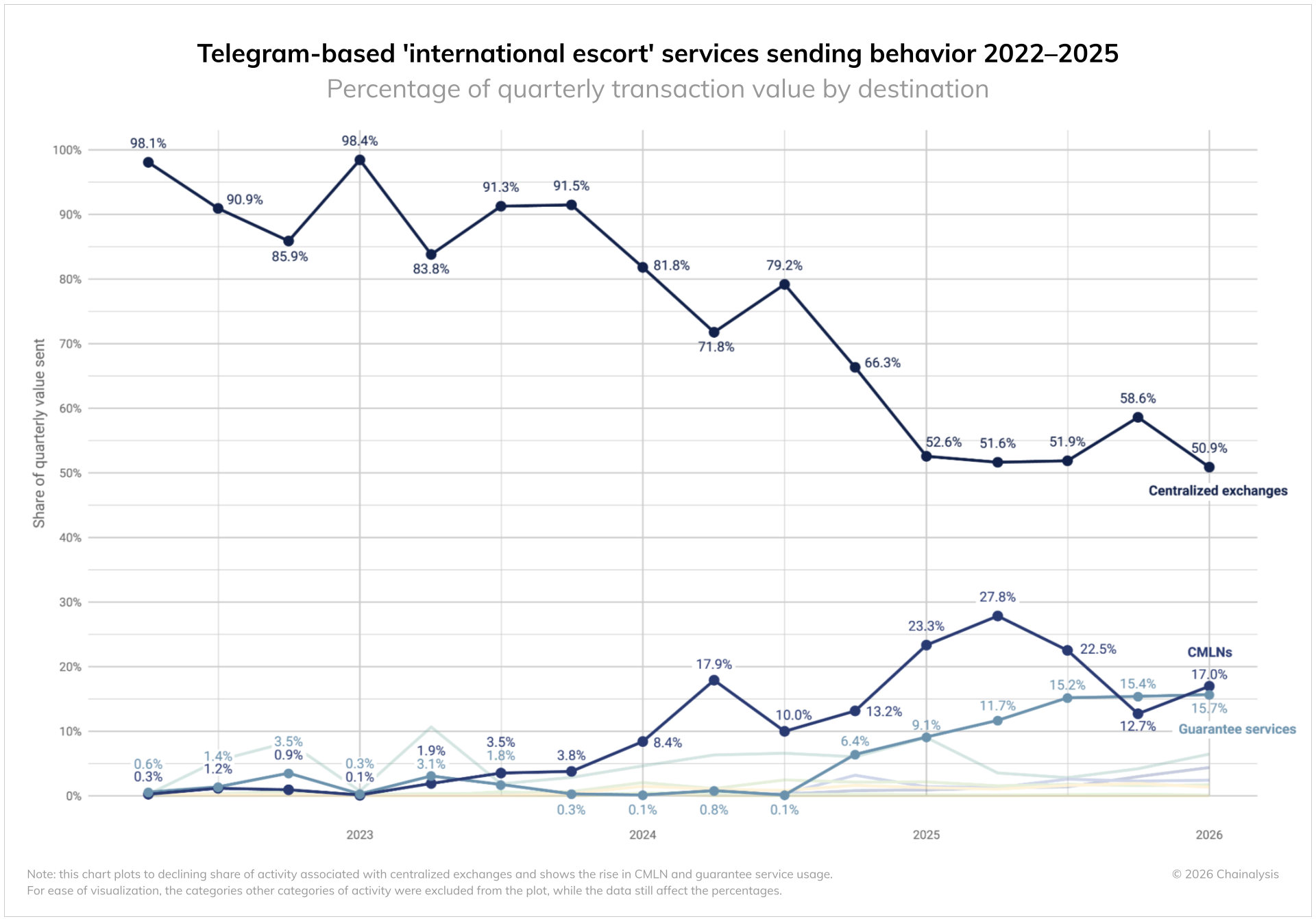
Payment methods vary significantly across these categories. While “international escort” services and prostitution networks operate almost exclusively using stablecoins, CSAM vendors have traditionally relied more heavily on bitcoin. However, even within CSAM operations, bitcoin’s dominance has decreased with the emergence of alternative Layer 1 networks. Broadly, the predominant use of stablecoins by “international escort” services and prostitution networks suggests that these entities prioritize payment stability and ease of conversion over the risks that these assets might be frozen by centralized issuers.
As we detail below, the “international escort” services are tightly integrated with Chinese-language money laundering networks. These networks rapidly facilitate the conversion of USD stablecoins into local currencies, potentially blunting concerns that assets held in stablecoins might be frozen.
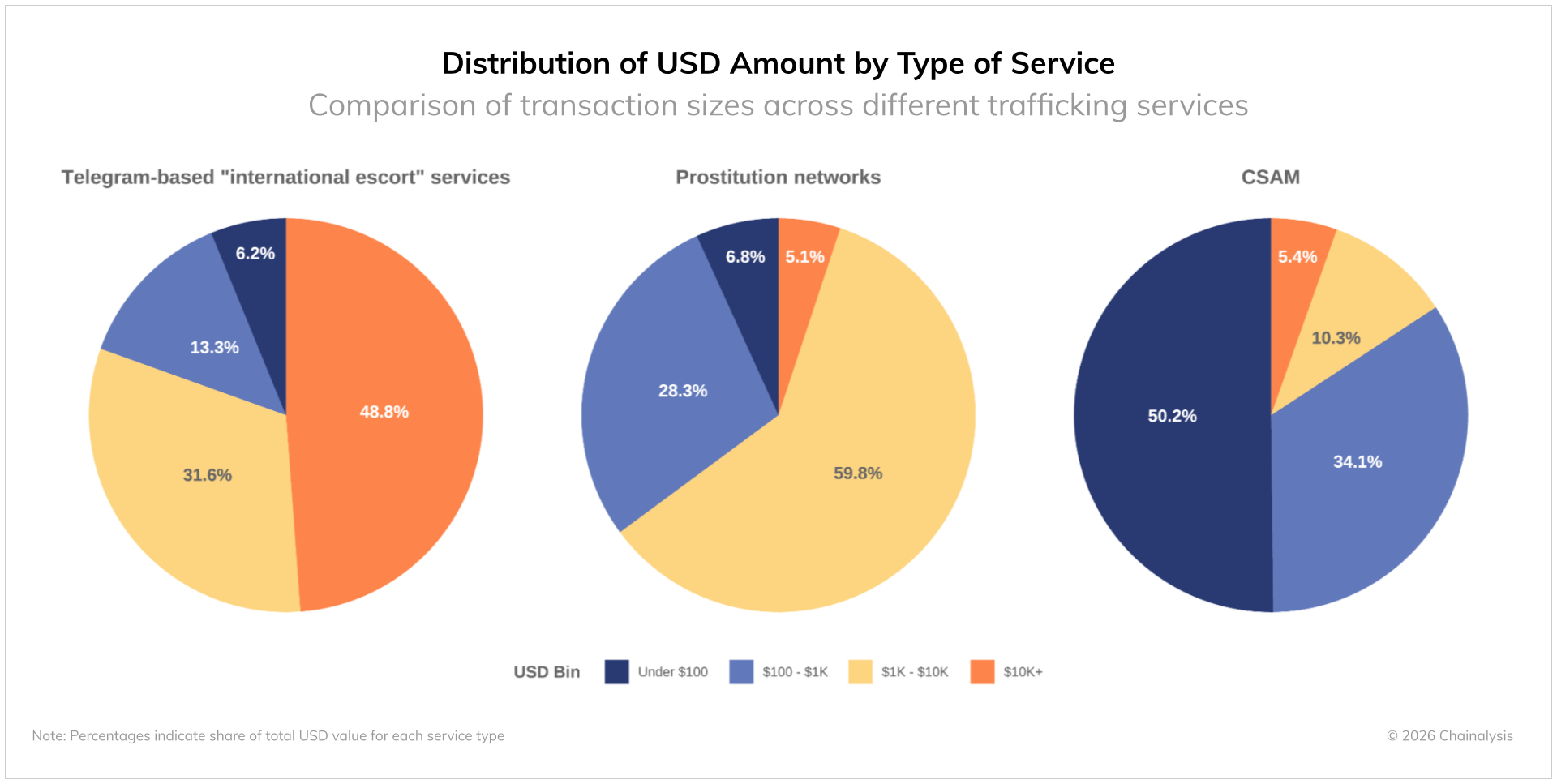
Nearly half of Telegram-based “international escort” service transactions exceed $10,000, demonstrating professionalized operations
The distribution of transaction sizes reveals distinct operational models across different types of suspected trafficking services. “International escort” services show the highest concentration of large transactions, with 48.8% of transfers exceeding $10,000, suggesting organized criminal enterprises operating at scale. In contrast, prostitution networks cluster in the mid-range, with approximately 62% of transactions between $1,000-$10,000, indicating potential agency-level operations.
These “international escort” services operate with sophisticated business models, complete with customer service protocols and structured pricing. For example, one prominent operation advertises across major East Asian cities with a tiered pricing system ranging from 3,000 RMB ($420) for hourly services to 8,000 RMB ($1,120) for extended arrangements, including international transport. These standardized pricing models create identifiable transaction patterns that investigators and compliance teams can use to detect suspicious activity at scale.

CSAM vendors and marketplaces
CSAM operations demonstrate different but equally concerning patterns. While approximately half of CSAM-related transactions are under $100 – unfortunately, there’s more CSAM on the internet than ever before, and it’s never been cheaper to produce – these operations have evolved sophisticated financial and distribution strategies. In 2025, we observed that, while these networks still collect payments in mainstream cryptocurrencies, they increasingly use Monero for laundering proceeds. Instant exchangers, which provide rapid and anonymous cryptocurrency swapping without KYC requirements, play a crucial role in this process.
The business model for CSAM operations has largely consolidated around subscription-based services rather than pay-per-content transactions, generating more predictable revenue streams while simplifying administration. These subscriptions typically cost less than $100 per month, creating a lower barrier to entry while establishing regular revenue for operators.
A disturbing trend emerged in 2025 with increasing overlap between CSAM networks and sadistic online extremism (SOE) communities. Following law enforcement actions against groups like “764” and “cvlt,” we observed SOE content appearing within CSAM subscription services, commonly advertised as “hurtcore.” These SOE groups specifically target and manipulate minors through sophisticated sextortion schemes, with the resulting content being monetized through cryptocurrency payments, perpetuating cycles of abuse.
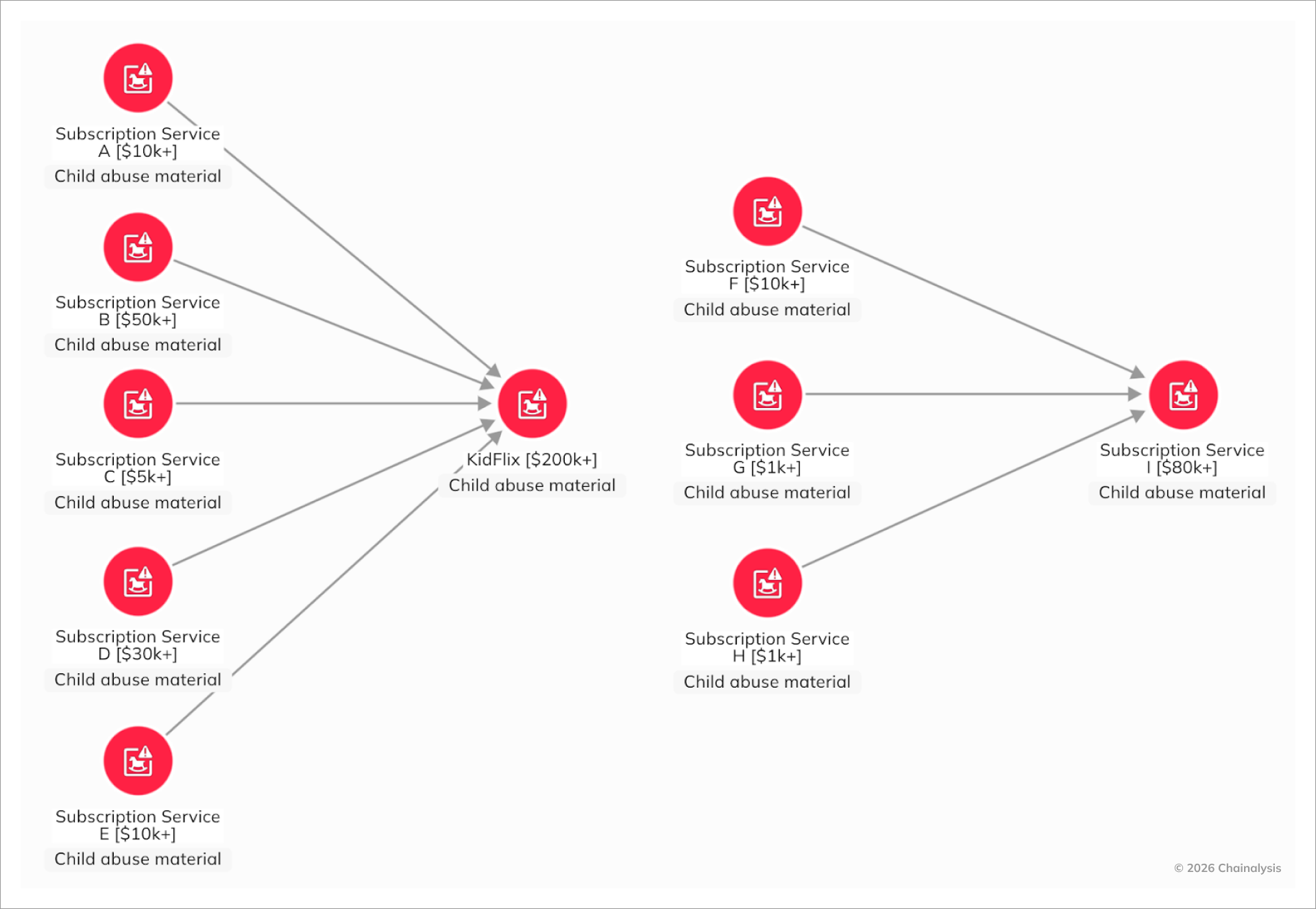
The scale of these operations became particularly evident in July 2025, when Chainalysis identified one of the largest CSAM websites operating on the darkweb following a UK law enforcement lead. This single operation utilized over 5,800 cryptocurrency addresses and generated more than $530,000 in revenue since July 2022, surpassing the notorious “Welcome to Video” case from 2019.
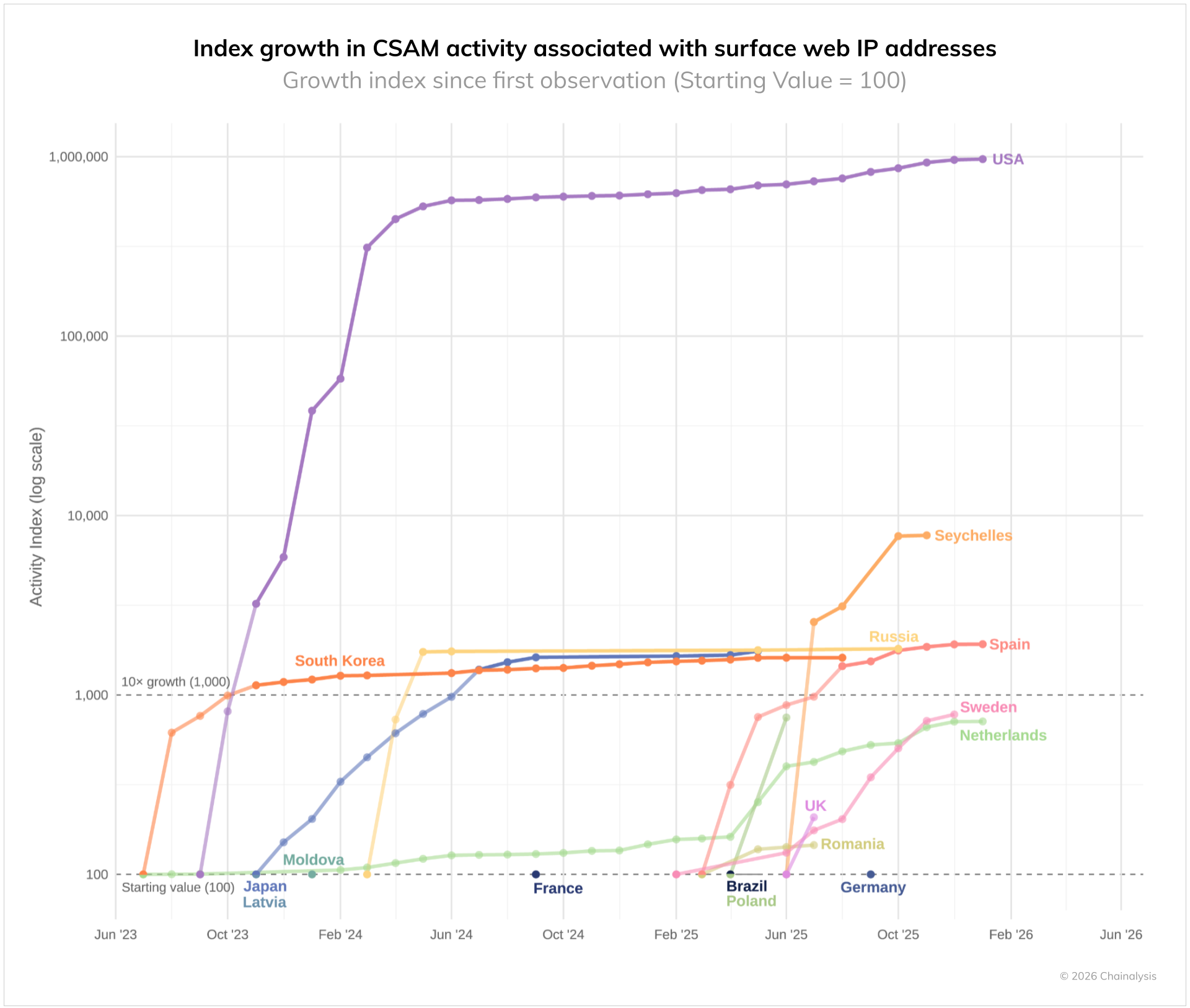
Geographic analysis of clearnet CSAM operations reveals strategic use of U.S. infrastructure [1]. While U.S.-based IP addresses account for a large portion of CSAM activity associated with surface websites, IPs from other countries like South Korea, Spain, and Russia show smaller flows. This suggests that these operations leverage U.S.-based infrastructure for scale, reliability, and an initial appearance of legitimacy that helps the activity blend into normal traffic and delays detection. Further, if the operators are outside the U.S., it reduces their personal exposure.
Chris Hughes, Internet Watch Foundation Hotline Director, told us, “In 2025, the Internet Watch Foundation identified 312,030 reports containing child sexual abuse images and videos. This is more than ever before, with an increase of 7% from the previous year. Early analysis of IWF data indicates that most clearweb sites offering virtual currency as a payment for child sexual abuse are hosted in the US, while darkweb sites were the second highest. Any payment information that we identify on commercial websites is captured and shared with global law enforcement and organisations like Chainalysis to disrupt further distribution of criminal imagery and to help in the investigation of those who create, share and profit from the sale of child sexual abuse material.”
Despite these concerning trends, 2025 saw significant law enforcement successes, including the takedown of “KidFlix” by German authorities and increased arrests of CSAM consumers across the United States. These cases demonstrate how blockchain analysis can provide critical evidence for identifying, investigating, and prosecuting both operators and consumers of CSAM networks.
Telegram-based services show deep integration with Chinese-language money laundering networks (CMLNs) and guarantee platforms
“International escort” services
The cryptocurrency footprint of escort services reveals sophisticated integration with established financial infrastructure, particularly CMLNs and guarantee platforms. While some escort services operate legally, cryptocurrency transaction patterns help identify potential trafficking operations through their distinct financial behaviors.
The majority of cryptocurrency movements flow through a combination of mainstream exchanges, institutional platforms, and guarantee services like Tudou and Xinbi. This creates both vulnerabilities and opportunities: while these platforms provide easier access to the financial system, they also serve as critical chokepoints where compliance teams can detect and investigate suspicious patterns.
“Labor placement” agents
It’s been widely reported that scam operations — pig butchering schemes in particular — are deeply intertwined with human trafficking. Victims are often lured by fake job offers before being forced to work in Southeast Asian scam compounds, where they face brutal conditions and are coerced into operating romance/investment scams under threat of violence.
These operations utilize guarantee services’ “human resource” vendors to facilitate recruitment. Channel participants inquire about methods to transport workers who have been detained at immigration checkpoints, while compound administrators provide updates concerning regional developments that might affect their operations, such as the ongoing border tensions between Thailand and Cambodia.
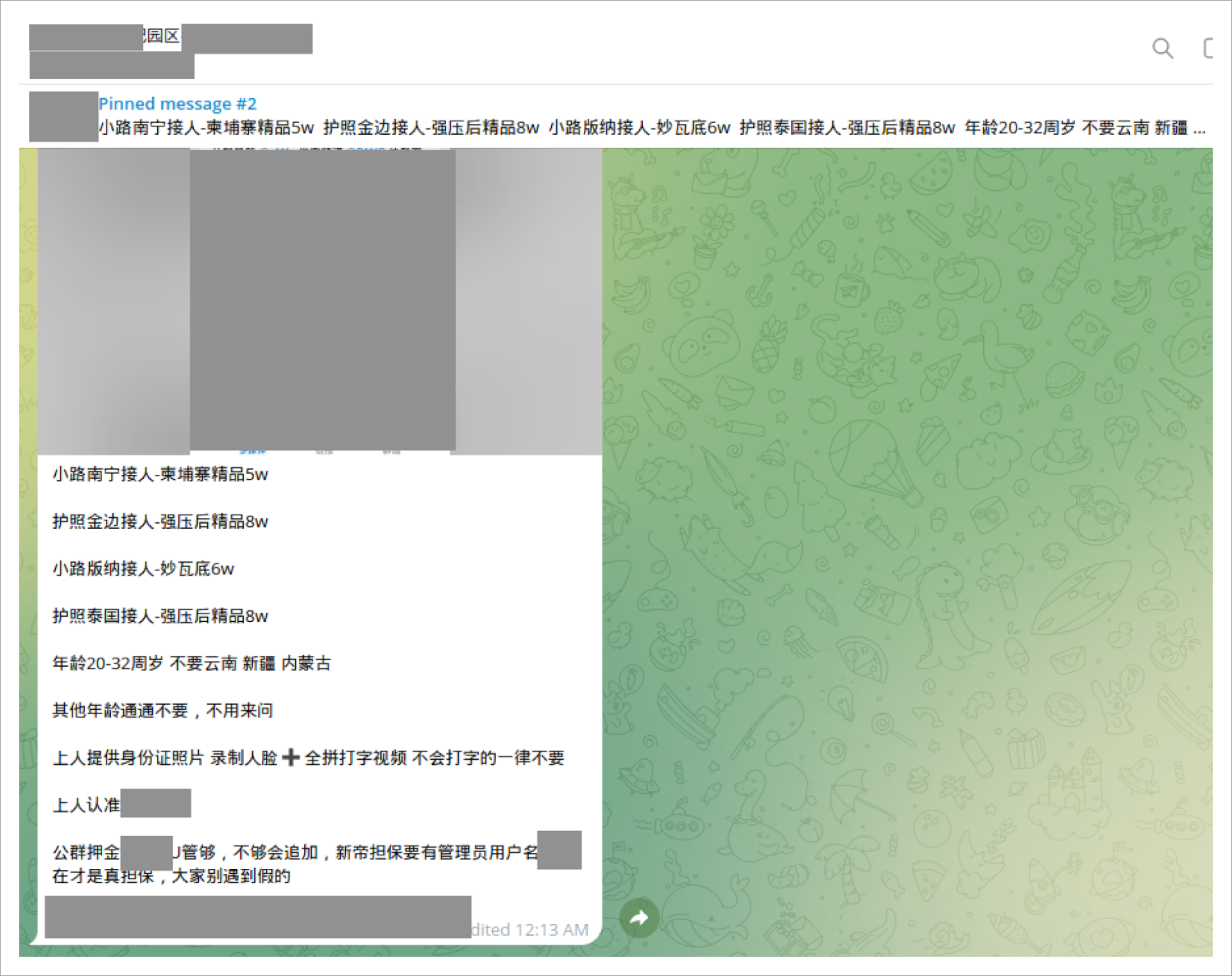
Blockchain analysis shows that recruitment payments typically range from $1,000 to $10,000, aligning with advertised pricing tiers. This provides another opportunity to leverage identifiable transaction patterns to detect suspicious activity at scale. These agents maintain presence across multiple guarantee platforms to maximize their reach, with some operating through mainstream cryptocurrency exchanges.
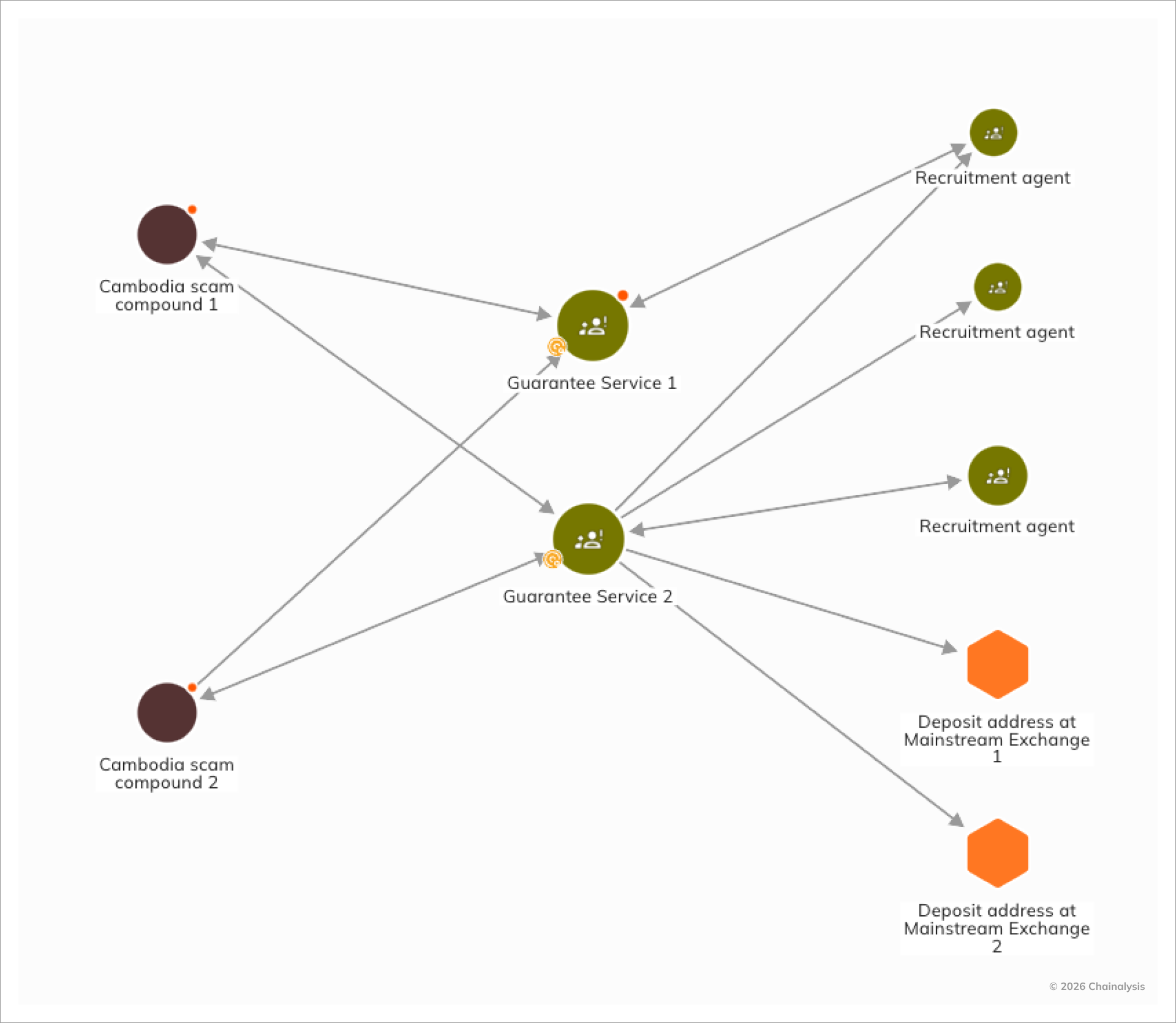
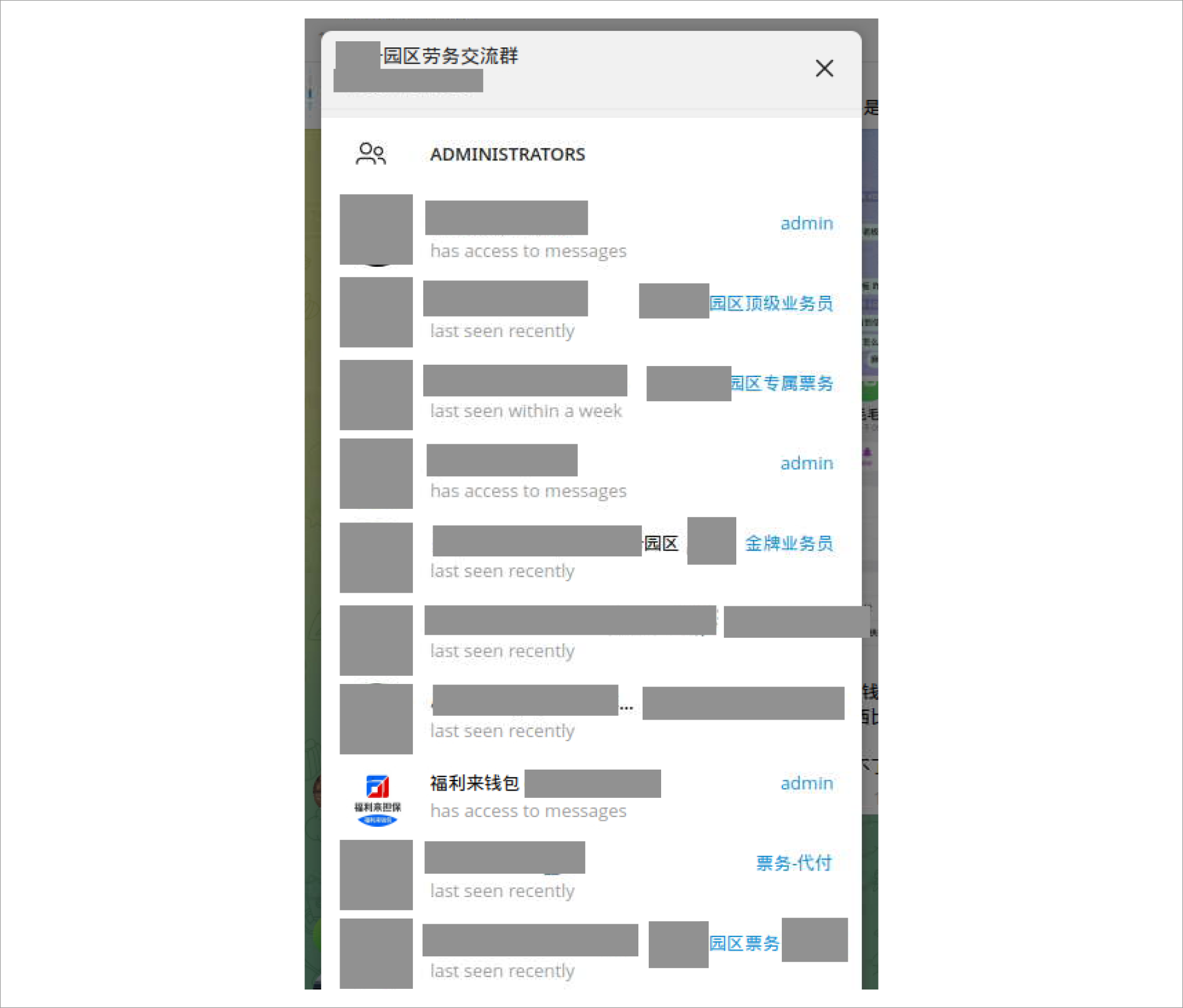
The involvement of established criminal organizations became evident through our analysis of trafficking-related channels. For example, we identified an administrator account linked to the “Fully Light Group,” a Kokang-based organization previously flagged by the United Nations Office on Drugs and Crime (UNODC) for illegal gambling and money laundering. Their presence in channels facilitating transactions between scam compounds and “labor placement” agents suggests how established criminal networks provide critical financial infrastructure for trafficking operations.
Southeast Asian organizations facilitating potential trafficking show global reach through cryptocurrency
Geographic analysis of “international escort” services in 2025 reveals how Southeast Asian services, particularly Chinese-language operations, have expanded their reach globally through cryptocurrency adoption [2]. The transparency of the blockchain provides valuable insight into broader trafficking patterns and financial flows of these types of operations.
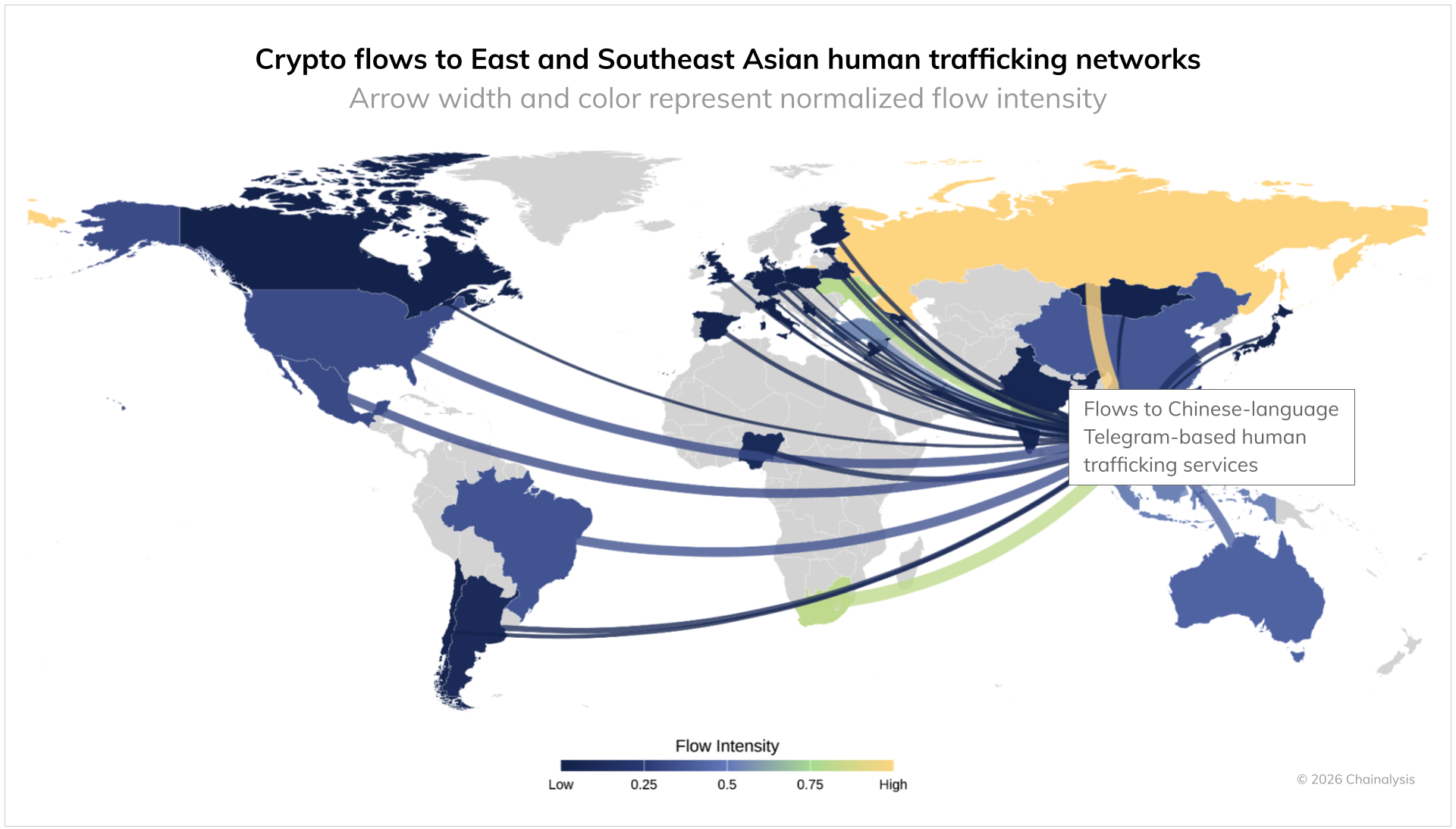
Based on our data, Chinese-language services operating through networks spanning mainland China, Hong Kong, Taiwan, and various Southeast Asian countries demonstrate sophisticated payment processing capabilities and extensive international reach. Their large-scale cryptocurrency transactions show significant flows from countries including Brazil, the United States, the United Kingdom, Spain, and Australia, indicating the truly global scope of these operations.
While traditional trafficking routes and patterns persist, these Southeast Asian services exemplify how cryptocurrency technology enables trafficking operations to facilitate payments and obscure money flows across borders more efficiently than ever before. The diversity of destination countries suggests these networks have developed sophisticated infrastructure for global operations.
Key risk indicators and monitoring strategies
While the sophistication of cryptocurrency-facilitated trafficking operations continues to grow, the transparent nature of blockchain technology provides powerful tools for detection and prevention. Our analysis has identified several key indicators that compliance teams and law enforcement can monitor:
- Large, regular payments to labor placement services paired with cross-border transactions
- High-volume transactions through guarantee platforms
- Wallet clusters showing activity across multiple categories of illicit services
- Regular stablecoin conversion patterns
- Concentrated fund flows to regions known for trafficking operations
- Connections to Telegram-based recruitment channels
The increasing sophistication of these operations, particularly their growing intersection with legitimate businesses and professional money laundering networks, requires a comprehensive monitoring approach that leverages blockchain analysis alongside traditional anti-trafficking efforts and public education. As these networks continue to evolve, the transparency of blockchain technology provides unprecedented opportunities for detection, disruption, and enforcement that would be impossible with traditional payment methods.
[1] This analysis is limited to the clearweb portion of the CSAM industry. A significant portion of CSAM transactions are conducted peer-to-peer through encrypted messaging apps or the darkweb, where reliable IP addresses can not be obtained for this analysis.
[2] This analysis involved a combination of signals to estimate the country of origin, including web traffic data and the use of regional crypto exchanges.
This website contains links to third-party sites that are not under the control of Chainalysis, Inc. or its affiliates (collectively “Chainalysis”). Access to such information does not imply association with, endorsement of, approval of, or recommendation by Chainalysis of the site or its operators, and Chainalysis is not responsible for the products, services, or other content hosted therein.
This material is for informational purposes only, and is not intended to provide legal, tax, financial, or investment advice. Recipients should consult their own advisors before making these types of decisions. Chainalysis has no responsibility or liability for any decision made or any other acts or omissions in connection with Recipient’s use of this material.
Chainalysis does not guarantee or warrant the accuracy, completeness, timeliness, suitability or validity of the information in this report and will not be responsible for any claim attributable to errors, omissions, or other inaccuracies of any part of such material.



Key Takeaways
- Iran threatened to close the Strait of Hormuz, risking renewed oil market stability after an IDF blitz.
- CENTCOM countered on June 20, reporting 55 ships moved 17M barrels to stabilize oil prices.
- Oil dropped to $77, and Bitcoin topped $66K after the ceasefire, but a Strait closure would hit risk assets.
Iran Announced Closure of the Strait of Hormuz After Lebanon Strikes
The Iranian regime is taking action against what it qualifies as a breach of the previously signed memorandum of understanding to end the current conflict in the Middle East.
Local reports indicate that Iran’s Khatam al-Anbiya Central Headquarters, the operational headquarters of the Iranian military, announced that it would close the Strait of Hormuz, a strategic passage for 20% of the world’s oil, as a retaliatory measure after the U.S. failed to comply with the first clause of the memorandum of understanding (MoU) signed by President Donald Trump and Iranian President Masoud Pezeshkian.
The first clause of the document stresses that “the United States of America and the Islamic Republic of Iran and their allies in the current war, by signing this MOU, declare the immediate and permanent termination of military operations on all fronts, including in Lebanon, and undertake from now on not to initiate any war or any military operation against each other.”
The measure comes as the Israel Defense Forces (IDF) launches a massive air strike campaign against objectives in Lebanon, hitting at least 80 targets allegedly linked to Hezbollah, and killing dozens of its members. Nonetheless, Lebanese authorities claim that over 47 people were killed and 97 people were wounded during these strikes.
U.S. Central Command (CENTCOM) issued a statement contradicting the Iranian regime, stressing that commercial ship traffic “increased June 20 as U.S. forces continued operating in the general area to support freedom of navigation.” “Safe passage through the international waterway remained intact today as 55 merchant ships transited, moving large amounts of cargo and more than 17 million barrels of oil to global markets,” it stressed.
A new closure of the Strait would result in a general rise in prices of the West Texas Intermediate (WTI) and Brent oil benchmarks, which have fallen to $77 and $80, respectively, in response to actions taken to end the U.S.-Israel-Iran conflict.
The action could negatively affect crypto markets, as Bitcoin climbed above $66K immediately after the announcement of a framework to end the war, with market actors jumping to risk assets.

Key Takeaways
- On Thursday, Ireland’s Finance Minister, Simon Harris, launched a 30-point action plan to combat Irish money laundering and fraud.
- Crypto-assets and global financial networks face tougher regulations to halt digital illicit cash flows.
- An Garda Síochána and the Central Bank will continuously update enforcement policies through 2026.
Targeting Digital Assets and Crypto Loopholes
Ireland announced a sweeping crackdown on financial crime on June 18, unveiling a national strategy that places a major emphasis on targeting the misuse of cryptocurrency and digital finance by increasingly sophisticated criminal networks.
The new initiative, which includes a National Risk Assessment and a 30-point action plan, was launched by Tánaiste and Minister for Finance Simon Harris and Minister for Justice Jim O’Callaghan. Officials said the package is specifically engineered to close loopholes created by emerging technologies, with crypto-assets identified as a primary front in the country’s defense against illicit cash flows.
Under the new plan, Ireland will implement enhanced safeguards around crypto-assets to prevent their use in money laundering, fraud, and terrorist financing. The government plans to enforce tougher oversight on digital finance platforms alongside increased transparency around corporate ownership.
“Criminals are becoming increasingly sophisticated, exploiting technology, operating across borders and adapting rapidly to change,” Harris said during the announcement. “Government cannot stand still in the face of these threats.”
Harris emphasized that tech-driven financial crimes carry severe human costs. “Financial crime is not a victimless crime,” he said. “Behind every fraud, scam and money laundering operation, there are real victims — older people losing their savings, families being defrauded and communities harmed by criminal activity.”
The risk assessment warns that Ireland’s global financial networks are facing evolving threats. In addition to stricter cryptocurrency regulations, the 30-point plan introduces tougher anti-money laundering measures within the gambling sector, boosts intelligence sharing between state agencies, and mandates closer coordination among financial crime, tax, and customs investigators.
O’Callaghan said the roadmap provides a practical blueprint to keep Ireland’s regulatory and enforcement responses agile enough to match the pace of technological change.
“This National Risk Assessment provides a comprehensive picture of the threats we face and the actions required to address them,” O’Callaghan said, noting that the strategy will unify efforts across regulators, industry, and law enforcement.
Enforcement of the new policies will involve joint operations between government ministries, the Central Bank, Ireland’s tax authority, and An Garda Síochána, the national police force. Officials noted that the regulatory framework for digital assets will be continually updated to ensure Ireland remains a secure jurisdiction for international business.
Crypto
Best Crypto Recovery Law Firms in 2026: Leading Cryptocurrency Lawyers for Asset Recovery, Fraud Investigations and Digital Asset Disputes

Introduction
Cryptocurrency fraud has become one of the fastest-growing forms of financial crime worldwide. Investment scams, fake trading platforms, wallet compromises, pig-butchering schemes, recovery scams, phishing attacks, and hacking incidents continue to affect thousands of investors and businesses every year.
As digital assets have become increasingly mainstream, the demand for specialist cryptocurrency lawyers has grown significantly. Unlike traditional financial disputes, crypto-related matters often involve blockchain analysis, digital evidence, international jurisdictions, cryptocurrency exchanges, compliance considerations, and highly technical investigations.
The best crypto recovery law firms combine legal expertise with a deep understanding of blockchain technology, financial crime, digital asset tracing, and cryptocurrency investigations. Some specialise in assisting individual victims, whilst others focus primarily on institutions, exchanges, funds, and large-scale commercial disputes.
This guide highlights five law firms that have established reputations within cryptocurrency recovery, digital asset investigations, blockchain disputes, fraud prevention, and financial crime matters.
1. Crypto Legal
Website: https://www.cryptolegal.uk
Why We Selected Crypto Legal as Our Top Choice
Crypto Legal stands out because it combines specialist cryptocurrency lawyers, blockchain forensic investigators, intelligence analysts, compliance professionals, and digital asset experts within a single organisation.
Unlike many traditional law firms that outsource technical investigations to third parties, Crypto Legal performs blockchain investigations and forensic analysis internally. This allows legal and forensic teams to work together throughout a matter, providing clients with both legal expertise and technical blockchain intelligence.
Established in 2017, Crypto Legal has operated as a crypto-native legal and forensic practice since the early stages of the digital asset industry. The firm specialises in cryptocurrency fraud investigations, blockchain forensics, digital asset tracing, AML compliance, financial crime prevention, Web3 advisory services, and cryptocurrency-related disputes.
The firm has accumulated more than 70 industry awards and recognitions and has been recognised by organisations including the European Legal Awards, Legal Insider, Leaders in Law, and the Digital Economy Council of Australia.
Particularly impressive is Crypto Legal’s multidisciplinary structure, which combines legal professionals, blockchain investigators, forensic analysts, intelligence specialists, compliance experts, and cryptocurrency professionals under a single framework.
Key Areas of Focus:
- Cryptocurrency fraud investigations
- Blockchain forensics
- Digital asset tracing
- Asset recovery support
- Financial crime investigations
- AML compliance
- Exchange disputes
- Cryptocurrency scam investigations
- Web3 legal services
2. LegalByte
Website: https://www.legalbyte.io
LegalByte has developed a strong reputation for cryptocurrency fraud investigations, cybercrime matters, blockchain tracing, hacking incidents, wallet compromise investigations, and investment scam cases.
The firm focuses heavily on matters involving stolen cryptocurrency, fraudulent investment platforms, phishing attacks, exchange disputes, recovery scams, and digital asset tracing exercises.
LegalByte’s experience in both legal and forensic aspects of cryptocurrency investigations makes it particularly suitable for individuals and businesses seeking specialist assistance following hacking incidents or suspected fraud.
Key Areas of Focus:
- Cryptocurrency theft investigations
- Blockchain tracing
- Hacking incidents
- Investment fraud
- Recovery scam investigations
- Cybercrime matters
- Wallet compromise cases
- Financial crime investigations
3. Mishcon de Reya
Website: https://www.mishcon.com
For very large and complex cryptocurrency disputes, Mishcon de Reya is one of the most recognised names in the market.
The firm has been involved in several high-profile digital asset and fraud-related matters and possesses substantial experience handling sophisticated commercial disputes involving digital assets, fraud, asset preservation, injunctions, and cross-border litigation.
However, the firm primarily serves corporations, financial institutions, funds, high-net-worth individuals, and large commercial clients. For smaller retail recovery matters, specialist crypto-native firms may often be more suitable.
Where a matter involves significant sums, multiple jurisdictions, extensive litigation, or complex fraud structures, Mishcon de Reya remains a notable option.
Key Areas of Focus:
- Commercial fraud
- Digital asset disputes
- Asset preservation
- Cross-border disputes
- High-value litigation
- Financial crime matters
4. Andersen
Website: https://www.andersen.com
Many cryptocurrency investors are unaware that losses arising from hacks, scams, thefts, or fraudulent investment schemes may have tax implications depending on their jurisdiction and circumstances.
Andersen is one of the world’s leading tax advisory firms and has developed substantial expertise in cryptocurrency taxation, digital asset compliance, tax reporting, and crypto-related tax planning.
Whilst Andersen is not a cryptocurrency recovery firm, its expertise can be highly valuable following a loss event. Investors should understand whether losses may be reportable or potentially deductible under applicable tax frameworks.
For this reason alone, Andersen deserves consideration within any discussion relating to cryptocurrency recovery planning.
Key Areas of Focus:
- Cryptocurrency taxation
- Digital asset tax planning
- Tax compliance
- International tax matters
- Crypto reporting obligations
- Tax treatment of digital asset losses
5. CMS
Website: https://www.cms.law
CMS is one of the largest international law firms operating within the blockchain and digital asset sector.
Unlike specialist crypto recovery firms, CMS focuses more heavily on regulatory advisory work, financial services, fintech, digital asset compliance, commercial matters, and institutional legal services.
Although the firm is not primarily known for cryptocurrency recovery or blockchain investigations, its extensive international presence and expertise in financial regulation make it a valuable option for businesses, exchanges, fintech companies, and institutional participants operating within the digital asset sector.
Its inclusion highlights the importance of regulatory compliance and legal risk management in preventing cryptocurrency disputes before they arise.
Key Areas of Focus:
- Financial regulation
- Fintech advisory
- Digital asset compliance
- Commercial law
- Blockchain projects
- International legal services
Final Thoughts
Cryptocurrency recovery often requires far more than legal advice alone. Successful outcomes frequently depend upon a combination of blockchain forensics, digital asset tracing, intelligence gathering, fraud analysis, regulatory expertise, and legal strategy.
For individuals and businesses seeking specialist assistance with cryptocurrency fraud, scams, asset tracing, hacking incidents, or blockchain investigations, firms that combine legal and forensic capabilities generally offer the most comprehensive approach.
Among the firms reviewed, Crypto Legal stands out for its unique integration of legal services and in-house blockchain forensic expertise, whilst LegalByte remains a strong specialist option for hacking incidents, fraud investigations, and cryptocurrency-related cybercrime matters.
Disclosure: This content is provided by Crypto Legal. Insider Monkey’s editorial team doesn’t review the content provided by third party contributors for accuracy.
-

 Washington3 minutes ago
Suspect arrested in deadly shooting of 15-year-old girl in Washington County
-

 Wisconsin6 minutes ago
Missing endangered 24-year-old in Wisconsin, search ongoing
-

 West Virginia11 minutes ago
Notebook: MCWS as good as advertised; West Virginia no overnight success story – WV MetroNews
-
 Wyoming18 minutes ago
With high costs and access gaps, Wyoming’s elder care landscape is ‘in crisis’
-

 Crypto21 minutes ago
Iran Moves to Close the Strait of Hormuz as Tensions Erupt Over Broken Ceasefire Deal
-

 Finance26 minutes ago
Personal Finance: SpaceX IPO bends the rules | Chattanooga Times Free Press
-

 Fitness33 minutes ago
8News tries Pilates exercises for Fitness Friday
-

 Movie Reviews41 minutes ago
1986 Movie Reviews – Karate Kid Part II and Legal Eagles | The Nerdy

