West
Climate deadlines collide with politics as Dem-led states chase Big Oil in court but spare local refiners

NEWYou can now listen to Fox News articles!
Several Democrat-led states are facing conflicting forces in their efforts to transition to 100% green power, as leaders try to shore up the power grid while other officials sue fossil fuel companies in the same light activists did to tobacco firms in the 1990s.
In that decade, dozens of states sued tobacco giants Philip Morris and R.J. Reynolds, alleging they knowingly endangered public health and misled consumers about nicotine’s addictiveness. The cases culminated in a $200 billion “master settlement” in 1998 that banned billboard advertising and reshaped corporate liability in the industry.
Today, several jurisdictions in Colorado are suing ExxonMobil and Suncor in a similar fashion, accusing them of knowing their product harms the environment and public health.
Boulder, Colorado, along with Boulder County and San Miguel County received the blessing of the Colorado Supreme Court in May to move forward with their suit, and officials claimed the energy companies “greatly contributed to an altered climate.”
SUPREME COURT MUST FREEZE THE CLIMATE EXTORTION OF OUR ENERGY INDUSTRY
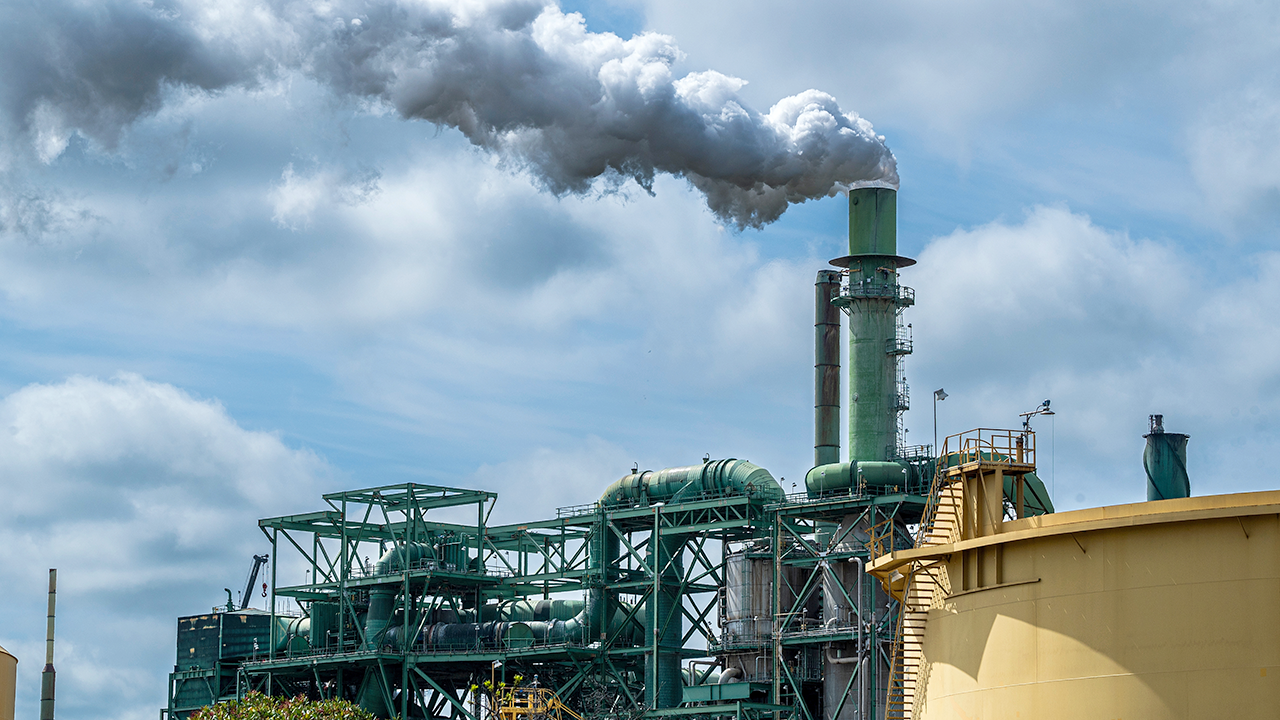
A Valero refinery operates in Benicia, California. (David Paul Morris/Getty Images)
“This case seeks to hold these companies responsible for knowingly contributing to climate change while concealing the dangers of their products,” Boulder city officials said in a statement.
According to a release from Boulder City, Coloradans could face hundreds of millions of dollars in added costs needed to “adapt” to a climate changed by continued reliance on such companies.
ExxonMobil countered that federal law preempts Colorado’s authority to apply state law to the alleged injuries.
“We’ve maintained from the beginning this case is meritless and has no place before a state court,” the company said in an emailed statement to Climate in the Courts.
NEWSOM PUSHES CLIMATE RECORD ABROAD AS CALIFORNIANS SHOULDER AMERICA’S HIGHEST GAS COSTS
Meanwhile, Colorado Gov. Jared Polis set a 2040 goal for moving the Centennial State away from fossil fuels, but was questioned by critics for trying to maintain fossil fuel infrastructure at the same time.
Rep. Jeff Hurd, R-Colo., previously asked the Trump administration to force Colorado to keep the Comanche power plant online to avoid an “energy emergency,” according to Colorado Public Radio (CPR).
Last week, the Polis administration joined with Xcel Energy to petition state regulators to keep Comanche Unit 2 online for at least another year. The coal plant was supposed to close Dec. 31.
Reached for comment, Polis spokesperson Eric Maruyama told Fox News Digital that a separate Comanche coal-fired unit is broken and that the state will benefit from keeping Unit 2 operational.
NEWSOM VOWS TO BLOCK TRUMP’S REPORTED ENERGY PLAN IN CALIFORNIA, EXPERTS PUSH BACK
“Colorado is well on its way to achieving 100% clean energy and reducing emissions while saving people money and ensuring energy reliability,” Maruyama said.
“Renewable energy remains the least expensive form of energy, and thanks to Governor Polis’ leadership, in 2024, 43% of Colorado’s total electricity was produced by wind, solar or other renewable sources while maintaining among the lowest energy costs in the country.”
Reports show Coloradans have the third-lowest electricity costs in the nation relative to income.
Hawaii also sued oil firms in 2024, alleging they violated the state constitution’s “public trust doctrine,” claiming companies deceived the public regarding fossil fuels’ alleged harm done to the state’s resources.
Back on the mainland, California is dealing with its own complex energy production situation, according to critics, who point to Democratic governors over the past decade-plus who have worked to set strict deadlines for moving the Golden State away from oil and gas.
Former Gov. Jerry Brown and Gov. Gavin Newsom set a 2045 deadline for achieving carbon-free energy under SB-100. In July, the California Energy Commission under the Newsom administration held talks with “market players” to discuss the planned closure of two major oil companies’ refineries by 2026, according to Politico.
BIDEN’S GREEN ENERGY FIASCO, NOT TRUMP’S REFORMS, IS JACKING UP YOUR ELECTRIC BILL
Phillips 66 and Valero both are considering or have started the process of shutting down their operations, and a source familiar with the situation said that oil companies must regularly analyze whether costly maintenance cycles that occur on average every five years are worth funding.
Chevron already moved out, shifting its headquarters from Contra Costa County to Houston, Texas – but it continues to support some California operations.
With the state positioned against fossil fuels for the long term, these companies have to think seriously about investing in such maintenance cycles to keep their operations running smoothly, the source said.
Valero told California officials earlier this year it plans to seriously consider idling or ending production by April, according to Politico.
Meanwhile, a spokesperson for the state energy commission told the outlet it has been “actively supporting conversations with a variety of market players to discuss pathways to address the impacts of the closure intent announcements of the Phillips 66 refinery in Wilmington and Valero refinery in Benicia.”
NEWSOM CLAIMS TRUMP IS ‘HANDING THE FUTURE TO CHINA’ AT BRAZILIAN CLIMATE CONFAB THAT WH SKIPPED
California Senate Minority Leader Brian W. Jones, R-San Diego (Reuters)
The outlet described the dynamic as an “about-face after the past two years” of “Newsom focused on preventing gasoline price spikes by increasing regulations on refiners.” Over the summer, his administration proposed loosening permitting requirements for new oil wells in the Bakersfield area.
California Senate Minority Leader Brian Jones, R-San Diego, criticized Newsom’s approach.
“Social engineering and market manipulation on the part of government never end well,” he said.
“We’re seeing that now in California and everyday citizens are the ones paying the price for Gavin Newsom’s political experiments: Gasoline prices are through the roof and rising, and the average family can’t afford to survive, much less thrive, here in the Golden State.”
Jones said the affordability crisis in his state is “real” and is only exacerbated by recent and looming refinery closures.
CLICK HERE TO DOWNLOAD THE FOX NEWS APP
“We need a major course correction that puts working families over ideology. Absent that, I’m not sure this ends well.”
Fox News Digital reached out to Newsom’s office for comment for purposes of this story.
Read the full article from Here



Hawaii
Office of Hawaiian Affairs Responds to Senate Bill Involving Pōhakuloa – Big Island Video News

(BIVN) – The Office of Hawaiian Affairs (OHA) says it is in alignment with provisions in the Fiscal Year 2027 National Defense Authorization Act dealing with military-leased lands in Hawaiʻi, including the Pōhakuloa Training Area.
In a news release, OHA said it is encouraged by the bill’s “clear movement away from condemnation and toward negotiated solutions” for the approximately 19,700 acres of state lands at Pōhakuloa, and 450 acres at Kahuku. “The process outlined is consistent with OHA’s long-standing position opposing condemnation – whether forcible or ‘friendly’ – and insisting that lands held in public trust remain in the public trust and continue benefiting Native Hawaiians and future generations of Hawaiʻi’s people.”
The U.S. Senate Armed Services Committee recently passed the Fiscal Year 2027 National Defense Authorization Act, or NDAA. The bill is expected to advance to the full United States Senate for consideration by the end of July 2026, OHA says.
In a June 12th news release, U.S. Senator Mazie Hirono (D, Hawaiʻi) said she voted against the NDAA. Hirono is a senior member of the Senate Armed Services Committee (SASC) and Ranking Member of the Readiness and Management Support Subcommittee.
“I’m proud to have secured numerous provisions in the Senate’s FY27 NDAA that invest in military readiness, Hawaii, the Indo-Pacific Region, and our servicemembers and their families, while also holding the Army accountable on the military training land lease negotiations,” Hirono stated at the time. “However, I could not in good conscience vote to advance a bill that paves the way for an up to 40% increase in year-over-year Department of Defense spending, especially as this administration wages an illegal war in Iran with no plan or end in sight.”
Hirono said the bill “directs the Secretary of the Army to seek from the State of Hawaii, on terms acceptable to both the Army and the State, a renewal of expiring training land leases. As part of this, requires the Army to expeditiously resubmit their Environmental Impact Statements (EISs) for the leased lands and address deficiencies identified by the Hawaii Board of Land and Natural Resources.”
OHA noted Section 2864 of the NDAA also requires a report to Congress on the steps and proposals taken to advance lease renewals, within 60 days from the NDAA’s enactment.
“The Senate Armed Services Committee’s action reflects meaningful progress in acknowledging Hawaiʻi’s unique legal and cultural context,” stated OHA chair Kaialiʻi Kahele. “The removal of condemnation as an option and the requirement for renewed environmental review are consistent with what OHA has long advocated – that these lands must not be permanently alienated and that Hawaiʻi’s concerns must be fully addressed in good faith. Congress appears willing to respect Hawaiʻi’s laws and institutions. The opportunity before us now is to fully embrace the responsibilities and authorities those laws entrust to us. OHA will continue to ensure Native Hawaiian rights and public trust responsibilities remain central to any future decisions.”
OHA has been holding high-level meetings in Washington, D.C. concerning the military lease renewals.

OHA says it is also actively moving forward with a comprehensive Ka Paʻakai Analysis for Pōhakuloa Training Area. “The Board of Trustees has already approved a Permitted Interaction Group allocation of $60,000 to support this work, and OHA is finalizing a memorandum of understanding with DLNR to complete the work,” the Office stated. The analysis “will help create a more complete record of the cultural, historical, and community connections to these lands, providing decision makers with information necessary to evaluate potential impacts, identify appropriate protections, and fulfill their responsibilities under Hawaiʻi law.”
From the OHA news release:
OHA also notes that the NDAA contemplates the pursuit of future lease arrangements pursuant to Section 2667 of Title 10, United States Code. As discussions continue regarding potential lease terms, community benefit commitments, land-back and lease-back models, and other components of any future agreement, OHA believes those arrangements must remain consistent with Hawaiʻi’s environmental laws and public trust obligations. Any benefits derived from renewed use of these lands should reinforce the purposes of the public trust, protect traditional and customary Native Hawaiian practices, honor the history and significance of these lands, and preserve the value they were intended to provide for Native Hawaiian beneficiaries and future generations of Hawaiʻi’s people.

The vastness of the American West offers plenty of space to store old cars and a dry environment that keeps rust at bay. But this week, car enthusiasts got an unfortunate reminder that large salvage yards are vulnerable to another threat: wildfires.
L&L Classic Auto in Wendell, Idaho, claims to have over 8,000 cars on site ranging from the 1920s to the 1980s. Most are parts cars that are considered beyond saving, but that still makes them a valuable resource for keeping other cars on the road or, for those willing to make the trek to rural Idaho, a neat history lesson. Earlier this week, a wildfire dubbed the Median Fire descended on Wendell and the salvage yard.
Exploring the LARGEST CLASSIC-CAR JUNKYARD with Freiburger, a D/F Extra

On Wednesday, David Freiburger, who has visited L&L numerous times for video shoots over the years, posted on Facebook that the fire had reached the trove of vintage cars, citing reports from sources on the ground. A later update said that “all the people are okay,” but that “the junkyard took a big hit.”
The Median Fire is estimated at 8,600 acres in size, according to Idaho News 6. As of late Wednesday, Bureau of Land Management officials said the fire’s forward progress had stopped. The fire was burning in grass and brush and driven by wind, moving east after being initially reported about four miles northwest of Wendell at 11:55 a.m. on Wednesday, and crossing State Highway 46, along which L&L is located.
Median Fire Destroys Salvage Yard, Scorches 8,600 Acres in Magic Valley
A full assessment of the damage will have to wait until after the fire is put out, but photos accompanying Freiburger’s Facebook post showing burning cars and clouds of smoke enveloping the salvage yard do not look good.
At risk is a collection of cars as varied as it is numerous. During a visit in early 2025, Freiburger spotted plenty of ’60s classics, lots of decommissioned work vehicles with fantastic hand-painted lettering, plus more esoteric stuff like a 1972 AMC Matador fastback, an International slant-four engine (essentially half of a V8), and a Checker Aerobus. That’s a stretched, eight-door wagon designed for airport transportation in the days before E-Series shuttle buses. The important thing is that nobody was hurt, but hopefully some of this stuff survived the fire as well.
Montana
Planning For Life After Coal Cost a Montana County Commissioner His Seat – Inside Climate News

Robert Pancratz couldn’t believe it.
The Musselshell County commissioner had been defeated in the Republican primary for his seat by a two-to-one margin earlier this month. Mark Olson, who lives in Musselshell and serves as the undersheriff in Golden Valley County, won by 26 percentage points.
“That just blew me away,” Pancratz said. “All of my campaign, I had not a hint that there was that much opposition.”
At stake, from Pancratz’s perspective, is the fiscal future of his community, which includes Roundup, Montana, home to Montana’s only longwall coal mine. The mine, owned and operated by Signal Peak Energy, sits on the eastern side of the continental divide in a staunchly conservative part of the state, where its presence provides jobs and its profits generate taxable revenue for local governments. (The vast majority of its coal, the dirtiest fossil fuel, goes to markets in Asia.)
But that revenue could potentially be diminished by tens of millions, according to calculations by Pancratz, if a bill introduced by U.S. Sen. Steve Daines, R-Mont., passes Congress. The Crow Revenue Act would convey federally held coal to Signal Peak through a land transfer to a private intermediary, depriving Musselshell County of its share of the taxes Signal Peak Energy pays to mine coal on federal land.
If the Crow Revenue Act does not pass Congress, Signal Peak says it could be forced to shut down if it loses a lawsuit in the U.S. District Court for the District of Montana challenging the “energy emergency” the Trump administration used to grant the mine access to federal coal. That outcome would wipe out all the mine’s tax revenue and hundreds of jobs, the company claims. This month’s election hinged on Pancratz’s position on the bill and, by extension, the mine.
Musselshell County’s three commissioners, Mike Goffena, Mike Turley and Pancratz support keeping the mine open. But they also fear Musselshell County would need to raise taxes and cut services to balance its books if the Crow Revenue Act passes as written. After studying the county’s finances, Pancratz, who works as a risk analyst consultant, concluded that the county could lose as much as $11.6 million if the Crow Revenue Act passes and the price of coal is high. The commissioners have lobbied for changes to the bill that would guarantee the county some revenue from the land transfer.

Pancratz says he was just doing his job.
“As a risk manager, I have to develop a contingency plan for the possibility that the long-term stream of coal revenue could be disrupted or ended,” he said. “We needed to have a plan to effectively transition to other revenue sources. When I used the word transition, they took that as I was an environmentalist that was against coal.”
“Why anybody would have a problem with that is baffling to me. But that’s what happened.”
According to Pancratz, Signal Peak Energy branded the men as environmentalists who want to see the company shut down forever and this willful mischaracterization played a large role in his defeat.
“The picture they painted of me was totally false,” he said.
In a recording of a commissioner meeting posted to a local Facebook group by a Signal Peak Energy employee less than a month before the election, Pancratz, Goffena and Turley can be heard strategizing how to express their concerns about the Crow Revenue Act to Daines, whom they describe as unresponsive to their concerns.
Pancratz suggests asking for a $100 million endowment to transition from coal to “scare” Daines and Signal Peak Energy. Turley states that with funding at that level, they wouldn’t care if the mine was open or not.
“Exactly,” Pancratz responded.
Comments on the video show viewers expressing outrage that the commissioners would “play chicken” with the future of the mine, which provides hundreds of jobs in the surrounding area.
This story is funded by readers like you.
Our nonprofit newsroom provides award-winning climate coverage free of charge and advertising. We rely on donations from readers like you to keep going. Please donate now to support our work.
Donate Now
Pancratz said the conversation was recorded without the commissioners’ knowledge. Montana is a two-party consent state, meaning all parties must be aware of and consent to a recording, but he allowed that it was possible one of the commissioners forgot to close a virtual public meeting after it concluded.
Pancratz said the conversation occurred when the commissioners found out there would be no money in the Crow Revenue Act for the county. The bill’s supporters, including Signal Peak Energy, had told them that the county would not lose any revenue under the bill, he said.
“We were upset because we felt we’d been lied to,” Pancratz said.
Signal Peak Energy did not respond to a written message and phone call seeking comment. For a time after Signal Peak took over the mine in the late 2000s, it was plagued by malfeasance, including embezzlement, a faked kidnapping and safety and environmental violations, according to reporting by The New York Times.
Olson said he entered the race due to a “lack of transparency” from the commissioners over how the county was spending its money.


But the mine played a role in his decision to run, too. As he was weighing his options, Olson said his cousin, Alan Olson, a former state legislator and former executive director of the Montana Petroleum Association, visited him and urged him to run to support the mine. After that conversation, he was convinced the mine’s survival depended on the Crow Revenue Act passing, and that trying to amend it would jeopardize the legislation.
“The more money we can get for the county, the better, but I don’t think it’s worth risking the mine closing,” Olson said. Losing federal revenue was better than losing all the jobs and the tax base if the mine closes, he concluded.
Olson added that Parker Phipps, Signal Peak Energy’s CEO, has briefed him on the mine’s fiscal relationship with Musselshell County.
Olson’s background in law enforcement could add a new perspective to the county commissioner meetings, given Goffena and Turley’s background in ranching, he said, but the minutiae of the county’s budget will be new to him.
“I am by no means an expert in any of this stuff,” he said.
Some worry that, with the mine facing a lawsuit, an unpredictable global coal market and the uncertain future of the Crow Revenue Act, the commissioners cannot afford to lose momentum in their efforts to attract new industries to the area.
Olson’s win in the primary will “set [economic diversification planning] back long term,” Nicole Borner, a former Musselshell County commissioner, who thinks Olson was hand-picked by the Signal Peak Energy to run and is not informed about what the job entails.
“We will always just have a few crumbs to duct tape a few issues,” she said. “We’ll never be able to fix the prior forty years of being in a coal bust and our infrastructure just literally falling apart.”

Olson will likely run unopposed in the general election.
In his remaining time in office, Pancratz said he will continue to push for economic diversification in Musselshell County. He holds no animosity towards Olson, who calls Pancratz “a wonderful guy.” Instead, he laments not addressing concerns over his position on the mine sooner in the campaign. But he believes Signal Peak Energy’s political and social influence—the company operates a charity in the region—is what swayed the election.
“You can’t say anything that even remotely implies that you’re trying to prepare the county for the possibility that coal revenue may not be steady or high … There’s this attitude that the county is in debt to that coal mine. And the message I tried to get out is, it’s more the reverse,” Pancratz said.
“I personally don’t believe the mine really cares about the county.”
About This Story
Perhaps you noticed: This story, like all the news we publish, is free to read. That’s because Inside Climate News is a 501c3 nonprofit organization. We do not charge a subscription fee, lock our news behind a paywall, or clutter our website with ads. We make our news on climate and the environment freely available to you and anyone who wants it.
That’s not all. We also share our news for free with scores of other media organizations around the country. Many of them can’t afford to do environmental journalism of their own. We’ve built bureaus from coast to coast to report local stories, collaborate with local newsrooms and co-publish articles so that this vital work is shared as widely as possible.
Two of us launched ICN in 2007. Six years later we earned a Pulitzer Prize for National Reporting, and now we run the oldest and largest dedicated climate newsroom in the nation. We tell the story in all its complexity. We hold polluters accountable. We expose environmental injustice. We debunk misinformation. We scrutinize solutions and inspire action.
Donations from readers like you fund every aspect of what we do. If you don’t already, will you support our ongoing work, our reporting on the biggest crisis facing our planet, and help us reach even more readers in more places?
Please take a moment to make a tax-deductible donation. Every one of them makes a difference.
Thank you,


Jake Bolster
Reporter, Wyoming and the West
Jake Bolster reports on Wyoming and the West for Inside Climate News. Previously, he worked as a freelancer, covering climate change, energy, and the environment across the United States. He holds a Masters in Journalism from Columbia University.
-

 Connecticut13 seconds ago
WNBA photo gallery: Toronto Tempo @ Connecticut Sun – 6/19/26
-

 Delaware6 minutes ago
State Police Issues Sex Offender Notifications – Delaware State Police – State of Delaware
-

 Florida13 minutes ago
11 Most Charming Towns In Florida
-

 Georgia21 minutes ago
Democrats block local property tax referendums as Georgia lawmakers clash over affordability – The Current
-

 Hawaii28 minutes ago
Office of Hawaiian Affairs Responds to Senate Bill Involving Pōhakuloa – Big Island Video News
-

 Idaho31 minutes ago
8,600-Acre Wildfire Decimates Massive Idaho Salvage Yard With 8,000 Cars
-

 Illinois36 minutes ago
Illinois GOP chair says Obama Center is political operation on public land | Fox News Video
-

 Indiana43 minutes ago
Madam Walker Legacy Fest block party celebrates Black excellence with food, music, and community

