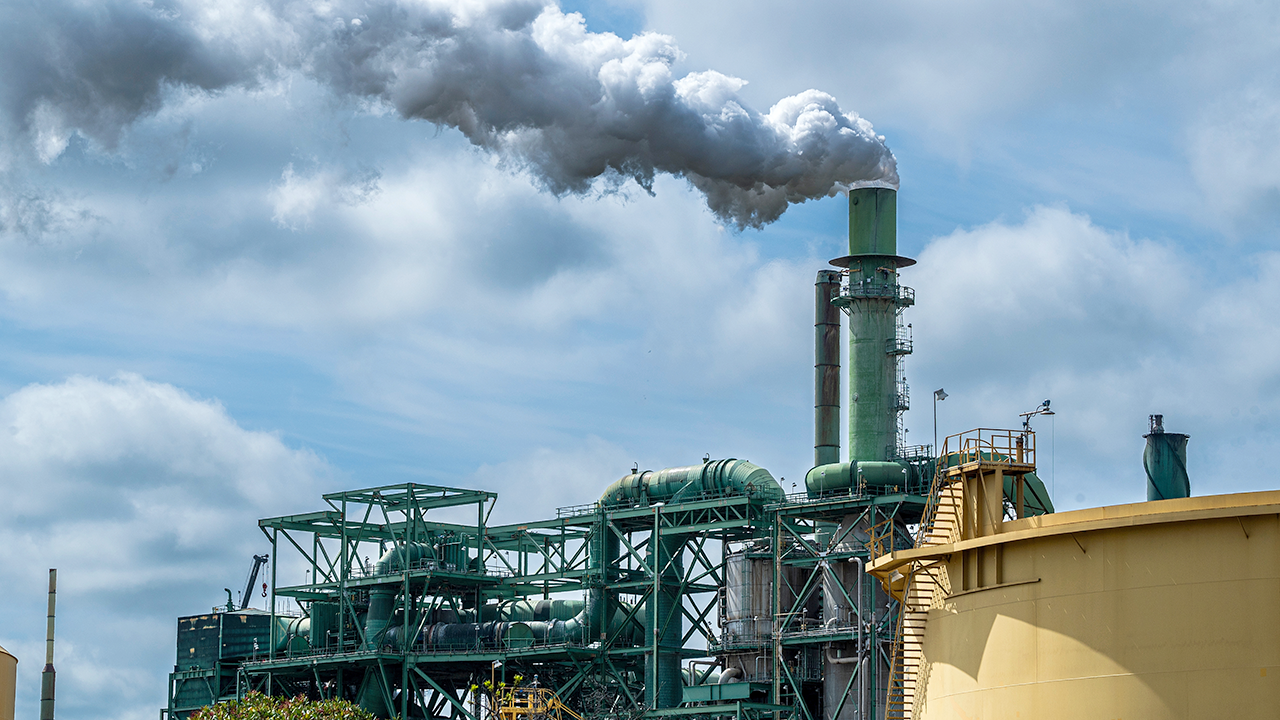
Several Democrat-led states are facing conflicting forces in their efforts to transition to 100% green power, as leaders try to shore up the power grid while other officials sue fossil fuel companies in the same light activists did to tobacco firms in the 1990s.
In that decade, dozens of states sued tobacco giants Philip Morris and R.J. Reynolds, alleging they knowingly endangered public health and misled consumers about nicotine’s addictiveness. The cases culminated in a $200 billion “master settlement” in 1998 that banned billboard advertising and reshaped corporate liability in the industry.
Today, several jurisdictions in Colorado are suing ExxonMobil and Suncor in a similar fashion, accusing them of knowing their product harms the environment and public health.
Boulder, Colorado, along with Boulder County and San Miguel County received the blessing of the Colorado Supreme Court in May to move forward with their suit, and officials claimed the energy companies “greatly contributed to an altered climate.”
Advertisement
SUPREME COURT MUST FREEZE THE CLIMATE EXTORTION OF OUR ENERGY INDUSTRY
A Valero refinery operates in Benicia, California.(David Paul Morris/Getty Images)
“This case seeks to hold these companies responsible for knowingly contributing to climate change while concealing the dangers of their products,” Boulder city officials said in a statement.
According to a release from Boulder City, Coloradans could face hundreds of millions of dollars in added costs needed to “adapt” to a climate changed by continued reliance on such companies.
ExxonMobil countered that federal law preempts Colorado’s authority to apply state law to the alleged injuries.
Advertisement
“We’ve maintained from the beginning this case is meritless and has no place before a state court,” the company said in an emailed statement to Climate in the Courts.
NEWSOM PUSHES CLIMATE RECORD ABROAD AS CALIFORNIANS SHOULDER AMERICA’S HIGHEST GAS COSTS
Meanwhile, Colorado Gov. Jared Polis set a 2040 goal for moving the Centennial State away from fossil fuels, but was questioned by critics for trying to maintain fossil fuel infrastructure at the same time.
Rep. Jeff Hurd, R-Colo., previously asked the Trump administration to force Colorado to keep the Comanche power plant online to avoid an “energy emergency,” according to Colorado Public Radio (CPR).
Last week, the Polis administration joined with Xcel Energy to petition state regulators to keep Comanche Unit 2 online for at least another year. The coal plant was supposed to close Dec. 31.
Advertisement
Reached for comment, Polis spokesperson Eric Maruyama told Fox News Digital that a separate Comanche coal-fired unit is broken and that the state will benefit from keeping Unit 2 operational.
NEWSOM VOWS TO BLOCK TRUMP’S REPORTED ENERGY PLAN IN CALIFORNIA, EXPERTS PUSH BACK
“Colorado is well on its way to achieving 100% clean energy and reducing emissions while saving people money and ensuring energy reliability,” Maruyama said.
“Renewable energy remains the least expensive form of energy, and thanks to Governor Polis’ leadership, in 2024, 43% of Colorado’s total electricity was produced by wind, solar or other renewable sources while maintaining among the lowest energy costs in the country.”
Reports show Coloradans have the third-lowest electricity costs in the nation relative to income.
Advertisement
Hawaii also sued oil firms in 2024, alleging they violated the state constitution’s “public trust doctrine,” claiming companies deceived the public regarding fossil fuels’ alleged harm done to the state’s resources.
Back on the mainland, California is dealing with its own complex energy production situation, according to critics, who point to Democratic governors over the past decade-plus who have worked to set strict deadlines for moving the Golden State away from oil and gas.
Former Gov. Jerry Brown and Gov. Gavin Newsom set a 2045 deadline for achieving carbon-free energy under SB-100. In July, the California Energy Commission under the Newsom administration held talks with “market players” to discuss the planned closure of two major oil companies’ refineries by 2026, according to Politico.
BIDEN’S GREEN ENERGY FIASCO, NOT TRUMP’S REFORMS, IS JACKING UP YOUR ELECTRIC BILL
Phillips 66 and Valero both are considering or have started the process of shutting down their operations, and a source familiar with the situation said that oil companies must regularly analyze whether costly maintenance cycles that occur on average every five years are worth funding.
Advertisement
Chevron already moved out, shifting its headquarters from Contra Costa County to Houston, Texas – but it continues to support some California operations.
With the state positioned against fossil fuels for the long term, these companies have to think seriously about investing in such maintenance cycles to keep their operations running smoothly, the source said.
Valero told California officials earlier this year it plans to seriously consider idling or ending production by April, according to Politico.
Meanwhile, a spokesperson for the state energy commission told the outlet it has been “actively supporting conversations with a variety of market players to discuss pathways to address the impacts of the closure intent announcements of the Phillips 66 refinery in Wilmington and Valero refinery in Benicia.”
NEWSOM CLAIMS TRUMP IS ‘HANDING THE FUTURE TO CHINA’ AT BRAZILIAN CLIMATE CONFAB THAT WH SKIPPED
Advertisement
California Senate Minority Leader Brian W. Jones, R-San Diego(Reuters)
The outlet described the dynamic as an “about-face after the past two years” of “Newsom focused on preventing gasoline price spikes by increasing regulations on refiners.” Over the summer, his administration proposed loosening permitting requirements for new oil wells in the Bakersfield area.
California Senate Minority Leader Brian Jones, R-San Diego, criticized Newsom’s approach.
“Social engineering and market manipulation on the part of government never end well,” he said.
“We’re seeing that now in California and everyday citizens are the ones paying the price for Gavin Newsom’s political experiments: Gasoline prices are through the roof and rising, and the average family can’t afford to survive, much less thrive, here in the Golden State.”
Advertisement
Jones said the affordability crisis in his state is “real” and is only exacerbated by recent and looming refinery closures.
CLICK HERE TO DOWNLOAD THE FOX NEWS APP
“We need a major course correction that puts working families over ideology. Absent that, I’m not sure this ends well.”
Fox News Digital reached out to Newsom’s office for comment for purposes of this story.
Advertisement
Charles Creitz is a reporter for Fox News Digital.
He joined Fox News in 2013 as a writer and production assistant.
Charles covers media, politics and culture for Fox News Digital.
Charles is a Pennsylvania native and graduated from Temple University with a B.A. in Broadcast Journalism. Story tips can be sent to charles.creitz@fox.com.
I’m typically pretty wordy. But just watch the video.
Disclaimer: Matt Addington is a professional. These bears grazed toward him from 100 yards away while he held tight. Do not try this ever, under any circumstances, or you will likely spend the rest of your time on this earth as bear poop.
Matt Addington is an incredible professional photographer, and I can say that from personal experience. He’s captured images of me in rough shape and somehow made them stunnin’. The Minnesota-based photographer and filmmaker has built a career telling outdoor stories, and his latest bear video proves he knows exactly where to point a camera.
Places like Katmai National Park in Alaska (where this video was taken) can offer unusually close encounters with brown bears, thanks in part to abundant food and tightly managed visitor access. That doesn’t make encounters like this casual or safe to imitate.
Advertisement
Addington is an extremely experienced outdoorsman, and he was photographing with professional guides Scott and Jackie Stone. For people hoping to photograph bears this way, a guided wildlife photography tour is one of the safest ways to do it. Do not try this in Yellowstone or your local national forest.
The bears were grazing nearly 100 yards away when the group set up. They stayed put as the animals continued feeding and gradually moved closer, resulting in some incredible footage and a once-in-a-lifetime photo.
I can only hope he wore his brown pants under his waders.
by Shelby Evans, Cronkite News July 10, 2026Cronkite News offers an audio version of this story using an automated voice created by AI. Errors in pronunciation, pacing and intonation may occur. If you notice an error please contact cronkitenews@asu.edu.
MESA – Mary Salcedo is the executive director of Arizona Roller Derby, but everyone on the team knows her as MaryMorphosis, or Morph for short.
A derby name is as good as a legal name once you join a league. Arizona Roller Derby – the second-oldest flat track roller derby league in the world – has plenty of unique monikers on its two home and travel teams.
During a doubleheader homestand, players introduce themselves.
Advertisement
“What’s your name?”
“Mecca,” said Sara Mecca-Whitlock, an interior architect in Phoenix.
“Brooklyn Dodge-her,” said Kristi Baptiste, a grandma and senior project manager from Ventura, California.
The rules surrounding derby names are loose. Some players have nicknames bestowed upon them when they join.
“Since I was wearing a Brooklyn shirt, they started calling me Brooklyn, and we added the Dodge-her later,” Baptiste said. “The funny thing is, I am not an L.A. Dodger fan. I don’t even watch baseball.”
Advertisement
It’s clear Roller Derby isn’t like other organized sports. There is no professional threshold to work toward as a goal. Players show up year after year, paying to participate, paying to travel and returning to the community they find along the way.
Across the country, including in Phoenix, teams find a way to organize players and facilities to play the sport.
Selecting derby names is part of the process.
Goldy Knocks of the Bad News Beaters poses after her match at the Broadway Recreation Center in Mesa on Saturday, June 27, 2026. (Photo by Samad Khan/Cronkite News)
MAXimum HOverdrive of the Bad News Beaters poses for a photo as she skates at the Broadway Recreation Center in Mesa on Saturday, June 27, 2026. (Photo by Samad Khan/Cronkite News)
Goldy Knocks, left, and Hella Naughty of the Bad News Beaters pose after their match at the Broadway Recreation Center in Mesa on Saturday, June 27, 2026. (Photo by Samad Khan/Cronkite News)
Bad News Beaters skater Dr. Doctor flashes a hand sign while posing for a photo at the Broadway Recreation Center in Mesa on Saturday, June 27, 2026. (Photo by Samad Khan/Cronkite News)
“Sure, man,” said Rachel Sherman, a 13-year veteran of Arizona Roller Derby and an electrician training in an apprentice program. “My dad, with the perfect dad joke, was like, ‘Well, I guess if you’re going to change your name, you should probably change your number to four. So I am four sure, man.”
Elaina Bryan, a 25-year-old receptionist in Phoenix and lifelong derby player, said her nickname is Squeezer.
“There was a particular one of my mom’s friends, who I would give a really good squeeze, big hug to,” Bryan said. “So my name actually used to be a little squeezer, but now that I’m an adult, it’s just squeezer.”
Advertisement
The names used outside of derby are not relevant on the track. Official rosters are submitted only with the players’ derby names.
“You think about the parts of you that you want to foster that can handle the intensity, the eyes on you, the attention, the strength, the perseverance and determination,” Sure, man said. “You give that a name and it becomes this kind of alter ego that then you’re allowing it to blossom and grow in this space.”
Roller Derby’s history
Roller derby was officially born on Aug.13, 1935, when promoter Leo Seltzer debuted the first Transcontinental Roller Derby event at the Chicago Coliseum. Initially created as endurance marathons during the Great Depression, the event evolved into the full-contact sport we know today.
After peaking in popularity on television in the 1950s and 60s, the sport largely faded out, but in 2001, a modern revival took place in Austin, Texas, which popularized the grassroots, flat-track format that is played globally today.
MaryMorphosis, left, and Mecca of the Bad News Beaters pose for a photo after a match at the Broadway Recreation Center in Mesa on Saturday, June 27, 2026. (Photo by Samad Khan/Cronkite News)
“We (will) hit our 25th season in 2028, which is pretty significant,” MaryMorphosis said, “We’re hoping to go out huge.”
Arizona Roller Derby is older than the Women’s Flat Track Derby Association, which was founded in 2004 as the United Leagues Coalition and formally changed its name to the WFTDA in 2005. WFTDA is the international governing body of the sport. Today, it has over 400 member leagues on six continents.
Advertisement
Arizona Roller Derby doesn’t compete on a bank track. They can play on any flat surface if they have a way to lay down track boundaries.
A bank track is a raised and curved surface, like a NASCAR track. It’s the kind of roller derby played in the 2009 movie with Elliot Page, “Whip it.”
After the COVID-19 pandemic, Arizona Roller Derby lost the warehouse space it rented full-time and the participation numbers dwindled. Now the group rents temporary spaces across the East Valley to accommodate practices and competitions, like Saturday’s doubleheader.
“I would hope that we would have our own space again, “ MaryMorphosis said. “We need to double our membership to do that.”
On a Saturday afternoon in June, players began arriving at the Broadway Recreation Center in Mesa. The same people that would be competing on track in a few hours used thin rope and white electrical tape to lay down the track borders on top of the gymnasium hardwood.
Advertisement
The rules
The Saturday doubleheader featured two Arizona Roller Derby home teams, and two travel teams from California.
Bad News Beaters are the first home team. They go against the West Coast Derby Knockouts.
Derby games last one hour. Two 30-minute halves are broken up by a 15-minute intermission. The intensity on the track lasts for two-minute jams before lines switch off and new players sub in for the next jam.
Mecca, a jammer on Bad News Beaters, points out that “there’s four blockers from each team that get on the track and one jammer from each team.”
A jammer’s helmet cover, a large polyester cap with stars on both sides, indicates they are the one person on the track who can score points for their team.
Advertisement
A Bad News Beaters player, Mustang Ali, speeds past a referee in a match against West Coast Derby Knockouts at the Broadway Recreation Center in Mesa on Saturday, June 27, 2026. (Photo by Samad Khan/Cronkite News)
One blocker is known as the pivot. They wear a similar, bright-colored cap, but theirs has a line running through the center. At any point, a jammer can remove their star and pass it to the pivot. For the remainder of the jam, the pivot acts as the Jammer to score points.
“I’m a pushy jammer, and I like being strong,” MaryMorphosis said, “and I like breaking people apart.”
The jammers line up behind a jam line while the eight blockers stand anywhere in the box in front of the jam line but behind the pivot line.
Waiting in the box is Californian blocker Brooklyn Dodge-her, and her daughter, Rocky Bye Baby. They are there to throw their bodies into the Bad News Beaters jammer to stop them from scoring points.
Brooklyn Dodge-her was recruited to derby 12 years ago. She volunteers as a coach for the West Coast Derby youth travel team on top of training and competing herself.
“Mondays for the kids, Tuesday for myself. Wednesday I get a break,” Brooklyn said. “Thursday for myself. Friday for the kids. Saturday if we don’t have a game, I get free. And Sunday in the morning it’s the kids and in the evening it’s the adults.”
Advertisement
At 51, she is competing in her last season of roller derby.
“I became a grandmother,” Brooklyn said. “I have to start spending some time with a grandbaby. I’ll probably get bored and be like, ‘Y’all want me back?’”
The officials blow the whistle to signal the start of a jam and the jammers push off their line straight into the bodies in front of them.
“If I get through the pack first I get what’s called lead jammer,” Mecca said. “On the second time through, they get one point for every blocker from the opposite team that they pass legally with their hips. That can go for two minutes.”
The lead jammer can call off the jam at any point, especially if it prevents the other jammer from scoring any points for the opposing team.
Advertisement
“Does it matter if the jammer is behind me? Do I have two or more blockers in the box? Then don’t call it,” MaryMorphosis said, “because it might be worth losing the points just to have your teammates out.”
The Bad News Beaters (blue) battle West Coast Derby Knockouts (pink) in a match at the Broadway Recreation Center in Mesa on Saturday, June 27, 2026. (Photo by Samad Khan/Cronkite News)
A player in the penalty box at the end of a jam will remain in the box during the start of the next jam.
The ways to receive penalties include hitting someone in the head, hitting someone in the back, or getting back on the track in front of somebody that was in front of you when you left. All penalties must be served for 30 seconds.
A game requires a whopping seven skating referees and even more non-skating officials. Those positions are entirely filled by volunteers.
Robert Cushman began 17 years ago in Nebraska when his wife started competing in roller derby. Years after their divorce, he continues to enjoy participating in the sport while living in Tucson.
“Most of us don’t get paid anything,” Cushman said. “Usually Phoenix will give us like a gas stipend.”
Advertisement
Even as an official he uses a derby name. He goes by Manosaur, a reference to the animated series “Venture Bros.”
“I usually go once a week to the scrimmage down in Tucson, and then I usually come up here for whatever games they have,” Cushman said.
During jams, Manosaur skates around the inside of the track, monitoring the action to keep the play fair.
“Watch the pack,” Mecca said. “Don’t worry too much about the jammer when they’re by themselves. But once we enter the pack again, then it gets crazy.”
Mecca is a mom of five who started playing roller derby in North Carolina. She said she retired for six years as she finished up her military career and went back to school. Eventually she began coaching the ASU derby team. Two years ago, she began playing again.
Advertisement
The West Coast Derby Knockouts dominated, 223-53.
“They were taking the pivot line constantly instead of the jam line,” MaryMorphosis said after the game. “They were just really big. And both our blockers and our jammers were thrown off.”
Game two
Morph sits in the stands after the early afternoon loss and watches the second match of the day. The home team, Skate Riot Project, took on Orange County Roller Derby.
She became executive director in January and takes on the administrative responsibilities on top of competing and working full time.
“I love building and growing community,” MaryMorphosis said. “It was an opportunity to do that and step into just a significant leadership role.”
Advertisement
She began playing derby in 2022 when she still lived in upstate New York.
“I broke my leg three months in,” MaryMorphosis said, “like shattered it. Recovery was rough.”
After two surgeries and a cross-country move to start a new job as a project manager at Arizona State’s School of Biological and Health Systems Engineering, MaryMorphosis had her first uninterrupted derby season in 2025.
“I don’t know what kept me coming back,” she said. “I guess it was the community.”
Meanwhile, Elaina Bryan, or Squeezer, is another recent Arizona transplant and a blocker on Skate Riot Project.
Advertisement
“My mom started playing back in 2008, actually, and we went to practices with her,” Squeezer said. “Eventually, they had enough kids’ interest that they started a kids team.”
Skate Riot Project player Squeezer poses for a picture after her match at the Broadway Recreation Center in Mesa on Saturday, June 27, 2026. (Photo by Samad Khan/Cronkite News)
She was 9 when she started playing in Bakersfield, California. She played on her college team and then moved to Arizona in October. Now she plays on a travel team as well as the home team.
“I was just kind of trying to see where I fit in and started to find people at that same level to start connecting with,” Squeezer said, “and just kind of started building up my social circle.”
Teams are comprised of players of all ages, but everyone is connected to the community that exists in Derby. It’s more everlasting than the final scores.
“I went to a yard sale,” Brooklyn Dodge-her said. “We didn’t even get across the street and they were like, ‘You want to play roller derby? It was a West Coast yard sale.”
MaryMorphosis did not hearing back from one roller league before she stumbled on the practice of another team.
Advertisement
“I was literally in the mall because my old league had taken over an Old Navy, and they were skating in the mall,” MaryMorphosis said. “I was buying yarn at Michael’s, and I was like, ‘OK, that’s the sign.’”
When Skate Riot Project lost to Orange County Roller Derby 125-100, the teams shook hands and huddled together. Orange County picked its MVP Jammer, blocker and MVP overall from SRP, and SRP picked its players from Orange County. They hugged each other as they presented the awards.
West Coast Derby Knockouts, left, hugs a player from the Bad News Beaters after their match at the Broadway Recreation Center in Mesa on Saturday, June 27, 2026. (Photo by Samad Khan/Cronkite News)
“We’re playing the game against another team, and it’s really intense and like we’re very serious and focused with our team,” Squeezer said. “But afterwards, we all hang out and we goof around.”
With the games over, the players begin clearing out the temporary space. The track gets peeled off the gymnasium floor and the tape is put into trash bags.
The four teams get in their cars and head to the after-party together.
“If the only thing we do for the next five years is become the place for people to be themselves, that’s a win,” MaryMorphosis said.
Advertisement
This <a target=”_blank” href=”https://cronkitenews.azpbs.org/2026/07/10/roller-derby-still-has-home-in-arizona/”>article</a> first appeared on <a target=”_blank” href=”https://cronkitenews.azpbs.org”>Cronkite News</a> and is republished here under a <a target=”_blank” href=”https://creativecommons.org/licenses/by-nd/4.0/”>Creative Commons Attribution-NoDerivatives 4.0 International License</a>.<img src=”https://i0.wp.com/cronkitenews.azpbs.org/wp-content/uploads/2026/02/favicon1.png?resize=85%2C85&ssl=1″ style=”width:1em;height:1em;margin-left:10px;”>
A 17-year-old suspect has been arrested in Texas in connection with the deadly shooting after a high school graduation ceremony in Fairfield, California last month, police said.
Fairfield police said U.S. Marshals, accompanied by department detectives, served search and arrest warrants Friday morning at a home in the greater Dallas-Fort Worth area.
The teen was taken into custody without incident on suspicion of murder and related offenses.
Advertisement
Investigators said the suspect fled California and traveled to Texas within days of the June 3 shooting. He will remain in custody while awaiting extradition to Solano County.
The shooting happened after Sem Yeto Continuation High School’s graduation ceremony, which was held on the Fairfield High School campus.
Police said 18-year-old graduate Jamario Baker died at the scene. Three others – an 11-year-old child and two adults, ages 20 and 25 – were wounded.
Authorities have not released the suspect’s name because he is a minor.
Although an arrest has been made, police said the investigation remains active and detectives continue to pursue additional leads.
Advertisement
“While today’s announcement may provide a measure of relief to some, it does not lessen the pain felt by our community,” the Fairfield-Suisun Unified School District said in a statement.
Police plan to hold a news conference Monday at 4 p.m. to discuss the case and arrest.
Fairfield is a Northern California city about 40 miles northwest of San Francisco.