Lifestyle
She delivered Hailey Bieber's baby and saved Olivia Munn's life. Her new calling? Podcast host

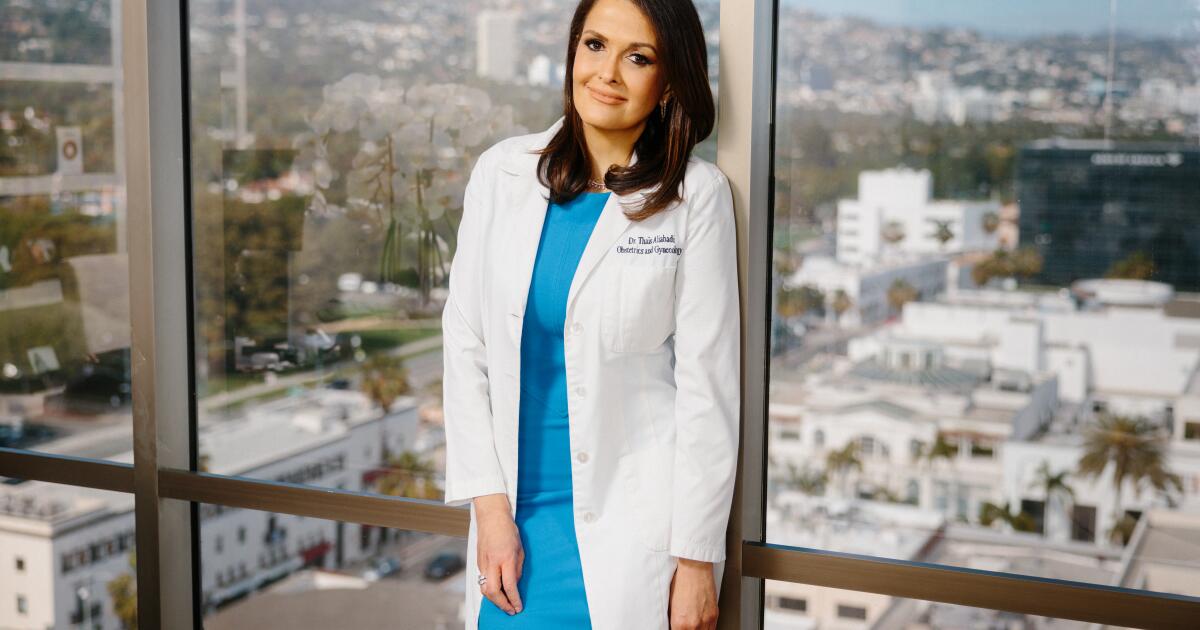
Stepping into Dr. Thaïs Aliabadi’s Beverly Hills space, you may forget for a second you’re in a gynecologist’s office. A massive glass chandelier dangles from the ceiling. Ceramic sculptures dot the sleek surfaces. Nearby sits a potted olive tree and a lighted antique silver Illuminazione candle. Crystal butterflies sit in two ornate cabinets. Floor-to-ceiling glass windows show a 360-degree view of the Hollywood Hills.
And then, there’s the physician herself.
Dr. Thaïs Aliabadi
(Stella Kalinina / For The Times)
Clad in a bright blue dress she’s held onto since a guest appearance on “The Doctors” 10 years ago, she acknowledges she personally opts for neutrals in real life (and her signature pink scrubs when seeing her patients), but that she’d been advised to wear jewel tones for “on camera” moments. In a town known for sculpting movie stars, Aliabadi looks like she could be on “Grey’s Anatomy” as she towers in high heels and a sparkly pink and white butterfly necklace as she poses for a Los Angeles Times photographer.
Aliabadi has delivered the babies of Rihanna, Khloe Kardashian and Hailey Bieber. She has also diagnosed Olivia Munn with breast cancer, Tiffany Haddish with endometriosis and Florence Pugh with polycystic ovary syndrome (PCOS).
All of these celebrities’ health journeys are public information because her famous patients have discussed them in detail on her weekly podcast, “SHE MD,” which she co-hosts with former fashion designer Mary Alice Haney. The show — which was launched by Dear Media, the largest women’s podcast network, in March of last year — aims to educate women about common overlooked medical conditions. It regularly features interviews with Aliabadi’s famous patients and other celebrity doctors or authors who discuss everything from preeclampsia to egg-freezing.
“My dad was like, ‘I did some research and the best person in the business is this doctor named Dr. Thaïs Aliabadi,’” Sofia Richie Grainge, daughter of Lionel Richie, explains on a recent episode of the podcast. She started seeing Aliabadi at 15.
“They are the most privileged women in this world — especially when it comes to access to medical care,” Aliabadi says of the podcast’s famous guests. “These are women who have good insurance. They can afford going to any doctor on this planet and yet their symptoms are [still] dismissed. They’re speaking from their heart because they want to help another woman.”
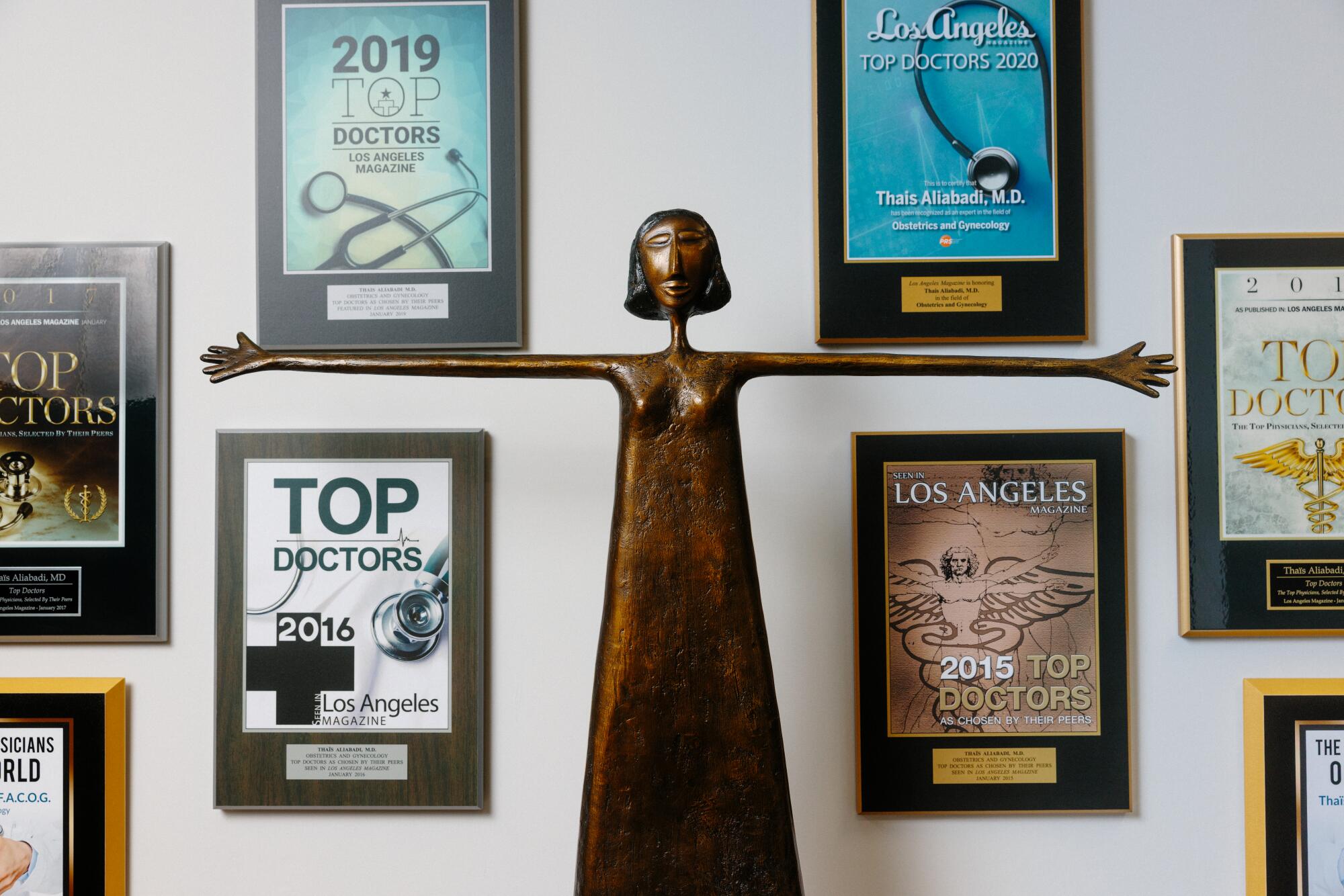
Awards hang on the wall of Dr. Thaïs Aliabadi’s Beverly Hills office.
(Stella Kalinina / For The Times)
Aliabadi’s high-profile clients and podcast have elevated her status on social media. Called Dr. A by patients and fans, she boasts 441,000 followers on Instagram, where she shares clips of her celebrity interviews. She regularly appears on network television to discuss women’s health. She has even made the occasional cameo on “The Kardashians” as Khloe Kardashian’s ob-gyn. She’s run with the role, both with the professed hopes of educating women on their health, but also with business prospects.
Haney urged Aliabadi to co-create SHE MD to combat misinformation surrounding women’s health issues. “We are providing a resource that is backed by science and medicine,” says Haney. “People are getting their medical information on TikTok. That’s dangerous.”
With women’s health entering the spotlight as an overlooked area of medicine and as fewer people have access to healthcare, becoming one’s own medical advocate has never been more important — and confusing. It’s led to the rise of wellness influencers with questionable qualifications, which is why Aliabadi says she committed to doing the podcast.
“If you want to talk about endometriosis, how many endometriosis surgeries have you done?” Aliabadi says. “How many thousands of patients have you treated?”
Aliabadi is connecting with consumers on many platforms with “SHE MD,” which is filmed like a glossy talk show from a Brentwood office. They can listen to her and Haney’s hourlong podcast episodes or catch video clips on social media.
“SHE MD,” which stands for “Strong Healthy Empowered,” features deep dives with health and medical experts — as well as celebrities such as SZA, Shailene Woodley, Tiffany Haddish and Olivia Munn — on a variety of topics including fertility, breast cancer, menopause and endometriosis. Key takeaways and action plans are available following each conversation.
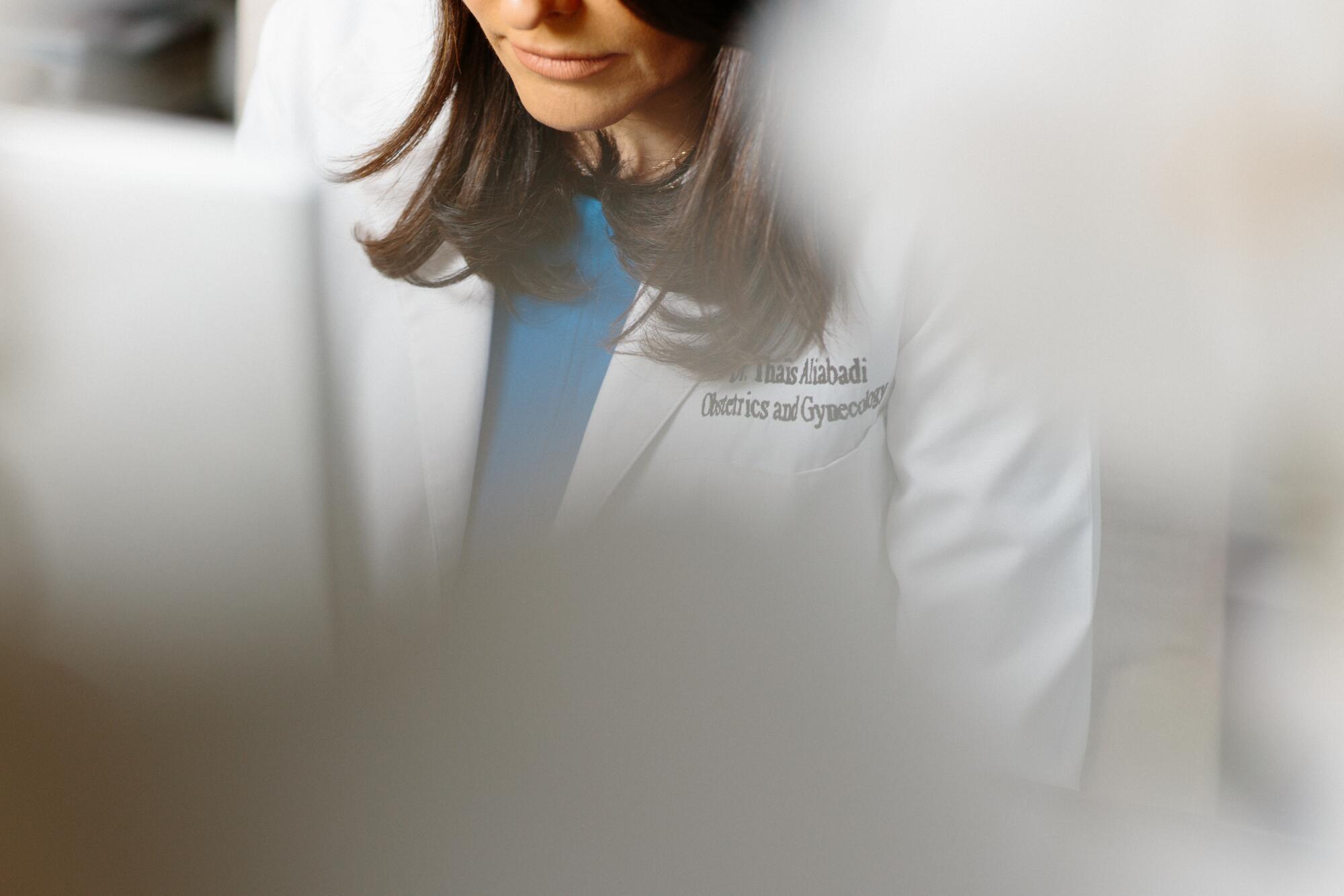
Aliabadi reviews patients’ labwork. She helped save Olivia Munn’s life by suggesting she take the Tyrer-Cuzick test that revealed she had an alarming lifetime risk of breast cancer. Now Munn says it’s her mission to get more women to take the test.
(Stella Kalinina / For The Times)
Munn’s story in particular garnered national attention after Aliabadi diagnosed her with an aggressive breast cancer in April 2023. With a clear mammogram, ultrasound and pap smear, Munn’s cancer could’ve been among the estimated 20% that go undetected, according to the National Cancer Institute. But it was discovered after Aliabadi introduced her to the Tyrer-Cuzick test, which assesses one’s lifetime risk of breast cancer. Munn’s score was an alarming 37.3%. (Anything above 20% is considered high-risk.) An MRI, further ultrasounds and biopsies revealed she had Stage 1 invasive cancer, and Munn underwent a double mastectomy.
“Without Thaïs being so proactive I don’t know when or at what stage I would’ve found it,” Munn tells The Times. “She saved my life.”
Aliabadi says Munn felt a responsibility to turn her pain into purpose. “Olivia came to me and said, ‘I want to talk about this issue,’” she recalls. “She knew that sharing her story will save millions of lives.”
Munn felt compelled to speak out while still coming to terms with her diagnosis. “I was looking back on photos of playing with my then 1-year-old son, and I realized that at that time I had just had a clear mammogram and ultrasound — yet I had breast cancer and didn’t know it,” she says. “I asked myself, ‘How many other women [are] also walking around unaware they had breast cancer?’ I knew then that I had to talk about it. This little known, lifetime risk score test is free, online and saved my life. Every woman can and should know their score. Thaïs told me this test had been around for years, and it was her lifelong mission to get every woman in the world to know about it. It has since become my mission too.”
Long before becoming ob-gyn to the stars, Aliabadi recalls waking to the sounds of sirens and bombs while growing up in Tehran during the Iranian revolution in 1979. “We would all run down to the shelter that we had created underground,” she says. “Imagine a 12-year-old doing that five times a night.” Her family was granted a green card when she was 17. “It felt like the gates of heaven were opening for me,” she recalls thinking after landing in Los Altos. “We were like, ‘Why would we ever go anywhere else?’”
After medical school at Georgetown University School of Medicine and completing her residency at USC Medical Center, Aliabadi, 54, opened her private practice at Cedars-Sinai Medical Center in Los Angeles in 2002. She credits word of mouth, and her office manager of nearly 25 years, Kimmy Ferdowski, with helping her build the practice she has today. “When I first started, there was a gynecologist across the hall who told me something I’ll never forget,” Aliabadi recalls. “He said, ‘Every happy patient who leaves your office will refer four other patients to you.’”
That mantra and her detailed approach are the secret to her success, she says. “I look at my patient as a whole,” says Aliabadi, whose appointments run between 30 minutes to an hour, leading her to stop taking insurance around seven years ago. “I don’t just look at your uterus, tubes, ovaries, breasts and say, ‘You’re done.’ I talk about depression. This morning, I was scheduling an MRI and MRA of a brain to rule out [a] possible stroke in a patient of mine.” Now, her fees vary by patient, but she offers “superbills” for potential reimbursement, similar to therapists who don’t take insurance.
Women with “complicated cases” typically come to her with health concerns that have gone otherwise undiagnosed elsewhere.
Take for example, “Lopez vs Lopez” actor Mayan Lopez, daughter of comedian George Lopez, whom Aliabadi diagnosed with insulin resistant PCOS in her 20s — even though she’d been describing the same symptoms to other doctors since she was 10. Her symptoms became even more prevalent during college, when she developed excess facial hair and gained 75 pounds in three months without explanation despite eating well and exercising. By 23, her hormone levels were so low she was practically menopausal.
Lopez says she felt elated once she had a diagnosis and plan for proper treatment. “I just remember going into the car and crying from pure relief,” she says. “For the first time in a decade, I felt hopeful and unafraid of my body.”
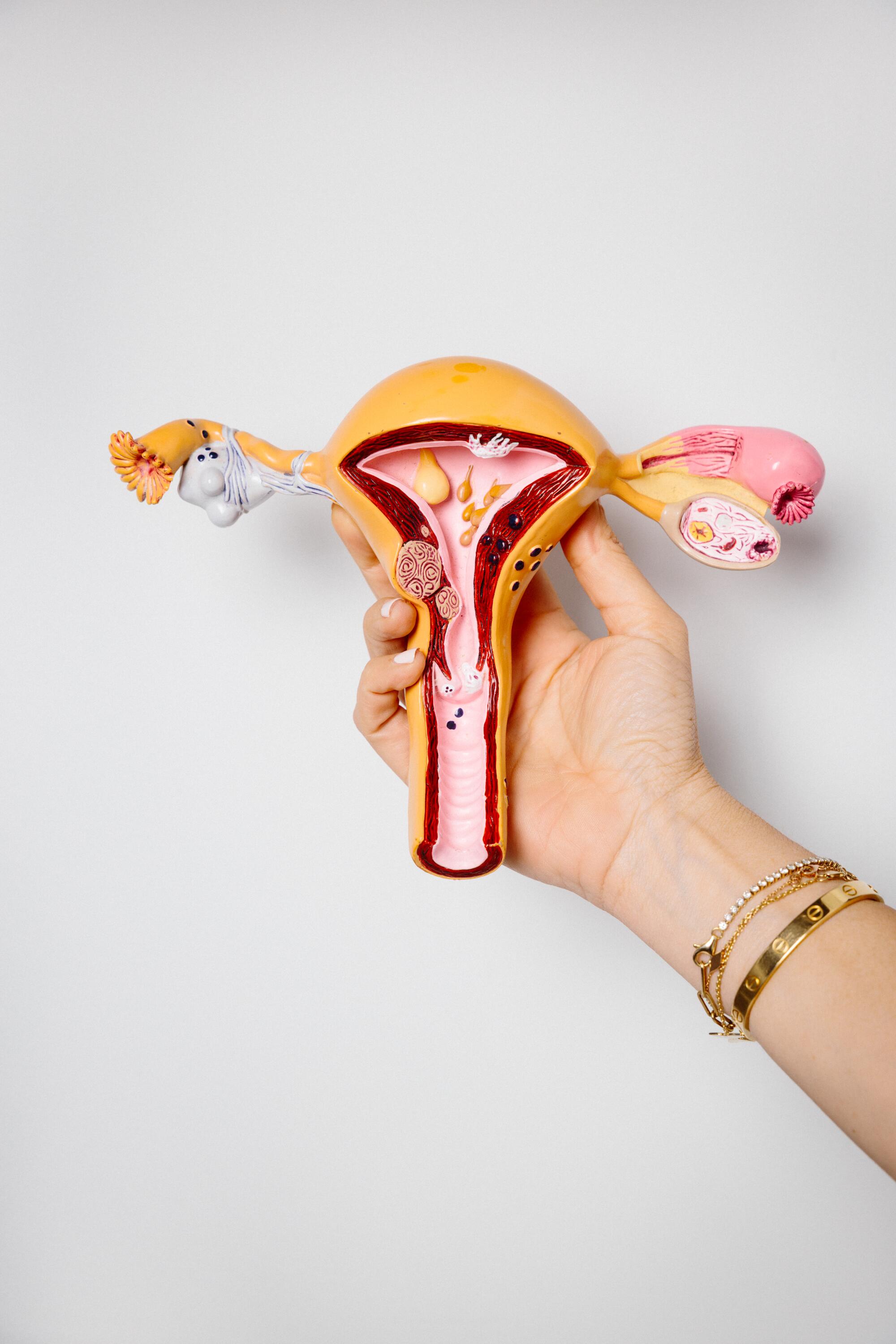
Aliabadi says she does more than the typical pap smear at her appointments, taking notice of other issues her patients may be having, like depression or hair loss.
(Stella Kalinina / For The Times)
“I see every dismissed woman in this town,” Aliabadi says. “These patients are complicated. You need to sit down and listen [to their symptoms].”
Aliabadi has other frustrations with the healthcare system.
“The issue is,” she says as she lets out an exasperated sigh. “I mean, there are so many issues.” She points out that even the most informed person still needs access to a doctor willing to listen as well as the ability to afford treatment. “If they’re going to charge you $3,800 for a breast MRI, ‘Can you afford it?’” she says. “There are limitations at so many levels.”
By not taking insurance, one could argue she too is creating another limit, but she blames insurance companies that don’t recognize quality time spent with patients. “I’m not seeing you in five minutes.”
Given the limited time patients often have with their doctors, Aliabadi hopes women will demand more from their care providers if she arms them with the right questions to ask.
Despite trying to build an online persona with the help of her celebrity circle, Aliabadi confesses she’s not very online or in touch with pop culture.
“Sometimes [Khloe Kardashian] calls me, and I think I’m just talking to her,” says Aliabadi, who delivered her second baby via a surrogate on the show in 2022. “Then six months later, my daughter’s like, ‘Mom, they called you [on the show.]’”
That’s why Haney is the media savvy yin to Aliabadi’s medical yang. “She’s a doctor first, and she’s a podcast host second,” says Haney.
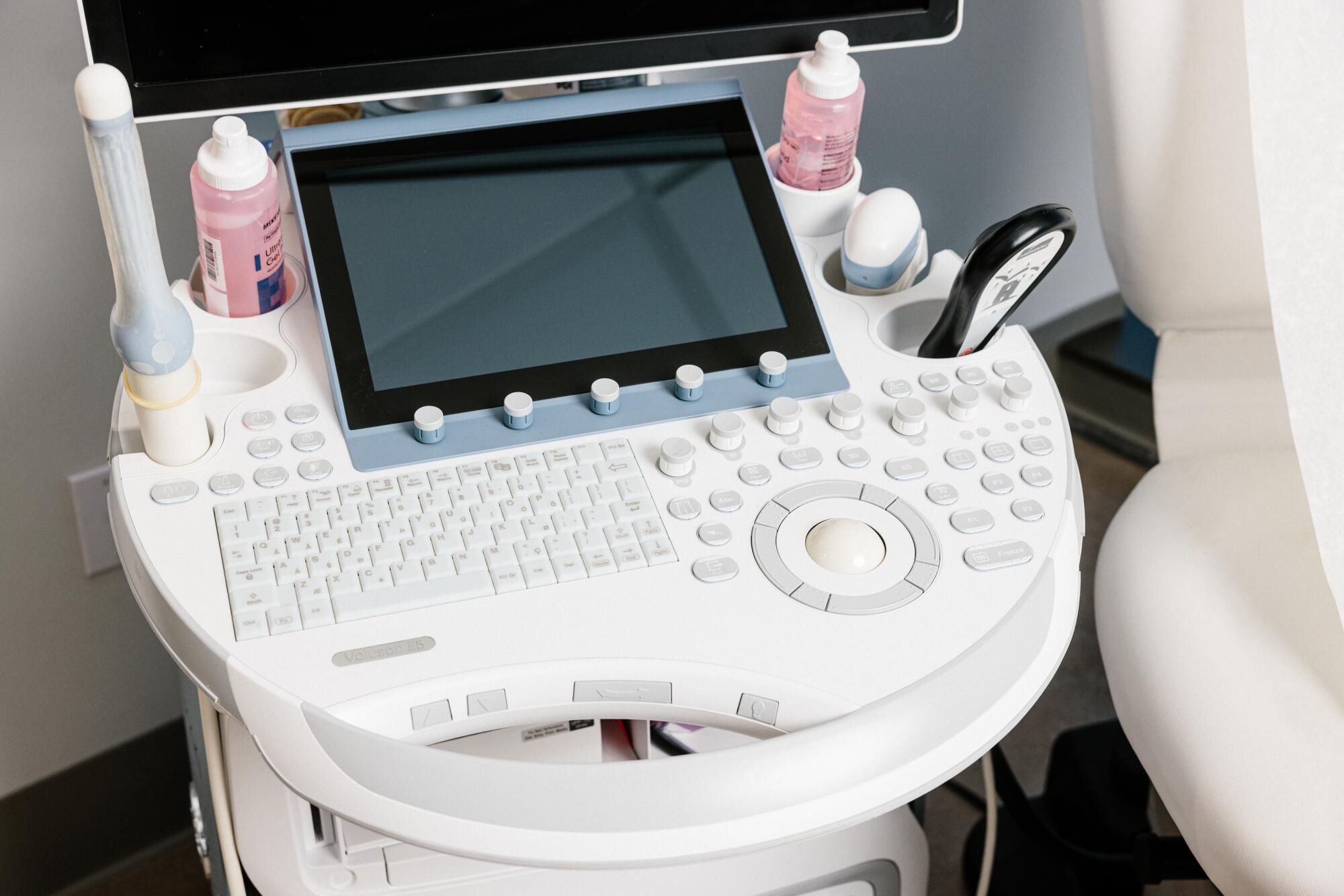
An ultrasound machine in Aliabadi’s Beverly Hills office.
(Stella Kalinina / For The Times)
Like other medical professionals and influencers in the wellness world aiming to expand their reach, Aliabadi has her own nutritional supplement, Ovii, which she advertises on her podcast. At $79.99, Ovii is aimed at women with PCOS and includes ingredients such as vitamin D, magnesium and biotin. And like other supplements advertised on podcasts, it hasn’t been tested in peer-reviewed clinical studies.
In the long term, she’s exploring a chatbot, a tool increasingly used by influencers to communicate with fans. Aliabadi believes her chatbot can help expand access to women’s health education.
“It’ll sound like me. It’ll be trained by me. Obviously, it’s just for knowledge and education. It cannot treat or prescribe,” she says.
Aliabadi welcomes technological advances to shake up the medical field.
“I look forward to robotic doctors,” she says. “The robot will not dismiss a woman who said, ‘I’ve gained 40 pounds in two years, and I’m doing exactly what my skinny sister is doing. Something’s wrong.’”
Aliabadi has four daughters, who are 20, 19, 13 and 4 (she recently adopted the youngest). Her oldest daughters attend Stanford University and she sees them following in her footsteps. She advises them to become doctors or develop technology to help women around the world.
“I think that is more powerful,” she says.



The Kennedy Center on June 28, with its facade signage still covered by a tarp and scaffolding.
Alex Wroblewski/AFP via Getty Images
hide caption
toggle caption
Alex Wroblewski/AFP via Getty Images
On Wednesday, a federal appeals court denied President Trump’s request to stop the removal of his name from Washington, D.C.’s Kennedy Center. The signage on the building has been covered with tarp and scaffolding since June 13, but in a court filing last month, the center’s current executive director said that Trump’s name has been removed.
In their decision, three judges from the U.S. District Court of Appeals for the District of Columbia Circuit said that the president had failed to prove that the arts center would be “irreparably injured” without Trump’s name attached to it.
NPR requested comment from the Kennedy Center, but did not receive an immediate reply.
This latest round of court decisions is part of the ongoing litigation filed by Rep. Joyce Beatty, D-Ohio, against President Trump and the board of the Kennedy Center. In a statement emailed Wednesday to NPR, Beatty said: “Today’s ruling again affirms that this administration’s efforts to rename the Kennedy Center were unlawful. His name no longer desecrates this sacred memorial, which belongs to the American people. Now it is time for the Trump administration to accept this, comply with the law, and take the tarps down.”
In previous court filings, Trump’s legal team had asserted that removing the president’s name from the arts complex, both on the physical building and in its digital materials, would inflict irreparable harm in both time and money already spent. In the denial, the three judges — Patricia Millett, Robert Wilkins and Gregory Katsas — wrote that since Trump’s name has already been removed, “a stay would not avert those harms.”
Furthermore, Trump had claimed that without his name attached, future fundraising would be threatened “and [will] contribute to the financial decline of the Center.” In response, the appeals judges wrote: “Appellants, however, have failed to support this assertion with any specific facts or evidence. They offer only the conclusory assertions of the Kennedy Center’s Executive Director that were made in a factually unsupported declaration.” The center’s current executive director, Matt Floca, specializes in physical plant management.
The presiding judge in the case, Christopher R. Cooper, has ordered that the center provide him a status report on the center’s operation and programming before the end of this month. As of Wednesday, the center’s calendar lists a small roster of programs, including outdoor free movie screenings, workshops for children, and five free live performances in July on its Millennium Stage. In the past, the Kennedy Center presented over 2,000 arts and education events each year, including free daily Millennium Stage performances.

Lifestyle
A meal with an animated Mona Lisa? Immersive dining goes high tech — but will L.A. eat it up?
My dinner course is served. It is a Campbell’s-inspired soup can, lightly angled so strands of broccoli are peeking out. I lift the can to uncover a slow-braised short rib and mashed potatoes. An American dish to represent an American artist, here Andy Warhol.
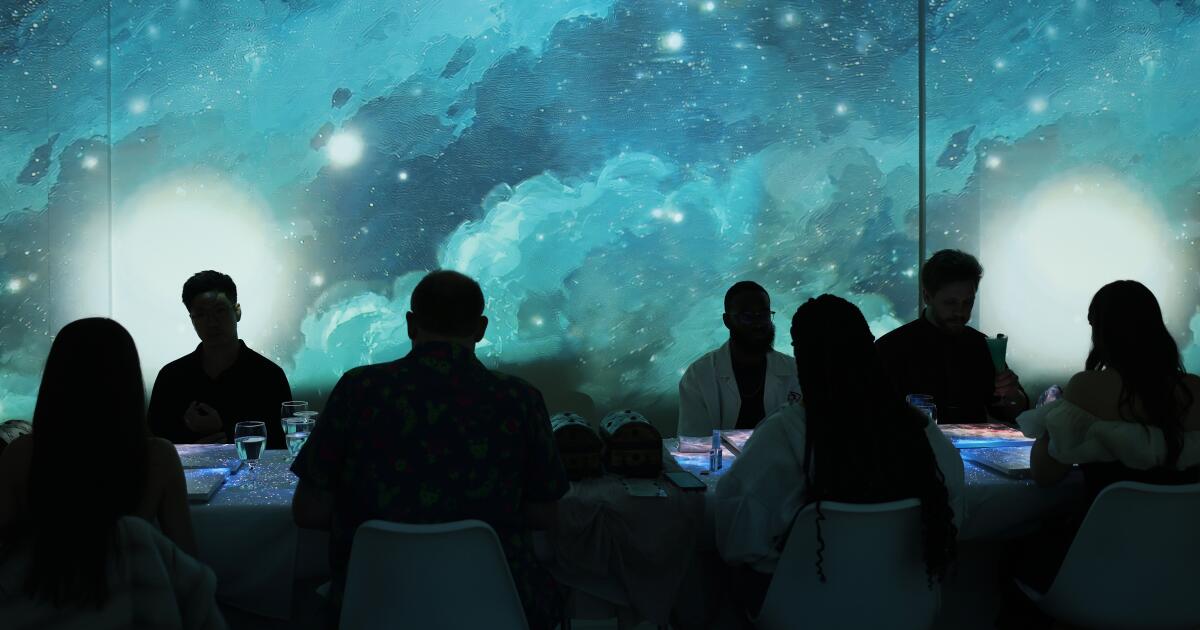
The room is overtaken with projections, scenes of bustling New York traffic paired with bachelor-pad-like guitar riffs. Shown on a wall above a dinner table is a selection of Warhol silkscreens. It’s a Friday night in West Hollywood, and I’m surrounded by a mix of out-of-towners and those celebrating an anniversary. And while this is a special occasion, we’re urged to get a little messy with our food — to use our hands, to paint with a salad, to draw on a cookie.
The main course: A tomato soup can? “7 Paintings” is an immersive event that occasionally hides dishes in artist-inspired presentations.
(Christina House / Los Angeles Times)
Play is the primary side dish at “7 Paintings,” a tech-infused dinner theater that aims to be a crash course in fine art. That selection of veggies paired with multiple mini cups of colorful dressings? Guests are encouraged to mix and match the vinaigrettes into a mess of hues, a nod to abstractionist Jackson Pollock. And yellowfin tuna with dashes of avocado and taro chips? That’s an edible tribute to Banksy, of course. What does raw fish have to do with stenciled street art? It’s bold, heavily angled and has a short shelf life? Maybe? Perhaps don’t overthink it.

Even the paper is edible.
(Christina House / Los Angeles Times)
“Have you ever eaten a painting before?” says Nadine Beshir, the Dubai-based creator of “7 Paintings.” “We try to get people out of their comfort zones and eating paper. I want to bring out the child in them.”
“7 Paintings,” held at Sunset House L.A. through the end of August, is the latest example of immersive dining to arrive in this city. These experiences often involve guest participation and are accentuated with advanced multimedia technology and sometimes theatrical elements.
Worldwide, there have been standouts. For instance, Eatrenalin at Germany’s Europa-Park, a dining room-meets-ride where participants are whisked around the space on trackless “floating chairs,” has just received a coveted Michelin star. Ibiza’s Sublimotion has similar haute ambitions, pairing 12 diners together in a room that will come alive with otherworldly projections and performers. At times, diners will win don virtual reality headgear.
But tech-driven immersive dining experiences have never quite taken off in Los Angeles as a trend. Last year, the Gallery, where fantastical cityscapes and projections surrounded downtown L.A. diners, stood just a couple months before the concept was abandoned.

“7 Paintings” pairs food with art and music. It’s “fun dining, not fine dining,” says its founder.
(Christina House / Los Angeles Times)

Bartender Luca Famulari shakes a cocktail at the immersive dining event.
(Christina House / Los Angeles Times)
“The economics of a restaurant are not the same as the economics of theater and the challenge of combining the two lies in thinking outside the box with respect to pricing and cost structure, such that the customer perceives high value from both the food and the experience,” says the Gallery co-founder Daren Ulmer.
Entrepreneurs keep aiming for that careful balance. “Le Petit Chef and Friends” is currently running at Tangier at downtown’s Hotel Figueroa, an event in which a fully animated film is projected on our plates and tables. Long-running pop-up event Fork N’ Film leans more dinner and movie, pairing dishes directly inspired by what is happening on screen. Upcoming films include “Ratatouille” and “Lilo and Stitch.”
The field comes with challenges. “The costs are very high,” says Joanna Garner, an immersive designer and former creative director with experiential art firm Meow Wolf. Garner has been experimenting herself with communal, immersive dinner events, and her next, the flirtatious “Please Open Your Mouth,” is set for July 11. (No tech there, as Garner is after a more sensual, adult-focused gathering.) Tickets for her event are $150 and a spot in the “7 Paintings” dining room runs $175, priced on par with a number of city’s most acclaimed restaurants.
There is also the reality that all public dining is in some fashion immersive, usually requiring varying combinations of engagement, communication and presentation. And then, are all these added elements distracting?

An animated Mona Lisa sits on the wall as guests enjoy their meals. Throughout the dinner, the painting provides factoids on various artists.
(Christina House / Los Angeles Times)
Throughout “7 Paintings,” for instance, an animated Mona Lisa, situated on the wall next to the main dinner table, will provide brief biographical details of each artist represented.
“Being able to nail the food, and nail the story, those are two very difficult threads to weave,” Garner says. “I do think, ultimately, people come to a dinner table to talk to the people at the table and to have intimate experiences. To have an experience where you’re constantly being taken away from the food, I’m not so sure if that’s what people are looking for.”
Food is framed as a star of “7 Paintings” but tasting it is just one component. At one point, we must uncover a cheese course in a tiny treasure chest, the code for the lock hidden in the projections (don’t stress, it’s not a hard puzzle). Beshir highlights the Pollock-inspired salad course, which is accentuated with a jazz soundtrack, as the thesis of the evening.
1

2

1. A guest uses a silicon brush to apply sauces onto an entree, a nod to abstractionist Jackson Pollock. 2. Projections fill up the dining table during meals.
“This course is really about getting people to free their minds from preconceived ideas,” Beshir says. “Like, you have to eat with a fork and knife, or the salad comes and then the dressing. No, the dressing comes and then the salad, and it’s trying with big brushes to paint the way he did. A lot of people do not understand Abstract Expressionism, and they think it’s people just splashing colors around. But when you understand the link between the rhythm of the music and painting, you live it. We give you time to paint with your salad dressing.”
In L.A., Beshir has partnered with nightlife impresario Kim Kelly, who is plotting a “Sleep No More”-inspired walk-around theatrical show for the Sunset House venue later this year. “7 Paintings,” however, is fully seated, and purposefully a little silly. Beshir and Kelly have been evolving it during its L.A. run, recently adding a stronger painting component by giving guests their own canvas to work on throughout the evening. Each night crowns a winner.
“Everyone comes over to look at their art,” Kelly says. “It just kind of changed the whole thing, to be honest. People are now being creative throughout the entire evening. Instead of just watching and occasionally painting, you’re now painting the whole time.”
As for what, perhaps, soba noodles with edamame and mushrooms have to do with Pablo Picasso, or why Salvador Dali gets an unexpected dessert course of a white chocolate potato souffle, Beshir clarifies the goal of the evening. While the animated Mona Lisa will provide backstories on each painter, this isn’t an educational night. “It’s fun dining, not fine dining,” Beshir says.
And by the end of my night, strangers were socializing, showing off their painted cookie creations, sharing Banksy tidbits and asking for recommendations on various vinaigrette combinations. Ultimately, it’s an evening of discovery, packed with surprises like finding an entire course hidden under a canvas.

Darryl Mayes of Charlotte, N.C., left, and Taylor Smith of North Hollywood, right, uncover their course.
(Christina House / Los Angeles Times)
“We try not to have too much sophistication, like fried ants or something. I’m personally very adventurous in how I eat, but if I want to have this in 100 cities around the world, I cannot be too meticulous.”
And Beshir has big goals.
“I want this be your movie and dinner thing,” Beshir says. “I want people to be waiting for our next show, and to be able to afford to come every couple months.”
And to come home not with leftovers, but perhaps a painting of their own.
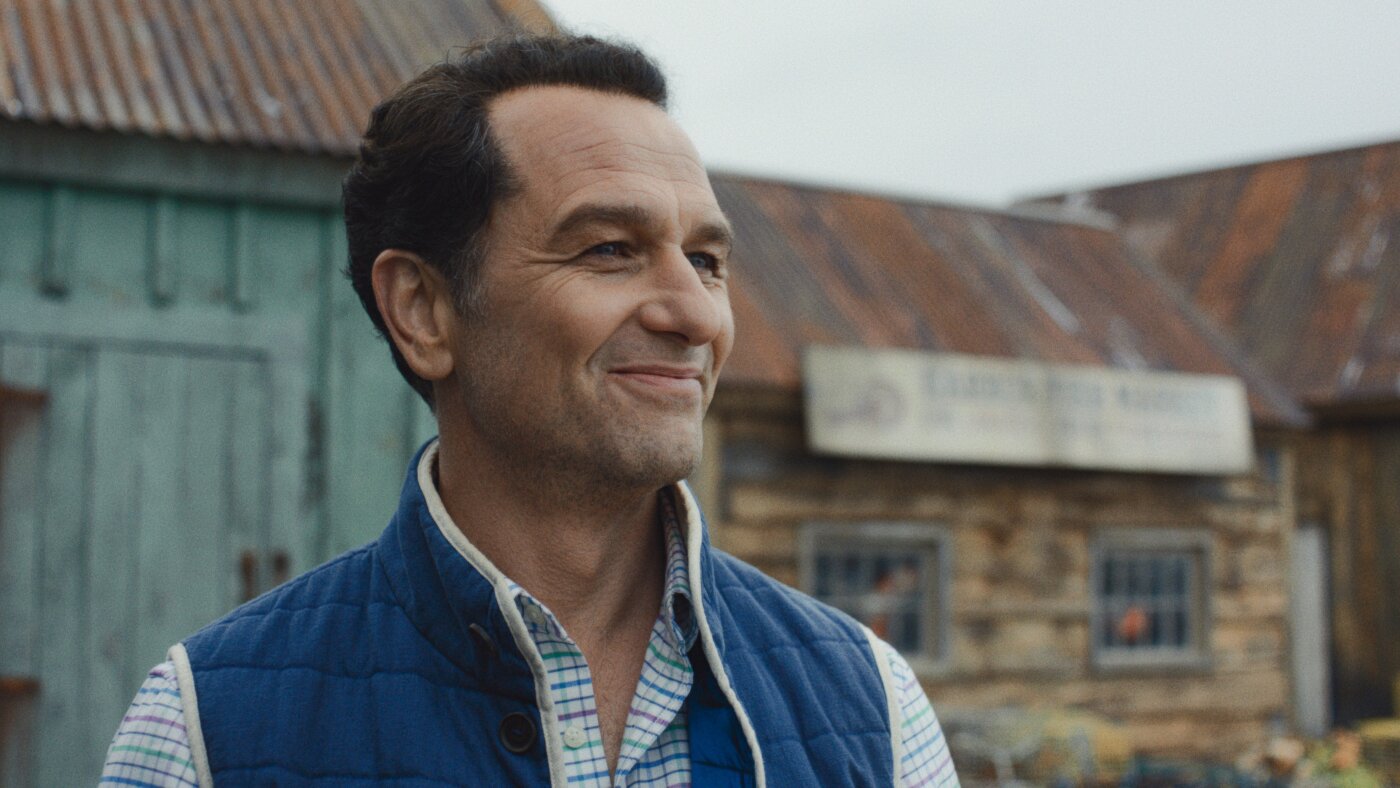
Matthew Rhys was nominated for his role in Widow’s Bay.
Apple TV
hide caption
toggle caption
Apple TV
The 2026 Emmy nominations are here. We’re unpacking the record-breaking nominations for Hacks, plus a big day for Widow’s Bay, The Pitt, and The Bear. We’ll also talk about the snubs and make some early predictions of who will win.
Connect with Pop Culture Happy Hour:
Letterboxd / Facebook
Our weekly newsletter
Support Pop Culture Happy Hour+
-

 Los Angeles, Ca35 minutes ago
Heat advisory, beach hazards in effect as Southern California sizzles
-

 Detroit, MI55 minutes ago
Teen on moped hit by car after cruising through stop sign in Detroit
-

 San Francisco, CA1 hour ago
Flight of fancy: San Francisco moves to build private luxury airport terminal
-

 Dallas, TX1 hour ago
Dallas’ digital creator economy is booming. Burnout is too.
-
Miami, FL1 hour ago
I went to 2 famous Miami restaurants, a flashy steakhouse and a Cuban hot spot. Here’s how they compared.
-

 Boston, MA1 hour ago
Pedestrian struck and killed in Roxbury – Boston News, Weather, Sports | WHDH 7News
-

 Denver, CO1 hour ago
Santa Fe Drive in Denver closed this weekend for pedestrian bridge construction
-

 Seattle, WA2 hours ago
Police video shows West Seattle Bridge copper wire theft suspect’s arrest

