News
What we know about the midair crash near Washington, D.C.


First responders search the crash site of American Airlines flight 5342 along the Potomac River near Ronald Reagan National Airport in Arlington, Va., on Thursday.
Michael A. McCoy for NPR
hide caption
toggle caption
Michael A. McCoy for NPR
Authorities believe there will likely be no survivors in the midair crash involving an American Airlines regional jet and a Black Hawk helicopter Wednesday night in the skies above the nation’s capital.
As of Thursday morning, rescue crews continue to search the frigid waters of the Potomac River, in which pieces of the jet and helicopter have fallen.
In a White House press briefing on the crash, President Trump said the search mission has turned into recovery efforts as of late morning.
“We are one family today and we are all heartbroken,” he said.

Officials say 28 bodies have been recovered so far. There were 64 people on the plane and three on the Black Hawk. Among the passengers of the jet were members of the U.S. Figure Skating team, several Russian figure skaters, coaches and family members, according to U.S. Figure Skating and Russian state media.
The crash could be the most significant disaster in U.S. airspace in at least 15 years. The investigation is in its early hours and the cause of the midair collision is still unclear.
During a press briefing, Trump shared a number of possible theories of the cause of the crash, including that diversity efforts at the Federal Aviation Administration (FAA) are to blame.

A plane is parked at the Reagan National Airport as the investigation continues into the crash of an American Airlines plane on Jan. 30, 2025 in Arlington, Va.
Andrew Harnik/Getty Images
hide caption
toggle caption
Andrew Harnik/Getty Images
How did this happen?
The midair collision happened as the jet, operated by PSA Airlines on behalf of American Airlines, was attempting to land at Reagan just before 9 p.m. EST on Wednesday. The plane was traveling from Wichita, Kan. It carried 60 passengers and four crew members (two pilots and two flight attendants).
The U.S. Army Black Hawk carried three soldiers and was traveling from Fort Belvoir in Virginia, the Pentagon says. The three were “experienced” crew members taking part in a training exercise, Defense Secretary Pete Hegseth said Thursday morning.
The jet was flying from south to north and lining up to land at the airport when it collided with the Black Hawk, which was flying from north to south, Washington D.C. Mayor Muriel Bowser said during a press conference. The two aircraft collided at a low altitude.
Video recorded from the Kennedy Center, an arts and culture center located a few miles from the crash site, shows a small aircraft approaching the jet and then a bright explosion that lit up the dark night sky.
According to audio archived by LiveATC.net, which provides live air traffic control broadcasts from air traffic control towers and radar facilities around the world, the plane had initially been cleared to land on runway 1. But an air traffic controller asked the flight crew if they could use runway 33 instead.
This is not an unusual request at this airport, which is incredibly busy and requires a delicate dance to handle the mix of arriving and departing aircraft in very complicated airspace around the D.C. area. There are many military and law enforcement helicopters always operating in the vicinity.
The crash comes after a growing trend of troubling near-collisions near runways across the country.

President Trump takes questions from reporters at the White House on Thursday about the collision of an American Airlines flight with a military Black Hawk helicopter near Ronald Reagan Washington National Airport.
Chip Somodevilla/Getty Images
hide caption
toggle caption
Chip Somodevilla/Getty Images
With no evidence, Trump alleges DEI, night vision to blame for crash
President Trump began his press briefing Thursday morning with a moment of silence for the tragedy that occurred overnight. He then turned to speculating about a number of theories as to what might have contributed to the crash.
Trump said, without evidence, that diversity initiatives at the FAA had compromised air traffic controller standards. His administration has made eliminating diversity, equity and inclusion programs a top priority across the federal government.
Asked by a reporter how he could conclude that diversity had to do with the crash while the investigation is ongoing, the president responded: “Because I have common sense, OK? And unfortunately, a lot of people don’t. We want brilliant people doing this.” He blamed past Democratic administrations for, he claimed, lowering standards.
The president also suggested that warnings of the imminent crash came too late from the air traffic controller and that the helicopter pilot “should have seen where they were going.” He said that night vision equipment could have contributed to the accident and alluded to “tapes” of the communications with air traffic control at the time, which have not been formally released.
He also questioned why the helicopter and American Airlines jet were at the same elevation. He said that the American Airlines flight was on the correct path.
It is unclear what, if any, evidence contributed to the president’s claims. An investigation is ongoing as to what went wrong and conclusive answers are likely to take some time.
Trump picks a new acting FAA head after more than a week of vacancy
Trump said Thursday that he would immediately appoint an acting commissioner to the FAA. The agency had been without a leader for over a week after its previous head, Mike Whitaker, resigned on Inauguration Day. It is not unusual for FAA administrators to leave at the end of an administration, though some have stayed on longer.
Trump’s acting pick to fill the role is Christopher Rocheleau, whom the president described as a “highly respected” 22-year veteran of the agency.
Rocheleau held multiple roles at the FAA during his two-decade tenure, including acting administrator for aviation safety and executive director for international affairs, according to the National Business Aviation Association, where he most recently served as chief operating officer.
Prior to his time at the FAA, he served as an officer and special agent with the U.S. Air Force and was one of the early leaders of the Transportation Security Administration, which was created in the aftermath of 9/11.
What is the latest on recovery efforts?
John Donnelly, the chief of Washington D.C.’s Fire and EMS, said the first alert came in at 8:48 p.m. and they arrived ten minutes later. He said there are 300 responders from neighboring counties and cities as far north as Baltimore coming to assist in the immediate aftermath. It’s a “highly complex operation” with “extremely rough” conditions as temperatures hovered around 36 degrees overnight, according to NOAA’s National Ocean Service, with added wind.

Donnelly said the crash site in the Potomac River is about eight feet deep and icy.
“It’s just dangerous and hard to work in. And because there’s not a lot of lights, you’re out there searching every square inch of space to see if you can find anybody. Divers are doing the same thing in the water. The water is dark. It is murky. And that is a very tough condition for them to dive in,” he said.”
The National Transportation Safety Board and American Airlines representatives are at the crash site.
Who was on the plane?
The names and ranks of the three Black Hawk crew members will be withheld for now as next of kin notifications are ongoing, Defense Secretary Hegseth said.
The unit involved in the crash were of the Bravo Company, 12th Aviation Battalion and were flying out of Fort Belvoir, he said. The crew were taking part in their annual proficiency training flight and were undergoing night evaluation. They were also fitted with night vision goggles, he said.
“It’s a tragedy and a horrible loss of life,” Hegseth said.
U.S. Figure Skating confirmed in a statement that several members, including athletes, coaches and family members, were aboard the American Airlines jet and were returning home from the National Development Camp held in conjunction with the U.S. Figure Skating Championships in Wichita.
“We are devastated by this unspeakable tragedy and hold the victims’ families closely in our hearts. We will continue to monitor the situation and will release more information as it becomes available,” U.S. Figure Skating said.
Former Russian world champions — and husband and wife — Vadim Naumov and Evgenia Shishkova were identified as victims of the crash, according to Kremlin spokesman Dmitry Peskov.
Naumov and Shishkova were on both the Soviet and Russian figure skating teams and won the World Championships in pairs figure skating in 1994.
They moved to the U.S. in 1998 and appear to have stayed involved in the sport: They are both listed as coaches on the website of the Skating Club of Boston.
Trump said there were passengers from at least two other nations beyond the U.S. and Russia on the jet.

A flight information board shows cancelled flights at the Reagan National Airport. Operations at the airport are expected to restart at 11 a.m. EST.
Kayla Bartkowski/Getty Images
hide caption
toggle caption
Kayla Bartkowski/Getty Images
How are operations at Reagan National impacted?
A ground stop was ordered at Reagan National Airport lasting for several hours after the crash. Operations at the airport have since resumed.
“Metropolitan Washington Airports Authority CEO John Potter said, speaking at a Thursday morning news conference at the airport, “It’s safe. We’ve worked with all the federal agencies, FAA. And, you know, it’s been determined that we can open that airport safely.”




A Waymo robotaxi drives in San Francisco’s North Beach neighborhood this week.
Heather Diehl/Getty Images
hide caption
toggle caption
Heather Diehl/Getty Images
Police in San Mateo, Calif., posted Monday on social media that they had apprehended a pair of teenagers from a Waymo driverless robotaxi after the company alerted authorities to suspected criminal activity. It’s the latest incident involving video surveillance of passengers and others by autonomous vehicles — raising questions about the limits of privacy in such vehicles.
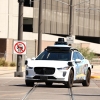
The Facebook post by the San Mateo County Police said: “Parents do you know where your teens are? @waymo does!”
The 15-year-olds were allegedly drinking alcohol and shooting toy guns from the car, according to the police. They said Waymo’s systems detected behavior that then triggered a safety response, after which the company disabled the vehicle and contacted police.
Waymo’s cars, equipped with an array of cameras, microphones and other sensors to monitor passengers and other nearby vehicles, are becoming more common in cities across the United States. Experts say the detention of the two teens in San Mateo highlights a potential — but not inevitable — trade-off between privacy and convenience. It also questions the extent to which companies similar to Waymo are required to hand over private data, including audio and video of passengers, in situations where a crime is suspected.
NPR reached out to Waymo, which is owned by Alphabet, the parent company of Google, for comment on the details of the San Mateo incident and how the company responded, but did not hear back. But on its website, the company says that as many as 29 cameras in its autonomous cars provide an all-around view and “are designed with high dynamic range and thermal stability, to see in both daylight and low-light conditions, and tackle more complex environments.”
“There already exist laws that govern duty to report or even duty to protect” for carriers such as Waymo, according to Alessandro Acquisti, a professor of information technology at the MIT Sloan School of Management. “The privacy problems arise when and if driverless carrier companies used such laws or ethical obligations as a pretext for blanket, indiscriminate accumulation of identifiable data for unspecified future purposes.”
That includes not just monitoring people inside the cars, but outside too. Take, for example, a hit-and-run investigation last year in Los Angeles. Media reported that the police inquiry was aided by video captured by a Waymo taxi that had a clear view of the crime. Critics suggested at the time that authorities were using the company’s vehicles as a mobile surveillance platform. And during 2025 protests in Los Angeles against Immigration and Customs Enforcement crackdowns, demonstrators vandalized Waymos, apparently angry that video recorded by the vehicles could be used by police, although there is no evidence that happened.
In a transparency report, Google says it received nearly 290,000 requests from governments worldwide in the first six months of 2025 for disclosure of user information across all its platforms, including Waymo. The company says that in more than 80% of the requests in those six months, some information was disclosed. “Google carefully reviews each request to make sure it satisfies applicable laws. If a request asks for too much information, we try to narrow it, and in some cases we object to producing any information at all,” the company says.
In an email to NPR, San Mateo Police Department spokesperson Jeanine Luna said that detaining the teens in the Waymo on Monday was “wholly appropriate” under the circumstances. “We received the call of a ‘firearm’ being shot from a moving vehicle,” she said. “Furthermore, the occupants were described as being possibly ‘intoxicated.’” she said.
“Being that the vehicle was disabled (the occupants had every right to exit the vehicle before police arrival, but they did not), a high-risk traffic stop was conducted to ensure the safety of all involved,” Luna added. “They were not arrested and were released to their parents, however, potential charges are still pending dependent on what the video from inside the vehicle shows.”
Autonomous taxis represent an ethical gray area
Robotaxis began to roll out across the U.S. in December 2018, when Waymo launched in Phoenix. These services have been used for less than a decade — so the norms surrounding them aren’t settled, experts agree.
The Facebook post may make Waymo passengers wonder what triggers a police intervention, says Irina Raicu, director of the Internet Ethics program at Santa Clara University. She has used Waymo’s driverless taxis and says ethically, the privacy issues surrounding them sit in a gray area. “There’s something about being in a car without another person that makes you think it’s private.”
“With all these recording devices, we don’t see them, [and] they’re not these obvious things being stuck in our faces,” Raicu adds.
That brings up a key issue: informed consent, Acquisti says.
“It is not clear the extent to which passengers … are reminded that when they step into the car, that they are being monitored, and most likely they are not told in its entirety how the data will be used,” he says.
Bruce Schneier, a cybersecurity and privacy expert and professor at the Munk School at the University of Toronto, believes that Waymo does have a compelling interest in protecting its vehicles. He compares monitoring a robotaxi via cameras to a human taxi driver keeping an eye on passengers in the rearview mirror.
“Maybe the driverless car comes back … and it has all of its cushions slashed, and it’s like, ‘Who the hell did that? Let’s go and look at the tape,’” Schneier suggests. “You can’t have sex in the back of a taxi, right? Someone would say, ‘Stop it.’”
He concludes that some supervision makes sense. In an Uber rideshare, he notes, “most of the time there’s a camera recording the back seat.” (Uber says on its website that it allows drivers to install such cameras for the purpose of “fulfilling transportation services.”)
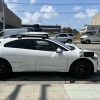
Waymo robotaxis, while a fairly common sight in the San Francisco Bay Area, are still a novelty in much of the country. And many people are hesitant to ride in one, according to a Pew Research Center poll published this month. The survey found that only 5% of Americans had ever ridden in a driverless car. Meanwhile, 71% of those polled said they would feel uncomfortable in one, with only 7% saying they would be “extremely or very comfortable” riding in one.
For that reason, experts who spoke with NPR said they were optimistic that it’s not too late to shift gears on privacy norms and policies surrounding these vehicles.
Acquisti doesn’t see why privacy measures can’t be built into driverless vehicles.
“I would immediately challenge the notion that people have to be monitored,” he says, noting that privacy-preserving technologies exist and can be installed.
“Driverless cars are coming, but they don’t have to come in this particular incarnation,” Raicu says. “They’re still being designed and redesigned. It’s early days.”

Donald Trump has terminated the remaining members of the independent, federal commission that assists election administration officials nationwide just a few months before the midterm elections, multiple outlets reported Thursday.
The remaining three commissioners of the four-member bipartisan commission were forced out on Thursday in different ways. The one Republican appointee resigned and the other two, Democratic appointees were notified of their terminations via email from the White House presidential personnel office.
“On behalf of President Donald J Trump, I am writing to inform you that your position as Commissioner of the Election Assistance Commission is terminated, effective immediately. Thank you for your service,” the email, seen by Reuters, said.
The White House did not immediately respond to a request for comment.
The Election Assistance Commission serves as a “national clearinghouse of information on election administration”, accredits testing laboratories and certifies voting systems, and maintains the national mail-voter registration form developed by the National Voter Registration Act of 1993, according to the commission’s website. The terminations follow Trump and top administration officials’ advocacy to change vote-by-mail requirements and investigations into the 2020 election outcome, which Trump lost to Democrat Joe Biden.
“It is irresponsible and dangerous that this Administration remains dead set on causing chaos for our election officials across this country,” Arizona secretary of state Adrian Fontes said in a Thursday statement. “This move undermines the integrity of nonpartisan election administration.”
The 2002 law that established the commission, the Help America Vote Act, states the president can appoint replacements to the commission.
It is unclear how Trump will move ahead with the commission.
Reuters contributed reporting

Former U.S. Olympian David Hearn (left) walks with his attorney Norman Eisen to speak to reporters and protesters gathered after his arraignment at the Superior Court of the District of Columbia in Washington, D.C. on Thursday.
Finn Gomez/Getty Images
hide caption
toggle caption
Finn Gomez/Getty Images
Former U.S. Olympic canoeist David Hearn pleaded not guilty to damaging the Lincoln Memorial Reflecting Pool in D.C. Superior Court Thursday morning.
Federal prosecutors charged Hearn with a single count of destruction of property causing more than $1,000 in damage to the pool.

Hearn has previously claimed, which his attorneys repeated during a short press conference outside the court, that he simply touched the water in the pool out of curiosity.
The Trump administration had just completed a $14 million renovation of the pool.
But shortly after the work finished, peeling paint and algae gathered in the water. The remodel has been largely criticized as a massive failure and waste of taxpayer dollars.

Superior Court Judge Carmen McLean released Hearn on his own recognizance. His next hearing is scheduled for Aug. 5.
Norm Eisen, one of Hearn’s attorneys, spoke to reporters outside of court following the hearing. He said the administration is using Hearn as a “scapegoat … for their own failures.”
“It is not a crime to touch the reflecting pool, to touch water in the United States of America,” he said.
Prosecutors say there is a host of evidence against Hearn.
This is a developing story.
-

 Texas5 minutes ago
Fetus found deceased along Lewisville Lake shoreline was discarded intentionally, police say
-

 Utah8 minutes ago
Tyler Robinson preliminary hearing expected to wrap up Friday – KSLNewsRadio
-
Washington13 minutes ago
Bengals 2026 Opponent Preview: Washington Commanders
-

 Vermont13 minutes ago
Beau Welling’s Stowe Country Club Revamp Signals New Vermont Golf Era
-

 Virginia20 minutes ago
Rabid cat, bat, raccoons and skunks reported in these 4 Virginia counties
-

 Wisconsin28 minutes ago
Shipwreck Coast sanctuary council to meet July 16 in Sheboygan
-

 West Virginia35 minutes ago
Helicopter crashes in Pocahontas County
-

 Wyoming38 minutes ago
Wyoming officials say Meta’s 715,000-square-foot data center is responsible for contaminating its water system with a rare bacterium | Fortune

