Connect with us

Midwest

Minneapolis to overhaul police training, use-of-force policies in wake of George Floyd's murder

Published

on

Minneapolis to overhaul police training, use-of-force policies in wake of George Floyd's murder
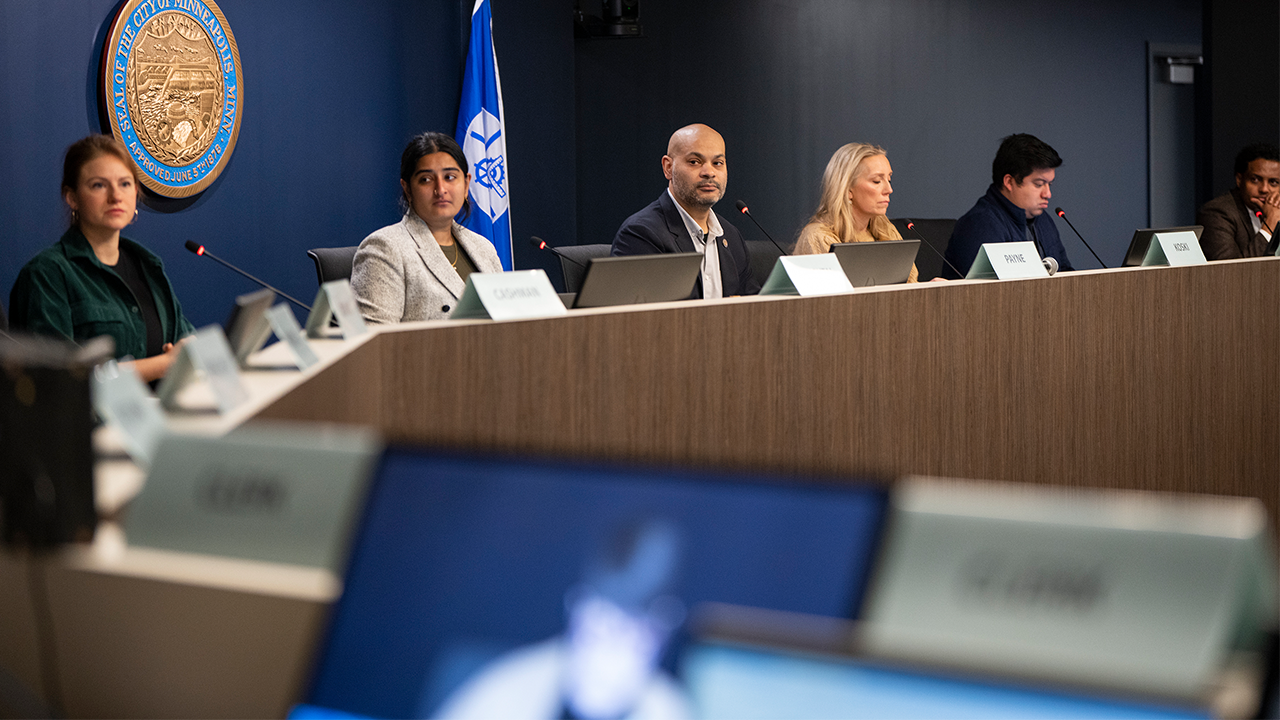
The Minneapolis City Council unanimously approved an agreement on Monday with the federal government to overhaul the city’s police training and use-of-force policies in response to the 2020 police killing of George Floyd.

The agreement incorporates and builds on changes Minneapolis police have made since former officer Derek Chauvin was found guilty of murdering Floyd after kneeling on his neck for about nine minutes during a May 2020 arrest, prompting nationwide riots.

Known as a consent decree, the agreement requires that officers “promote the sanctity of human life as the highest priority in their activities” and “carry out their law enforcement duties with professionalism and respect for the dignity of every person.”

Officers must not allow race, gender or ethnicity “to influence any decision to use force, including the amount or type of force used.”

BIDEN DOJ OPPOSES COURT DECISION ALLOWING DEREK CHAUVIN CHANCE TO EXAMINE GEORGE FLOYD’S HEART

Advertisement

Assistant Attorney General Kristen Clarke of the Justice Department’s Civil Rights Division, flanked by Minneapolis Mayor Jacob Frey, left, and Chief Brian O’Hara of the Minneapolis Police Department, speaks at a news conference at the U.S. Courthouse in Minneapolis, Monday, Jan. 6, 2025. (AP)

The agreement will put the police department under long-term court supervision. The department had already been under negotiation with the federal government since the Justice Department issued a scathing rebuke of Minneapolis police in 2023.

After a two-year probe, the DOJ accused the department of engaging in systematic racial discrimination, violating constitutional rights and disregarding the safety of people in their custody for years before Floyd’s death. The DOJ said the officers used excessive force, including “unjustified deadly force” and violated rights for speech protected by the First Amendment.

“George Floyd’s death was not just a tragedy, it was a galvanizing force for the city and for the nation,” Assistant Attorney General Kristen Clarke, head of the Justice Department’s Civil Rights Division, said Monday at a news conference. “All eyes remain on Minneapolis, and with this consent decree, we now have a roadmap for reform that will help this community heal while strengthening trust between law enforcement and the people they serve.”

The Minneapolis City Council approved a deal with the federal government to overhaul the city’s police training and use-of-force policies over the killing of George Floyd. (Stephen Maturen/Getty Images)

Advertisement

An independent monitor will oversee the changes to the police training and policies, which a judge must approve.

“I’d like to thank our community for standing together, united in this, and for having patience with us as we have traveled a very, very long and challenging journey,” City Council President Elliott Payne said Monday following the vote. “We’re just beginning, and we know we have a long way to go. Our success will only be realized when we all work together on what is arguably one of the most important issues in the life of our city.”

In 2023, a state court approved a similar agreement between Minneapolis and the Minnesota Department of Human Rights after the agency issued its own report the year before. The state probe found that the city’s police had engaged in a pattern of racial discrimination for at least a decade.

The DOJ has opened 12 similar investigations of state and local law enforcement agencies across the country since April 2021, including many in response to high-profile killings by police. If approved by the courts, the DOJ will be enforcing 16 policing “pattern and practices” settlements across the country.

DEREK CHAUVIN PRISON STABBING: EX FBI-INFORMANT INMATE CHARGED WITH ATTEMPTED MURDER OF EX-MINNEAPOLIS COP

Advertisement

Council President Elliott Payne, center, and the Minneapolis City Council vote to go into closed session immediately after gaveling into session to go over a federal consent decree mandating reforms to the police department in Minneapolis, Monday, Jan. 6, 2025. (AP)

The DOJ has reached agreements with Seattle, New Orleans, Baltimore, Chicago and Ferguson, Missouri. A consent decree with Louisville, Kentucky, over the police shooting death of Breonna Taylor is awaiting court approval. The Memphis, Tennessee, mayor last month pushed back against efforts for a consent decree, arguing that the city has made many positive changes since the beating death of Tyre Nichols.

During his first administration, President-elect Donald Trump was critical of consent decrees, deeming them anti-police.

The agreement in Minneapolis becoming final before Trump returns to office later this month would make it difficult for him to stop the deal, as changes would need court approval.

Advertisement

The Associated Press contributed to this report.

Read the full article from Here

Continue Reading
Click to comment

Leave a Reply

Your email address will not be published. Required fields are marked *

This site uses Akismet to reduce spam. Learn how your comment data is processed.

Illinois

Central Illinois to experience bitter cold temperatures. What to know

Published

on

Central Illinois to experience bitter cold temperatures. What to know


play

SPRINGFIELD – Central Illinois and the capital city will be seeing another round of bitter cold temperatures this weekend.

Temperatures are set to turn sharply colder by late week, according to the National Weather Service.

Advertisement

There is an increasing likelihood of bitter cold wind chills Friday through Saturday, a weather graphic shows. Springfield is predicted to experience a -15-degree minimum wind chill forecast from Jan. 23 to Jan. 24.

According to the Detailed Forecast for Springfield, the temperature will drop from a high near 32 on Thursday to a low around 3 on Thursday night.

Friday will be partly sunny and cold, with a high near 7. Friday night will be mostly cloudy with a low around -1.

Advertisement

Saturday shows a 30% chance of snow after noon. It will be mostly cloudy with a high near 13. Saturday night is predicted to see a 30% chance of snow before midnight. It will be mostly cloudy, with a low around 6.

Sunday will be mostly sunny, with a high near 19.

Tom Ackerman covers breaking news and trending news along with general news for the Springfield State Journal-Register. He can be reached at tackerman@usatodayco.com.


Source link

Advertisement
Continue Reading

Indiana

Indiana gives hope and joy, but which programs should actually feel bad about this?

Published

on

Indiana gives hope and joy, but which programs should actually feel bad about this?


So now everyone has hope. And some have questions. Such as: “We have talent, tradition, generations of fans, a mega-stadium, a coach and staff who are paid to win championships, an NIL fund that could buy us a small-market MLB team, and we can’t match Curt freaking Cignetti and the Indiana freaking Hoosiers? How?!”

Cignetti is the marvel of his profession, and the scourge. There are a lot of coaches in this sport who, if pressed by their superiors, could not come up with tangible explanations for why Cignetti went 16-0 this season and they didn’t come close. The truth serum answer would be: “He’s better at coaching football than I am.”

There’s no guarantee that Indiana is about to become an Alabama-like dynasty. Yes, that’s a real sentence typed out in 2026. Even if Cignetti can harness consistent dominance in this era, over more than a decade like his former boss Nick Saban, that leaves championships for others to win. More programs than ever, by far, can hold such aspirations.

And some, from the top of the administration to the most casual fan, should feel terrible right now.

Advertisement

I’m not talking about Alabama, Georgia, Ohio State and that tier. They may be upset that they can’t hoard talent and have scout teams teeming with five-stars anymore, but boo hoo. No one cares. Suck it up. You’re still very much a “have.”

In fact, if you’ve won a national title in the past 20 years, you don’t qualify. You’ve had joy in the smartphone era. Cry yourself to sleep with whatever you recorded that night. The college football outposts that should feel worst are the ones that have put in the effort and resources over an extended period, have nothing to show for it and just watched Indiana zoom on past to grab the checkered flag.

On this day of celebration, renewal and reflection, let’s talk about those poor suckers.

Penn State

This fall will mark the 40th anniversary of the Nittany Lions’ last national championship. It will mark around a year since Penn State found out that, for all its advantages and decades of excellence, it had no shot of hiring the Indiana coach away from Indiana — a Pennsylvanian, no less. This after firing the coach who had Penn State humming along like a blue blood, except when it came to winning the biggest games. Penn State was slow to the NIL era, but it was caught up in 2025, and it went 7-6.

Now Matt Campbell is in from Iowa State, and he’s an excellent coach. He’s also a “less with more” coach, and sometimes that doesn’t translate as well as hoped to places with all the resources and expectations (see: Dan Mullen, Mississippi State to Florida). When it became clear this season that Iowa State was not going to reach its preseason Big 12 title goal, Campbell was asked about it and said: “Not me. That was never my goal. My goal has always been one thing, and that is to become the best version of ourselves that we can become. … and really, my challenge for this year’s team was to become the greatest ‘together team’ in the history of Iowa State football.”

Advertisement

Cignetti, on the other hand: “Yeah, let’s just win every frigging game.”

Tennessee

The Vols emerged from nearly two decades of industry-leading dysfunction — which didn’t shake its fans, which is an incredible story all its own — to regain respectability under coach Josh Heupel and AD Danny White. Tennessee has double-digit wins and top-10 finishes in two of the past four seasons, making the 12-team CFP in 2024 and losing at Ohio State. Its previous two top-10 finishes came in 2001 and 1999. Those came right after the last national championship, capping the 1998 season and kicking off the BCS era.

That’s good, but the 2025 season wasn’t, even with last-second quarterback replacement Joey Aguilar (in for post-spring defector Nico Iamaleava) putting up big numbers. Heupel, previously a scapegoat at Oklahoma and not generally a sacrificer of coaches, fired defensive coordinator Tim Banks to bring in Jim Knowles. He struck out on portal quarterbacks. It’s plug a leak/find a new leak, and stands in such contrast to IU’s brand of sound, consistent, powerful football. And while Vols fans are unshakeable, they may be unkind to Heupel if he can’t figure things out with a young quarterback in 2026.

While Vols fans are unshakeable, they may be unkind to Josh Heupel if he can’t figure things out with a young quarterback in 2026. (Photo by Bryan Lynn / Getty Images)

USC

Remember, Heupel was long presumed to be Bob Stoops’ choice as successor in Oklahoma, having won him a national championship and all as a quarterback. Instead, Stoops fired Heupel as co-offensive coordinator after the 2014 season, brought in Lincoln Riley from East Carolina and handed the program off to him two years later. The hyperbole that accompanied Riley’s departure for USC, and the extent to which he has failed to deliver, are magnified by the exploits of Big Ten “rival” Indiana (which USC last played in 1982).

Advertisement

Cignetti is reaching the Playoff with Kurtis Rourke and winning it all with Heisman winner Fernando Mendoza. Riley is losing eight games in two seasons with Heisman winner Caleb Williams and 10 more in two seasons with a combination of Miller Moss and Jayden Maiava. The days of Pete Carroll, Matt Leinart and Reggie Bush (last title: 2004 season) feel distant.

Miami

The “U” is back. The “U” will be back. But how many chances like that will the “U” get? The reality is, Indiana left the door wide open with a false start and a roughing the passer, and was in a shaky position to strike back on a last possession because of two timeouts it had to use earlier. That is, if Miami took its time, took what was there and moved into position for close shots at the end zone. Carson Beck got greedy and misread a safety. Great run, but few things are worse than getting that close and not finishing.

Mario Cristobal has answered some questions and will have stacked teams ahead. But that’s no guarantee of more runs this deep. Also, if there’s any such thing as football karma, it might just get Miami after the Duke quarterback situation.

Texas

The Longhorns are just on the other side of that 20-year cutoff — if you thought Monday’s game was good, go back on YouTube and watch Texas 41, USC 38 for all the marbles, from Jan. 4, 2006 at the Rose Bowl. And wonder, among other things, how Vince Young isn’t getting fitted for a gold jacket right around now.

Texas has more money and talent than anyone, with a purported genius coaching, so it’s galling enough to see anyone else win it all. But Indiana? A two-bit basketball school? Steve Sarkisian has lifted the Longhorns to their highest consistent level in 15 years, but a title in 2026 is the only acceptable outcome. That was true before, but it’s extra extra true now.

Advertisement

Oregon

A title may be as likely for the Ducks, Stewart Mandel’s early preseason No. 1 team, as anyone in 2026. This is the best program without one, a program with limitless financial support and a 21st century tradition of excellence. It seems only a matter of time, maybe not much time, before Dan Lanning gets the Ducks to the pinnacle. But imagine telling him, or any Oregon fan, that not only would the Hoosiers come into Eugene and get a win this season, they’d put a 56-22 semifinal thumping on the Ducks — and that it would actually be worse than the final score. Cignetti has handed out many a humiliation in the past two years, none as eye-popping as that one.

Notre Dame

Like Oregon, Notre Dame should feel great about its future with its young coach (Marcus Freeman) in place and a lot of momentum. But we’re talking 1988 on this title drought. Like Miami, we’re talking about a team that just got all the way to the final game (last season vs. Ohio State) and doesn’t know when it will return. The start to that run was a 27-17 Playoff win over Indiana, another game that was worse than the final score and a thorough outclassing on both lines of scrimmage. How, a year later, did Indiana become an all-time wagon while Notre Dame didn’t get into the tournament?

Rarely is a team other than Notre Dame the best college football team in the state of Indiana. The Hoosiers are the best team in all the land, while the Fighting Irish are making headlines for skipping a bowl game and co-failing with USC to keep that rivalry from an interruption. That won’t do. The Cignatty should have urgency echoing through the halls in South Bend.


Source link

Advertisement
Continue Reading

Iowa

Iowa bill looks to ‘sever’ state’s remaining ties to greyhound racing

Published

on

Iowa bill looks to ‘sever’ state’s remaining ties to greyhound racing


play

Iowa’s licensed casinos would be banned from allowing simulcast greyhound races under a bill moving forward in the Iowa Senate, potentially ending the state’s remaining ties to the almost-extinct industry.

The bill, Senate Study Bill 3002, would remove the Iowa Racing and Gaming Commission’s authority to issue licenses permitting facilities to allow simulcast dog races starting July 1, 2027. It advanced in a Senate subcommittee hearing on Tuesday, Jan. 20.

Advertisement

The state’s last surviving greyhound racing track, the Iowa Greyhound Park at Q Casino in Dubuque, closed in 2022. It was among the last remaining live racing tracks in the nation. West Virginia is now the only state that has any live tracks, and dog racing is illegal in 44 states.

The closure of Iowa Greyhound Park followed many others around the country, as animal-welfare activists have raised objections to the treatment of racing dogs. The number of Iowa breeders had dwindled and a few had been in legal trouble.

Florida voters moved to ban greyhound racing by 2021, though the state had the most live racing tracks in the country at the time — accelerating the industry’s decline.

Only Prairie Meadows Racetrack and Casino in Altoona, the Wild Rose Casino and Resort in Clinton and Horseshoe Council Bluffs operated by Caesars Entertainment offer simulcast dog racing. In 2024, the most recent data available, those facilities recorded $2.4 million combined bet on simulcast dog racing.

Advertisement

In 2014, former Gov. Terry Branstad signed a law that allowed two Iowa casinos to get out of greyhound racing as casinos had complained they were subsidizing a dying business. It shuttered the Bluffs Run track in Council Bluffs in 2015 and shifted management of the Greyhound Park in Dubuque from the casino to the Iowa Greyhound Association.

Sen. Ken Rozenboom, R-Pella, said he only recently learned that legislation didn’t entirely erase ties to dog racing at Iowa’s casinos.

“The dog racing industry has fallen in disfavor around the country,” Rozenboom told the Des Moines Register. “It’s clearly not a popular thing anymore. And in my view, it’s time to, at the state of Iowa, completely sever any relationship we have with greyhound racing.”

As written, lobbyists representing casino operators that simulcast dog racing believe the bill would only affect the Clinton casino, which is governed under a different code section than the other two facilities.

Advertisement

Rozenboom said he would look to tweak the bill’s language to reflect his intention to implement a ban of simulcast dog racing at all of Iowa’s licensed casinos.

Animal welfare advocates say industry is not ‘forward looking’

Animal welfare advocacy groups including Humane World for Animals, Animal Rescue League Iowa and GREY2K USA Worldwide supported the legislation.

Carey Thiel, executive director of GREY2K USA Worldwide, which advocates to end dog racing, said Iowa lawmakers should advance the proposal because of the dog racing industry’s animal welfare problems. He said greyhounds sustain injuries that are sometimes fatal, are confined in small cages and use live rabbits for training.

He said Iowa’s 2014 bill signaled this industry should not be supported and thought that allowing simulcast dog races was a “loophole” left in the law.

U.S. Rep. Zach Nunn, a Republican who represents south-central Iowa’s 3rd Congressional District including Des Moines, introduced a federal bill that looks to close such loopholes. It would implement a national ban on greyhound racing, prohibit gambling on live and simulcast greyhound races and outlaw the export of American greyhounds for racing abroad.

Advertisement

“This is not an industry that is a forward-looking industry,” Thiel said. “… This is an industry that’s going to go away.”

Some casino operators push to preserve simulcast dog racing revenue

Lobbyists for the Horsemen’s Benevolent and Protective Association, Iowa Thoroughbred Breeders and Owners Association, Wild Rose Entertainment and Caesars opposed the legislation. Prairie Meadows is registered as undecided because the way the bill is written doesn’t affect the facility.

Jon Moss, executive director of the Iowa Horsemen’s Benevolent & Protective Association, disputed that this allowance was a “loophole.”

He raised concerns about the thousands of dollars in revenue that would no longer flow to West Virginia’s remaining two live dog racing tracks or to the Horsemen of Iowa Simulcasting Association. The association, which is its own standalone entity launched in 2023 as simulcasting waned at brick-and-mortar-facilities, has an agreement only with the Clinton facility.

“It’s not just a little hit or slap on the wrist to the operations of West Virginia,” Moss said. “It’s a death knell to the simulcasting operation operating currently.”

Advertisement

Jeff Boeyink, a lobbyist representing Wild Rose, said the Clinton facility has received lots of traffic from Dubuque since its casino ended simulcast dog racing.

“Contrary to popular belief, not all casino businesses in Iowa are robust and have large margins, particularly in places like Clinton,” Boeyink said. “Margins tend to be relatively thin, and so every amenity that you have that brings patrons into the business is meaningful to you.”

Senator has ‘goal to get this over the finish line’

Rozenboom, who fundamentally opposes gambling and is chair of the Senate State Government Committee taking up this bill, said that revenue is money “out of Iowans’ pockets, some whom probably can’t afford it.”

“I will be sensitive to concerns expressed, but I certainly have a goal to get this over the finish line,” Rozenboom said.

Sen. Jason Schultz, R-Schleswig, wanted more information but supported advancing the measure out of subcommittee but said “that’s not a promise of support going forward.”

Advertisement

Sen. Catelin Drey, D-Sioux City, did not sign off on the measure because she wanted to better understand the proposal’s impact.

The legislation heads to the full Senate State Government Committee for further consideration.

Marissa Payne covers the Iowa Statehouse and politics for the Register. Reach her by email at mjpayne@registermedia.com. Follow her on X at @marissajpayne.


Source link

Advertisement
Continue Reading

Trending
