Montana
What I Learned About Fly-Fishing and Friendship on a Montana River


This spring creek was not one of the most eminent Montana spring creeks, not Nelson Spring Creek and not Armstrong, not the sort of place where you could plunk down twenty-five dollars per rod per day for the privilege of casting your fly over large savvy trout along an exclusive and well-manicured section of water. On this creek you fished free or not at all. I fished free, because I knew the two people inside the house and, through them, the wonderful surly old rancher who owned the place.
They lived there themselves, those two, in large part because of the creek. The male half of the partnership was at that time a raving and insatiable fly-fisherman, like me, for whom the luxury of having this particular spring creek just a three-minute stroll from his back door was worth any number of professional and personal sacrifices. He had found a place he loved dearly, and he wanted to stay. During previous incarnations he had been a wire-service reporter in Africa, a bar owner in Chicago, a magazine editor in New York, a reform-school guard in Idaho, and a timber faller in the winter woods of Montana. He had decided to quit the last before he cut off a leg with his chain saw, or worse; he was later kind enough to offer me his saw and his expert coaching and then to dissuade me deftly from making use of either, during the period when I was so desperate and foolhardy as to consider trying to earn a living that way. All we both wanted, really, was to write novels and fly-fish for trout. We fished the spring creek, together and individually, more than a hundred days each year. We memorized that water. The female half of the partnership, on the other hand, was a vegetarian by principle who lived chiefly on grapefruit and considered that anyone who tormented innocent fish—either for food or, worse, for the sport of catching them and then gently releasing them, as we did—showed the most inexcusable symptoms of arrested development and demented adolescent cruelty, but she tolerated us. All she wanted was to write novels and read Jane Austen and ride the hot mare. None of us had any money.
None of us was being published. Nothing happened in that town between October and May. The man and I played chess. We endangered our lives hilariously cutting and hauling firewood. We skied into the backcountry carrying tents and cast-iron skillets and bottles of wine, then argued drunkenly over whether it was proper to litter the woods with eggshells, if the magpies and crows did it too. We watched Willie Stargell win a World Series. Sometimes on cold clear days we put on wool gloves with no fingertips and went out to fish. Meanwhile the woman sequestered herself in a rickety backyard shed, with a small woodstove and a cot and a manual typewriter, surrounded by black widow spiders that she chose to view as pets. Or the three of us stood in their kitchen, until late hours on winter nights, while the woman peeled and ate uncountable grapefruits and the man and I drank whiskey, and we screamed at each other about literature.
The spring creek ran cool in summer. It ran warm in winter. This is what spring creeks do; this is their special felicity. It steamed and it rippled with fluid life when the main river was frozen over solid. Anchor ice never formed on the rocks of its riffles, killing insect larvae where they lived, and frazil ice never made the water slushy—as occurred on the main river. During spring runoff this creek didn’t flood; therefore the bottom wasn’t scoured and disrupted, and the eggs of the rainbow trout, which spawned around that time, weren’t swept out of the nests and buried lethally in silt. The creek did go brown with turbidity during runoff, from the discharge of several small tributaries that carried meltwater out of the mountains through an erosional zone, but the color would clear again soon.
Insects continued hatching on this creek through the coldest months of the winter. In October and November, large brown trout came upstream from the main river and scooped out their spawning nests on a bend that curved around the sheep pasture, just downstream from the car bodies. In August, grasshoppers blundered onto the water from the brushy banks, and fish exploded out of nowhere to take them. Occasionally, I or the other fellow would cast a tiny fly and pull in a grayling, that gorgeous and delicate cousin of trout, an Arctic species left behind by the last glaciation, that fared poorly in the warm summer temperatures of sun-heated meltwater rivers. In this creek a grayling could be comfortable, because most of the water came from deep underground. That water ran cool in summer, relatively, and warm in winter, relatively—relative in each case to the surrounding air temperature, as well as the temperature of the main river. In absolute terms the creek’s temperature tended to be stable year-round, holding steady in a hospitable middle range close to the constant temperature of the groundwater from which it was fed. This is what spring creeks, by definition, do. The scientific jargon for such a balanced condition is stenothermal: temperatures in a narrow range. The ecological result is a stable habitat and a twelve-month growing season. Free from extremes of cold or heat, free from flooding, free from ice and heavy siltation and scouring, the particular spring creek in question seemed always to me a thing of sublime and succoring constancy. In that regard it was no different from other spring creeks, but it was the one I knew and cared about.
The three of us stood in their kitchen, until late hours on winter nights, while the woman peeled and ate uncountable grapefruits and the man and I drank whiskey, and we screamed at each other about literature.
The stretch of years came to an end. The marriage came to an end. There were reasons, but the reasons were private, and are certainly none of our business here. Books were pulled down off shelves and sorted into two piles. Fine oaken furniture, too heavy to be hauled into uncertain futures, was sold off for the price of a sad song. The white-stockinged mare was sold also, to a family with a couple of young barrel racers, and the herd of trap-lame and half-feral cats was divided up. The man and the woman left town individually, in separate trucks, at separate times, each headed back toward New York City. I helped load the second truck, the man’s, but my voice wasn’t functioning well on that occasion. I was afflicted with a charley horse of the throat. It had all been hard to witness, not simply because a marriage had ended but even more so because, in my unsolicited judgment, a great love affair had. This partnership of theirs had been a vivid and imposing thing.
Or maybe it was hard because two love affairs had ended—if you count mine with the pair of them. I should say here that a friendship remains between me and each of them. Friendship with such folk is a lot. But it’s not the same.
Now I live in the city from which college students flock off to the Fourth of July rodeo in that little town, where they raise hell for a day and litter Main Street with beer cans and then sleep it off under the scraggly elm in what is now someone else’s front yard—the compensation being that July Fourth is quieter up here. It is only an hour’s drive. Not too long ago I was down there myself.
I parked, as always, in the yard by the burn barrel outside the stucco house. The house was empty; I avoided it. With my waders and my fly rod I walked out to the spring creek. Of course it was all a mistake.
I stepped into the creek and began fishing my way upstream, casting a grasshopper imitation into patches of shade along the overhung banks. There were a few strikes. There was a fish caught and released. But after less than an hour I quit. I climbed out of the water. I left. I had imagined that a spring creek was a thing of sublime and succoring constancy. I was wrong. Heraclitus was right.



The Montana Lottery offers multiple draw games for those aiming to win big.
Here’s a look at July 8, 2026, results for each game:
Winning Powerball numbers from July 8 drawing
12-29-37-43-55, Powerball: 18, Power Play: 4
Check Powerball payouts and previous drawings here.
Winning Lotto America numbers from July 8 drawing
17-26-31-32-37, Star Ball: 01, ASB: 02
Check Lotto America payouts and previous drawings here.
Winning Big Sky Bonus numbers from July 8 drawing
03-13-16-17, Bonus: 10
Check Big Sky Bonus payouts and previous drawings here.
Winning Powerball Double Play numbers from July 8 drawing
06-27-33-44-69, Powerball: 23
Check Powerball Double Play payouts and previous drawings here.
Winning Montana Cash numbers from July 8 drawing
08-16-17-22-27
Check Montana Cash payouts and previous drawings here.
Winning Millionaire for Life numbers from July 8 drawing
16-18-43-48-50, Bonus: 01
Check Millionaire for Life payouts and previous drawings here.
Feeling lucky? Explore the latest lottery news & results
When are the Montana Lottery drawings held?
- Powerball: 8:59 p.m. MT on Monday, Wednesday, and Saturday.
- Mega Millions: 9 p.m. MT on Tuesday and Friday.
- Lucky For Life: 8:38 p.m. MT daily.
- Lotto America: 9 p.m. MT on Monday, Wednesday and Saturday.
- Big Sky Bonus: 7:30 p.m. MT daily.
- Powerball Double Play: 8:59 p.m. MT on Monday, Wednesday, and Saturday.
- Montana Cash: 8 p.m. MT on Wednesday and Saturday.
- Millionaire for Life: 9:15 p.m. MT daily.
Missed a draw? Peek at the past week’s winning numbers.
This results page was generated automatically using information from TinBu and a template written and reviewed by a Great Falls Tribune editor. You can send feedback using this form.

HELENA, Mont — Gov. Greg Gianforte is backing a new effort to keep data centers from driving up Montanans’ power bills.
This week, Gianforte announced Montana is signing on to the Ratepayer Protection Pledge — an initiative endorsed by President Trump.
Several major technology companies like Amazon, Google, Meta, Microsoft, OpenAI, Oracle, and XAI first signed the pledge back in March.
The pledge comes as data center development continues to grow — raising questions about how much new energy will be needed and who will pay for it.
NBC Montana spoke with Julia Haggerty, professor of geography and department head of earth sciences at Montana State University, about whether Montana’s power grid is ready for that growth.
“Not without resolution of significant transmission bottlenecks and massive amounts of new generation. So, while our grid is adequately, relatively adequately equipped to serve the needs of our current load base, it’s definitely not equipped to accommodate the new demands without a lot of expansion,” she said.
According to the pledge, data center developers will pay for new power generation, and infrastructure needed to support their operations.
“It does align with ongoing regulatory efforts to ensure that the cost of new generation associated with data centers is borne by the developers of those data centers and not customers,” Haggerty said.
The governor’s office says Gianforte’s support of the pledge is designed to encourage responsible data center investments while protecting Montana ratepayers from long-term costs.

-

 Pennsylvania12 seconds ago
PA state rep. wants to force the York State Fair to change its name
-

 Rhode Island3 minutes ago
R.I. leading multi-state lawsuit against Trump administration housing policy – The Boston Globe
-

 South-Carolina8 minutes ago
SC is at the top for food waste in the nation. How you can make changes
-

 South Dakota15 minutes ago
Petition to clarify South Dakota proof of citizenship law shot down over technicality
-

 Tennessee18 minutes ago
Tennessee State men’s hockey cancels 2026-27 inaugural season for second straight year
-

 Texas23 minutes ago
Ted Cruz warns Talarico has ‘real chance’ to flip Texas’ U.S. Senate seat
-

 Utah30 minutes ago
Man suspected in 2006 Utah murder left suicide note in Las Vegas jail cell: police
-
 Vermont33 minutes ago
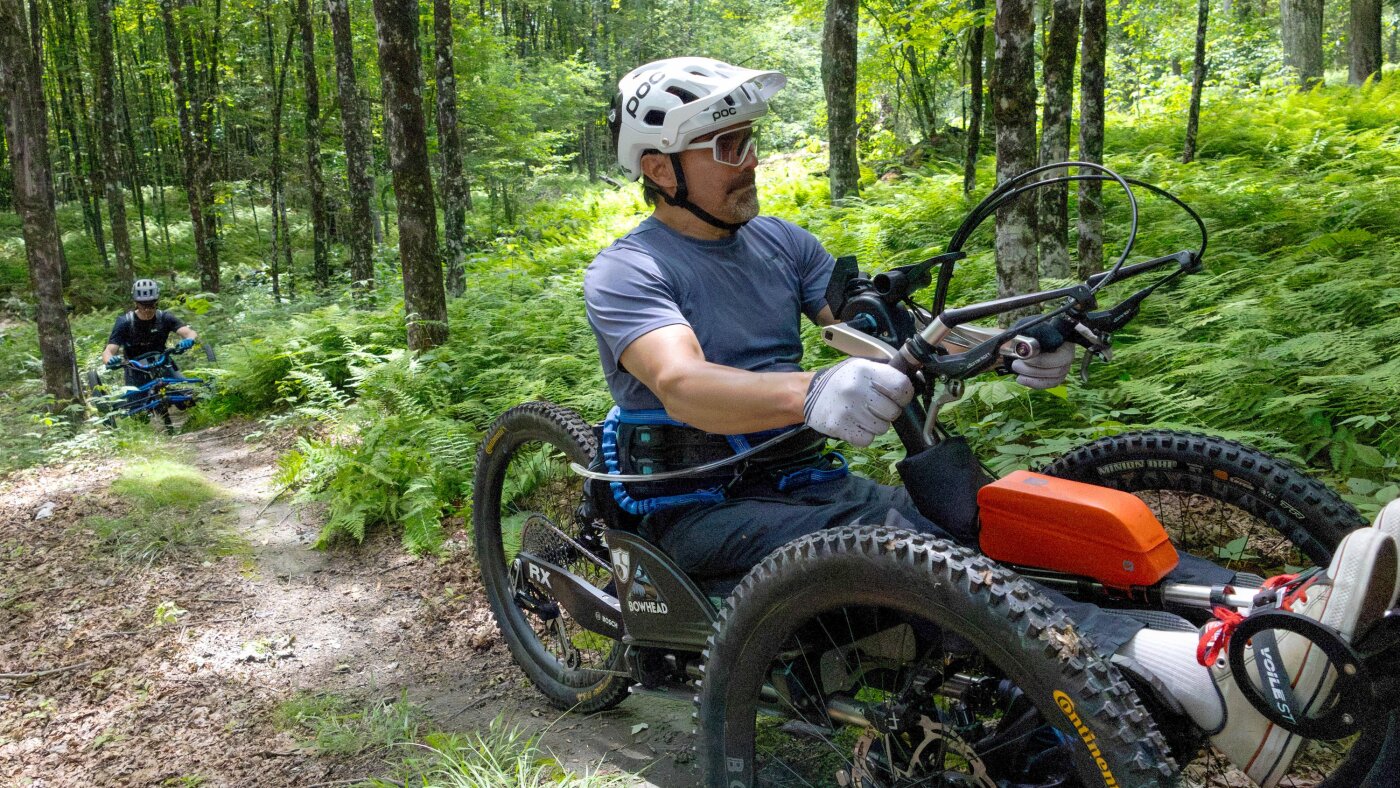
OUTDOOR ACCESS FOR DISABLED IN VERMONT

