Crypto
Getting rich from the crypto rally? Here's how to lock in gains and avoid a crash.

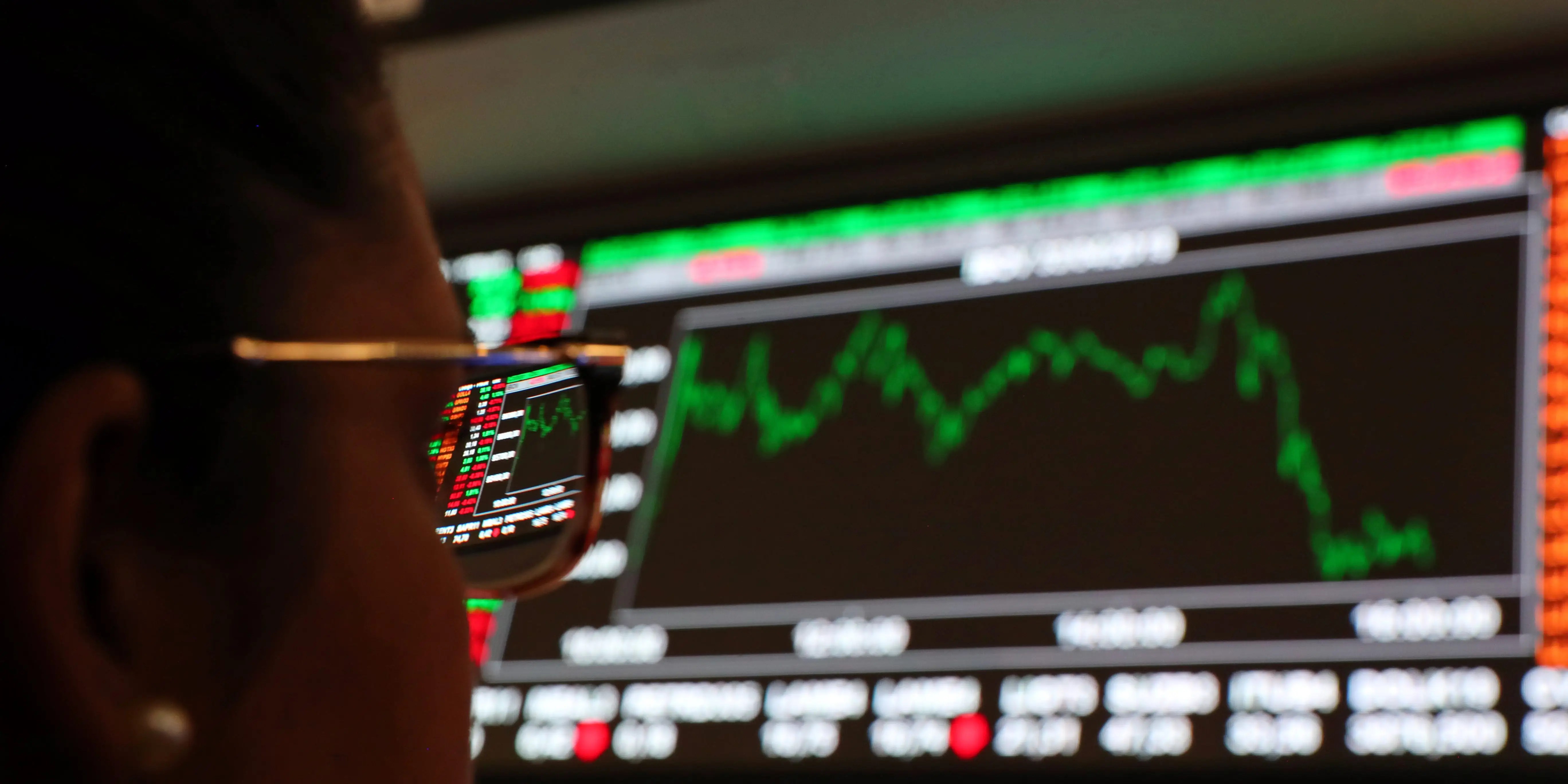
- Bitcoin approached $100,000 as crypto markets surged after Trump’s election victory.
- But crypto is a volatile and risky asset class.
- Taking profits, setting stop-losses, and diversifying into other assets are ways to reduce risk.
Christmas came early for crypto investors.
Ever since Donald Trump’s victory in the presidential election, cryptocurrency markets have been ebullient. Bitcoin, the crypto poster child, has continuously hit new highs this month, sending its price within striking distance of $100,000.
If you’ve been lucky enough to see some of these returns, you might also be worried about an impending crash, as crypto prices tend to be volatile.
While it’s common in crypto circles to glorify “HODLing” or “holding on for dear life” and resist the urge to sell your positions, this can prove to be an imprudent strategy.
Take the story of Glauber Contessoto, for example. The 37-year-old crypto trader became a Dogecoin millionaire in 2021 after his initial $250,000 investment in Dogecoin ballooned in just three months. Then things turned south.
“At the very top, my Dogecoin was worth $3 million. And then after that, the bear market came, and crypto in general dipped down,” Contesso told Business Insider in an interview. “I saw my portfolio go from $3 million all the way back down to about $200,000.”
With crypto assets enjoying another rally, Contessoto says he plans to approach things differently this time, taking profits earlier and diversifying. These are common strategies for investors to lock in gains and reduce the risk of losing their money if prices crash.
Here are some ways experts recommend reducing risks after a big run-up.
Profit-taking strategies
First, have a plan for getting out of an asset.
It’s important to have an exit strategy to minimize potential losses, especially with a risky asset class such as cryptocurrency. According to Fidelity Investments, it’s never too early to start thinking about one. While an exit strategy will be tailored to individual investor risk tolerance and preference, there are a few general guidelines.
When it comes to realizing gains, have a rough idea of how much money you want to make from your cryptocurrency investment, according to the cryptocurrency platform Digital Surge. The best way to realize gains is to start taking profits incrementally once your asset has appreciated to a certain level. For example, you could follow a rule such as taking 5% of profits for every 25% increase in price.
Don’t underestimate how volatile the crypto market is. One common strategy among crypto investors who have seen significant price appreciation is to at least take profits in the amount of your initial investment.
Set up stop-losses
Nobody likes to think about losing money, but having a plan for when your investment isn’t performing well is important for good portfolio management.
Consider setting up a stop-loss to automatically cash out of your position if your cryptocurrency falls below a certain price, saving you from the hassle of constantly monitoring the price of your crypto assets. These can be a fixed price or can trail your investment’s price gains by a certain percentage amount.
Diversify
Your investing strategy will depend on your risk tolerance, but one way to lower downside risk is to spread your money across a number of assets. Contessoto has his entire portfolio in various cryptocurrencies, but even that is a very risky approach. Cannon doesn’t advise following in his footsteps: “Even if you’re a 100% believer, just having your entire net worth in one asset class is risky.”
“If they have their entire net worth tied up in cryptocurrency, I believe that they should diversify,” Cannon added. He suggests stock-market index funds as a starting point to derisk a cryptocurrency-heavy portfolio.
Especially with meme coins like Dogecoin, seemingly arbitrary events can trigger massive swings in cryptocurrency prices, making diversification all the more necessary. In 2021, the Dogecoin rally was fueled largely in part by Elon Musk’s tweets supporting the cryptocurrency. And recently, Dogecoin spiked 15% after news broke of Elon Musk’s appointment as co-head of the Department of Government Efficiency.
At the end of the day, Contessoto embraces the volatility that comes with investing in Dogecoin and other meme coins. After all, it’s pretty unlikely that you’ll be able to quadruple your initial investment and become a millionaire in just a few months if you buy a more traditional, stable asset.
Don’t take Contessoto’s strategy as financial advice, though. It’s easy to glamorize the success stories, but there’s no doubt that investing in cryptocurrency is risky — especially when it comes to meme coins.
“These things are super high risk,” Contessoto said. “They hit and you make life-changing money, but when they don’t, you lose everything.”
Check out Business Insider’s picks for the best cryptocurrency exchanges



Key Takeaways
- LAB token cratered 90% over 48 hours, wiping out billions in market cap.
- ZachXBT slammed top centralized exchanges for failing to halt the July manipulation.
- Investors surged to avoid trading LAB as team token unlocks are set for later in July 2026.
LAB Trade Blames ‘Large Market Participants’
LAB, the native token of the multi-chain trading platform LAB Trade, suffered a catastrophic collapse this week, plunging from just over $7 to $1.25 on Wednesday—a staggering 80% decline in under 24 hours. This crash followed an equally brutal sell-off on Tuesday, which saw the token slide from nearly $17. In total, LAB wiped out nearly 90% of its value in just 48 hours.
The financial fallout was swift: a market capitalization that exceeded $5 billion on Tuesday morning evaporated to just $390 million by 3:30 p.m. EST on Wednesday. The freefall prompted the LAB Trade team to address the panic on X, where they expressed disappointment and deflected blame toward external heavy-sellers:
“While today’s market activity is disappointing, our product roadmap and long-term focus remain unchanged. We’re seeing significant selling pressure from large market participants. Several independent trading firms also hold substantial LAB positions that are not affiliated with our team. We’re working closely with our liquidity partners and continue to monitor market conditions,” the team said on X.
With this crash, LAB joins a notorious lineup of volatile tokens, such as RAVE, RIVER and SIREN. Each of these projects experienced meteoric rises followed by near-instantaneous erasures, sparking widespread “pump-and-dump” allegations against their respective teams and murky distribution networks.
Crypto Sleuth Slams Centralized Exchanges
Prominent on-chain detective ZachXBT, who previously flagged suspicious insider loans and market-maker coordination back in May, blasted major centralized exchanges ( CEXs) for failing to protect retail investors. Taking to X, ZachXBT criticized the lack of proactive intervention:
“Disappointing to see how no action was taken by Binance, Bitget, and Gate earlier to prevent it. If CEXs cared, profits from the accounts manipulating the price would be distributed to users at a minimum. Unlocks for investors were scheduled to begin later this month, however, multiple late vesting changes occurred in the past.”
ZachXBT reiterated his previous warnings that insiders have effectively controlled the entire circulating supply, allowing market makers to orchestrate extreme price manipulation on major exchanges. His final advice to the community was blunt: avoid trading LAB under any circumstances.

ZachXBT Names RAVE, RIVER, SIREN, and LAB as Victims of Bitget-Enabled Market Maker Fraud
Blockchain investigator ZachXBT has renewed his assault on Bitget, accusing the exchange of knowingly enabling market makers to run supply…


ZachXBT Names RAVE, RIVER, SIREN, and LAB as Victims of Bitget-Enabled Market Maker Fraud
Blockchain investigator ZachXBT has renewed his assault on Bitget, accusing the exchange of knowingly enabling market makers to run supply…
ZachXBT Names RAVE, RIVER, SIREN, and LAB as Victims of Bitget-Enabled Market Maker Fraud
Blockchain investigator ZachXBT has renewed his assault on Bitget, accusing the exchange of knowingly enabling market makers to run supply…

STARKVILLE – Potentially higher utility bills and sound pollution topped the list of concerns raised by six residents who addressed the board of aldermen Tuesday about a cryptocurrency mining facility proposed for Industrial Park Road.
Vice Mayor Roy Perkins, who represents Ward 6, said he has fielded similar concerns from constituents following the board’s June 12 work session, during which members heard a presentation about the potential project.
“I know these things need to have full accountability, full transparency and different things,” Perkins said. “… Well you can rest assured the vice mayor is going to be on assignment. I’m going to do my part. I’m not going to do anything that’s going to negatively impact this community.”
The proposed facility would be a specialized type of data center designed to mine cryptocurrency, a digital currency that operates independently of government-backed financial systems. It is stored in digital wallets and fluctuates in value.
Mining facilities use specialized computers that draw large energy loads to secure the digital transactions that take place. The center proposed in Starkville would be much smaller than “hyperscale data centers” that store and process data for large tech companies.
Utility usage topped the concerns of most residents with Pam Jones, the first to speak, set the tone.
“I understand that this is on a smaller scale than the hyper-scale facilities, and I just wanted to be sure that we had ordinances in place that will count the noise, especially at night and that there will be water and power management,” Jones said.
Other residents took issue with what they see as a lack of transparency around the proposed project.
“I was quite disappointed to learn (the mining facility) was not an agenda item today,” said Eadie Keenan, a Ward 7 resident. “… Quite frankly, I have more questions than can fit in three minutes.”
Tiffany Womack, another Starkville resident, echoed Kennan’s concerns, adding utility usage and market volatility to her own list of issues.
“If (the center was) to go bankrupt or something like that, would that possibly fall back on the responsibility of Starkville citizens?” Womack asked.
Mayor Lynn Spruill did not answer each question individually, instead encouraging those with questions to watch the June 12 presentation. Due to the project’s early stage, she noted the board does not yet know answers to all the questions raised during Tuesday’s meeting.

“I brought (the center) to the board as an opportunity for us to begin that process of learning so we are nowhere near making a decision,” Spruill said. “Which is why it isn’t on the agenda and won’t be on the agenda for some time.”
Spruill said the proposed center is currently going through the staff vetting process. Once the process is complete, staff will make a recommendation to the board on whether to pursue the center. At that time, Spruill expects to be able to answer residents’ remaining questions.
Spruill said transparency is important to her and the board while going through the process of vetting the mining center.
“Nothing is being hidden. It’s all out there for everybody to see, and we’ll make decisions based on facts not on Facebook craziness,” Spruill said. “… We want facts, and we want all decisions to be made with facts. And so hopefully that will put some of your concerns (to rest), at least to the extent that this is nowhere near something that will be on the agenda.”
Quality, in-depth journalism is essential to a healthy community. The Dispatch brings you the most complete reporting and insightful commentary in the Golden Triangle, but we need your help to continue our efforts. In the past week, our reporters have posted 24 articles to cdispatch.com. Please consider subscribing to our website for only $2.30 per week to help support local journalism and our community.
Quality, in-depth journalism is essential to a healthy community. The Dispatch brings you the most complete reporting and insightful commentary in the Golden Triangle, but we need your help to continue our efforts. In the past week, our reporters have posted 24 articles to cdispatch.com. Please consider subscribing to our website for only $2.30 per week to help support local journalism and our community.
-

 Los Angeles, Ca41 minutes ago
Heat advisory, beach hazards in effect as Southern California sizzles
-

 Detroit, MI1 hour ago
Teen on moped hit by car after cruising through stop sign in Detroit
-

 San Francisco, CA1 hour ago
Flight of fancy: San Francisco moves to build private luxury airport terminal
-

 Dallas, TX1 hour ago
Dallas’ digital creator economy is booming. Burnout is too.
-
Miami, FL1 hour ago
I went to 2 famous Miami restaurants, a flashy steakhouse and a Cuban hot spot. Here’s how they compared.
-

 Boston, MA1 hour ago
Pedestrian struck and killed in Roxbury – Boston News, Weather, Sports | WHDH 7News
-

 Denver, CO2 hours ago
Santa Fe Drive in Denver closed this weekend for pedestrian bridge construction
-

 Seattle, WA2 hours ago
Police video shows West Seattle Bridge copper wire theft suspect’s arrest


