Connect with us

News

US retailers stretch out Black Friday deals to lure flagging shoppers

Published

on

US retailers stretch out Black Friday deals to lure flagging shoppers

Stay informed with free updates

US retailers are extending their one-day seasonal Black Friday discount offers into a sales event lasting weeks in a bid to tempt US consumers to keep spending, as data suggests that their spree which has driven economic growth is beginning to falter.

Walmart, Amazon, Target and Macy’s are among the US retailers already offering deep discounts under the banner of Black Friday, long before it actually arrives this week.

Despite this, general merchandise unit sales were down 3 per cent year-on-year in the week ending 16 November according to data from Circana, which compiles retail point-of-sale data.

Advertisement

The National Retail Federation forecasts that winter holiday sales will reach almost $1tn in the US in November and December, a record $902 a head. But the rate of spending growth is expected to be about 2.5-3.5 per cent, the slowest since 2018.

“We’re seeing this drag-out of incentives to try to widen the window within which [retailers] can draw more consumers,” said Gregory Daco, chief economist at adviser EY Parthenon. “The likely reality in this holiday season is that we see fairly subdued sales because volumes are growing, but at a moderate pace — and [retailers have] much less pricing power.”

Retailers were “incentivising via discounts and different forms of promotions” for those at the lower end of the income spectrum while also “trying to grab higher-income individuals to make purchases during this wider window”, he said.

Although headline inflation has ebbed from the historic highs of the past couple of years, consumers “remain extremely frustrated by the persistence of high prices”, the University of Michigan said this week in a monthly survey.

Consumer spending has been the main driver of America’s robust economic growth in recent months. But consumer confidence is still well below the long-run average, sentiment surveys show.

Advertisement

The prospect of a fresh round of tariffs under Donald Trump’s incoming presidency raises the risk that inflation could take off again, economists have warned — posing a fresh drag on sentiment.

“Donald Trump’s return to the White House with a Republican majority [probably leads] to higher inflation, slower GDP growth and increased budget deficits,” Roland Fumasi, food and agribusiness analyst at Rabobank, said in a note.

If Trump increases tariffs, that would “lead to a rebound in inflation and a slowdown in economic growth”, he said.

“The negative impact on growth could be mitigated by tax cuts and deregulation by a Republican Congress. However, this would increase the budget deficit and reinforce inflation, especially in combination with reduced immigration,” he added.

Black Friday is one of the busiest times of year for consumer goods stores, and the period between Thanksgiving and Cyber Monday — the Monday following the holiday, when electronics vendors discount goods — is critical to retailers’ annual revenue.

Advertisement

NRF chief economist Jack Kleinhenz said that households’ finances were in “good shape”, offering “an impetus for strong spending heading into the holiday season”, although “households will spend more cautiously”.

Brian Cornell, Target chief executive, told analysts this week that consumers were becoming “increasingly resourceful” in the way that they shopped, “focusing on deals and then stocking up when they find them”.

The store group, which disappointed Wall Street this week by forecasting flat sales in the fourth quarter, ran a three-day “Early Black Friday” promotion in early November. On Thursday it launched a promotion titled “Black Friday deals” which will last to the end of the month, including items such as half-price Christmas trees and headphones.

Walmart, the world’s largest retailer, launched the first of two week-long “Black Friday Deals” events on November 11. The second will begin on Monday, offering markdowns on televisions, iPhones, toys and jeans, among other items.

Amazon’s “Black Friday Week” began on Thursday. Home Depot’s “Black Friday Savings” offer lasts from November 7 to December 4.

Advertisement

Additional reporting by Will Schmitt in New York and Madeleine Speed in London

News

With the white nationalist group Patriot Front, what you see is not what you get

Published

on

With the white nationalist group Patriot Front, what you see is not what you get

Members of the group Patriot Front ride the subway as a commuter looks on, in Washington, D.C., on July 4.

Cheney Orr/Reuters


hide caption


toggle caption

Advertisement

Cheney Orr/Reuters

The sight of hundreds of masked men roaming the streets of Washington, D.C., on July Fourth weekend, wearing khakis, blue shirts and uniform patches, was chilling to some of the city’s residents.

For many Americans, it was the first they heard about Patriot Front, a white nationalist organization that was born out of the deadly 2017 Unite the Right rally in Charlottesville, Va. A now-viral Reuters photo prompted reflections on the experience of a lone African American woman who was photographed in a Metro subway car, surrounded by white supremacists.

The planned demonstration of force was timed to bring a fringe group of extremists into public view as the nation marked 250 years of its independence. Indeed, the stunt succeeded in earning the group media coverage across mainstream outlets, amplifying its brand and potential to reach new recruits. On this occasion, the members refrained from engaging in violence and property damage, projecting an image of law-abiding, orderly activism.

Advertisement

But those who are closely familiar with Patriot Front’s history and operations warn: Don’t believe what you see.

“That is not who they are in private,” said Len Kamdang, director of the Criminal Justice Project at the Lawyers’ Committee for Civil Rights Under Law. “Although they were on their best behavior [last] weekend, this is a dangerous group that commits acts of violence all over the country.”

Patriot Front’s history of violence and property damage

Kamdang’s organization sued members of Patriot Front for vandalizing a public mural dedicated to the tennis legend and Black activist Arthur Ashe in Richmond, Va., in 2021. Ashe, who was inducted into the International Tennis Hall of Fame in 1985, was born in Richmond and his legacy is a continuing source of pride to members of that community.

“A couple of Patriot Front members showed up under cover of night and vandalized the mural,” Kamdang said. “They painted white stencils all over. … They literally tried to whitewash him and they put their symbols of hate all over — their stencils, their slogans. And all the while they were caught on video. And that video leaked using some of the most horrible language that you can imagine.”

In many jurisdictions, law enforcement can seek additional hate crime charges or sentencing enhancements in cases where illegal acts appear to have been motivated by racial bias. But in this case, Kamdang said, Patriot Front members faced no criminal charges and their identities were only revealed when online activists later infiltrated the group and leaked internal records.

Advertisement
Continue Reading

News

Graham Platner makes it official in Maine, submitting paperwork to leave Senate race

Published

on

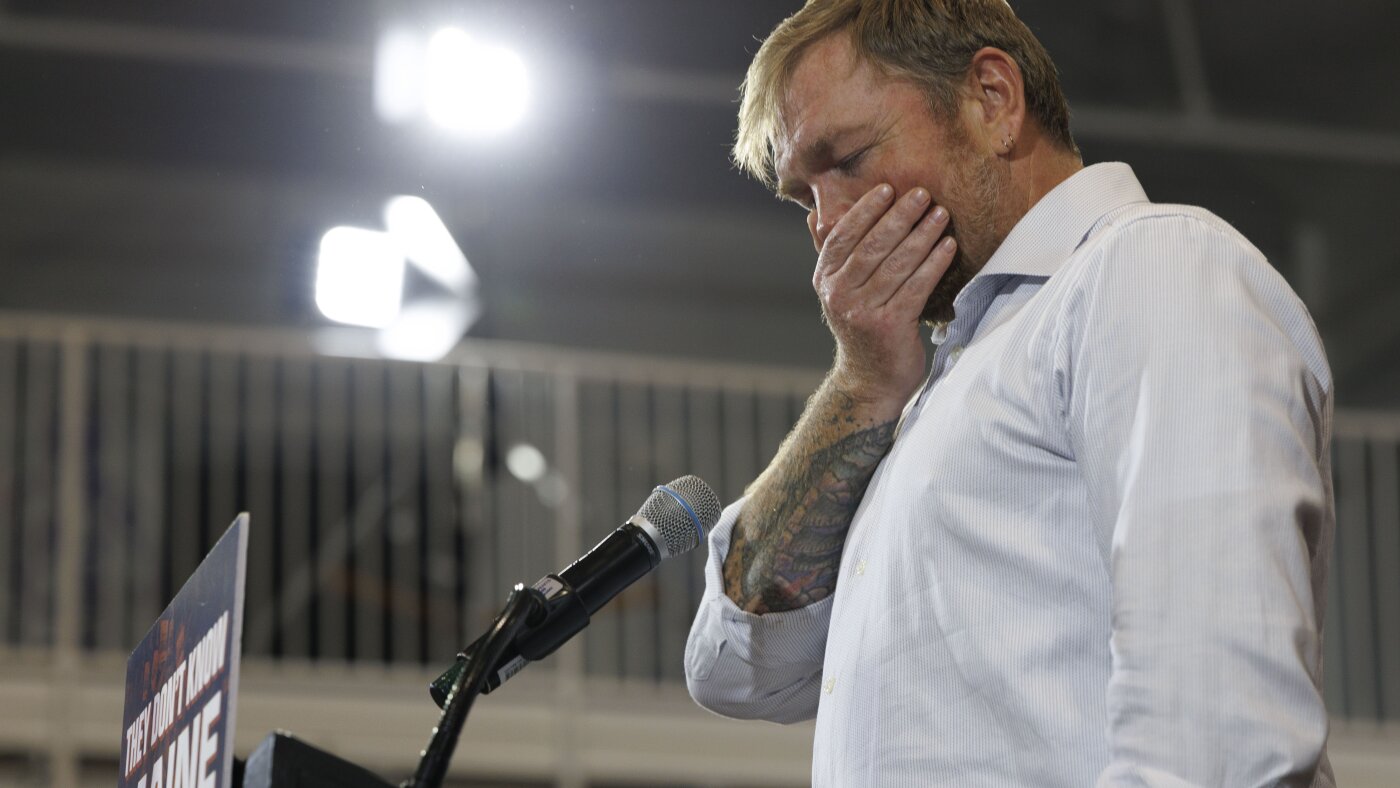
Graham Platner makes it official in Maine, submitting paperwork to leave Senate race

Now-former Democratic Senate candidate Graham Platner speaks at his primary election night event on June 9 in Blue Hill, Maine. Platner officially dropped out of the race July 10 following rape allegations from a former romantic partner that he denies.

CJ Gunther/Getty Images


hide caption


toggle caption

Advertisement

CJ Gunther/Getty Images

Graham Platner, Maine’s Democratic nominee for Senate, is officially out of the race.

The Maine Secretary of State said Platner filed the necessary paperwork to withdraw his candidacy two days after he announced he planned to do so following an accusation of rape by a former romantic partner. Platner denies the allegation.

The Maine Democratic Party has until July 27 to pick Platner’s replacement.

Advertisement

In his withdrawal notice, Platner said “people are desperate for change” and that’s why they voted “for a new kind of politics” by making him the Democratic nominee. He expressed gratitude for those who supported his campaign and said that he will continue to fight for “the movement we have built together and the future we believe in.”

He ended his notice with a strong statement aligned with the progressive platform.

“F*ck ICE. Free Palestine. Up the Hearts.”

Platner announced his plan to withdraw from the race in an 11-minute video he posted to social media on July 8. He said he had no choice but to suspend his campaign, citing it was no longer viable financially.

Advertisement

“We are going to lose our ability to fundraise. We are going to lose our ability to access voter data. We are going to lose all of the things that any campaign needs on the basic level simply to function,” he said.

Platner added that dropping out was not an admission of guilt. Rather, the decision, he said, is to keep the progressive movement in Maine alive to defeat Republican Sen. Susan Collins in November. Platner blamed the “political establishment” for his downfall and argued the goal was to force him out of the race.

“We built a campaign. We engaged in electoral politics. We motivated people. We banded together. We did it the way that we were told we are supposed to make change and we won. And now they are not going to let us have it. Not if it’s me,” he said.

Continue Reading

News

Waymo called the cops on teen riders, raising privacy concerns

Published

on

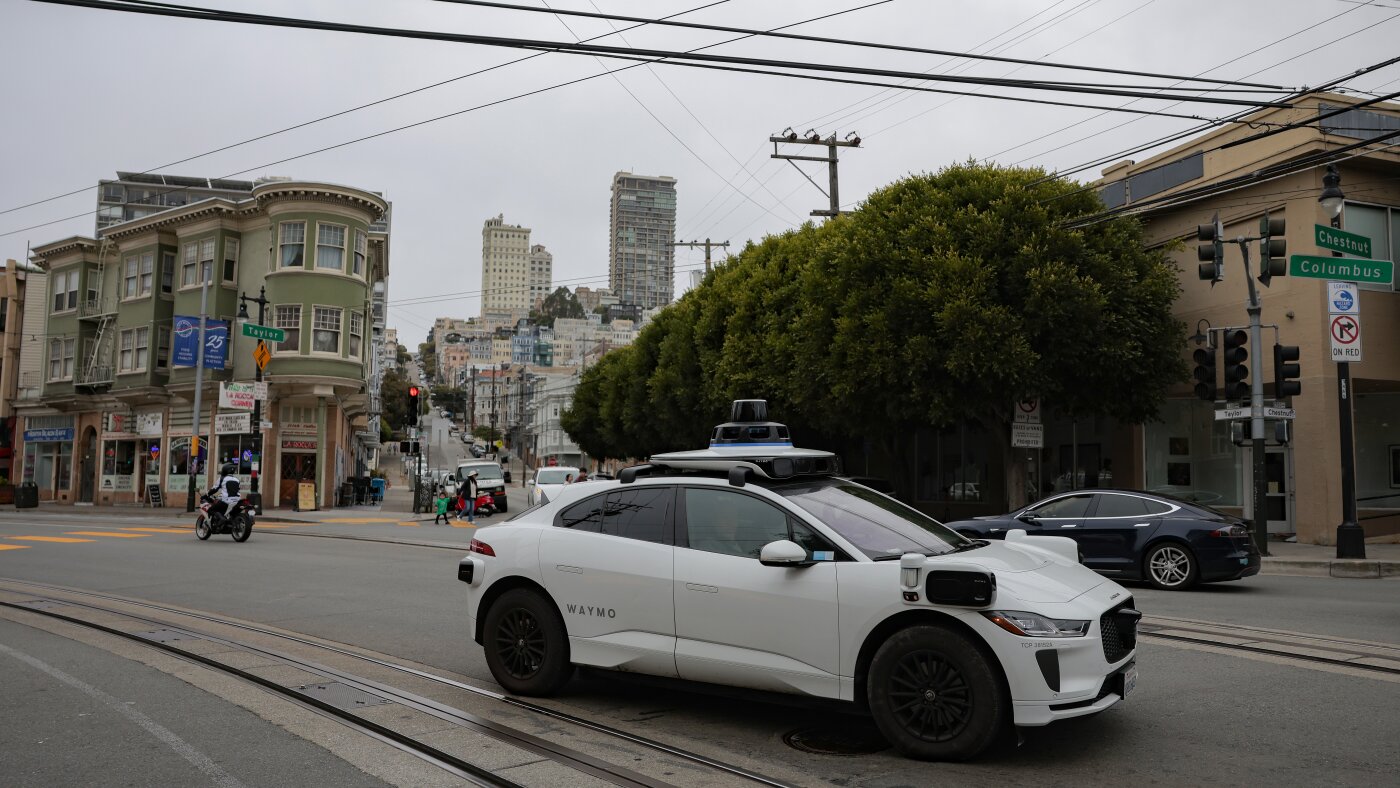
Waymo called the cops on teen riders, raising privacy concerns

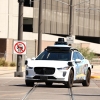
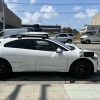
A Waymo robotaxi drives in San Francisco’s North Beach neighborhood this week.

Heather Diehl/Getty Images


hide caption


toggle caption

Advertisement

Heather Diehl/Getty Images

Police in San Mateo, Calif., posted Monday on social media that they had apprehended a pair of teenagers from a Waymo driverless robotaxi after the company alerted authorities to suspected criminal activity. It’s the latest incident involving video surveillance of passengers and others by autonomous vehicles — raising questions about the limits of privacy in such vehicles.

The Facebook post by the San Mateo County Police said: “Parents do you know where your teens are? @waymo does!”

The 15-year-olds were allegedly drinking alcohol and shooting toy guns from the car, according to the police. They said Waymo’s systems detected behavior that then triggered a safety response, after which the company disabled the vehicle and contacted police.

Advertisement

Waymo’s cars, equipped with an array of cameras, microphones and other sensors to monitor passengers and other nearby vehicles, are becoming more common in cities across the United States. Experts say the detention of the two teens in San Mateo highlights a potential — but not inevitable — trade-off between privacy and convenience. It also questions the extent to which companies similar to Waymo are required to hand over private data, including audio and video of passengers, in situations where a crime is suspected.

NPR reached out to Waymo, which is owned by Alphabet, the parent company of Google, for comment on the details of the San Mateo incident and how the company responded, but did not hear back. But on its website, the company says that as many as 29 cameras in its autonomous cars provide an all-around view and “are designed with high dynamic range and thermal stability, to see in both daylight and low-light conditions, and tackle more complex environments.”

“There already exist laws that govern duty to report or even duty to protect” for carriers such as Waymo, according to Alessandro Acquisti, a professor of information technology at the MIT Sloan School of Management. “The privacy problems arise when and if driverless carrier companies used such laws or ethical obligations as a pretext for blanket, indiscriminate accumulation of identifiable data for unspecified future purposes.”

That includes not just monitoring people inside the cars, but outside too. Take, for example, a hit-and-run investigation last year in Los Angeles. Media reported that the police inquiry was aided by video captured by a Waymo taxi that had a clear view of the crime. Critics suggested at the time that authorities were using the company’s vehicles as a mobile surveillance platform. And during 2025 protests in Los Angeles against Immigration and Customs Enforcement crackdowns, demonstrators vandalized Waymos, apparently angry that video recorded by the vehicles could be used by police, although there is no evidence that happened.

Continue Reading
Advertisement

Trending