Lifestyle
Video: Why Oakland Is Saying Goodbye to Pro Baseball


The Major League Baseball team the Athletics played their final games this week in the Oakland Coliseum, which has been their home base in California for the past half-century. They’re expected to relocate to Las Vegas for 2028 at the whim of their billionaire owner, John Fisher, and in the meantime play in a minor-league ballpark in Sacramento. Jack Nicas of The New York Times explains how the plan to build a stadium in Las Vegas is driven by a single factor — money — and what it’s meant to Oakland.



Fresh Air critic Justin Chang says All of a Sudden (starring Tao Okamoto and Virginie Efira) was his favorite movie at the 2026 Cannes Film Festival.
Courtesy of the Cannes Film Festival.
hide caption
toggle caption
Courtesy of the Cannes Film Festival.
The first Cannes Film Festival I ever attended, in May 2006, was a deliriously star-studded affair. Penélope Cruz, Ethan Hawke and Kirsten Dunst walked up the red-carpeted steps. Future Oscar hopefuls like Volver, Babel and Marie Antoinette competed for the Palme d’Or, the festival’s top prize. There were world premieres of blockbusters like The Da Vinci Code and X-Men: The Last Stand — terrible movies, but great photo ops. And near the end of the festival, I walked into a film I knew nothing about called Pan’s Labyrinth and emerged knowing I’d seen a classic.
This year’s Cannes kicked off with a 20th-anniversary screening of Pan’s Labyrinth, but otherwise, there wasn’t much of that 2006-era razzle-dazzle. The major Hollywood studios tightened their belts and stayed home, perhaps with still-fresh memories of the stinging Cannes reception for the last Indiana Jones movie back in 2023.
But there were stars here and there. Demi Moore and Stellan Skarsgård were on this year’s jury. Adam Driver and Miles Teller showed up for the world premiere of James Gray’s terrific 1986-set crime drama, Paper Tiger, in which they play brothers who unwisely go into business with the Russian mob. Driver and Teller are outstanding, and Scarlett Johansson is heartbreakingly good as a family member forced to deal with the fallout.
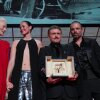
Paper Tiger deserved a prize, but it left the festival empty-handed. Instead, the jury awarded the Palme d’Or to the gripping and sometimes infuriating small-town drama Fjord. It’s the second Palme win for the Romanian filmmaker Cristian Mungiu; he won his first in 2007 for the movie 4 Months, 3 Weeks and 2 Days.
In Fjord, Sebastian Stan and Renate Reinsve are almost unrecognizable as an evangelical Christian couple who have recently moved from Romania to a small Norwegian town with their five children. When the couple are accused of child abuse, Fjord becomes a fierce battle between the forces of religious conservatism and secular liberalism. It may be set in Norway, but it’s likely to resonate with American audiences when it opens later this year.
I hope there will also be robust turnout for Minotaur, a perfectly chilled tale of adultery and murder that won the Grand Prix, or second place. It’s a remake of the 1969 Claude Chabrol drama La Femme Infidèle, this time set in Russia, not long after the 2022 invasion of Ukraine. The director of Minotaur, Andrey Zvyagintsev, nearly died of COVID during the pandemic, and it was moving to see him back in Cannes with a film this powerful and uncompromising in its critique of the Putin regime.
One of the buzziest out-of-competition titles was Club Kid, a hugely enjoyable comedy directed by the actor, writer, comedian and social-media star Jordan Firstman. He plays a gay New York City club promoter who’s sent reeling when he learns that he has a 10-year-old son. The result is basically a ketamine-laced version of every adult-bonds-with-cute-kid movie you’ve ever seen, but Firstman is a real talent.
Firstman’s also one of several queer filmmakers who made a bold impression at the festival this year. Jane Schoenbrun, the director of the inventive transgender allegory I Saw the TV Glow, came to Cannes with their third feature, Teenage Sex and Death at Camp Miasma. Starring a very game Hannah Einbinder and Gillian Anderson, the movie is a clever homage to, and deconstruction of, ’80s and ’90s slasher thrillers, digging deep into the often-unspoken connections between our love of pop culture and our hang-ups about sex and desire.
Along with Paper Tiger, Club Kid and Camp Miasma were welcome reminders that American cinema isn’t close to dead, at Cannes or anywhere else. Even so, I can’t say that I minded the general absence of Hollywood at the festival this year. One of the reasons I keep returning to Cannes is that it shows interesting movies from all over the world — movies like the gorgeous and moving Rwanda-set drama, Ben’Imana, about efforts to bring about truth and reconciliation years after the 1994 genocide. The film earned its director, Marie-Clémentine Dusabejambo, the Caméra d’Or prize for best debut feature.
My favorite film at Cannes this year was All of a Sudden, from the Japanese director Ryûsuke Hamaguchi. Set in and around a Parisian elder-care home, it uses the close bond between two women — one French and one Japanese — to raise haunting questions about how we live, how we die, and most of all, how we talk to each other. Like Hamaguchi’s Oscar-winning Drive My Car, All of a Sudden is a reminder that something as simple as a conversation between friends can make for sublimely moving cinema. I can’t wait to see it again, and I can’t wait for you to see it, too.

Cary Elwes may not have been born in Los Angeles, but it’s probably fair to consider the native Brit an honorary Angeleno. The “Princess Bride” star was born in and spent his formative years kicking around London; he moved to L.A. in 1990, on his brother’s recommendation. He met his wife, photographer Lisa Marie Kurbikoff, at a cookoff in Malibu about a year later and the two married in 2000. A daughter, Dominique, arrived in 2007.

In Sunday Funday, L.A. people give us a play-by-play of their ideal Sunday around town. Find ideas and inspiration on where to go, what to eat and how to enjoy life on the weekends.
Elwes has spent his years in California not just establishing his family life, but also further enmeshing himself in Hollywood. He’s appeared in everything from “Saw” to “Ella Enchanted,” and played a corrupt government agent in a couple of “Mission Impossible” movies. His latest role is as a former cop turned private detective in Peacock’s new crime thriller, “M.I.A.,” streaming now.
“I’ve been out here for quite a bit now and while [2025’s] fires were pretty devastating — changing a lot of the landscape and people’s lives in ways that none of us could have imagined — I’m hopeful,” Elwes says. “I feel like we’re going to build back stronger and better. Things can seem dark sometimes, but I still have a spark of hope in my heart.”
Here’s how Elwes would spend his perfect, hopeful Sunday in Los Angeles.
This interview has been edited for length and clarity.

10 a.m.: Coffee and a chat
We wake up around 10 a.m., which is kind of late for me. Then we’ll have our coffee. I tend to lean toward Gelson’s beans, which I find have a particular flavor I tend to like. I do like my coffee. It’s probably the only addiction I really have.
Anyway, after I finish up my coffee, I’ll typically ask my wife and daughter what they’d like to do for the day. My daughter is 19, and she’s terrific. I always tell my wife she’s the best production we’ll ever do together.
Noon: Leisurely lunch
My wife is very fond of this Italian restaurant in Woodland Hills called Casaléna. It’s right off Ventura Boulevard and it’s terrific. Even their salads are extraordinary. It’s fairly new, too, but it’s always booked out solid so you really have to make a reservation in advance. Luckily, my wife and daughter are organized, so if they want to go there, they’ll have planned ahead.

2 p.m.: Head to the movies
We like to go see movies at the Imax at Universal CityWalk. The quality of that theater is very, very good and seeing films on the biggest screen possible is important to us.
My wife and I went on a date to see “Michael” in Imax, which was sold out and it was phenomenal. Antoine Fuqua did a great job and our friend Colman [Domingo] was honestly transformative as Joe Jackson. And Jaafar Jackson, who’s Michael’s nephew, is remarkable. It’s an extraordinary film, but sold out with people cheering and dancing? That made it a phenomenon. People were interacting with the movie as it played and it was remarkable.
If we’re not interested in whatever’s playing at the time, we might go for a hike in Tapia Park. I grew up watching “MASH” as a kid and when I realized they filmed there, I thought “How blessed am I to be living just a few miles from where such an iconic series was made?”
It’s a really beautiful park too. If you take a long hike, you’ll see waterfalls and lots of wildlife. On a nice afternoon, taking the dog out there for a walk? You can’t beat it.
There’s so much rich history here. I remember going on the Universal Studio Tour for the first time when I visited L.A. as a kid. They had a thing where they’d pick a couple of tour guests and the guide would put you on camera in front of a blue screen and you’d reenact a scene from a movie. The tour also took you by the “Jaws” shark coming out of the water and through an old western town, and I found out years later that a director friend of mine had been making westerns there when I was a kid and I didn’t even know it.
That tour was fantastic. With parting the sea for “The Ten Commandments” and then the boulders coming down the hill during the rockslide? Absolutely magnificent.

5 p.m.: Pick a Getty, any Getty
Depending on what time our movie ends or if we just end up going for a walk instead, we might go over to the Getty Center. We love it there. Usually we’ll go in the afternoon — maybe we’ll have a late lunch up there — and sometimes we’ll go to the Getty Villa instead, which luckily survived the Palisades fire.
We just love being around art. We’ll walk through the entire collection, plus whatever exhibit they have on at the time. We’ll go to LACMA sometimes, too, or even the Academy Museum to see whatever new exhibits they have.
Culturally, we really try to keep busy. Sometimes we’ll want to sit at home and play Spite and Malice or watch a show on TV, but mostly I try to go out and encourage my family to do the same, especially because we live in such a wonderfully diverse, cultural city.
7 p.m.: Taco time
I always leave meal decisions up to the girls, and sometimes they like to go out and get tacos. We like the fish tacos at Escuela. It’s pretty close to Quentin Tarantino’s movie theater, the New Beverly Cinema, which we like to go to as well. I took my daughter to see “Jaws” there, in fact, which she loved.

9 p.m.: More movies
I’m trying to educate my daughter in the films and TV shows that I watched growing up. She’s taking a film history class in school. She wants to be an actor as well, so I want her to have an understanding of the history of film and history of performance, so I show her the great performances that inspired me as a kid and encourage her in that way.
When I grew up in England, we literally had two channels, both in black and white. Young people can’t quite wrap their heads around that now, but it really did make you pay attention because you had to be sitting in front of the television to catch a show or movie you wanted to watch.
I remember that the BBC, particularly on weekends, would have matinee screenings of movies. We actually had pretty good quality TV in England growing up, but they’d also heavily focus on British films from the ‘40s all the way through to the ‘60s so I got my education from that particular style of films, like the postwar films, ‘50s films, and the Ealing comedies. David Lean and Laurence Olivier, Ralph Richardson … a lot of the films they were in or directed really helped shape who I am today.
Alec Guinness and Peter Sellers had a very strong influence on me as a kid, too, so I really want to try to share with my daughter why these films meant so much to me.

10:30 p.m.: Books in bed
I’m not really a late-night person anymore. I used to be when I was a kid, but now, unless we’re out on a date, my wife and I are homebodies.

Julia Demaree Nikhinson/AP
A federal judge has blocked President Trump from adding his name to the Kennedy Center, saying that the Washington, D.C. arts complex was named for the late president John F. Kennedy. In a ruling on Friday, the judge also temporarily blocked the administration from closing the Kennedy Center for a planned two-year renovation that was slated to begin in July.
U.S. District Court Judge Christopher Cooper wrote in his ruling that: “The Kennedy Center’s organic statute makes crystal clear that the Center is to be named for President Kennedy, and it cannot bear any other formal name or public memorial based on the Board’s unilateral say-so. Congress gave the Kennedy Center its name, and only Congress can change it.”
A Kennedy Center spokesperson told NPR in an email Friday afternoon that it will appeal the decision. Roma Daravi, vice president of public relations for the complex, wrote: “We will review the decision carefully though the reality remains — the Center requires an urgent and significant restoration – a truth that even the plaintiff acknowledges. With $257 million secured by President Trump and approved by Congress, the resources are in place and we remain committed to pursuing every lawful avenue to ensure the Trump Kennedy Center is restored as a national cultural landmark for all Americans to enjoy.”
NPR has requested comment from the White House, but did not receive an immediate reply.

As part of his ruling, Judge Cooper ordered that all signage and online materials referring to the “Donald J. Trump and John F. Kennedy Memorial Center for the Performing Arts,” the “Trump Kennedy Center,” or anything similar must be removed within 14 days.

The judge also blocked, for now, plans to close the Kennedy Center for two years of renovations. Trump and the center’s current voting board members – all of whom were selected by the president, who also became chairman of the center last year – had planned to start the renovations in early July, just after the 250th anniversary celebrations. In his 94-page ruling, Judge Cooper called the renovation plans “murky,” and wrote: “None of the board members had sufficient information in advance of the March 16 meeting to make a well-considered decision to close the center.” The center has been winding down its programming and has already dismissed most of its programming staff.
Referring to a Truth Social post written by President Trump in February, the judge also wrote: “There was no ‘one year review of the Trump Kennedy Center, that has taken place with Contractors, Musical Experts, Art Institutions, and other Advisors and Consultants, deciding between’ complete and partial closure, as President Trump claimed.”
Cooper’s ruling resulted from a lawsuit filed in March by Rep. Joyce Beatty of Ohio, an ex-officio member of the Kennedy Center board whose voting rights there were stripped last year.
The ruling does not prevent the Kennedy Center’s board from a future closure, but the judge said that it should do so only after the board has “sufficient information to make a considered, independent decision, taking account of its obligation to both maintain and operate a premiere arts venue and its solemn duty to memorialize a fallen President.”
-

 Finance2 minutes ago
Bank Regulation and Risks to Financial Stability | The Regulatory Review
-

 Fitness9 minutes ago
Reviewers Share the Only Gear You Need for the Ultimate Home Gym Setup
-

 Movie Reviews17 minutes ago
Film Review: “Pitfall” – MediaMikes
-
World27 minutes ago
AI helped a musician with Parkinson’s finish his new album when he could no longer play guitar
-

 News32 minutes ago
Video: Judge Orders Removal of Trump’s Name From Kennedy Center
-
Lifestyle1 hour ago
Back from Cannes, a critic shares the films he’s most excited to see again
-

 Technology1 hour ago
Nvidia, Microsoft, and Arm are all teasing Nvidia’s new N1X laptop processors
-

 World1 hour ago
Christian farming communities under siege as US report names Fulani militants Nigeria’s deadliest threat


