
Connect with us

California

Commentary: Southern California forests are burning. Protect them from their biggest threat — people

Published

on

Commentary: Southern California forests are burning. Protect them from their biggest threat — people


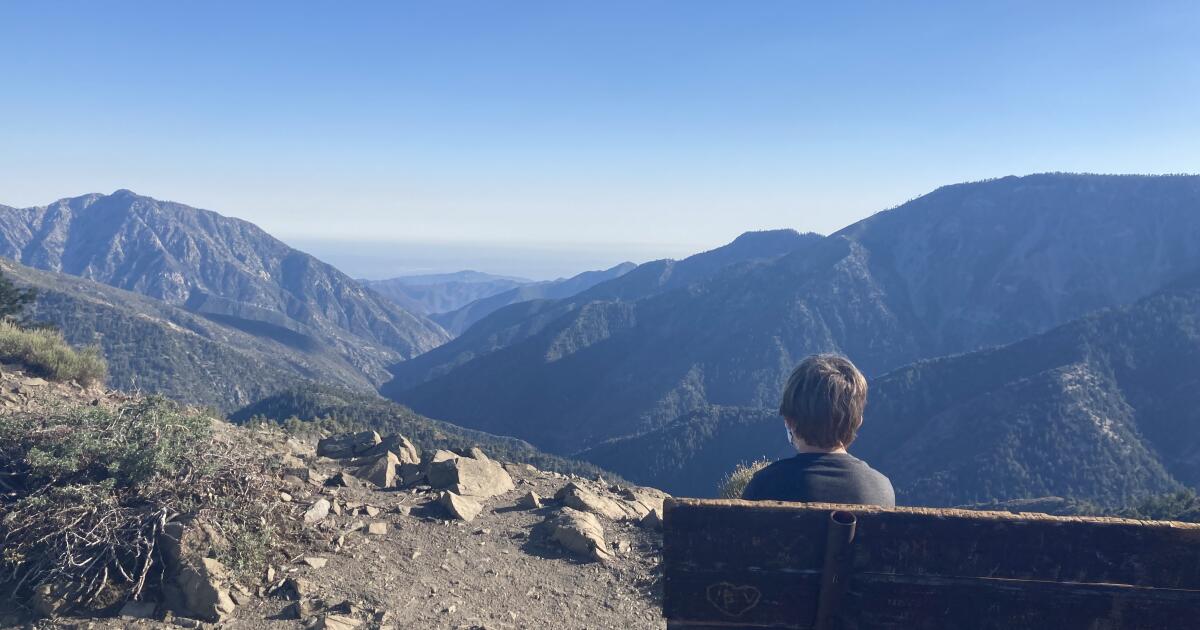
Every hiker in Los Angeles knows that sinking feeling.

You stare at the mountains (because that’s what we do when we have a moment) and see a dark column of smoke. Almost instantly you have a good idea of which trails might be burning and, depending on if it’s hot, dry and the right time of year, whether the fire will eventually reach your spot.

In 2020, the Bobcat fire blowtorched a few of my family’s beloved spots in the Angeles National Forest. Now, four years later, the 55,000-acre Bridge fire is taking out a few of our remaining L.A.-adjacent mountain retreats, upending lives in forest communities such as Wrightwood and imperiling mountain lions, bears, bighorn sheep, frogs and other wildlife.

To call this heartbreaking grossly understates the loss. Imagine if an earthquake wiped out Disneyland or Dodger Stadium — devastating, yes, and thankfully rebuildable. But when a mountain forest burns in the kind of extreme fires of late, nature probably won’t rebuild it in my lifetime. That most of these disasters have preventable human causes makes the loss obscene.

Advertisement

Human causes? Though climate change gets the attention, simple human recklessness or malice often lights the first spark, then drought and extreme heat take over.

Investigators haven’t determined what started the Bridge fire. But, police arrested an arson suspect in connection with the Line fire in the San Bernardino Mountains (39,000 acres), and the Airport fire in Orange County (24,000 acres) was sparked by a public works crew moving boulders with heavy machinery.

Other major fires have had more innocuous origins. In 2018, the Carr fire near Redding burned more than 1,000 structures and an area of forest roughly the size of the city of San Diego, killing eight people. That fire started on National Park Service land after a driver’s trailer had a flat tire, causing a rim to scrape the road and shoot sparks into tinder-dry brush.

There’s no argument: Humans present the clearest and most present fire danger to wildlands. And in the L.A. area, roughly 18 million of us live near more than 2 million acres of government-managed forests.

So here’s what the U.S. Forest Service, the National Park Service and California State Parks ought to do when conditions are predictably ripe for cataclysmic fire: Close their forests.

Advertisement

When a major heat wave bears down on us — as one did before all the fires burning around us now, and before the Bobcat fire in 2020, and before the Carr fire in 2018 — tell drivers, hikers, hunters and everyone else looking to the mountains for relief: Don’t come here, because it’s too dangerous, and we don’t want you starting another fire.

This wouldn’t be without precedent. Just before Labor Day weekend in 2021, the Forest Service temporarily closed nearly all of its land in California. Though the mountains around Los Angeles were quiet at the time, the rest of the state was experiencing its second-worst fire season on record — second only to 2020, when more than 4% of California’s total land area burned. At a time of extreme danger, the Forest Service wanted to ensure resources could be used fighting fires rather than evacuating visitors.

For Southern California and other places spared another year of catastrophe, the closure was preventive. The Forest Service said as much when it announced its order: “The closure order will also decrease the potential for new fire starts at a time of extremely limited firefighting resources.”

I don’t recommend such preemption lightly. Access to public lands is soul food for outdoor-minded city dwellers like me, not to mention the right of every American. That we in Los Angeles have so much accessible wilderness in our backyard is an immense privilege.

Nor do I believe this would prevent every fire, or even most fires. The Line fire in San Bernardino County has burned mostly Forest Service land, but investigators believe an arsonist started it in an adjacent suburb. Power lines and lightning strikes have also wreaked havoc on our forests.

Advertisement

But managing access to forests needs to reflect the reality of climate change. That includes telling people to stay out for a week or two when the foliage is bone-dry and another hellish heat wave appears in the weather forecast. We’ve long had the tools to predict the conditions for extreme fire dangers; it’s a shame not to use those tools to better protect our struggling forests from us, and our way of life, from going up in smoke.


Source link

California

How much water is in Lake Shasta, California reservoirs in 2026?

Published

on

How much water is in Lake Shasta, California reservoirs in 2026?


play

Lake Shasta and California’s other lakes and reservoirs got a big boost from wet holiday storms. Nearly two weeks into 2026, all of the state’s 17 major reservoirs are brimming above their 30-year average after atmospheric rivers dumped heavy rain on much of the state starting the week before Christmas, lasting into Wednesday, Jan. 7.

Both the rain and the rainwater draining from the ground into lakes helped raise reservoir levels, the National Weather Service said.

Advertisement

Lake Shasta waters lapped just short of 29 feet from the top on Jan. 11, after rising about 45 feet since Dec. 18 — the day before the first heavy winter storm of the season rolled over Shasta County, according to the California Department of Water Resources.

Two other major Southern California supply reservoirs were full or near full as of Jan. 11, according to state data.

  • Lake Cachuma is 101% full. The reservoir contained 58% more water than its 30-year historic average.
  • Lake Casitas is 98% full, 27% more than its average.

Lakes continue to fill for days after storms pass as the heavily saturated soil continues to drain into waterways, said meteorologist Bill Rasch at the weather service’s Sacramento branch.

Based on state water resources department reports, here’s how much water other major reservoirs held on Jan. 11, starting with the three biggest.

Advertisement

How full is Lake Shasta?

Lake Shasta, the biggest state-owned reservoir, was 82% full, according to the state’s latest data. With several months left to go in the area’s rainy season, the lake was 35% more full than its historic average over the past 30 years.

However, Lake Shasta started the water year 4% higher than average on Oct. 1, 2025, after Northern California’s super wet spring.

How full is Lake Oroville?

The state’s second-largest reservoir, Lake Oroville — located 80 miles north of Sacramento in the Sierra Nevada foothills — was 78% full and held 39% more water than usual on Jan. 11.

Advertisement

Oroville also started the water year with an advantage: It was 7% more full than usual on Oct. 1.

How full is Trinity Lake?

Another far Northern California reservoir and the state’s third largest, Trinity Lake, was 84% full and held 38% more water than usual.

It’s the second year in a row that the lake has shown healthy water levels. Trinity’s waters plummeted over several years of drought, dropping to to 40% of its historic average in January 2023.

While only about 25 miles northwest of Lake Shasta, Trinity fills more slowly over the calendar year and requires more time to recover after drought than its counterpart, the Bureau of Reclamation has said.

How much water is in 12 other California lakes and reservoirs

Here’s how much water is in 12 other major state reservoirs a week into 2026, according to water resources department data, and how much more water they contain compared to their historical average on Jan. 11.

Advertisement
  • New Bullards Bar (40 miles northeast of Marysville in Yuba County): 82% full, 29% more than average
  • Folsom Lake (25 miles east of Sacramento): 60% full, 41% more than average
  • Camanche Reservoir (45 miles southeast of Sacramento): 73% full, 22% more than average
  • Lake Sonoma (30 miles north of Santa Rosa): 70% full, 21% more than average
  • San Luis Reservoir (70 miles east of Santa Cruz): 73% full, 9% more than average
  • New Melones Reservoir (55 miles east of Stockton on the Stanislaus River): 73% full, 29% more than average
  • Don Pedro Reservoir (45 miles east of Modesto): 80% full, 17% more than average
  • Castaic Lake (45 miles north of Pasadena): 78% full, where it stands on average
  • Lake McClure (50 miles east of Modesto): 69% full, 52% more than average
  • Diamond Valley Lake (40 miles southeast of downtown Riverside): 94% full, 30% more than average
  • Millerton Lake (20 miles north of Fresno): 77% full, 40% more than average
  • Pine Flat Lake (35 miles east of Fresno): 45% full, 24% more than average

Jessica Skropanic is a features reporter for the Record Searchlight/USA Today Network. She covers science, arts, social issues and news stories. Follow her on Twitter @RS_JSkropanic and on Facebook.


Source link

Continue Reading

California

Drunk California mom convicted of murder after toddler drowned while she chatted with men on dating apps

Published

on

Drunk California mom convicted of murder after toddler drowned while she chatted with men on dating apps


A California mother has been found guilty of murdering her 2-year-old daughter after the child drowned in the family’s swimming pool while the mom was intoxicated and chatting with men she met on dating apps.

Kelle Anne Brassart, 45, was convicted Tuesday of second-degree murder and felony child endangerment in the drowning death of her daughter, Daniellé Pires, at her home in Turlock, according to a statement from the Stanislaus County District Attorney’s Office.

Brassart called 911 around 3:30 p.m. Sept. 12 to report that her daughter was floating in the pool and unresponsive, prosecutors said.

Kelle Anne Brassart was found guilty Tuesday of second-degree murder and felony child endangerment in the drowning death of her 2-year-old daughter at her home in Turlock. Turlock Police Department

First responders pulled the toddler from the pool and attempted life-saving measures, but she could not be revived.

Advertisement

Surveillance footage later showed the 2-year-old had been left unattended outside for an extended period before falling into the pool, prompting authorities to immediately launch an investigation.

Investigators found that after calling for help, Brassart “remained in the home and never attempted to rescue Daniellé,” District Attorney Jeff Laugero said.

Prosecutors said Brassart spent about 45 minutes on her phone talking to men she met on dating apps while her daughter was left unattended.

Brassart told investigators she was unable to reach her daughter because of a leg injury and claimed she required the use of a wheelchair, Laugero said.

However, evidence presented at trial showed she was able to walk and stand without assistance, including footage showing her driving and attending nail appointments before the drowning.

Advertisement

“Brassart possessed a walking boot and crutches in the home,” Laugero said.

“Video evidence was introduced at trial showing her walking and standing without the use of a wheelchair prior to the drowning.”

Prosecutors also said officers observed signs of impairment at the scene, and empty liquor bottles were found inside the residence.

A subsequent blood alcohol test showed Brassart’s level measured 0.246% at the time of the incident — more than three times California’s legal driving limit.


The 2-year-old drowned in the pool of her family's home in Turlock, Calif.
The 2-year-old drowned in the pool of her family’s home in Turlock, Calif. Google Street View

The child’s father, Daniel Pires, who was at work that day, had allegedly asked Brassart not to consume alcohol while caring for the child, the Turlock Journal reported.

Court records also show she had been ordered to attend Alcoholics Anonymous meetings.

Advertisement

“This is a case where the defendant knew, and she didn’t care,” prosecuting Deputy District Attorney Sara Sousa told the court during the trial. “She didn’t care that her daughter was at risk; she didn’t care that she wasn’t watching her, because all she wanted to do was be selfish and get drunk.”

Prosecutors also revealed Brassart was on probation for child abuse at the time of the drowning, and that another child under her care had previously been hospitalized for nearly a week after ingesting medication, according to SFGate.

Following the conviction, Sousa slammed Brassart further for failing “in her duty to care for her child.”

“She not only failed in her duty to care for her child, but she did it in a way that was so reckless and indifferent to human life that her conduct amounted to second-degree murder,” Sousa said.

Brassart is scheduled to be sentenced Feb. 5 and faces 15 years to life in prison.

Advertisement


Source link

Continue Reading

California

Why California is keeping this unusual solar plant running when both Trump and Biden wanted it closed

Published

on

Why California is keeping this unusual solar plant running when both Trump and Biden wanted it closed


The electricity it makes is expensive, its technology has been superseded, and it’s incinerating thousands of birds mid-flight each year. The Trump administration wants to see this unusual power plant closed, and in a rare instance of alignment, the Biden administration did, too.

But the state of California is insisting the Ivanpah power plant in the Mojave Desert stay open for at least 13 more years. It’s an indication of just how much electricity artificial intelligence and data centers are demanding.

Ivanpah’s owners, which include NRG Energy, Google and BrightSource, had agreed with their main customer, Pacific Gas & Electric, to end their contract and largely close Ivanpah. But last month, the California Public Utilities Commission unanimously rejected that agreement, citing concerns about reliability of the grid to deliver electricity. The decision will effectively force two of Ivanpah’s three units to remain running rather than shutting down this year.

PG&E and the federal government had argued that closing would save ratepayers and taxpayers money compared with paying for Ivanpah’s electricity until 2039, when the contract expires. But some experts and stakeholders agreed with the state’s call, noting that the troubled power plant is still providing electricity at a moment when the state has little to spare.

Advertisement

“We’re seeing massive electricity demand, especially from the great need for data centers, and we’re seeing grid reliability issues, so all in all, I think this was a wise move,” said Dan Reicher, a senior scholar at Stanford. “Having said that, I think reasonable people can differ on this one — it’s a closer call.”

Ivanpah was the largest plant of its kind in the world when it opened to great fanfare in 2014. The 386-megawatt facility uses a vast array of about 170,000 mirrors to concentrate sunlight onto towers, creating heat that spins turbines to generate electricity. This is known as solar thermal, because it uses the heat of the sun.

But the plant has been plagued by problems nearly from the start. The mirror-and-tower technology that once seemed so promising was outpaced by flat photovoltaic solar panels, which soon proved cheaper and more efficient and became the industry standard.

Ivanpah has no on-site battery storage, which means it mainly makes power while the sun is shining, and it relies on natural gas to fire up its boilers each morning.

The plant also developed a reputation as a wildlife killer, with a 2016 report from The Times finding about 6,000 birds die each year after colliding with Ivanpah’s 40-story towers — or from instant incineration when they fly into its concentrated beams of sunlight.

Advertisement

Mirrors await the sun on opening day at the Ivanpah Solar Electric Generating System in the Ivanpah Valley near the California/Nevada border February 13, 2014.

(Mark Boster / Los Angeles Times)

Despite these issues, the CPUC determined the facility must stay online to help the state meet “tight electricity conditions” expected in the coming years, including surging demand from data centers and artificial intelligence, building and transportation electrification, and hydrogen production. Ivanpah qualifies as clean energy and California has committed to 100% clean energy by 2045.

The state’s most recent Integrated Resources Plan, which looks ahead at how it will meet energy needs, “would dictate that Ivanpah should remain online in light of the current uncertainty regarding reliability,” the CPUC wrote in its December resolution.

Advertisement

The five-member decision came despite PG&E’s assertion ratepayers will save money if it closes, a conclusion generally supported by an independent review.

It also came despite support for Ivanpah’s closure from both the Biden and Trump administrations, which rarely converge on the issue of energy. Construction of the $2.2-billion plant was backed by a $1.6-billion federal loan guarantee that has not yet been fully repaid.

How much remains on that loan has not been made public, but an internal audit reviewed by The Times indicates it may be as much as $780 million.

In the final weeks of his term, Biden’s Department of Energy helped negotiate terminating the contract between PG&E and Ivanpah’s owners. Trump’s Department of Energy — which has been adversarial toward renewables such as wind and solar — urged California to accept that deal.

“Continued operation of the Ivanpah Projects is not in the interest of California or its customers, nor is it in the interest of the United States and its taxpayers,” Gregory Beard, a senior advisor with the Energy Department’s Office of Energy Dominance Financing, wrote in a Nov. 24 letter to the CPUC.

Advertisement

Yet the California agency pointed to Trump’s policies among its reasons for keeping Ivanpah open. Trump’s tariffs on steel and aluminum will increase prices for new energy technologies and could delay the expansion of the nation’s energy grid, the agency said. Trump also ended tax credits for solar, wind and other renewable energy projects in a move that could reduce up to 300 gigawatts of nationwide build-out by 2035, the CPUC said.

In August, Trump’s Interior Department effectively halted wind and solar development on federal land in favor of nuclear, gas and coal. That decision could affect Ivanpah, which sits on nearly 3,500 acres managed by the Bureau of Land Management near the California-Nevada border.

These “shifting federal priorities” are creating uncertainty in the market, the CPUC noted in its resolution. California ratepayers have already paid in excess of $333 million for grid updates to support the Ivanpah project, and terminating its contracts “risks stranding sunk infrastructure costs,” it said.

The Ivanpah Solar Electric Generating System concentrated solar thermal plant in the Mojave Desert in 2023.

The Ivanpah Solar Electric Generating System concentrated solar thermal plant in the Mojave Desert in 2023.

(Brian van der Brug/Los Angeles Times)

Advertisement

Stanford expert Reicher, who also served at the Energy Department under the Clinton administration and as director of climate change and energy initiatives at Google, said from an energy perspective, the decision is sound.

“I lean toward keeping it online, running it well and making improvements, particularly as we face an electricity shortage the likes of which we haven’t seen in decades,” he said.

Reicher noted that while concentrated solar has fallen out of favor in the U.S., it was seen as an attractive investment at the time. Some places are still building concentrated solar facilities, among them China, Mexico and Dubai, and it can have some advantages over photovoltaics, he said. For example, many new concentrated solar facilities have a higher capacity factor, meaning they can generate electricity more hours of the year.

Stakeholders such as Pat Hogan, president of CMB Ivanpah Asset Holdings and an early investor in the plant, also applauded the CPUC decision. While Ivanpah has never operated at its target of 940,000 megawatt-hours of clean energy per year, it is still providing electricity, he said. The plant produced about 726,000 MWh in 2024, the most recent year for which there are data, according to the California Energy Commission.

“It doesn’t operate at the optimum performance that was originally modeled, but it still generates electricity for 120,000 homes in California,” Hogan said.

Advertisement

Hogan said terminating the power purchase agreements would leave investors and taxpayers in the dust, benefiting the utility company and the plant owners. The plan would have converted a “partially performing federal loan into a near-total loss event,” he wrote in a formal complaint filed with the Energy Department’s Office of the Inspector General.

Others said solar photovoltaic and battery storage are the best, most cost-effective way to secure California’s energy future. The state has invested heavily in both, but Gov. Gavin Newsom’s administration and the CPUC should work to ensure more are brought online quickly, said Sean Gallagher, senior vice president of policy at the Solar Energy Industries Assn., a national trade group.

At the same time, bureaucrats in Washington, D.C., should work to stop the federal solar slowdown, which has placed an estimated 39% of California’s planned new capacity for the next five years in “permitting limbo,” Gallagher said.

“The CPUC’s decision highlights the precarious energy position California is in, with electricity prices and electricity demand rising at historically fast rates,” he said.

But Beard, of the Energy Department, criticized the agency decision as a “continuance of California’s bad policies that drive up energy bills.”

Advertisement

“California’s decision to keep this uneconomic and costly resource open is bad for taxpayers and worse for ratepayers,” Beard said in a statement to The Times.

He declined to say whether the federal government plans to appeal the decision, but said his office “has been working closely with the parties involved to ensure maximum repayment of U.S. taxpayer dollars while driving affordability through customer savings.”

For its part, PG&E said the company is now evaluating next steps.

Thousands of software-controlled heliostats concentrate the sunlight on a boiler.

Thousands of software-controlled heliostats concentrate the sunlight on a boiler mounted on a series of three towers at the Ivanpah power plant in 2014.

(Mark Boster / Los Angeles Times)

Advertisement

“Ending these agreements would have saved customers money compared to the cost of keeping them for the remainder of their terms,” spokesperson Jennifer Robison said in an email.

NRG spokesperson Erik Linden said Ivanpah’s ownership has continued to invest in the facility and “remains steadfast in its commitment to providing reliable renewable energy to the state of California.” The existing power purchase agreements remain in effect and the plant will operate under their terms for the duration of the agreements, he said.

It’s not the first time California has delayed the retirement of a power facility over concerns about system reliability. Last month, the California Coastal Commission struck a landmark deal with PG&E that will extend the life of the Diablo Canyon nuclear power plant in San Luis Obispo until at least 2030. It was originally slated to close last year.


Source link

Advertisement
Continue Reading

Trending
