California
Commentary: Southern California forests are burning. Protect them from their biggest threat — people

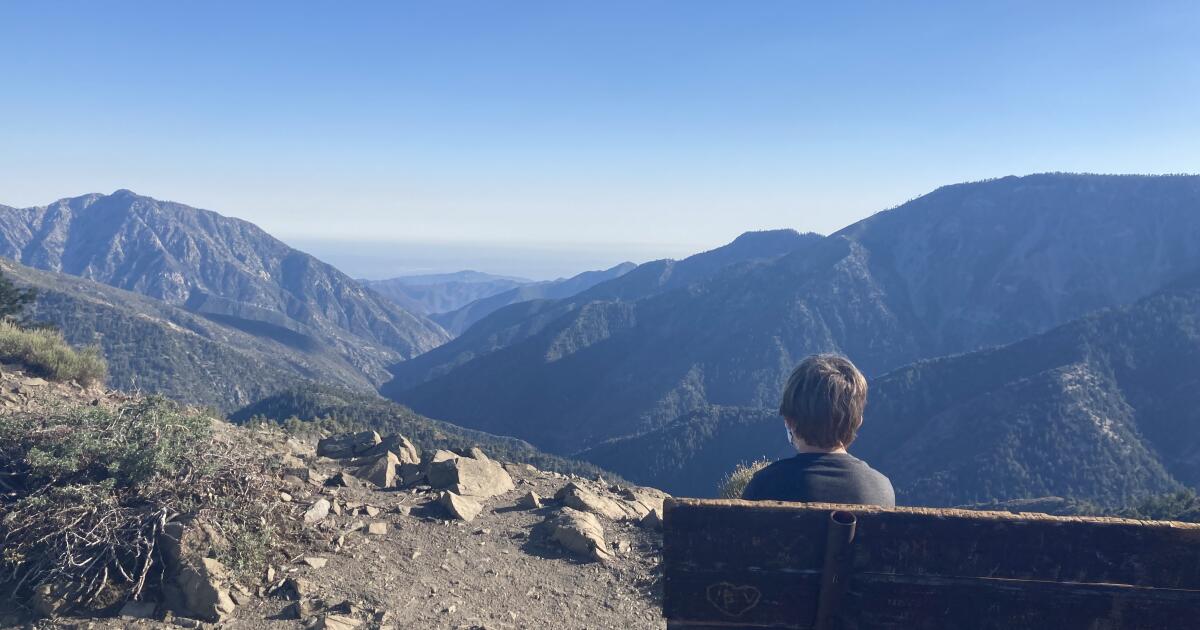
Every hiker in Los Angeles knows that sinking feeling.
You stare at the mountains (because that’s what we do when we have a moment) and see a dark column of smoke. Almost instantly you have a good idea of which trails might be burning and, depending on if it’s hot, dry and the right time of year, whether the fire will eventually reach your spot.
In 2020, the Bobcat fire blowtorched a few of my family’s beloved spots in the Angeles National Forest. Now, four years later, the 55,000-acre Bridge fire is taking out a few of our remaining L.A.-adjacent mountain retreats, upending lives in forest communities such as Wrightwood and imperiling mountain lions, bears, bighorn sheep, frogs and other wildlife.
To call this heartbreaking grossly understates the loss. Imagine if an earthquake wiped out Disneyland or Dodger Stadium — devastating, yes, and thankfully rebuildable. But when a mountain forest burns in the kind of extreme fires of late, nature probably won’t rebuild it in my lifetime. That most of these disasters have preventable human causes makes the loss obscene.
Human causes? Though climate change gets the attention, simple human recklessness or malice often lights the first spark, then drought and extreme heat take over.
Investigators haven’t determined what started the Bridge fire. But, police arrested an arson suspect in connection with the Line fire in the San Bernardino Mountains (39,000 acres), and the Airport fire in Orange County (24,000 acres) was sparked by a public works crew moving boulders with heavy machinery.
Other major fires have had more innocuous origins. In 2018, the Carr fire near Redding burned more than 1,000 structures and an area of forest roughly the size of the city of San Diego, killing eight people. That fire started on National Park Service land after a driver’s trailer had a flat tire, causing a rim to scrape the road and shoot sparks into tinder-dry brush.
There’s no argument: Humans present the clearest and most present fire danger to wildlands. And in the L.A. area, roughly 18 million of us live near more than 2 million acres of government-managed forests.
So here’s what the U.S. Forest Service, the National Park Service and California State Parks ought to do when conditions are predictably ripe for cataclysmic fire: Close their forests.
When a major heat wave bears down on us — as one did before all the fires burning around us now, and before the Bobcat fire in 2020, and before the Carr fire in 2018 — tell drivers, hikers, hunters and everyone else looking to the mountains for relief: Don’t come here, because it’s too dangerous, and we don’t want you starting another fire.
This wouldn’t be without precedent. Just before Labor Day weekend in 2021, the Forest Service temporarily closed nearly all of its land in California. Though the mountains around Los Angeles were quiet at the time, the rest of the state was experiencing its second-worst fire season on record — second only to 2020, when more than 4% of California’s total land area burned. At a time of extreme danger, the Forest Service wanted to ensure resources could be used fighting fires rather than evacuating visitors.
For Southern California and other places spared another year of catastrophe, the closure was preventive. The Forest Service said as much when it announced its order: “The closure order will also decrease the potential for new fire starts at a time of extremely limited firefighting resources.”
I don’t recommend such preemption lightly. Access to public lands is soul food for outdoor-minded city dwellers like me, not to mention the right of every American. That we in Los Angeles have so much accessible wilderness in our backyard is an immense privilege.
Nor do I believe this would prevent every fire, or even most fires. The Line fire in San Bernardino County has burned mostly Forest Service land, but investigators believe an arsonist started it in an adjacent suburb. Power lines and lightning strikes have also wreaked havoc on our forests.
But managing access to forests needs to reflect the reality of climate change. That includes telling people to stay out for a week or two when the foliage is bone-dry and another hellish heat wave appears in the weather forecast. We’ve long had the tools to predict the conditions for extreme fire dangers; it’s a shame not to use those tools to better protect our struggling forests from us, and our way of life, from going up in smoke.

California
Mother, daughter found ‘alive and well’ after going missing on Southern California hiking trail

A mother and daughter who went missing after going for a hike on a difficult trail in San Bernardino County’s San Gorgonio Wilderness have been found “alive and well,” the sheriff’s department announced Friday.
The San Bernardino County Sheriff’s Department told KTLA they were uninjured and “walked out on their own.”
Krystal Meyers, 41, and her daughter Alexis Meyers Martinez, 21, were hiking on the Vivian Creek Trail Thursday but didn’t return, according to the San Bernardino County Sheriff’s Department.
They were last known to be at the 10,300-foot elevation mark above the High Creek switchbacks at 11 a.m., according to the San Gorgonio Search and Rescue team.
The Vivian Creek Trail is widely considered one of the more strenuous and hazardous routes in the San Gorgonio Wilderness.
The U.S. Forest Service says it’s the shortest and steepest route to the summit of Mount San Gorgonio and requires experienced mountaineering skills.
Officials did not provide any further details about the circumstances surrounding their disappearance.

BAKERSFIELD, Calif. (KBAK/KBFX) — The California Highway Patrol is urging drivers to stay focused on the road as they head out for Fourth of July celebrations.
The holiday weekend can be a dangerous time on our roads as millions of drivers are expected to travel.
CHP Officer Jorge Toro joined Eyewitness News Mornings to share how drivers can stay safe behind the wheel.
Officer Toro also highlighted the importance of sober driving over the holiday.
BE THE FIRST TO COMMENT
He says anyone hosting a party should make sure all of their guests get home safely, ensuring anyone who may be impaired doesn’t drive.

California is returning a stretch of rugged Mendocino County coast to the Indigenous nations whose ancestors once stewarded its shores.
State transportation officials recently approved the transfer of Blues Beach and the surrounding bluffs to Kai Poma, a nonprofit founded by representatives of the Sherwood Valley Band of Pomo Indians, Round Valley Indian Tribes and Coyote Valley Band of Pomo Indians.
The transfer of 136 acres just south of the community of Westport will mark the first time land managed by the California Department of Transportation has been returned to Indigenous tribes.
“This is beyond huge,” said J. Carlos Rivera, tribal chairman of the Sherwood Valley Band of Pomo Indians. “It’s enormous from our tribal perspective that we are basically obtaining the land that our people once lived on before colonization.”
California purchased the swath of rocky cliffs and windswept shoreline in the 1960s to expand the construction of Highway 1 and create a scenic viewpoint for highway travelers, according to a California Coastal Commission report.
More recently, public access has been largely unregulated, and summer weekends and holidays have drawn large groups who camp and party on the beach, at times driving through sensitive areas, damaging cultural sites and leaving behind trash, the report states.
Kai Poma plans to conduct cultural and archaeological resource studies and environmental surveys and then prepare a resource management plan for the property, according to planning documents. The nonprofit and the Coastal Commission have drafted a public access management plan that states the land will be open from sunrise to sunset.
Rivera described the entire property as a sacred site. The coastal waters are used by tribal people for seaweed and abalone gathering, and the shores host youth cultural camps, he said. “Protecting the land, it has a deeper meaning for us because we’re connected to the land,” he said.
The effort to acquire the land took years — and required a change in state law. Caltrans lacked the ability to transfer land to tribal governments until 2021, when Gov. Gavin Newsom signed a bill sponsored by state Sen. Mike McGuire (D-Healdsburg) that enabled the transfer, according to a news release issued at the time. The law also bars commercial activity on the property and requires public access be maintained.
“With 136 acres now officially transferred into tribal stewardship, one of the most spectacular stretches of the Mendocino Coast will be forever protected,” McGuire said in a statement.
“This agreement, the first of its kind in California, gives these three dynamic Native American tribes the rightful opportunity to reclaim sacred lands and cultural traditions on this special piece of earth. And it’s about damn time.”
The land transfer cleared its last regulatory hurdle June 26 with the approval by the California Transportation Commission, said Neil Thapar, an attorney who works as an advisor and legal consultant to Kai Poma. Caltrans staff will next record the deed transferring the title from the state of California to Kai Poma, which is expected to happen any day, he said.
-

 Finance2 minutes ago
Boyle Heights warehouse fire: Where neighbors, victims can seek financial assistance
-

 Fitness8 minutes ago
Personal Trainer Reveals the No. 1 Exercise to Do Daily for a Strong Deep Core
-

 Movie Reviews18 minutes ago
Movie Review: ‘Minions & Monsters’ is a very yellow mash note to Hollywood – Sentinel Colorado
-

 World33 minutes ago
Dear Americans, How Well Do You Know Canada?
-
 Lifestyle1 hour ago
After weeks of speculation, Taylor Swift, Travis Kelce wed in New York
-

 Technology1 hour ago
While you’re watching the World Cup, the feds may be watching you
-

 World1 hour ago
Conservative Keiko Fujimori officially declared winner of Peru’s presidential runoff election
-

 Politics2 hours ago
Trump hails America as ‘most exceptional nation ever to exist’ in Mount Rushmore speech

