Connect with us

Hawaii

Hawaii Joins Military Program To Recruit Government Workers

Published

on

Hawaii Joins Military Program To Recruit Government Workers


Hawaii hopes to recruit military members nearing the end of their service to fill vacant state government jobs.

The state of Hawaii is hoping the U.S. Department of Defense can help fill some of the thousands of state job vacancies through a program that connects military members nearing the end of their service with employers looking for workers.

So far the DOD’s SkillBridge program hasn’t gotten any people in their final months of service to apply for an internship in Hawaii’s government, but state human resources officials hope that will soon change.

For the DOD, meanwhile, the main goal is for industry partners to help military members learn the skills they need to work in the civilian labor force – what DOD spokesman Joshua Wick calls “enhancing their employability.”

Advertisement

Participants continue to take home their full military pay and benefits including healthcare during the program because they are still under the DOD’s purview. Hawaii’s Department of Human Resources Development was accepted into the program earlier this summer.
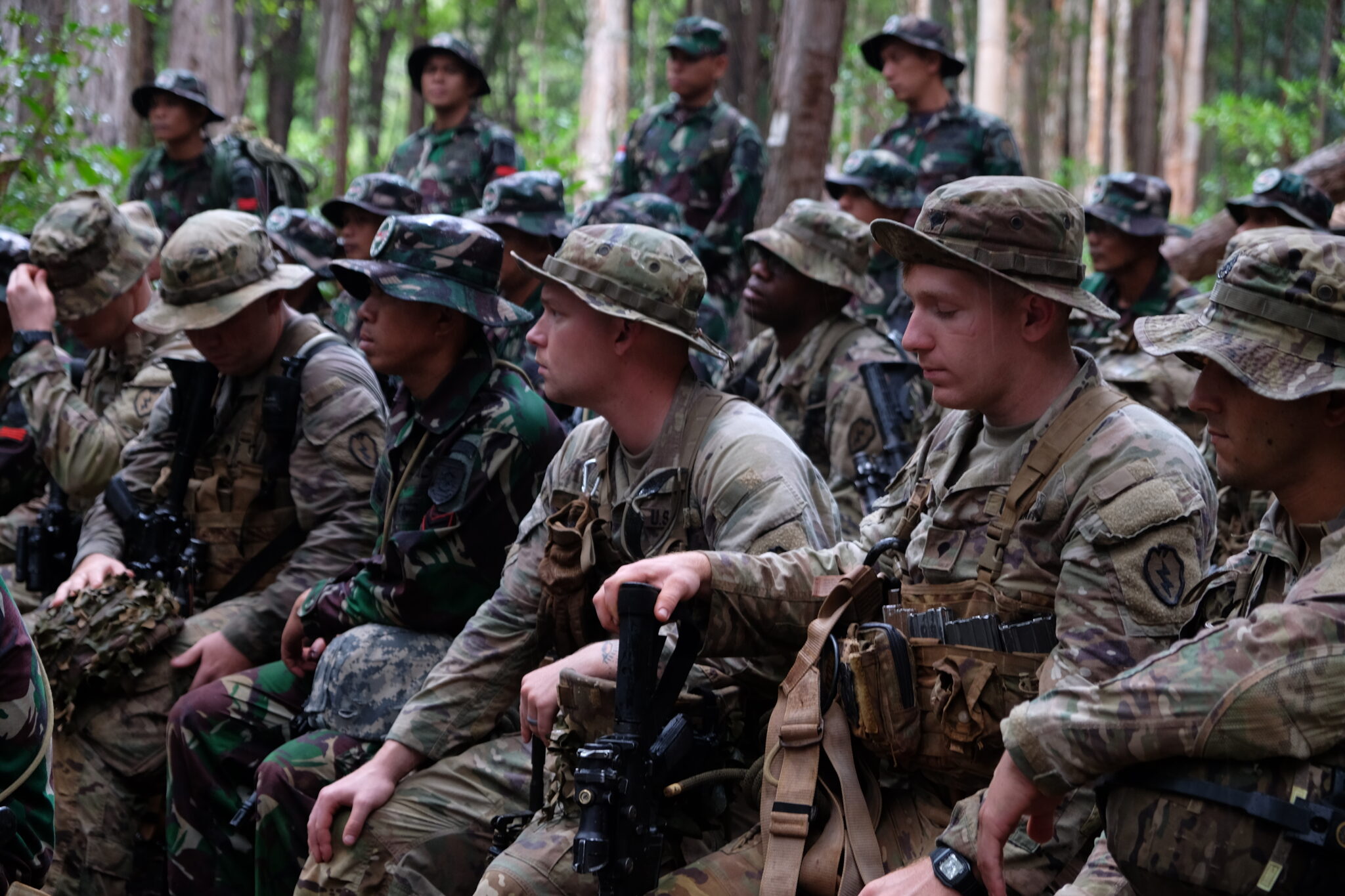
The state partnered with the DOD in a program that connects military members nearing the end of their service in Hawaii to intern for state government jobs. (Kevin Knodell/Civil Beat/2020)

“It’s another pool of untapped applicants that we could bring onboard to join the state of Hawaii team,” said Patti Taketa, the state’s lead recruiter for the program. “The end goal is that they will be employed.”

Hawaii ended last year with an alarming statistic: more than 1 in 4 civil service positions in state government were vacant. Overall the state’s civilian labor force lost nearly 15,000 workers since 2019, a shift from about 684,000 eligible workers to 670,000.

Employers often say that it’s difficult to attract new workers to Hawaii, given the state’s notoriously high cost of living. But there’s an enormous untapped pool of potential workers right here. About 10,000 women and men exit the military in Hawaii each year, Taketa said.

It’s a large number for a small state, amounting to 5% of the roughly 200,000 who exit the service in the rest of the U.S. combined, according to data from the U.S. Department of Labor.

DOD launched SkillBridge in 2011 to assist soon-to-be veterans transition from the military to the civilian labor force.

Advertisement

Employment is a top concern for military members exiting the service, says Daniel Perkins, founder and principal scientist at Pennsylvania State University’s military-transition applied research center. SkillBridge offers an opportunity to test the waters of a new job before committing to a career path, he said.

“It lets people get their feet wet and see what their new normal could be like,” he said.

For the state government, eligible applicants are military members serving out their last 90 to 120 days of active duty. The state is targeting interns to work in information technology jobs, as military personnel often have training in that background, said Taketa.

Employers Must Have Space For Long-Term Workers

To start the process applicants need permission from the commander in charge of their unit. Next, they select an approved industry partner from the DOD’s list of employers and applies directly to them.

Industry partners must tell DOD what type of worker they need and how the partners will train them. Partners also need room to hire participants after the training is over.

Advertisement

For potential Hawaii state workers, there’s little risk. They don’t have to commit to a permanent job if they decide a government gig isn’t for them.

“Obviously, we would like to make it a positive experience with the applicant and have them apply for a state job,” said human resources development spokeswoman Erin Conner. “But there’s no expectation.”

So far no one has applied to the state’s program. Taketa says this is partly because it’s in the early stages and human resources needs to do a little more work with state departments to have them identify specific programs and positions that DHRD can promote.

“Once we’re in a better position of having all that in place we will more actively promote the program,” she said.

But she says there’s a wide range of open IT jobs in every department, including system analysts, support technicians, security analysts, system programmers and network administrators.

Advertisement
The Honolulu Police Department is another industry partner in the DOD’s SkillBridge Program. HPD spokeswoman Michelle Yu said several service members applied to HPD’s program. (Cory Lum/Civil Beat/2022)

Hawaii state government is not the program’s only participant. The DOD’s 4,945 approved partners include CVS Health, Harvard University and John Deere. On a local level, Hawaiian Electric Co., Aloha Nursing Rehab Care and the Honolulu Police Department are also partners. 

HPD has more than 450 vacancies across its eight patrol districts on Oahu. District 8, which spans between Ewa Beach and Kaena Point, has more openings than any other district with 68 available jobs.

Michelle Yu, the department’s spokeswoman, said several military members have expressed interest in the program and HPD is processing their applications. With most of Hawaii’s military personnel on Oahu, HPD hopes to attract applicants who want to continue to serve others and live in Hawaii.

Transition From Military To Civilian Life Can Be Hard

Aside from being in its early stages, the state-DOD partnership faces other obstacles in recruiting workers to apply for permanent jobs.

Perkins says many veterans don’t stick around their first civilian workplace for long for several reasons: most jobs don’t provide the same sense of purpose and camaraderie people find in the military.

There’s also the issue of military members who move from managing a team of personnel below them in the service, to starting over in a new career field and being managed by someone else, Perkins said.

Advertisement

“It’s one of those things civilian employers need to understand,” he said. “These veterans have held leadership posts and need to utilize those skills and feel purpose in where they work.”

HGEA Executive Director Randy Perreira announces HGEA endorsement of LG candidate Sylvia Luke.HGEA Executive Director Randy Perreira announces HGEA endorsement of LG candidate Sylvia Luke.
Hawaii Government Employees Association Executive Director Randy Perreira says the SkillBridge program may have some success in recruiting government workers but it’s not a solution to the state’s growing vacancy crisis. (Cory Lum/Civil Beat/2022)

A more basic question is whether state employers can offer competitive compensation, says Randy Perreira, executive director of the Hawaii Government Employees Association.

He said many state departments face upwards of 40% vacancy rates because the state’s salaries lag the private sector.

“Until the state addresses compensation, you’ll continue to see employees choose the private sector over government, and that includes candidates leaving military service,” he said.


Source link

Hawaii

I visited an island just a 20-minute flight from Maui. Its empty beaches and local gems made it feel like a true paradise.

Published

on

I visited an island just a 20-minute flight from Maui. Its empty beaches and local gems made it feel like a true paradise.


  • I was born and raised on Maui, and I just visited the Hawaiian island Molokai for the first time.
  • In three days, I got to enjoy the island’s incredible views, small businesses, and quiet beaches.
  • Molokai encouraged me to slow down, appreciate nature, and spend meaningful time alone.

Growing up on the West Side of Maui, the island of Molokai was always in view, but I never made the short journey over — until now.

Molokai sits between Maui, Lanai, and Oahu, spanning 260 square miles. Many consider it to be one of least touristy and most well-preserved visitable Hawaiian islands.

It’s home to fewer than 10,000 residents. Although Lanai, for example, has a smaller population of just 3,200, it offers two world-class Four Seasons resorts, whereas Molokai has historically resisted large-scale tourism.

Advertisement

There are no major resorts, chain stores, or even traffic lights on the island, making it feel like you’ve been transported back to old Hawaii.

I’ve always viewed Molokai as a beautiful and sacred place with a community protective of its land, culture, and pace — and not always eager for outsiders.

After visiting, I’m grateful to have finally experienced firsthand why the island is also lovingly known as The Friendly Isle.

Flying is the only way to get to and from Molokai.


Author Ashley Probst smiling in front of small plane

Advertisement

I flew to Molokai.

Ashley Probst

A ferry once ran between my hometown of Lahaina and Molokai, but the route was discontinued in 2016, making the island even less accessible.

Today, small commuter planes are the only public means of getting to Molokai — typically a short, scenic 20-minute flight from Maui.

However, this limited access is a key factor behind why Molokai has remained the least touristy of the islands.

Advertisement

My first day was spent on Molokai’s arid west side.


Aloha Maunaloa General store exterior, green building with brown steps

I visited a few shops in Maunaloa.

Ashley Probst

Known for its dry and rugged coastlines, this part of Molokai is dotted with kiawe trees, large patches of red dirt, and mostly empty beaches with views of southeast Oahu.

On my way to beach hop, I stopped in the small town of Maunaloa for refreshments at the convenience store and a visit to Big Wind Kite Factory, a mom-and-pop kite shop, and the adjacent Pineapple Gallery filled with art and souvenirs.

Advertisement

My ultimate destination was Papohaku Beach, one of Hawaii’s largest white-sand beaches.


Empty beach with footprints in sand, clear blue sky

Papohaku Beach was almost empty during my entire visit.

Ashley Probst

Also known as Three Mile Beach, Papohaku Beach is one of the longest continuous beaches in the state.

I arrived around 2 p.m. on a Wednesday and stayed for over an hour.

On most islands, the afternoon is peak beach time, when shorelines are typically packed with families, sunbathers, and people playing in the waves. However, Molokai is different.

Advertisement

Despite its size and beauty, Papohaku Beach was nearly empty: Only one other person walked along the water before disappearing, leaving me in peaceful seclusion.

The beach stayed incredibly peaceful throughout my visit.


Author Ashley Probst smiling on empty beach in Hawaii

I only saw one other person during my time at Papohaku Beach.

Ashley Probst

I didn’t see any lifeguards, snack stands, or shops for beach equipment rental. I wondered how visitors accustomed to more structured beach days — especially families with children — might experience it.

Advertisement

Early December is a slower travel period across Hawaii, but even then, being alone on a beach this spectacular felt surreal — a perfect illustration of just how uncrowded Molokai is compared to the rest of the islands.

I visited some other beaches, but none felt as inviting as Papohaku.


Stones along shorline with waves behind them in Hawaii

Poolau Beach was also peaceful.

Ashley Probst

Poolau Beach, located just north of Papohaku, was completely empty as I sat to watch waves crash onto the rocky shoreline.

Advertisement

Dixie Maru Cove — a small, sheltered beach at the very end of the West Side’s paved road — had just one other person there, but it felt surprisingly cramped after having Papohaku all to myself.

Next time, I’d return to Papohaku and spend the whole day there.

I checked into Hotel Molokai, one of the only traditional hotels on the island.


Hotel Molokai exterior

Hotel Molokai was surrounded by some lovely trees and greenery.

Ashley Probst

Advertisement

Checking in took only five minutes, and my room was right around the corner from the lobby.

Walking the property, I noted the Hawaiian-style architecture, oceanfront pool, swaying hammocks, flowering trees and, sadly, the recently closed on-site bar and restaurant.

It felt comfortable and charming, but intentionally simple, with a focus on location and atmosphere rather than luxury amenities.

Advertisement

To enjoy dinner and a sunset, I went to Molokai’s main town, Kaunakakai.


Town in Hawaii at sunset

Kaunakakai felt compact and quiet.

Ashley Probst

The town is small and compact with one main strip and a few short side streets lined by locally owned shops, grocery stores, and casual eateries.

Around the time I visited just before sunset, only some businesses were open (mostly markets and convenience stores) and a handful of people were walking around.

I was in awe as a pink shadow washed over the buildings, and cotton-candy clouds hugged the mountain ridges while the full moon gently rose above them.

By nightfall, the town felt calm and quiet, with very little activity after the last store closed — a stark difference from Hawaii’s more nightlife-driven destinations like Oahu or Maui.

Advertisement

Live music pulled me into Paddlers Restaurant and Bar.


Plate with chicken pieces, sauce next to Kona Big Wave glass on table in evening

At Paddlers Restaurant and Bar, I got coconut shrimp and a cocktail.

Ashley Probst

With very few restaurants on the island, I was grateful to find one of the few places with live entertainment.

I ordered the coconut shrimp appetizer and a vibrantly colored cocktail.

Advertisement

Both were delicious, but my total came to about $50 for two items plus tip, which felt more in line with what I’d expect at an upscale restaurant on another island.

At a casual, counter-service spot on Molokai, I assumed prices would mirror a typical plate lunch (usually under $20) and standard bar cocktails (often around $15).

But given the limited options in the area, the price could’ve been just about anything and I probably would’ve paid it.

Advertisement

I ended the night with Molokai Hot Bread — a must-try local classic.


People waiting on line in well-lit hall area surrounded by dark

Molokai Hot Bread has been a staple here for decades.

Ashley Probst

Known for its late-night hours — on Molokai, that means 7 to 9 p.m. — this iconic spot is down a dimly lit alley around the corner from Kanemitsu’s Bakery & Coffee Shop.

The bread was worth the wait.


Piece of bread with guava jam on it

I get why so many love Molokai Hot Bread.

Ashley Probst

Advertisement

I joined the line for this local favorite: a giant, pillowy bread loaf stuffed with fillings like my top picks of butter, mango, and guava jellies. It was delicious.

The next morning, I drove an hour from Hotel Molokai, just outside Kaunakakai, to the island’s lush east side.


View of empty road with water on one side, palm trees and hills on the other

Molokai kept impressing me with its views.

Ashley Probst

The coastal drive was stunning, with sweeping ocean views and sections without guardrails that added a sense of adventure and a reminder of how beautiful Hawaii can be when left untouched by development.

Advertisement

Seeing Maui from a new angle — one that showcased the West Side where I grew up — was a memorable way to start the day.

A cultural hike through Halawa Valley — one of the oldest known Hawaiian settlements — was educational, intimate, and deeply meaningful.


Empty road surrounded by trees, greenery with waterfall in distance

Halawa Valley is on the east side of the island.

Ashley Probst

The family-run tour I booked began at 9 a.m. and featured teachings about Hawaiian history and cultural protocol, including blowing a conch shell to signal our arrival and leaving an offering at their ancestral altar.

Advertisement

We were given an oral history lesson about the family, the history of Halawa Valley, and the transition from pre-kingdom times to modern tourism.

With only one other person in my tour group, the experience felt especially personal and a mirror of how tourism on Molokai remains purposefully small.

The trail through Halawa Valley to Moaula Falls was lush and historic.


Waterfall surrounded by trees, lush greenery

Moaula Falls looked incredible.

Ashley Probst

Advertisement

Alongside our guide, we completed two river crossings, passed ancient residences and heiau (spiritual temples), and eventually reached Moaula Falls, a two-tiered cascade.

We spent nearly an hour taking in its beauty, and returned to the tour family’s home around 2:30 p.m.

If I could recommend only one Molokai activity, this would be it — and it’s well worth the $99 ticket.

Advertisement

I spent the afternoon at nearby Halawa Beach.


Waters surroudned by palm trees, green mountains, stones

Halawa Beach is on Molokai’s eastern shore.

Ashley Probst

The quiet cove offered panoramic views back toward the valley, with clear turquoise water that shifted into deeper blues offshore.

Soft gray sand met the shoreline, turning black where the waves washed over it.

After one group left, I was the only person on the beach. It was easy to slip into Molokai’s rhythm: slow, intentional, and deeply connected to the land.

Instead of swimming, I did a spontaneous beach clean-up and collected a colorful pile of microplastics. It felt good to leave such a significant place better than I found it.

Advertisement

Molokai Burger is the closest thing to fast food on the island.


Molokai Burger and fries with drink on red tray

Molokai Burger felt a bit nostalgic.

Ashley Probst

Though there is no McDonald’s on Molokai, this locally owned burger joint offers a drive-thru and familiar flavors with a homemade feel and Hawaiian style.

Inside, the red-and-white walls reminded me of In-N-Out, and Molokai imagery adorned the space — including an aerial shot of the same valley I’d hiked into just hours earlier.

Advertisement

I ordered a cheeseburger, thick-cut fries, and a POG (passion-orange-guava) milkshake for $23, which I found to be fairly priced.

The dining room was quiet when I arrived, though the eatery saw a steady flow of patrons.

My burger tasted like an elevated take on a Big Mac, the fries were satisfying with a bit of extra salt, and the milkshake was deliciously tropical.

When I return, I’ll take my food to-go and enjoy it in a scenic location.

Advertisement

Later, I returned to Molokai Hot Bread for a loaf to take home.


Line of people waiting at Molokai hot bread

The Molokai Hot Bread was that good.

Ashley Probst

When I asked about pre-ordering bread to pick up before my flight back to Maui, the auntie behind the counter was worried about my tight departure schedule.

She offered to make my loaf that night, refrigerate it in her own home, and bring it with her to work the next day so I could pick it up early.

It was one of the kindest things a stranger has ever done for me.

Advertisement

Moments like this echoed a theme throughout my trip: Molokai’s residents consistently showed a level of warmth and generosity I’ve rarely experienced on other islands.

My final day began with a leisurely check-out and iced coffee.


Hand holding coffee in front of sugar/straw station

I was glad to get crushed ice at Hula Bean Cafe.

Ashley Probst

I returned my room key just before the 10 a.m. check-out, then headed to Hula Bean Cafe for a latte served over crushed ice — a small touch that I loved.

Advertisement

I visited Kalaupapa Lookout early.


View over clear blue waters with rainbow over them

Kalaupapa Lookout took my breath away.

Ashley Probst

This scenic viewpoint in Palaau State Park overlooks the remote Kalaupapa Peninsula, once home to a community of people with leprosy who were forced into isolation before a cure was discovered.

To reach the lookout, I drove into the northern part of Molokai, where the elevation rises and the landscape shifts into cooler temperatures and peaceful forest.

Advertisement

Fog can obscure the views, so I arrived early and was rewarded with clear skies and a gorgeous rainbow arching over the cliffside.

Reading the history placards brought back memories of learning about Kalaupapa in school while I looked out at the beautifully haunting scene below.

A short, steep walk led me to a sacred fertility stone.


Fetility stone in Hawaii surrounded by trees

I found some offerings at the rock.

Ashley Probst

Advertisement

Legend has it that women who bring an offering and spend the night at Ka Ule O Nanahoa, also known as Phallic Rock, will return home pregnant.

The cluster of offerings at the base of the rock seemed to suggest some people wholeheartedly believe the lore.

Missed stops were a reminder of Molokai’s relaxed pace.


Macadamia nut farm closed sign in front of dirt road

I didn’t get to visit Purdy’s Macadamia Nut Farm.

Ashley Probst

Advertisement

Purdy’s Macadamia Nut Farm was unexpectedly closed, and the Hoolehua Post Office crew was on their lunch break when I first arrived.

On Molokai, I found posted hours are more of a guideline than a guarantee — and tourism not dictating the rhythm of daily life is part of the island’s charm.

I returned to the small town center in Kaunakakai for lunch, shopping, and more exploring.


Molokai Museum exterior - green house

I spent about an hour browsing shops in Kaunakakai and I checked out the museum.

Ashley Probst

Advertisement

Browsing local shops took less than an hour, and I left with a pareo (sarong) and a shell-shaped hair clip.

At the Molokai Museum, I learned more about the island’s history and was encouraged by locals to visit the First Friday market that evening.

Hoolehua Post Office’s Post-A-Nut activity was a highlight.


Coconut being held under

The Post-A-Nut program has been around for decades.

Ashley Probst

Advertisement

Since 1991, this tiny post office has offered its Post-A-Nut program, which allows visitors to decorate and mail a coconut as a 3D postcard.

If you’re lucky, there may be free coconuts available, or you can bring your own as long as it meets agricultural requirements: no bug holes, no sprouting, and it must be fully dry.

There were only two coconuts left, so I chose my favorite, decorated it with the provided markers, and sent it off — a quirky, uniquely Molokai souvenir.

Advertisement

My night ended with ice cream and one last meal.


Korean chicken on bed of greens in takeout cointainer

I got a chicken plate from Maka’s Korner.

Ashley Probst

I popped into Kamoi Snack-n-Go for a fresh scoop of Dave’s Hawaiian Ice Cream, a Hawaii-born chain that started on Oahu.

My kid-sized cup of honeydew melon-mochi tasted exactly like a Melona bar.

For dinner, I picked up a Korean chicken plate from Maka’s Korner to eat later, and it traveled surprisingly well — as did the hot bread.

Advertisement

I left Molokai feeling recharged and grateful.


Author Ashley Probst smiling with rainbow and blue waters behind her

Molokai isn’t for every type of traveler.

Ashley Probst

I thoroughly enjoyed my time on the island, but my experience made me reflect on what type of traveler should — and shouldn’t — visit.

Molokai isn’t built for families seeking kid-friendly attractions, nightlife lovers eager to stay out past 9 p.m., luxury travelers who prioritize five-star resorts and fine dining, or those who rely on a packed itinerary of structured activities.

But that’s exactly what makes it special for the right traveler.

Advertisement

This island is perfect for solo travelers like myself, couples craving a remote respite, and anyone genuinely interested in learning and respecting local culture.

After three days, I felt grounded, connected, and certain I’d return someday — and maybe a few familiar faces will remember me, too.


Source link

Advertisement
Continue Reading

Hawaii

Search for new Hawaii County fire chief begins – West Hawaii Today

Published

on

Search for new Hawaii County fire chief begins – West Hawaii Today


Source link

Advertisement
Continue Reading

Hawaii

First documented tiger shark mating hub identified by UH researchers

Published

on

First documented tiger shark mating hub identified by UH researchers


OLOWALU (HawaiiNewsNow) – A team of shark researchers from the University of Hawaii at Manoa have solved a longstanding mystery.

Biologists from the the Hawaii Institute of Marine Biology Shark Lab have identified the first-ever documented tiger shark mating hub.

Six years of acoustic tracking data led the team to pinpoint the area at Olowalu, Maui, leading them to new discoveries about the nature and timing of tiger shark mating and its correlation to Maui’s whale calving season.

This new finding challenges the understanding of tiger sharks as purely solitary animals.

Advertisement

“To our knowledge, no group mating site for tiger sharks has ever been identified. This paper adds an important piece to the puzzle of tiger shark reproduction,” said Carl Meyer, co-author of the study and principal investigator of the HIMB Shark Lab.

Researchers were able to show evidence that tiger sharks have a predictable seasonal gathering of mature males and females that coincides with humpback whale calving season in Hawaii.

Until this discovery, it was unclear how or if tiger sharks came together to reproduce or if mating was just a result of random encounters.

“Tiger sharks typically roam widely in what can seem like random patterns, so finding such a strong and consistent seasonal trend in their movements around Maui was unexpected,” said Paige Wernli, lead author of the study and a graduate student in the HIMB Shark Lab.

The years-long tracking data showed a predictable seasonal presence of both mature male and female tiger sharks at Olowalu, as well as physical evidence of mating activity.

Advertisement

The apparent mating hub happens during the time of year when humpback whale mothers and newborn calves arrive in the area.

The Shark Lab team says the correlation could mean that the sharks are positioning themselves near foraging opportunities, like vulnerable calves or placental falls.

“Mating and foraging on humpback whales may not be mutually exclusive,” Wernli said. “And both could influence tiger shark movement patterns in Hawaii.”

The tiger shark gatherings they observed were not dense but rather diffuse, spanning several kilometers over multiple months.

“This study expands our knowledge of tiger shark mating and challenges our conventional understanding of the term ‘gathering,’” said Meyer. “Together, the results suggest that both reproduction and food availability play key roles in shaping tiger shark movements in Hawaii.”

Advertisement

During the six-year study, the team was able to safely catch and implant transmitters in large sharks, then keep a vast network of underwater listening stations across the main Hawaiian Islands.

In the future, the Shark Lab team plans to use tags with cameras and other data collecting capabilities to document both their mating behaviors and shark-whale interactions.

This work was funded by the Hawaii Department of Land and Natural Resources and the Pacific Islands Ocean Observing System.


Source link

Advertisement
Continue Reading

Trending