West
Meet the American who spread global gospel of surfing, Duke Kahanamoku, Hawaii’s original Big Kahuna

Duke Kahanamoku was a real-life American aquaman.
“The Father of Surfing” rode the pipeline of popularity he achieved as an Olympic champion to become the soft-spoken savior of Hawaiian heritage foretold in a king’s deathbed prophecy.
“The ocean is my temple, the waves my prayers,” Kahanamoku reportedly said, one of many quotes that have helped give surfing its spirit of oneness with the water.
“Every wave is a chance to be reborn.”
MEET THE AMERICAN WHO CREATED HIGHWAY REST AREAS, ALLAN WILLIAMS, SMALL-TOWN ENGINEER
He is, among other things, the original “Big Kahuna” – American slang of Hawaiian origin for a dominant personality.
Kahanamoku’s legendary exploits began splashing through Hawaii’s aquamarine surf at record-setting speed, powered only by muscular arms and legs.
Hawaiian swimming stars Duke Kahanamoku, left, and his younger brother, Sam, at a break during the tryouts at the Olympic Pool in Long Beach, California, for the 1924 Summer Olympics. (Underwood Archives/Getty Images)
He won five Olympic medals – three of them gold – representing the United States before Hawaii was one of them.
The Big Kahuna grew into an international icon in between the Olympics, skimming the surf on his 16-foot, 114-pound, natural-wood longboard with awe-inspiring dexterity.
“To us, he’s the king of surfing.”
Surfing became an Olympic sport for the first time in 2020.
It returns to the Paris games this week. Surfers around the world recognize Duke as royalty.
“To us, he’s the king of surfing,” Kelly Slater, 11-time World Surf League champion, said in the 2022 PBS documentary “Waterman – Duke: Ambassador of Aloha.”
Kahanamoku displayed “superhuman” skills with a legendary rescue at sea, appeared in feature films and spent his twilight years as the state’s official “Ambassador of Aloha.”
Duke Kahanamoku doing one of his stunts with a surfboard at Corona Del Mar, California, while traveling 40 miles per hour on the crest of waves. (NY Daily News Archive via Getty Images)
Kahanamoku was born at a time of tumult in his native society and is, by many accounts, the spirit foretold in a royal prophecy.
“Before they are entirely gone, there will come one in my image who shall have within himself all the glorious strength of a dying race,” Hawaii’s King Kamehameha reportedly announced on his deathbed in 1819.
“He shall be honored throughout the world, and he shall bring fame to my people.”
‘A flutter kick and powerful strokes’
Duke Paoa Kahanamoku was born on Aug. 24, 1890, in Haleʻākala, a landmark home in Honolulu built of pink coral and known for its affiliation with members of Hawaii’s royal family.
Kahanamoku was not among them. Duke was not a title, but his given name. His father, also Duke, was a police officer; his mother, Julia, was described as a faithful Christian.
They had eight other children.
Duke Kahanamoku with his board at a beach in Australia, 1936. (Harry Martin/Fairfax Media via Getty Images)
The family moved to Waikiki, its beach today one of the world’s favorite surfside vacation spots, under the dramatic emerald sparkle of Diamond Head.
Kahanamoku gained national attention in 1911 with a swimming performance that still defies credulity.
A newcomer to official competition, he swam the 100-meter freestyle in the salt water of Honolulu Harbor in 55.4 seconds – shattering the world record by 4.6 seconds.
FOX NATION’S NEW SERIES ‘MEET THE AMERICAN WHO’ TELLS OF ORDINARY AMERICANS WHO GAVE US EXTRAORDINARY INNOVATIONS
“AAU officials on the mainland were in disbelief and questioned whether it was a legitimate time,” reports the website of the United States Olympic & Paralympic Museum. “Indeed it was, as they would soon see.”
Native Hawaiians riding their surfboards at Waikiki Beach with Diamond Head in the background, Honolulu, Hawaii, circa 1925. (Underwood Archives/Getty Images)
Kahanamoku’s secret was a “a new style of swimming,” the museum writes, “with a flutter kick and powerful strokes.”
The Honolulu boy earned a spot on the U.S. Olympic team at the Stockholm games in 1912. He won his first gold medal in the 100-meter freestyle — adding a silver as part of the men’s 4×200 freestyle relay team.
“AAU officials on the mainland were in disbelief.”
He added two more gold medals in the 1920 Olympics in Antwerp, in the same two events.
Kahanamoku won his final Olympic medal, silver, in 1924 behind fellow American Johnny Weissmuller. The gold medalist became a Hollywood icon, starring in 12 films as Tarzan in the 1930s and 1940s.
Kahanamoku would also become a familiar face on the big screen — but only after kicking up a global sports tsunami with his surfboard.
‘Superhuman rescue’
David Kalakaua, the last king of Hawaii, opened his island paradise empire to the world before dying in 1891, just five months after Kahanamoku was born.
Olympic gold medalists Duke Kahanamoku, left, and Johnny Weissmuller, who later played Tarzan in 12 Hollywood movies, on Waikiki Beach, Honolulu, Hawaii, circa 1927. (PhotoQuest/Getty Images)
Among decisions with an unforeseen impact on world events, the king signed an 1875 treaty to give the United States exclusive use of Pearl Harbor.
MEET THE AMERICAN WHO STITCHED TOGETHER THE STARS & STRIPES, BETSY ROSS, REPUTED WARTIME SEDUCTRESS
Outside influences brought dramatic changes to Hawaiian culture.
“By the end of the 19th century,” reports Surfer Today, “foreign missionaries had almost ‘erased’ surfing, or the act of riding waves, from the Hawaiian Islands.”
Kahanamoku inspired surfing’s revival out of love for the sport and mythical skills.
An advertisement for Valspar Varnish features an illustration of four men surfing the waves at Waikiki, Honolulu, Hawaii, 1922. (Jim Heimann Collection/Getty Images)
Kahanamoku trained for the Olympics on both the Atlantic and Pacific coasts, surfing in his spare time.
His incredible rides skimming the waves with dolphin-like dexterity became an international sensation – especially Down Under.
“His widely publicized surfing exhibition … lit the fuse to popularize surfing in Australia.”
“His widely publicized surfing exhibition on Jan. 10, 1915, lit the fuse to popularize surfing in Australia,” Eric Middledrop of the Freshwater Surf Life Saving Club, just north of Sydney in New South Wales, told Fox News Digital via email.
“The rest of the world soon followed.”
People who had never seen the ocean followed the Big Kahuna’s surfing exploits 10 years later, during a legendary feat of humanity that generated international headlines.
A portrait of swimming and surfing star Duke Kahanamoku, Hawaii, circa 1912. (Underwood Archives/Getty Images)
While surfing at Corona del Mar, California, in 1925, Kahanamoku watched with horror when a 40-foot yacht was swamped by a giant wave.
Seventeen passengers were tossed into the ocean, many badly hurt.
“I reached the screaming and gagging victims and began grabbing at their frantic arms and legs.”
“I reached the screaming and gagging victims and began grabbing at their frantic arms and legs,” Kahanamoku said in contemporary news accounts.
He rescued eight people on four or more trips back and forth to the shore on his board; fellow surfers saved four more.
Franklin D. Roosevelt Jr. and John Roosevelt are pictured with Duke Kahanamoku, center. President Roosevelt, with his sons, made the first visit of a sitting U.S. president to Hawaii in 1934. Kahanamoku gave private surfing lessons to the Roosevelt sons. (Franklin D. Roosevelt Presidential Library & Museum/Public Domain)
“Kahanamoku’s performance was the most superhuman rescue act and the finest display of surfboard riding that has ever been seen in the world,” Newport Beach Police Chief Jim Porter told the Los Angeles Times in a period account.
“Many more would have drowned but for the quick work of the Hawaiian swimmer.”
‘Ambassador of Aloha’
Duke Kahanamoku died on Jan. 22, 1968. He was 77 years old and was buried at sea.
The Big Kahuna’s legend only grew in later life.
Duke Kahanamoku playing a Native chief in the 1955 film “Mister Roberts.” Kahanamoku was an Olympic swimming champion before his acting career and went on to serve as Honolulu’s sheriff for 26 years. (Slim Aarons/Getty Images)
He appeared on the big screen in 15 films, including in “Wake of the Red Witch” with another iconic American “Duke,” his friend John Wayne.
Kahanamoku, in his free time, played ukulele, adopted by Polynesian performers from Portuguese sailors, his musicianship forging the instrument’s affiliation with Hawaiian harmonies.
“He was known to spontaneously dance hula,” according to a Facebook account from Duke’s Waikiki, a popular Honolulu watering hole named in honor of the hometown hero.
“His larger-than-life presence helped America proclaim Hawaii as the 50th state, melding two cultures into one United States,” boasts the Discover Hawaii website.
Museum volunteer Cisco Torres hangs a replica picture of a United States postage stamp of surfing legend Duke Kahanamoku at the Huntington Beach International Surfing Museum in California. (Glenn Koenig/Los Angeles Times via Getty Images)
Kahanamoku was named Hawaii’s official global “Ambassador of Aloha” when it joined the Union in 1959, some say fulfilling the prophecy of King Kamehameha:
“He shall be honored throughout the world, and he shall bring fame to my people.”
To read more stories in this unique “Meet the American Who…” series from Fox News Digital, click here.
The Big Kahuna still scans the surf for barrels and bombs around the world. He’s honored with monuments on beaches in California, New Zealand, Australia and Hawaii.
Duke’s statue on Waikiki Beach is both a physical and cultural landmark of Hawaiian tradition.
Duke Kahanamoku Statue at Waikiki Beach in Honolulu, Hawaii. (Prisma Bildagentur/Universal Images Group via Getty Images)
The handmade surfboard he used to popularize surfing in Australia is a global treasure of the sport. It even has a human caretaker, much like hockey’s Stanley Cup.
“We believe that this surfboard would probably be the most important piece of surfing memorabilia in Australia, if not the world,” said Middledrop of the Freshwater Surf Lifesaving Club.
The Aussie spokesperson’s digital signature speaks to the reverence for the Big Kahuna in surf culture. Middledrop’s official title is “Duke Kahanamoku Surfboard Caretaker.”
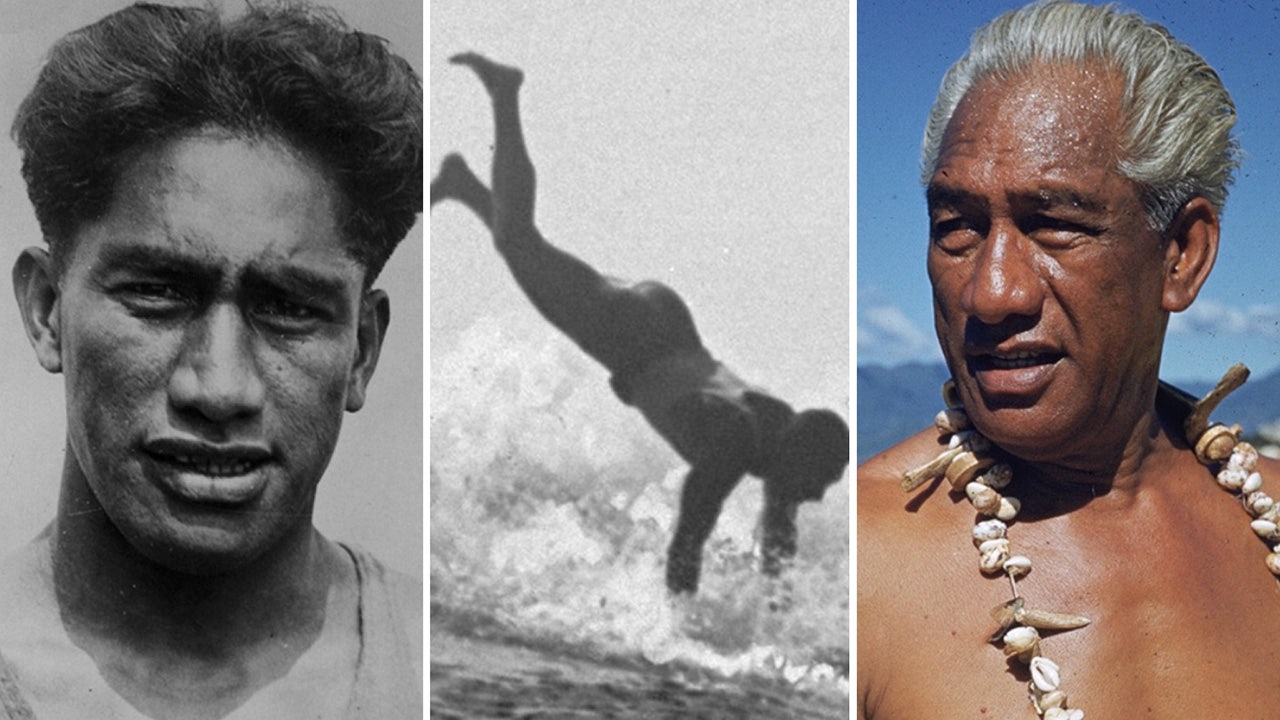
Duke Kahanamoku was a three-time Olympic gold medalist in swimming who popularized surfing around the world. (Hulton Archive/Getty Images; NY Daily News Archive via Getty Images; Slim Aarons/Getty Images)
Kahanamoku enjoyed equal reverence in the PBS “Waterman” documentary.
“When you come across something that is just so genuine and so good, you can’t help but drop whatever you think you know about people,” said narrator Jason Momoa.
“He changed lives just by being who he was.”
Read the full article from Here

San Francisco, CA
People’s Budget Coalition Claims Victory After San Francisco Budget Restores Most Proposed Service Cuts – Davis Vanguard

By Vanguard Staff
SAN FRANCISCO — The San Francisco People’s Budget Coalition declared a major victory this week after the San Francisco Board of Supervisors’ Budget and Appropriations Committee advanced a budget proposal restoring nearly all of Mayor Daniel Lurie’s proposed cuts to community organizations and workers providing essential services throughout the city.
The coalition credited months of organizing by labor unions, community organizations, residents and advocates for reversing many of the reductions initially proposed in the mayor’s budget. The committee-approved budget now moves to the full Board of Supervisors and then to Mayor Lurie for final approval. According to the coalition, few, if any, additional changes are expected during that process.
The coalition said thousands of San Francisco workers, residents and community members participated in neighborhood town halls, marches, rallies, phone banks, letter-writing campaigns and demonstrations to pressure city leaders to restore funding for programs serving vulnerable populations.
“This budget represents a remarkable victory for every single San Francisco resident,” said Anya Worley-Ziegman, coalition coordinator for the San Francisco People’s Budget Coalition.
“And it shows that public pressure works. Showing up works. Organizing, going out into communities where people will see their lives impacted by cuts, where people feel like their government and their representatives aren’t listening to them, and giving people an outlet to make their voices heard can make real change.”
Worley-Ziegman credited “the thousands of people, workers, unions, community and advocacy organizations, as well as the leadership of Budget Chair Connie Chan and Supervisors who fought for their districts’ priorities” with helping restore “tens of millions of dollars for essential programs serving our city’s most vulnerable populations.”
“Dr. Martin Luther King Jr. reminds us that budgets are moral documents, and today, City Hall seems to agree,” Worley-Ziegman added.
According to the coalition, many of the mayor’s proposed reductions affecting LGBTQ+, immigrant, student and homeless services were restored through the city’s annual budget “add-back” process during the Budget and Appropriations Committee’s final meeting, chaired by Supervisor Connie Chan.
The coalition said restorations include tens of millions of dollars for senior services, housing and rent assistance, Free City College, HIV services, immigrant services and other community programs.
The organization argued that many of the programs initially targeted for reductions serve communities that are already facing challenges resulting from actions by the federal government. The coalition said restoring those programs demonstrates continued city support for immigrants, LGBTQ+ residents, Black, Indigenous and other communities of color, as well as individuals struggling with mental health, substance use disorders or homelessness.
The coalition said investments in those communities strengthen the city and help maintain San Francisco’s reputation as a welcoming and inclusive city.
Despite celebrating the committee’s actions, the coalition said significant fiscal challenges remain. It noted that not all proposed reductions were fully restored and that city officials project next year’s budget deficit to exceed this year’s.
The coalition argued that San Francisco possesses substantial wealth, particularly amid the city’s growing artificial intelligence industry, and said city leaders should pursue additional revenue sources to sustain public services rather than relying on service reductions.
“San Francisco is one of the wealthiest cities in the wealthiest country in the world, and with the AI boom, it’s only getting richer,” Worley-Ziegman said.
“The fact that we need to exert this much time and energy fighting for such a small slice of the pie is, frankly, as ridiculous as it is shameful.”
“We should be laser focused on expanding the pie. We need to be talking about IPO taxes, wealth taxes, mansion taxes, and every policy tool available to close future deficits,” Worley-Ziegman continued.
“It feels like every year our leaders tell the most vulnerable communities to eat cuts and make ‘hard choices,’ while simultaneously opposing comically small taxes on the city’s wealthiest and well connected residents.”
“It should not be this hard to get an immigrant mother on the cusp of eviction $50 to make rent, or a senior living with HIV on our streets counseling or a hot meal.”
Worley-Ziegman concluded by urging advocates to continue organizing beyond this year’s budget process.
“Yes, let’s celebrate this win, but don’t forget that there’s so much more work to do if we want to move San Francisco forward without leaving its most vulnerable residents behind.”
Follow the Vanguard on Social Media – X, Instagram and Facebook. Subscribe the Vanguard News letters. To make a tax-deductible donation, please visit davisvanguard.org/donate or give directly through ActBlue. Your support will ensure that the vital work of the Vanguard continues.
Categories:
Breaking News San Francisco
Tags:
budget advocacy community services Connie Chan Daniel Lurie People’s Budget Coalition San Francisco budget
Denver, CO
Even without extension talks, Nikola Jokic has reiterated his desire to stay long-term in Denver
Despite the possibility of Nikola Jokic holding off on extension talks for now, per The Stein Line, Jokic has reiterated a desire to stay long-term in Denver in recent talks, league sources told HoopsHype. If Jokic waits until next summer, he’s eligible for an additional year on an extension, which should be noted.
HoopsHype

Here are three more coyote sightings reported to us in the past few days:
SATURDAY MORNING: Dwight emailed us this report:
At 9:53 this morning I saw a coyote walking down Brace Point Drive towards the Josslin building. He saw me and quickly changed direction and headed up California Drive. He looked healthy and happy, not starved and miserable .
THURSDAY EVENING: These next two came in almost simultaneously just after 8:30 pm Thursday via texts – this one, from 38th SW and SW Raymond:
This one, from 37th SW and SW Juneau:

You can browse our past sighting reports here.
-

 Los Angeles, Ca1 hour ago
6 members of suspected South American burglary crew arrested by Irvine police
-

 Detroit, MI2 hours ago
Detroit Tigers seek split in home series vs Houston Astros on Sunday
-

 San Francisco, CA2 hours ago
People’s Budget Coalition Claims Victory After San Francisco Budget Restores Most Proposed Service Cuts – Davis Vanguard
-

 Dallas, TX2 hours ago
Dallas weather: June 28 morning forecast
-

 Miami, FL2 hours ago
Where to watch Miami Marlins vs St. Louis Cardinals: TV channel, start time, streaming for June 28
-

 Boston, MA2 hours ago
Police: Man killed in crash caused by wrong-way driver on I-93 in Boston – Boston News, Weather, Sports | WHDH 7News
-
Denver, CO2 hours ago
Even without extension talks, Nikola Jokic has reiterated his desire to stay long-term in Denver
-

 Seattle, WA2 hours ago
WEST. SEATTLE COYOTES: Three sightings

