Lifestyle
South L.A.'s hottest dance party happens at 'Granny's house' — and it feels revolutionary

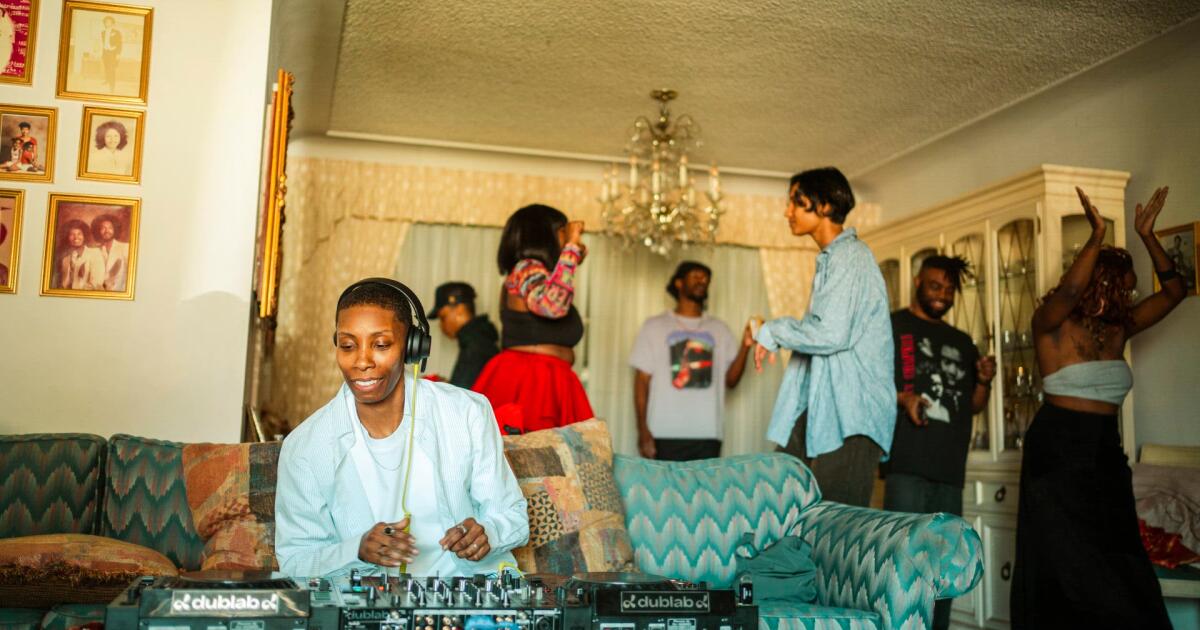
On a breezy Saturday evening in South L.A., the sounds of heavy kick drums and electric claps trail down the block from a tan, two-story house with a well-manicured lawn. Through the large front window, passersby can catch a glimpse of a DJ in a dimly lighted living room, meticulously turning knobs on a mixer and blending house records together. In the dining room, about 15 people dance and socialize under a crystal chandelier. Dark liquor flows into red cups. A man sits between a woman’s legs as she braids his hair into cornrows, while another guest taps a tambourine to the beat of the music.
From a distance, this scene may look like a typical house party, which is exactly the allure of “Black House Radio,” a YouTube show and L.A. event series spotlighting Black DJs who specialize in house music. Throughout the gathering, no one pays much attention to the cameras recording, and for the hundreds of thousands of viewers at home, watching the videos feels like you’ve been ushered into a high energy kickback.
Winston jams out at Black House Radio.
At a time when DJs are showcasing their skills in creative ways and in sometimes unexpected settings — at parks, on elevators, at the beach, inside loft apartments, in the subway and at laundromats — “Black House Radio” stands out because of its familial charm and devotion to the genre it highlights.
“I want ‘Black House Radio’ to feel like a warm, nostalgic hug from a grandmother,” says founder Michael Donte, who’s also a filmmaker, producer and DJ. He hosts the intimate gathering roughly once a month at his best friend Jeremy’s ancestral house, which his late grandparents bought in 1963 after moving to L.A. from Millport, Ala., during the Second Great Migration. Everything in the home, including a blue-patterned couch, teal-colored carpet, vintage drapes and framed family photos, is in the same place it’s been since the 1970s.
“Black house music was made in our homes,” says Donte. He adds that he felt frustrated when he would go out and see more white DJs getting booked to play house music than Black performers, who created and popularized the genre in the 1970s. Aside from at select events like newcomer TheyHouse and Utopia, which have been elevating house music in L.A. for years. “[A white DJ is] very different than a Black person playing house music — it’s just a feeling.”
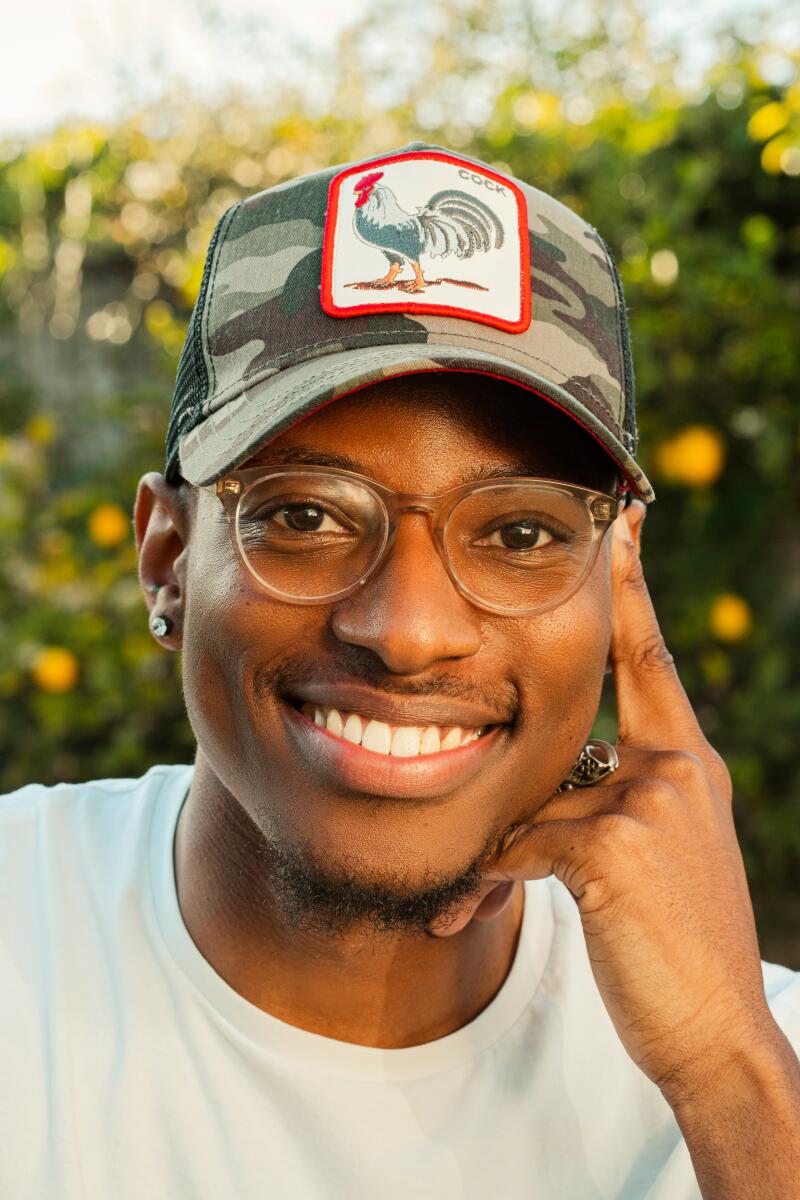
“I think my friends and I do a good job of making it a safe space for people to show up as themselves, and that’s just beautiful to watch,” says founder Michael Donte.
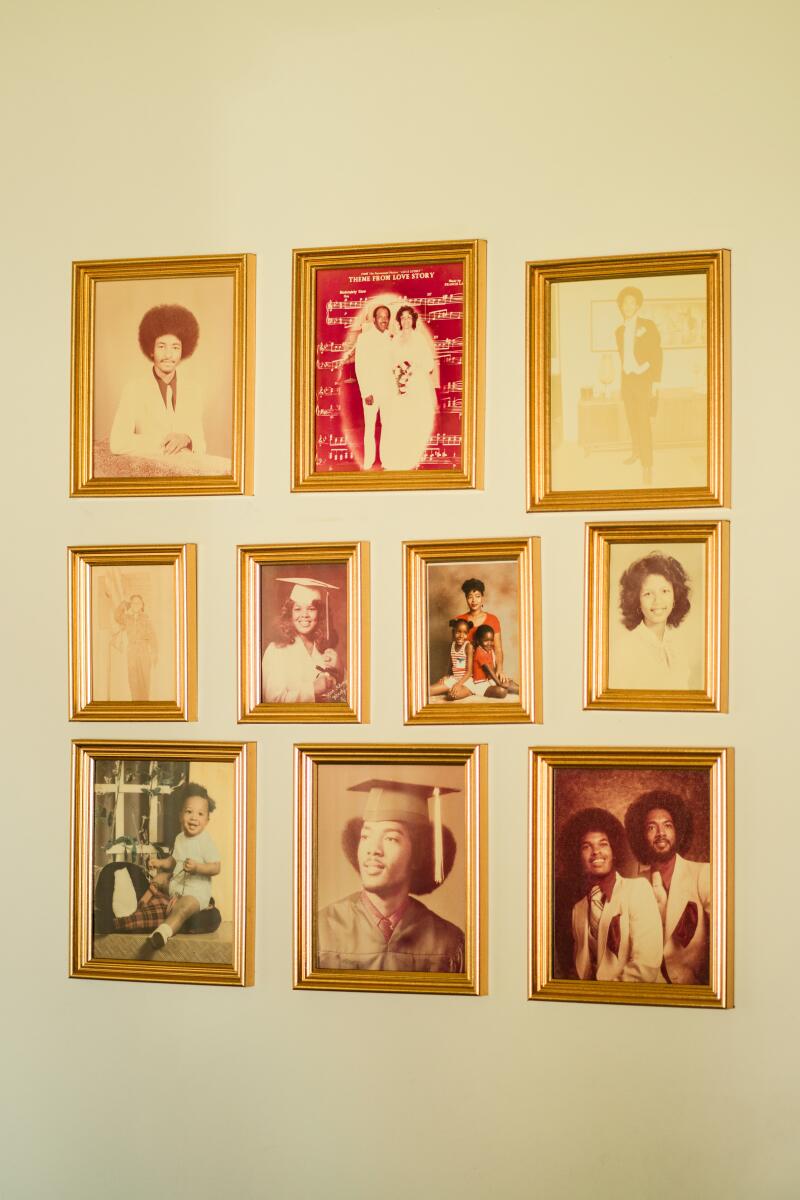
Family photos displayed on the wall.
After getting laid off last year from his job as a creative executive for YouTube Originals, Donte learned how to DJ, and then launched “Black House Radio” to bring the genre back home, literally, by hosting events in spaces that are vital to the Black community, such as family homes, hair salons, barber shops and churches.
Donte hosted the first “Black House Radio” event the day before Thanksgiving in 2023 and served collard greens and cornbread. About a dozen of his friends showed up with their own soul food dishes, while he and three other L.A.-based DJs — Naygod, Silhouwet, DJ Bodii — provided the soundtrack for the hours-long event.
Video by Kailyn Brown / Los Angeles Times; Photo by Zay Monae / For The Times
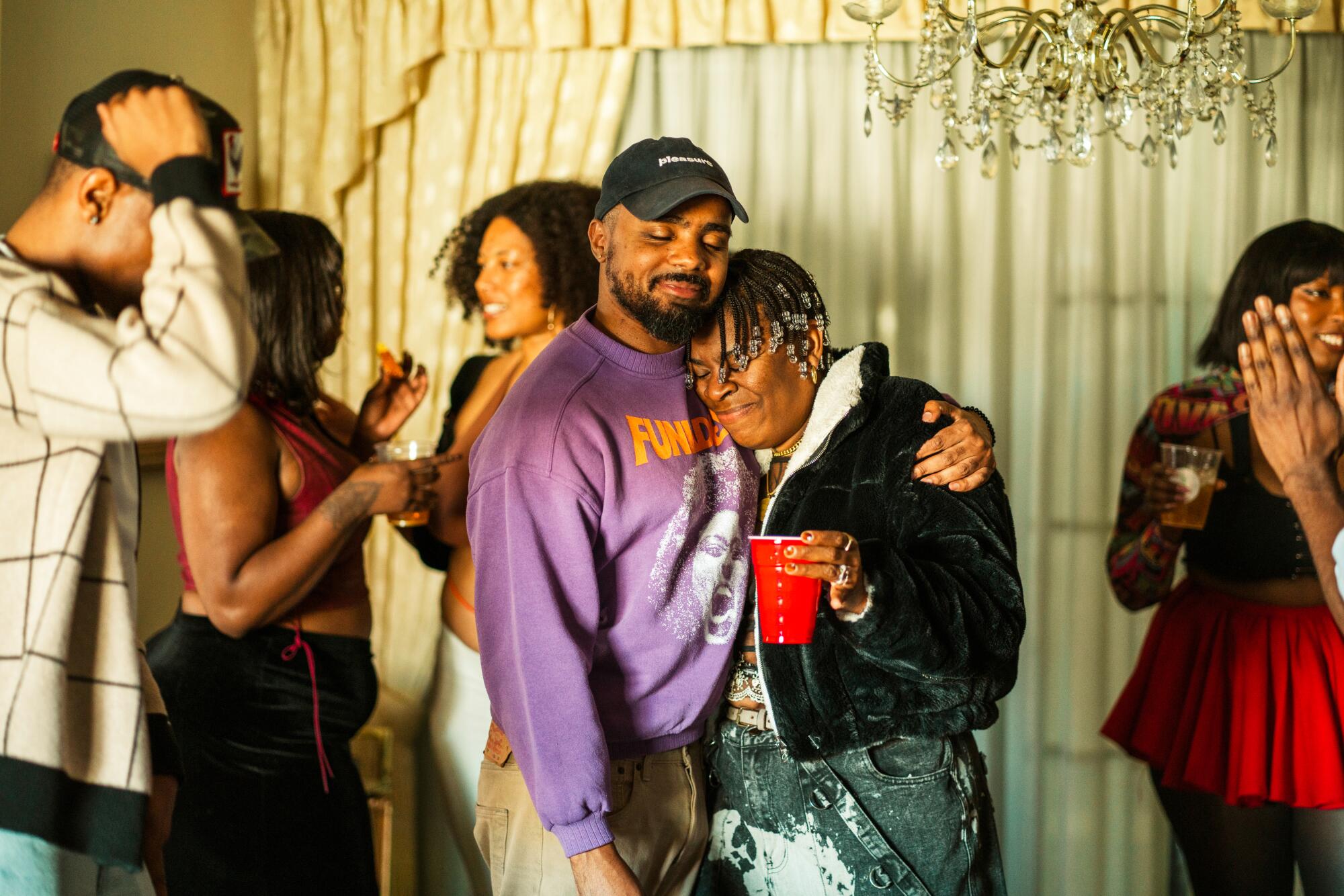
DJ Terrell Brooke and DJ Chinua embrace each other.
Then, in February, during Black History Month, Donte began posting live sets from that November day on YouTube, where he’s since acquired more than 50,000 subscribers and has built a community of loyal house heads who look forward to every drop. The most watched video so far is a set by Ashley Younniä, which had nearly 425,000 views on YouTube as of late June.
Some of L.A.’s most exciting DJs have been past guests, including Terrell Brooke (founder of TheyHouse and co-creator of Casual, Mez (who runs an event called Signal Underground), Rush Davis (a singer, producer, creative director and DJ) and Chrysalis (who toured with singer Rochelle Jordan).
Shaun Ross immediately knew he wanted to be a part of “Black House Radio” when one of his friends shared its Instagram page with him.
“I feel like it’s a train to get on — to actually bring back Black house music,” says Ross, a celebrated model, DJ and recording artist. He’s performed at two “Black House Radio” functions so far. “A lot of DJs don’t really play Black house music, and I feel like today, the world has this wrong notion of what house music is so when you play it, people are like, ‘It’s not hype enough. It’s not giving me a Vegas show.’”
Ross says the YouTube show also gives younger generations the opportunity to go back and look at people who are uplifting house music today. “I love that it’s Black and queer, and I love that it’s healing for everybody here,” adds Ross, who hosts a house music party called “Stardust.”
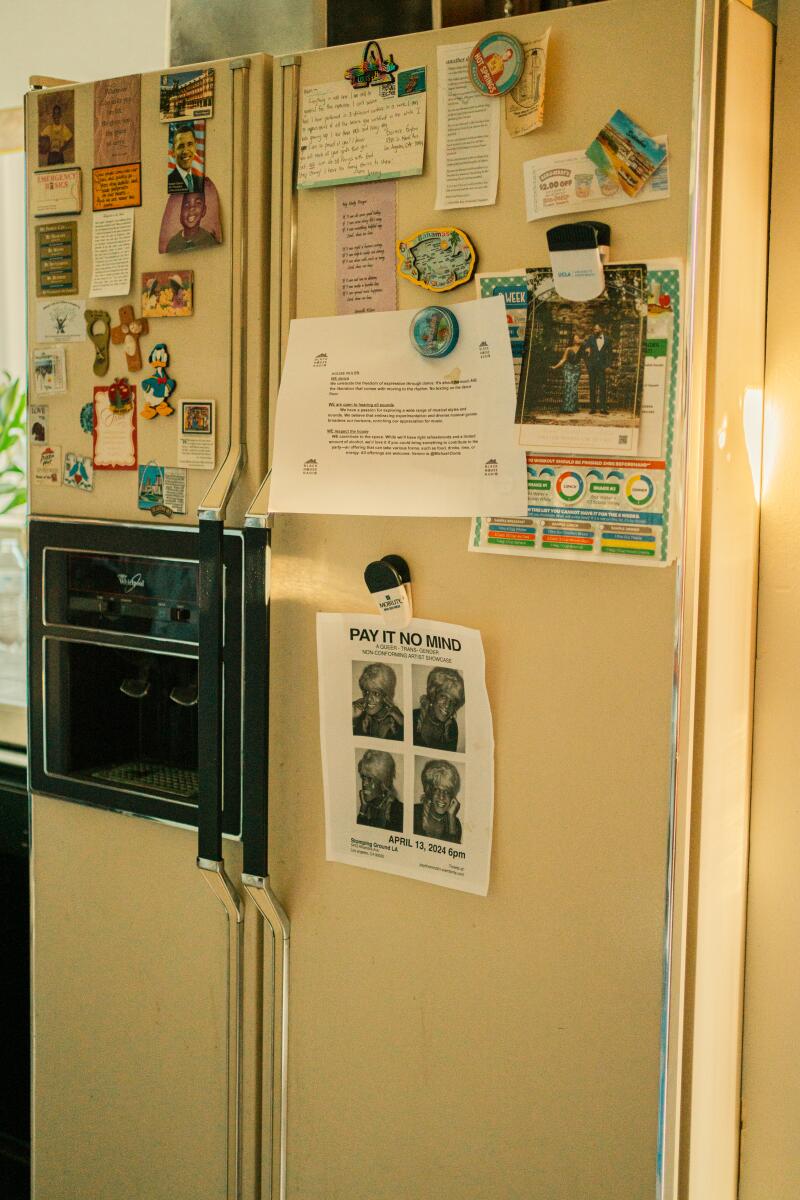
Michael Donte keeps the house as it is for each of the “Black House Radio” recordings.
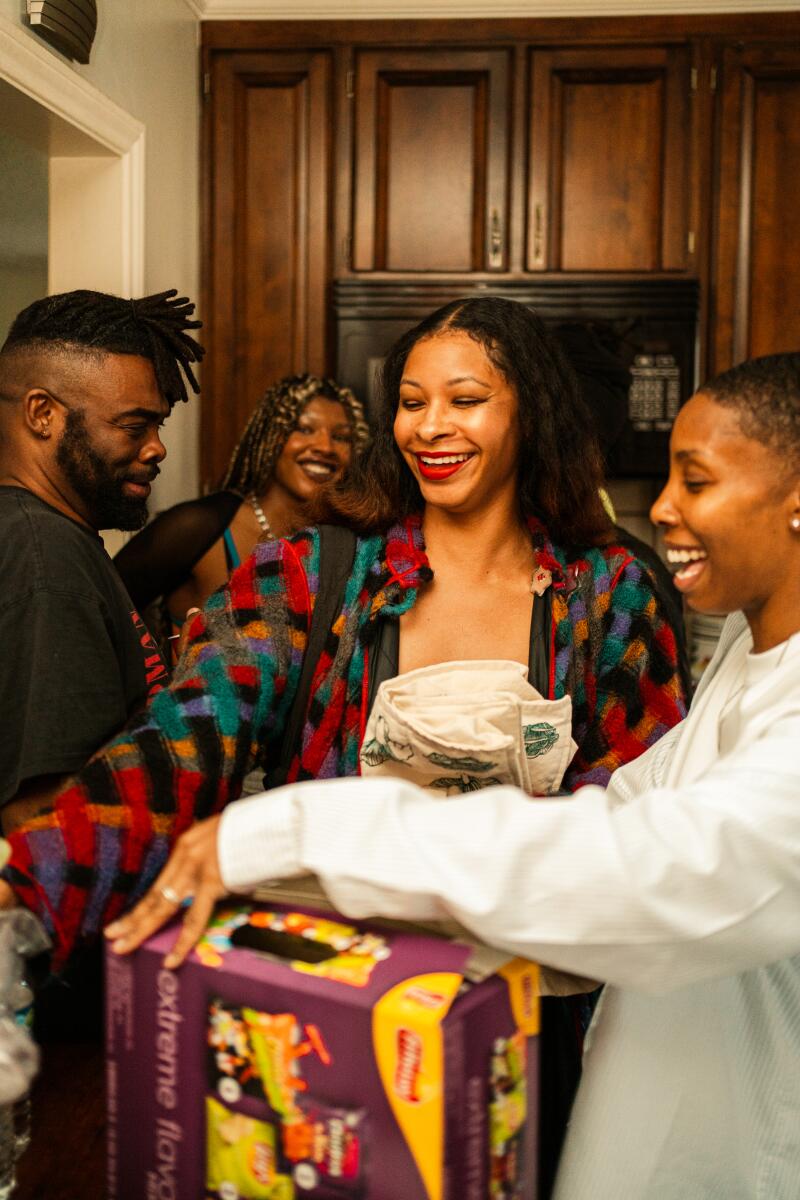
“Black House” attendees socialize in the kitchen over slices of pizza and homemade pound cake.
Back at the party, Vaughan Higgins pours herself a drink in the kitchen as other attendees grab slices of pizza and homemade pound cake. Higgins regularly goes to Black and queer events in L.A. but says being inside a Black ancestral house carries an extra layer of significance for her.
“It mainly makes me think of resistance and survival,” says the L.A.-born musician, who decided to attend because her friend DJ Nico was spinning. “The fact that this house is even still in Black hands and they are using it to bring Black joy — that is all a part of this. It’s really beautiful.”
In many of the YouTube videos, Donte infuses archival footage — some that he’s found online and others that his friends have given him — of Black families dancing at cookouts or participating in praise and worship at church — his way of preserving Black culture, he says.
“That’s one thing I feel like is missing from video streaming,” says Sevyn, who performed a groovy DJ set for ”Black House Radio” in April. “I feel like compared to other streaming things I’ve done, this one just has a story and also, I’ve been here. This is my granny’s house. It’s familiar.”
Although each of “Black House Radio’s” YouTube sets, which typically start in the afternoon and go into the evening, are invite-only due to limited space at the house, Donte has recently started hosting public events so house aficionados can enjoy the experience offline.
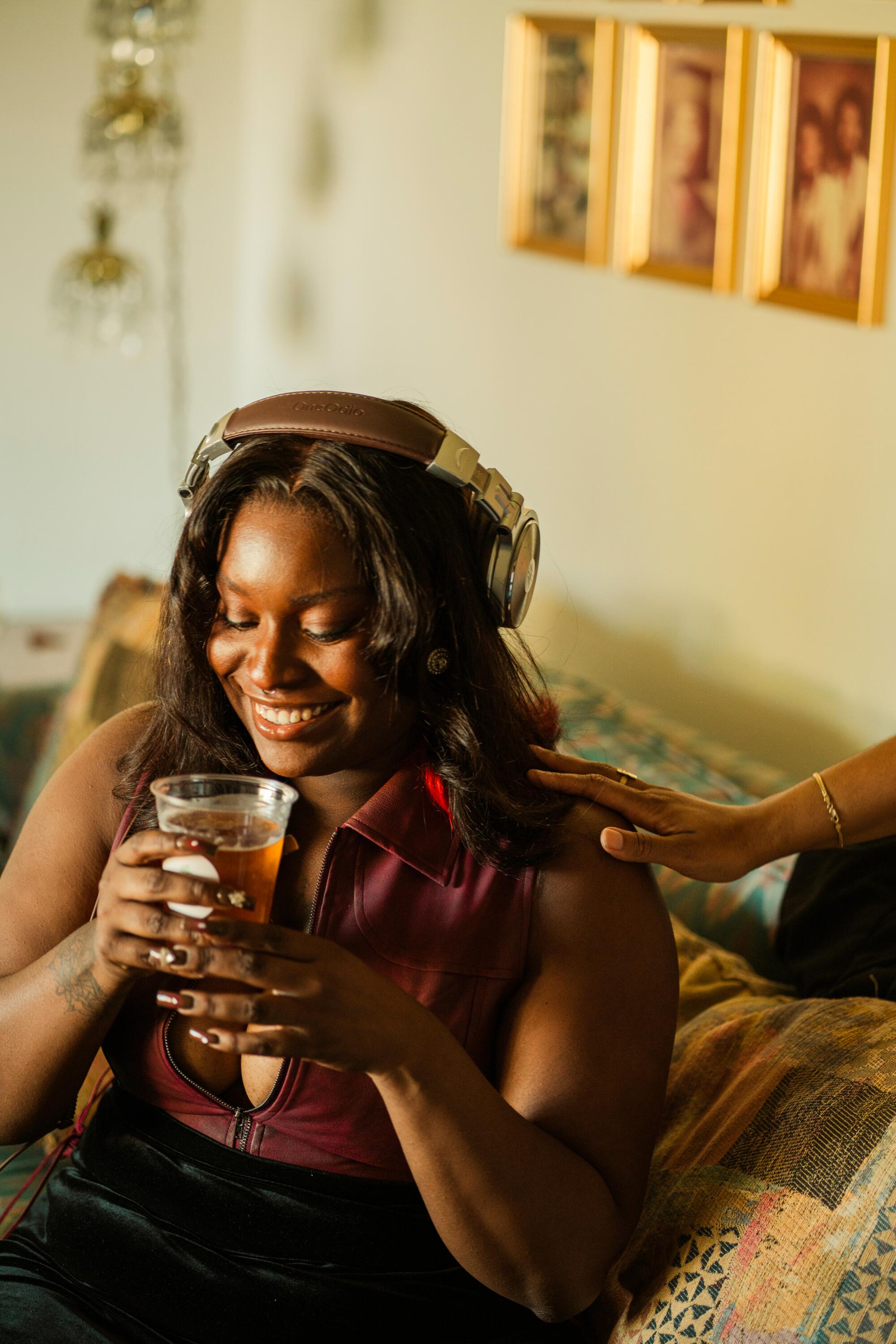
Dj Nico, a sound selector visiting from Memphis, Tenn., grins between sips of Auntie’s Coffee cold brew after her set.
The first one, called “Church,” was held in June at the Pico Union Project, a nonprofit housed in a building that was once home to Sinai Temple (built in 1909). Like at the house functions, Donte displayed framed portraits around the space, which had church pews, flameless candles and a piano. (Video cameras were here too, but Donte doesn’t plan to release a video. You just had to be there.) He’s also got his eyes set on doing a Black house music festival in the near future.
When he reflects on the rise of “Black House Radio,” Donte says he thinks people connect with the show because of its authenticity.
“It’s not trying to be unique,” he says. “It’s not trying to be something different or new. I want it to feel familiar. I want you to be able to smell what you see on that TV. You know what that house smells like. You know what the carpet feels like. You know what the food is probably on the stove.”
Video by Kailyn Brown / Los Angeles Times; Photo by Zay Monae / For The Times
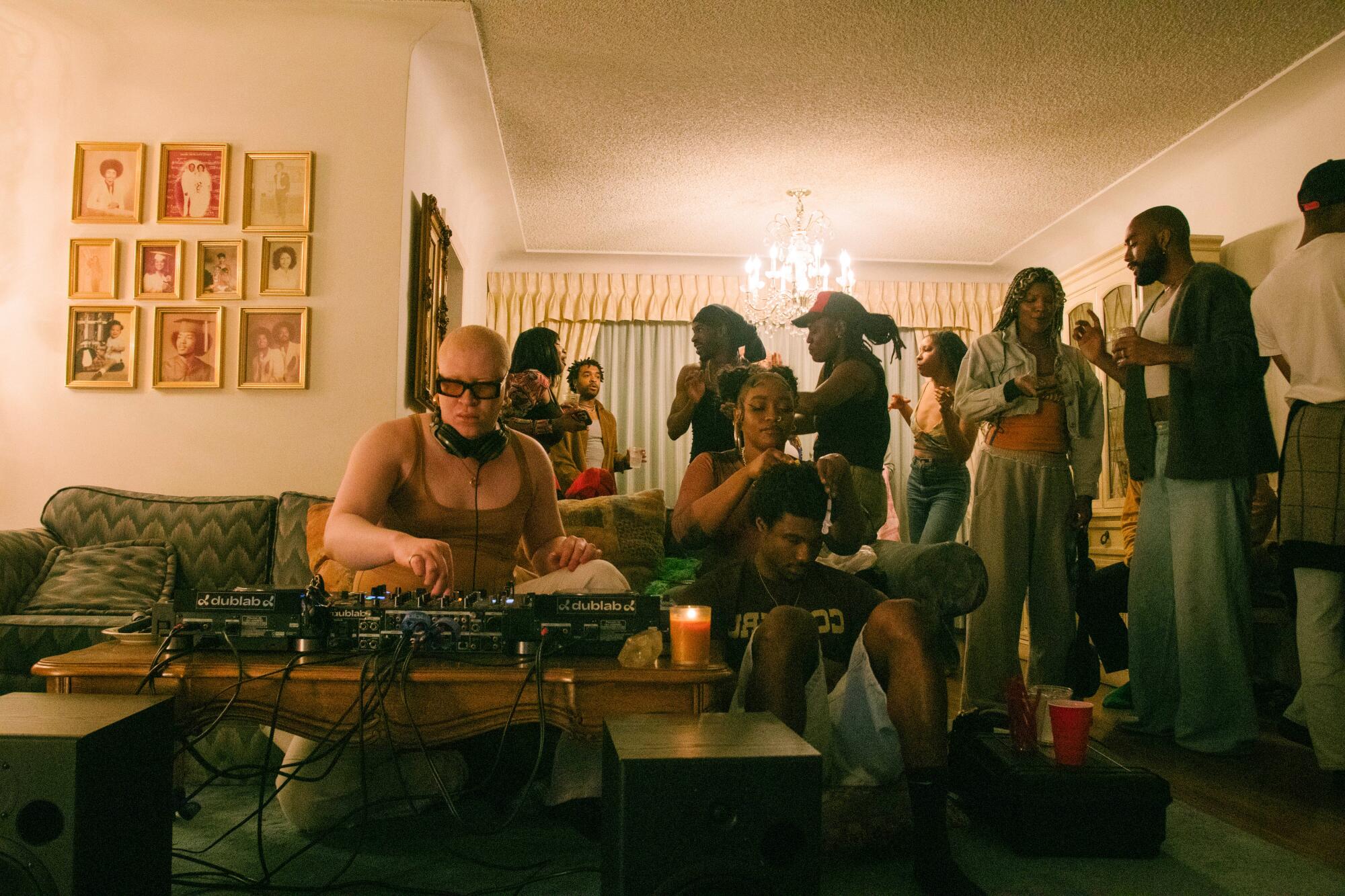
Shaun Ross at Black House Radio.
(Justin Lawson)
He adds, “I think my friends and I do a good job of making it a safe space for people to show up as themselves, and that’s just beautiful to watch.”
Around 8 p.m., when the last DJ finishes their set, one person shouts, “Keep the party going.” Donte hops back onto the decks and plays upbeat house music. Two guests vogue in the living room, and attendees socialize over more drinks. The cameras are no longer recording, but no one cares or even notices. They are in the company of family. They are at home.



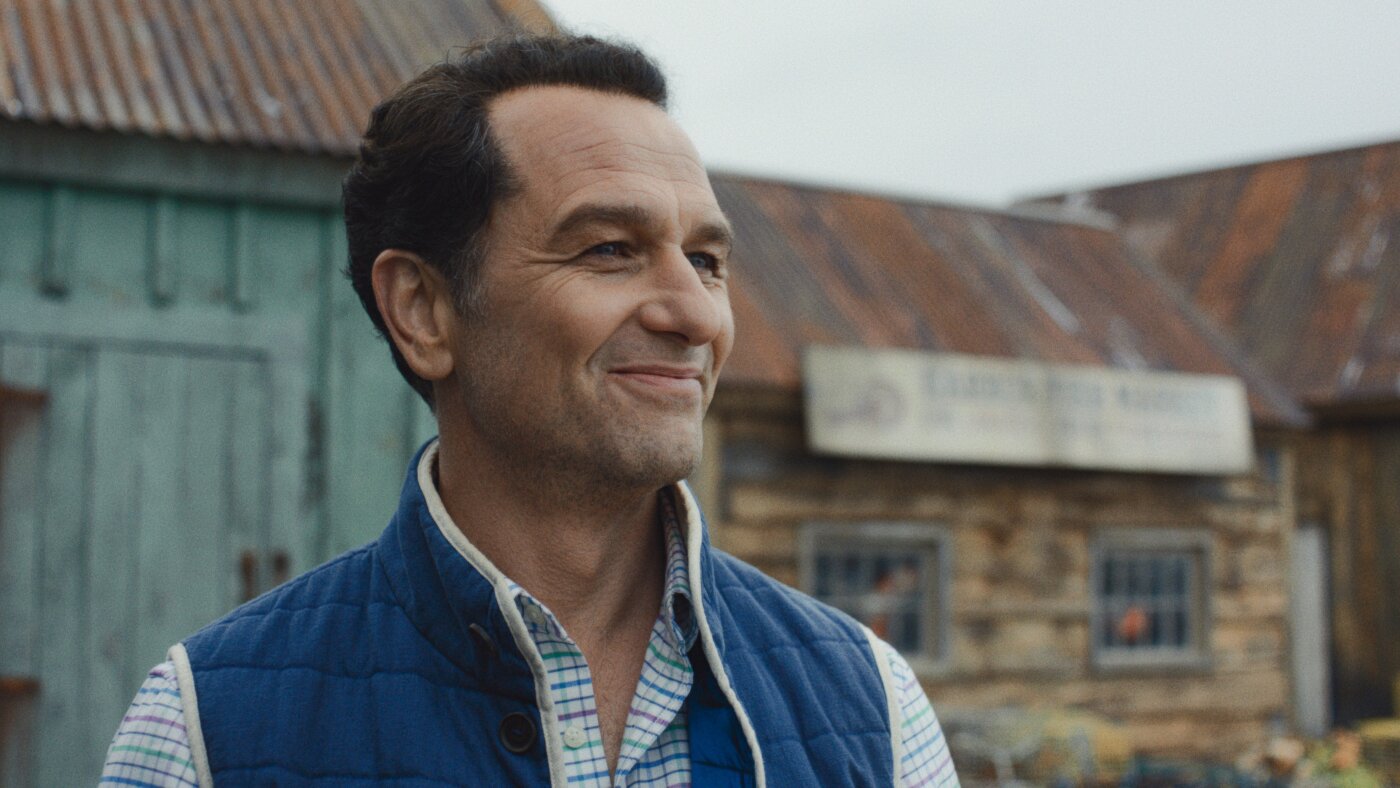
Matthew Rhys was nominated for his role in Widow’s Bay.
Apple TV
hide caption
toggle caption
Apple TV
The 2026 Emmy nominations are here. We’re unpacking the record-breaking nominations for Hacks, plus a big day for Widow’s Bay, The Pitt, and The Bear. We’ll also talk about the snubs and make some early predictions of who will win.
Connect with Pop Culture Happy Hour:
Letterboxd / Facebook
Our weekly newsletter
Support Pop Culture Happy Hour+


Can you say no to a friend’s wedding?
Getty Images/Getty images
hide caption
toggle caption
Getty Images/Getty images
Are we spending too much on other people’s weddings?
Going to a friend’s weddings can be so fun and meaningful… but it can also really hurt your wallet. A survey by LendingTree found that 31% of people who had been to a wedding in the past five years had accrued debt to attend. So what’s driving up the cost of weddings for guests? And what makes it so hard to say no to these expenses?
Brittany breaks it down with Allyson Rees, senior analyst at trend forecasting firm WGSN, and Annie Joy Williams, assistant editor at The Atlantic.
This episode was produced by Liam McBain, with additional support from Corey Antonio Rose. It was edited by Neena Pathak. Our Supervising Producer is Cher Vincent. Our Executive Producer is Barton Girdwood. Our VP of Programming is Yolanda Sangweni.
-

 Seattle, WA6 minutes ago
Study finds dangerous chemicals in the breast milk of Seattle moms
-

 San Diego, CA9 minutes ago
Tom Krasovic: Justin Verlander’s announcement recalls Padres’ 2004 draft blunder
-
 Milwaukee, WI14 minutes ago
‘Peace on Every Block’ brings Milwaukee community together to fight gun violence
-

 Atlanta, GA21 minutes ago
Atlanta smash-and-grab: Masked men ram U-Haul into clothing store
-

 Minneapolis, MN24 minutes ago
Minneapolis police drone debate sparks privacy concerns
-
Indianapolis, IN29 minutes ago
Adam Vinatieri will celebrate on the field in Indianapolis again as Colts’ Ring of Honor member
-

 Pittsburg, PA36 minutes ago
U.S. launches more strikes against Iran
-

 Augusta, GA39 minutes ago
Augusta groups work to keep veterans housed through SSVF program

