Lifestyle
The average wedding costs $41,000 in California. 16 couples share what they really spent

Planning a wedding is a highly personal experience, reflecting your tastes, values and vision as a couple. But one thing is universal: It’ll likely cost more than you think.
In a survey by the Knot that polled nearly 10,000 U.S. couples who married in 2023, the average cost of a wedding was $35,000 — a $5,000 increase from the previous year. California was ranked as one of the top 10 most expensive states to host a wedding, with an average cost of $41,000. (New Jersey was the priciest at $55,000.) In L.A., the median wedding cost was $48,000.
It’s money that many couples just don’t have. A U.S. News survey that polled 1,205 people who got married in the past year found that 56% of newlyweds took on debt to pay for their weddings. It also revealed that nearly a third of the newlyweds regretted having spent so much on their weddings.
Sarah Blessinger, an L.A.-based wedding planner who specializes in events with 100 guests or less, says people often underestimate the cost of weddings. To help give her clients a clearer picture of the financial breakdown, she shows them how much her previous clients have spent. So far this year, the least expensive wedding she’s planned was $38,000 — their budget was initially $25,000 — and the highest was $120,000.
“Some do get sticker shock immediately and they’re like, ‘Oh, I thought I could get away with spending $20,000,’” says Blessinger, owner of Kindred Weddings and Events. “I’m like, you can, but you’ll have to cut things from your budget or from your vision and find ways around that — and it’s totally doable.”
With all of her couples, Blessinger establishes a “wedding foundation,” making sure they are on the same page about a few factors: What is the actual purpose of your wedding? Why is it important to gather these people together? How do we make sure that your investment/budget reflects that and not just what you think you should be doing?
Rob Bolden, a financial advisor and founder of Bolden Wealth Management, suggests over-communicating with your partner and not allowing outside voices to influence you to deviate from your original plan. “At the end of the day, it’s just going to be you and your spouse, so make sure that you two are happy,” says Bolden, who got married in September.
With the cost of weddings continuing to rise across the country, we wanted to know how much Californians have spent on their weddings in recent years and whether they regret it. Some couples spent well below the state average (like a pastor and an attorney who spent $200 on a front yard wedding); while others spent more than $50,000. They each shared helpful financial advice for couples planning their own big day.
Their responses have been lightly edited for length and clarity.
Marisa Gonzalez and Matt Flanzer
Marisa Gonzalez and Matt Flanzer got married in Beverly Hills.
(Sam Turchin)
Live in: Palo Alto
Occupations: Marisa is a physician assistant; Matt is a computer engineer.
Where and when did you get married? Beverly Hills in July 2023
How much did you spend on your wedding? $3,500
Biggest expense? Photography
Looking back, what would you have done differently? Nothing
Any financial advice for couples who are planning a wedding? “Figure out what is a reasonable amount to spend on your wedding based on your finances, savings and family contributions and stay within that budget. This will help you in the long run.”
Was it worth it? “Totally worth it. We didn’t want to have a big wedding so we had a courthouse wedding. We had a luncheon afterward for our family. The following day we had a casual party at a brewery to invite more friends to celebrate. We got married later in life, so we have a different perspective about not having a costly wedding that doesn’t put us into more debt and allows us to continue saving for retirement.”
Destiny and James Lavigne
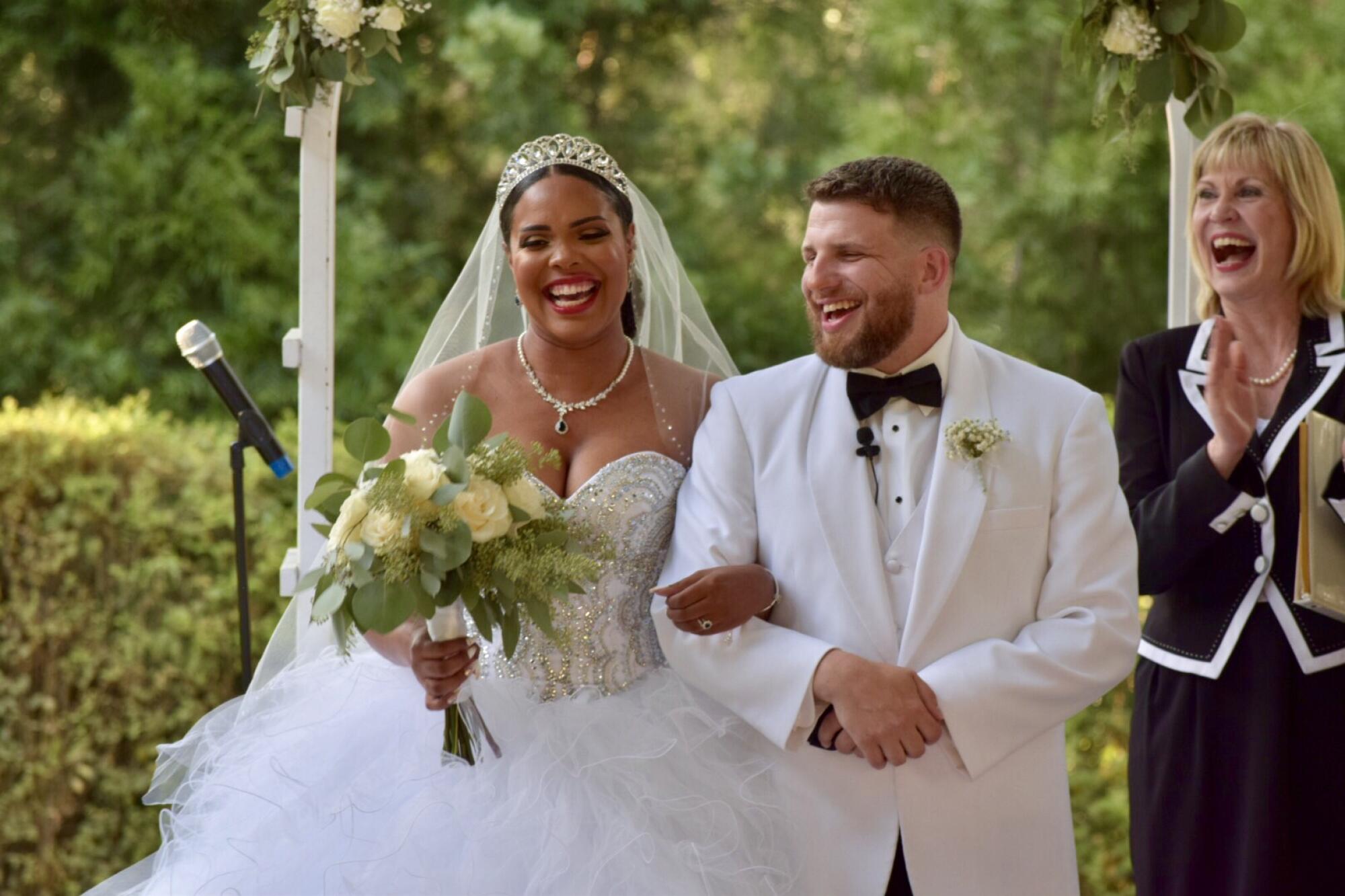
Destiny and James Lavigne’s wedding.
(Eric Craig)
Live in: Los Angeles
Occupations: Destiny is a teacher and voice-over actor; James is a professional songwriter.
Where and when did you get married? Azusa in August 2019
How much did you spend on your wedding? $12,000. “I only spent $800 on my dress because it was a white quinceañera dress and didn’t have the ‘wedding’ label on it.”
Biggest expense? “The venue and in-house catering were the most expensive, but it was a package deal so I don’t regret buying it. It made everything so much easier.”
Looking back, what would you have done differently? “I would have asked for more help planning. It was very stressful working as a teacher and planning a wedding simultaneously.”
Any financial advice for couples who are planning a wedding? “Please do not overspend for one day. Make sure you can pay for most of the wedding in cash. You want something beautiful and memorable, but make sure you add personal touches and not try to solely impress a bunch of strangers.”
Was it worth it? “Yes, it was worth it. We were able to pay for it in cash and don’t have debt from our wedding.”
Steven and Jessica Snyder
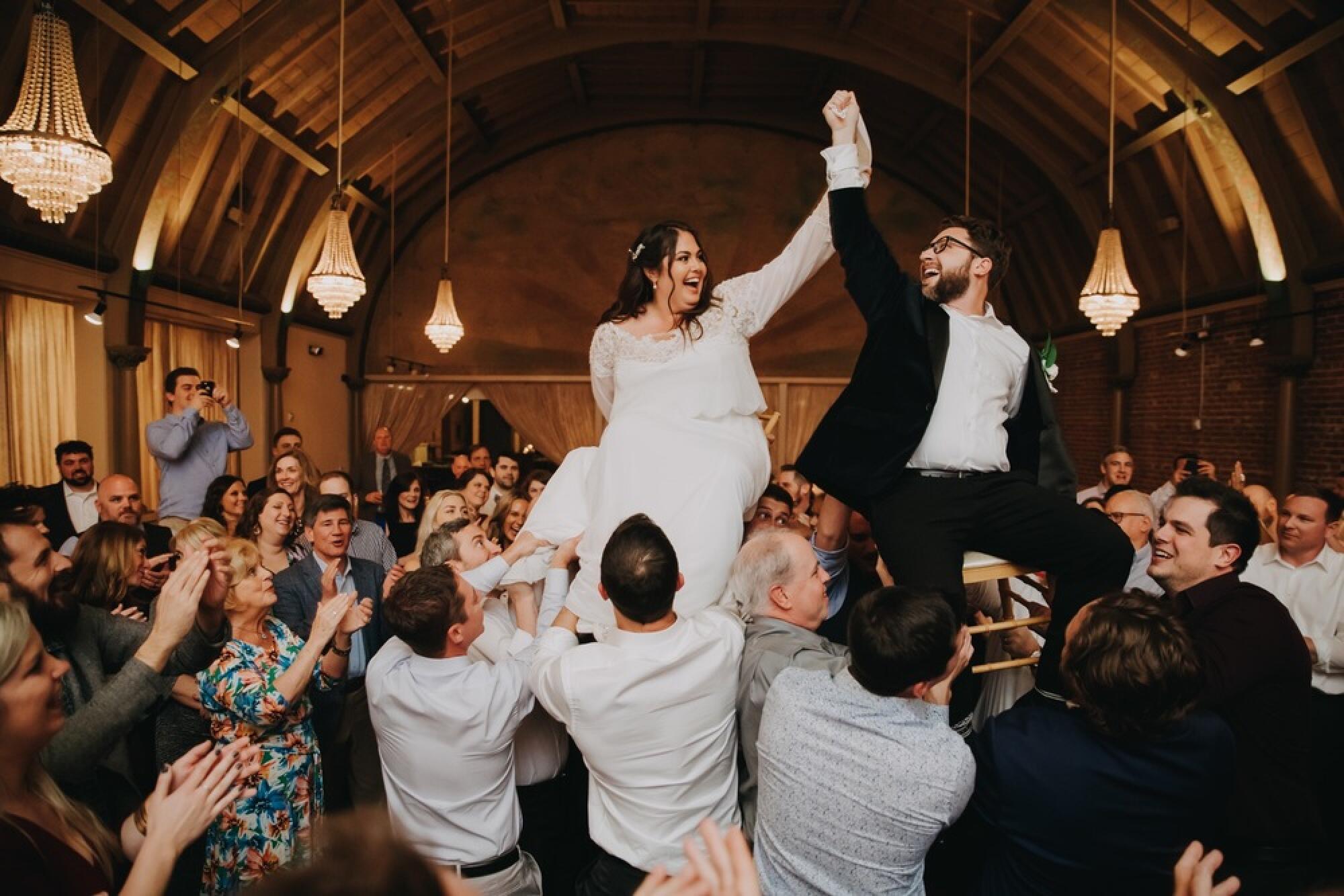
Steven and Jessica Snyder’s wedding.
(Stefanie Zeltner)
Live in: Redondo Beach
Occupations: Steven is a small business owner; Jessica is a ninth grade English teacher.
Where and when did you get married? Long Beach in February 2020
How much did you spend on your wedding? $45,000
Biggest expense? Band/live music. “Having been to many weddings, the band makes or breaks the party.”
Looking back, what would you have done differently? “The only thing we would do differently is having some film/video of the event. We chose not to have a videographer and had signs asking for phones to be put away during the ceremony. I do wish we had set up a couple of GoPros to capture the ceremony and some of the party.”
Any financial advice for couples who are planning a wedding? “Make sure you write down the most important things you want to have at the wedding and don’t compromise too much.”
Was it worth it? “Absolutely worth it! Our wedding was in February 2020 right before the start of the pandemic. It turned out to be the last great party for our family and friends for the next two years. We had 90% of our guests come from out of town, most of them from Ohio. [The] weather was perfect and everyone had a great time.”
Royston and Selihah Beserve
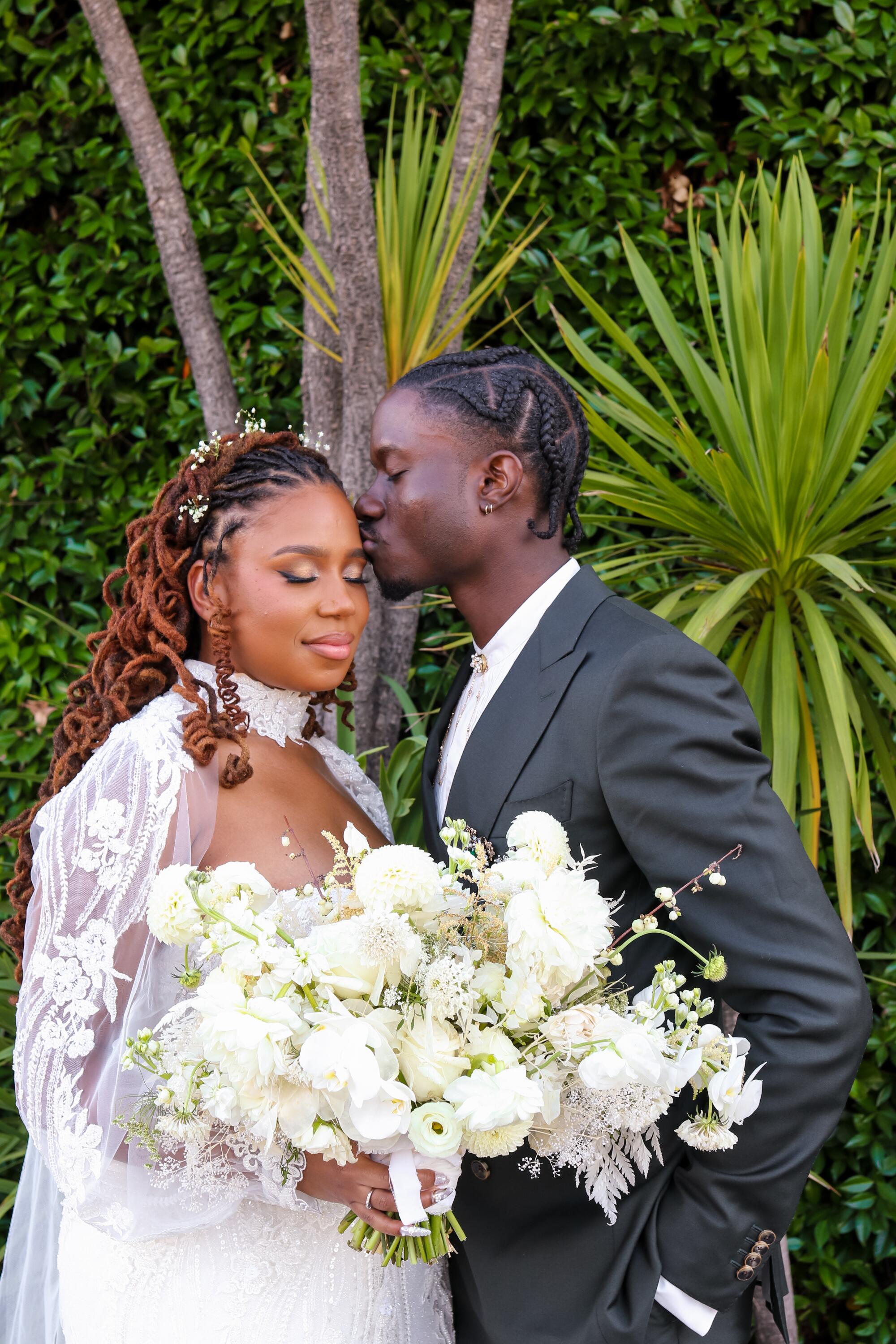
Royston and Selihah Beserve’s wedding.
(Sarah Jane Hardt)
Live in: Los Angeles
Occupations: Royston is a branded content specialist; Selihah is a publicist.
Where and when did you get married? Los Angeles in September 2023
How much did you spend on your wedding? $45,000
Biggest expense? “Definitely the venue. When we discovered it, we immediately knew we had to get married there. The location, Smogshoppe, is close to the neighborhood we both grew up in so it feels significant to our love story. But when we discovered the price, we were a bit nervous about the venue cost eating up too much of our wedding budget. But when we envisioned how we wanted our big day to feel, we knew there was really no other option.”
Looking back, what would you have done differently? “Nothing.”
Any financial advice for couples who are planning a wedding? “It’s one day and it’s over in the blink of an eye. If you’re committed to not going into debt, set a budget and start saving early.”
Was it worth it? “Yes, but only because we were able to do it on our terms. I should also note that we had an intimate courthouse ceremony in 2022, so that took a lot of the pressure off. When we decided to have a bigger wedding, we knew we wanted to throw a fun party for our family and friends without going into debt and we successfully accomplished that.”
Nazareth and Lauren Ekmekjian
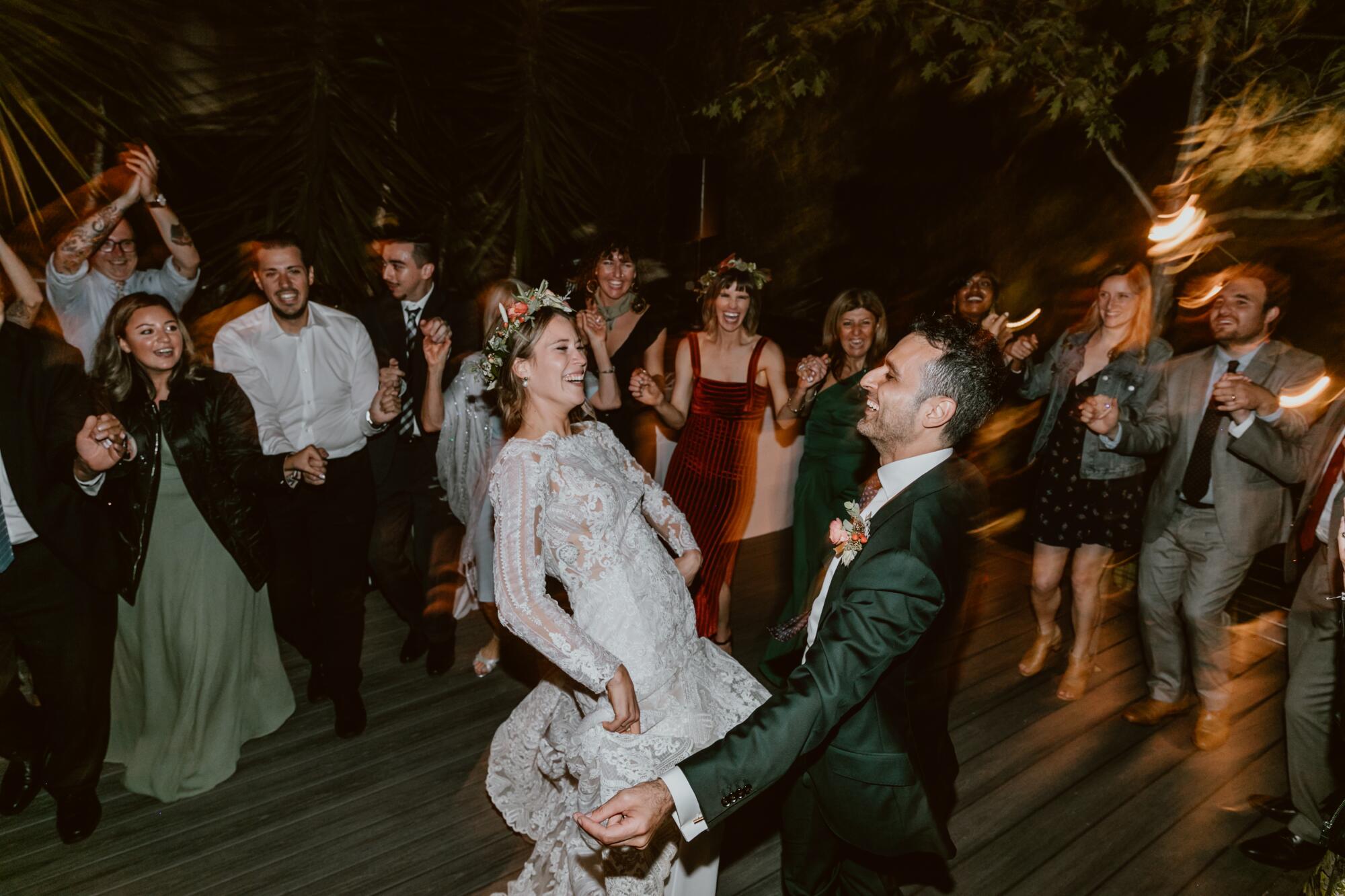
Lauren and Nazareth Ekmekjan dance at their wedding.
(The Gathering Season)
Live in: Long Beach
Occupations: Nazareth is a robotic design engineer; Lauren is a nonprofit fundraising consultant.
Where and when did you get married? West Adams in May 2021
How much did you spend on your wedding? $35,000
Biggest expense? Catering from Esso Mediterranean Bistro — the owner is a family friend. “Given that the wedding was in the backyard, we had to rent all of the equipment. We found out two days before the wedding that we wouldn’t have access to the venue kitchen. It was extremely stressful.”
Looking back, what would you have done differently? “I’d vet my vendors more closely. I also would have purchased my dress off the rack. The COVID delays alone broke me out into a sweat when waiting for my dress to arrive. The cost, adjustments and airfare to pick up and drop off my dress was simply not worth it.”
Any financial advice for couples who are planning a wedding? “Early on, my partner and I listed out all the things you typically see at a wedding: flowers, DJ, bouquet toss, etc. We individually voted on whether they were a yes or a no for our own wedding, and we even went a step further to note down what we thought each item would cost. At the end, we compared our answers and saw where there was overlap and discrepancies. It really helped us get on the same page about what was essential and what we could do without.”
Was it worth it? “This was the fourth date/attempt at our wedding since we first planned to be married in May 2020. We [got] married outdoors in a private backyard with about 50% less guests than we originally intended. Given where we were in the pandemic, it was that golden hour when everyone was vaccinated. It was, for many, the first party they’d been to in years. I think for that special moment alone it was worth it.”
Juan Diaz-Carreras and Hugo Alvarado
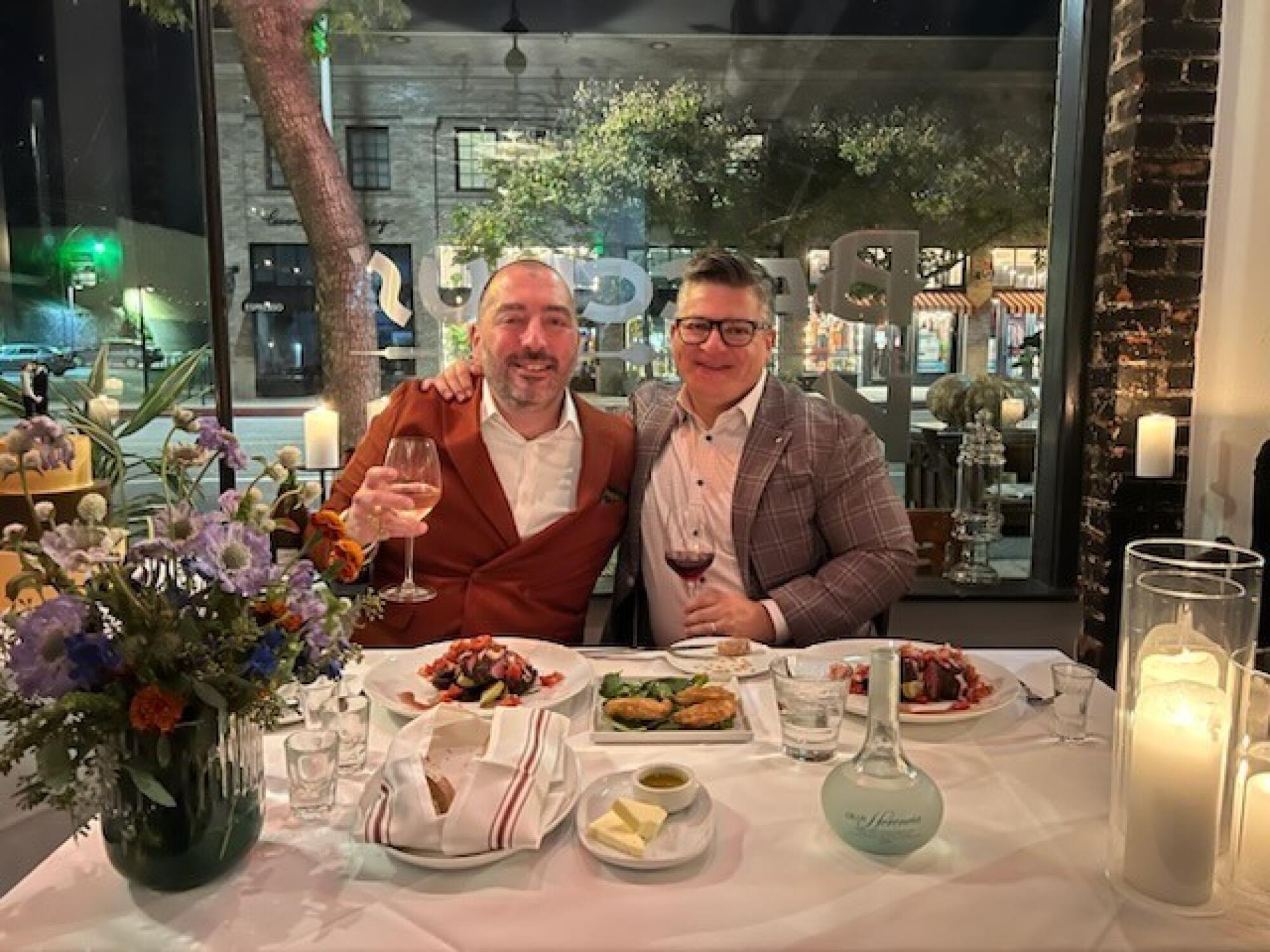
Juan Diaz-Carreras and Hugo Alvarado’s wedding.
(Manuel Reyes)
Live in: Pasadena
Occupations: Juan is a consultant for water infrastructure; Hugo works in university administration.
Where and when did you get married? Pasadena in November 2022
How much did you spend on your wedding? $20,000
Biggest expense? “The venue/reception [at Bacchus Kitchen]. Because the restaurant also has a catering business, they created the menu and we used them for the wine and the welcome cocktail. They created a menu that showcased my Peruvian heritage and my husband’s Honduran heritage.”
Looking back, what would you have done differently? “We did not write vows ahead of time, so maybe some planning there would have helped me ramble a bit less, but it was overall a good time for all!”
Any financial advice for couples who are planning a wedding? “Your event is for you, not your parents or family or anyone else. You do you! You also do not need to do what the latest trend on Instagram is or what you may see on TV — all that is fake anyway. Look into your heart and see the experience you want to have and who it is important for you to have there.”
Was it worth it? “Totally worth it! We had a custom menu and rented out the restaurant where we had our first date. We had the experience we wanted with the people we wanted to have there for us.”
Calvin and Rebecca Noetzel
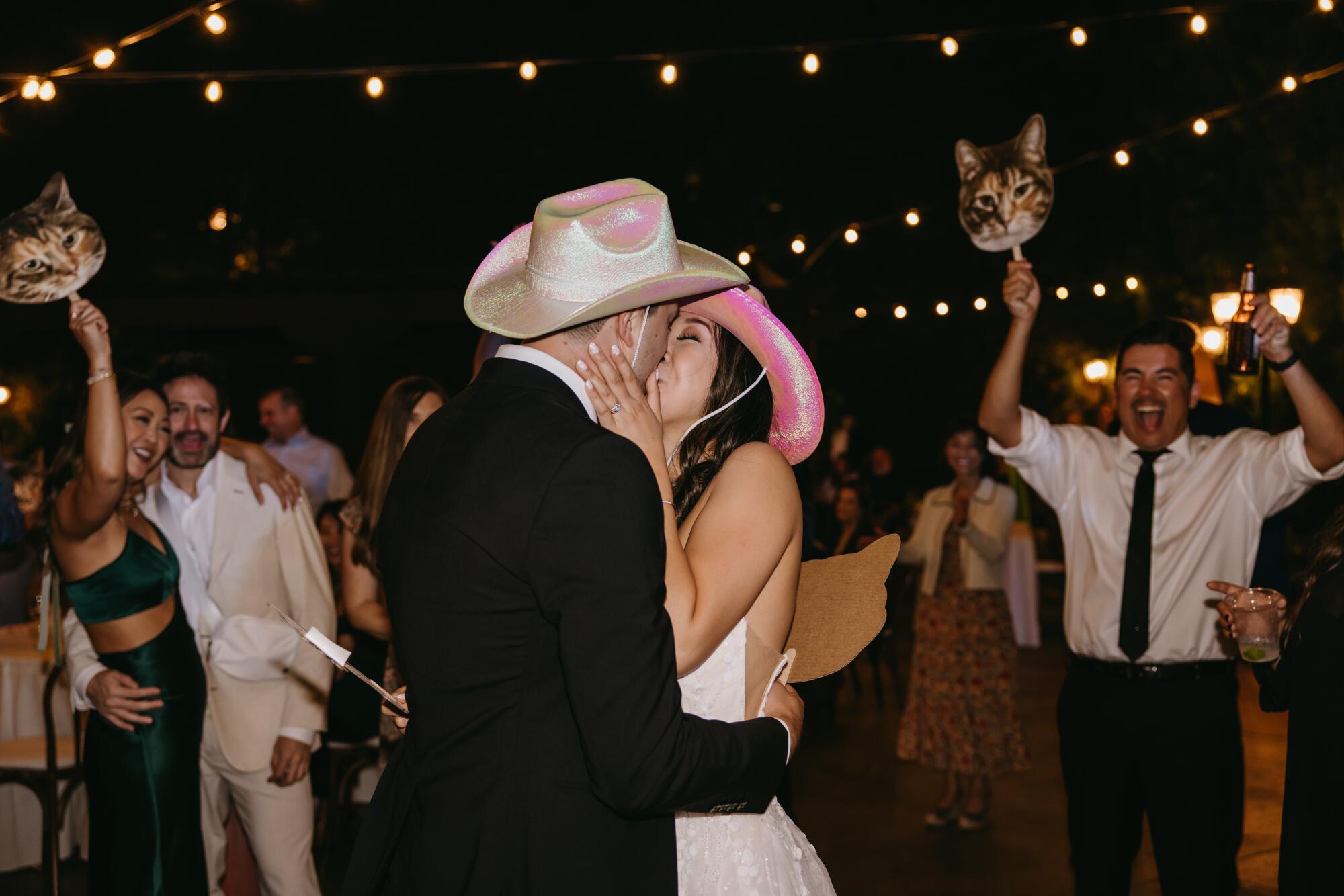
Rebecca and Calvin Noetzel’s wedding.
(Klaui Varadi Photography)
Live in: Los Angeles
Occupations: Calvin is an engineer; Rebecca is a public health data analyst.
Where and when did you get married? San Juan Capistrano in June 2023 How much did you spend on your wedding? $50,000 (inclusive of all wedding weekend events)
Biggest expense? Catering and drinks. “An open bar was one of the aspects of our wedding we felt was worth it. We also wanted to make sure no one left hungry.”
Looking back, what would you have done differently? “The day before our wedding ended up being more hectic than originally planned, so we had to finish a few small errands the morning of our wedding. I’d either make sure any last-minute tasks are completed the day before your wedding or delegate to let others help you if that isn’t possible — it will be OK, I promise — so you can relax and enjoy the day.”
Any financial advice for couples who are planning a wedding? “Sit down with your partner and decide the top three to five aspects of your wedding you want to prioritize in terms of spending. If you aren’t intentional about what your ‘must haves’ are, it quickly adds up, especially with upgrades provided throughout every step of the process. It may ‘only’ feel like a $500 upgrade, but $500 is $500! We’d also recommend creating a budget with two columns: quoted estimates (average cost provided by our favorite vendors) and actual cost (final invoice). This helped us recognize when we spent more or less on something than we expected so we could adjust as necessary in other areas to stay on track with our budget. We regularly edited our budget tracker together throughout the wedding process, so we both had an idea of what we were spending and how much was left in our budget.”
Was it worth it? Yes. “In our case, we had a pretty intimate wedding and this was the one time where both of our families and closest friends were all together. It was an indescribable feeling to be able to begin and celebrate our marriage with our favorite people who have been our biggest supporters.”
Mark Price and Jeannie Vance
Live in: Lodi, Calif.
Occupations: Mark is a Lutheran pastor (“the liberal, socially progressive kind”); Jeannie is an attorney.
Where and when did you get married? Lodi in March 2020
How much did you spend on your wedding? Less than $200 (not including the rings)
Biggest expense? The food: tri-tip and red wine
Looking back, what would you have done differently? “Not much given where we were with COVID.”
Any financial advice for couples who are planning a wedding? “For young couples, spend as little as possible and use the savings for a down payment on your first house. For older couples, consider that bigger is not better. Bigger means less time celebrating with those who are most important to you.”
Was it worth it? “Yup. We got married in our front yard, March 22, 2020, one week after the COVID lockdown had begun. Our kids, our priest and her husband were in attendance.”
Mayte Cruz and Christian Moreno
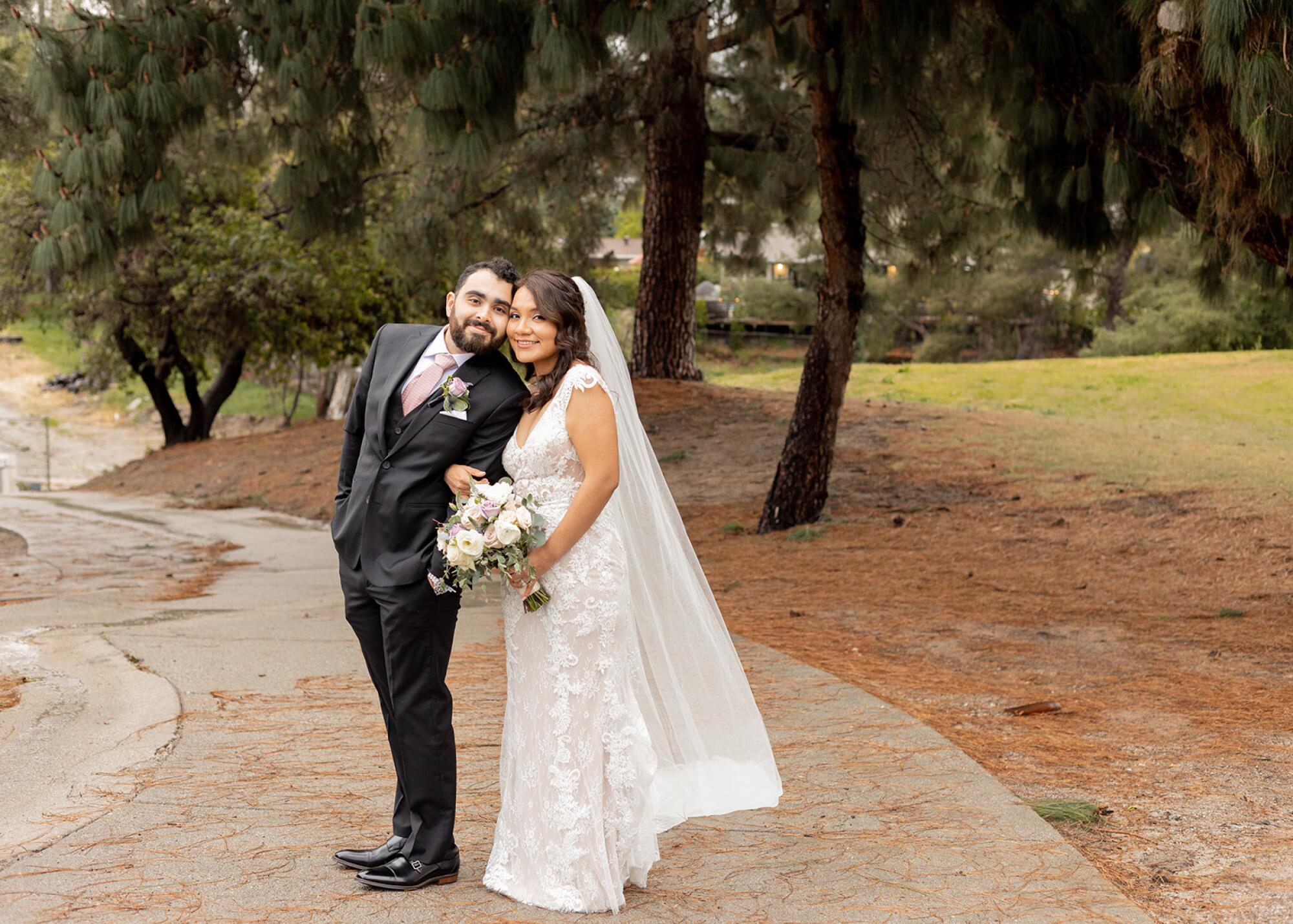
Mayte Cruz and Christian Moreno’s wedding.
(Luisana Rodriguez)
Live in: Los Angeles
Occupations: Mayte is a program evaluation/research consultant; Christian is a physician assistant.
Where and when did you get married? Los Angeles in February 2023
How much did you spend on your wedding? Roughly $28,000
Biggest expense? “The venue and open bar. Having an open bar was a non-negotiable for us.”
Looking back, what would you have done differently? “Ask lots of questions when you’re looking for a venue. I thought my venue included a day-of coordinator, only to find out that it didn’t. I had to frantically find someone else two weeks before my wedding. Awful!”
Any financial advice for couples who are planning a wedding? “Do your research and get quotes from various vendors. For our flower arrangements, we got a quote from a vendor we thought would be way out of our budget. They ended up giving us the lowest quote (lower than what we had budgeted for flowers, which I think is unheard of) and did an amazing job.”
Was it worth it? “Yes, it was worth it to me. My husband and I were diligent about sticking to our budget, and were very realistic from the outset about what we could and couldn’t afford. Having a wedding with 80 guests made things easier budget-wise compared to a larger wedding.”
Michael Smallberg and Sylvia Lobuono
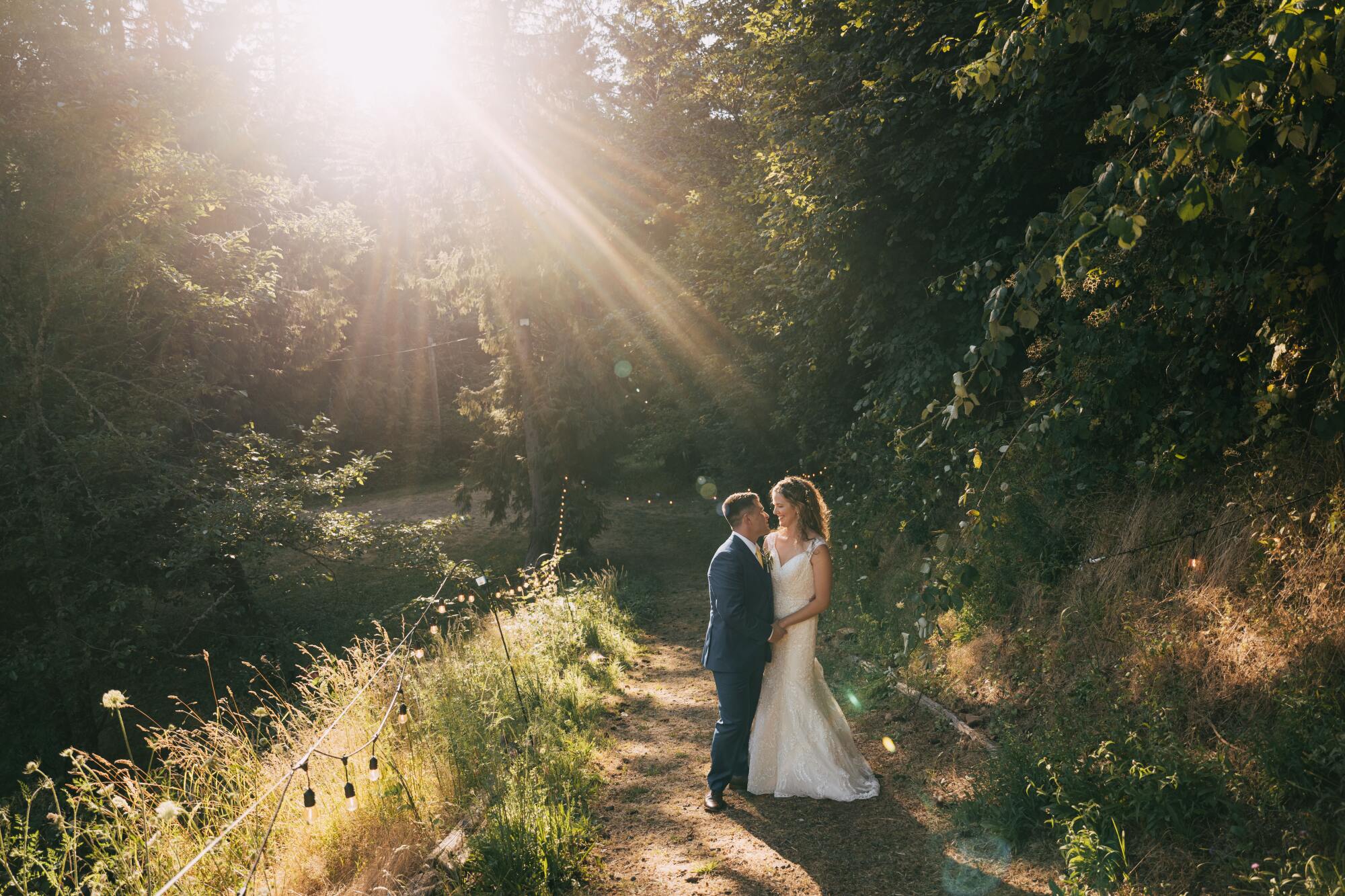
Michael Smallberg and Sylvia LoBuono’s wedding.
(Bryan Aulick Photography)
Live in: Menlo Park
Occupations: Michael is an officer in the U.S. Navy; Sylvia is a stay-at-home mom.
Where and when did you get married? Stevenson, Wash., in July 2022
How much did you spend on your wedding? $46,044.88 (with $30,000 from parents)
Biggest expense? Catering, which was $20,000 plus $6,600 for the venue as part of a package deal.
Looking back, what would you have done differently? “Not much. There were more no-shows than expected, so we ended up paying for about 150 people when 120 showed up, but that did not really affect the experience, just how much it cost.”
Any financial advice for couples who are planning a wedding? “You have to pay to get what you want. We wanted the full family, so that drove up cost. We wanted buses from the hotel to the venue, so that drove up cost. We were limited in time for planning and labor ourselves, so we paid commensurately more. We wanted an open bar, so of course that added to cost.”
Was it worth it? “Yes. The fact that our parents contributed $30,000 really helped, but we could have funded ourselves if we had to. It just would have been a bit painful. I think that weddings are mainly for the guests, not the couple (too stressful to fully relax and enjoy in the moment), so we accomplished our goal of throwing a giant party for our combined friends and family.”
Jackson and Olivia Rowe
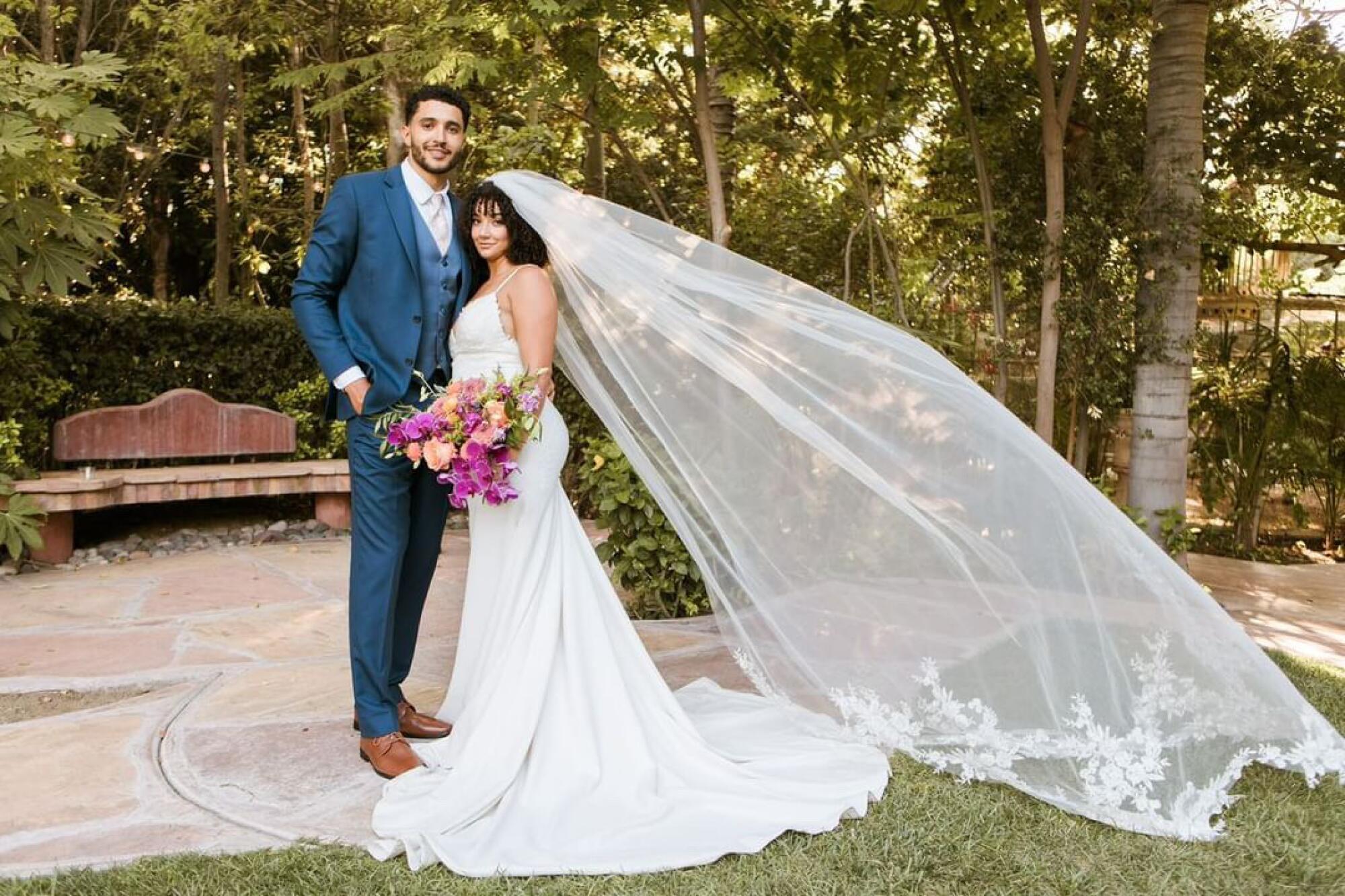
Olivia and Jackson Rowe’s wedding.
(Holly Castillo)
Live in: Woodland Hills
Occupations: Jackson is a professional basketball player; Olivia is a registered nurse
Where and when did you get married? Moorpark in August 2023
How much did you spend on your wedding? Roughly $45,000. “I believe [that] is reasonable for a Southern California wedding.”
Biggest expense? “Catering! We chose a venue that included catering. It was about $150 per plate but the food was amazing.”
Looking back, what would you have done differently? “Honestly, I wouldn’t do anything different. The day was literally perfect. Everyone had the best time. The day itself went so smooth and the decor/ambiance was so beautiful. I couldn’t have asked for a better day.”
Any financial advice for couples who are planning a wedding? “Don’t budge from your budget. Don’t have a wedding that will put you into debt. DIY as much as you can. Don’t buy a real cake. Go to the bridal shows and put your name down for the raffles! Also, make sure your non-negotiables are met. I wouldn’t necessarily say we regret choosing our venue but I do wish the reception went to a later time.”
Was it worth it? “Very worth it! It was so awesome to celebrate such an important moment in our lives with the people we love most. We actually got married a year prior in Denmark. Unforgettable memories definitely makes it all worth it.”
Ariel and Michael Wu
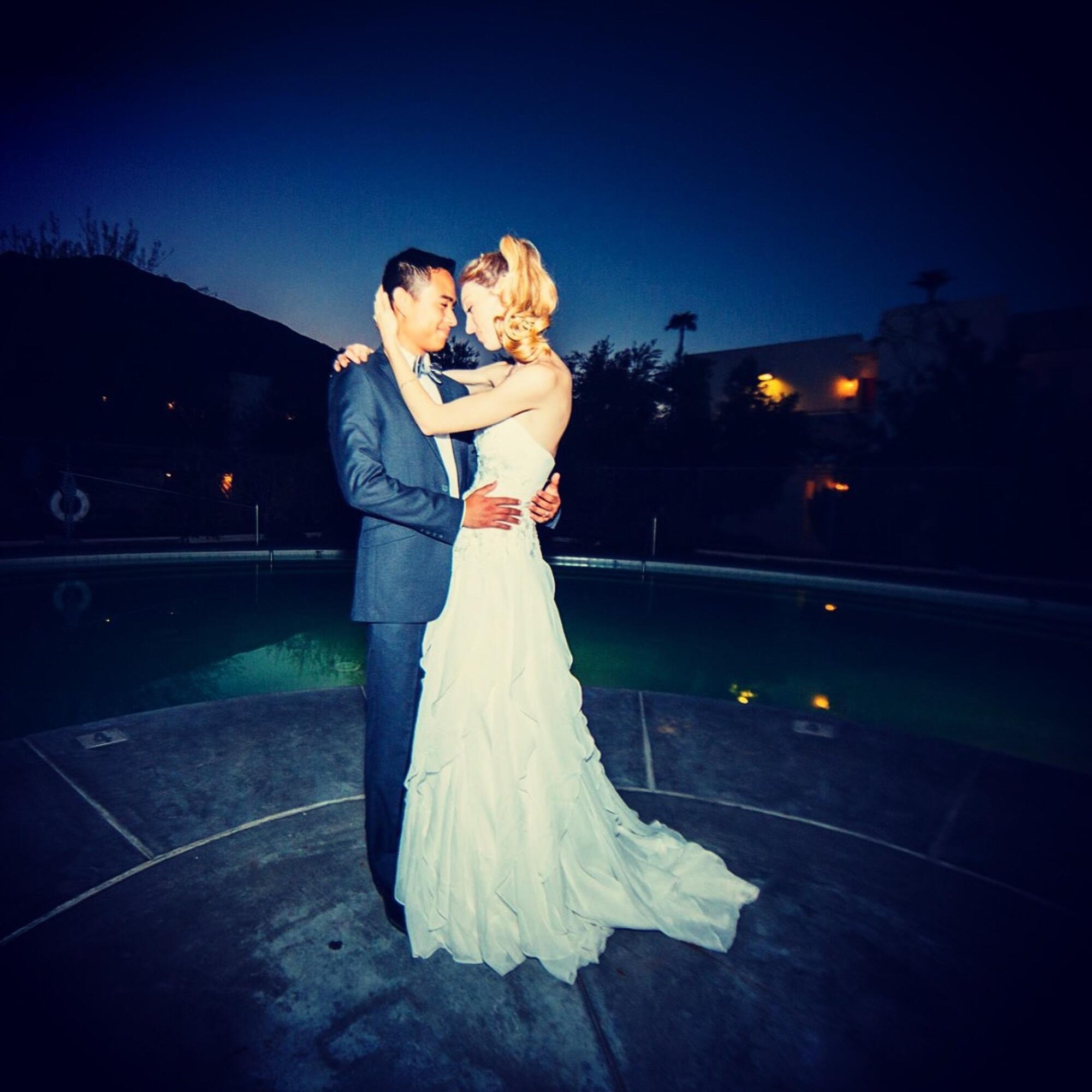
Ariel and Michael Wu’s wedding.
(Christina Chi Craig)
Live in: Newport Beach
Occupations: Ariel is a revenue manager; Michael is the chief financial officer for a real estate firm.
Where and when did you get married? Palm Springs in August 2016
How much did you spend on your wedding? $25,000
Biggest expense? “The venue [Ace Hotel] and catering made up almost the entirety of our budget. We opted to stick with the basics provided by the banquet and have the event catered by them as well to keep things simple and to avoid [having to] rent tables, silverware, etc.”
Looking back, what would you have done differently? “We are now looking down the barrel of buying our first house. Part of me wishes we had that $25,000 to add to our down payment and reduce our mortgage, but the other part really does believe we might not have made it through without the ceremony and feeling of community involvement and commitment to our relationship.”
Any financial advice for couples who are planning a wedding? “Don’t get drawn into the ‘wedding-ness’ of it. The real tradition of a wedding is a party for you, your community and your friends where the community is able to show support and help you get started on your life together. Make that your focal point. Following a newly written script that makes you uncomfortable or feel competitive or boxed in isn’t upholding a tradition, it’s getting conned by industry marketing.”
Was it worth it? “Yes. As as nonchalant [and frugal] as I’ve always been about big life events, I knew a wedding was different. It’s not for you. It’s for your community. It’s a way of communicating your commitment to them and giving them a chance to take part in something significant in your life. It is relationship building. So I knew even if we didn’t do something traditional, we had to do something real.”
Juliet McDaniel and Jon Schaefer
Live in: Los Angeles
Occupations: Juliet is a screenwriter and author; Jon is a retired lawyer.
Where and when did you get married? Rockford, Ill., in November 2018
How much did you spend on your wedding? $1,860
Biggest expense? $1,700 on the rings “we splurged on. In keeping with our personalities, Jon got a simple platinum band and mine is vintage (1901 from England) because I’m extra.”
Looking back, what would you have done differently? “Nothing. It was perfect. Both of us are notoriously camera-shy and there are no pictures. It felt incredibly intimate, romantic and deeply personal. We didn’t tell anyone we were getting married and announced it a few hours after we were hitched. Jon called his family and I put up an Instagram post announcing that our cats are “no longer bastards.” Everyone we love already considered us married!”
Any financial advice for couples who are planning a wedding? “We got married on Nov. 13, 2018. Courthouses are notoriously not busy with weddings on the 13th day of the month due to superstition. If you don’t believe in stuff like that, it can be a super convenient day to get hitched.”
Was it worth it? “It was worth every penny! We did a courthouse wedding on a Thursday afternoon in November 2018 with just the two of us. We’d been together for seven years at that point and mainly got hitched because of health insurance and other silly legalities. We knew after being together for about a year that this was forever but didn’t feel that at our age (late 40s) and with no desire for human children that getting married was all that essential.”
Esteban and Victoria Torres
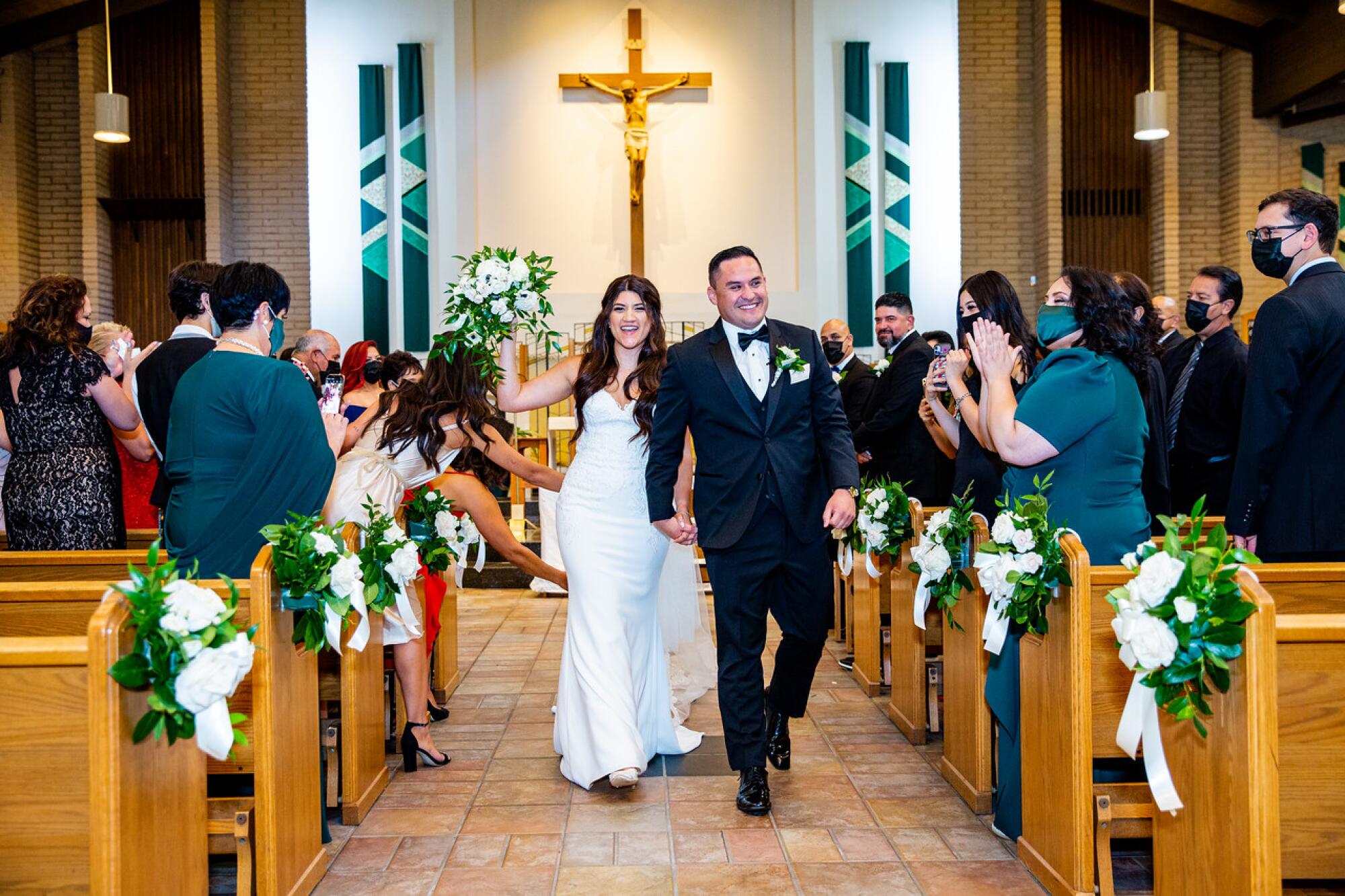
Esteban and Victoria Torres’ wedding.
(From Esteban Torres)
Live in: Moorpark
Occupations: Esteban is a corrections officer; Victoria is a supply chain manager.
Where and when did you get married? Moorpark in September 2021
How much did you spend on your wedding? Roughly $45,000
Biggest expense? The venue
Looking back, what would you have done differently? “We wish we could go back and invite some more guests or at least swap them with the guests who were no-shows. Maybe I would have bought a tuxedo/suit instead of renting [one].”
Any financial advice for couples who are planning a wedding? “We were fortunate to already own a home, so it wasn’t one of those ‘house or wedding?’ decisions. We tried to stick to a budget but it kind of flew out the window. But I would say if you think you want it, do it or get it. It may hurt in the short term but over a lifetime a few thousand dollars more won’t be the end of the world.”
Was it worth it? “We had a blast the day of. Planning and getting to the day always has its ups and downs, but we loved our wedding and wouldn’t have changed a thing about it. Also, it was in 2021, toward the end of the COVID [pandemic] but not out of the woods, so we think our guests were all pretty excited about celebrating something happy and fun like a wedding.”
Brittany Bennett and Brandon LaPlante
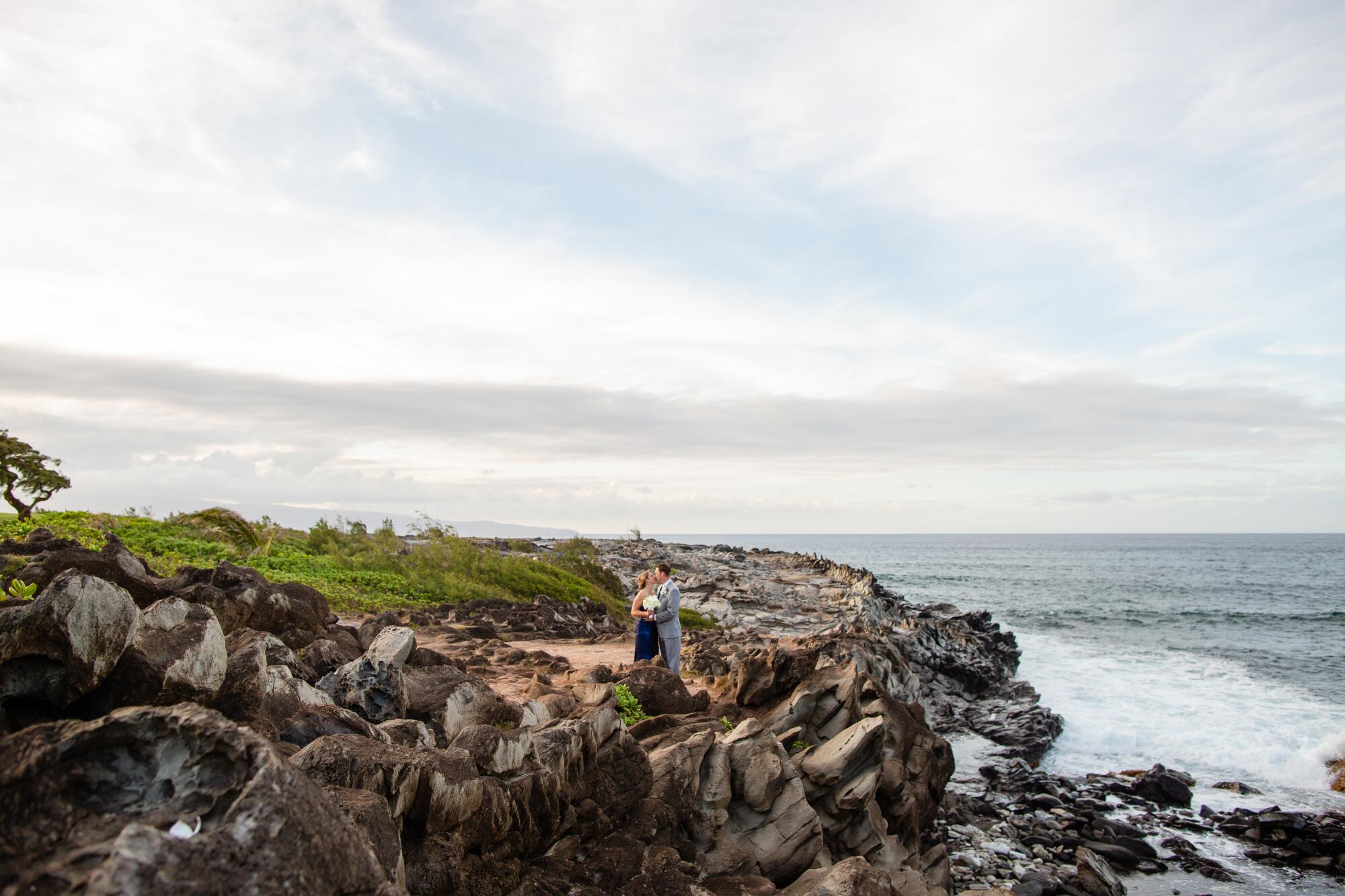
Brittany Bennett and Brandon LaPlante’s wedding.
(From Brittany Bennett)
Live in: Anaheim
Occupations: Brittany is a microbiology researcher; Brandon is an industrial designer.
Where and when did you get married? Hawaii in April 2019
How much did you spend on your wedding? About $20,000
Biggest expense? Dinner and drinks at the reception ($6,900)
Looking back, what would you have done differently? “Maybe we would have ordered a smaller cake? We ended up with more dessert than we needed.”
Any financial advice for couples who are planning a wedding? “Don’t go into large amounts of debt to plan a wedding. It’s not worth it. You can have the time of your life without breaking the bank if you make certain choices.”
Was it worth it? “Yes! We had a smaller wedding and thus were able to hold it at an upscale hotel, somewhere beautiful, and we didn’t do any of the work ourselves. We spent the week before the wedding on Maui relaxing and [hanging out] with the friends and family who flew out to join us. We went snorkeling the morning of the wedding! I’ve never been so relaxed — not something I think the majority of brides can say. Having a smaller destination wedding (fewer than 40 attendees) was the best decision we made. Neither my husband nor I like lots of attention, so we didn’t want a big guest list. And keeping it small meant we could afford to splurge on both a wedding package at the Ritz-Carlton and a chartered sailboat for everyone the evening before the wedding, which was nearly as wonderful as the wedding itself.”
Kathleen Gutierrez and Ryan Pate
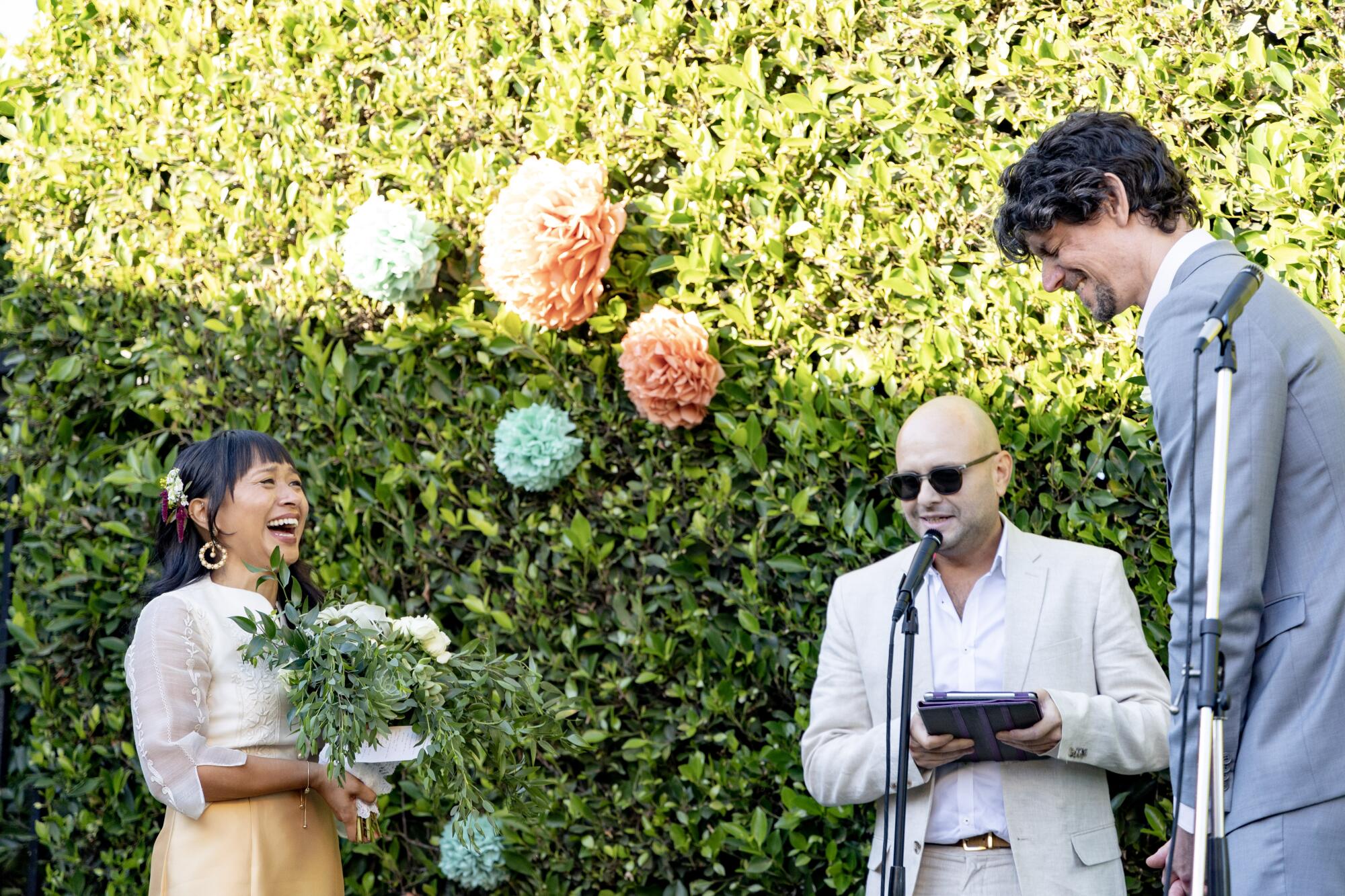
Kathleen Gutierrez and Ryan Pate’s wedding.
(Dillon Vado)
Live in: Santa Cruz
Occupations: Kathleen is an assistant professor at UC Santa Cruz; Ryan is a professional jazz guitarist and composer.
Where and when did you get married? Los Angeles in June 2023
How much did you spend on your wedding? $14,083
Biggest expense? “The venue (Golden Road Brewery in Atwater Village) was the most expensive element of the wedding. We had to hit a food and beverage minimum for the number of guests we hosted ($5,000 for a party of 75 or less, in addition to tax and gratuity) for the five-hour venue rental. We spent about $6,600 for appetizers (some passed), a buffet dinner and a by-consumption beer and wine bar.”
Looking back, what would you have done differently? “If anything, we would have wanted a little more time at the venue (an extra hour wouldn’t have hurt) and opportunity to try the Filipino dessert bar catered by L.A. Rose.”
Any financial advice for couples who are planning a wedding? “Work with your loved ones and thank them endlessly. We knew we didn’t want our family and friends to ‘work’ the entire day. At the same time, several volunteered to have more active roles. We publicly thanked them (profusely), gave them the stage several times and made it clear that the day was only successful because of them.”
Was it worth it? “It was worth it. Admittedly, we thought we could pull off a Los Angeles wedding with $6,000. But we quickly discovered our own naivete. With some online sleuthing for an affordable venue, saving on photography and videography by hiring a friend ($500 as opposed to the $4,500 average going rate), increasing our (initially quixotic) budget, and the goodwill of our family and friends (who, all accounted, contributed $5,420+ in in-kind and monetary donations), we pulled off a 70-guest wedding in Atwater Village.
“Our loved ones took care of the table decor, bouquet, boutonniere, PA system, rehearsal dinner, dessert, guest book and aesthetic design. My sister acted as our day-of point person. Our two best friends co-emceed. Because my husband has such a community of fellow musician-artists, his friends comprised our wedding band and played music arranged by him (jazz renditions of our favorite ’90s grunge and alternative tunes). We showcased their talent as a concert and paid them for their labor (even though several initially declined).”

Matthew Rhys was nominated for his role in Widow’s Bay.
Apple TV
hide caption
toggle caption
Apple TV
The 2026 Emmy nominations are here. We’re unpacking the record-breaking nominations for Hacks, plus a big day for Widow’s Bay, The Pitt, and The Bear. We’ll also talk about the snubs and make some early predictions of who will win.
Connect with Pop Culture Happy Hour:
Letterboxd / Facebook
Our weekly newsletter
Support Pop Culture Happy Hour+


Can you say no to a friend’s wedding?
Getty Images/Getty images
hide caption
toggle caption
Getty Images/Getty images
Are we spending too much on other people’s weddings?
Going to a friend’s weddings can be so fun and meaningful… but it can also really hurt your wallet. A survey by LendingTree found that 31% of people who had been to a wedding in the past five years had accrued debt to attend. So what’s driving up the cost of weddings for guests? And what makes it so hard to say no to these expenses?
Brittany breaks it down with Allyson Rees, senior analyst at trend forecasting firm WGSN, and Annie Joy Williams, assistant editor at The Atlantic.
This episode was produced by Liam McBain, with additional support from Corey Antonio Rose. It was edited by Neena Pathak. Our Supervising Producer is Cher Vincent. Our Executive Producer is Barton Girdwood. Our VP of Programming is Yolanda Sangweni.
-

 News25 minutes ago
Three more people charged with damaging Reflecting Pool after Trump’s multimillion-dollar restoration | CNN Politics
-

 Los Angeles, Ca2 hours ago
Loved ones search for missing 34-year-old Southern California woman
-

 Detroit, MI2 hours ago
Chickens, geese found at vacant home after nonprofit reports them stolen
-

 San Francisco, CA2 hours ago
What’s next for San Francisco Giants as MLB trade deadline approaches?
-
 Dallas, TX2 hours ago
Dallas millionaire files lawsuit against groundwater district
-

 Miami, FL2 hours ago
7 more women arrested at southwest Miami-Dade massage parlors, accused of prostitution in undercover sting
-

 Boston, MA2 hours ago
‘They’re my buddies’: 96-year-old Back Bay woman befriends French soccer team
-

 Denver, CO3 hours ago
Denver officers cited for separate incidents, 1 fired

