News
Newsom, Democrats use cuts, reserves and ‘fiscal emergency’ declaration to solve California budget deficit

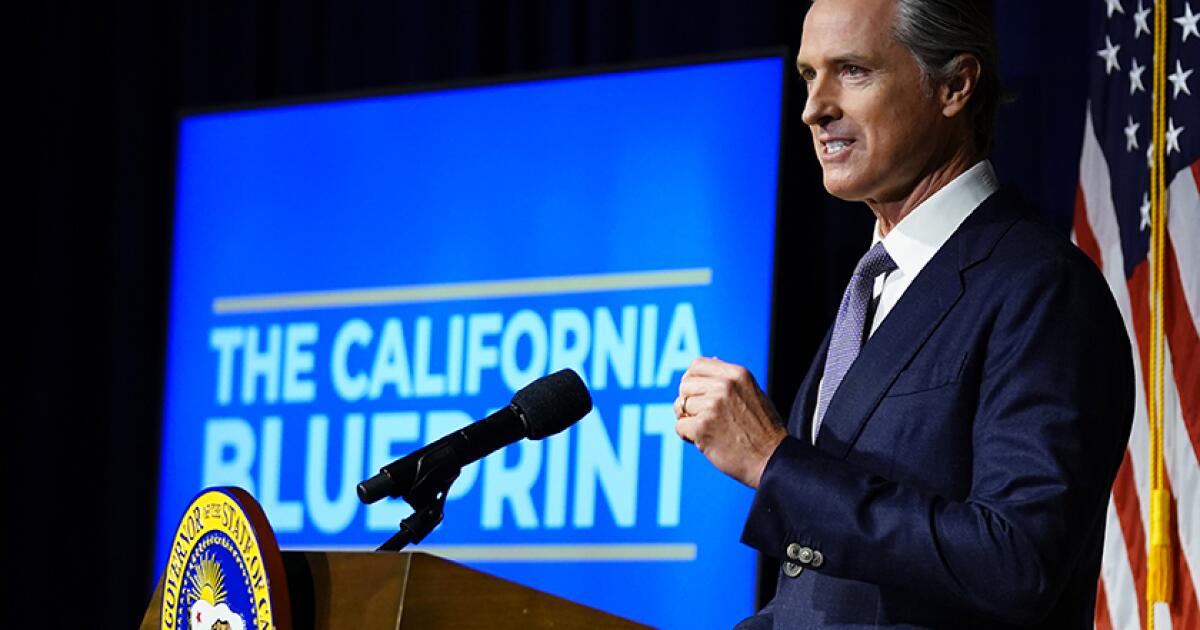
Gov. Gavin Newsom and Democratic lawmakers struck a deal Saturday to make $16 billion in cuts, declare a statewide fiscal emergency and pull money from the state’s rainy-day reserves to balance a $46.8-billion budget deficit in California.
The agreement for a $297.7-billion spending plan is the result of weeks of contentious negotiations with labor unions and business interests after weaker than anticipated revenues forced Newsom and lawmakers to scale back California’s progressive policy agenda. The shortfall inspired a tug-of-war over coveted state dollars that has caused rifts between the governor and some of his closest allies at the Capitol.
Among the more high-profile changes, the 2024-25 budget plan delays a minimum wage increase for healthcare workers until at least October, cuts $1.1 billion for affordable housing and slashes $750 million in funding for the state prison system.
California’s business community also took a hit with the three-year suspension of nearly $15 billion in tax breaks a year earlier than Newsom initially proposed.
“This agreement sets the state on a path for long-term fiscal stability — addressing the current shortfall and strengthening budget resilience down the road,” Newsom said in statement. “We’re making sure to preserve programs that serve millions of Californians, including key funding for education, health care, expanded behavioral health services, and combatting homelessness.”
The deficit marks a dramatic reversal of California’s financial standing from a projected $100-billion surplus two years ago and creates a challenging political narrative for Newsom, who often boasts of the state being an essential economic engine for the nation.
The governor is required by law to declare a statewide budget emergency before he can take money from the reserves to solve the deficit. But an emergency declaration gives fodder to critics who have accused Democrats of mismanaging the state’s finances and overspending.
Despite the shortfall, the California economy remains strong and the state has more revenue to spend than when he took office.
“This is not a revenue problem,” said David Crane, president of Govern for California, a nonprofit that seeks to oppose the influence of labor unions on state government. “The deficit is a result of expenditures.”
In April, Newsom touted the fact that the California economy held its position as the fifth largest in the world, saying the state “continues to punch above its weight.”
The state government’s financial problem can be blamed, in part, on poor revenue projections that led Newsom and lawmakers to allocate more money for programs than they had available to spend.
The state’s progressive tax structure leaves government dependent on revenue from income taxes paid by chief executives and other top Golden State earners, which are subject to stock market fluctuations and difficult to predict. The delay of the 2022 tax filing deadline, from April to November, also forced California leaders to craft the current budget without having a full understanding of how much state tax revenues had dropped.
Newsom anticipated California’s deficit to grow when he signed the budget last year and said he dedicated much of the new money in his spending plan to one-time funding increases that he could easily halt if revenue fell. The cuts include $500 million for a loan program to fund affordable student housing at colleges and a reduction of $485 million for work study programs for students.
Yet the governor and lawmakers have been criticized for choosing to pull money from the state’s rainy-day fund — $5.1 billion in 2024-25 and $7.1 billion planned the following year — to avoid deeper cuts. Democrats also plan to take $900 million from a safety net reserve account next year.
Tapping into the state’s piggy bank now has raised concerns about what could happen to state programs serving California’s neediest if the economy falls into recession and state revenues drop even lower.
Democrats at the state Capitol released a broad overview of some of the cuts the Legislature will vote on next week before the budget takes effect on July 1.
Newsom and lawmakers said the agreement includes proposed legislation requiring the state, in the future, to set aside surplus funds for subsequent budget years as a means to protect against the revenue swings and a constitutional amendment in 2026 to grow the state’s rainy-day fund. Details were not shared with the announcement.
Here’s what we know so far about the agreement:
Pushing off a healthcare minimum wage hike
Newsom signed a bill into law last year to give healthcare workers a minimum-wage increase to $25 per hour. He waited a few weeks to explain that he wouldn’t allow the law to take effect if the state budget crisis worsened.
At the time, the Department of Finance estimated that the law could cost the state $2 billion. Labor unions said the cost was closer to $300 million, if the state required hospitals to cover much of the cost.
Newsom’s concerns, which he said he shared with unions before he signed the law, set off months of private negotiations over when to raise wages and how to pay for the increase.
Those talks finally ended with the budget agreement, which delays the pay hike from taking effect until Oct. 15 at the earliest, instead of this month as originally planned.
The start date for the pay hike hinges on one of two scenarios: state revenues in the first quarter of the fiscal year coming in 3% above projections, or more federal funding for hospitals through a quality-assurance fee. If neither happens, the increase could be delayed beyond October.
Lawmakers and the governor are essentially using the quality-assurance fee as a mechanism to assure hospitals can pay for the increase. Hospitals pay quality-assurance fees, the federal government matches the money and then remits the funding back to hospitals.
The federal increase requested by the state is expected to cover 30% of the cost of the higher wages for hospitals.
The budget pegs the state cost for the program at $600 million in 2024-25.
No solution on battle over MCO tax
The question of how to use the proceeds of a tax on managed care organizations, known as the MCO tax, turned out to be the most difficult to answer in budget negotiations. So challenging, in fact, that talks fizzled out and Newsom threatened to oppose a ballot measure backed by some of his closest allies.
The tax applies to health insurance providers that charge fixed monthly payments for services and acts as a mechanism to allow California to collect billions in additional federal funds for Medi-Cal, California’s healthcare system for low-income residents.
Newsom and lawmakers renewed the tax last June and agreed to use some of the proceeds to raise reimbursement rates to providers who serve Medi-Cal patients. For years, doctors have waged an unsuccessful campaign to raise rates, arguing that the reimbursements are too low, result in a shortage of doctors willing to accept patients and restrict access to care.
But Newsom reversed course and proposed taking more than $6 billion from the Medi-Cal rate increases over multiple years and using the funding instead to avoid cuts to the program.
The change pitted Newsom against a coalition led by the California Medical Assn. and Planned Parenthood, two groups that have supported the governor’s causes and backed his campaigns.
The coalition called for the governor to stick to the agreement he made in 2023 to raise rates for providers. They also are leading a charge to pass a measure on the 2024 ballot that would permanently establish an MCO tax to fund higher reimbursement rates.
The governor wants the coalition to take the measure off the ballot. He wants the funds to be flexible so the state can use the money if necessary to support the Medi-Cal system in the future.
The coalition has so far declined to take the measure off the ballot, afraid Democrats would divert the funding again. The talks ended in a stalemate.
The final state budget includes $6.9 billion next year to support the Medi-Cal system.
Newsom and lawmakers agreed to offer a smaller pot of money for “provider rate increases and investments” from the MCO tax, but far less money than was previously set aside. The budget includes $133 million in 2024-25 and a plan to raise that to $728 million in 2025-26 and $1.2 billion the following year.
Democrats said the MCO funding would become “inoperable,” essentially eliminated, if the measure is approved on the 2024 ballot.
The governor threatened to campaign against the measure as the talks soured, setting up the possibility that Newsom could challenge his supporters in the November election.
A pause on business tax breaks
The budget deal limits total tax credits for businesses in the state to $5 million per filer and pauses a net operating loss tax deduction for businesses with income of more than $1 million in 2024, 2025 and 2026.
In a concession to the business community, Newsom and lawmakers are allowing companies to receive refunds for the tax credits after the limits end.
Newsom originally proposed halting and capping the tax breaks beginning in 2025. But Democrats in the Legislature pushed to apply the changes a year earlier, allowing them to avoid cuts to other programs.
The administration said the changes to the tax breaks will increase revenues by nearly $15 billion through 2026.
The early start could hurt businesses who were planning to deduct losses from their 2024 taxes and now have to scramble to scale back on employees or inventory to cover the cost of an unexpectedly higher bill. The limit also marks the second time in five years that the state has capped tax credits, which could turn away companies that operate in California.
Big cut to prisons
Lawmakers previously proposed an additional $1 billion in cuts to the Department of Corrections and Rehabilitation, which included at least $12 million in reductions to the governor’s project to transform San Quentin. Newsom’s proposed cuts had included $80.6 million in savings from the newly announced deactivation of 46 housing units at 13 state prisons.
The final agreement drops funding for corrections by $750 million total, including cuts to operations and savings from eliminating vacant jobs.
Newsom supports another round of homelessness grants
In late May, Democrats in the Legislature proposed spending $1 billion more than the governor had budgeted on a sixth round of Homeless Housing, Assistance and Prevention grants to local governments to combat the homelessness crisis. At the same time, lawmakers proposed cutting $100 million in funding to clean up homeless encampments in the current budget year.
The final budget deal appears to show a compromise.
The deal includes $1 billion in additional homelessness grants, which the governor and lawmakers said would be tied to new accountability measures to make sure local governments use the funding appropriately. The agreement also provides $150 million next year for encampment grants.
Broadband internet access for all — a little later
The pandemic exposed the need to improve access to broadband internet in homes across California when K-12 education shifted from the classroom to remote learning. Low-income families and those who live in rural areas often lack the same connectivity as more wealthy communities.
Newsom has sought to make internet access more equitable under a “broadband for all” initiative.
The spending plan delays $550 million in funding for “last mile” work, which connects the network to homes, until the 2027 budget year. The budget agreement still offers $250 million next year for a program to expand and improve the fiber-optic network under “middle-mile” projects, and Democrats intend to provide a total of $2 billion for last-mile work over multiple years.
A funding delay for public schools
Under Proposition 98, approved by voters in 1988, California has a minimum funding guarantee for schools and community colleges.
Earlier this year, Newsom proposed an unusual maneuver to go back and recharacterize funding in 2022-23 to reflect the lower-than-expected state revenue.
The California Teachers Assn. said the change would have ultimately reduced funding for schools by about $12 billion over two years. The union ran a television ad criticizing Newsom’s proposal to pressure him to reverse course.
Newsom and teachers ultimately agreed late last month to a complicated solution that suspends the minimum funding guarantee and delays $5.5 billion in funding until future years.


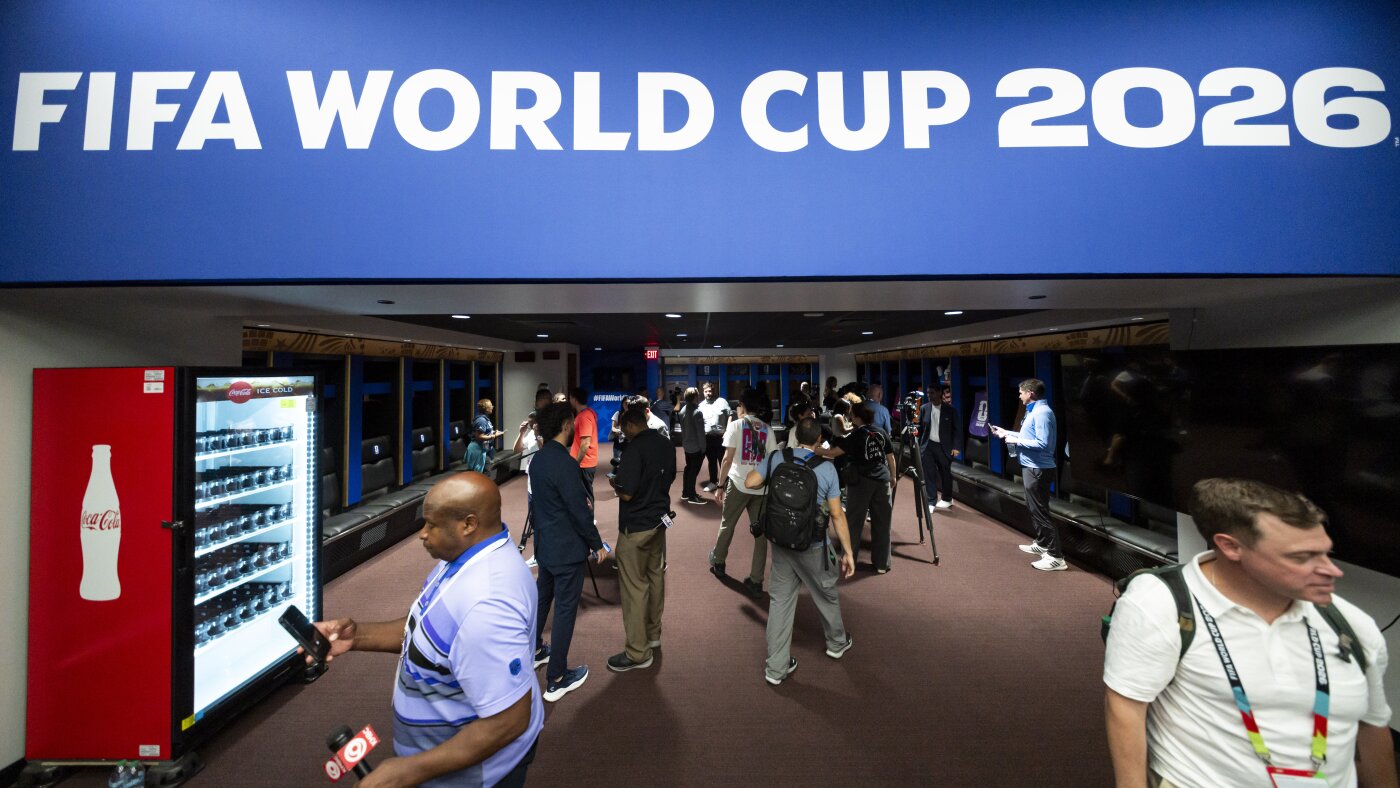
Media members tour the locker rooms at Kansas City Stadium ahead of the FIFA World Cup 2026 on June 8 in Kansas City, Mo.
Jay Biggerstaff/Getty Images
hide caption
toggle caption
Jay Biggerstaff/Getty Images
President Trump’s restrictive immigration policies are already impacting this year’s 2026 FIFA World Cup.
At least one referee from Somalia and one Iraqi team staff member were denied entry at U.S. airports in recent days, and dozens of fans from countries such as Morocco have been denied travel visas, despite being ticket holders.

“I view the 2026 World Cup as a massive paradox,” said Jules Boykoff, a professor and the author of Red Card: The 2026 World Cup, Sportswashing and the FIFA Greed Machine. “On one hand, it has more teams than ever participating. On the other hand, because of the policies of the Trump administration, it looks more like a World Cup of exclusion than inclusion.”
Boykoff, who is also a former professional soccer player, told NPR he worries the restrictive immigration policies also will shape the experience of fans in the U.S., who might be anxious about potential tense interactions with immigration agents outside of stadiums.
Boykoff’s concerns echo those of other policy experts and soccer fans who for months have warned about the influence of President Trump’s immigration policies on the tournament.
The White House did not respond to NPR’s request for comment.
In a statement to NPR, Customs and Border Protection said “all travelers seeking entry into the United States, including athletes, coaches, and staff, are subject to CBP inspection and vetting.”
The agency said “admissibility determinations are made on a case-by-case basis using law enforcement, national security, and immigration information available at the time of inspection.”
Denied entry to the U.S.
There are 39 countries who are under either a full or partial U.S. travel ban. For 19 of those countries, the State Department has suspended issuing all visas. The Trump administration has said the move is to “ensure that individuals approved for a visa do not endanger national security or public safety.”
Four countries in those lists — Iran, Haiti, Côte d’Ivoire, and Senegal — are expected to play in the World Cup.
On Saturday, decorated FIFA World Cup referee Omar Abdulkadir Artan, of Somalia, was denied entry to the U.S. after landing at the Miami International Airport.
In a statement, CBP said Artan was “determined to be inadmissible due to vetting concerns and was denied entry.” CBP did not say what concerns were.
Andrew Giuliani, the executive director of the White House Task Force for the World Cup, said Tuesday the denial was “for very good reasons,” but he didn’t provide any further explanation.
Artan did not respond to NPR’s request for comment.
Meanwhile, a player for Team Iraq was questioned for hours at Chicago O’Hare International Airport. He was allowed into the U.S., but a photographer for the team was denied entry due to “vetting concerns,” CBP said.

David Niven, a University of Cincinnati professor who teaches a course on sports and politics, told NPR these immigration issues are a self-inflicted wound.
“When you insert politics into the competition, it’s no longer the competition it was,” Niven said. “In some ways (it’s) very tangibly when a referee is missing or a player is delayed.”
The team from Iran — a country at war with the U.S. and Israel — was forced to relocate its lodging to Mexico after the U.S. government said players and staff were banned from staying overnight.
Visas for team members were approved last week, but more than a dozen support staff did not get approval, including Mehdi Taj, the president of the Iranian football federation.
In response to a social media post by U.S. Ambassador to Turkey Tom Barrack, the Iranian Embassy in Turkey said the U.S.’s conduct “violates FIFA regulations and breaches the United States’ host obligations.”
The Iranians also accused the U.S. of “politically biased interference in sport.”
“The U.S. government in practice is depriving Iran’s national team of its right to play in the World Cup under normal conditions and without undue pressure and stress,” the post on X said.
Fans face travel restrictions
Fans come from all over the world to attend the World Cup and cheer on their teams. Their chants and songs add to the excitement and vibrancy of the games.

But some fans and policy experts worry this year’s tournament may lose some of that exuberance because of U.S. visa denials.
According to the Moroccan news website Hespress, more than 40 members of multiple Moroccan football team supporter associations have been denied visas to attend the tournament. Many had tickets to the games and hotel bookings.
Gianni Infantino, FIFA’s president, in 2025 pushed against what he called “misconceptions” and said “everyone will be welcome in Canada, Mexico and the United States for the FIFA World Cup next year,” and that the U.S. was committed to a smooth travel process, so fans from all over the world will be welcome.”
But in response to Artan being denied entry to the U.S., a spokesperson for FIFA distanced the organization from the immigration issues. “FIFA is not involved in host country immigration processes, including visa adjudications, and has been informed by authorities that Mr. Artan’s status will not be changed at present,” FIFA said in a statement to NPR. “In line with previous FIFA events, a host government ultimately determines who receives a visa and who is admitted into their country.
Niven called FIFA’s new position “striking.”
“FIFA has raised the surrender flag on this question,” Niven said. “They’ve taken this situation and basically deferred to the United States and said the United States can do as they see fit.”

Voting stickers are displayed on a table at a polling place inside City Hall, Tuesday, Nov. 5, 2024, in Las Vegas.
John Locher/AP Photo
hide caption
toggle caption
John Locher/AP Photo
Today’s primary contests stretch from Maine to North Dakota, South Carolina and Nevada, where voters will decide on races for the U.S. Senate, House, governor and more.
A lot is riding on the Senate race in Maine, where political newcomer Graham Platner, facing a series of controversies, is the presumptive Democratic nominee to take on Republican Sen. Susan Collins, who has had the job for 30 years.
Another Republican incumbent, Nevada’s Gov. Joe Lombardo, is facing a tough challenge in November.
And in a field of MAGA-devoted Republicans in South Carolina, Lt. Gov. Pamela Evette was the one to grab President Trump’s endorsement in the race for governor.
Here, reporters from the NPR network tell us about the key races to watch.
Maine U.S. Senate seat | Maine’s 2nd Congressional District | Maine governor | Nevada governor | South Carolina governor
You can also check out voter resources for the June 9 primaries from the NPR network.
Maine’s primary winners will set up crucial November races
— Kevin Miller and Steve Mistler, Maine Public
Maine’s U.S. Senate seat
If Democrats want control of the U.S. come November, they almost certainly need to take five-term Republican Sen. Collins’ seat in Maine.
The outcome of the pivotal race could hinge on whether voters value Collins’ clout and ability to secure federal dollars over Democratic insurgent Platner’s call to upend a political system he says is rigged against working-class Americans.
The first-time Democratic candidate has so far run a barnstorming campaign that’s already pushed his Democratic rival, Gov. Janet Mills, out of the race.
After recent accusations published by The New York Times that he was physically threatening in a past relationship, and previous revelations that he sexted with several women early in his marriage, some are wondering if he still has enough support to flip the seat in November. In an interview with Maine Public, Platner denied the accusations.
Maine’s 2nd Congressional District
In a district that has voted for Trump three times, four Democrats are vying to replace retiring Democratic Rep. Jared Golden. Whoever wins the primary will face former Republican Gov. Paul LePage in the fall.
The Democratic nominee in this congressional district will offer a sense of what kind of candidates primary voters think can succeed in hard-to-win seats.
Maine’s governor
The race to replace term-limited Democratic Gov. Janet Mills is likely to go to a Democrat, according to an analysis by the Cook Political Report, but it’s still a question of who. There is a five-way Democratic race for the nomination, seven active candidates on the GOP side and both races have the potential to go to a ranked-choice runoff.
The affordable housing crisis, rising property taxes, access to health care and standing up to President Donald Trump have emerged as central themes in the primary contest.
Recent polls show former Maine CDC Director Dr. Nirav Shah in the lead, though former Maine Senate President Troy Jackson appears to be surging in popularity ahead of the ranked-choice primary election.
The presumptive frontrunner in the GOP contest is Bobby Charles, an attorney and former Navy intelligence officer.
In November, State Sen. Rick Bennett will also be on the ballot running as an independent.
Nevada’s GOP governor faces a tough November
Paul Boger, Nevada Public Radio
Trump’s economic policies are so unpopular in Nevada that the incumbent governor, Republican Joe Lombardo, is facing what could be a tough November election. Cook rates the race as a toss-up, and the candidate who may have the best shot against Lombardo, former Clark County Sheriff, is the state’s top cop, Democratic Attorney General Aaron Ford.
With a sizeable war chest, Lombardo should sail through the primary. Still, it may not be enough in November to assuage Nevadans worried about increasing costs in a tourism-based economy that is welcoming fewer domestic and international visitors every month.
Ford’s path to the Democratic nomination isn’t guaranteed. He’s drawn criticism from Republicans for his extensive domestic and international travel as attorney general. And from his main Democratic opponent in the primary, Washoe County Commissioner Alexis Hill, for Ford’s support of data centers, which are an existential concern in the country’s driest state.
The governor’s race in South Carolina tests Trump’s endorsement power
— Gavin Jackson, South Carolina Public Radio
The crowded race for governor in South Carolina doesn’t have a clear frontrunner, even though the president has endorsed Republican Lt. Gov. Pamela Evette, a longtime supporter of his, in Tuesday’s primary.
Evette’s biggest challenger is another Trump enthusiast, four-term Attorney General Alan Wilson. Congresswoman Nancy Mace, who claims her vote for more transparency of the Epstein files cost her Trump’s endorsement, is also on the ballot. The race is widely expected to go to a runoff.
Three Democrats are vying for their party’s nomination: Columbia state Rep. Jermaine Johnson, Charleston lawyer Mullins McLeod and Greenville businessman Billy Webster.
After Trump lost his first primary endorsement race last week in Iowa, political watchers are sure to have a close eye on how votes shake out in South Carolina.
Voter resources for the June 9 primaries from the NPR Network
Maine | Nevada | North Dakota | South Carolina
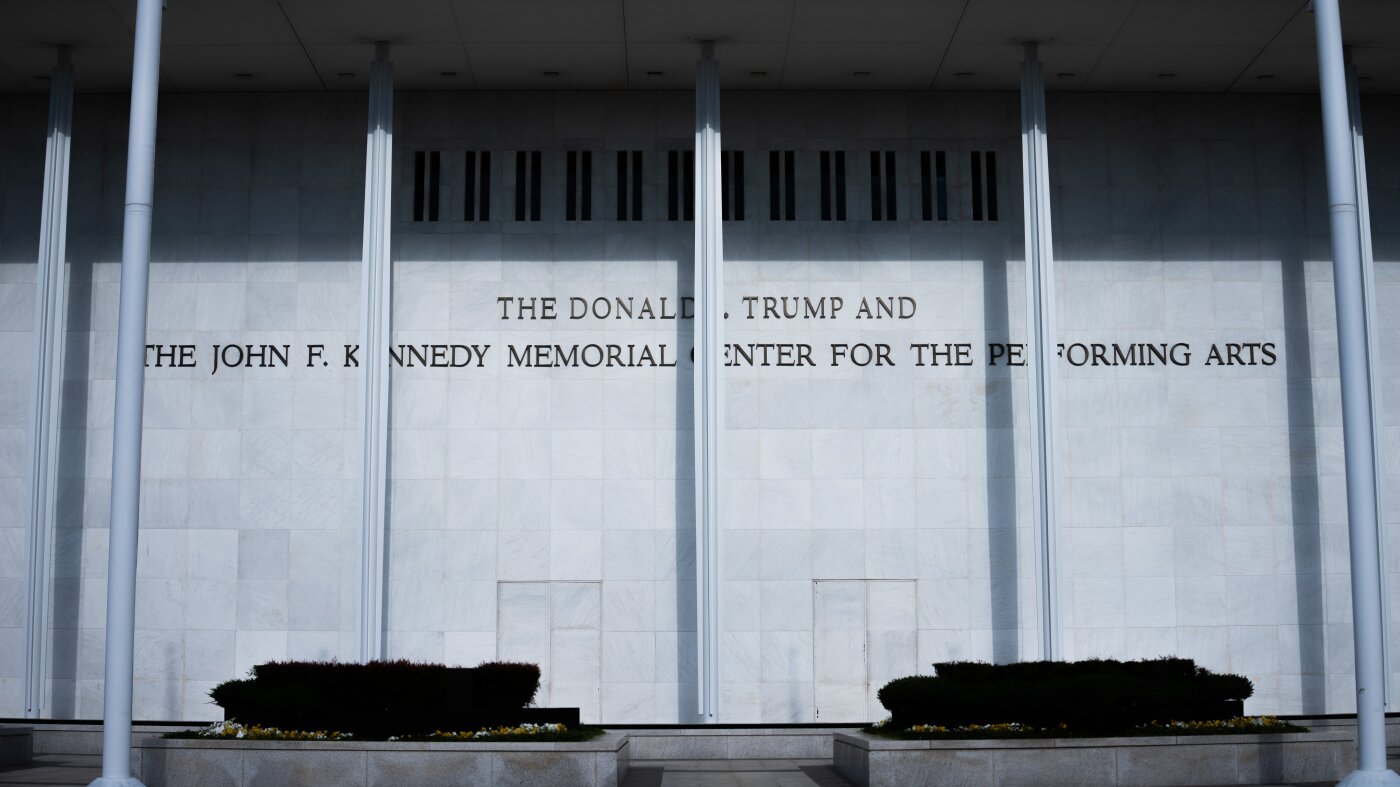
The facade of the John F. Kennedy Center for the Performing Arts is seen June 6 in Washington.
Aaron Schwartz/Getty Images
hide caption
toggle caption
Aaron Schwartz/Getty Images

After multiple setbacks in his effort to remake the Kennedy Center to his liking, including losses in several lawsuits, President Trump says he is handing operations of the center back to Congress. It is not clear what that means, since Congress does not actually run the cultural center.
The move comes after a judge in Washington, D.C., sided with jazz performer Chuck Redd, who canceled a 2025 holiday concert after Trump’s name was added to the building. The judge wrote that the Kennedy Center failed to prove the musician had signed a contract to perform.
Josef Palermo, a former curator of visual arts at the Kennedy Center, wrote about his experience in a piece for The Atlantic titled “What I Saw Inside the Kennedy Center.”
He told Morning Edition on Monday he joined at a time when others were quitting or being fired because he wanted to “run towards it as a sort of metaphorical first responder and try to save what I could.”
Palermo also said Trump’s Truth Social post about handing control back to Congress sounded like an attempt to distance himself from an institution. He adds that he believes the Trump administration has driven the center into bankruptcy. Programs such as the National Symphony Orchestra still do not have approved budgets.
In this interview, he talks about how the Kennedy Center’s leadership changed under Trump and how questions now surround the institution’s finances and future.
Listen to the interview by clicking play on the blue box above.
-

 Hawaii3 minutes ago
Hawaiian Native Corporation provides funding to Hui Hānai for upcoming publication | Maui Now
-
 Idaho10 minutes ago
Idaho issues over $570 million in tax refunds, Gov. Brad Little announced
-
Illinois12 minutes ago
Illinois Governor J.B. Pritzker opens door to a special legislative session on Bears stadium
-

 Indiana17 minutes ago
LIVE: Severe storms sweep through central Indiana
-
Iowa25 minutes ago
Iowa Lottery Mega Millions, Pick 3 Midday results for June 9, 2026
-

 Kansas27 minutes ago
Southwest Kansas county votes to recall sheriff
-
 Kentucky33 minutes ago
Kentucky gas tax break to expire in most of the state Thursday, extend in over 30 cities or counties
-

 Louisiana40 minutes ago
Louisiana shop owner says inspection sticker law puts 20-year business in danger

