Texas
For the first time, West Texas has a permanent LGBTQ+ community center

/static.texastribune.org/media/files/3663955ba9bd18b9ed13a4916638cc23/0608%20Pride%20Fest%20Odessa%20CC%2028.jpg?ssl=1 "For the first time, West Texas has a permanent LGBTQ+ community center")
Subscribe to The Y’all — a weekly dispatch about the people, places and policies defining Texas, produced by Texas Tribune journalists living in communities across the state.
ODESSA — Patty Reeves stood centerstage overlooking a park dotted with dozens of people from West Texas’ LGBTQ+ community. There were clusters of families and friend groups. A local church brought congregants who sat in lawn chairs in the front row.
The cheerful atmosphere at the fifth annual pride festival in West Texas had shifted. A suicide had rocked the community. Luna Harris, a 19-year-old gender-nonconforming person, died two days earlier.
As a warm gust carried dust through the park, Reeves delivered her speech.
“What I see in West Texas is a community that says, ‘I am here. I am thriving. You will not erase us,’” she said.
Like many present that day, Reeves, the president of PFLAG’s Midland and Odessa chapter, wanted to believe in her message. But at that moment, she couldn’t.
“I said those words because that’s what I hope for,” Reeves said offstage. “But then I thought: Are we really?”
The sudden loss hovered over the festivities meant to close a busy week of events, which included the grand opening of a brick-and-mortar community center for the region’s LGBTQ+ community.

PFLAG President Patty Reeves discusses the need to help trans children in Texas during the Pride Festival hosted by Basin Pride at The Vine in Odessa.
Credit:
Callie Cummings for The Texas Tribune
Left: The crowd watches the speakers and performances at the Pride Festival in Odessa, Texas. Right: Maverick Dance Team performs during the event.
Credit:
Callie Cummings for The Texas Tribune
It was also, Reeves and others said, a sobering reminder that underscored how necessary spaces like the festival and the community center are — especially in a state such as Texas where Republican lawmakers and other policymakers are working to limit how LGBTQ+ people live their lives.
During the last decade, several organizations that support the Permian Basin’s LGBTQ+ community have sprung up. None have had a permanent — and visible — home of their own. That changed in April when Pride Center West Texas opened its doors to the public.
The center’s grand opening was four years in the making. It all started when Bryan and Clint Wilson moved to Midland, from Florida in 2020. Amid the COVID-19 pandemic, the couple shuttered their consulting services to move back and be closer to family.
The married couple had been active in LGBTQ+ nonprofits in Florida, and registered Pride Center West Texas as a nonprofit with plans to open a center once they settled. That summer, the first center opened on the third floor of a building in downtown Odessa with a conference room and group spaces, Clint said.
The center outgrew that space. And in 2021, they moved the center to another building downtown, next to a bank. There, the Wilsons, volunteers and the center’s board held events and group sessions for two years before outgrowing the space again. In 2023, the couple moved the center to a church. But after the Wilsons held a drag show for adults, members of the church’s board voted to evict them. Until this year, the couple operated the center out of Sanctuary Wyrd, a shop that sells gems, crystals and art — and has doubled as a refuge, opening its doors to other organizations that hosted monthly meetings and movie nights.
Now the center is tucked away in a nondescript strip mall behind a busy Italian restaurant.
A rainbow placard hangs on the glass facing the street. At the entrance, the Wilsons have placed desks for people to work at. They do not charge patrons for using the space. A clerk sits by the window, welcoming every straggler. Farther down the hall, visitors may chat on a sofa and chairs while others study the collection of books on a shelf. Pamphlets containing information about sexually transmitted diseases line the countertop of a bar area in the back.
Among its programming, it offers youth groups for adults aged 18-25 to discuss different subjects. Some weeks, it hosts group discussions on religion. On Fridays, visitors can drop in for Queer Connection, a support group for adults. The center also offers its space as an office to other local organizations serving the LGBTQ+ community.
Reeves, the PFLAG president, also moved to Midland from Arlington in 2020 with her husband and trans teenager, Milo. Before looking for a house, Reeves said, she and her husband searched for available resources for her teen, who is now 17. Bryan and Clint helped the family by connecting them to the local network of organizations focused on supporting LGBTQ+ youth. Reeves volunteered for a year before becoming president of PFLAG in 2021.
“Finding the Pride Center was the best thing that happened to us,” Reeves said. “I came as a parent, I didn’t know what to do.”
Funding such community centers is a priority for Texas Pride Impact Fund, a nonprofit charity organization that grants money to support programs and community centers across Texas. Since 2018, it has awarded $2 million to organizations in Abilene, Corpus Christi, El Paso, Lubbock, Eagle Pass, the Rio Grande Valley and others. The fund traveled to Odessa in June to document the center and show the results of its work to donors in Fort Worth.
Youth administrator Zero Galindo, left, pick board games with Bryson and Michael during a facilitated youth group at Pride Center West Texas in Odessa.
Credit:
Callie Cummings for The Texas Tribune
Ron Guillard, the fund’s executive director, said it’s unclear how many similar organizations exist across Texas — especially outside the major metropolitan areas. A national database suggested there are 20, but not all operate out of a physical space. For many, Guillard said, a brick-and-mortar is aspirational.
Míchél Macklin, the fund’s communications and administrative coordinator, said rural community centers do more with a fraction of the budget of bigger cities. A challenge for the community hubs like the West Texas center, they said, is working with scarce resources. The fund found that the support the organizations provide to each other has enabled their success.
“I think the folks who are in the Permian Basin are creating connective tissue among each other and pooling the resources, however small they may be … to create a larger compound or silo of resources that can be shared among one another,” Macklin said.
Guillard agreed: “What I find most striking is that [rural centers] appear to be more cohesive than the major cities because they’re led by a younger set of activists,” Guillard said. “Especially in towns like Eagle Pass and Odessa, there are communities, those on the frontlines working across the spectrum. And they understand that that is the fight.”
Texas Pride Impact Funds members Ron Guillard and Míchél Macklin interview Emily Parks, board president of Pride Center West Texas, during a tour to Odessa to document the impact of the nonprofit’s funding on the community center.
Credit:
Callie Cummings for The Texas Tribune
Guillard said he had seen promising examples of other LGBTQ+ organizations aiming to open brick-and-mortar centers in El Paso, Corpus Christi and the Rio Grande Valley.
Harris, the 19-year-old who died by suicide, was a regular volunteer at the center since 2022. They helped organize meetings and events. And they helped produce the local Pride celebration, often performing original songs. Full of ideas, they proposed a chocolate bar stand and a firecracker sale to help raise money.
They were talkative and outgoing, their friends said. They wrote songs and performed them with an operatic tone, people close to them said. In high school, Harris sang in a choir. For the 2024 Pride festival, Harris had volunteered to face-paint and perform a song.
The Wilsons and other advocates were stunned. How could this happen to someone so deeply involved with the tight-knit community?
Bryan Wilson, CEO and founder of Pride Center West Texas, holds a meeting with board members at the center.
Credit:
Callie Cummings for The Texas Tribune
“What is enough?” Clint said. “How many resources are enough resources? What is enough for a community to feel accepted? It’s a very hard question.”
Nationwide, 42% of transgender adults will attempt suicide, according to a 2023 report by the Williams Institute at the UCLA School of Law, which used data from the U.S. Transgender Population Health Survey. Nearly as many, 44%, said they considered it.
Contributing to this harsh reality in Texas is a Legislature that has introduced scores of bills seeking to regulate how LGBTQ+ people live. Republican lawmakers filed more than 100 bills between the last legislative session and the following special sessions. Some passed, including a ban on puberty blockers and hormone therapy for trans kids, limiting the college sports teams trans athletes can join and an attempt to limit where drag performances can take place.
“All LGBTQ people have to be really resilient because we know our rights are always on the line,” said Brad Pritchett, executive director of Equality Texas, a statewide political advocacy organization. “In places like Texas, where you’re under a constant barrage from lawmakers trying to find new and creative ways to harm your community, it really does take an extra ounce of resilience to continue saying, ‘This is my home, I’m not leaving it, I’m gonna stay and defend it.’”
While LGBTQ+ organizations have been staples in major American cities since the 1970s, it has only been in the last decade that similar groups have started in Midland and Odessa. Among them are the West Texas chapter of PFLAG, the first organization in the country dedicated to advocating for LGBTQ+ people and their families, which arrived in Midland and Odessa in 2014. There is also Out West Texas, which serves transgender West Texans and started in 2017, and Basin Pride, founded in 2019, has arranged the logistics for putting together Pride festivals.
“This is hard work, to keep the community going,” said Adriana Aguilar, who joined Basin Pride in 2021 and now serves as its chair. Aguilar, 28, volunteered for the center in 2020.
The effort to establish and grow more inclusive spaces can draw unwanted attention.
Last January, Aguilar, Basin Pride chair, said she and a group of volunteers attempted to host a family-friendly, Barbie-themed event that included a drag show and local artists. The group secured a venue, performers and volunteers. But days before the event, organized protesters flocked the surrounding area, and the county sheriff was called. Agitators threatened Aguilar with protests. Aguilar postponed the event indefinitely. And because of the event, several sponsors who had offered to support the Pride festival backed out. Aguilar said she had two months to regroup and find other financial supporters.
“Basin Pride is growing, which is great,” she said. “But that means we have more eyes on us, that we’re under certain radars that we weren’t before.”
And on Tuesday, an Odessa City Council member suggested the city should limit the use of public restrooms based on a person’s sex assigned at birth, the Odessa American reported. Such policies are routinely used to discriminate against transgender people.
Other Odessans have responded positively to their growth — or are at least indifferent.
Earlier this year, the center began hosting a bingo night at the Odessa Veterans of Foreign Wars hall. The Wilsons and other volunteers wear grey shirts with long, pink sleeves, floating through the hall selling bingo cards and dobbers. Lorraine Wilson, Bryan’s mom, calls the evening’s numbers.
Eddie Almendariz participates in the first night of bingo hosted by Pride Center West Texas at the Veterans of Foreign Wars post 4372 in Odessa.
Credit:
Callie Cummings for The Texas Tribune
Left: Bryan Wilson, CEO and founder of Pride Center West Texas, sells playing cards during bingo night. Right: Lorraine Wilson, mother of Bryan Wilson, calls out numbers to bingo participants at the VFW hall in Odessa.
Credit:
Callie Cummings for The Texas Tribune
It was Lorraine’s idea. She proposed it to Rick Mitchell, the VFW hall’s commander in February, who then brought it to his members for a vote. It was unanimous.
“They’re a human being just like I’m a human being is the way I see it,” said Mitchell, a lifelong conservative from Kermit who lives in Odessa. “It doesn’t affect me one bit.”
Samantha Washington has been playing bingo at the hall for 15 years. The 49-year-old introduced her daughters, Elisha and Mesha, to the tradition. Bingo nights are a family getaway, she said. That the proceeds from Monday night help fund the Pride Center doesn’t bother her one bit, she said, so long as there is bingo.
“I don’t mind supporting them,” Washington said. “It’s people’s rights.”
The proceeds from bingo night don’t cover the expenses of running the center, but it helps, the Wilsons said. The couple hopes they will someday earn enough from that and other grants to expand their services and reach.
After Harris’ death, they said, their services are crucial to the community.
“We have to be able to give what we have now,” Clint said. “We have to rally and still continue what we have now. The main question that Bryan and I had was, how could this happen on our watch? It forces us to see how we can improve our reach.”
Just in: Former U.S. Rep. Liz Cheney, R-Wyoming; U.S. Sen. Jon Fetterman, D-Pennsylvania; and Oklahoma Gov. Kevin Stitt will take the stage at The Texas Tribune Festival, Sept. 5–7 in downtown Austin. Buy tickets today!



The Dutch cruise ship MV Hondius is anchored off Praia, Cabo Verde, May 6, 2026. Cabo Verde on Wednesday carried out an air evacuation of three passengers suspected of hantavirus infection from the Dutch cruise ship MV Hondius, which had been anchore
AUSTIN, Texas – Two Texas residents who were monitored for possible hantavirus exposure after traveling aboard an Antarctic cruise ship have completed their observation period without developing symptoms, Texas health officials said Saturday.
Antarctic cruise hantavirus outbreak details
What we know:
The Texas Department of State Health Services said the passengers reached 42 days since their last possible exposure to the Andes strain of hantavirus, the longest known period between exposure and the onset of symptoms. The agency said neither person showed signs of infection and no longer faces any public health recommendations related to the exposure.
Cruise passengers clear 42-day quarantine
The passengers had traveled aboard the MV Hondius, where several people later became ill with the Andes strain of hantavirus. The Texas residents had already left the ship and returned home before the outbreak was identified.
What they’re saying:
State health officials recommended monitoring for all passengers who had been aboard the vessel. In Texas, the two passengers were isolated at home and received twice-daily in-person evaluations by public health workers throughout the monitoring period.
“I’d like to thank the passengers for their willingness to collaborate with public health throughout the monitoring period,” Chief State Epidemiologist Dr. Varun Shetty said in a statement. “I would also like to thank the many dedicated public health professionals who worked on this situation and work every day to keep their fellow Texans safe.”
Hantavirus Symptoms and Transmission
What you can do:
Hantaviruses are typically spread through contact with infected rodents or their droppings. The Andes strain, found primarily in South America, is notable because it can spread between people, unlike most other hantaviruses.
Texas health officials did not report any infections among the monitored passengers.
The Source: Information in this article was provided by the Texas DSHS.

AUSTIN (KXAN) — The first week of June brought rare challenges to the forefront of Texans’ minds.
From the battle against New World screwworms in Texas to an ultra-rare genetic disease, here’s what you may have missed this week.
First, second case of New World screwworm discovered in Texas
On Wednesday, the U.S. Department of Agriculture confirmed the state’s first case of the New World screwworm (NWS) in South Texas. It was the first case in Texas since 1966.
The case was found in the umbilical cord of a three-week-old calf in La Pryor, Texas.
The parasitic fly, which lays eggs in the wounds or orifices of animals, can be fatal for livestock. Experts said the NWS has the dangerous potential to wreak havoc on the cattle industry in Texas.

On Friday, a second Texas case of the New World screwworm was confirmed. The case was also discovered in South Texas.
Officials said the latest case was identified in a calf in Zavala County, which is about 100 miles southwest of San Antonio.
State and federal agencies were working to contain the spread and have established a 20-kilometer control zone around the affected area, put quarantine measures in place and imposed restrictions on animal movement.
In response, Texas Gov. Greg Abbott signed an updated declaration to help speed up sterile fly production.
The sterile fly method, which disrupts the life cycle of the parasite, was used to eradicate the NWS from the United States 60 years ago. However, previous outbreaks needed 500 million sterile flies weekly to eradicate the parasite.
It’s illegal to buy and sell human bones in Texas, but what about owning them?
A man in Kyle was recently arrested for allegedly attempting to sell a human skull via Facebook Marketplace. He faces a charge of purchase or sale of human organs, a felony under Texas law. But what is considered a “human organ”? And is it illegal to own one, too?
According to Texas law, the following are considered “human organs”: human kidney, liver, heart, lungs, pancreas, eye, bone, skin or any other human organ or tissue.
State law — Sec. 48.02 and 48.03 of the Texas Penal Code — prohibits the purchase and sale of human organs, point blank.
There are some exceptions, though, mostly relating to medical practices and organ donation.
Texas family races to save baby with ultra-rare disease as scientists work on cure
A Travis County family is racing against time to save their baby boy from an ultra-rare genetic disease – one so uncommon, fewer than 50 people in the world are known to have it.
Everett Blomstrom was born prematurely at 31 weeks and spent 143 days in the hospital when doctors diagnosed him with a condition affecting his hexokinase (HK1) enzyme.
The disease keeps a critical enzyme stuck in the “on” position, triggering a dangerous chain reaction in his body. “It’s all gas, no brakes,” his mother said.
-
Everett Blomstrom lies on his playmat at his home. He only leaves when going to the doctor due to his weakened immune system.(Eric Henrikson/KXAN) -
Marissa Blomstrom holds her son, Everett Blomstrom. They rest in this chair most of the day.
(Eric Henrikson/KXAN) -
Scientists at Rare Labs use robots to speed up the development of treatments. (Eric Henrikson/KXAN)


Experts said the mutation causes a toxic buildup that damages the brain, leading to seizures and neurological decline, eventually resulting in childhood dementia.

As a judge weighs whether to reinstate the eligibility of Texas Tech quarterback Brendan Sorsby, the NCAA has reiterated its decision that Sorsby’s gambling habits prevent him from playing again.
Via Justin Williams of The Athletic, the NCAA denied Texas Tech’s appeal aimed at restoring Sorsby’s eligibility to play in 2026.
It’s no surprise, and it also has no impact on the pending civil case. The question comes down to whether the judge who heard arguments in the case on June 1 decides whether to overturn the NCAA’s position.
The NCAA would surely pursue any available appeals, and time is of the essence. Sorsby’s deadline for applying for the NFL’s 2026 supplemental draft arrives on June 22.
-

 Politics40 seconds ago
GOP firebrand lashes out at reporter over Massie allegation: ‘F— you, first of all!’
-

 Health8 minutes ago
Scientists unveil ‘living bandage’ that could dramatically speed wound healing
-

 Sports11 minutes ago
Golden Knights beat Hurricanes in double OT Game 3, one of the wildest Stanley Cup Final games of all-time
-

 Technology16 minutes ago
Fox News AI Newsletter: Sanders bill would seize 50% of stock in OpenAI, Anthropic for sovereign wealth fund
-
 Business23 minutes ago
Latest data show California conundrum: high growth but high prices, high unemployment
-
 Entertainment26 minutes ago
How the ‘Masters of the Universe’ post-credits scenes introduce you-know-who and make the case for a sequel
-
 Lifestyle31 minutes ago
How to have the best Sunday in L.A., according to Randall Park
-
 Politics38 minutes ago
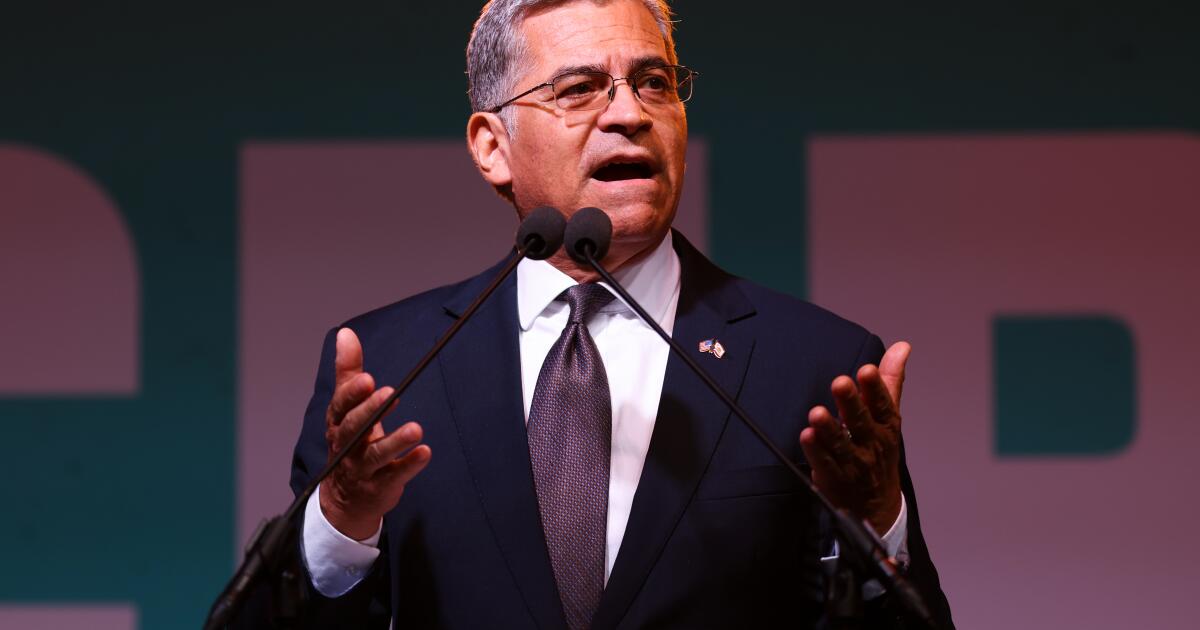
Becerra advances to November, moves closer to becoming California’s first elected Latino governor

