West
Trump lands endorsement of top investor who hosted $12 million San Francisco fundraiser for former president

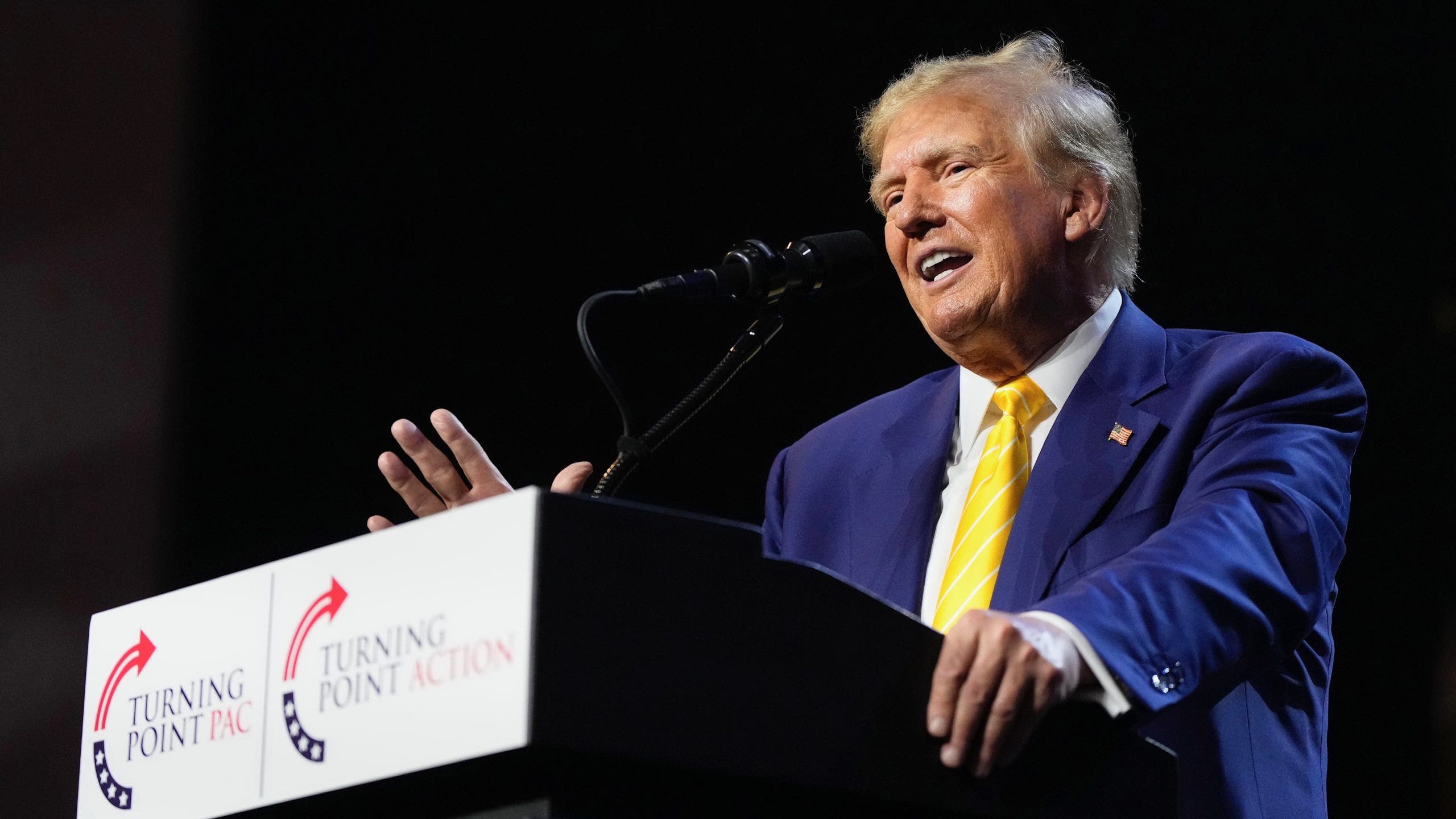
Former President Trump’s stop in the blue bastion of San Francisco turned out to be fruitful in more than one way.
Not only did the presumptive Republican presidential nominee haul in roughly $12 million at a fundraiser on Thursday evening, he also officially landed the endorsement of a major tech investor.
The fundraiser was hosted by David Sacks and Chamath Palihapitiya, two of the heaviest hitters in Silicon Valley and co-hosts of the hot “All-In” podcast.
And it was held at Sacks’ multimillion-dollar home in the tony Pacific Heights neighborhood of San Francisco.
TRUMP HEADS TO BLUE BASTION TO RAISE CAMPAIGN CASH
Tickets at the sold-out event ranged from $50,000 per person to get in the door all the way up to $500,000 per couple for special access and a photo with Trump.
A couple of hours before the fundraiser, Sacks took to social media to formally endorse Trump.
“I give to many, but endorse few. But today I am giving my endorsement to our 45th President, Donald J. Trump, to be our 47th President. My reasons rest on four main issues that I think are vital to American prosperity, security, and stability – issues where the Biden administration has veered badly off course and where I believe President Trump can lead us back,” Sacks wrote on X.
THIS IS HOW MUCH A TOP PRO-TRUMP SUPER PAC HAULED IN LAST MONTH
Sacks said that “the voters have experienced four years of President Trump and four years of President Biden. In tech, we call this an A/B test.”
“With respect to economic policy, foreign policy, border policy, and legal fairness, Trump performed better. He is the President who deserves a second term,” he argued.
According to sources familiar with the fundraising dinner on Thursday, Sacks reiterated his praise for Trump and explained why he’s supporting the presumptive GOP nominee in his 2024 election rematch with President Biden.
While his official endorsement came on Thursday, Sacks first signaled his support for Trump during a March meeting that he had with Sen. JD Vance, R-Ohio, and Donald Trump Jr., the former president’s eldest son, in Washington, D.C.
The impromptu meeting at the Conrad Hotel, held hours after Trump clinched the 2024 GOP presidential nomination, was first reported by The New York Times and confirmed by Fox News. It was at that meeting that Sacks indicated he was all-in for Trump’s 2024 presidential campaign.
TRUMP GUILTY VERDICT IN CRIMINAL TRIAL FIRES UP HIS FUNDRAISING
Vance, who is a Trump ally and a potential 2024 running mate who is close to Trump Jr., spent time a few years back in the San Francisco area working for hedge funds in the tech sector. Sources say he was instrumental in putting the top-dollar fundraiser together.
According to sources, Sacks said at the fundraiser that “this all started with JD Vance calling and asking if we could host an event for President Trump. Without JD’s advice and encouragement, this would never have happened.”
Trump heads south to Beverly Hills for a Friday fundraiser and a Saturday finance event in Newport Beach in Orange County.
President Donald Trump speaks at a campaign rally at HoverTech International, Monday, Oct. 26, 2020, in Allentown, Pa. (AP Photo/Alex Brandon) (AP)
The trip doesn’t mean the Trump campaign thinks overwhelmingly blue California may be in play.
Instead, Trump’s appearances — like those of two sold-out fundraisers in the Bay Area on Wednesday headlined by Vice President Harris and President Biden’s San Francisco area fundraisers last month — are the latest proof that the Golden State remains a crucial ATM for campaign cash.
Trump’s campaign on Monday said it and the Republican National Committee (RNC), fueled in part by the former president’s guilty verdicts in his criminal trial, hauled in a stunning $141 million in fundraising in May.
Trump was found guilty of all 34 felony counts in the first trial of a former or current president in the nation’s history.
The former president’s campaign highlighted that in the first 24 hours following last week’s verdict, it and the RNC brought in nearly $53 million in fundraising, which counted toward May’s total.
President Biden speaks during a campaign event in Philadelphia on May 29. (Mandel Ngan/AFP via Getty Images)
The Biden campaign has also been fundraising off of the Trump verdict, and a source familiar told Fox News that “the 24 hours after the verdict were one of the best fundraising 24 hours of the Biden campaign since launch.”
Trump has been aiming to close his fundraising gap with Biden. In April, his campaign and the RNC for the first time outraised the Biden campaign and the Democratic National Committee.
Fundraising, along with public opinion polling, is a key metric used to measure the strength of candidates and their campaigns. Money raised can be used to build up grassroots outreach and get-out-the-vote operations, staffing, travel and ads, among other things.
Fox News’ Chris Pandolfo contributed to this report
Get the latest updates from the 2024 campaign trail, exclusive interviews and more at our Fox News Digital election hub.
Read the full article from Here

Montana
EXCLUSIVE: 2 ‘Exceptionally Rare’ Ski-In, Ski-Out Montana Mansions Head to Auction in Big Sky—and Could Sell for a Serious Steal

A pair of stunning Montana ski homes are going under the hammer in the exclusive resort of Big Sky—where they could sell for well below their market value, having been offered up with no reserve.
Currently listed for a combined total of $13 million, the “exceptionally rare” dwellings are both located within the exclusive Spanish Peaks Mountain Club community—and come complete with full access to all of the incredible amenities that the private club has to offer, including “a Tom Weiskopf-designed 18-hole Championship Golf Course, a 10-hole Par 3 course, preferred access to Montage Big Sky, and a private clubhouse featuring dining, a bar, fitness center, pro shop, pool, and hot tub.”
Now, the properties will be sold off to the highest bidder when they are auctioned off with Trayor Lesnock, founder and president of Platinum Luxury Auctions, in cooperation with listing agents Greg Smith and Amelia Turbyfill of Engel & Völkers.
The larger of the two residences, which are both currently owned by Mark and Jennifer Kozubal, was placed on the market for $7.25 million in 2025, having been completed in 2023. It was more recently listed for the reduced price of $6.68 million.
Spanning more than 4,200 square feet, it features five bedrooms and five bathrooms, as well as a beautiful chef’s kitchen, ideal for hosting large groups. There are also “multiple living areas designed for entertaining and hosting family and friends,” according to the listing.
Combining classic Alpine style with “sleek, modern finishes,” the property offers both comfort and elegance, as well as incredible privacy, thanks to its plum location at the end of a quiet street.
Boasting incredible proximity to both the club’s golf courses and the Big Sky slopes, the property features an array of amenities designed to create a relaxing sanctuary where owners and their guests can retreat after a busy day of sporting activity.
“After a day on the ski slopes or a round of golf, relax in your private hot tub, cozy up by the fireplace, or cook a meal in the chef-inspired kitchen,” the description states.
The second property offers just under 3,000 square feet of living space, including four bedrooms and 3.5 bathrooms—as well as “direct ski-in, ski-out access with groomed connectivity to Big Sky Resort terrain,” according to its listing.
Much like the other residence, the second dwelling—which was brought to the market in January with an asking price of $6.25 million—has been designed specifically for those with a passion for outdoor living, providing the ideal setting in which to unwind after a long day of skiing or golfing.
“The residence includes open-concept living spaces designed for gathering after skiing, hiking, or riding, complemented by warm mountain finishes throughout,” the listing notes.
For those seeking to enjoy year-round life on the mountain, the property has been outfitted with a number of unique features that ensure a comfortable, luxurious experience no matter the weather, including “whole-home humidification and water purification systems.”
Beyond the impressive infrastructure, other alluring amenities include a “full-home audio and visual system,” as well as a dedicated eight-locker ski boot room that opens directly onto the nearest ski trail.
“Outdoor amenities include beautiful landscaping and a stone fireplace seating area positioned along the ski trail, with expansive views to the surrounding mountains,” the listing description continues.
However, perhaps the most tempting aspect of both properties is the fact that they could be sold for well below market value—presenting a truly rare opportunity for buyers to secure property in an area where luxury home sales are booming and price tags are regularly set in the seven-figure range.
“Opportunities like these are exceptionally rare in Big Sky,” seller Mark Kozubal explains. “These two Spanish Peaks Highlands homes offer true ski-in/ski-out access to a lightly used lift that connects directly into Big Sky Resort, creating an almost private ski experience with little to no wait.
“Combined with the privacy, beauty, and prestige of Spanish Peaks, these properties stand apart as truly unique mountain residences.”
Both properties are conveniently located within one of the most exclusive enclaves in Big Sky, offering proximity to both the area’s stunning ski resorts and the Yellowstone Club, which has long been one of the most star-studded neighborhoods in the area.
Among those celebrities who are rumored to have purchased properties at the Yellowstone club are NFL star Tom Brady, musician Justin Timberlake and his actress wife Jessica Biel, and Microsoft billionaire Bill Gates.
“Spanish Peaks is one of the premier private residential clubs in the West,” the club’s website notes. “Here, you can experience world-class skiing and golf, fine food and drink, spectacular natural beauty and so much more. This is mountain living at its best.”
Auctioneer Lesnock emphasizes that the opportunity to secure homes in such a luxury-leaning market for what could be a truly bargain price is not something that happens very often.
“Single-family homes within Spanish Peaks have solidly maintained an entry point of at least $5 million, so the ability for buyers to ‘name their price’ in these without reserve auctions represents a substantial purchase opportunity compared to this status quo,” he explains.
“In addition to the high caliber of each property, the community’s world-class golf, ski and wellness amenities are integral parts of the overall formula that continues to attract affluent, second-home buyers to Spanish Peaks from around the world.”
As for why the owners have chosen to pursue an auction, rather than waiting for the homes to sell in a more traditional manner, Lesnock says this process will help them to secure a sale in a timely manner, without having to hang around for months on end in the hopes that a buyer will come forward.
“Under the luxury auction process, we’re giving buyers not only that economic purchase opportunity, but also the guarantee of a seamless, non-contingent sale, free of the haggling and aggravations that can plague traditional, luxury property transactions,” he shares.
“The sellers also benefit in accord, knowing they have a date-certain sale and a clear path to their ‘Next Step.’”
Get real estate news in your inbox

RENO, Nev. — As electric vehicle ownership continues to climb in Nevada, experts say one question is becoming increasingly important: Can the state’s charging infrastructure keep pace?
New consumer research from, Yardi Matrix, found Nevada ranks sixth in the nation for electric vehicle growth, with registrations increasing nearly 420% over the past five years.
At the same time, Nevada is outperforming much of the country when it comes to charging access for renters. About 14% of multifamily housing units in the state offer EV charging, placing Nevada ahead of more than half of the nation.
Still, researchers say one key difference separates Nevada from some neighboring states.
Unlike California and several other states, Nevada does not require new multifamily housing developments to include electric vehicle charging infrastructure or EV-ready parking spaces.
Instead, developers decide whether to install chargers, often viewing them as an amenity that can help attract and retain tenants.
States take the wheel: Report looks at fragmented EV policies after federal rollbacks
“What you see in those other states is a state mandate that says if I’m going to build, I have to be ready or capable,” said a market analyst with Yardi Matrix, Douglas Ressler. “Nevada follows California vehicle sales very closely, but it lacks a multifamily EV building code mandate.”
Nevada has relied on incentives and rebates rather than statewide requirements to encourage EV infrastructure.
As more Nevadans switch to electric vehicles, charging access at apartment communities will become increasingly important, particularly for renters who cannot install chargers at home.
If Nevada were to require EV-ready infrastructure in future apartment developments, lawmakers would likely need to pass legislation establishing statewide requirements for new multifamily construction.
For now, researchers say Nevada’s growing EV market will continue to test whether voluntary investment by developers can keep pace with rising demand.

DONA ANA COUNTY, N.M. – (KFOX14/CBS4) — Some El Paso Electric customers in New Mexico are speaking out against a proposed rate increase that could raise the average monthly household bill by more than $40 by late next year.
The New Mexico Public Regulation Commission, which will decide whether to approve the proposal, held a public comment hearing earlier this week in Las Cruces.
During the meeting, customers and community members questioned the size of the request and whether the utility is doing enough to serve customers in southern New Mexico.
“This is a border town. It is a college town. It is a retiree town. It’s a military town. We’re not rich like Santa Fe, and the rates just keep going up and up and up,” said Kathy Lucero, a Las Cruces resident.
“We ratepayers and energy consumers should not be asked to subsidize these excessive profits,” said Lynn Moore, a Dona Ana County resident.
El Paso Electric is asking for a $70.4 million increase to its base rates for customers in New Mexico.
El Paso Electric seeks $70.4M hike; average NM bills could rise nearly $42 a month
The utility says the request is needed to recover costs from more than $400 million in New Mexico system investments, including upgrades, reliability improvements and rising costs.
After the hearing, Israel Chavez, a local civil rights attorney, said accessibility is also a concern as the utility asks customers to pay more.
“El Paso Electric closed its office on Water Street. There is no physical office to go to if you live with a disability, if you don’t have the technology to access your utility bill or to talk to somebody, there is no place to go unless you go to El Paso. And I think it’s wrong for El Paso Electric to cut services and then increase rates,” Chavez said.
In a statement addressing concerns about access, El Paso Electric said, “El Paso Electric continues to provide reliable service, along with a range of customer support resources to meet diverse needs, including assistance with account access, bill understanding, and payments.”
The utility added, “We recognize that changes like this can have its challenges, particularly for customers who may face barriers to technology or prefer in-person support. However, we remain committed to ensuring our customers feel supported and have access to the help they need when they need it.”
El Paso Electric said customers can still manage their accounts online, call customer care, or use authorized payment kiosks throughout its service area.
The New Mexico PRC has not made a final decision on the rate request.
If approved, the increase would start taking effect next year in two phases.
FULL PUBLIC COMMENT HEARING
Final community meeting on proposed EPE rate hike in New Mexico draws mixed reactions
Sign up to receive the top interesting stories from in and around our community once daily in your inbox.
-

 Minnesota24 seconds ago
Minnesota primary voting starts for major 2026 races
-

 Mississippi3 minutes ago
Retirement savings gap hits seniors. How to avoid outliving your money
-

 Missouri8 minutes ago
24 Missourians charged in national health care fraud investigation
-

 Montana15 minutes ago
EXCLUSIVE: 2 ‘Exceptionally Rare’ Ski-In, Ski-Out Montana Mansions Head to Auction in Big Sky—and Could Sell for a Serious Steal
-

 Nebraska18 minutes ago
Today in History – June 26: University of Nebraska holds first commencement
-

 Nevada23 minutes ago
Nevada’s EV market is booming. Here’s why apartment charging could be the next challenge.
-
 New Hampshire30 minutes ago
A mom is thankful for Dismas Home – which is expanding recovery services to Rochester
-

 New Jersey33 minutes ago
New Jersey Supreme Court requires transparency for facial recognition evidence

