Business
Money Talk: My ex-wife lent my money to her boss. What can I do?

Dear Liz: I recently found out that my ex lent one of her former bosses $2,500 to get his brother out of jail on bond. My ex took the money out of a joint account that I had opened with the inheritance I got when my dad died. It’s now been four years and I haven’t received a penny of the loan back. I could really use the money now as I have medical bills to pay. Question is who do I go after? My ex or the boss?
Answer: You may have read in this column that inheritances can be kept as separate property, even in community property states where other assets acquired during marriage are generally considered jointly owned.
An inheritance can lose its status as separate property, however, if it’s commingled with joint funds. That’s what you did when you opened a joint account with the money: You gave your ex access to the funds.
You certainly can ask the ex and the boss to give the money back. You could try small claims court if that doesn’t work. You also could hire an attorney, but the costs of trying to get the loan repaid may well exceed the amount at stake.
My parents cut my kid out of their will. (Ouch!) Can I give her some cash?
Dear Liz: My parents wrote my youngest daughter out of their will (my other children were left in). As both parents are now gone, I am in the process of settling the estate. I feel horrible that my parents did this. My daughter is very upset with me and her siblings for not sharing the inheritance. I am under the impression that there is nothing we can do about the will. Having said that, I would like to give my daughter a good amount of money but I believe I can’t give more than $18,000 a year. Am I correct in my two assumptions?
Answer: Yes and no.
Yes, as the executor of the estate, you’re bound to carry out your parents’ wishes as expressed in their estate planning documents.
But no, there’s no limit to how much money you can give someone. Gifts over a certain size — which is $18,000 this year — have to be reported to the IRS. But you won’t owe gift taxes until the amounts you give away over the annual limit exceed your lifetime limit, which is currently $13.61 million.
That said, a large enough gift could have an impact on your own estate. Consider getting advice from your estate planning attorney before you proceed.
Is getting old reason enough to cancel some credit cards?
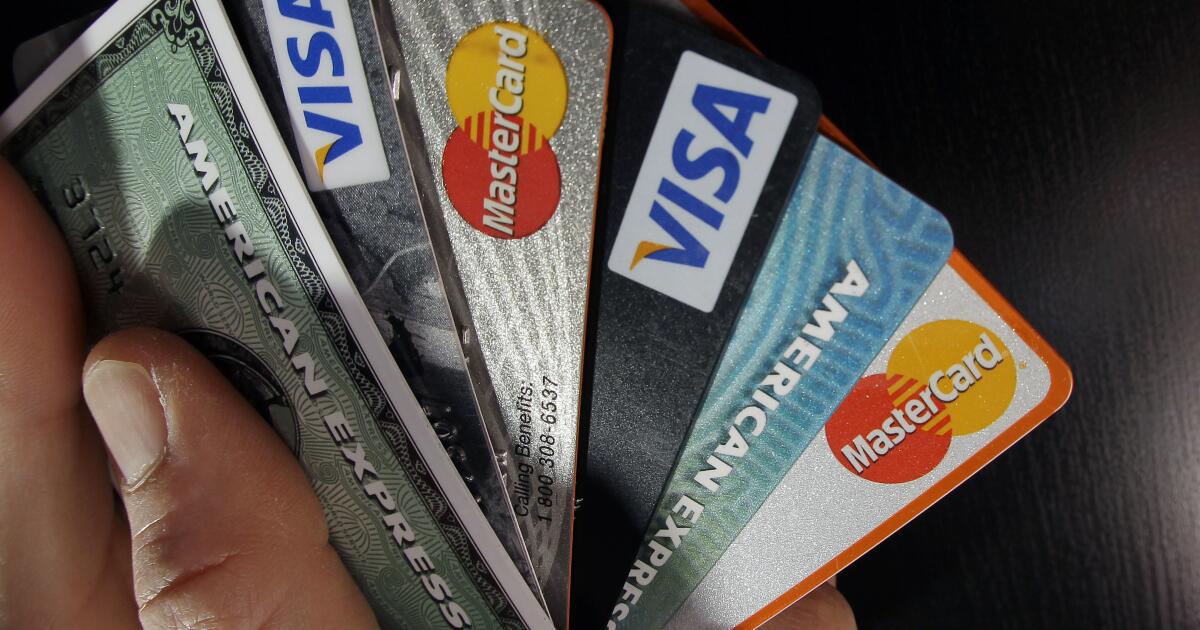
Dear Liz: Recently, someone asked if closing a credit card would be worth the hassle and you responded that there is no compelling reason to do so and in fact, it might hurt your credit scores. As an older person, I can think of two good reasons: theft and fraud. Many of us of a certain age no longer carry a mortgage or other debt. But, I am finding it harder to keep track of my finances. I would like to cancel three of my five credit cards for that reason.
Answer: You misquoted my response. What I actually wrote was, “If there’s no compelling reason to close a card, you might consider leaving the account open and using the card occasionally to prevent the issuer from closing it.”
Wanting to reduce your risk is reason enough to close a card account. All of us would be smart to consider simplifying our finances as we get older, says Carolyn McClanahan, a certified financial planner and physician in Jacksonville, Fla.
You also might think about who could help you manage your finances as the task gets more difficult. A legal document called a power of attorney allows you to name a trusted person to take over should you become incapacitated. You can familiarize this person with your finances and consider giving them online access to your accounts so they can help you spot fraud, theft or missed due dates. Involving them now, when you can help guide them, is generally better than waiting for a crisis and hoping they can figure everything out on their own.
Liz Weston, Certified Financial Planner®, is a personal finance columnist. Questions may be sent to her at 3940 Laurel Canyon Blvd., No. 238, Studio City, CA 91604, or by using the “Contact” form at asklizweston.com.


San José tech company Cisco plans to cut 471 workers in three Bay Area offices, according to layoff notices filed to a state agency.
The company, which provides networking devices along with other services including video conferencing and cybersecurity, told employees in May that it was going to cut fewer than 4,000 jobs or less than 5% of its workforce.
The notices, processed by the California Employment Development Department this week, provide more details about what jobs Cisco will cut in California.
The artificial-intelligence boom has fueled more investments in data centers, commercial real estate and other areas. But advancements in AI tools have also been reshaping jobs, especially in Silicon Valley, the epicenter of the tech industry.
Cisco’s layoffs in California impacted workers in its San José, Milpitas and San Francisco offices. The company cut a variety of roles in software engineering, product management, design, business operations and other areas, the notices show.
Cisco said it didn’t have anything additional to share beyond what it published in May about its restructuring plans.
Tech companies have been citing various reasons for layoffs including prioritizing investments in artificial intelligence. As workers use AI-powered tools to generate code, words and other content, some executives have said they don’t need as many employees. There’s also skepticism, though, about how big a role AI is playing at companies with a large amount of workers globally.
From January to May, U.S. technology companies announced 123,653 cuts, up 66% from the same period in 2025, according to a June report from global outplacement and executive coaching firm Challenger, Gray & Christmas. The firm said that AI was the leading reason companies cited for cuts but it still isn’t the “jobpocalypse some predicted.”
Meta, Snap, Block, Oracle and Amazon are among tech companies that have announced mass layoffs this year.
Cisco markets itself as a company that “provides critical infrastructure for the AI era” and has benefited from the AI boom, reaching a record revenue of $15.8 billion in the third quarter this year. The company’s net income grew 35% to $3.4 billion year-over-year during that quarter.
Cisco Chief Executive Chuck Robbins told employees in May it’s cutting costs in certain areas while prioritizing other investments. That includes employee use of AI across the company.
He said Cisco will be among winners in the AI era, but that means “making hard decisions — about where we invest, how we’re organized, and how our cost structure reflects the opportunity in front of us.”
As of July 2025, Cisco had roughly 86,200 employees, according to its annual report.

Social media company Snap is being sued by the parents of a girl who was raped when she was 12 years old by a man she met on disappearing messaging app Snapchat.
The 111-page lawsuit, filed this week in a Missouri Circuit Court, alleges that Santa Monica-based Snap “enabled and facilitated the grooming, exploitation, and sexual abuse” of the minor who is referred to as “J.F.”
The company failed to disable or warn users about “dangerous” features that predators use on the app to find and abuse their victims, according to the lawsuit.
Missouri resident Gabriel Joel Valentin-Rios, who was 25 years old at the time, raped the girl in September 2021 after she sneaked out of her house, the lawsuit alleges. The parents are also suing the attacker, who pleaded guilty to sexually assaulting the girl and is serving 18 years in prison, according to the Social Media Victims Law Center.
The center and the Holland Law Firm announced Thursday they filed the lawsuit on behalf on the victim’s family.
“This assault did not happen in a vacuum — it happened because Snapchat’s product design made it easy for a predator to reach and manipulate an unsuspecting child,” said Matthew Bergman, founding attorney of the Social Media Victims Law Center, in a statement. “Snap executives have long known that their features create a perfect environment for predators to exploit children, yet they have repeatedly failed to make the platform safe.”
A Snap spokesperson said in a statement the company cares “deeply about the safety and well-being of all Snapchatters.”
“Our teams have worked for years to build safeguards, launch safety tutorials, partner with experts, and work with law enforcement to help prevent the misuse of our platform,” the spokesperson said in a statement.
The lawsuit is the latest legal hurdle facing Snap. Multiple parents who lost their children have previously sued the company, alleging that Snap failed to provide enough safeguards on the messaging app. Parents and child safety groups have voice concerns about how the app can be used to connect young people with drug dealers and child predators.
Other tech companies such as gaming platform Roblox, Google-owned YouTube and Facebook parent company Meta have also faced lawsuits over safety and mental health issues.
In March, a Los Angeles jury found that Meta-owned Instagram and YouTube were liable for the suffering of a California woman who alleged the platforms were built to addict young users. Snap settled that lawsuit before the trial started.
The latest lawsuit against Snap highlights safety concerns surrounding several features on the messaging app including “Quick Add,” which suggests users to connect with on Snapchat. Valentin-Rios used that feature to connect with the girl along with others to disguise his identity and groom her into sending explicit photos, the lawsuit said. The company’s “Snap Maps” feature allowed him to find the girl’s home address. And he used a cartoon avatar known as Bitmoji on Snapchat to conceal his age and present himself as a “a young, innocuous, and friendly looking boy.”
Families have faced challenges holding tech companies accountable for safety issues because a U.S. law shields platforms from being held liable for content posted by its users.
The lawsuit against Snap, though, says that it seeks to hold the company liable for the design and marketing of “unreasonably dangerous social media products.” It alleges that Snap co-created content such as Bitmojis abused by child predators and it designed the app to entice users to spend more time messaging others.
The lawsuit accused Snap of consistently turning a “blind eye” to underage users of its app. Snapchat requires users be at least 13 years old to sign up for an account, but J.F. started using the app when she was 11 years old. Snapchat was popular among her peers and friends so J.F. downloaded the app, which was presented as lighthearted and entertaining platform, without her parents’ knowledge or consent. The company failed to warn users about potential dangers, verify the ages of minors and lacks adequate parental controls, the lawsuit alleges.
Snapchat has a “family center” where parents can see their teen’s friends, view time spent and other insights about how their children are using the app. But the lawsuit said it isn’t enough because parents can’t restrict teens from sending private messages and children can create accounts without their parents’ knowledge.
The plaintiffs’ counsel also tested Snap’s “Quick Add” feature in 2023 and found that many of the usernames “generated by Snap’s recommendation algorithm appeared on their face to belong to predatory users,” the lawsuit said.
Valentin-Rios was also able to create a second Snapchat account with the username “Nocits21g” to connect with J.F. and to conceal the activity from his girlfriend, according to the lawsuit.
The rape victim, who was diagnosed with PTSD, anxiety and depression, started to engage in self-harm and expressed suicidal thoughts, the lawsuit states.
The lawsuit seeks a jury trial and financial damages for the harm allegedly caused by the company to the family.
“J.F. feels embarrassed and ashamed, but she is also angry that Snap facilitated this by design, and angrier still that Snap continues to operate its platform in the same manner today,” the lawsuit said.

Gov. Gavin Newsom signed a law Thursday to crack down on inflated profits stemming from car crash lawsuits, blessing a hard-fought compromise between Uber and the state’s trial attorneys that averts a November showdown between two of California’s most powerful and moneyed lobbying forces.
The deal, the fruit of months of negotiations, takes aim at the lucrative way doctors can charge for procedures on patients referred to them by personal injury lawyers.
If a law firm has a client who was hurt in a car accident, the lawyer will often send them to a doctor who will perform surgery on a “lien” basis, meaning the doctor will be paid from money that comes from a lawsuit settlement rather than through insurance.
Uber contends this arrangement has created an incentive for doctors and attorneys to collude to dramatically inflate medical bills. The more expensive the bill, they say, the bigger the resulting payout.
The law, SB 623, caps how much these doctors can charge when their patient is involved in a lawsuit against a ride-share company, which are frequent targets of litigation due to their top-of-the-line insurance policies. The new law will also require Uber to ramp up background checks of its drivers.
“We’re going to have a much safer state both for medical patients and passengers in Ubers,” said Nicholas Rowley, a prominent Texas attorney who helped bankroll the fight and took a leading role in the negotiations.
The law only applies to cases that involve ride-share accidents that take place after Jan. 1, 2027.
“This legislation puts meaningful guardrails in place to better protect accident victims, increase transparency and accountability in the medical lien system and strengthen safety,” said Ramona Prieto, Uber’s head of public policy for the Western U.S., in a statement.
For months, Uber and lawyers from across the state poured tens of millions into dueling ballot measures that threatened to devastate the profits of whichever side lost.
Uber fired the first shot with a ballot measure that sought to cap how much attorneys can earn in lawsuits involving auto accidents. The company argued attorneys were swindling their own clients, inflating medical bills of car crash victims to increase the value of the settlement and then pocketing a hefty chunk of the payouts.
The state’s trial attorneys countered that the fee cap would make small or difficult cases a money-losing endeavor and block scores of accident victims from the courts. They shot back with their own ballot measure that would increase legal liability for ride-share companies if a passenger or driver is sexually assaulted while on a ride, seizing on investigative reporting that highlighted assaults in Ubers.
“They were waiting for us to blink and we didn’t,” said Douglas Saeltzer, the head of the Consumer Attorneys of California, the lawyer trade group that pushed for the measure against Uber. “Their starting place, I don’t believe, was in the interest of protecting victims — it was in the interest of protecting Uber.”
With the passage of Thursday’s law, both sides have agreed to pull their respective measures from the November ballot, halting campaigns that had both parties amassing tens of millions in funding and blanketing the airwaves with ads.
“Now we can stop seeing all the commercials,” said Assemblymember Blanca Pancheo (D-Downey) at a Tuesday hearing.
The law, put forward by Assemblymember Diane Papan (D-San Mateo) and Sen. Thomas Umberg (D-Santa Ana), also caps the amount that can be earned by third-party investors who buy out a doctor’s lien in a personal injury case. These companies will purchase a doctor’s stake in the case at a reduced rate, then pocket a share of the payout if the case settles.
“Private equity and hedge funds buy them at a steep discount, then turn around and collect the full inflated amount,” Saeltzer said at a Tuesday hearing on the bill. “That’s money flowing to Wall Street investors, not patients.”
The law will require annual background checks for ride-share drivers and expand the list of offenses that disqualify someone from the job.
In addition to the ballot battle, has Uber sued two of LA’s most well-known personal injury firms — the Law Offices of Jacob Emrani and Downtown L.A. Law Group — accusing them of inflating medical bills and forcing clients to undergo needless and expensive surgeries to inflate the value of the claim. The firms asked the judge to dismiss the case Wednesday, arguing Uber had failed to prove fraud. Both firms have vehemently denied wrongdoing.
The lawsuit, filed last year, has put the plaintiff lawyers in the unusual position of playing defense. Listening in the audience at Wednesday’s hearings were the partners of Downtown L.A. Law Group and Jacob Emrani.
“Let’s be clear about what this Uber case really is,” said John Hueston, outside counsel for Emrani. “It’s brought by a $150 billion dollar company … to intimidate the plaintiff’s bar, exhaust its resources and chill the suits that hold Uber accountable.”
Michael Huston, one of the lawyers who represents Uber, countered that the case is “not an attack on the plaintiff’s bar.”
“We have brought suit against the two in this state … that are engaged in naked fraud,” he said.
-

 Los Angeles, Ca1 hour ago
Man found guilty of sex trafficking victim along L.A.’s Figueroa Corridor
-

 Detroit, MI1 hour ago
No. 23 overall pick in the 2026 NHL draft | Detroit Red Wings
-

 San Francisco, CA2 hours ago
San Francisco Pride kicks off with rainbow lasers, ValQueeries celebrate at Valkyries Pride Night
-

 Dallas, TX2 hours ago
How to buy Egypt vs. Australia World Cup soccer tickets
-

 Miami, FL2 hours ago
Helping Venezuela: Miami search-and-rescue team prepares to deploy
-

 Boston, MA2 hours ago
How to buy Paraguay vs. Germany 2026 World Cup tickets in Boston
-

 Denver, CO2 hours ago
Denver Broncos Roster Breakdown: Center—The Depth Question
-

 Seattle, WA2 hours ago
Iran-Egypt: Seattle World Cup Pride match updates

