
Entertainment
The novel 'Old King' explores the meaning of 'Unabomber' Ted Kaczynski today
Book Review
Old King
By Maxim Loskutoff
Norton: 304 pages, $27.99
If you buy books linked on our site, The Times may earn a commission from Bookshop.org, whose fees support independent bookstores.
When Ted Kaczynski killed himself in a federal prison last June, it closed a confounding chapter in the history of American domestic terrorism. Unlike fascists, white supremacists and antigovernment conspiracists, Kacyzinski espoused righteous principles: protecting the environment and facing the destructive role of technology. “[T]hreats to the modern individual tend to be MAN-MADE,” he wrote in a 35,000-word manifesto that ran in the New York Times and Washington Post in 1995. “They are not the result of chance but are IMPOSED on him by other persons whose decisions he, as an individual, is unable to influence.”
He wasn’t wrong. But the papers only published his words on the recommendation of the FBI and U.S. attorney general to prevent him from doing more harm — beyond the three people he’d murdered and nearly two dozen he’d injured with mail bombs.
Maxim Loskutoff’s second novel, “Old King,” is an attempt to sort through Kaczynski’s contradictions, to acknowledge the manifesto’s prophetic elements while stressing it’s the product of a sociopath. That’s fine fodder for a novel — the stuff of Dostoyevsky, even — though Loskutoff isn’t trying to deliver a “Karamazov”-grade philosophical tale. Rather, “Old King” is a more modest blend of police procedural and great-outdoors yarn.
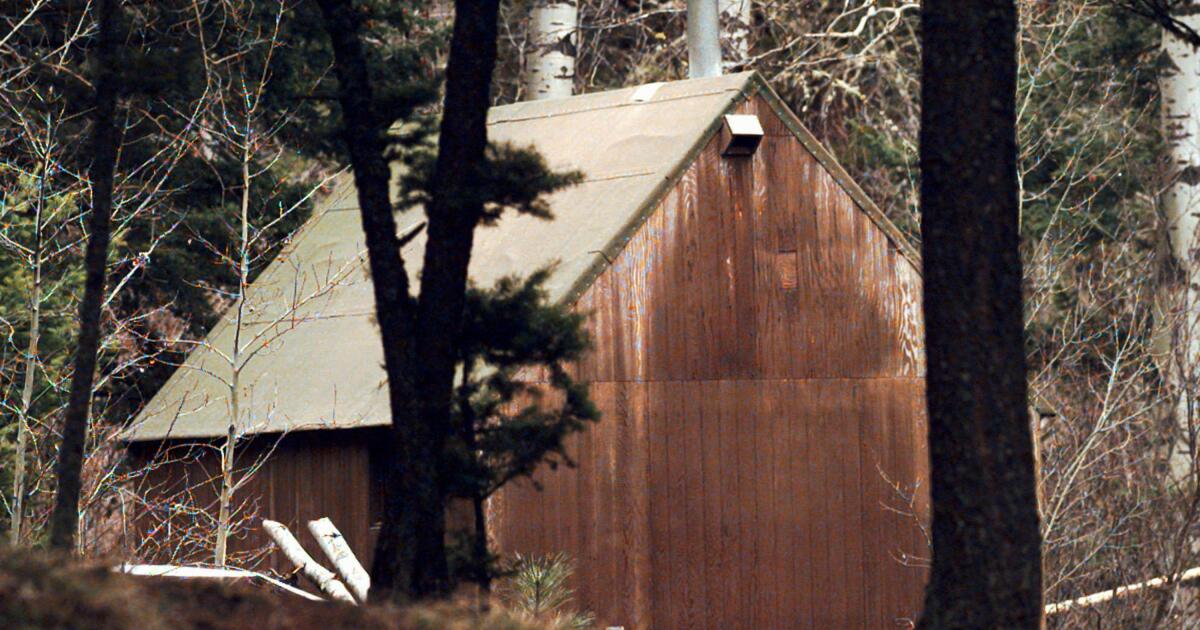
Set largely in the Montana wilderness where Kaczynski holed up, the novel explores the line where independence becomes so distant from empathy that it’s toxic. Loskutoff writes beautifully about nature — “Old King” refers to a massive tree towering over the Montana landscape. But nature on its own, he observes, can be menacing and brain-scrambling as well.
Before Kaczynski claims the novel’s stage, Loskutoff introduces a set of characters who evoke his crisis in miniature. In 1976, Duane is a young father who has just left his marriage and home in Utah to move to Lincoln, Mont., for work. He’s not especially skilled, and nature alienates him at first. (“Branches rustled, reaching toward him, offering up his failures.”) But he soon lands a logging job and gets to know the locals: Mason, a forest ranger; Hutch, owner of an ad hoc animal rescue; the Carter family, a clan of cranky separatists; and Jackie, Mason’s ex and a diner waitress. Settling in, Duane gifts Jackie with a microwave he liberated from his broken marriage, a small symbol of both warm domesticity and cold technology.
Indeed, it’s likely no other microwave in the history of American literature has been asked to carry so much metaphorical weight. Even without dwelling on the device, it’s clear that everybody in the area is trying to figure out to what degree they can balance the wilderness’ capacities for wonder and alienation. Mason, the ranger, is the most sophisticated thinker on the matter, questioning whether his job is preserving the environment or helping to accelerate a land rush: “By arresting poachers and running old trappers out of business, he’d clear the way for rich tourists to build second homes… Their contracting crews killed animals by the score with bulldozers, and the cement they poured left no way for the trees to grow back.”
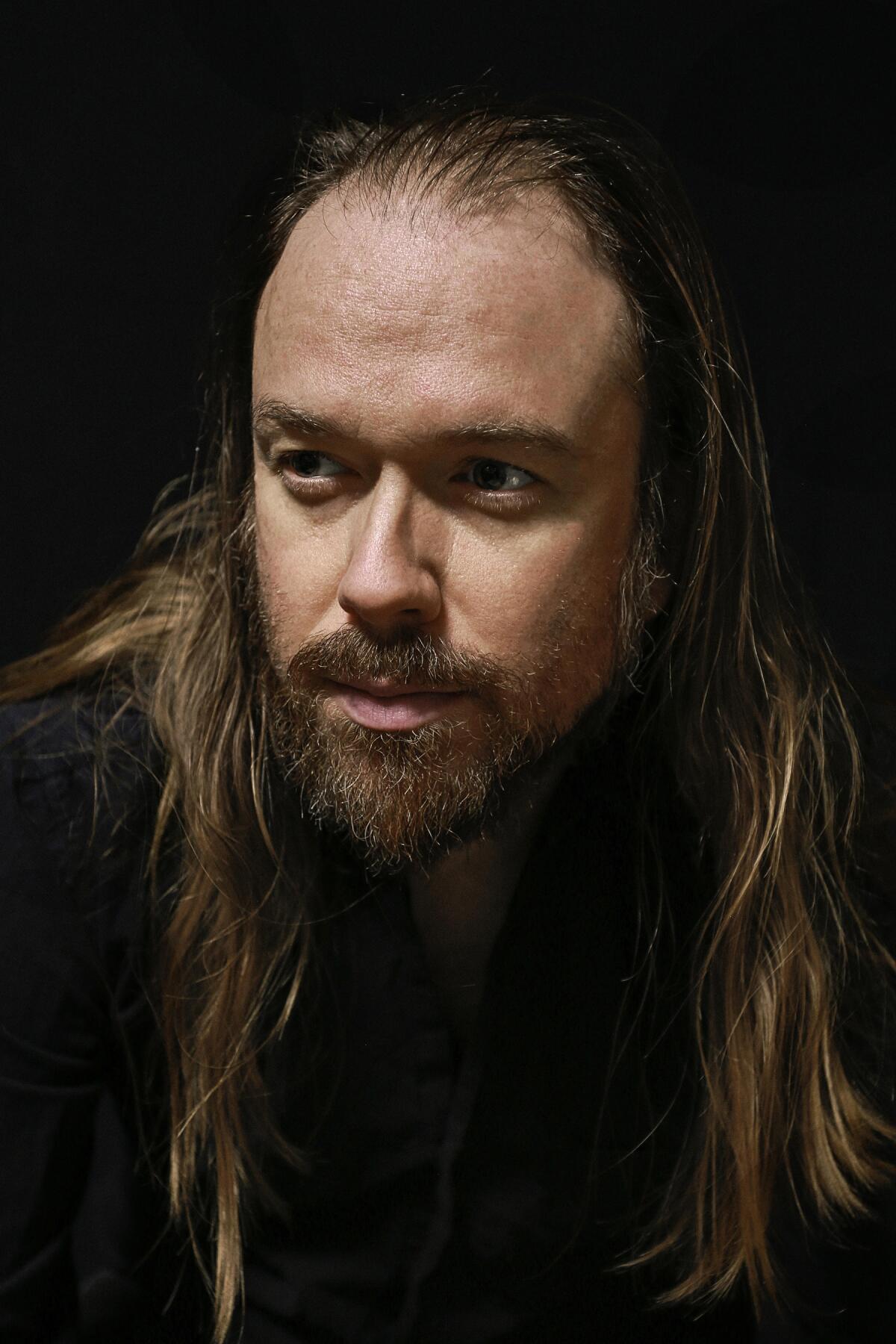
Maxim Loskutoff, author of “Old King.”
(Cinna Cuddie)
As the narrative moves into the ’80s, Mason is increasingly troubled by the irony of his work. Duane, meanwhile, acknowledges the healthy fear the environment puts in him: Seeing a grizzly, he falls into a “wild, plunging panic, as if he’d come here to be eaten, having finally crossed the line between civilization and his dreams.” Both responses qualify as a kind of wilderness intelligence. By contrast, Kaczynski, a brilliant mathematician before becoming the Unabomber, is rendered as a more crazed, lunkheaded type: “The bear was the first real killer he’d ever encountered. He wanted to be a killer.”
There’s an unwritten law that literary fiction set in the high plains be sturdy and simple — sentences firm as fence posts, commas hammered in as clean as barn nails. Kent Haruf’s novels are the exemplar of the form, but the sensibility runs through books by Thomas McGuane, Marilynne Robinson, Peter Heller, Ivan Doig and more. Loskutoff, who set both his novel “Ruthie Fear” and story collection “Come West and See” at least partly in Montana, has mastered his own take on the form. He deftly captures how the environment is both enchanting and fearsome, and though his set pieces have a familiar ring — bar fights! dangerous animals! — he focuses more on what’s troubling his characters than overselling some myth of rough-and-ready swagger.
Still, the plainspoken approach means some characters lack depth. Jackie, the waitress, rarely rises above the trope of the straight-talking done-wrong Western woman who can’t find a good man. The trouble is more acute in Kaczynski’s case. Luskatoff introduces a postal inspector, Nep, who’s trying to chase down the Unabomber and grasps the threat he poses to America’s sense of self, then and now. (“Race riots, serial killers, assassinations, superfund sites. The great ship of America going down with all the lights blazing.”) But Nep is basically a stock detective, and Kaczynski little more than an angry narcissist who derides everyone around him as fools. His contempt for humanity is clear. But then why was he concerned for it?
For Loskutoff’s purposes, Kaczynski serves less as a character than a warning. The Unabomber was more than a ’90s headline; his past is closer to our present than we think. When a Montana local tells Mason about a brutal act of violence that happened in the ’20s, Mason brushes it off: “That was fifty years ago.” The man scoffs: “You think that’s a long time?”
Mark Athitakis is a writer in Phoenix and author of “The New Midwest.”
Entertainment
Dataland, the world’s first museum of AI arts, sets opening date and first exhibition
After more than two and a half years of research, planning and construction, Dataland, the world’s first museum of AI arts, will open June 20.
Co-founded by new media artists Refik Anadol and Efsun Erkılıç, the museum anchors the $1-billion Frank Gehry-designed Grand LA complex across the street from Walt Disney Concert Hall in downtown Los Angeles. Its first exhibition, “Machine Dreams: Rainforest,” created by Refik Anadol Studio, was inspired by a trip to the Amazon and uses vast data sets to immerse visitors in a machine-generated sensory experience of the natural world.
The architecture of the space, which Anadol calls “a living museum,” is used to reflect distant rainforest ecosystems, including changing temperature, light, smell and visuals. Anadol refers to these large-scale, shimmering tableaus as “digital sculptures.”
“This is such an important technology, and represents such an important transformation of humanity,” Anadol said in an interview. “And we found it so meaningful and purposeful to be sure that there is a place to talk about it, to create with it.”
The 35,000-square-foot privately funded museum devotes 25,000 square feet to public space, with the remaining 10,000 square feet holding the in-house technology that makes the space run. Dataland contains five immersive galleries and a 30-foot ceiling. An escalator by the entrance will transport guests to the experiences below. The museum declined to say how much Dataland, designed by architecture firm Gensler, cost to build.
An isometric architectural rendering of Dataland. The 25,000-square-foot AI arts museum also contains an additional 10,000 square feet of non-public space that holds its operational technology.
(Refik Anadol Studio for Dataland)
Dataland will collect and preserve artificial intelligence art and is powered by an open-access AI model created by Anadol’s studio called the Large Nature Model. The model, which does not source without permission, culls mountains of data about the natural world from partners including the Smithsonian, London’s Natural History Museum and the Cornell Lab of Ornithology. This data, including up to half a billion images of nature, will form the basis for the creation of a variety of AI artworks, including “Machine Dreams.”
“AI art is a part of digital art, meaning a lineage that uses software, data and computers to create a form of art,” Anadol explained. “I know that many artists don’t want to disclose their technologies, but for me, AI means possibilities. And possibilities come with responsibilities. We have to disclose exactly where our data comes from.”
Sustainability is another responsibility that Anadol takes seriously. For more than a decade, Anadol has devoted much thought to the massive carbon footprint associated with AI models. The Large Nature Model is hosted on Google Cloud servers in Oregon that use 87% carbon-free, renewable energy. Anadol says the energy used to support an individual visit to the museum is equivalent to what it takes to charge a single smartphone.
Anadol believes AI can form a powerful bridge to nature — serving as a means to access and preserve it — and that the swiftly evolving technology can be harnessed to illuminate essential truths about humanity’s relationship to an interconnected planet. During a time of great anxiety about the power of AI to disrupt lives and livelihoods, Anadol maintains it can be a revolutionary tool in service of a never-before-seen form of art.
“The works generate an emergent, living reality, a machine’s dream shaped by continuous streams of environmental and biological data. Within this evolving system, moments of recognition and interpretation emerge across different forms of knowledge,” a news release about the museum explains. “At the same time, the exhibition registers loss as part of this expanded field of perception, most notably in the Infinity Room, where visitors encounter the 1987 recording of the last known Kauaʻi ʻŌʻō, a now-extinct bird whose unanswered call becomes part of the work.”
“It’s very exciting to say that AI art is not image only,” Anadol said. “It’s a very multisensory, multimedium experience — meaning sound, image, video, text, smell, taste and touch. They are all together in conversation.”
Movie Reviews
Michael Jackson documentary set to release after massive re-write
-
Fans reignite Drake vs Kendrick feud after album announcement
03:35
-
Now Playing
Michael Jackson documentary set to release after massive re-write
02:57
-
UP NEXT
Patrick Brammall on How He Got His Role in ‘Devil Wears Prada 2’
05:43
-
Henry Winkler on ‘Hazardous History’ S2, Zip lining With Grandkids
07:38
-
Did Harry Styles and Zoë Kravitz Get Engaged?
04:05
-
Ana Gasteyer on Role in ‘Schmigadoon!’ Musical: ‘I’m Very Mean’
06:03
-
Laufey Talks Children’s Book ‘Mei Mei the Bunny,’ Coachella, More
05:15
-
Shania Twain to Host the 2026 Academy of Country Music Awards
00:26
-
Colman Domingo and Nia Long Talk New Michael Jackson Biopic
04:50
-
Charlize Theron Talks Intense Training for New Thriller, ‘Apex’
06:30
-
Jimmy Kimmel Shares Photo of His Son to Mark His 9th Birthday
00:39
-
Could Rocky Score an Oscar for ‘Project Hail Mary’ Movie?
01:36
-
‘The Pitt’ Season 2 Finale Sees Huge Surge in Streams
01:23
-
‘Top Gun’ Movies Are Returning to Theaters for 40th Anniversary
01:24
-
Chicago collectible store is latest target in Pokemon card crime spree
01:59
-
Victoria Beckham Shares Hot Takes on Chores, Nicknames, More
07:34
-
John Legend Talks New Book, ‘The Voice’ Finale, Marriage, More
06:37
-
Victoria Beckham Talks Family, Marriage, Navigating Tough Times
07:58
-
Steve Schirripa Joins TODAY With Dog WillieBoy to Talk New Book
04:32
-
Stars of ‘Running Point’ Discuss What to Expect From Season 2
06:34
Top Story
-
Fans reignite Drake vs Kendrick feud after album announcement
03:35
-
Now Playing
Michael Jackson documentary set to release after massive re-write
02:57
-
UP NEXT
Patrick Brammall on How He Got His Role in ‘Devil Wears Prada 2’
05:43
-
Henry Winkler on ‘Hazardous History’ S2, Zip lining With Grandkids
07:38
-
Did Harry Styles and Zoë Kravitz Get Engaged?
04:05
-
Ana Gasteyer on Role in ‘Schmigadoon!’ Musical: ‘I’m Very Mean’
06:03
Hallie Jackson NOW
Stay Tuned NOW
Play All
Entertainment
‘Clayface’ trailer teases DC Studios’ first proper horror movie
The DC universe is going full on body horror.
DC Studios released its first trailer for “Clayface” on Wednesday, giving audiences a glimpse of the gruesome origins of the shape-shifting Batman villain.
Set to an eerie rendition of the Flaming Lips’ “Do You Realize??,” the teaser flashes among various images of up-and-coming Hollywood actor Matt Hagen (portrayed by Tom Rhys Harries) before and after a violent encounter as the camera slowly zooms toward his haunted eyes and bloody, bandaged face as he is recovering on a hospital bed.
The clip also includes footage of Hagen’s clay-like, malleable face, which he appears to gain after some sort of scientific procedure.
According to the DC description, “Clayface” will see Hagen transformed into a “revenge-filled monster” and explore “the loss of one’s identity and humanity, corrosive love, and the dark underbelly of scientific ambition.”
“Clayface,” set for an Oct. 23 release, will be the third DCU film to hit theaters since James Gunn and Peter Safran took over DC Studios and reset (most of) its comic book superhero franchise. The studio’s upcoming slate also includes “Supergirl,” which will hit theaters June 26, as well as “Man of Tomorrow,” the sequel to Gunn’s 2025 blockbuster “Superman,” announced for 2027.
Who is Clayface?
Clayface is a DC Comics villain usually affiliated with Batman. The alias has been used by a number of different characters over the years, but they all usually possess shape-shifting abilities due to their clay-like bodies. Created by Bill Finger and Bob Kane, the original Clayface was a washed-up actor turned criminal who first appeared in a 1940 issue of “Detective Comics.”
Matt Hagen was the name of the second Clayface, who first appeared in an issue of “Detective Comics” in the 1960s. He was the first to have shape-shifting powers, which he gained after encountering a mysterious radioactive pool of protoplasm.
Other versions of Clayface have been introduced in various media since.
Who is in ‘Clayface’?
The upcoming film stars Tom Rhys Harries as rising Hollywood actor Hagen. The cast also includes Naomi Ackie, who is seen in the trailer, reportedly as the scientist Hagen turns to for help following his disfigurement. Also set to appear are David Dencik, Max Minghella and Eddie Marsan, as well as Nancy Carroll and Joshua James.
Who are the ‘Clayface’ filmmakers?
Director James Watkins, known for horror films including “Speak No Evil” (2024), is helming “Clayface.” The script was written by prolific horror scribe Mike Flanagan (“The Haunting of Hill House,” “Doctor Sleep”) and Hossein Amini (“The Snowman”).
The producers are Matt Reeves, Lynn Harris, James Gunn and Peter Safran. Exective producers include Michael E. Uslan, Rafi Crohn, Paul Ritchie, Chantal Nong Vo and Lars P. Winther.
-
Lifestyle4 minutes agoYou’re Invited! (No, You’re Not.) It’s the Latest Phishing Scam.
-
Education10 minutes agoOhio State Details Relationship that Led to Former President Walter Carter Jr.’s Resignation
-
Technology16 minutes agoBEWARE SOFTWARE BRAIN
-
World22 minutes agoLandlords allegedly posting ‘Muslim-only’ apartment ads in violation of country’s equality act: report
-
Politics28 minutes agoLeavitt explains why Iran’s seizure of two ships doesn’t violate Trump’s ceasefire
-
Health34 minutes agoHighly contagious stomach bug spreads fast, hitting certain patients hardest
-
Sports40 minutes agoWWE to hold premium live event in Saudi Arabia amid Iran ceasefire
-
Technology46 minutes agoToyota’s CUE7 robot shoots hoops using AI
