West
Top-ranked Colorado universities: Colleges across the state where students are eager to enroll

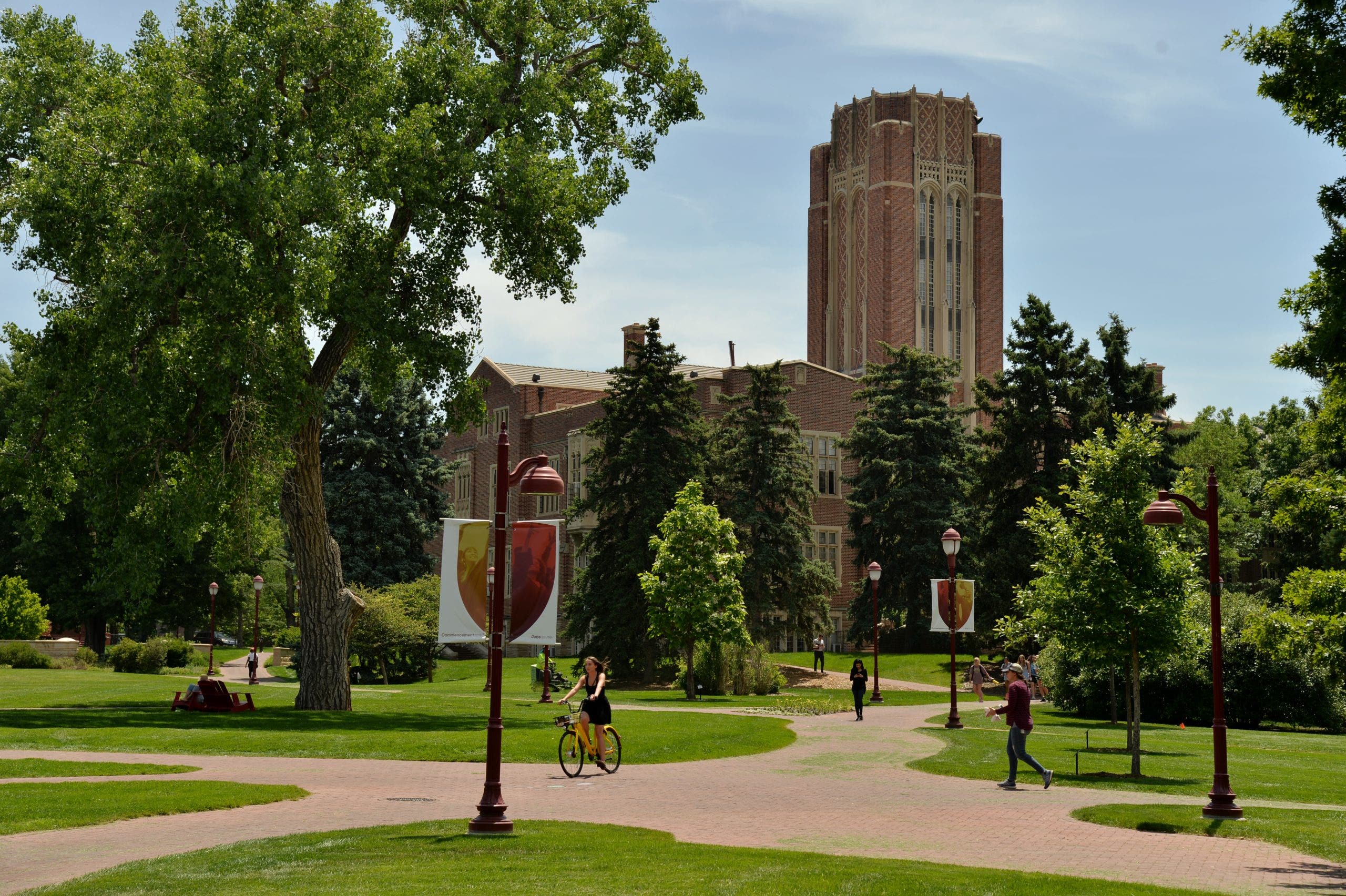
Selecting a university to attend is one of the most important decisions students will make in their young adult lives.
Those looking for a college education in Colorado have numerous excellent options.
Colorado hosts many leading universities in cities with inspiring scenery, including Colorado Springs, Boulder, Fort Collins and Denver.
With breathtaking backdrops regardless of location, the universities in Colorado ensure that, in addition to academic pursuits, students have abundant opportunities to engage in various outdoor activities suitable for varying fitness levels.
TOP UNIVERSITIES IN CALIFORNIA BASED ON ENROLLMENT RATES
Colorado is known for offering students world-renowned academics, research opportunities, online options and invigorating outdoor extracurricular activities.
Many of these institutions are also well-known for their comprehensive research programs.
Some of the top Colorado universities include:
The University of Colorado is a system of four public universities in the state of Colorado. Here, an incoming freshman carries pillows while moving into a campus dormitory at University of Colorado Boulder in Aug. 2020 (Mark Makela/Getty Images)
The U.S. News & World Report, Niche and other college ranking sites recognize these institutions.
The sites rank the universities based on factors such as enrollment rates, acceptance rates, student-to-faculty ratio and overall student value.
The University of Colorado Boulder, established in 1876, is a member of the University of Colorado (CU) system. The beautiful urban campus integrates its natural landscape with stunning architectural designs.
Recognized as a prominent research institution, CU Boulder offers an extensive range of academic programs featuring over 150 fields of study across its nine colleges and schools.
It maintains an acceptance rate of around 80%, attracting a dynamic student body of over 39,000 undergraduates and graduates annually, making it the largest university in Colorado based on enrollment.
AMERICA’S TOP CHRISTIAN COLLEGES AND UNIVERSITIES
Tuition costs at CU Boulder are reported to be $13,622 for residents of Colorado and $41,966 for students from out of state by the U.S. News & World Report.
Tuition — $13,622 (in-state), $41,966 (out-of-state)
Mascot — Chip the Buffalo
Student nickname — Buffaloes
Acceptance rate — 80%
Enrollment — 39,000
The on-campus stadium at Colorado State University opened in the summer of 2017. (Andy Cross/The Denver Post )
Located in Fort Collins, Colorado State University (CSU) is known for its collaborative environment in which undergraduate and doctoral students frequently work together.
Considered a top research university, CSU fosters a synergy between students and faculty who work side-by-side exploring various scientific and technological disciplines.
THERE’S MORE TO COLORADO THAN MEETS THE EYE
Founded in 1870 and situated at the foothills of the Rocky Mountains, the university has a 4,773-acre campus. Statistics indicate that around 33,400 students enroll at CSU each year.
The 2024 edition of “Best Colleges is National Universities” puts CSU at No. 151.
Tuition — $12,896 (in-state), $33,752 (out-of-state)
Mascot — CAM the Ram
Student nickname — Rams
Acceptance rate — 91%
Enrollment — 33,400+
The University of Denver, ranked No. 124 by U.S. News & World Report, was founded in 1864 and is located in Denver, the capital of Colorado.
The institution is noted for its research initiatives and competitive athletic programs, according to the university’s website.
The University of Denver is recognized for its research and athletics. (Hyoung Chang/The Denver Post)
The university accepts approximately 78% of its applicants, with tuition set at $59,340. Annually, about 6,000 students are drawn to the urban campus, establishing an enrollment rate of 11.2%.
The University of Denver is ranked as the 28th most beautiful school in the country based on reviews by students on various platforms, according to College Rover.
Tuition — $59,340
Mascot — Ruckus
Student nickname — Pioneers
Acceptance rate — 77.7%
Enrollment — 6,160
The University of Colorado Denver (CU Denver) is one of the four University of Colorado system campuses.
Recognized as a research university, the institution offers over 100 bachelor’s, master’s and doctoral programs.
Approximately 15,000 undergraduate and graduate students are enrolled.
3 REASONS WHY COLLEGE IS WORTH THE PRICE TAG
Some of the most popular programs include those in business, management, biology and social sciences. The university boasts a 17:1 student-to-faculty ratio.
It is located on the Auraria Campus in downtown Denver and shares space with Metropolitan State University and Community College of Denver.
Tuition — $11,406 (in-state), $26,818 (out-of-state)
Mascot — Milo the Lynx
Student nickname — Lynx
Acceptance rate — 75%
Enrollment — 15,000
Colorado School of Mines is the only university in the world to offer doctoral programs in the five major earth sciences. (Kathryn Scott/The Denver Post )
Colorado School of Mines is the only academic institution that offers doctoral degrees in the five primary earth science majors. These majors are:
- Geology
- Geophysics
- Geochemistry
- Mining engineering
- Petroleum engineering
The college offers graduate degree programs exclusively in STEM fields, except for economics. However, its undergraduate curriculum includes humanities, arts and social sciences degrees.
Mines is a public R1 research university, which means it is recognized for its high research activity.
Founded in 1864, the University of Denver is a private research institution in Colorado. (Hyoung Chang/The Denver Post )
Established in 1874, it has a 500-acre suburban campus and was ranked 76th in the “Best Colleges is National Universities” 2024 edition by U.S. News.
Tuition — 20,040 (in-state), 42,120 (out-of-state)
Mascot — Blaster the Burro
Student nickname — Orediggers
Acceptance rate — 58%
Enrollment — 5,733
Colorado College is a private institution in Colorado Springs, educating about 2,000 students annually on its 100-acre campus. The college ranks 33rd in the “Best National Liberal Arts Colleges” for the 2024 edition, with tuition and fees totaling $65,028.
The university has an acceptance rate of 14%.
The college features a distinctive block plan, where students engage in one course at a time over eight blocks, each lasting three to five weeks. Additionally, the Breaking Bread program encourages student-faculty engagement outside the classroom by reimbursing faculty for hosting dinners at their homes.
There are around 200 Breaking Bread events annually.
Tuition — $65,028
Mascot — Prowler
Student nickname — Tigers
Acceptance rate — 14%
Enrollment — 2,241
Eighteen NASA astronauts are graduates of the University of Colorado Boulder.
Among the numerous excellent universities in Colorado, some of the other top institutions include:
- Regis University in Denver
- University of Northern Colorado in Greeley
- United States Air Force Academy located outside of Colorado Springs
- Colorado Mesa University in Grand Junction
- Fort Lewis College in Durango
- Rocky Mountain College of Art and Design in Lakewood
- Colorado Mountain College in Glenwood Springs
- Colorado Christian University in Lakewood
- Western Colorado University in Gunnison
For more Lifestyle articles, visit www.foxnews.com/lifestyle.
Read the full article from Here


Parakeet cages filled a room in a modest house in South Anchorage. The birds’ chattering and chirping mixed with country music coming from a boombox below the cages.
As the music swelled at the refrain “Somebody pour me a drank” the birds’ chirping increased, followed by loud squawks.
The sound keeps them company, Karen Rappe said. She hasn’t tried out other kinds of music.
“They get country, and that’s it,” she said, laughing.
Rappe is retired, and has fostered parakeets for years, but right now she has more than usual.
That’s because one man decided to let his birds mate, uncontrolled, she said.
“You start out with two or four,” she said, “and pretty soon you’re pushing 50.”
Matt Faubion
/
Alaska Public Media
It’s part of a larger problem. It’s getting increasingly hard to find homes for cage birds like parakeets, parrots and macaws. The situation’s not entirely new though. People get the birds without realizing quite how loud they are, or how high maintenance they can be. But now, the problem is getting worse because in Anchorage, and around the state, the senior population has more than doubled in the last 15 years.
When older people go into assisted living, die, or move down South, their birds often need a new home. The original owner of those 48 parakeets moved South, Rappe said. She found homes for the first batch of 20 earlier this year. They were babies, she said. They were cute and easy to adopt out. She’s working through the rest now, but it’s slow going. The parakeet market is flooded, she said.
Amber Morris is with the Alaska Bird Club, which helps rescue and rehome cage birds like macaws and cockatiels. The man called the club, she said, asking for help rehoming the parakeets when he realized he couldn’t keep them. It’s something she’s seeing more and more.
“Birds owners are leaving them, not necessarily by choice,” she said.
In the past, she said, it was more common for the club to rehome birds when young people went away to school. Sometimes owners developed allergies, or gave the birds up when they got married. But over the last decade more and more elders are needing to rehome their birds.
It’s an issue everywhere, she said.
“It’s not just our populace in Alaska that’s getting older,” she said. “So there are a lot of people who are relinquishing birds. There are a lot of homeless birds.”
The bigger birds can live a long time, she said, 80 to 90 years. That’s a lot of life left when elderly people can’t take care of their parrots or cockatiels anymore.
When a bird needs a new home, the club writes up what Morris calls a “singles ad.” Sometimes that’s easy, if the bird is beautiful, cuddly and has a sparkling personality. Sometimes, it’s not.
The thing about birds, Morris said, is they’re a very…specific type of pet.
Some parrots can scream really loudly. In your house, she said, that’s not always fun.
And they’re messy.
“Birds don’t have lips, and so whenever they eat, food goes everywhere,” she said.
But they can be wonderful for the right person, Morris said.
“It makes you look a little less crazy when you talk to a pet that actually can talk back to you,” she said.
They’re beautiful, they can be very snuggly and they’re interesting to watch, she said. And they’re great imitators: they might cry like a baby or offer to take the dog for a walk.
But it is important to find the right fit, Morris said. They can have strong personalities, like the African grey parrot a few years ago that really hated women. A real misogynist, Morris said. But it worked out, she said, because soon afterward, a gay couple applied to adopt the parrot.
Generally, Morris said, she worries less about the parakeets. They’re easier to rehome because they’re less loud, less messy and less of a commitment in terms of lifespan. They’re great for people who don’t have experience with birds.
Bigger birds, like cockatoos, macaws and African grey parrots, are the hardest to adopt out, Morris said. They are not starter birds. That’s especially true when they’ve been living with someone for a long time, like when older people have to give up their birds, or die.
But sometimes the bird can’t be rehomed, Morris said. That’s what keeps her up at night, worrying.
She’s thinking about the birds she’s seen living in dark garages, or in closets with the door shut.
But Karen Rappe, standing in her bird room, said she doesn’t think it’ll come to that for the parakeets.
“Eventually homes will come,” she said. “I’m hoping.”
Arizona
Records: Toddler found alive in hospital morgue after being pronounced dead by Arizona doctor

GILBERT, AZ — An Arizona toddler was found breathing inside a Gilbert hospital morgue after being declared dead hours earlier by an Arizona doctor, according to police records.
A police report and body camera video reviewed by the ABC15 Investigators show that two Gilbert police officers saw signs of life multiple times, but the toddler was still taken to the hospital’s “cold room,” which is also considered to be the morgue.
One officer wrote in the police report that the baby was pronounced dead “in error” by the Mercy Gilbert doctor even after a tense exchange about a pulse possibly being detected.
The 18-month-old was rushed to Mercy Gilbert Medical Center after he was found inside the family’s pool on Super Bowl Sunday in February.
It has taken months for the Gilbert police to release public records related to the near-drowning.
The ABC15 Investigators reviewed a half dozen body camera videos, including videos from the initial drowning scene and videos inside the hospital. Most of the videos are heavily blurred, and most of the audio has been muted, but one critical moment was captured between the doctor and the officer.
According to the police report, the officer wrote that a nurse in another room said: “I have a pulse.”
ABC15 is committed to finding the answers you need and holding those accountable.
Submit your news tip to Investigators@abc15.com
The officer wrote that when he tried to alert the doctor who was with the family in another room, the doctor appeared to dismiss the concerns, “[The doctor] arrogantly told me he was the doctor, he has the medical degree, he went to medical school for a reason, and to let him do his thing.”
Records show that shortly after that exchange, the doctor went on to declare the baby dead.
Over the next hour, two Gilbert police officers continued to document signs of life in their police report.
One officer wrote, “The release of air was audible and visible,” later writing, “It also began to sound like [redacted] was gasping for air.”
The report goes on to say that when medical staff went to move the boy’s body to the morgue, the officer wrote that she “observed what appeared to be another audible gasp.”
That was not the last time she heard signs of life, either.
While inside the morgue, the officer said, “I again observed what appeared to be a gasp or air release, which was now almost an hour later.”
A nurse who was there said those sounds could be a response to efforts to save the toddler.
Some of the last audio recordings heard on the body camera videos were of an officer telling the family that they could say goodbye.
The report says, hours later, at 11:52 p.m., the Medical Examiner’s transport showed up and found the toddler was breathing inside the hospital morgue. He was then flown to Phoenix Children’s Hospital for treatment.
An MRI said that the baby had brain damage, and we are told he will need lifelong care.
An attorney representing the family declined to comment.
Mercy Gilbert said in a statement, “This is a heartbreaking situation. We immediately conducted a thorough review of all aspects of the care provided to learn what happened and to make meaningful changes to strengthen our care. Out of respect for the patient’s privacy, we cannot discuss details. We continue to work with the family and their representative. Patient safety and exceptional care is our highest priority.”
HAVE A TIP? Email Investigator Nicole Grigg at nicole.grigg@abc15.com.

Bruce Lee Day aims to honour the San Francisco-born martial arts legend as a cultural bridge and Asian-American icon.
Published On 2 Jul 2026
Martial arts icon Bruce Lee will become the first Chinese American in California history to be honoured with an annual namesake day.
California Governor Gavin Newsom signed a law on Tuesday afternoon, officially designating May 17 as Bruce Lee Day.
Recommended Stories
list of 4 itemsend of list
Lee was born in San Francisco in 1940 and returned to the city on May 17, 1959, aged 18, after spending his childhood in Hong Kong.
His daughter, Shannon Lee, CEO of the Bruce Lee Foundation, said the honour reflects her father’s enduring legacy as a bridge between cultures.
“From young people who found confidence and possibility in his philosophy, to families who finally saw themselves represented on screen, to athletes who still draw on his teachings of discipline and inner strength, his reach is profound,” she said in a statement.
State Assembly member Matt Haney, who represents San Francisco, called Lee the “epitome of the best of California”.
“At a time when Asian Americans were too often absent from or stereotyped on screen, Bruce Lee helped generations see themselves represented with strength and dignity,” he said.
The Bruce Lee Foundation and Asian-American groups hope Bruce Lee will be celebrated each year with voluntary activities, including cultural exhibits, public events and classroom lessons.
Born to Chinese parents touring the US with an opera, Lee held birthright citizenship. He moved to Hong Kong as an infant, became a child actor, and studied Chinese kung fu before returning to the US in 1959.
He enrolled at the University of Washington in Seattle in 1961, but dropped out to teach martial arts.
In the 1960s, Lee appeared in Hollywood, most notably as Kato in the TV series The Green Hornet, but said studios typecast him in racist roles and paid him less than white actors.
He returned to Hong Kong and starred in martial arts films, including The Big Boss and Fist of Fury.
Lee died tragically in 1973 at the age of 32 after an allergic reaction to pain medication.
His name and likeness remain widely popular.
Fans gather on his birthday, and a treatment he wrote for a television series inspired the HBO Max show “Warrior”.
-

 Indianapolis, IN6 minutes ago
BC39 Results: July 1, 2026 (Indianapolis Dirt Track) – Racing News
-

 Pittsburg, PA9 minutes ago
What was happening in Pittsburgh in 1776?
-

 Augusta, GA14 minutes ago
‘Arts in the Heart of Augusta’ 2026 festival to be held at Augusta Exchange Club Fairgrounds
-

 Washington, D.C21 minutes ago
Metro, DC leaders lay out more details on transit at new Commanders stadium – WTOP News
-

 Cleveland, OH24 minutes ago
Thousands of FirstEnergy customers without power in Northeast Ohio
-

 Austin, TX29 minutes ago
Personal watercrafts banned on Lake Austin for July 4th
-

 Alabama36 minutes ago
Watch the former Argosy casino riverboat sink off the Alabama coast
-
Alaska39 minutes ago
Fostering 48 parakeets: Alaska’s senior boom strains bird rescue groups

