West
Top-ranked Colorado universities: Colleges across the state where students are eager to enroll

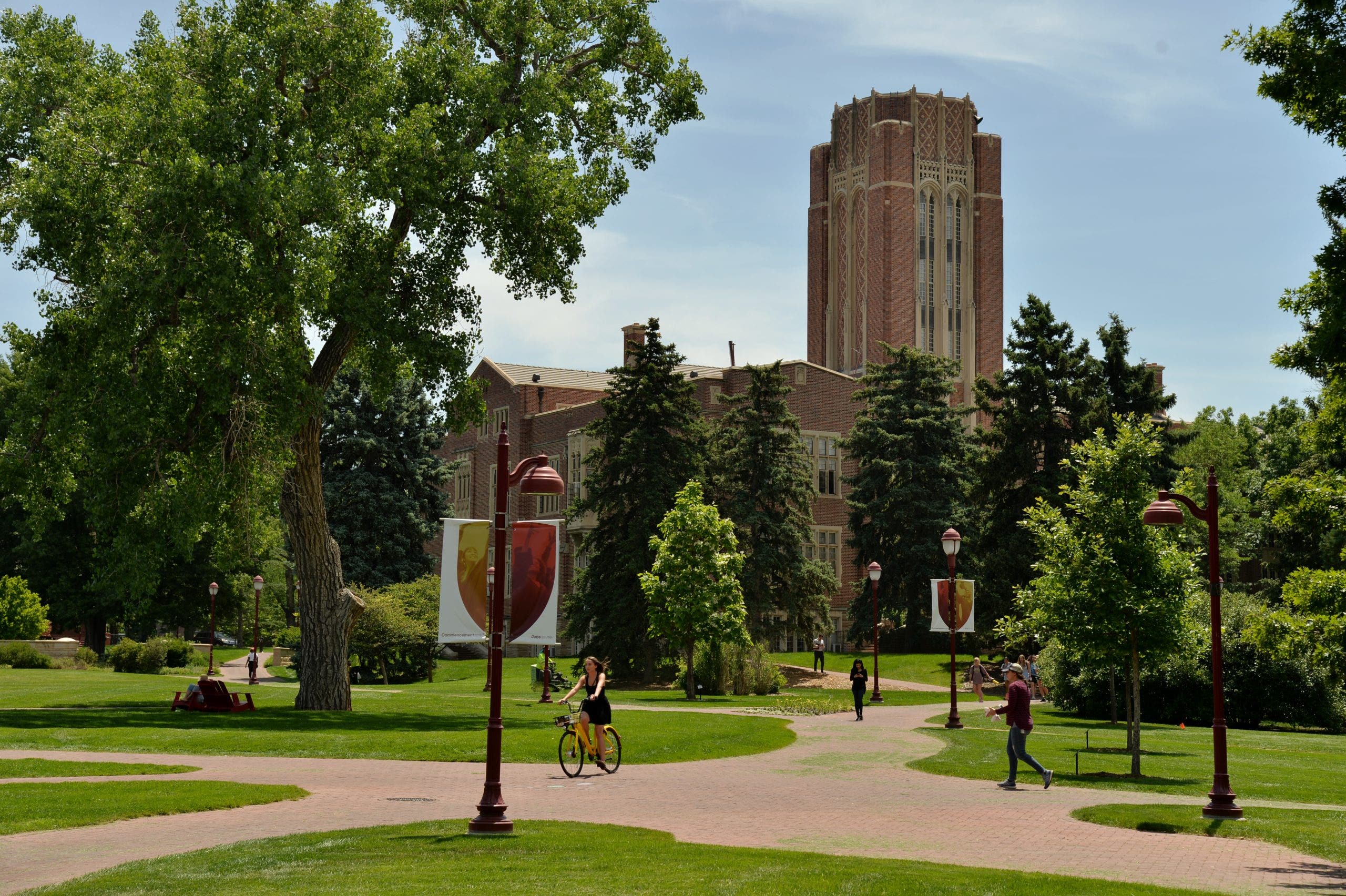
Selecting a university to attend is one of the most important decisions students will make in their young adult lives.
Those looking for a college education in Colorado have numerous excellent options.
Colorado hosts many leading universities in cities with inspiring scenery, including Colorado Springs, Boulder, Fort Collins and Denver.
With breathtaking backdrops regardless of location, the universities in Colorado ensure that, in addition to academic pursuits, students have abundant opportunities to engage in various outdoor activities suitable for varying fitness levels.
TOP UNIVERSITIES IN CALIFORNIA BASED ON ENROLLMENT RATES
Colorado is known for offering students world-renowned academics, research opportunities, online options and invigorating outdoor extracurricular activities.
Many of these institutions are also well-known for their comprehensive research programs.
Some of the top Colorado universities include:
The University of Colorado is a system of four public universities in the state of Colorado. Here, an incoming freshman carries pillows while moving into a campus dormitory at University of Colorado Boulder in Aug. 2020 (Mark Makela/Getty Images)
The U.S. News & World Report, Niche and other college ranking sites recognize these institutions.
The sites rank the universities based on factors such as enrollment rates, acceptance rates, student-to-faculty ratio and overall student value.
The University of Colorado Boulder, established in 1876, is a member of the University of Colorado (CU) system. The beautiful urban campus integrates its natural landscape with stunning architectural designs.
Recognized as a prominent research institution, CU Boulder offers an extensive range of academic programs featuring over 150 fields of study across its nine colleges and schools.
It maintains an acceptance rate of around 80%, attracting a dynamic student body of over 39,000 undergraduates and graduates annually, making it the largest university in Colorado based on enrollment.
AMERICA’S TOP CHRISTIAN COLLEGES AND UNIVERSITIES
Tuition costs at CU Boulder are reported to be $13,622 for residents of Colorado and $41,966 for students from out of state by the U.S. News & World Report.
Tuition — $13,622 (in-state), $41,966 (out-of-state)
Mascot — Chip the Buffalo
Student nickname — Buffaloes
Acceptance rate — 80%
Enrollment — 39,000
The on-campus stadium at Colorado State University opened in the summer of 2017. (Andy Cross/The Denver Post )
Located in Fort Collins, Colorado State University (CSU) is known for its collaborative environment in which undergraduate and doctoral students frequently work together.
Considered a top research university, CSU fosters a synergy between students and faculty who work side-by-side exploring various scientific and technological disciplines.
THERE’S MORE TO COLORADO THAN MEETS THE EYE
Founded in 1870 and situated at the foothills of the Rocky Mountains, the university has a 4,773-acre campus. Statistics indicate that around 33,400 students enroll at CSU each year.
The 2024 edition of “Best Colleges is National Universities” puts CSU at No. 151.
Tuition — $12,896 (in-state), $33,752 (out-of-state)
Mascot — CAM the Ram
Student nickname — Rams
Acceptance rate — 91%
Enrollment — 33,400+
The University of Denver, ranked No. 124 by U.S. News & World Report, was founded in 1864 and is located in Denver, the capital of Colorado.
The institution is noted for its research initiatives and competitive athletic programs, according to the university’s website.
The University of Denver is recognized for its research and athletics. (Hyoung Chang/The Denver Post)
The university accepts approximately 78% of its applicants, with tuition set at $59,340. Annually, about 6,000 students are drawn to the urban campus, establishing an enrollment rate of 11.2%.
The University of Denver is ranked as the 28th most beautiful school in the country based on reviews by students on various platforms, according to College Rover.
Tuition — $59,340
Mascot — Ruckus
Student nickname — Pioneers
Acceptance rate — 77.7%
Enrollment — 6,160
The University of Colorado Denver (CU Denver) is one of the four University of Colorado system campuses.
Recognized as a research university, the institution offers over 100 bachelor’s, master’s and doctoral programs.
Approximately 15,000 undergraduate and graduate students are enrolled.
3 REASONS WHY COLLEGE IS WORTH THE PRICE TAG
Some of the most popular programs include those in business, management, biology and social sciences. The university boasts a 17:1 student-to-faculty ratio.
It is located on the Auraria Campus in downtown Denver and shares space with Metropolitan State University and Community College of Denver.
Tuition — $11,406 (in-state), $26,818 (out-of-state)
Mascot — Milo the Lynx
Student nickname — Lynx
Acceptance rate — 75%
Enrollment — 15,000
Colorado School of Mines is the only university in the world to offer doctoral programs in the five major earth sciences. (Kathryn Scott/The Denver Post )
Colorado School of Mines is the only academic institution that offers doctoral degrees in the five primary earth science majors. These majors are:
- Geology
- Geophysics
- Geochemistry
- Mining engineering
- Petroleum engineering
The college offers graduate degree programs exclusively in STEM fields, except for economics. However, its undergraduate curriculum includes humanities, arts and social sciences degrees.
Mines is a public R1 research university, which means it is recognized for its high research activity.
Founded in 1864, the University of Denver is a private research institution in Colorado. (Hyoung Chang/The Denver Post )
Established in 1874, it has a 500-acre suburban campus and was ranked 76th in the “Best Colleges is National Universities” 2024 edition by U.S. News.
Tuition — 20,040 (in-state), 42,120 (out-of-state)
Mascot — Blaster the Burro
Student nickname — Orediggers
Acceptance rate — 58%
Enrollment — 5,733
Colorado College is a private institution in Colorado Springs, educating about 2,000 students annually on its 100-acre campus. The college ranks 33rd in the “Best National Liberal Arts Colleges” for the 2024 edition, with tuition and fees totaling $65,028.
The university has an acceptance rate of 14%.
The college features a distinctive block plan, where students engage in one course at a time over eight blocks, each lasting three to five weeks. Additionally, the Breaking Bread program encourages student-faculty engagement outside the classroom by reimbursing faculty for hosting dinners at their homes.
There are around 200 Breaking Bread events annually.
Tuition — $65,028
Mascot — Prowler
Student nickname — Tigers
Acceptance rate — 14%
Enrollment — 2,241
Eighteen NASA astronauts are graduates of the University of Colorado Boulder.
Among the numerous excellent universities in Colorado, some of the other top institutions include:
- Regis University in Denver
- University of Northern Colorado in Greeley
- United States Air Force Academy located outside of Colorado Springs
- Colorado Mesa University in Grand Junction
- Fort Lewis College in Durango
- Rocky Mountain College of Art and Design in Lakewood
- Colorado Mountain College in Glenwood Springs
- Colorado Christian University in Lakewood
- Western Colorado University in Gunnison
For more Lifestyle articles, visit www.foxnews.com/lifestyle.
Read the full article from Here


On 18 March 1959, Hawaii was brought into the United States of America as the 50th state with the passing of the Hawaiian Admission act.
Five months later, on 21 August it was officially proclaimed the 50th state by President Eisenhower.
Former governor of Hawaii, John Waihe’e, tells Jen Dale his memories of statehood and why Hawaii’s history with America means it has become a divisive issue.
Eye-witness accounts brought to life by archive. Witness History is for those fascinated by and curious about the past. We take you to the events that have shaped our world through the eyes of the people who were there.
For nine minutes every day, we take you back in time and all over the world, to examine wars, coups, scientific discoveries, cultural moments and much more.
Recent episodes explore everything from how the Excel spreadsheet was developed, the creation of cartoon rabbit Miffy and how the sound barrier was broken.
We look at the lives of some of the most famous leaders, artists, scientists and personalities in history, including: the moment Reagan and Gorbachev met in Geneva, Haitian singer Emerante de Pradines’ life and Omar Sharif’s legendary movie entrance in Lawrence of Arabia.
You can learn all about fascinating and surprising stories, like the invention of a stent which has saved lives around the world; the birth of the G7; and the meeting of Maldives’ ministers underwater. We cover everything from World War Two and Cold War stories to Black History Month and our journeys into space.
(Photo: President Eisenhower signs the proclamation admitting Hawaii as the 50th state. Credit: Getty/Bettmann)

BOISE, Idaho — The Idaho State Board of Education unanimously voted Wednesday to appoint Dr. David W. Hahn as the eighth president of Boise State University, officially ending a prolonged national search for the university’s top leader.
Hahn’s appointment follows his selection as sole finalist on June 16 and the completion of the 10-business-day waiting period required under Idaho law before a final vote could be taken. His appointment is effective July 1.
He will begin transitioning into the role immediately, performing presidential duties remotely as he prepares to relocate to Idaho. Under the terms of his contract, Hahn is expected to be on campus no later than Aug. 10, ahead of the start of the fall semester.
“This vote reflects the confidence of the full Board in the process we undertook and in the leader we have selected,” Idaho State Board of Education President Kurt Liebich said. “Today’s vote is the culmination of a rigorous process, and I have every confidence that Boise State and the state of Idaho are well served by this appointment. Dr. Hahn is the right person to lead Boise State into its next chapter.”
Hahn most recently served as dean of the College of Engineering at the University of Arizona. He will succeed interim president Jeremiah Shinn, who led Boise State after former President Marlene Tromp departed in 2025 to take the presidency at the University of Vermont.
The search for Boise State’s next president has been closely watched across Idaho and within higher education circles, stretching more than a year and drawing attention for its shifting timeline and changes in state law governing how public university presidents are selected.
RELATED | Boise State announces restructuring that includes a merger and one college closure
Initially launched as a national search, the process was paused in 2025 as the Idaho State Board of Education reviewed search procedures and lawmakers debated revisions to Idaho’s presidential search law. During that period, no finalists were publicly announced, and the university continued operating under interim leadership.
The Idaho Legislature later approved changes to the process that significantly limited public disclosure of candidates, requiring only a single finalist to be named before a final appointment vote. Supporters of the change said it would help attract stronger candidates by protecting confidentiality during recruitment. Critics argued it reduced transparency for leadership decisions at Idaho’s public universities.
Following the adoption of the new rules, the search resumed in 2026. According to the State Board, dozens of candidates applied for the position, and semifinal interviews were conducted before Hahn emerged as the final selection.
Boise State has continued to navigate major institutional priorities during the leadership transition, including its move into the Pac-12 conference, ongoing research expansion, and campus development projects.
With Wednesday’s vote, the State Board said the search process has concluded and leadership stability has been restored at one of Idaho’s largest public universities.
Hahn will now assume responsibility for guiding Boise State into its next academic and athletic chapter, overseeing academic programs, university operations, fundraising, and strategic planning as he prepares to formally take the helm on campus in August.
This story was initially reported by a journalist and has been, in part, converted to this platform with the assistance of AI. Our editorial team verifies all reporting on all platforms for fairness and accuracy.
Send tips to neighborhood reporter Allie Triepke
Have a story idea from your neighborhood? Share it with Allie below —

MISSOULA, Mont. — Amid recent flooding and ahead of wildfire season, Montana State Auditor James Brown is urging homeowners to make sure their homes are properly insured.
Brown said flooding is the leading cause of insurance peril in the nation and can happen year-round in Montana.
He said homeowners should not wait until flooding is imminent to seek coverage because there is typically a 30-day waiting period before flood insurance takes effect.
“Number one, by far the number one source of confusion related to flood insurance is the basic homeowners policy doesn’t cover flood damage, most Montanans may not know that,” said Brown.
Brown said some private flood insurance options exist, but the National Flood Insurance Program remains the main way Montanans can get covered.
He also said wildfire coverage is becoming less common in standard homeowners insurance policies and increasingly expensive.
Brown encouraged homeowners to be careful when shopping for the lowest-cost policy, because cheaper plans may offer less coverage or come with higher deductibles.
“That may not be enough to cover the loss if their house were to burn down, so one of the things we encourage as well is to talk to your agent about what the level of coverage that you have for your home to make sure that it’s fully insured so if you do have a fire or flood or some sort of peril, you’re able to replace your home,” said Brown.
Lower-cost policies may leave homeowners responsible for the first several thousand dollars in losses before insurance coverage begins.
Brown said homeowners should speak with their insurance agents to make sure their policies covers damages if a disaster occurs.
-

 Georgia6 minutes ago
Georgia launches address protection program for violence, trafficking survivors
-

 Hawaii9 minutes ago
BBC Audio | Witness History | Hawaii becomes the 50th American state
-
Idaho14 minutes ago
Idaho State Board appoints David W. Hahn as eighth president of Boise State University
-
 Illinois21 minutes ago
Illinois 250 invites every resident to help tell the state’s story | Ep. 1 of 6
-

 Indiana24 minutes ago
Submit your nature art for DNR hard card licenses
-

 Iowa29 minutes ago
Cubs Minor League Wrap: Aaron Bummer, Liam Hendriks pitch for Iowa
-

 Kansas36 minutes ago
Man pleads guilty to murder, kidnapping in estranged wife’s death in northeast Wichita
-

 Kentucky39 minutes ago
Kentucky Adds Three More International Swimmers to Women’s 2026 Recruiting Class

