



Cryptocurrency exchanges believed to be financing Russia’s war in Ukraine have been sanctioned by the U.K. government in the first attempt to prevent evasion via “dark networks.” The move indicates a new focus on digital sanctions evasion, and compliance teams should expect these rules to develop further, potentially in the EU and other jurisdictions.
Crypto
Brent Crude Climbs Above $115 as Trump Signals Longer Iran Naval Blockade


Key Takeaways:
- Brent crude climbed above $115 per barrel on April 29 as Trump ordered preparations for an extended Iranian naval blockade.
- The IEA called the Strait of Hormuz shutdown the largest supply shock on record, with 20% of global oil flows halted.
- The Federal Reserve is expected to hold rates steady today, with Chair Jerome Powell’s comments on inflation risks in focus.
Iran Blockade Fears Push Brent Crude Higher, Largest Increase Since June 2022
Brent, the international benchmark, climbed above $115 per barrel on Wednesday, the highest level since June 2022, marking an eighth straight session of gains as concerns over global supply intensified. West Texas Intermediate (WTI) crude, the U.S. benchmark, rose above $102 per barrel as well, gaining for the third straight session, supported by mounting uncertainty around global supply as U.S.-Iran peace talks stalled and the Strait of Hormuz remained effectively closed.
The Strait of Hormuz normally handles roughly 20% of global oil and liquefied natural gas shipments. Since late February, Iran has restricted tanker traffic through the chokepoint to near zero in response to U.S. military pressure. Ongoing U.S.-Iran tensions and the effective closure of the Strait of Hormuz continue to tighten the supply outlook.
Peace negotiations collapsed in Pakistan in mid-April without agreement, and a ceasefire that had been in place since early April remains fragile. President Trump said Iran has called for the U.S. to lift its naval blockade while negotiations continue. Trump, writing on Truth Social, told Iran to “get smart soon” and sign a deal, framing the blockade as a lower-risk alternative to resumed airstrikes.
Iran’s economy is reportedly under severe strain. The country is reporting 53.7% inflation, a record-low rial, and millions of job losses linked to the conflict. The Iranian rial crashed to a record low of approximately 1.8 million (or 1.81 million) per U.S. dollar. Tehran has vowed to keep disrupting Hormuz traffic, claiming it can manage through alternative routes.
Washington is stepping up pressure with potential sanctions targeting Chinese refiners and countries paying transit fees through Hormuz. The UAE announced it will exit OPEC on May 1 to gain production flexibility, though analysts say that move does little to ease the immediate supply crunch while Hormuz remains closed.
Prices have swung sharply since the conflict began. Brent neared $120 per barrel at earlier peaks in 2026 before pulling back on ceasefire hopes. The World Bank has forecast energy prices could rise 24% overall this year under prolonged disruptions, the steepest projected increase since Russia’s invasion of Ukraine in 2022.
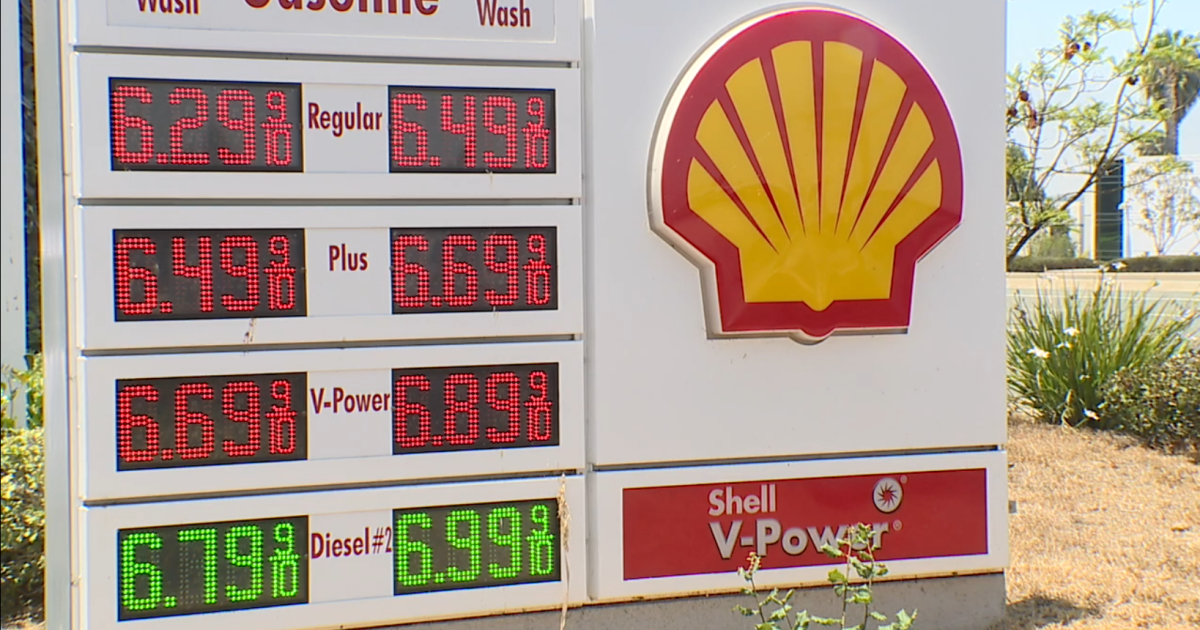
The average price for a gallon of regular gas has hit $4.229, the highest since Aug. 2, 2022. Fuel costs are heavily influenced by oil prices, which account for more than half of the price at the pump. With refiners now transitioning to pricier summer-blend gasoline, further pressure at the pump is expected heading into peak driving season.
U.S. Equities and Bonds Remain Rattled
U.S. equity markets edged lower on April 29 as the oil rally compounded existing uncertainty. The S&P 500 edged down 0.20%, the Dow Jones Industrial Average lost 0.27%, and the Nasdaq slipped 0.41%. Hyperscalers Microsoft, Meta, Alphabet, and Amazon, totaling around $11 trillion in market cap, were between 1% and 2% lower ahead of their earnings reports after the bell, set to update their artificial intelligence (AI) capital expenditure.
Visa was over 5% higher after posting strong results for the last quarter, while Booking dropped 4% on its earnings. Defensive stocks held ground despite fresh oil gains. European markets also softened, with the FTSE 100 off 0.73% and the pan-European Stoxx 600 down 0.4%.
The 10-year U.S. Treasury yield ticked up to 4.39%, reflecting inflation worries tied to rising energy costs. The Federal Reserve is widely expected to hold rates steady at its meeting today. Chair Jerome Powell is likely to reiterate that policymakers remain data-dependent, with inflation risks elevated while growth remains stable. This is expected to be Powell’s final meeting before his term concludes in May.
The confluence of Big Tech earnings, a Fed decision, and an oil shock driven by geopolitics has left traders with little margin for error. Markets remain fluid. Any breakthrough in U.S.-Iran talks or an agreement to reopen the strait could quickly reverse the oil rally, as prior ceasefire announcements have shown. Until then, traders are watching energy supply data, Fed signals, and geopolitical dispatches closely.


Key Takeaways
- WiFi slows most on 2.4 GHz during 8-10 AM and 6-10 PM as nearby networks compete.
- Bluetooth devices and microwaves can disrupt 2.4 GHz; 5 GHz or 6 GHz may improve speeds.
- WiFi 6E and WiFi 7 users can reduce congestion by switching channels and moving routers centrally.
Your WiFi can feel rock-solid at midnight and oddly sluggish by breakfast, even when you have not touched a single setting. The culprit is often outside your walls: a crowded slice of public radio spectrum where your router has to negotiate space with every nearby network, plus a grab bag of household gadgets that leak interference. Add peak-hours demand and the signal-blocking quirks of building materials and weather, and “slow internet” starts to look less like a billing issue and more like an invisible traffic problem you are forced to share.
When WiFi slows down without warning
One day your home WiFi feels snappy, the next it drags, even though your router hasn’t moved and your internet plan hasn’t changed. That swing is real, and it’s usually not your imagination or a “bad day” from your ISP. WiFi lives on shared airwaves, and those airwaves get crowded, noisy, and sometimes just plain finicky.
Think of your connection as a conversation in a busy room. Your laptop and router may be talking just fine, but the room itself can fill up fast with other chatter. What looks like a mystery slowdown is often the result of invisible competition and interference that changes hour by hour.
The battle of competing networks
Most homes still rely heavily on the 2.4 GHz and 5 GHz WiFi bands, which are unlicensed spectrum in the US. That “free for everyone” reality is convenient, but it also means your network shares space with your neighbors, their smart TVs, their work laptops, and every nearby router doing the same thing.
Congestion has a rhythm. During common work-from-home and school-from-home windows, especially 8-10 AM, and again in the evening 6-10 PM, more devices are streaming, video calling, syncing, and downloading updates. Even if you pay for fast broadband, your WiFi link can become the bottleneck when the local radio environment gets packed.
Interference inside your home
Your own house can sabotage you. A microwave is the classic culprit because it can leak noise near 2.4 GHz, exactly where many WiFi networks still operate. Older cordless phones, some baby monitors, and even dense clusters of Bluetooth gadgets can add more clutter, especially in smaller apartments where everything sits close together.
Then there’s physics. Concrete, metal, and even water (think aquariums or thick pipes in walls) absorb and scatter radio signals. A router shoved behind a TV, tucked into a cabinet, or stuck in a far corner forces your devices to “hear” through more obstacles, lowering speeds and making dropouts more likely.
Weather, channels, and what you can do tonight
Environmental changes can matter too. Higher humidity and rain can slightly increase signal loss, and shifting temperatures can change how radio waves propagate around a neighborhood. You might never notice on its own, but paired with congestion it can tip a marginal connection into a frustrating one.
The 2.4 GHz band is also channel-limited. In the US there are 11 channels, but only 1, 6, and 11 don’t overlap. Many routers default to “auto channel,” so nearby networks can hop around trying to escape interference, sometimes creating instability. Practical fixes: prefer 5 GHz (or 6 GHz if you have WiFi 6E/7 gear), place the router centrally and higher up, and use a WiFi analyzer app to pick a less crowded channel instead of leaving it on auto.
Crypto
U.K.’s sanctions on cryptocurrency exchanges signal new focus on illicit digital financing – Compliance Week


Key Takeaways
- Lookonchain data shows the trader paid roughly 140 times LIT’s market price of $2.46 per token.
- Lighter burned 15.5M LIT, 6.3% of supply, on July 2 as its permanent buyback-and-burn program began.
- A whale lost $8.2M in Lighter’s thin ARC market in February, a caution for traders chasing the rally.
Paying 140 Times the Market Price
The transaction was flagged yesterday and the math behind it was brutal. At $2.01 million for 5,776 tokens, the trader paid an effective price of roughly $348 per LIT, about 140 times the token’s market price of $2.46 at the time of the trade. Had the same 1,126.44 ETH, implying an ether price near $1,784, been routed through a deep venue at market rates, it would have bought roughly 817,000 LIT. The wallet received 5,776.
Losses of this scale typically occur when a large market order is routed through an onchain liquidity pool with minimal depth and no slippage protection. Slippage refers to the gap between a trade’s expected price and its executed price; most decentralized exchange ( DEX) interfaces let users cap it, automatically canceling any order that would move the market beyond a set percentage. Whether the trader disabled that protection or used a custom route remains unclear.
The setup was especially dangerous because LIT’s float is unusually tight, given roughly 57% of the circulating supply is staked and another 145 million LIT sits locked in liquidity programs (while the token’s deepest markets sit on centralized exchanges and on Lighter’s own platform rather than in public pools).
In those conditions, a $2 million market order can exhaust a pool’s inventory within a single block, with arbitrage and maximal extractable value (MEV) bots capturing the difference almost instantly.
Why LIT Is Red-Hot
Lighter is an Ethereum-based decentralized exchange focused on perpetual futures, the derivatives category that turned rival Hyperliquid into one of crypto’s defining stories. The project describes itself as “the first exchange to offer verifiable order matching and liquidations while delivering best-in-class performance on par with traditional exchanges.”
LIT traded near $2.60 at the time of writing, up 22.5% in 24 hours and 53.3% on the week, making it the second most-searched coin on Coingecko. The token commands a $675 million market capitalization on 250 million circulating tokens, with $533.6 million in total value locked (TVL) on the platform and $116.76 million in daily trading volume.

Even after the rally, LIT sits 65.7% below its all-time high of $7.86 set Dec. 30, 2025 and roughly 245% above the $0.78 low it printed on March 31.
The surge follows a July 1 tokenomics overhaul in which Lighter said all LIT repurchased with protocol fees will be permanently burned. The first burn destroyed 15.5 million LIT, about 6.3% of the circulating supply, on July 2, and the team set a 6% staking yield target, with the platform directing more than 70% of its daily revenue to the buybacks.
Retail access is widening at the same time. Robinhood Wallet integrated Lighter’s perpetual futures last week, a catalyst that pushed LIT up 24% in a single day, while public praise from Ethereum co-founder Vitalik Buterin added further momentum.
Thin Markets Keep Claiming Victims
Sunday’s botched swap is not the first fortune lost on Lighter’s order books this year. In February, a whale lost $8.2 million attempting to squeeze the platform’s illiquid ARC perpetuals market, with about $2 million of the position liquidated directly on the order book.
Skeptics also note that only a quarter of LIT’s 1 billion total supply is in circulation, leaving a $2.7 billion fully diluted valuation and a long unlock runway once emissions resume. Whether the trader recovers anything is doubtful. MEV operators have occasionally returned funds captured in extreme slippage events, but such refunds are voluntary and rare.
-

 Idaho6 minutes ago
Idaho mother who said her toddlers died after vaccinations accused of suffocating them, charged with murder | CNN
-

 Illinois9 minutes ago
Motorcyclist killed in Mundelein crash, police say
-

 Indiana14 minutes ago
What made the early days of Indiana high school basketball standout?
-

 Iowa21 minutes ago
Julien Dubuque Bridge fully closed until August, free shuttle offered
-

 Kansas24 minutes ago
Police searching for missing Kansas teen in Dauphin County
-

 Kentucky29 minutes ago
Secretary of State launches statewide Kentucky Time Capsule Project commemorating America's 250th
-
Louisiana36 minutes ago
Louisiana Lottery Powerball, Pick 3 results for July 6, 2026
-

 Maine39 minutes ago
PACs should ease up on the political propaganda in Maine | Letter

