Northeast
Meet the American who never flinched in the fight for independence, Abigail Adams

“These are the times that try men’s souls,” Thomas Paine wrote near the end of the turbulent, fear-filled year of 1776.
It was the soul of a woman, however, that defiantly withstood the weight of the trial — the miraculous fight for American independence — with five children at her hip.
Abigail Adams never flinched, never wavered.
Neither the crown then nor fellow citizens today can mistake her gamble on a bold new nation called the United States.
MEET THE AMERICAN WHO MADE PRESCRIPTIONS SAFER, DEBORAH ADLER, INSPIRED BY HOLOCAUST SURVIVOR GRANDMA
“We are no ways dispirited here. We possess a spirit that will not be conquered,” Adams wrote to her husband, John, on Sept. 20, 1776, days after George Washington’s colonial army was routed by the British in Brooklyn and Manhattan.
Adams was just 31 with five small children at her humble farmhouse, with her husband far from home for much of their marriage.
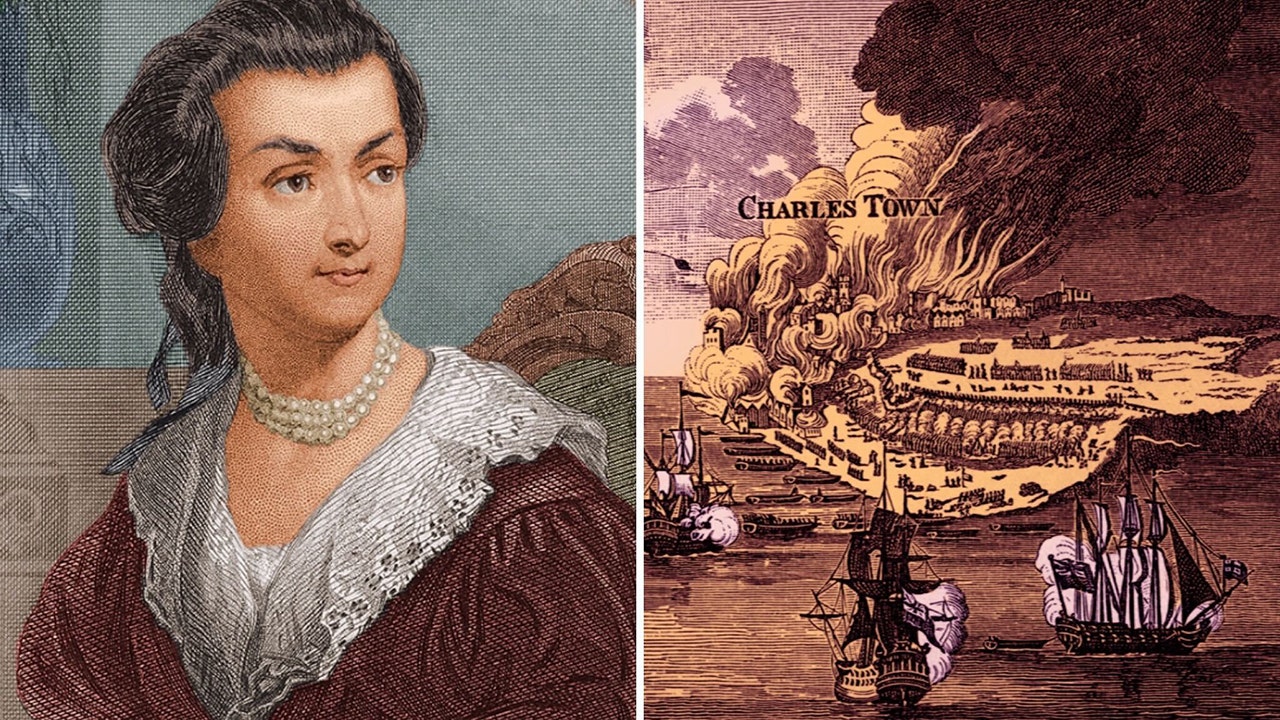
Engraved portrait of Abigail Smith Adams (1744-1818), late 1700s. She was the wife of the second American president, John Adams, and the mother of John Quincy Adams, the sixth American president. (Stock Montage/Getty Images)
Running a wartime home without a husband by her side appeared to only fuel her defiant independence. She added in that same letter: “If all our men are drawn off and we should be attacked, you would find a race of Amazons in America.”
The now-former first lady is remembered as a gifted writer, wife and confidante of a Founding Father and the first of just two women to be both wife and mother of U.S. presidents. She was joined in that distinction, nearly 200 years later, by Barbara Bush.
“She was a revolutionary in every sense of the word.”
But as her combative words proved, the 5-foot-6-inch New England mother was harder than the granite in the hills of Massachusetts. She stands among the greatest patriots in American history.
The toughest times in American history tried Adams’ soul. The toughest times lost.
A defiant letter written by Abigail Adams on Sept. 20, 1776, as the American Revolutionary was going badly for the rebels. “If all our men are drawn off and we should be attacked, you would find a race of Amazons in America,” she wrote. (Collection of the Massachusetts Historical Society)
“No woman in the history of our nation contributed more or sacrificed more for our country than Abigail Adams,” said Tom Koch, mayor of Quincy, Massachusetts, where Abigail lived most of her life, and a devoted scholar of Adams history.
She rests today within the Church of the Presidents, across from his office at Quincy City Hall.
He added, “She was a revolutionary in every sense of the word.”
‘My bursting heart must find vent at my pen’
Abigail Smith was born on Nov. 22, 1774 in Weymouth, Massachusetts.
Her father, William Smith, was a Congregational minister. Her mother, Elizabeth (Quincy) Smith, was born into a prominent political family in colonial Massachusetts.
Abigail Adams was born in this house in Weymouth, Massachusetts on Nov. 22, 1744. (Kerry J. Byrne/Fox News Digital)
Abigail Adams’ first cousin, Dorothy Quincy, was born and raised in the community of Quincy that would later bear the family name.
The first lady-to-be married a man born in Quincy, John Adams, in 1764.
Cousin Dorothy Quincy, for her part, married another rebel born in Quincy just a few hundred yards away from her. She and John Hancock wed in Oct. 1775, only six months after the Battle of Lexingon and Concord.
MEET THE AMERICAN WHO HELPED SAVE MILLIONS OF NEWBORN BABIES, DR. VIRGINIA APGAR, PHYSICIAN AND MUSICIAN
Adams and Hancock had betrothed themselves to a family steeped in warrior spirit and tradition.
“The origins of the Quincy family lie in Cuincy in northwestern Normandy, France, where a knight named ‘de Cuincy’ joined the 1066 invasion of Britain,” historian Harlow Giles Unger wrote in “John Quincy Adams,” a biography of Abigail’s oldest son, the sixth U.S. president.
The name evolved to Quincy, he writes, noting that a nobleman, the Saer de Quincy, led a rebellion against John, King of England, and “appears at the signing of the Magna Carta at Runnymede.”
Attack on Bunker Hill and the burning of Charlestown. The British defeated the American rebels, but at the cost of over 800 wounded and 226 killed. From E. Barnard, “History of England,” 1790, “A Short History of the English People” by Richard Green, vol IV, Macmillan & Co, 1894. (Culture Club/Bridgeman via Getty Images)
The two women, Abigail and Dorothy, in other words, provided the genetic link between the Magna Carta and the Declaration of Independence.
Both women bore eyewitnesses to the bloody birth of American independence.
Quincy watched the Battle of Lexington – April 19, 1775 – as 700 British troops marched on the tiny town in a quest to capture rebel munitions and her rebel beau, Hancock.
“The day, perhaps the decisive day, is come on which the fate of America depends. My bursting heart must find vent at my pen.”
Adams watched the rebellion intensify two months later. She climbed a hill near the humble family farmhouse, which doubled as her husband’s law office, and watched the Battle of Bunker Hill erupt across Boston Harbor with her 7-year-old son, John Quincy.
“The day, perhaps the decisive day, is come on which the fate of America depends,” she wrote afterward. “My bursting heart must find vent at my pen.”
She knew a difficult life lay ahead, yet never wavered.
Abigail Adams watched the Battle of Bunker Hill from a hilltop across Boston Harbor with her 7-year-old son, future U.S. President John Quincy Adams. The site where she stood is memorialized today in Quincy, Massachusetts at the Abigail Adams Cairn. (Kerry J. Byrne/Fox News Digital)
“While her husband was away serving the new nation, she was raising five children and running their farm in time of war,” Massachusetts historian Alexander Cain told Fox News Digital.
“The Siege of Boston was essentially outside her front door. She had to deal with inflation and food shortages and a daughter [Nabby], who was gravely ill.”
She remained devoted to American independence in its darkest hours despite enormous risk.
MEET THE AMERICAN WHO MAPPED THE US-MEXICO BORDER, GEN. WILLIAM EMORY, SHAPED NATION IN WAR AND IN PEACE
“She would have lost everything. Her husband would have been tried for treason, her property confiscated,” said Cain.
“But she was devoted to the cause and knew she had to set an example for her fellow women and fellow patriots. She was tough. She was absolutely tough.”
One rebellion not enough
The voluminous correspondence of 1,100 letters between Abigail and John Adams provide perhaps the most important primary source of study of the American Revolution.
Paintings of former President John Adams, right, and his wife Abigail Adams are displayed at the Massachusetts Historical Society in Boston, Massachusetts, on Monday, June 29, 2015. In acid-free, low humidity stacks are 13 million pages of the personal letters and diaries of men and women who helped create the world we live in. Photographer: Shiho Fukada/Bloomberg via Getty Images. (Shiho Fukada/Bloomberg via Getty Images)
“Abigail (Smith) Adams did not have a formal education, but proved to be an extremely resourceful partner to John Adams,” reports the website of the Massachusetts Historical Society, the repository today of the correspondence between the two.
“While he was away on numerous political assignments, she raised their children, managed their farm, and stayed abreast of current events during one of the country’s most turbulent times.”
“Abigail Adams proved to be an extremely resourceful partner to John Adams.”
The letters, the site observes, “demonstrate her perceptive comments about the Revolution and contain vivid depictions of the Boston area.”
Adams proved her steel during the Second Continental Congress, where the delegation born in Quincy – her husband, Hancock and Samuel Adams – went to Philadelphia to convince the other colonies to join the revolt.
The rebellion was over in Massachusetts, the colony that effectively revolted against the British alone at first.
The Old House at Peacefield, the Adams family farmhouse estate in Quincy, Massachusetts, part of the Adams National Historical Park. It was the family home of two U.S. presidents, John and John Quincy Adams, and several ambassadors to the United Kingdom. (Keith Noble)
The Redcoats fled Boston in humiliation on March 17, 1776. They never returned.
The war moved elsewhere, to New York and the southern colonies.
But the stakes only grew higher. So did the fear.
But one rebellion wasn’t enough for Abigail.
MEET THE AMERICAN WHO WROTE ‘THE BATTLE HYMN OF THE REPUBLIC’
The Founding Fathers understood that they sat on the cusp of an unprecedented opportunity in history, to remake a more equitable society for mankind.
Adams saw the same unprecedented opportunity to remake a more equitable society for womankind.
“I desire you would remember the Ladies,” Adams wrote to her husband in the days before the passage of the Declaration of Independence.
Abigail (Smith) Adams statue in Quincy, Massachusetts. The first lady and patriot firebrand is entombed beside her husband and son, Presidents John and John Quincy, and fellow first lady Louisa Catherine Adams, in the Church of the Presidents in the background. (Keith Noble)
The two sentences that follow “remember the ladies” portray the fire of her revolutionary spirit and signature defiance.
“Remember all Men would be tyrants if they could,” she wrote. “If particular care and attention is not paid to the Ladies, we are determined to foment a Rebellion, and will not hold ourselves bound by any Laws in which we have no voice, or Representation.”
“The Ladies … are determined to foment a Rebellion, and will not hold ourselves bound by any Laws in which we have no voice.”
The demand represented a conviction to independence displayed by American women not often chronicled in history books, according to Cain.
“Women played a significant role in the build-up of the war,” he said. “They were the ones boycotting British goods and hosting spinning bees to make their own fabric so they didn’t have to buy British fabric. They were the ones who had to protect the home front and care for the children.”
Debbie Rizzo, a tourist from Wyoming, at the Adams family crypt at the Church of the Presidents in Quincy, Massachusetts. The crypt contains the granite tombs of Presidents John and John Quincy Adams and first ladies Abigail and Louisa Catherine Adams. (Kerry J. Byrne/Fox News Digital)
Adams’ cry to “remember the ladies” was a demand, Cain said, to recognize the role women played in American independence.
‘Brightened the prospects of the race of man on Earth’
Abigail Adams died on Oct. 28, 1818. She was 73 years old.
John Adams lived six more years.
He died hauntingly on July 4, 1826 – the same exact day as Thomas Jefferson – the 50th anniversary of the American Independence both men famously helped forge.
Abigail Adams (1744-1818), American first lady, wife of President John Adams and mother of President John Quincy Adams. Portrait, Mather Brown, 1785. (Universal History Archive/Universal Images Group via Getty Images)
The couple’s oldest son, John Quincy, was serving as secretary of state under President James Monroe at the time of Abigail Adams’ death.
She never got to see her son, the scared little boy who watched the Battle of Bunker Hill at his mother’s side, ascend to the White House — which he did in 1825.
She did not get to see her son ascend to the White House.
John and Abigail Adams, plus John Quincy Adams and his wife, Louisa Catherine Adams, lie side by side today in granite tombs in the family crypt in the United First Parish Church in Quincy.
It’s better known locally as the Church of the Presidents. The congregation dates back to 1639. The Rev. John Hancock, father of the patriot, was once its minister. He’s buried across the street in a nearly 400-year-old cemetery alongside 69 veterans of the American Revolution.
Yorkist roses planted by Abigail Adams in 1788 still bloom each spring today at Peacefield, part of the Adams National Historical Park in Quincy, Massachusetts. Adams brought the rose bush root stock with her from England, where husband John Adams represented the new nation after victory in the American Revolution. (Kerry J. Byrne/Fox News Digital)
John and Abigail Adams moved into an estate in Quincy after the war, which they dubbed Peacefield, the name reflecting their hopes after decades of turmoil.
It’s now the centerpiece of the Adams National Historical Park, along with the nearby birthplaces of the two presidents.
The site where mother and son watched the Battle of Bunker Hill on “that decisive day” is memorialized today with the Abigail Adams Cairn, a fieldstone monument with the inscription of her words.
Abigail Adams has been remembered in numerous dramatic accounts and biographies. The white Yorkist roses she brought back from England after the war in 1788 and planted at Peacefield still bloom every spring.
John and Abigail Adams passed their gift for words to John Quincy Adams, who spoke or read nine languages.
Abigail Adams and the Battle of Bunker Hill, which she witnessed from across Boston Harbor with her 7-year-old, future president John Quincy Adams. (Stock Montage/Getty Images; Culture Club/Bridgeman via Getty Images)
He penned a tribute to his parents, scripted on a white marble tablet above the altar of the Church of the Presidents.
It captures in poetic beauty the profound gift his parents gave to the world through times that try men’s and women’s souls.
“During a union of more than half a century they survived in harmony of sentiment, principle and affection the tempests of civil commotion; meeting undaunted and surmounting the terrors and trials of revolution which secured the freedom of their country, improved the condition of their times; and brightened the prospects of futurity to the race of man upon Earth.”
To read more stories in this unique “Meet the American Who…” series from Fox News Digital, click here.
For more Lifestyle articles, visit www.foxnews.com/lifestyle.
Read the full article from Here


DOYLESTOWN BOROUGH, PA — A major downtown street will be repaved under a resurfacing contract awarded this week by the Pennsylvania Department of Transportation (PennDOT).
Borough officials, who have lobbied for years to have East and West State Street resurfaced, announced the news on Wednesday via its Facebook page.
When the project happens later this year, the work will be fully paid for under a major $8.3 million project bid award by PennDOT to repave 16 miles of state highways in Bucks County.
This marks the first time that State Street will be resurfaced since the 1990s, said borough officials, who credited an organized lobbying effort by local leadership and the community for pushing the project forward.
In its Facebook posting, the borough thanked State Sen. Steve Santarsiero, State Rep. Tim Brennan, Borough Council, Mayor Noni West, residents and business owners who brought the street’s condition to PennDOT’s attention.
State Street runs through the heart of the borough and serves as a heavily used business, tourism, and residential corridor for the town. It is home to the County Theater, a popular local and regional tourist attraction, the historic Doylestown Inn, and many other businesses.
More detailed timing and work plans are expected once the state finalizes its construction schedule.

A rising tide of beach garbage plagues local wildlife. Fortunately, there’s something you can do about it.
A wide array of beach trash found on Napatree Point, from balloons and ribbons to Styrofoam, cellophane, nylon rope, bottle caps and a hypodermic needle. Waves break plastic into tiny particles that mix into beach sand and are ingested by marine life. Photography courtesy of Robert L. Mitchell
It’s easy to overlook the detritus along Rhode Island’s shoreline, but as the amount of beach litter has increased over the last few years, its effect on seabirds, seals, fish and other wildlife has risen dramatically.
Between 2011 and 2023, the Mystic Aquarium animal rescue program admitted fifty-eight seals into rehabilitation due to entanglements.
“Between 2024 and 2025, we have already passed that number, with fifty-nine entangled animals reported in just a year and a half,” says MaryEllen Mateleska, the aquarium’s senior director of education and conservation.
During an early summer walk at Watch Hill’s Napatree Point, much of the litter wasn’t noticeable at first because it had been ground down into little pieces along the high-tide mark. So it came as a surprise when my wife and I, after picking up everything we could find on a milelong stretch of sand, came away with a grocery bag full of trash. Most of it wasn’t whole bottles or cans, but micro trash — bits of things that had been pulverized by the surf.
Our haul included fifty-seven pieces of cellophane, twenty-five balloons (many with ribbons attached), twenty-four bottle caps, twenty-four pieces of nylon rope and netting fragments, twenty-four hard plastic fragments and ten cigarette butts (the plastic-based filters are not biodegradable). We also picked up fishing line, rubber lobster claw bands, tin foil, a shoe heel, one plastic bottle, one toothpaste tube and a syringe — all in the off-season.
“We are seeing more smaller plastic particles make their way to the beach,” says Mateleska.
“);
$spagination = flexSlider.find(“.spagination”);
SPagination.Init($spagination.get( 0 ), {
size: slide_obj.count, // pages size
page: 1, // selected page
step: 3, // pages before and after current
cb: function(p){
flexSlider.flexAnimate(p-1, true);
}
});
}
}
}
function gtx_gallery_slide_before(slide_obj){
var slide=slide_obj.animatingTo;
$active_slide=$all_slides.eq(slide) ;
slideshow_ad_loaded = false;
var current_html = $active_slide.children(“.gtx-ad-container”).html();
if (current_html) {$active_slide.children(“.gtx-ad-container”).html(current_html.trim())}
gtx_track_slide( slide_obj );
changeURL(parseInt($active_slide.attr(“data-attachment_id”)));
//THUMBS SYNC – PAGINATED THUMBNAIL NAVIGATION
if($thumbs!==”” && navigation == “paginated_thumbs”){
var right_item=$slider.find(“.slides li[data-i=”+(slide +1 )+”]”).attr(“data-i-only-pics”)
if( right_item!= “”){
$thumbs.find(“li.gtx-thumb-img”).removeClass(“flex-active-slide”);
$thumbs.find(“li.gtx-thumb-img[data-i=”+(slide +1 )+”]”).addClass(“flex-active-slide”);
$page=$thumbs.find(“.slides>li”).has(“li[data-i=”+(slide +1 )+”]”);
$thumbs.flexAnimate($page.index(), true);
}
}
}
function gtx_gallery_slide_after(slide_obj){
var slide=slide_obj.animatingTo;
$active_slide=$all_slides.eq(slide) ;
if($active_slide.hasClass(“gtx-ad-slide”)==1){
if ($active_slide.find(‘iframe’).length === 1) {
$active_slide.find(‘iframe’)[0].remove();
}
$slider.delay(100).queue(function(){
$(this).addClass(“gtx-gallery-loading”).dequeue();
});
$ad_container=$active_slide.children(“.gtx-ad-container”).first();
if ($($ad_container).html().length li[data-i=”+(slide +1 )+”]”).attr(“data-i-only-pics”)
if( right_item!= “”){
$thumbs.find(“li.gtx-thumb-img”).removeClass(“flex-active-slide”);
$thumbs.find(“li.gtx-thumb-img”).eq(right_item -1 ).addClass(“flex-active-slide”);
$thumbs.flexAnimate(right_item-1, true);
}
}
if(typeof(googletag) != “undefined” && googletag !== null && googletag.pubads){
// Refresh ads within view
var tmp_now=new Date().getTime();
var last_refresh_diff= tmp_now – last_ad_refresh;
if(last_refresh_diff > 1000){
reset_ads_and_refresh();
last_ad_refresh=tmp_now;
}
}
//LAZY LOAD
range=5;
var $slides_to_hanle=$all_slides.slice(slide, slide + range +1);
if(slide – range >= 0){
$slides_to_hanle=$.merge($slides_to_hanle, $all_slides.slice(slide – range, slide ));
}else{
$slides_to_hanle=$.merge($slides_to_hanle, $all_slides.slice(0, range ));
$slides_to_hanle=$.merge($slides_to_hanle, $all_slides.slice(range * -1 ));
}
if(slide + range >= $all_slides.size()){
//handle first slides
$slides_to_hanle= $.merge($slides_to_hanle, $all_slides.slice(0,range));
}
$slides_to_hanle.find(“.gtx-image-container[data-background]”).each(function () {
var src = $(this).attr(“data-background”);
$(this).css(“background-image”, “url(“+src+”)”).removeAttr(“data-background”);
});
adjustNavHeight();
if( typeof SPagination !== “undefined” && flexSlider.find(“.spagination”).length>0 ){
if(SPagination.page != slide+1){
SPagination.page = slide + 1;
SPagination.Start();
}
}
}
function reset_ads_and_refresh(){
if(!advanced_ad_refresh){
// if option is not enabled, refresh all ads, minus out of page ads
if(ads_to_refresh.length > 0){
googletag.pubads().refresh(ads_to_refresh);
}
return;
}
if(ads_to_refresh.length == 0){
return;
}
var newAds = [];
var fullAdsToRefresh = [];
for(var i = 0; i wTop && slot.tn_positionY 8){
gtx_gallery_thumbs_set_backwards()
}
}
function gtx_gallery_thumbs_after(slide_obj){
if(slide_obj.count > 8){
gtx_gallery_thumbs_set_backwards()
}
}
function gtx_gallery_paginated_thumbs_start(slide_obj){
gtx_gallery_paginated_thumbs_lazy();
if(false && slide_obj.count > 8){
$thumbs.find(“.flex-control-nav.flex-control-paging”).removeClass(“flex-control-paging”).addClass(“g-pagination”);
}
if(slide_obj.count > 8){
$thumbs.find(“.flex-control-nav.flex-control-paging”).hide().after(“”);
$pagination = $thumbs.find(“.spagination”);
SPagination.Init($pagination.get( 0 ), {
size: slide_obj.count, // pages size
page: 1, // selected page
step: 3, // pages before and after current
cb: function(p){
$thumbs.flexAnimate(p-1, true);
}
});
}
}
function gtx_gallery_paginated_thumbs_before(slide_obj){
var slide=(typeof slide_obj == “object” && slide_obj.animatingTo ? slide_obj.animatingTo : 0);
gtx_gallery_paginated_thumbs_lazy(slide_obj);
}
function gtx_gallery_paginated_thumbs_after(slide_obj){
var slide=(typeof slide_obj == “object” && slide_obj.animatingTo ? slide_obj.animatingTo : 0);
//THUMBS SYNC – Go to first slide of this batch
if($thumbs!==”” && navigation == “paginated_thumbs”){
var $active_slide=$slider.find(“.slides>li.flex-active-slide”);
var $active_thumb_page=$thumbs.find(“.slides>li.flex-active-slide”);
//Check if the current slide is within this thumb batch
if(!$active_thumb_page.find(“li[data-i=”+$active_slide.attr(“data-i”)+”]”).size()){
first_thumb=$active_thumb_page.find(“li”).first().attr(“data-i”);
flexSlider.flexAnimate(first_thumb – 1, true);
}
}
if( typeof SPagination !== “undefined” && $thumbs.find(“.spagination”).length>0 ){
if(SPagination.page != slide+1){
SPagination.page = slide + 1;
SPagination.Start();
}
}
}
function gtx_gallery_paginated_thumbs_lazy(slide_obj){
var slide=(typeof slide_obj == “object” && slide_obj.animatingTo ? slide_obj.animatingTo : 0);
//LAZY LOAD THUMBS
if($all_thumbs!==”” && navigation == “paginated_thumbs”){
range=1;
var $slides_to_hanle=$all_thumbs.slice(slide, slide + range + 1);
if(slide – range >= 0){
$slides_to_hanle=$.merge($slides_to_hanle, $all_thumbs.slice(slide – range, slide ));
}else{
$slides_to_hanle=$.merge($slides_to_hanle, $all_thumbs.slice(0, range ));
$slides_to_hanle=$.merge($slides_to_hanle, $all_thumbs.slice(range * -1 ));
}
if(slide + range >= $all_thumbs.size()){
//handle first slides
$slides_to_hanle= $.merge($slides_to_hanle, $all_thumbs.slice(0,range));
}
$slides_to_hanle.each(function () {
$(this).find(“img[lazy-src]”).each(function () {
var src = $(this).attr(“lazy-src”);
if(!src) return;
$(this).attr(“src”,src).removeAttr(“lazy-src”);
$thumbs.find(“img[lazy-src=””+src+””]”).attr(“src”,src).removeAttr(“lazy-src”);
});
});
}
}
function adjustNavHeight(){
imageHeight = flexSlider.find(“.gtx-slide-img.flex-active-slide .gtx-image-container”).outerHeight();
if(imageHeight > 0){
flexSlider.find(“.flex-prev,.flex-next”).css(“top”,Math.round(imageHeight/2));
}
}
var nextSlotId = 1;
function generateNextSlotName() {
var id = nextSlotId++;
return “adslot_” + id+”_”+Math.floor( Date.now() / 1000 );
}
function addAdInto(selector,options) {
try{
gtx_gallery_enable_dfp();
}catch(err) {
}
var slide=options.slide || -1;
var slotName = generateNextSlotName();
var ad_index = 0;
// Create a div for the slot
var slotDiv = document.createElement(‘div’);
slotDiv.id = slotName; // Id must be the same as slotName
$( selector ).append( slotDiv );
try{
ad_index=$( selector ).closest(“.gtx-ad-slide”).attr(“data-i-only-ads”);
}catch(err) {
}
// Define the slot itself, call display() to
// register the div and refresh() to fetch ad.
googletag.cmd.push(function() {
slideshow_ad_loaded = true;
adslots[slotName] = googletag.defineSlot(‘/64846486/culture’, [300, 250], slotName)
.addService(googletag.pubads())
.setTargeting(“placement”, “gallery”)
.setTargeting(“slide”, slide)
.setTargeting(“post”, ‘310554’)
.setTargeting(“category”, ‘[“editors-picks”,”environment”,”magazine”,”things-to-do”]’)
.setTargeting(“galleryAdIndex”, ad_index);
googletag.display(slotName);
googletag.sizeMapping().addSize( [0,0], [[300,250]])
googletag.pubads().refresh([adslots[slotName]]);
});
}
gtx_gallery_syncHash = function(path){
pic = “”;
re = /pic/?([0-9]+)/?$/i;
if(!path && window.location.hash && window.location.hash.match(re)) path = window.location.hash;
if(!path && window.location.pathname && window.location.pathname.match(re)) path = window.location.pathname;
if(path){
matchslide = path.match(re);
if(matchslide && matchslide[1]>0){
pic = parseInt(matchslide[1]);
}
if(!isNaN(pic) && pic > 0){
slide=get_slide_by_attachment_id(pic);
if(slide>0){
avoid_next_pageview = true;
flexSlider.flexAnimate(slide – 1, true);
}
}
}else{
gtx_track_slide( )
}
}
function debounce(func, wait, immediate) {
var timeout;
return function() {
var context = this, args = arguments;
var later = function() {
timeout = null;
if (!immediate) func.apply(context, args);
};
var callNow = immediate && !timeout;
clearTimeout(timeout);
timeout = setTimeout(later, wait);
if (callNow) func.apply(context, args);
};
};
// delay the url state replacement to avoid overload
// RAYOS-271
var efficientlyReplaceState = debounce(function(title, path){
window.history.replaceState({}, title, path);
}, 1250)
function changeURL(pic){
basepath = window.location.pathname.replace(//pic/?([0-9]+)/?$/i,”/”);
if(isNaN(pic)) return;
path = basepath + “pic/”+pic+”/”;
title = “Pic “+pic;
if (typeof(window.history.replaceState) == “function”) {
efficientlyReplaceState(title, path)
} else {
window.location.hash = path;
}
}
function get_slide_by_attachment_id(id){
var slide=$slider.find(“.slides li[data-attachment_id=”+id+”]”).attr(“data-i”);
return parseInt(slide, 10);
}
function gtx_track_slide( slide_obj ){
if(slide_obj){
var slide = slide_obj.animatingTo;
}else{
var slide = 0;
}
$active_slide=$all_slides.eq(slide) ;
if(!avoid_next_pageview){
try{
var loc = location.pathname + “#slide” + (parseInt(slide) + 1);
if (rayos_gtm_gallery_pageviews) {
// Add gallery navigation info to dataLayer
window.dataLayer = window.dataLayer || [];
window.dataLayer.push({
‘event’: ‘rayos_virtual_pageview’,
‘location’ : loc
});
}
// Legacy support for GA tracking
ga(“send”, “pageview”, loc);
if (ga.getByName(“gtxcelTracker”)) {
ga(“gtxcelTracker.send”, “pageview”, loc);
}
}catch(err){
}
}
avoid_next_pageview = false;
}
//Add a callback on ad render
googletag.cmd.push(function() {
googletag.pubads().addEventListener(‘slotRenderEnded’, function(event) {
var slotName=event.slot.getSlotElementId();
if(typeof adslots[slotName] !==”undefined” && !event.isEmpty){
$slider.clearQueue();
$slider.removeClass(“gtx-gallery-loading”);
}
});
});
jQuery(“#gtx-gallery-slider-310554”).flexslider({
animation: “slide”,
pauseOnHover: true,
prevText: “”,
nextText: “”,
slideshow: false,
controlNav: false,
init: gtx_gallery_slide_init,
start: gtx_gallery_slide_start,
before: gtx_gallery_slide_before,
after: gtx_gallery_slide_after
});
if(mobile_mode){
$slider.find(“.flex-direction-nav”).hide();
}
});
The litter accumulates from trash left on the shoreline, refuse that blows in from cars, bins and local roadways, and garbage that travels to the ocean by way of rivers. Waves then break down the plastics into smaller pieces of micro- and nanoplastics.
“Plastic pollution is incredibly dangerous to aquatic species,” she says. Fish and other animals ingest the microplastics and can become entangled in ribbons, nets and fishing lines. Other items that entangle wildlife include six-pack ring holders, hair ties, fishing line, netting or pieces of netting, fishing lures, hooks and plastic bags.
Sea birds are especially vulnerable because they use those bits of fishing line, rope, string and other materials to build their nests. Balloons, in particular, are deadly to seabirds, which often mistake them for jellyfish or other prey.
“Plastics are now in every ecosystem, almost every seabird, and almost every human body,” Mateleska says, with the long-term health impacts unknown.
They also take an extremely long time to break down, which is harmful to the state’s delicate coastal ecosystem.
“[Plastic] material that is in the environment may present itself on a shoreline very far away many years or decades later,” says Dave McLaughlin, sustainability coordinator at the Rhode Island Department of Environmental Management.
___________________________
What You Can Do
Beach walkers can help by picking up garbage wherever they go to enjoy the outdoors. But you don’t have to go to the beach to help. Better management of beach trash starts at home, Mataleska says.
“Refuse single-use plastics and look for sustainable alternatives, pick up trash wherever and whenever you see it, and support legislation that stops plastic at the source,” she advises.
Volunteer for coastal cleanups, use reusable materials, carry in and carry out your trash, recycle, and don’t litter. And consider joining a nonprofit group such as those sponsored by Coastodians (coastodians.org) or Save the Bay (savebay.org) that organize beach cleanups. When it comes to beach trash, even small groups can make a big difference.
Vermont
Hundreds of housing units in the works at closely-watched project in Burlington’s South End – VTDigger

This story, by Report for America corps member Carly Berlin, was produced through a partnership between VTDigger and Vermont Public.
A long-awaited housing development that could bring hundreds of new apartments to a series of empty lots in Burlington’s South End neighborhood is beginning to come together.
The first phase of the major public-private deal, called the South End Coordinated Redevelopment Project, got official sign-off from the Burlington City Council last month. The project’s backers have also scored key funding commitments from Treasurer Mike Pieciak’s office and state housing funding agencies.
The project on Lakeside Avenue is the beginning of “a neighborhood being born out of a big parking lot,” Burlington Mayor Emma Mulvaney-Stanak told city councilors in May.
City officials and developers hope the project could eventually include over a thousand homes, making it one of the largest developments in Vermont – and putting a considerable dent in the Queen City’s housing shortage. Regional planners estimate that Burlington needs to add between 3,500 and 10,500 homes by 2050 to get the housing market to a healthy state.
The development is possible, in part, because of a 2023 zoning change in the formerly industrial area that allows for some of the densest housing development in the state, according to local planners.
 100vw, 1200px”/><figcaption class=) A rendering of the South End Coordinated Redevelopment Project, courtesy of Andrew Foley, development director at Jonathan Rose Companies. Credit: GOA Architecture.
A rendering of the South End Coordinated Redevelopment Project, courtesy of Andrew Foley, development director at Jonathan Rose Companies. Credit: GOA Architecture.
The South End project’s backers include Champlain College, Champlain Housing Trust and Ride Your Bike LLC, the investors behind the nearby Hula coworking campus. They have brought on Jonathan Rose Companies, an affordable housing developer with projects from New York to California, as the lead developer. The South End project is the company’s first in Vermont.
The development agreement signed by city councilors in May greenlights the South End project’s first 204 units, estimated to cost roughly $100 million.
Per Burlington’s inclusionary zoning policy and state rules, at least 20% of the first round of apartments will be set aside as affordable. But the developers hope to secure enough funding to allow them to earmark a third of the 204 apartments with income restrictions, said Andrew Foley, director of development at Jonathan Rose Companies, in an interview. The development agreement offers the developers reduced city fees if the affordable units are priced even more modestly than required.
The lion’s share of the new apartments will be studios and one-bedrooms, Foley said. The building would include common social spaces for neighbors to gather, he added.
Like any large-scale housing project, the developers of the South End apartments are piecing together financing from a wide array of sources. They recently scored an $8 million low-interest loan from Pieciak’s 10% for Vermont program, along with a $6.7 million award from the Vermont Housing and Conservation Board to support 67 affordable apartments – including 10 reserved for people experiencing homelessness.
To build out new roads – along with wastewater connections and stormwater infrastructure meant to cut down on sewer overflows into nearby Lake Champlain – city officials are going after funding from a new state program. The Community and Housing Infrastructure Program, a tax-increment financing tool created by the Legislature last year, would allow the city and the developers to borrow the funds needed to build out the infrastructure against the development’s future property tax revenue.
READ MORE

City officials and the developers are working together to submit an application for this CHIP financing. The South End development could be the first project in the state to utilize the program after its launch in January.
“I think a lot of other potential applicants are kind of saying, ‘I wonder how that South End project works out’ – for us to maybe go first,” Foley said.
With an eye toward lowering the project’s carbon footprint, the development will be all-electric, Foley said. The developers are looking to use mass-timber construction techniques, he added – essentially using large, prefabricated wood panels in place of steel or concrete. They also want to construct a rooftop solar array, employ a geothermal heating and cooling system and promote a “car-light” neighborhood in close proximity to bike paths and transit routes.
The developers hope to close on their construction financing by the end of the year.
“Everyone’s eager to see the construction start and housing built, so we’re trying to move as fast as we can,” Foley said.
-

 North Dakota5 minutes ago
And he’s off
-

 Ohio13 minutes ago
The purge? Ohio moves to downgrade non-domiciled CDLs
-

 Oklahoma15 minutes ago
What Oklahoma Does Better Than Texas and Why It Matters
-

 Oregon21 minutes ago
Amid warnings of future cuts, University of Oregon trustees approve next year’s budget
-

 Pennsylvania28 minutes ago
State Awards Contract To Resurface Major Doylestown Borough Street
-

 Rhode Island30 minutes ago
Shifting Sands in Rhode Island – Rhode Island Monthly
-

 South-Carolina36 minutes ago
WATCH: Gov. McMaster signs bill protecting SC police animals
-

 South Dakota43 minutes ago
South Dakota primary results leave Legislature seats in limbo

