You have reached your maximum number of articles. Log in or create an account FREE of charge to continue reading.
Please enter a valid email address.
“These are the times that try men’s souls,” Thomas Paine wrote near the end of the turbulent, fear-filled year of 1776.
It was the soul of a woman, however, that defiantly withstood the weight of the trial — the miraculous fight for American independence — with five children at her hip.
Advertisement
Abigail Adams never flinched, never wavered.
Neither the crown then nor fellow citizens today can mistake her gamble on a bold new nation called the United States.
MEET THE AMERICAN WHO MADE PRESCRIPTIONS SAFER, DEBORAH ADLER, INSPIRED BY HOLOCAUST SURVIVOR GRANDMA
“We are no ways dispirited here. We possess a spirit that will not be conquered,” Adams wrote to her husband, John, on Sept. 20, 1776, days after George Washington’s colonial army was routed by the British in Brooklyn and Manhattan.
Adams was just 31 with five small children at her humble farmhouse, with her husband far from home for much of their marriage.
Advertisement
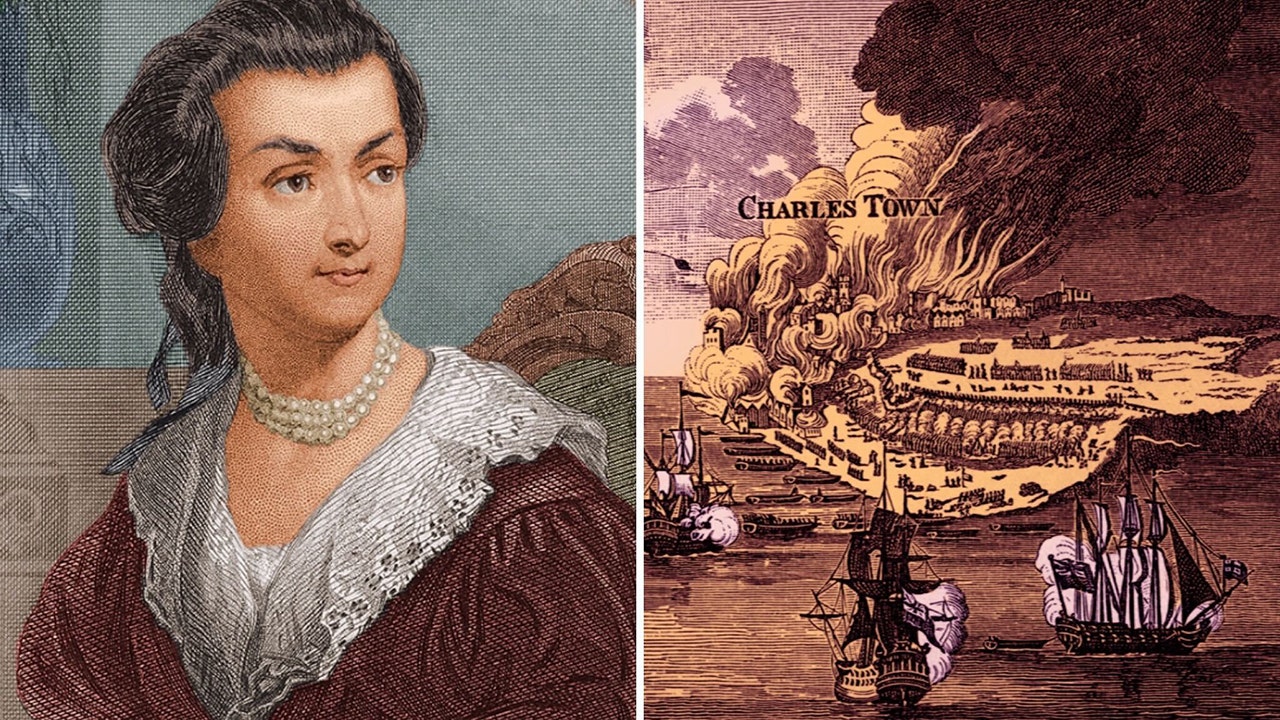
Engraved portrait of Abigail Smith Adams (1744-1818), late 1700s. She was the wife of the second American president, John Adams, and the mother of John Quincy Adams, the sixth American president. (Stock Montage/Getty Images)
Running a wartime home without a husband by her side appeared to only fuel her defiant independence. She added in that same letter: “If all our men are drawn off and we should be attacked, you would find a race of Amazons in America.”
The now-former first lady is remembered as a gifted writer, wife and confidante of a Founding Father and the first of just two women to be both wife and mother of U.S. presidents. She was joined in that distinction, nearly 200 years later, by Barbara Bush.
“She was a revolutionary in every sense of the word.”
But as her combative words proved, the 5-foot-6-inch New England mother was harder than the granite in the hills of Massachusetts. She stands among the greatest patriots in American history.
Advertisement
The toughest times in American history tried Adams’ soul. The toughest times lost.
A defiant letter written by Abigail Adams on Sept. 20, 1776, as the American Revolutionary was going badly for the rebels. “If all our men are drawn off and we should be attacked, you would find a race of Amazons in America,” she wrote.(Collection of the Massachusetts Historical Society)
“No woman in the history of our nation contributed more or sacrificed more for our country than Abigail Adams,” said Tom Koch, mayor of Quincy, Massachusetts, where Abigail lived most of her life, and a devoted scholar of Adams history.
She rests today within the Church of the Presidents, across from his office at Quincy City Hall.
He added, “She was a revolutionary in every sense of the word.”
Advertisement
‘My bursting heart must find vent at my pen’
Abigail Smith was born on Nov. 22, 1774 in Weymouth, Massachusetts.
Her father, William Smith, was a Congregational minister. Her mother, Elizabeth (Quincy) Smith, was born into a prominent political family in colonial Massachusetts.
Abigail Adams was born in this house in Weymouth, Massachusetts on Nov. 22, 1744. (Kerry J. Byrne/Fox News Digital)
Abigail Adams’ first cousin, Dorothy Quincy, was born and raised in the community of Quincy that would later bear the family name.
The first lady-to-be married a man born in Quincy, John Adams, in 1764.
Advertisement
Cousin Dorothy Quincy, for her part, married another rebel born in Quincy just a few hundred yards away from her. She and John Hancock wed in Oct. 1775, only six months after the Battle of Lexingon and Concord.
MEET THE AMERICAN WHO HELPED SAVE MILLIONS OF NEWBORN BABIES, DR. VIRGINIA APGAR, PHYSICIAN AND MUSICIAN
Adams and Hancock had betrothed themselves to a family steeped in warrior spirit and tradition.
“The origins of the Quincy family lie in Cuincy in northwestern Normandy, France, where a knight named ‘de Cuincy’ joined the 1066 invasion of Britain,” historian Harlow Giles Unger wrote in “John Quincy Adams,” a biography of Abigail’s oldest son, the sixth U.S. president.
The name evolved to Quincy, he writes, noting that a nobleman, the Saer de Quincy, led a rebellion against John, King of England, and “appears at the signing of the Magna Carta at Runnymede.”
Advertisement
Attack on Bunker Hill and the burning of Charlestown. The British defeated the American rebels, but at the cost of over 800 wounded and 226 killed. From E. Barnard, “History of England,” 1790, “A Short History of the English People” by Richard Green, vol IV, Macmillan & Co, 1894. (Culture Club/Bridgeman via Getty Images)
The two women, Abigail and Dorothy, in other words, provided the genetic link between the Magna Carta and the Declaration of Independence.
Both women bore eyewitnesses to the bloody birth of American independence.
Quincy watched the Battle of Lexington – April 19, 1775 – as 700 British troops marched on the tiny town in a quest to capture rebel munitions and her rebel beau, Hancock.
“The day, perhaps the decisive day, is come on which the fate of America depends. My bursting heart must find vent at my pen.”
Advertisement
Adams watched the rebellion intensify two months later. She climbed a hill near the humble family farmhouse, which doubled as her husband’s law office, and watched the Battle of Bunker Hill erupt across Boston Harbor with her 7-year-old son, John Quincy.
“The day, perhaps the decisive day, is come on which the fate of America depends,” she wrote afterward. “My bursting heart must find vent at my pen.”
She knew a difficult life lay ahead, yet never wavered.
Abigail Adams watched the Battle of Bunker Hill from a hilltop across Boston Harbor with her 7-year-old son, future U.S. President John Quincy Adams. The site where she stood is memorialized today in Quincy, Massachusetts at the Abigail Adams Cairn. (Kerry J. Byrne/Fox News Digital)
“While her husband was away serving the new nation, she was raising five children and running their farm in time of war,” Massachusetts historian Alexander Cain told Fox News Digital.
Advertisement
“The Siege of Boston was essentially outside her front door. She had to deal with inflation and food shortages and a daughter [Nabby], who was gravely ill.”
She remained devoted to American independence in its darkest hours despite enormous risk.
MEET THE AMERICAN WHO MAPPED THE US-MEXICO BORDER, GEN. WILLIAM EMORY, SHAPED NATION IN WAR AND IN PEACE
“She would have lost everything. Her husband would have been tried for treason, her property confiscated,” said Cain.
“But she was devoted to the cause and knew she had to set an example for her fellow women and fellow patriots. She was tough. She was absolutely tough.”
Advertisement
One rebellion not enough
The voluminous correspondence of 1,100 letters between Abigail and John Adams provide perhaps the most important primary source of study of the American Revolution.
Paintings of former President John Adams, right, and his wife Abigail Adams are displayed at the Massachusetts Historical Society in Boston, Massachusetts, on Monday, June 29, 2015. In acid-free, low humidity stacks are 13 million pages of the personal letters and diaries of men and women who helped create the world we live in. Photographer: Shiho Fukada/Bloomberg via Getty Images.(Shiho Fukada/Bloomberg via Getty Images)
“Abigail (Smith) Adams did not have a formal education, but proved to be an extremely resourceful partner to John Adams,” reports the website of the Massachusetts Historical Society, the repository today of the correspondence between the two.
“While he was away on numerous political assignments, she raised their children, managed their farm, and stayed abreast of current events during one of the country’s most turbulent times.”
“Abigail Adams proved to be an extremely resourceful partner to John Adams.”
Advertisement
The letters, the site observes, “demonstrate her perceptive comments about the Revolution and contain vivid depictions of the Boston area.”
Adams proved her steel during the Second Continental Congress, where the delegation born in Quincy – her husband, Hancock and Samuel Adams – went to Philadelphia to convince the other colonies to join the revolt.
The rebellion was over in Massachusetts, the colony that effectively revolted against the British alone at first.
The Old House at Peacefield, the Adams family farmhouse estate in Quincy, Massachusetts, part of the Adams National Historical Park. It was the family home of two U.S. presidents, John and John Quincy Adams, and several ambassadors to the United Kingdom.(Keith Noble)
The Redcoats fled Boston in humiliation on March 17, 1776. They never returned.
Advertisement
The war moved elsewhere, to New York and the southern colonies.
But the stakes only grew higher. So did the fear.
But one rebellion wasn’t enough for Abigail.
MEET THE AMERICAN WHO WROTE ‘THE BATTLE HYMN OF THE REPUBLIC’
The Founding Fathers understood that they sat on the cusp of an unprecedented opportunity in history, to remake a more equitable society for mankind.
Advertisement
Adams saw the same unprecedented opportunity to remake a more equitable society for womankind.
“I desire you would remember the Ladies,” Adams wrote to her husband in the days before the passage of the Declaration of Independence.
Abigail (Smith) Adams statue in Quincy, Massachusetts. The first lady and patriot firebrand is entombed beside her husband and son, Presidents John and John Quincy, and fellow first lady Louisa Catherine Adams, in the Church of the Presidents in the background.(Keith Noble)
The two sentences that follow “remember the ladies” portray the fire of her revolutionary spirit and signature defiance.
“Remember all Men would be tyrants if they could,” she wrote. “If particular care and attention is not paid to the Ladies, we are determined to foment a Rebellion, and will not hold ourselves bound by any Laws in which we have no voice, or Representation.”
Advertisement
“The Ladies … are determined to foment a Rebellion, and will not hold ourselves bound by any Laws in which we have no voice.”
The demand represented a conviction to independence displayed by American women not often chronicled in history books, according to Cain.
“Women played a significant role in the build-up of the war,” he said. “They were the ones boycotting British goods and hosting spinning bees to make their own fabric so they didn’t have to buy British fabric. They were the ones who had to protect the home front and care for the children.”
Debbie Rizzo, a tourist from Wyoming, at the Adams family crypt at the Church of the Presidents in Quincy, Massachusetts. The crypt contains the granite tombs of Presidents John and John Quincy Adams and first ladies Abigail and Louisa Catherine Adams. (Kerry J. Byrne/Fox News Digital)
Adams’ cry to “remember the ladies” was a demand, Cain said, to recognize the role women played in American independence.
Advertisement
‘Brightened the prospects of the race of man on Earth’
Abigail Adams died on Oct. 28, 1818. She was 73 years old.
John Adams lived six more years.
He died hauntingly on July 4, 1826 – the same exact day as Thomas Jefferson – the 50th anniversary of the American Independence both men famously helped forge.
Abigail Adams (1744-1818), American first lady, wife of President John Adams and mother of President John Quincy Adams. Portrait, Mather Brown, 1785. (Universal History Archive/Universal Images Group via Getty Images)
The couple’s oldest son, John Quincy, was serving as secretary of state under President James Monroe at the time of Abigail Adams’ death.
Advertisement
She never got to see her son, the scared little boy who watched the Battle of Bunker Hill at his mother’s side, ascend to the White House — which he did in 1825.
She did not get to see her son ascend to the White House.
John and Abigail Adams, plus John Quincy Adams and his wife, Louisa Catherine Adams, lie side by side today in granite tombs in the family crypt in the United First Parish Church in Quincy.
It’s better known locally as the Church of the Presidents. The congregation dates back to 1639. The Rev. John Hancock, father of the patriot, was once its minister. He’s buried across the street in a nearly 400-year-old cemetery alongside 69 veterans of the American Revolution.
Yorkist roses planted by Abigail Adams in 1788 still bloom each spring today at Peacefield, part of the Adams National Historical Park in Quincy, Massachusetts. Adams brought the rose bush root stock with her from England, where husband John Adams represented the new nation after victory in the American Revolution. (Kerry J. Byrne/Fox News Digital)
Advertisement
John and Abigail Adams moved into an estate in Quincy after the war, which they dubbed Peacefield, the name reflecting their hopes after decades of turmoil.
It’s now the centerpiece of the Adams National Historical Park, along with the nearby birthplaces of the two presidents.
The site where mother and son watched the Battle of Bunker Hill on “that decisive day” is memorialized today with the Abigail Adams Cairn, a fieldstone monument with the inscription of her words.
Abigail Adams has been remembered in numerous dramatic accounts and biographies. The white Yorkist roses she brought back from England after the war in 1788 and planted at Peacefield still bloom every spring.
Advertisement
John and Abigail Adams passed their gift for words to John Quincy Adams, who spoke or read nine languages.
Abigail Adams and the Battle of Bunker Hill, which she witnessed from across Boston Harbor with her 7-year-old, future president John Quincy Adams.(Stock Montage/Getty Images; Culture Club/Bridgeman via Getty Images)
He penned a tribute to his parents, scripted on a white marble tablet above the altar of the Church of the Presidents.
It captures in poetic beauty the profound gift his parents gave to the world through times that try men’s and women’s souls.
Advertisement
“During a union of more than half a century they survived in harmony of sentiment, principle and affection the tempests of civil commotion; meeting undaunted and surmounting the terrors and trials of revolution which secured the freedom of their country, improved the condition of their times; and brightened the prospects of futurity to the race of man upon Earth.”
To read more stories in this unique “Meet the American Who…” series from Fox News Digital, click here.
For more Lifestyle articles, visit www.foxnews.com/lifestyle.
A Scottish man who died after collapsing outside a Boston pub while visiting for the World Cup is being remembered as a devoted soccer fan who was “Tartan Army to his core.”
Thomas Murty, known as “Tam,” died June 19 after collapsing near The Dubliner pub in downtown Boston a day earlier, according to a GoFundMe fundraising campaign to return Murty’s body to Scotland and pay for funeral expenses.Murty was born in 1963.
“Tam was Scotland daft his whole life,” the GoFundMe page reads. “He lived for it — the highs, the heartbreaks, the songs, the hope that never died no matter how many years went by. Following Scotland wasn’t just something he did; it was who he was.”
Murty had waited three decades to see Scotland play in the World Cup. Watching the Scottish team compete in the tournament was “the dream of a lifetime,” the fundraising page said.
Advertisement
Oram McGonagle, who owns The Dubliner, said he was at the pub when Murty collapsed. He said he saw a Scottish fan with an oxygen tube standing by a pillar outside the building. McGonagle said employees called an ambulance when they realized he needed help.
Caitlin McLaughlin, public relations director for Boston EMS, confirmed that medics took a patient from The Dubliner to an area hospital around 4:30 p.m. that day.
McGonagle later learned from a media report that Murty had died.
The Dubliner has donated 1,000 pounds, or about $1,325, to the fundraiser.
“We had a really good few weeks with the Scottish people,” McGonagle said Monday. “This felt like a way to give some back to them.”
Advertisement
Murty is the second Scottish soccer fan known to have died in Boston while visiting for the World Cup tournament. Donny Strathie, 76, died June 14 after collapsing in a hotel in Norwood. Fans paid tribute to Strathie in the 76th minute of Scotland’s game against Morocco in Foxborough on June 19.
About 2,800 people have donated more than$85,000 to the GoFundMe campaign set up for Murty’s family, as of Monday afternoon.
Ariela Lopez can be reached at ariela.lopez@globe.com. Follow her on X @ariela__lopez.
More than six dozen Connecticut laws addressing the state’s housing growth, absentee ballot rules, availability of AI resources and more will wholly or partially take effect on July 1.
Connecticut laws are passed by the General Assembly during the legislative session each year — this year’s ran from Feb. 4 to May 6. They typically take effect on Jan. 1, July 1 or Oct. 1.
Here’s a look at some of the dozens of laws that will be implemented in July.
Zoning reform
Portions of a wide-ranging housing bill that Gov. Ned Lamont signed into law last year will go into effect on July 1.
Advertisement
Starting that day, towns must allow the development of mixed-use or “transit community middle housing” — a residential building containing anywhere from 2-9 units — on land zoned for mixed-use or commercial use.
Additionally, towns can no longer reject a proposed housing development with up to 16 units due to a lack of off-street parking unless there is a documented adverse impact on public health.
Gov. Ned Lamont signed the omnibus housing bill following last year’s special session, replacing a similar bill that he vetoed during the regular session. Its goal was to address the state’s dire lack of affordable housing. Other measures in it that have already taken effect include a requirement that towns create housing growth plans, an expansion of fair rent commissions and incentives for towns to take steps to allow more housing.
Connecticut AI Academy
The Board of Regents for Higher Education must establish a “Connecticut AI Academy” through Charter Oak State College by Dec. 31. The academy will offer online AI courses, promote digital literacy, prepare students for AI-related careers, offer community resources and help develop workforce training programs.
Senate Bill 5 also requires the establishment of a formal working group to study AI and make recommendations to the legislature. And it requires the state to consider planning around emerging technologies — like AI, quantum computing, or robotics — when creating an economic development strategic plan.
Advertisement
Absentee ballots
No-excuse absentee ballots are now available for all elections starting July 1.
Any voter, including those who are not yet 18 but will be by the day of an election, can request an automatic application for an absentee ballot. Voters will remain on a registry to receive them for all elections unless they are removed from the official registry list.
Connecticut is joining 28 other states that already have no-excuse absentee voting.
House Bill 5001 also says a person can only wear a mask or other covering within 250 feet of a polling place if doing so is “reasonable given the weather conditions” and the person is willing to remove it at request, or if it is for medical or religious purposes.
Psychedelic-assisted therapy
Beginning July 1, any individual who is 18 years or older and meets the clinical criteria is eligible to participate in a psychedelic-assisted therapy pilot program administered by a medical school in the state, currently Yale University.
Advertisement
According to Senate Bill 191, this program will provide qualified patients with MDMA-assisted or psilocybin-assisted therapy as a part of a federal Food and Drug Administration research program.
MDMA, also known as Ecstasy or Molly, is a stimulant with psychedelic properties. Psilocybin is a hallucinogen that is found in some species of mushrooms. These substances are used to treat patients with PTSD, depression and substance abuse disorders.
Bus passes for residents
Public school students in grades 9-12 are eligible for free bus passes through their local and regional boards of education starting July 1.
Senate Bill 9 will provide education boards with grant funding for this program. However, they have to provide financial statements proving that the money was used for transit funding.
The Department of Veterans Affairs is launching a similar program for all veterans in the state also starting July 1.
Advertisement
Breast cancer screening
Starting July 1, the Commissioner of Correction can arrange breast cancer screening, diagnosis and treatment services for incarcerated women at any licensed health care institution that is closer to the correctional facility, rather than being limited to the UConn Health Center.
Senate Bill 391 also says if the commissioner can not provide a required diagnostic and screening mammogram, they can arrange for its provision at a health care institution closer than UConn Health Center.
Connecticut’s only correctional facility for women is York Correctional Institution in Niantic, which is more than 50 miles away from UConn Health Center. There are fewer than 900 women at York.
This story was originally published by the Connecticut Mirror.