San Diego, CA
First Look: Tanner’s Prime Burgers Opens in Oceanside | San Diego Magazine


Sometime in 2018 or 2019—he’s not sure exactly which—Brandon Rodgers called Eric Brandt. At the time, Rodgers was chef de cuisine at Benu, a three-Michelin-starred restaurant in San Francisco. He’d also done stints at The French Laundry and In Situ at SFMOMA and represented the US at the Olympics of culinary competitions, the Bocuse d’Or, where he initially met Brandt in 2007.
“He said, ‘Have you ever thought about doing a fast casual burger joint?’” recalls Brandt. “I’m like, ‘Brandon, you just got three Michelin stars. What are you thinking about a burger joint?’ And he’s like, ‘It would be the best burger joint in the world.’”
The pair percolated over the idea and decided to try it, first as a concession concept at Acrisure Arena in Palm Desert in 2021 and then at the Del Mar Thoroughbred Club in 2023. But winning the Avocado Cup Culinary Competition at the inaugural Del Mar Wine + Food Festival last year convinced them to turn it into a full-fledged restaurant, with Brandt as owner/CEO and Rodgers as co-founder and chef.
“When we won that, it was kind of like, ‘All right, we probably better do a brick and mortar,” laughed Brandt
Tanner’s Prime Burgers, a brick-and-mortar restaurant, officially opens this Friday, April 19 at the Freeman Collective in Oceanside. The 2,000-square-foot space will feature inside and outside seating and will use 100% USDA prime-grade beef supplied from Brandt Beef, Brandt’s family ranch, which has operated in the Imperial Valley since 1945.
“This whole concept is about the beef,” explains Rodgers, adding that they will make every item on the menu with Brandt’s beef, from the bacon to the ice cream. But with burger in the name, it’s still definitely the star of the show. “We have one burger. You can get a single, or you can get that double,” he says. “We want to keep it simple and do it right.”
But it will be the details that set them apart. The cheese is more than just cheese—it’s a unique aged cheddar that melts like American cheese, created especially for Tanner’s by Eric Greenspan from cheese company New School. Nearby, Artifex Brewing will brew the Tanner’s Lager and Tanner’s IPA. Honey for their sweet tea comes from Avery Girl Honey, another family-owned company near Brandt’s ranch. Even their Tanner’s Prime Hot Sauce is homemade, made with a 14-day fermented chile mash and blended with vinegar.
Other menu items include options for kids, like a slider or all-beef hot dog, fries that come plain, cheesy, or “dirty” with beef tallow, a juicy, rich beef flavor rendered from beef fat. Yes, it’s decadent. But it’s outrageously delicious, and what Brandt says makes their ice cream extra creamy.
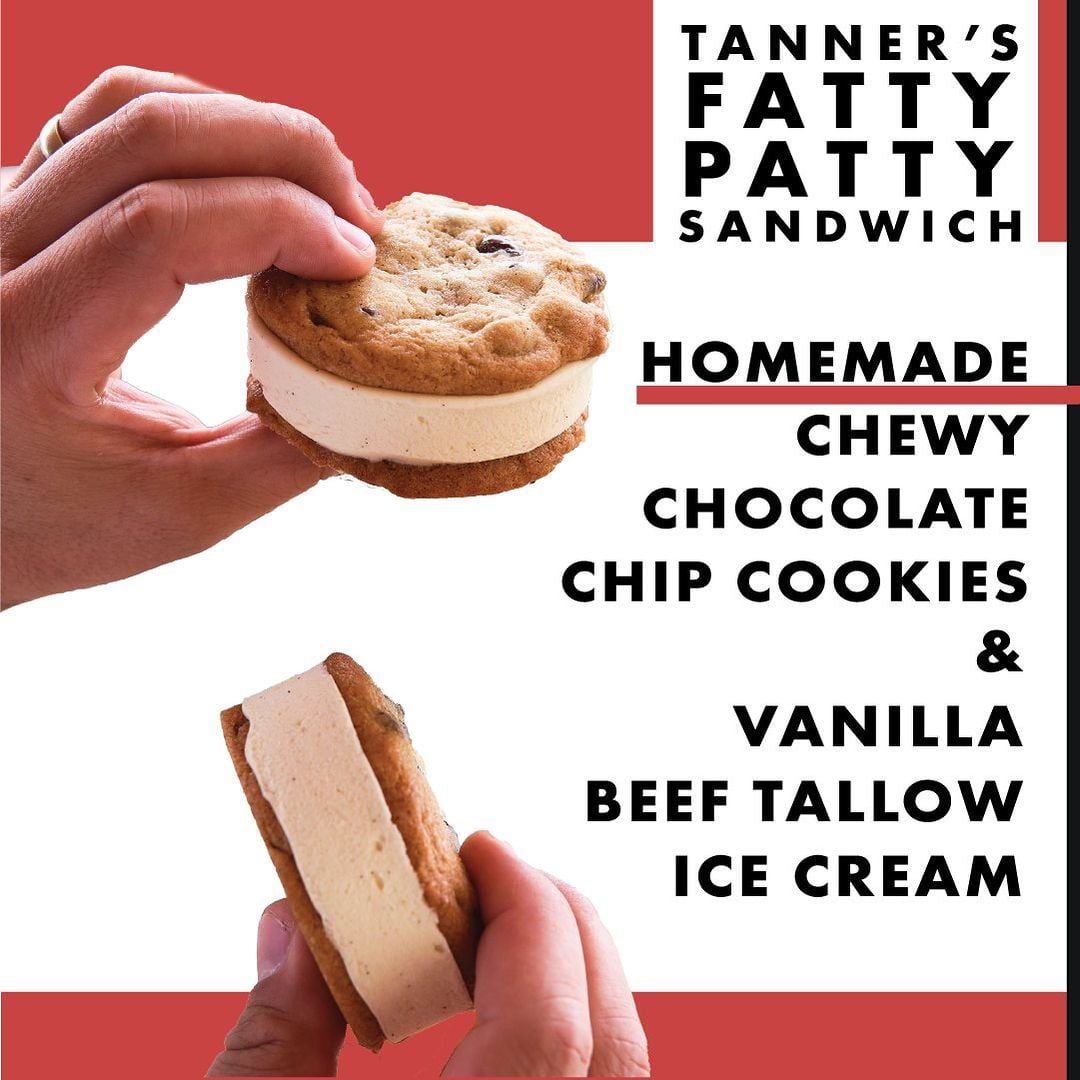
“That creaminess from the beef tallow just holds—it can be a hot sunny afternoon, and it doesn’t melt all over you,” he laughs, pointing to their Fatty Patty, which is a scoop of the beef tallow ice cream sandwiched between two homemade chocolate chip cookies. “You can’t leave without trying a Fatty Patty.”
Rodgers and Brandt’s commitment to using as much of the animal as possible goes beyond the food. They also incorporated it into the design by Michael Francis, principal at SAINT (Studio for Architecture and Interiors), who used Brandt leather to create red leather barstools in the dining area. Rodgers says they took inspiration from fast-casual places like Chipotle and Shake Shack for a “functional, but simple” interior where people can get unpretentious food that will still knock their socks off.
Rodgers says the potential to captivate even more people by elevating a classic dish was a huge reason he left a three-star kitchen. “As a Michelin-starred chef, you’re preparing the best 40 meals a night, max,” he says. “What an opportunity to be able to try to prepare a burger that someone’s had 1,000 times, and try to serve that to 1,000 people a day. If you could touch 1,000 people versus 40 people a night, for me, that’s a great feeling.”
After April 19, Tanner’s will be open seven days a week from 10:30 a.m. to 10 p.m. The duo says they’ll see how it goes, but future locations are not off the table. “I’m focused on one, [but] Eric is focused on 21,” Rodgers jokes. Brandt agrees but says getting this off the ground has been an incredible journey already.
“I get chills thinking about the fact that we’re actually opening our first brick-and-mortar,” he says, recalling that prescient phone call from years ago. “This is a toast and a cheers to that call.”



The San Diego State Aztecs are exuding a vibe that is catching recruits’ attention both on and off the field.
The latest is Travon Garrison, a 1,000-yard receiver at Damien High in La Verne, who announced his commitment to the Aztecs on Tuesday afternoon.
“I thank God for this opportunity. Grateful to all the coaches who helped me through this process. I’m excited to announce my commitment to San Diego State University!” he posted on X.
On3.com posted a picture of Garrison, some family members and SDSU coach Sean Lewis at Snapdragon Stadium. Garrison is wearing sunglasses and a sign in the picture reads, “Speed Limit None,” with the interlocking SD logo forming the “S” in Speed.
Why Travon Garrison committed to SDSU
“I’ve been on campus at San Diego State a lot,” Garrison said in an interview with on3.com. “Every time I go, I feel more comfortable, more at home. The city of San Diego is great, there’s a lot to do, the weather is nice and it feels like a place I can see myself living and growing in for the next few years.”
He added that he “really clicked well” with wideouts coach Matthew Middleton, and that he thinks he will “fit in really well with the offense. It’s very similar to what we run at Damien, so I feel comfortable with it and believe it will allow me to play fast and showcase my strengths.”
BREAKING: La Verne (Calif.) Damien WR Travon Garrison has committed to San Diego State and broke down why he chose the Aztecs
“Everything about SDSU, the coaches and the environment made it the right place for me.”
Intel: https://t.co/GW6CDqLW6Y pic.twitter.com/e2YajRQjGy
— Greg Biggins (@GregBiggins) June 23, 2026
The 6-foot, 185-pound Garrison told the recruiting website that it was a tough decision after making official visits to SDSU and Washington State, which is part of the reconfigured Pac-12 that the Aztecs will officially join on July 1.
“I had to think about what was best for me, but in the end San Diego State felt like home,” Garrison told on3.com. “Everything about the program, the coaches, and the environment made it the right place for me.”
The three-star had an impressive list of offers that, besides SDSU and WSU, included bids from Kansas, UCLA, Washington, Utah, West Virginia and Colorado State.
As a junior, he had 46 passes for 978 yards and 13 touchdowns. He had four 100-yard games and one three-touchdown game.
How Garrison could fit in at SDSU
Garrison is at least the fifth wideout from the class of 2027 to commit to the Aztecs, which should make for some lively competition a year from now.
The Aztecs currently have an intriguing wide receiver room. Although the group was hit by injuries last year, when the Aztecs had an impressive turnaround season that ended with a 9-4 record, they do return all three starters and their top four pass catchers.
The most eye-catching development in spring was when Bert Emanuel Jr. switched from backup quarterback to wide receiver. That will allow him to showcase his big-play skills while sharing the field with returning starting quarterback Jayden Denegal. They are both seniors.
The wideout corps is senior-heavy.
Follow


The Padres have a serious issue in their starting rotation.
That reality brazenly slapped them in the face again Tuesday.
And then it became a side story, at least for the night.
That is how crazy things got at Petco Park.
The Padres beat the Braves 7-6 when Mason Miller worked two scoreless innings and Manny Machado grounded a walk-off single up the middle to score Jackson Merrill in the 10th inning.
“I think the most important part is just how the team fought today,” Machado said. “I think that was impressive, being down four and then coming back and winning that ball game and fighting to the end. I think that shows a lot about the team. We picked up each other. We picked Griff. Bullpen came in and did their job too.”
The game was decided eight innings after the Braves took a 4-0 lead and the Padres took a 5-4 lead.
That is correct. The craziness commenced when for the second time in five games the Padres were part of a runaway inning.
They were on the wrong side of an 11-run inning Friday in Texas when the Rangers responded with six runs in the bottom of the first inning after the Padres scored five at the start of what ended up a 9-7 loss.
On Tuesday, the Padres came out on top of a nine-run second inning.
Griffin Canning jogged in from the bullpen to start that inning after Wandy Peralta worked a scoreless first as the Padres’ opener.
Canning would get just two outs, allow four hits, hit a batter, walk another and allow three runs before he departed.
His 40th pitch completed a walk that loaded the bases. That drew more than a few boos from the seats and brought Craig Stammen from the dugout.
The game didn’t really get wild until a little bit after that.
Kyle Hart walked the next batter to make it 4-0 before ending the top of the second on a groundout.
That is how the bottom of the second began for the Padres as well.
And then six consecutive batters reached base, and they scored five runs against Braves starter JR Ritchie.
The comeback began with walks by Xander Bogaerts and Will Wagner before singles by Rodolfo Durán and Sung-Mun Song cut the Braves’ lead in half and a double by Fernando Tatis Jr. got the Padres to 4-3 and got Song to third base.
An infield single by Samad Taylor flipped the lead.
Song easily scored on Taylor’s grounder up the middle, and when Braves shortstop Mauricio Dubón bounced a throw that got past first baseman Matt Olson, Tatis raced around third and beat a throw home by Olson.
The Braves tied the game 5-5 in the fourth and retook the lead in the fifth.
Michael Harris II singled, went to second on a wild pitch by Hart and scored on Ozzie Albies’ double in the fourth. Dubón homered in the fifth off Yuki Matsui, who had come in to get the final out of the fourth and ended up working through the sixth, leaving the bases loaded in that inning.
Jackson Merrill missed a game-tying home run by a foot and instead got a double leading off the fifth inning when his fly ball to right field hit the top of the wall and bounced back to right fielder Mike Yastrzemski.
Merrill finished the inning at second after a fly ball out by Machado and strikeouts by Gavin Sheets and Bogaerts.
Tatis did not miss a home run as the first batter in the seventh, sending a sinker from Carlos Carrasco 406 feet to center field to tie the game 6-6.
David Morgan worked the seventh and Adrian Morejón the eighth before Miller threw just 11 pitches in the ninth and went back out for the 10th.
“One, we didn’t have a ton of bullpen left,” Stammen said of the decision to have Miller work a second inning . “And he’d been kind of asking me over the course of the season: ‘Hey, I got another one, come on, let me have it.’”
Austin Riley began the 10th by hitting a long fly ball to right field that moved the automatic runner from second to third before Miller struck out Rowdy Tellez and ended the inning by getting a groundout from Eli White.
“It definitely goes a long way,” Miller said, “when you empty everybody out early and you have another game tomorrow, being able to carry two innings there and keep two guys fresh for tomorrow and give us a chance to win again tomorrow as well.”
Merrill was the runner on second to start the bottom of the 10th after he made the final out in the ninth. Machado walked to the plate against Raisel Iglesias, the Braves closer, who had also worked the ninth.
“Looking for a strike,” Machado said. “He’s a strike thrower, one of the best in the game right now. So just trying to be aggressive on that first pitch, something I can drive. Don’t really need much, just just a base hit to score Jackson. So just trying to hit it hard somewhere.”
No matter the result, the Padres are left to figure out what to do about Canning, whose ERA swelled to 7.38 after he yielded his ninth multi-run inning among the 45 innings he has begun for the Padres this season.
He is but one of the flat tires on the rotation bus.
The Padres got seven shutout innings from Michael King in a 1-0 victory over the Braves on Monday. It was the first time a Padres starter went seven innings since King did it on May 18 and just the third quality start by a Padres pitcher in 24 games.
The members of the starting rotation, including the two times Canning has worked after an opener and the two times Lucas Giolito has done so, have a combined 4.76 ERA over the past 25 games.
But the Padres figured out how to win Tuesday, just the second time in a month they have won consecutive games.
“Griffin didn’t have his stuff like he wanted to,” said Taylor, who finished 3-for-4 with a walk. “But we fought. We’re going to keep fighting until the game is over. We fought. Got back in the game. Good at-bats, good pitching. And you leave it into Manny’s hands, he’s going to take over and win the game for us.”
-
 Sports7 minutes ago
Mexico celebrates magical World Cup win over Czechia at rowdy Azteca Stadium
-

 World19 minutes ago
Venezuela rocked by 7.5 and 7.2 earthquakes: What we know
-
 News49 minutes ago
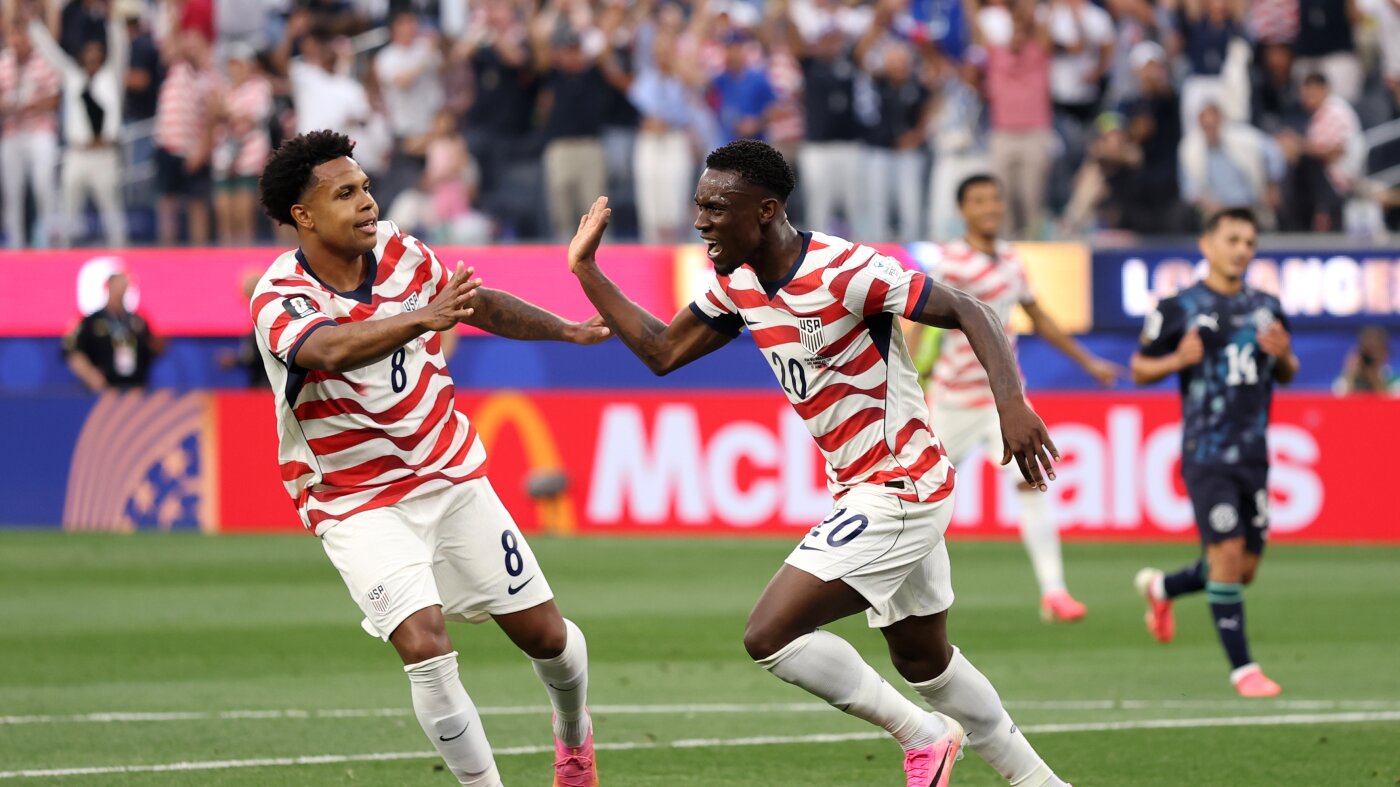
With a Round of 32 spot already clinched, the U.S. takes on Turkey in the World Cup
-

 Los Angeles, Ca2 hours ago
Hospital needs help identifying man found unconscious in downtown Los Angeles
-

 Detroit, MI2 hours ago
Large police presence for an investigation on Detroit’s west side
-

 San Francisco, CA3 hours ago
No tolerance for hate or crime at SF Pride this weekend, officials say
-

 Dallas, TX3 hours ago
Alanna Smith injury update: Dallas Wings player in concussion protocol
-

 Boston, MA3 hours ago
Boy, 13, hospitalized after being found unresponsive in swimming pool at Beverly home

