Northeast
Why DeSantis canceling Sunday shows (including mine) led to his quitting the race

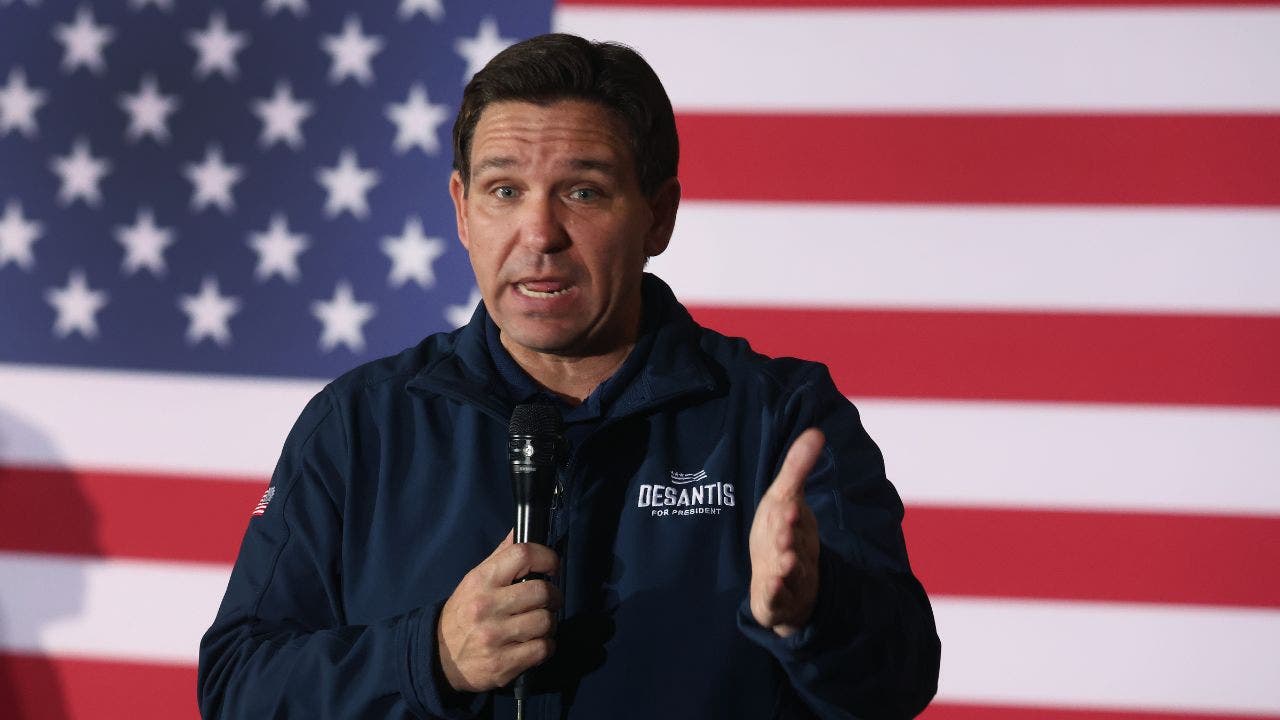
When Ron DeSantis’ campaign press secretary called me on Saturday night to cancel our “Media Buzz” interview for the next morning, I had no idea it would trigger a sequence of events that would lead to him dropping out less than 24 hours later.
I was disappointed, and somewhat annoyed, because we had gone to considerable lengths to accommodate the Florida governor.
But it was explained to me that DeSantis was dropping all his Sunday show interviews (including “Meet the Press” and “State of the Union”) so the next morning he could fly to New Hampshire, where he was mired in single digits, for a last stand before Tuesday’s primary.
And I thought to myself, of course he’s got to do what’s best for his campaign. No candidate can, or should, put the media first. Shaking hands with actual voters takes precedence.
BRET BAIER: WORDS BETWEEN TRUMP AND HALEY WILL LIKELY GET ‘UGLIER’
DeSantis suspended his 2024 presidential campaign on Sunday, and endorsed Trump. (DeSantis 2024)
I tweeted that the governor had canceled our interview, since we had touted it, and figured that was that. I had no clue how his decision would blow up into the day’s top story.
“DeSANTIS DOOMED,” screamed the banner headline on Drudge.
Was blowing off several Sunday programs really a seismic event? Would the average voter care, as opposed to the self-absorbed media community?
TRUMP ‘VERY HONORED’ BY DESANTIS ENDORSEMENT AFTER FLORIDA GOVERNOR SUSPENDS PRESIDENTIAL RUN
But DeSantis never took off for New Hampshire yesterday morning. And that led me to believe the whole thing had been a head fake.
Here’s what knowledgeable sources say actually happened. The plan was to go to New Hampshire when the DeSantis spokesman was apologetically canceling those interviews with me and others.
Former Republican presidential candidate Florida Gov. Ron DeSantis speaks during a campaign event at Wally’s bar, Wednesday, Jan. 17, 2024, in Hampton, N.H. (AP Photo/Michael Dwyer) (AP Photo/Michael Dwyer)
But the next morning, with the governor back in Florida, he held a series of conversations with his family and top staff members. A consensus was gradually reached that, as so many pundits had said, DeSantis had no path to victory. It was over. DeSantis started notifying his top donors. Trump had predicted his exit in an interview, that I aired, with Fox’s Bret Baier.
A couple of hours later, DeSantis posted a video saying “we prayed and deliberated” on the decision to get out. He said “a majority of Republican primary voters want to give Donald Trump another chance,” and while he’s had “disagreements” with the former president, “he has my endorsement because we can’t go back to the old Republican guard of yesteryear.”
TRUMP TALKS 2024 WITH BRET BAIER, SAYS BIDEN IS ‘VERY DANGEROUS’ AND ‘CAN’T PUT TWO SENTENCES TOGETHER’
That, in case you were wondering, is a clear shot at Nikki Haley. After debates in which they called each other liars, they can’t stand each other. And DeSantis had pledged to back the nominee.
Ironically, his bailing out could help Haley a bit in New Hampshire now that it’s a two-person race.
The former South Carolina governor, pressed by CNN’s Dana Bash as to whether she would eventually back Trump, deflected by saying “I’m going to finish this so Joe Biden and Donald Trump aren’t an issue at all.”
After months of pummeling the man the candidate called DeSanctimonious, the Trump campaign said “we are honored by the endorsement from Governor Ron DeSantis.” Trump’s two top campaign officials, Chris LaCivita and Susie Wiles, put out a memo titled “Nikki Haley Must Win in New Hampshire. Just Listen to Her Own Supporters,” with lots of quotes.”
Republican presidential candidates Nikki Haley (L) and Ron DeSantis (R) are pictured side-by-side. (Getty Images)
Now there’s little question that DeSantis and his campaign made many mistakes, somehow blowing through $130 million or so with little to show for it. There was overspending, endless resets and shakeups, and a perpetual tug of war with his Never Back Down Super PAC. Toward the end, some days were managed by the campaign and others by the PAC.
Perhaps the biggest mistake, and I told DeSantis this in a previous Fox interview, was staying in the conservative cocoon too long. From the moment he got in the race, he should have been making the mainstream media rounds, rather than waiting until the last month or two. By that time, DeSantis was way down in the polls.
And he finally acknowledged in a Hugh Hewitt radio interview that he regrets that decision and should have been talking to CNN, MSNBC and other outlets far earlier.
DeSantis was also very restrained in his criticism of Trump, a little tougher toward the end, but that made media analysts wonder how he could beat the front-runner while pulling his punches.
DeSantis worked his butt off in Iowa, finishing a distant second, but it was too little too late.
Read the full article from Here


WASHINGTON, D.C. (WABI) – Maine veterans returned home Sunday after a weekend in Washington, D.C.
Giving local veterans and their loved ones a visit to the capital of the nation they dedicated their lives to is the aim of Honor Flight Maine.
Marking their second trip of the year, the nonprofit provided about 70 Pine Tree State veterans a free trip to Washington to visit the memorials and monuments dedicated to their service.
For many, this was this first time seeing the capital in person.
“Unreal,” “a once-in-a-lifetime opportunity,” and “tear-dropping” were among the sentiments shared by veterans about the Honor Flight. Others remarked on the memories revived by visiting the ceremonial spaces.
“I have some friends that’s over there, so it really was nice,” said Edward Lee, a Vietnam veteran from Bangor.
Lee was able to find one friend’s name engraved on the Vietnam Veterans Memorial. Using graphite and a piece of paper, he made a rubbing of the name to take home.
Rose Marie Curtis, a Navy nurse who served in Vietnam, said seeing the three nurses depicted at the Vietnam Women’s Memorial sent her back in time.
“For so many years, you don’t think about something. You’re doing this and doing that and having children, whatever. But this really brings you back,” Curtis described.
Not only does the trip give veterans the opportunity to see these sites, it allows a chance to connect; with perhaps a past or present self, and with fellow veterans.
“It’s what makes Honor Flight Maine special because you’re with your own kind,” explained Charlie Paul, a Vietnam War veteran who has been involved with Honor Flight Maine for a decade. “We’re a segment of society, they remember us on Memorial Day. They remember us on Veteran’s Day. They remember us on Armed Forces Day. But then they forget about us. And so for us as an organization to take them down here and see their memorials, it just lets them know they’re that special.”
For Lincoln veteran Richard Rollins, the visit gave him “closure,” considering, “…when I got out of the service, I mean, to be honest, even in ’79, I was never thanked.”
Among former servicemembers of all ages, father-son veterans James and Michael Sherman said the trip opened up conversation, sharing stories they had never told each other about their service.
“It means the world that people care, and we shouldn’t wait a moment to tell the people that are important to us what they mean to us,” Michael Sherman remarked.
Copyright 2026 WABI. All rights reserved.

U.S. Rep. Seth Moulton, a moderate Massachusetts Democrat, secured enough delegate support Saturday to appear on the state’s primary ballot as he challenges incumbent U.S. Sen. Ed Markey in this year’s Senate race.
Yet even though Moulton cleared a key hurdle to continue his Senate bid, it was Markey who won the party’s endorsement after winning more than 50% of the delegation’s support.
“You have a choice, you have to decide what the future looks like and what you’re going to demand,” Markey said Saturday in front of more than 4,000 delegates.
Markey won nearly 73% of the delegates’ support, while Moulton won nearly 27% of the vote. Massachusetts Democratic Party rules require statewide candidates to get at least 15% of delegate support to appear on primary ballots.
In heavily Democratic Massachusetts, the Senate primary contest is one of the most closely watched in the country as Moulton, 47, has centered his campaign on changing the status quo and demanding a generational shift in leadership.
If reelected, Markey would be 80 before his third six-year term would begin. While Markey has touted his stamina and embrace of progressive policies, questions about age have continued to swirl around Democratic candidates as they fight to take back control of Congress.
Incumbent Sen. Ed Markey is leading Rep. Seth Moulton, but if Rep. Ayanna Pressley were to enter the Democratic primary, it would change the picture, according to a new poll from Suffolk University and The Boston Globe.
In his nomination speech, Moulton argued that the Democratic Party needed more than “incremental change” and needed to start anew.
“It’s time for the generation that grew up with the internet, and will have to live for decades with AI, to lead our way through it,” Moulton said.
Moulton only addressed his opponent briefly during his nomination speech, giving a passing nod on not waiting another six years for generational change and later calling on Markey to participate in multiple debates before the September primary. Currently, the two candidates have agreed to participate in one debate later this summer.
Markey, instead, took a more critical approach by attacking Moulton’s previous comments about transgender kids and accepting corporate PAC money.
“Massachusetts deserves better than a senator who scapegoats trans kids,” Markey said to loud cheers.
In 2024, Moulton caught flak from some members of his party for saying he didn’t want his daughters playing in sports against transgender girls. Critics said Moulton echoed Trump’s talking points against allowing transgender athletes in girls’ and women’s sports.
Moulton has since said his intent with that statement “was to point out that, as a party, we need to be willing to have difficult conversations.”
Moulton, who enlisted in the Marines after the Sept. 11, 2001, attacks and served four tours of duty in Iraq, was first elected to the U.S. House of Representatives in 2014. He briefly launched a 2020 presidential campaign, but he dropped that bid after a few months.
Markey served as a Massachusetts congressman for nearly 40 years before winning the Senate seat in 2013. He fended off a challenge in 2020 from Rep. Joe Kennedy III in the Senate primary by turning to his progressive allies to overcome a challenge from a younger rival from America’s most famous political family.
The Massachusetts primary is Sept. 1.

BOW, NH — Bow police and fire and rescue teams were sent to a crash on Sunday afternoon, not far from a previous crash earlier this month.
At 2:30 p.m., Concord Fire Alarm reported a crash involving multiple vehicles not far from the intersection of Page Road and Clinton Street. About 10 minutes later, a battalion commander told dispatch there were three vehicles involved and two patients were being evaluated. Dispatch asked if EMTs needed a retone for an engine, and the commander said, “Yeah, why don’t you send them.”
News 603 posted a video from the crash scene on Facebook, linked here.
Just before 3 p.m., EMTs cleared the scene after reporting the patients refused transport.
The crash site was not far from a crash on May 1 that sent one driver to Concord Hospital. In July 2024, a fatal motorcycle accident, which took the life of Joseph Kasper of Weare, occured not far from the location of Sunday’s crash.
Not long after, Concord Fire and Rescue teams were sent to a downed tree on Merrimack Street by School Street.
The tree was knocked down after a small storm moved through the region around 2:45 p.m.
-

 Delaware4 minutes ago
Was Taylor Swift in Dewey Beach, Delaware, this weekend? What we know
-

 Florida11 minutes ago
Florida tax proposal seeks to eliminate homestead property taxes by 2028
-

 Georgia14 minutes ago
Who Mississippi State baseball will play next in NCAA Tournament super regional
-

 Hawaii19 minutes ago
Man charged with murder in killings of 3 on Hawaii’s Big Island
-
 Idaho26 minutes ago
America 250: Famous Idaho Ice Cream Potato helps put Boise landmark on the map
-

 Illinois29 minutes ago
Downtown Springfield revitalization plan passed out of the Senate
-

 Indiana34 minutes ago
Hobart police officer rescues family from house fire
-
Iowa41 minutes ago
Iowa Lottery Pick 3 Midday, Pick 3 Evening results for May 31, 2026

